 Add to Chrome
 Add to Firefox
 Add to Edge
RobustMask: Certified Robustness against Adversarial Neural Ranking Attack via Randomized Masking
Dec 29, 2025
Neural ranking models have achieved remarkable progress and are now widely deployed in real-world applications such as Retrieval-Augmented Generation (RAG). However, like other neural architectures, they remain vulnerable to adversarial manipulations: subtle character-, word-, or phrase-level perturbations can poison retrieval results and artificially promote targeted candidates, undermining the integrity of search engines and downstream systems. Existing defenses either rely on heuristics with poor generalization or on certified methods that assume overly strong adversarial knowledge, limiting their practical use. To address these challenges, we propose RobustMask, a novel defense that combines the context-prediction capability of pretrained language models with a randomized masking-based smoothing mechanism. Our approach strengthens neural ranking models against adversarial perturbations at the character, word, and phrase levels. Leveraging both the pairwise comparison ability of ranking models and probabilistic statistical analysis, we provide a theoretical proof of RobustMask's certified top-K robustness. Extensive experiments further demonstrate that RobustMask successfully certifies over 20% of candidate documents within the top-10 ranking positions against adversarial perturbations affecting up to 30% of their content. These results highlight the effectiveness of RobustMask in enhancing the adversarial robustness of neural ranking models, marking a significant step toward providing stronger security guarantees for real-world retrieval systems.

Seedance 1.5 pro: A Native Audio-Visual Joint Generation Foundation Model
Dec 23, 2025Recent strides in video generation have paved the way for unified audio-visual generation. In this work, we present Seedance 1.5 pro, a foundational model engineered specifically for native, joint audio-video generation. Leveraging a dual-branch Diffusion Transformer architecture, the model integrates a cross-modal joint module with a specialized multi-stage data pipeline, achieving exceptional audio-visual synchronization and superior generation quality. To ensure practical utility, we implement meticulous post-training optimizations, including Supervised Fine-Tuning (SFT) on high-quality datasets and Reinforcement Learning from Human Feedback (RLHF) with multi-dimensional reward models. Furthermore, we introduce an acceleration framework that boosts inference speed by over 10X. Seedance 1.5 pro distinguishes itself through precise multilingual and dialect lip-syncing, dynamic cinematic camera control, and enhanced narrative coherence, positioning it as a robust engine for professional-grade content creation. Seedance 1.5 pro is now accessible on Volcano Engine at https://console.volcengine.com/ark/region:ark+cn-beijing/experience/vision?type=GenVideo.
A Large Language Model Based Method for Complex Logical Reasoning over Knowledge Graphs
Dec 22, 2025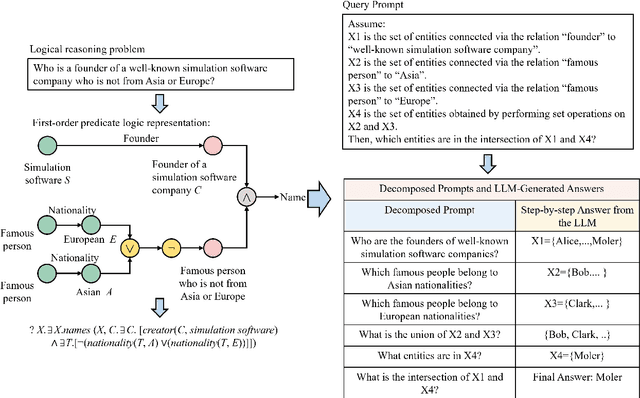
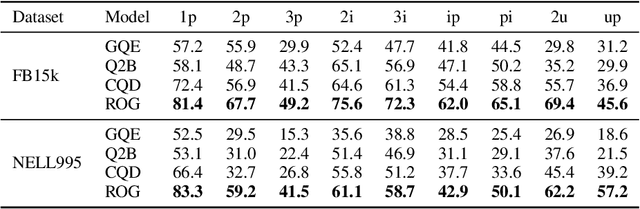
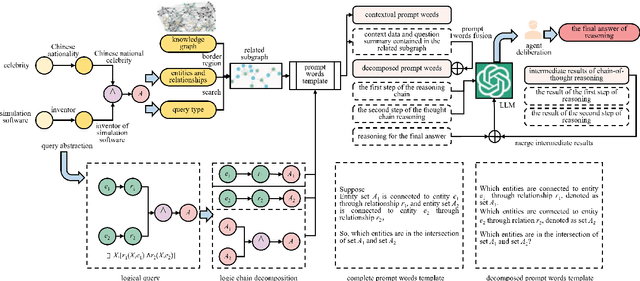
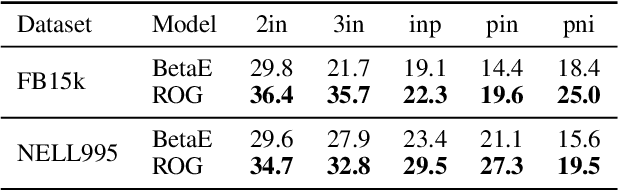
Reasoning over knowledge graphs (KGs) with first-order logic (FOL) queries is challenging due to the inherent incompleteness of real-world KGs and the compositional complexity of logical query structures. Most existing methods rely on embedding entities and relations into continuous geometric spaces and answer queries via differentiable set operations. While effective for simple query patterns, these approaches often struggle to generalize to complex queries involving multiple operators, deeper reasoning chains, or heterogeneous KG schemas. We propose ROG (Reasoning Over knowledge Graphs with large language models), an ensemble-style framework that combines query-aware KG neighborhood retrieval with large language model (LLM)-based chain-of-thought reasoning. ROG decomposes complex FOL queries into sequences of simpler sub-queries, retrieves compact, query-relevant subgraphs as contextual evidence, and performs step-by-step logical inference using an LLM, avoiding the need for task-specific embedding optimization. Experiments on standard KG reasoning benchmarks demonstrate that ROG consistently outperforms strong embedding-based baselines in terms of mean reciprocal rank (MRR), with particularly notable gains on high-complexity query types. These results suggest that integrating structured KG retrieval with LLM-driven logical reasoning offers a robust and effective alternative for complex KG reasoning tasks.
The Devil is in Attention Sharing: Improving Complex Non-rigid Image Editing Faithfulness via Attention Synergy
Dec 17, 2025Training-free image editing with large diffusion models has become practical, yet faithfully performing complex non-rigid edits (e.g., pose or shape changes) remains highly challenging. We identify a key underlying cause: attention collapse in existing attention sharing mechanisms, where either positional embeddings or semantic features dominate visual content retrieval, leading to over-editing or under-editing. To address this issue, we introduce SynPS, a method that Synergistically leverages Positional embeddings and Semantic information for faithful non-rigid image editing. We first propose an editing measurement that quantifies the required editing magnitude at each denoising step. Based on this measurement, we design an attention synergy pipeline that dynamically modulates the influence of positional embeddings, enabling SynPS to balance semantic modifications and fidelity preservation. By adaptively integrating positional and semantic cues, SynPS effectively avoids both over- and under-editing. Extensive experiments on public and newly curated benchmarks demonstrate the superior performance and faithfulness of our approach.
POLAR: A Portrait OLAT Dataset and Generative Framework for Illumination-Aware Face Modeling
Dec 16, 2025Face relighting aims to synthesize realistic portraits under novel illumination while preserving identity and geometry. However, progress remains constrained by the limited availability of large-scale, physically consistent illumination data. To address this, we introduce POLAR, a large-scale and physically calibrated One-Light-at-a-Time (OLAT) dataset containing over 200 subjects captured under 156 lighting directions, multiple views, and diverse expressions. Building upon POLAR, we develop a flow-based generative model POLARNet that predicts per-light OLAT responses from a single portrait, capturing fine-grained and direction-aware illumination effects while preserving facial identity. Unlike diffusion or background-conditioned methods that rely on statistical or contextual cues, our formulation models illumination as a continuous, physically interpretable transformation between lighting states, enabling scalable and controllable relighting. Together, POLAR and POLARNet form a unified illumination learning framework that links real data, generative synthesis, and physically grounded relighting, establishing a self-sustaining "chicken-and-egg" cycle for scalable and reproducible portrait illumination. Our project page: https://rex0191.github.io/POLAR/.
Esim: EVM Bytecode Similarity Detection Based on Stable-Semantic Graph
Nov 17, 2025Decentralized finance (DeFi) is experiencing rapid expansion. However, prevalent code reuse and limited open-source contributions have introduced significant challenges to the blockchain ecosystem, including plagiarism and the propagation of vulnerable code. Consequently, an effective and accurate similarity detection method for EVM bytecode is urgently needed to identify similar contracts. Traditional binary similarity detection methods are typically based on instruction stream or control flow graph (CFG), which have limitations on EVM bytecode due to specific features like low-level EVM bytecode and heavily-reused basic blocks. Moreover, the highly-diverse Solidity Compiler (Solc) versions further complicate accurate similarity detection. Motivated by these challenges, we propose a novel EVM bytecode representation called Stable-Semantic Graph (SSG), which captures relationships between 'stable instructions' (special instructions identified by our study). Moreover, we implement a prototype, Esim, which embeds SSG into matrices for similarity detection using a heterogeneous graph neural network. Esim demonstrates high accuracy in SSG construction, achieving F1-scores of 100% for control flow and 95.16% for data flow, and its similarity detection performance reaches 96.3% AUC, surpassing traditional approaches. Our large-scale study, analyzing 2,675,573 smart contracts on six EVM-compatible chains over a one-year period, also demonstrates that Esim outperforms the SOTA tool Etherscan in vulnerability search.
Part-X-MLLM: Part-aware 3D Multimodal Large Language Model
Nov 17, 2025We introduce Part-X-MLLM, a native 3D multimodal large language model that unifies diverse 3D tasks by formulating them as programs in a structured, executable grammar. Given an RGB point cloud and a natural language prompt, our model autoregressively generates a single, coherent token sequence encoding part-level bounding boxes, semantic descriptions, and edit commands. This structured output serves as a versatile interface to drive downstream geometry-aware modules for part-based generation and editing. By decoupling the symbolic planning from the geometric synthesis, our approach allows any compatible geometry engine to be controlled through a single, language-native frontend. We pre-train a dual-encoder architecture to disentangle structure from semantics and instruction-tune the model on a large-scale, part-centric dataset. Experiments demonstrate that our model excels at producing high-quality, structured plans, enabling state-of-the-art performance in grounded Q\&A, compositional generation, and localized editing through one unified interface. Project page: https://chunshi.wang/Part-X-MLLM/
SimTac: A Physics-Based Simulator for Vision-Based Tactile Sensing with Biomorphic Structures
Nov 14, 2025Tactile sensing in biological organisms is deeply intertwined with morphological form, such as human fingers, cat paws, and elephant trunks, which enables rich and adaptive interactions through a variety of geometrically complex structures. In contrast, vision-based tactile sensors in robotics have been limited to simple planar geometries, with biomorphic designs remaining underexplored. To address this gap, we present SimTac, a physics-based simulation framework for the design and validation of biomorphic tactile sensors. SimTac consists of particle-based deformation modeling, light-field rendering for photorealistic tactile image generation, and a neural network for predicting mechanical responses, enabling accurate and efficient simulation across a wide range of geometries and materials. We demonstrate the versatility of SimTac by designing and validating physical sensor prototypes inspired by biological tactile structures and further demonstrate its effectiveness across multiple Sim2Real tactile tasks, including object classification, slip detection, and contact safety assessment. Our framework bridges the gap between bio-inspired design and practical realisation, expanding the design space of tactile sensors and paving the way for tactile sensing systems that integrate morphology and sensing to enable robust interaction in unstructured environments.
SpeechJudge: Towards Human-Level Judgment for Speech Naturalness
Nov 11, 2025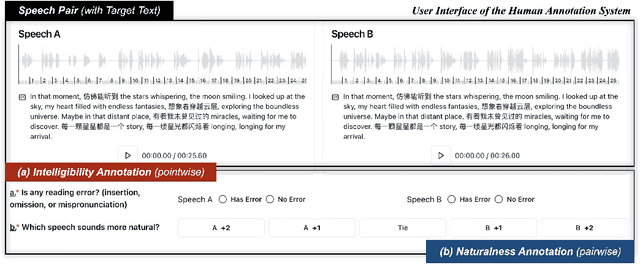
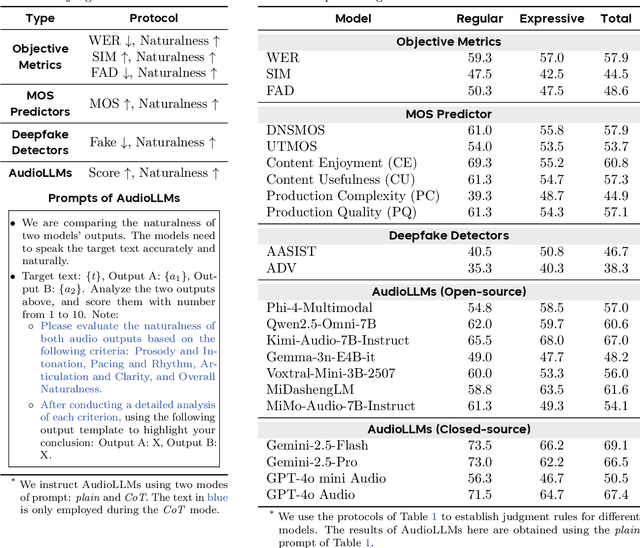
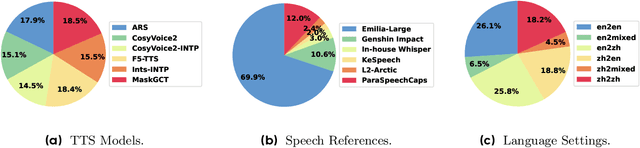
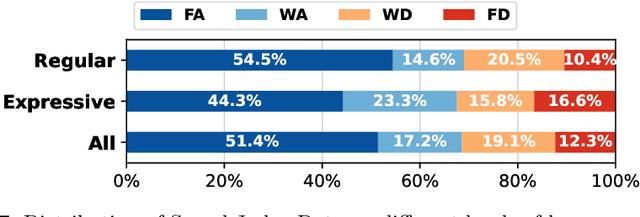
Aligning large generative models with human feedback is a critical challenge. In speech synthesis, this is particularly pronounced due to the lack of a large-scale human preference dataset, which hinders the development of models that truly align with human perception. To address this, we introduce SpeechJudge, a comprehensive suite comprising a dataset, a benchmark, and a reward model centered on naturalness--one of the most fundamental subjective metrics for speech synthesis. First, we present SpeechJudge-Data, a large-scale human feedback corpus of 99K speech pairs. The dataset is constructed using a diverse set of advanced zero-shot text-to-speech (TTS) models across diverse speech styles and multiple languages, with human annotations for both intelligibility and naturalness preference. From this, we establish SpeechJudge-Eval, a challenging benchmark for speech naturalness judgment. Our evaluation reveals that existing metrics and AudioLLMs struggle with this task; the leading model, Gemini-2.5-Flash, achieves less than 70% agreement with human judgment, highlighting a significant gap for improvement. To bridge this gap, we develop SpeechJudge-GRM, a generative reward model (GRM) based on Qwen2.5-Omni-7B. It is trained on SpeechJudge-Data via a two-stage post-training process: Supervised Fine-Tuning (SFT) with Chain-of-Thought rationales followed by Reinforcement Learning (RL) with GRPO on challenging cases. On the SpeechJudge-Eval benchmark, the proposed SpeechJudge-GRM demonstrates superior performance, achieving 77.2% accuracy (and 79.4% after inference-time scaling @10) compared to a classic Bradley-Terry reward model (72.7%). Furthermore, SpeechJudge-GRM can be also employed as a reward function during the post-training of speech generation models to facilitate their alignment with human preferences.
MoRE: 3D Visual Geometry Reconstruction Meets Mixture-of-Experts
Oct 31, 2025Recent advances in language and vision have demonstrated that scaling up model capacity consistently improves performance across diverse tasks. In 3D visual geometry reconstruction, large-scale training has likewise proven effective for learning versatile representations. However, further scaling of 3D models is challenging due to the complexity of geometric supervision and the diversity of 3D data. To overcome these limitations, we propose MoRE, a dense 3D visual foundation model based on a Mixture-of-Experts (MoE) architecture that dynamically routes features to task-specific experts, allowing them to specialize in complementary data aspects and enhance both scalability and adaptability. Aiming to improve robustness under real-world conditions, MoRE incorporates a confidence-based depth refinement module that stabilizes and refines geometric estimation. In addition, it integrates dense semantic features with globally aligned 3D backbone representations for high-fidelity surface normal prediction. MoRE is further optimized with tailored loss functions to ensure robust learning across diverse inputs and multiple geometric tasks. Extensive experiments demonstrate that MoRE achieves state-of-the-art performance across multiple benchmarks and supports effective downstream applications without extra computation.