 Add to Chrome
 Add to Firefox
 Add to Edge
MiniCPM: Unveiling the Potential of Small Language Models with Scalable Training Strategies
Apr 09, 2024




The burgeoning interest in developing Large Language Models (LLMs) with up to trillion parameters has been met with concerns regarding resource efficiency and practical expense, particularly given the immense cost of experimentation. This scenario underscores the importance of exploring the potential of Small Language Models (SLMs) as a resource-efficient alternative. In this context, we introduce MiniCPM, specifically the 1.2B and 2.4B non-embedding parameter variants, not only excel in their respective categories but also demonstrate capabilities on par with 7B-13B LLMs. While focusing on SLMs, our approach exhibits scalability in both model and data dimensions for future LLM research. Regarding model scaling, we employ extensive model wind tunnel experiments for stable and optimal scaling. For data scaling, we introduce a Warmup-Stable-Decay (WSD) learning rate scheduler (LRS), conducive to continuous training and domain adaptation. We present an in-depth analysis of the intriguing training dynamics that occurred in the WSD LRS. With WSD LRS, we are now able to efficiently study data-model scaling law without extensive retraining experiments on both axes of model and data, from which we derive the much higher compute optimal data-model ratio than Chinchilla Optimal. Additionally, we introduce MiniCPM family, including MiniCPM-DPO, MiniCPM-MoE and MiniCPM-128K, whose excellent performance further cementing MiniCPM's foundation in diverse SLM applications. MiniCPM models are available publicly at https://github.com/OpenBMB/MiniCPM .

Advancing LLM Reasoning Generalists with Preference Trees
Apr 02, 2024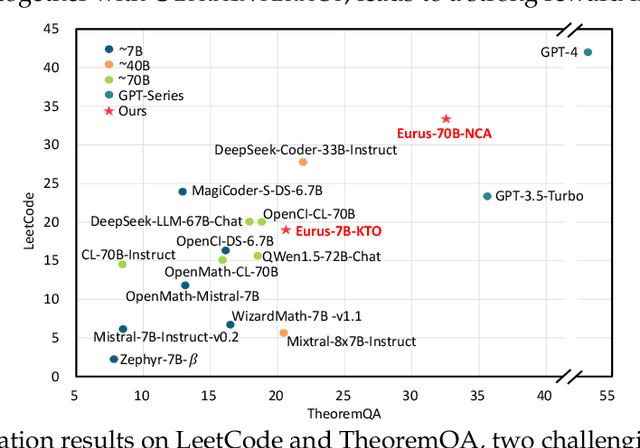
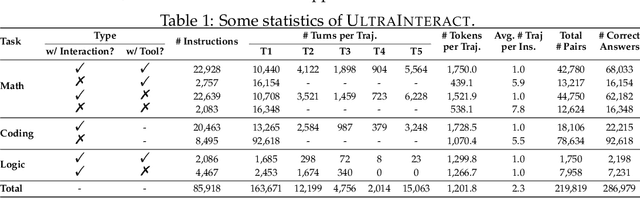
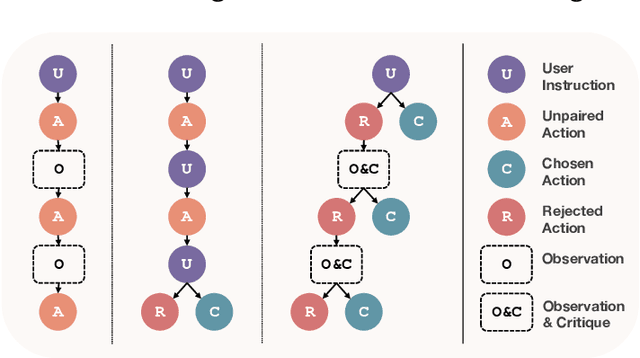
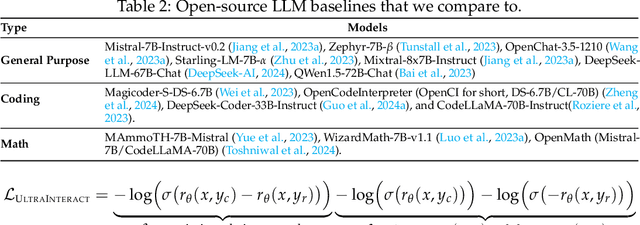
We introduce Eurus, a suite of large language models (LLMs) optimized for reasoning. Finetuned from Mistral-7B and CodeLlama-70B, Eurus models achieve state-of-the-art results among open-source models on a diverse set of benchmarks covering mathematics, code generation, and logical reasoning problems. Notably, Eurus-70B beats GPT-3.5 Turbo in reasoning through a comprehensive benchmarking across 12 tests covering five tasks, and achieves a 33.3% pass@1 accuracy on LeetCode and 32.6% on TheoremQA, two challenging benchmarks, substantially outperforming existing open-source models by margins more than 13.3%. The strong performance of Eurus can be primarily attributed to UltraInteract, our newly-curated large-scale, high-quality alignment dataset specifically designed for complex reasoning tasks. UltraInteract can be used in both supervised fine-tuning and preference learning. For each instruction, it includes a preference tree consisting of (1) reasoning chains with diverse planning strategies in a unified format, (2) multi-turn interaction trajectories with the environment and the critique, and (3) pairwise data to facilitate preference learning. UltraInteract allows us to conduct an in-depth exploration of preference learning for reasoning tasks. Our investigation reveals that some well-established preference learning algorithms may be less suitable for reasoning tasks compared to their effectiveness in general conversations. Inspired by this, we derive a novel reward modeling objective which, together with UltraInteract, leads to a strong reward model.
Joint Pedestrian Trajectory Prediction through Posterior Sampling
Mar 30, 2024Joint pedestrian trajectory prediction has long grappled with the inherent unpredictability of human behaviors. Recent investigations employing variants of conditional diffusion models in trajectory prediction have exhibited notable success. Nevertheless, the heavy dependence on accurate historical data results in their vulnerability to noise disturbances and data incompleteness. To improve the robustness and reliability, we introduce the Guided Full Trajectory Diffuser (GFTD), a novel diffusion model framework that captures the joint full (historical and future) trajectory distribution. By learning from the full trajectory, GFTD can recover the noisy and missing data, hence improving the robustness. In addition, GFTD can adapt to data imperfections without additional training requirements, leveraging posterior sampling for reliable prediction and controllable generation. Our approach not only simplifies the prediction process but also enhances generalizability in scenarios with noise and incomplete inputs. Through rigorous experimental evaluation, GFTD exhibits superior performance in both trajectory prediction and controllable generation.
Robust and Scalable Model Editing for Large Language Models
Mar 26, 2024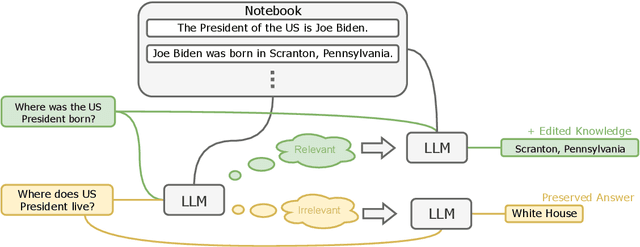

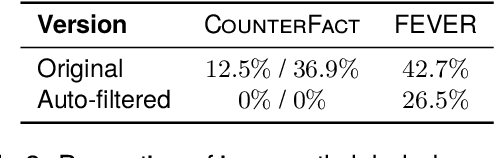
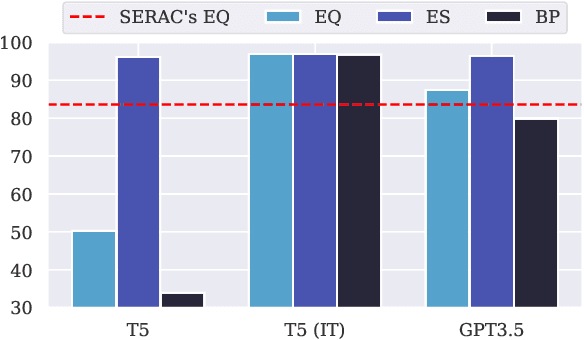
Large language models (LLMs) can make predictions using parametric knowledge--knowledge encoded in the model weights--or contextual knowledge--knowledge presented in the context. In many scenarios, a desirable behavior is that LLMs give precedence to contextual knowledge when it conflicts with the parametric knowledge, and fall back to using their parametric knowledge when the context is irrelevant. This enables updating and correcting the model's knowledge by in-context editing instead of retraining. Previous works have shown that LLMs are inclined to ignore contextual knowledge and fail to reliably fall back to parametric knowledge when presented with irrelevant context. In this work, we discover that, with proper prompting methods, instruction-finetuned LLMs can be highly controllable by contextual knowledge and robust to irrelevant context. Utilizing this feature, we propose EREN (Edit models by REading Notes) to improve the scalability and robustness of LLM editing. To better evaluate the robustness of model editors, we collect a new dataset, that contains irrelevant questions that are more challenging than the ones in existing datasets. Empirical results show that our method outperforms current state-of-the-art methods by a large margin. Unlike existing techniques, it can integrate knowledge from multiple edits, and correctly respond to syntactically similar but semantically unrelated inputs (and vice versa). The source code can be found at https://github.com/thunlp/EREN.
LLaVA-UHD: an LMM Perceiving Any Aspect Ratio and High-Resolution Images
Mar 18, 2024

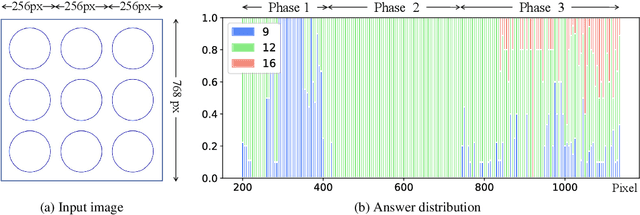
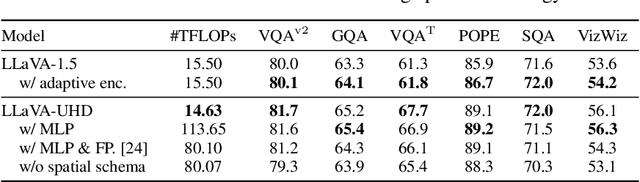
Visual encoding constitutes the basis of large multimodal models (LMMs) in understanding the visual world. Conventional LMMs process images in fixed sizes and limited resolutions, while recent explorations in this direction are limited in adaptivity, efficiency, and even correctness. In this work, we first take GPT-4V and LLaVA-1.5 as representative examples and expose systematic flaws rooted in their visual encoding strategy. To address the challenges, we present LLaVA-UHD, a large multimodal model that can efficiently perceive images in any aspect ratio and high resolution. LLaVA-UHD includes three key components: (1) An image modularization strategy that divides native-resolution images into smaller variable-sized slices for efficient and extensible encoding, (2) a compression module that further condenses image tokens from visual encoders, and (3) a spatial schema to organize slice tokens for LLMs. Comprehensive experiments show that LLaVA-UHD outperforms established LMMs trained with 2-3 orders of magnitude more data on 9 benchmarks. Notably, our model built on LLaVA-1.5 336x336 supports 6 times larger (i.e., 672x1088) resolution images using only 94% inference computation, and achieves 6.4 accuracy improvement on TextVQA. Moreover, the model can be efficiently trained in academic settings, within 23 hours on 8 A100 GPUs (vs. 26 hours of LLaVA-1.5). We make the data and code publicly available at https://github.com/thunlp/LLaVA-UHD.
Mastering Text, Code and Math Simultaneously via Fusing Highly Specialized Language Models
Mar 18, 2024Underlying data distributions of natural language, programming code, and mathematical symbols vary vastly, presenting a complex challenge for large language models (LLMs) that strive to achieve high performance across all three domains simultaneously. Achieving a very high level of proficiency for an LLM within a specific domain often requires extensive training with relevant corpora, which is typically accompanied by a sacrifice in performance in other domains. In this paper, we propose to fuse models that are already highly-specialized directly. The proposed fusing framework, UltraFuser, consists of three distinct specialists that are already sufficiently trained on language, coding, and mathematics. A token-level gating mechanism is introduced to blend the specialists' outputs. A two-stage training strategy accompanied by balanced sampling is designed to ensure stability. To effectively train the fused model, we further construct a high-quality supervised instruction tuning dataset, UltraChat 2, which includes text, code, and mathematical content. This dataset comprises approximately 300,000 instructions and covers a wide range of topics in each domain. Experiments show that our model could simultaneously achieve mastery of the three crucial domains.
BurstAttention: An Efficient Distributed Attention Framework for Extremely Long Sequences
Mar 14, 2024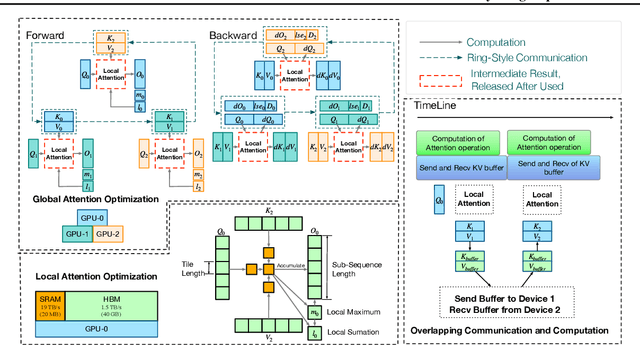
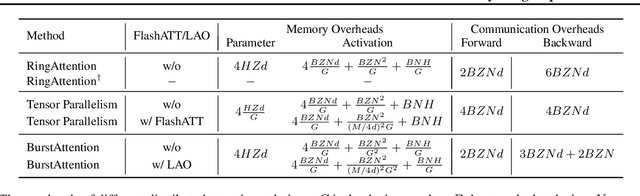
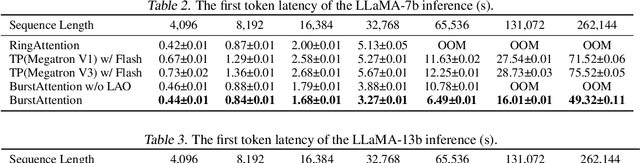
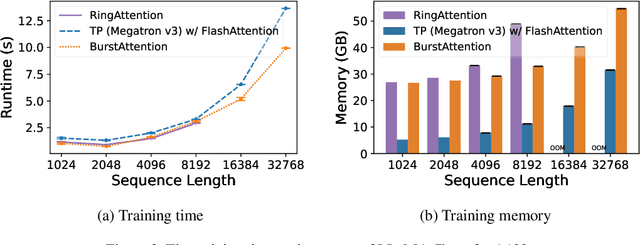
Effective attention modules have played a crucial role in the success of Transformer-based large language models (LLMs), but the quadratic time and memory complexities of these attention modules also pose a challenge when processing long sequences. One potential solution for the long sequence problem is to utilize distributed clusters to parallelize the computation of attention modules across multiple devices (e.g., GPUs). However, adopting a distributed approach inevitably introduces extra memory overheads to store local attention results and incurs additional communication costs to aggregate local results into global ones. In this paper, we propose a distributed attention framework named ``BurstAttention'' to optimize memory access and communication operations at both the global cluster and local device levels. In our experiments, we compare BurstAttention with other competitive distributed attention solutions for long sequence processing. The experimental results under different length settings demonstrate that BurstAttention offers significant advantages for processing long sequences compared with these competitive baselines, reducing 40% communication overheads and achieving 2 X speedup during training 32K sequence length on 8 X A100.
StableToolBench: Towards Stable Large-Scale Benchmarking on Tool Learning of Large Language Models
Mar 13, 2024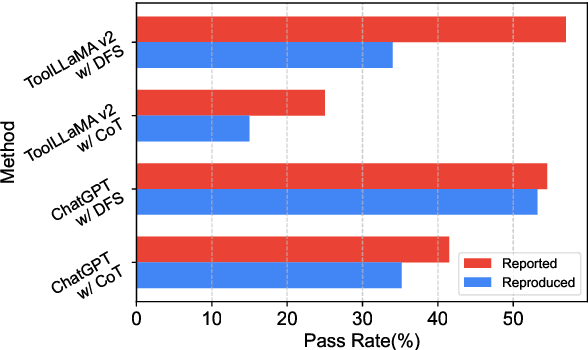
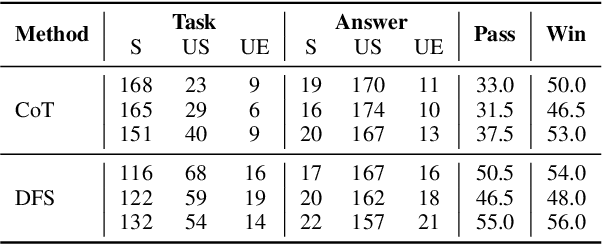
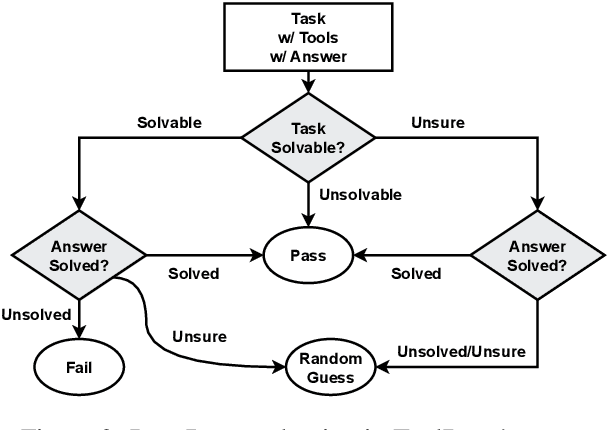
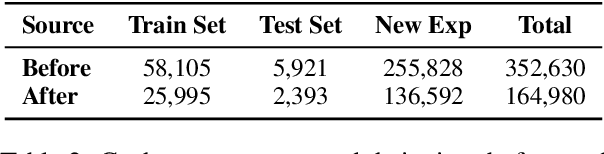
Large Language Models (LLMs) have witnessed remarkable advancements in recent years, prompting the exploration of tool learning, which integrates LLMs with external tools to address diverse real-world challenges. Assessing the capability of LLMs to utilise tools necessitates large-scale and stable benchmarks. However, previous works relied on either hand-crafted online tools with limited scale, or large-scale real online APIs suffering from instability of API status. To address this problem, we introduce StableToolBench, a benchmark evolving from ToolBench, proposing a virtual API server and stable evaluation system. The virtual API server contains a caching system and API simulators which are complementary to alleviate the change in API status. Meanwhile, the stable evaluation system designs solvable pass and win rates using GPT-4 as the automatic evaluator to eliminate the randomness during evaluation. Experimental results demonstrate the stability of StableToolBench, and further discuss the effectiveness of API simulators, the caching system, and the evaluator system.
Yi: Open Foundation Models by 01.AI
Mar 07, 2024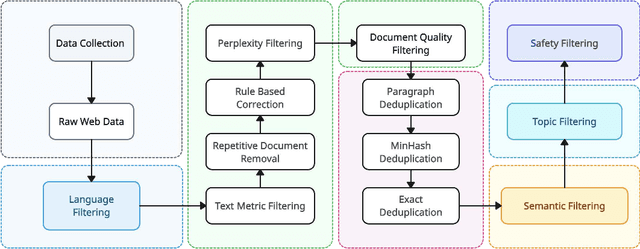

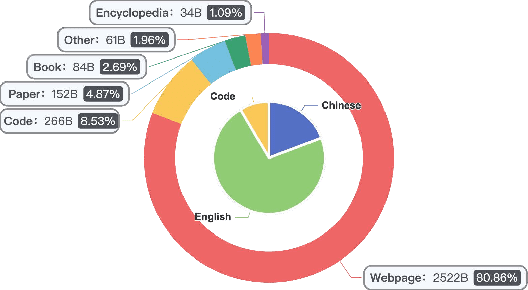
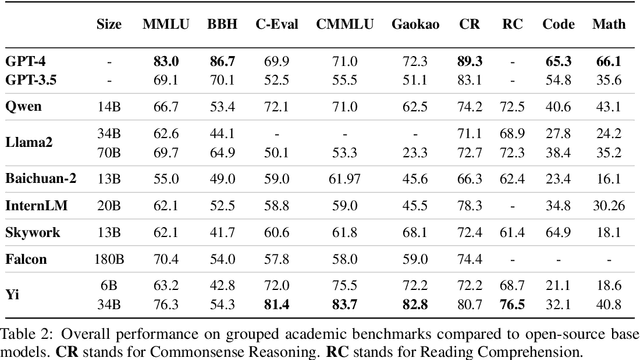
We introduce the Yi model family, a series of language and multimodal models that demonstrate strong multi-dimensional capabilities. The Yi model family is based on 6B and 34B pretrained language models, then we extend them to chat models, 200K long context models, depth-upscaled models, and vision-language models. Our base models achieve strong performance on a wide range of benchmarks like MMLU, and our finetuned chat models deliver strong human preference rate on major evaluation platforms like AlpacaEval and Chatbot Arena. Building upon our scalable super-computing infrastructure and the classical transformer architecture, we attribute the performance of Yi models primarily to its data quality resulting from our data-engineering efforts. For pretraining, we construct 3.1 trillion tokens of English and Chinese corpora using a cascaded data deduplication and quality filtering pipeline. For finetuning, we polish a small scale (less than 10K) instruction dataset over multiple iterations such that every single instance has been verified directly by our machine learning engineers. For vision-language, we combine the chat language model with a vision transformer encoder and train the model to align visual representations to the semantic space of the language model. We further extend the context length to 200K through lightweight continual pretraining and demonstrate strong needle-in-a-haystack retrieval performance. We show that extending the depth of the pretrained checkpoint through continual pretraining further improves performance. We believe that given our current results, continuing to scale up model parameters using thoroughly optimized data will lead to even stronger frontier models.
LLM-Oriented Retrieval Tuner
Mar 04, 2024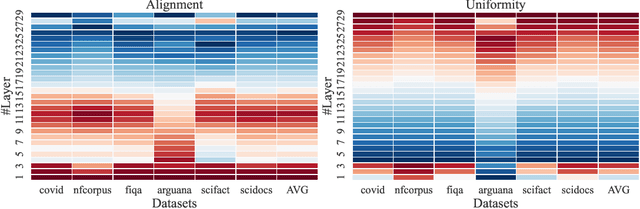
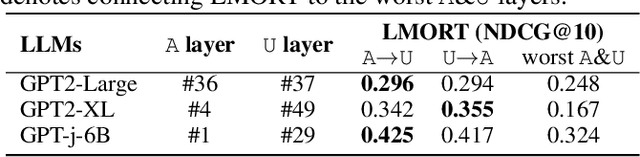

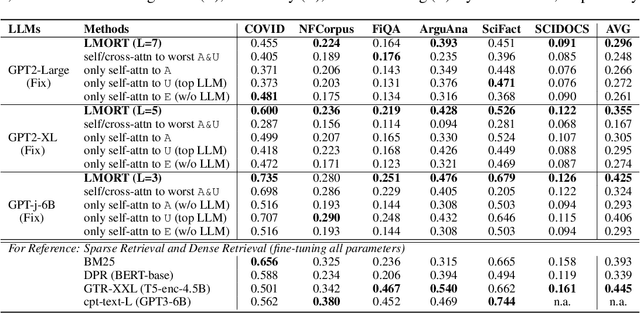
Dense Retrieval (DR) is now considered as a promising tool to enhance the memorization capacity of Large Language Models (LLM) such as GPT3 and GPT-4 by incorporating external memories. However, due to the paradigm discrepancy between text generation of LLM and DR, it is still an open challenge to integrate the retrieval and generation tasks in a shared LLM. In this paper, we propose an efficient LLM-Oriented Retrieval Tuner, namely LMORT, which decouples DR capacity from base LLM and non-invasively coordinates the optimally aligned and uniform layers of the LLM towards a unified DR space, achieving an efficient and effective DR without tuning the LLM itself. The extensive experiments on six BEIR datasets show that our approach could achieve competitive zero-shot retrieval performance compared to a range of strong DR models while maintaining the generation ability of LLM.