 Add to Chrome
 Add to Firefox
 Add to Edge
ERNIE 3.0 Titan: Exploring Larger-scale Knowledge Enhanced Pre-training for Language Understanding and Generation
Dec 23, 2021
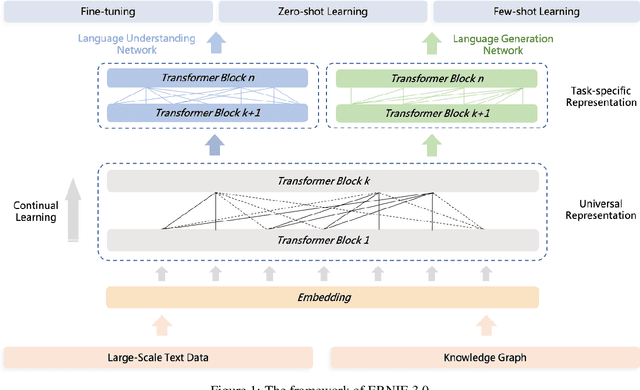
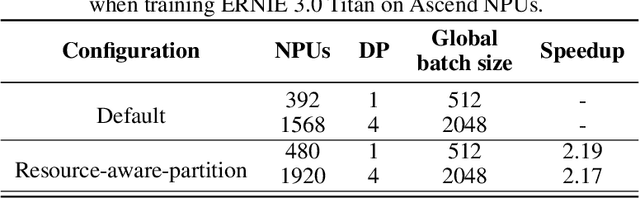
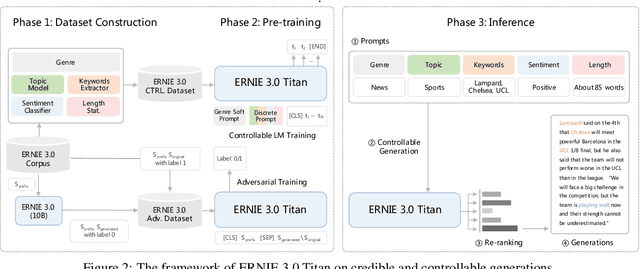
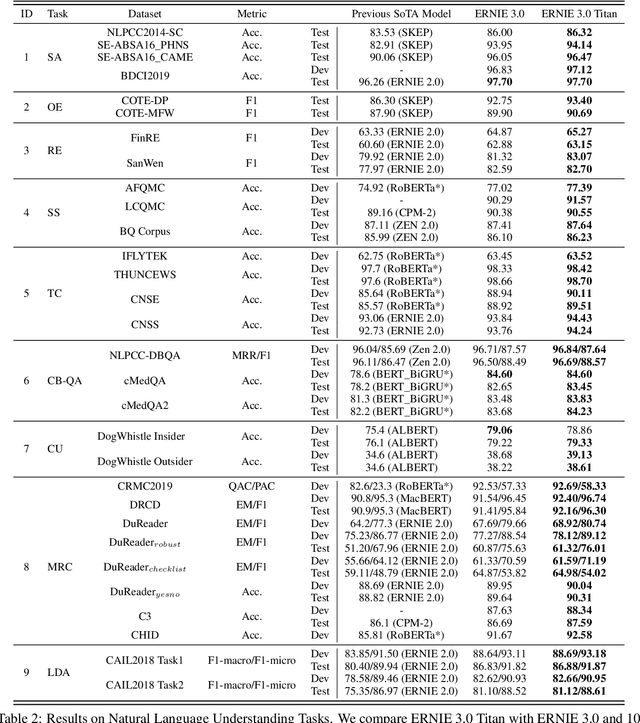
Pre-trained language models have achieved state-of-the-art results in various Natural Language Processing (NLP) tasks. GPT-3 has shown that scaling up pre-trained language models can further exploit their enormous potential. A unified framework named ERNIE 3.0 was recently proposed for pre-training large-scale knowledge enhanced models and trained a model with 10 billion parameters. ERNIE 3.0 outperformed the state-of-the-art models on various NLP tasks. In order to explore the performance of scaling up ERNIE 3.0, we train a hundred-billion-parameter model called ERNIE 3.0 Titan with up to 260 billion parameters on the PaddlePaddle platform. Furthermore, we design a self-supervised adversarial loss and a controllable language modeling loss to make ERNIE 3.0 Titan generate credible and controllable texts. To reduce the computation overhead and carbon emission, we propose an online distillation framework for ERNIE 3.0 Titan, where the teacher model will teach students and train itself simultaneously. ERNIE 3.0 Titan is the largest Chinese dense pre-trained model so far. Empirical results show that the ERNIE 3.0 Titan outperforms the state-of-the-art models on 68 NLP datasets.

End-to-end Adaptive Distributed Training on PaddlePaddle
Dec 06, 2021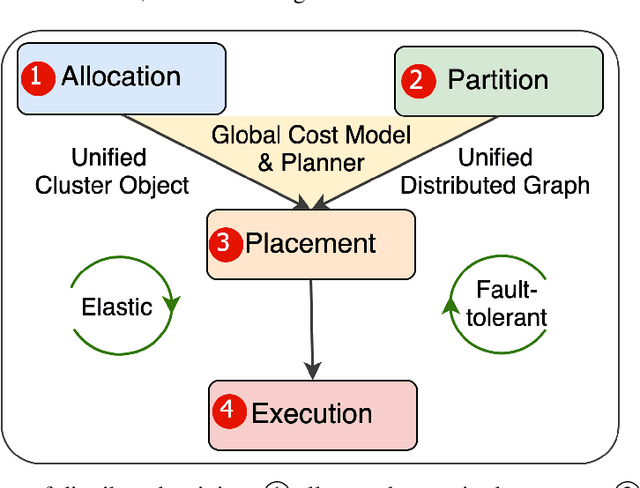
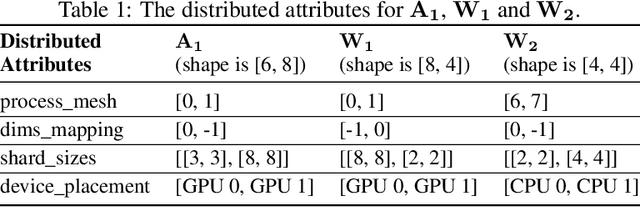
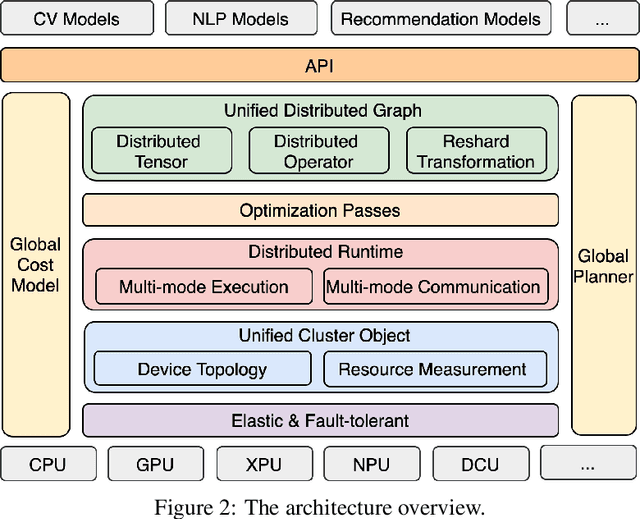
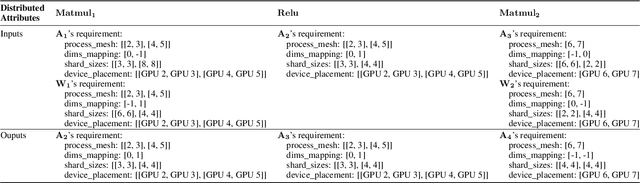
Distributed training has become a pervasive and effective approach for training a large neural network (NN) model with processing massive data. However, it is very challenging to satisfy requirements from various NN models, diverse computing resources, and their dynamic changes during a training job. In this study, we design our distributed training framework in a systematic end-to-end view to provide the built-in adaptive ability for different scenarios, especially for industrial applications and production environments, by fully considering resource allocation, model partition, task placement, and distributed execution. Based on the unified distributed graph and the unified cluster object, our adaptive framework is equipped with a global cost model and a global planner, which can enable arbitrary parallelism, resource-aware placement, multi-mode execution, fault-tolerant, and elastic distributed training. The experiments demonstrate that our framework can satisfy various requirements from the diversity of applications and the heterogeneity of resources with highly competitive performance. The ERNIE language model with 260 billion parameters is efficiently trained on thousands of AI processors with 91.7% weak scalability. The throughput of the model from the recommender system by employing the heterogeneous pipeline asynchronous execution can be increased up to 2.1 times and 3.3 times that of the GPU-only and CPU-only training respectively. Moreover, the fault-tolerant and elastic distributed training have been successfully applied to the online industrial applications, which give a reduction of 34.49% in the number of failed long-term training jobs and an increase of 33.91% for the global scheduling efficiency in the production environment.
HeterPS: Distributed Deep Learning With Reinforcement Learning Based Scheduling in Heterogeneous Environments
Nov 20, 2021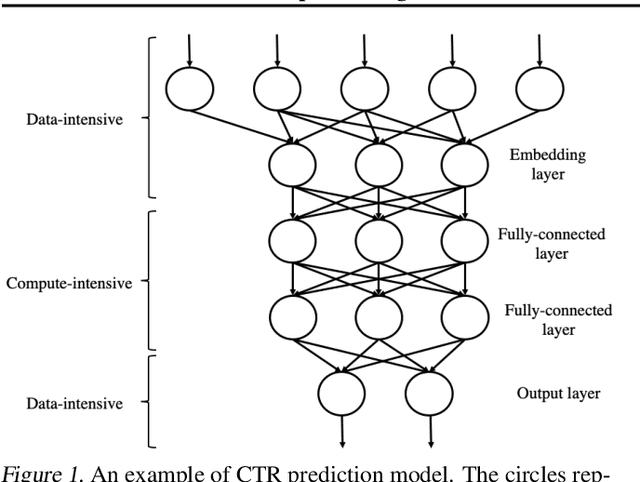
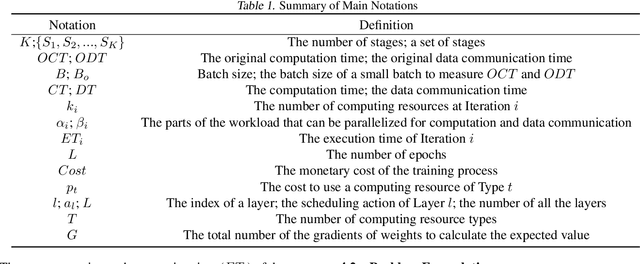
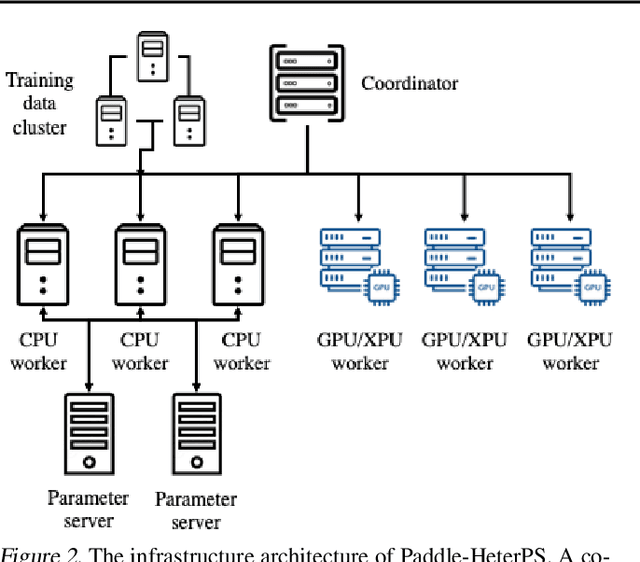
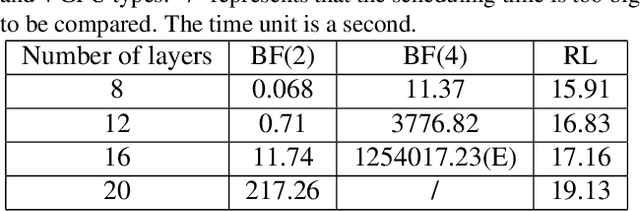
Deep neural networks (DNNs) exploit many layers and a large number of parameters to achieve excellent performance. The training process of DNN models generally handles large-scale input data with many sparse features, which incurs high Input/Output (IO) cost, while some layers are compute-intensive. The training process generally exploits distributed computing resources to reduce training time. In addition, heterogeneous computing resources, e.g., CPUs, GPUs of multiple types, are available for the distributed training process. Thus, the scheduling of multiple layers to diverse computing resources is critical for the training process. To efficiently train a DNN model using the heterogeneous computing resources, we propose a distributed framework, i.e., Paddle-Heterogeneous Parameter Server (Paddle-HeterPS), composed of a distributed architecture and a Reinforcement Learning (RL)-based scheduling method. The advantages of Paddle-HeterPS are three-fold compared with existing frameworks. First, Paddle-HeterPS enables efficient training process of diverse workloads with heterogeneous computing resources. Second, Paddle-HeterPS exploits an RL-based method to efficiently schedule the workload of each layer to appropriate computing resources to minimize the cost while satisfying throughput constraints. Third, Paddle-HeterPS manages data storage and data communication among distributed computing resources. We carry out extensive experiments to show that Paddle-HeterPS significantly outperforms state-of-the-art approaches in terms of throughput (14.5 times higher) and monetary cost (312.3% smaller). The codes of the framework are publicly available at: https://github.com/PaddlePaddle/Paddle.
PP-PicoDet: A Better Real-Time Object Detector on Mobile Devices
Nov 01, 2021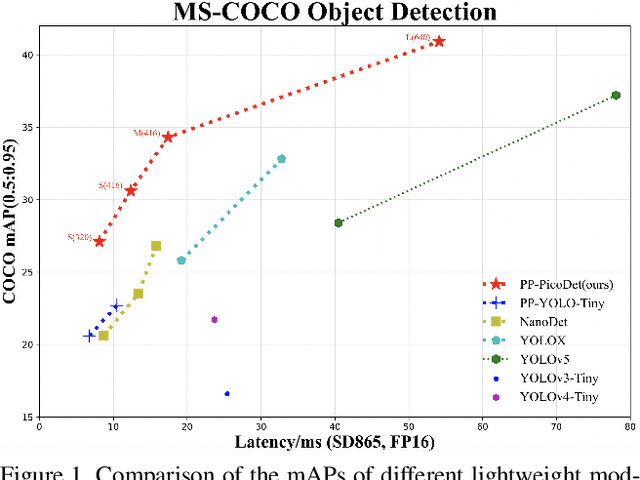
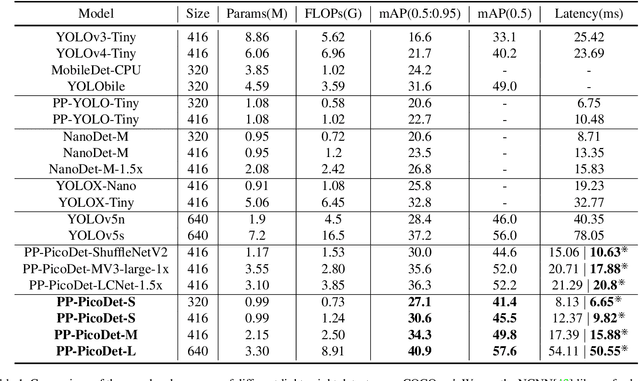
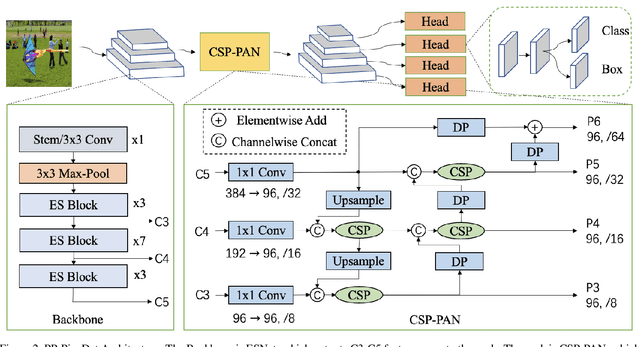
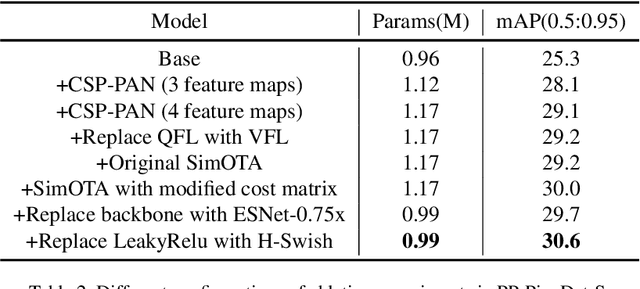
The better accuracy and efficiency trade-off has been a challenging problem in object detection. In this work, we are dedicated to studying key optimizations and neural network architecture choices for object detection to improve accuracy and efficiency. We investigate the applicability of the anchor-free strategy on lightweight object detection models. We enhance the backbone structure and design the lightweight structure of the neck, which improves the feature extraction ability of the network. We improve label assignment strategy and loss function to make training more stable and efficient. Through these optimizations, we create a new family of real-time object detectors, named PP-PicoDet, which achieves superior performance on object detection for mobile devices. Our models achieve better trade-offs between accuracy and latency compared to other popular models. PicoDet-S with only 0.99M parameters achieves 30.6% mAP, which is an absolute 4.8% improvement in mAP while reducing mobile CPU inference latency by 55% compared to YOLOX-Nano, and is an absolute 7.1% improvement in mAP compared to NanoDet. It reaches 123 FPS (150 FPS using Paddle Lite) on mobile ARM CPU when the input size is 320. PicoDet-L with only 3.3M parameters achieves 40.9% mAP, which is an absolute 3.7% improvement in mAP and 44% faster than YOLOv5s. As shown in Figure 1, our models far outperform the state-of-the-art results for lightweight object detection. Code and pre-trained models are available at https://github.com/PaddlePaddle/PaddleDetection.
PP-ShiTu: A Practical Lightweight Image Recognition System
Nov 01, 2021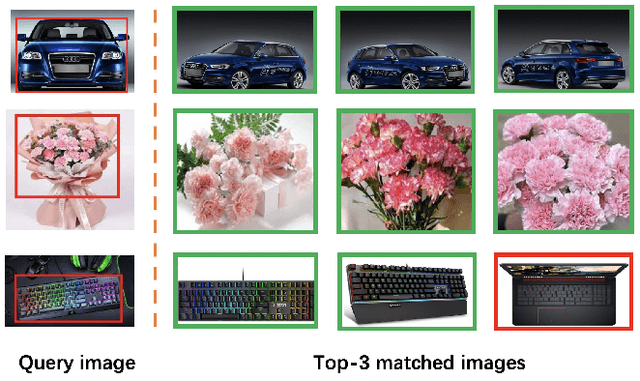
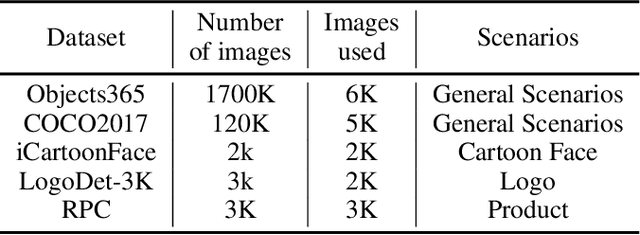
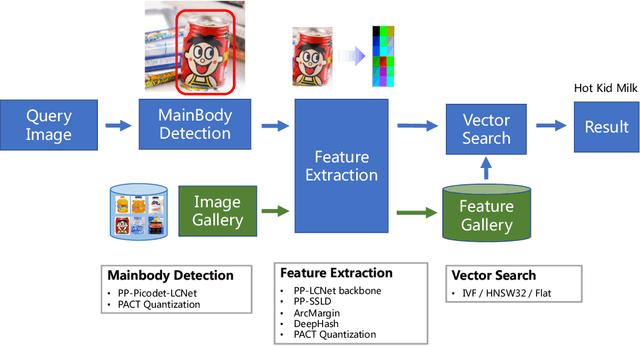
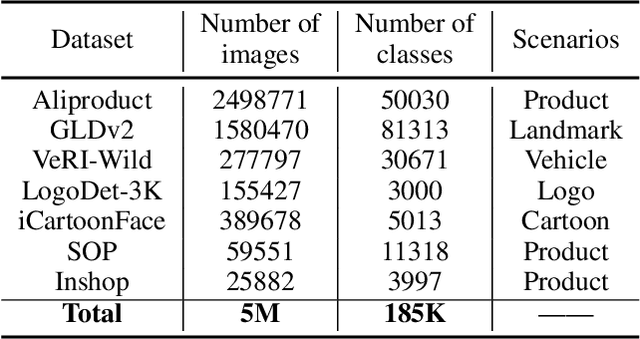
In recent years, image recognition applications have developed rapidly. A large number of studies and techniques have emerged in different fields, such as face recognition, pedestrian and vehicle re-identification, landmark retrieval, and product recognition. In this paper, we propose a practical lightweight image recognition system, named PP-ShiTu, consisting of the following 3 modules, mainbody detection, feature extraction and vector search. We introduce popular strategies including metric learning, deep hash, knowledge distillation and model quantization to improve accuracy and inference speed. With strategies above, PP-ShiTu works well in different scenarios with a set of models trained on a mixed dataset. Experiments on different datasets and benchmarks show that the system is widely effective in different domains of image recognition. All the above mentioned models are open-sourced and the code is available in the GitHub repository PaddleClas on PaddlePaddle.
PP-LCNet: A Lightweight CPU Convolutional Neural Network
Sep 17, 2021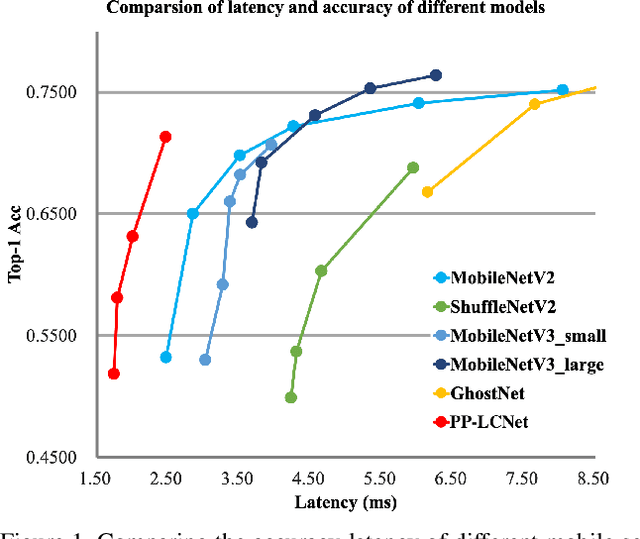
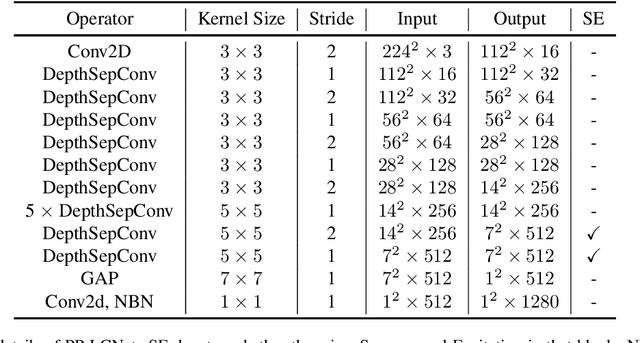
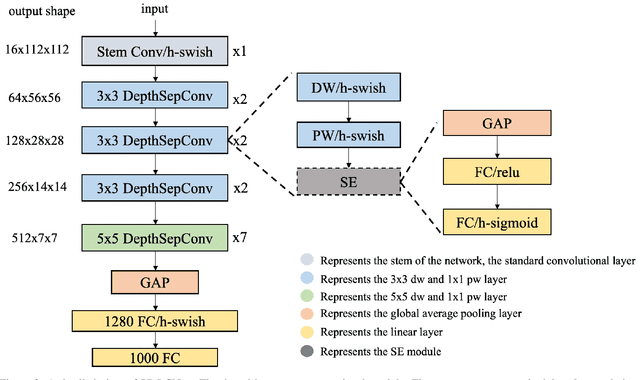
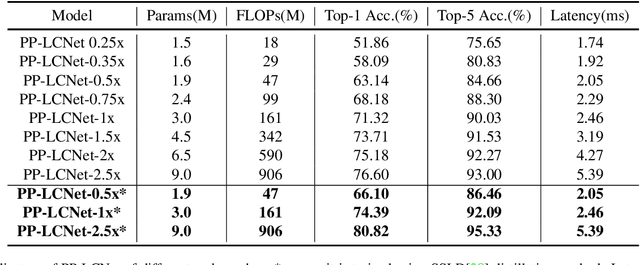
We propose a lightweight CPU network based on the MKLDNN acceleration strategy, named PP-LCNet, which improves the performance of lightweight models on multiple tasks. This paper lists technologies which can improve network accuracy while the latency is almost constant. With these improvements, the accuracy of PP-LCNet can greatly surpass the previous network structure with the same inference time for classification. As shown in Figure 1, it outperforms the most state-of-the-art models. And for downstream tasks of computer vision, it also performs very well, such as object detection, semantic segmentation, etc. All our experiments are implemented based on PaddlePaddle. Code and pretrained models are available at PaddleClas.
PP-OCRv2: Bag of Tricks for Ultra Lightweight OCR System
Sep 07, 2021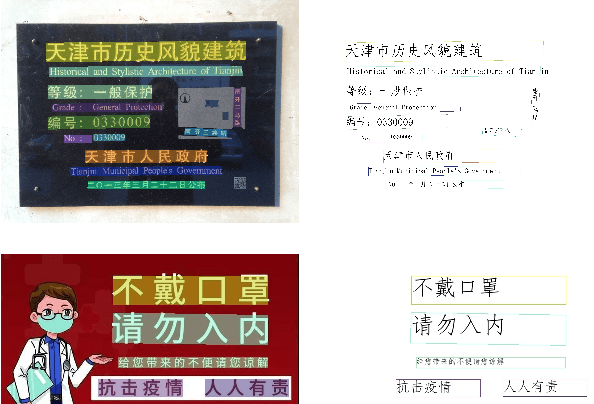

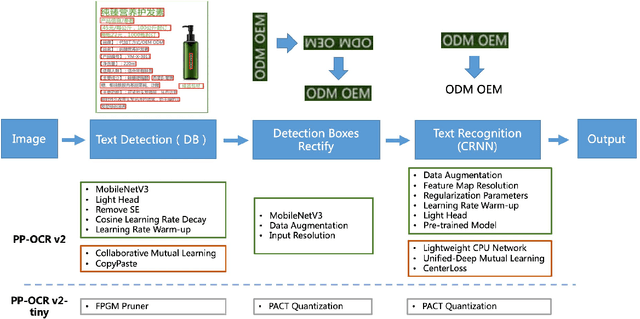
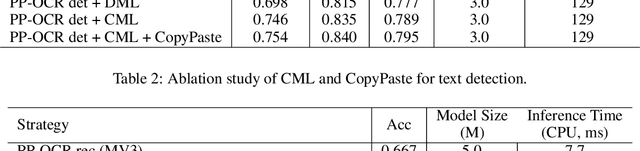
Optical Character Recognition (OCR) systems have been widely used in various of application scenarios. Designing an OCR system is still a challenging task. In previous work, we proposed a practical ultra lightweight OCR system (PP-OCR) to balance the accuracy against the efficiency. In order to improve the accuracy of PP-OCR and keep high efficiency, in this paper, we propose a more robust OCR system, i.e. PP-OCRv2. We introduce bag of tricks to train a better text detector and a better text recognizer, which include Collaborative Mutual Learning (CML), CopyPaste, Lightweight CPUNetwork (LCNet), Unified-Deep Mutual Learning (U-DML) and Enhanced CTCLoss. Experiments on real data show that the precision of PP-OCRv2 is 7% higher than PP-OCR under the same inference cost. It is also comparable to the server models of the PP-OCR which uses ResNet series as backbones. All of the above mentioned models are open-sourced and the code is available in the GitHub repository PaddleOCR which is powered by PaddlePaddle.
PAFNet: An Efficient Anchor-Free Object Detector Guidance
Apr 28, 2021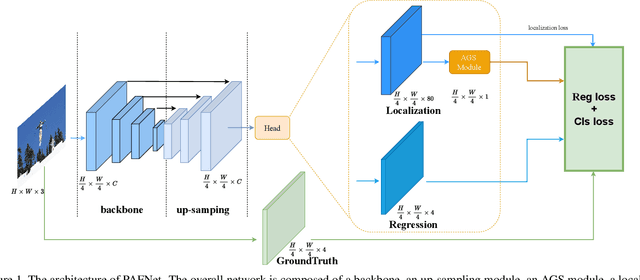
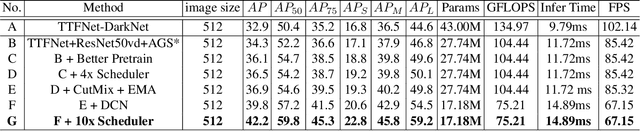
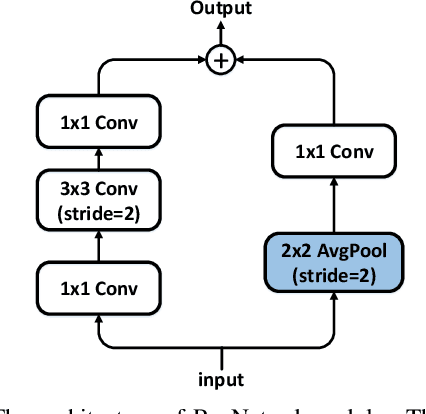

Object detection is a basic but challenging task in computer vision, which plays a key role in a variety of industrial applications. However, object detectors based on deep learning usually require greater storage requirements and longer inference time, which hinders its practicality seriously. Therefore, a trade-off between effectiveness and efficiency is necessary in practical scenarios. Considering that without constraint of pre-defined anchors, anchor-free detectors can achieve acceptable accuracy and inference speed simultaneously. In this paper, we start from an anchor-free detector called TTFNet, modify the structure of TTFNet and introduce multiple existing tricks to realize effective server and mobile solutions respectively. Since all experiments in this paper are conducted based on PaddlePaddle, we call the model as PAFNet(Paddle Anchor Free Network). For server side, PAFNet can achieve a better balance between effectiveness (42.2% mAP) and efficiency (67.15 FPS) on a single V100 GPU. For moblie side, PAFNet-lite can achieve a better accuracy of (23.9% mAP) and 26.00 ms on Kirin 990 ARM CPU, outperforming the existing state-of-the-art anchor-free detectors by significant margins. Source code is at https://github.com/PaddlePaddle/PaddleDetection.
PP-YOLOv2: A Practical Object Detector
Apr 21, 2021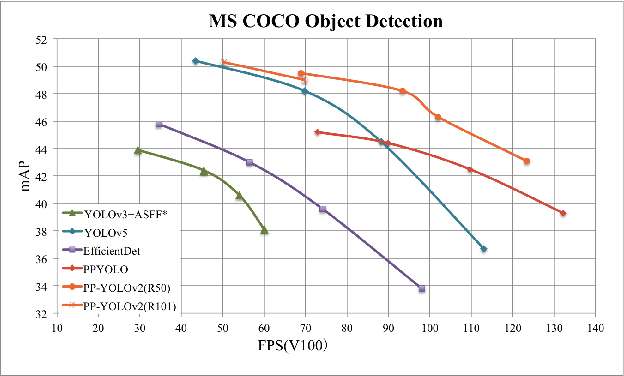

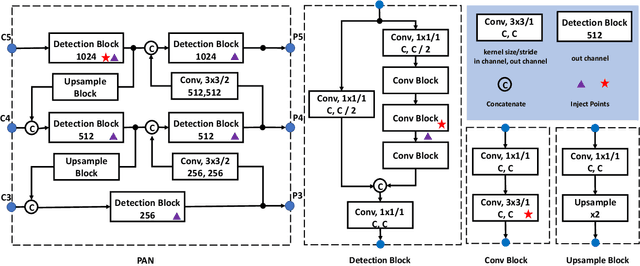
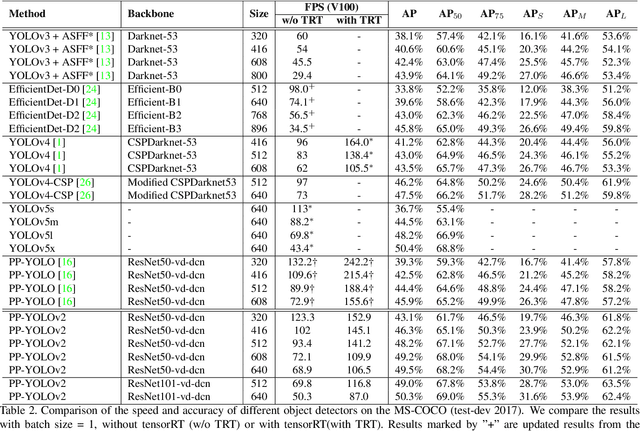
Being effective and efficient is essential to an object detector for practical use. To meet these two concerns, we comprehensively evaluate a collection of existing refinements to improve the performance of PP-YOLO while almost keep the infer time unchanged. This paper will analyze a collection of refinements and empirically evaluate their impact on the final model performance through incremental ablation study. Things we tried that didn't work will also be discussed. By combining multiple effective refinements, we boost PP-YOLO's performance from 45.9% mAP to 49.5% mAP on COCO2017 test-dev. Since a significant margin of performance has been made, we present PP-YOLOv2. In terms of speed, PP-YOLOv2 runs in 68.9FPS at 640x640 input size. Paddle inference engine with TensorRT, FP16-precision, and batch size = 1 further improves PP-YOLOv2's infer speed, which achieves 106.5 FPS. Such a performance surpasses existing object detectors with roughly the same amount of parameters (i.e., YOLOv4-CSP, YOLOv5l). Besides, PP-YOLOv2 with ResNet101 achieves 50.3% mAP on COCO2017 test-dev. Source code is at https://github.com/PaddlePaddle/PaddleDetection.
Beyond Self-Supervision: A Simple Yet Effective Network Distillation Alternative to Improve Backbones
Mar 10, 2021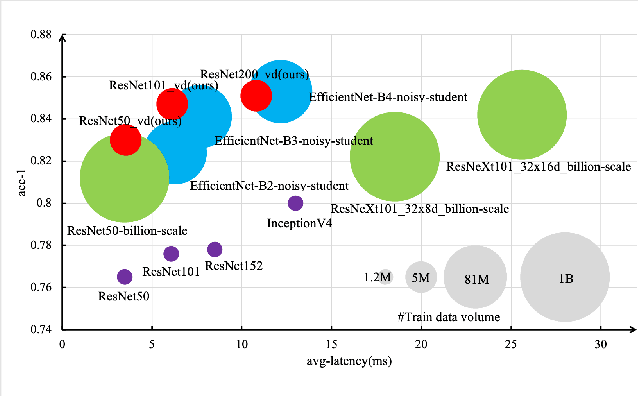
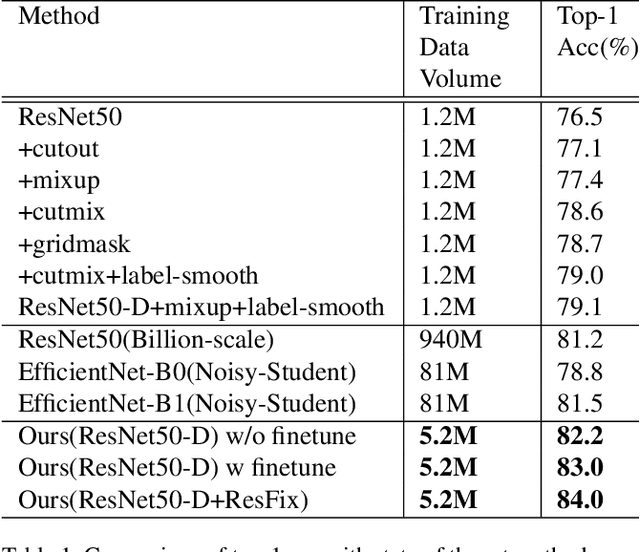
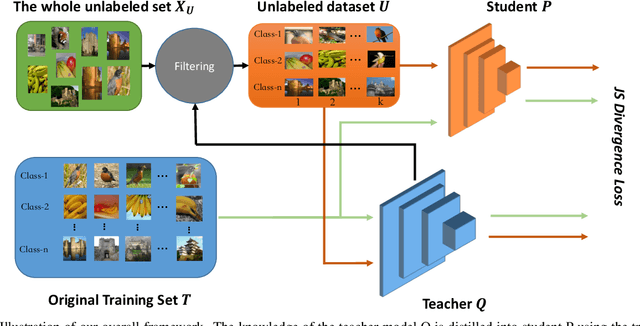
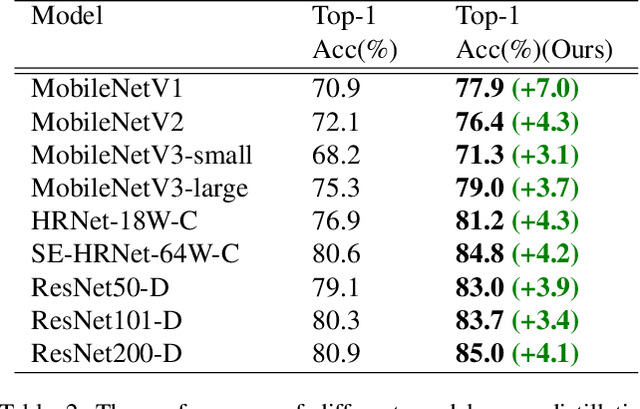
Recently, research efforts have been concentrated on revealing how pre-trained model makes a difference in neural network performance. Self-supervision and semi-supervised learning technologies have been extensively explored by the community and are proven to be of great potential in obtaining a powerful pre-trained model. However, these models require huge training costs (i.e., hundreds of millions of images or training iterations). In this paper, we propose to improve existing baseline networks via knowledge distillation from off-the-shelf pre-trained big powerful models. Different from existing knowledge distillation frameworks which require student model to be consistent with both soft-label generated by teacher model and hard-label annotated by humans, our solution performs distillation by only driving prediction of the student model consistent with that of the teacher model. Therefore, our distillation setting can get rid of manually labeled data and can be trained with extra unlabeled data to fully exploit capability of teacher model for better learning. We empirically find that such simple distillation settings perform extremely effective, for example, the top-1 accuracy on ImageNet-1k validation set of MobileNetV3-large and ResNet50-D can be significantly improved from 75.2% to 79% and 79.1% to 83%, respectively. We have also thoroughly analyzed what are dominant factors that affect the distillation performance and how they make a difference. Extensive downstream computer vision tasks, including transfer learning, object detection and semantic segmentation, can significantly benefit from the distilled pretrained models. All our experiments are implemented based on PaddlePaddle, codes and a series of improved pretrained models with ssld suffix are available in PaddleClas.