 Add to Chrome
 Add to Firefox
 Add to Edge
TopoFR: A Closer Look at Topology Alignment on Face Recognition
Oct 14, 2024
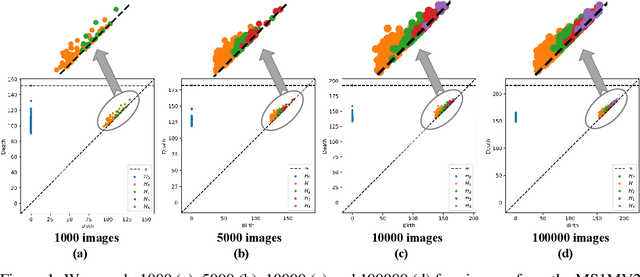

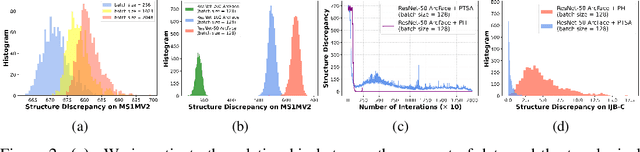
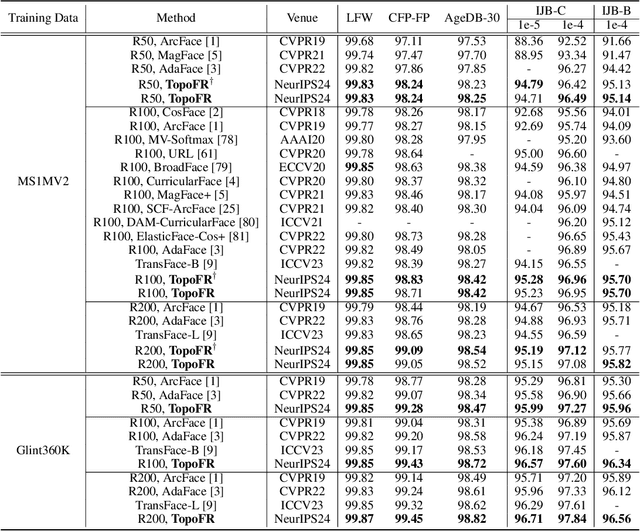
The field of face recognition (FR) has undergone significant advancements with the rise of deep learning. Recently, the success of unsupervised learning and graph neural networks has demonstrated the effectiveness of data structure information. Considering that the FR task can leverage large-scale training data, which intrinsically contains significant structure information, we aim to investigate how to encode such critical structure information into the latent space. As revealed from our observations, directly aligning the structure information between the input and latent spaces inevitably suffers from an overfitting problem, leading to a structure collapse phenomenon in the latent space. To address this problem, we propose TopoFR, a novel FR model that leverages a topological structure alignment strategy called PTSA and a hard sample mining strategy named SDE. Concretely, PTSA uses persistent homology to align the topological structures of the input and latent spaces, effectively preserving the structure information and improving the generalization performance of FR model. To mitigate the impact of hard samples on the latent space structure, SDE accurately identifies hard samples by automatically computing structure damage score (SDS) for each sample, and directs the model to prioritize optimizing these samples. Experimental results on popular face benchmarks demonstrate the superiority of our TopoFR over the state-of-the-art methods. Code and models are available at: https://github.com/modelscope/facechain/tree/main/face_module/TopoFR.

Autonomous Driving in Unstructured Environments: How Far Have We Come?
Oct 10, 2024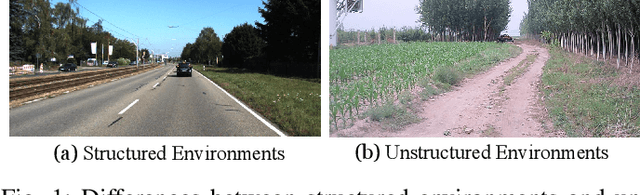
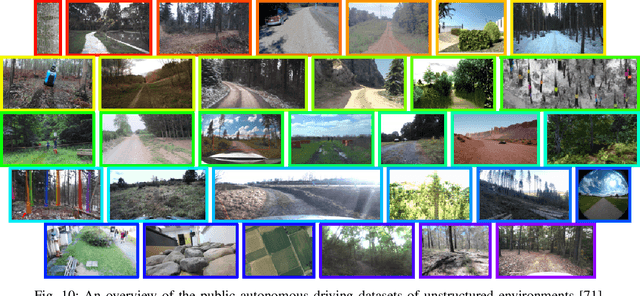
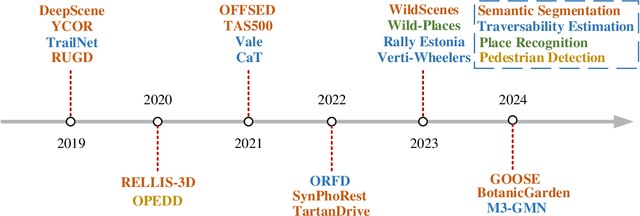
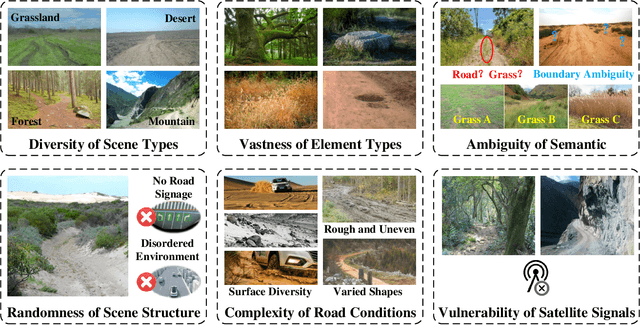
Research on autonomous driving in unstructured outdoor environments is less advanced than in structured urban settings due to challenges like environmental diversities and scene complexity. These environments-such as rural areas and rugged terrains-pose unique obstacles that are not common in structured urban areas. Despite these difficulties, autonomous driving in unstructured outdoor environments is crucial for applications in agriculture, mining, and military operations. Our survey reviews over 250 papers for autonomous driving in unstructured outdoor environments, covering offline mapping, pose estimation, environmental perception, path planning, end-to-end autonomous driving, datasets, and relevant challenges. We also discuss emerging trends and future research directions. This review aims to consolidate knowledge and encourage further research for autonomous driving in unstructured environments. To support ongoing work, we maintain an active repository with up-to-date literature and open-source projects at: https://github.com/chaytonmin/Survey-Autonomous-Driving-in-Unstructured-Environments.
FedL2G: Learning to Guide Local Training in Heterogeneous Federated Learning
Oct 09, 2024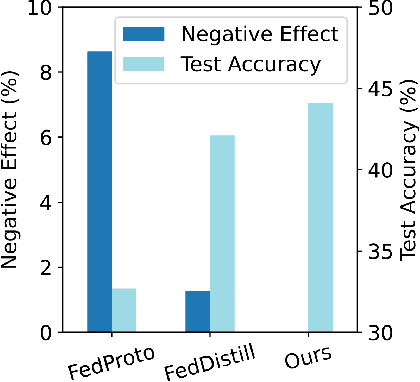
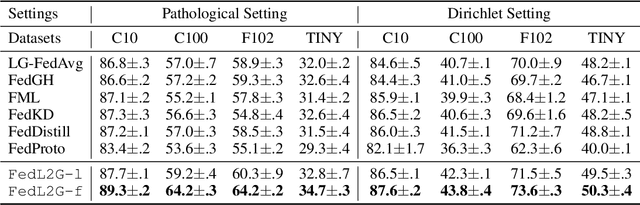
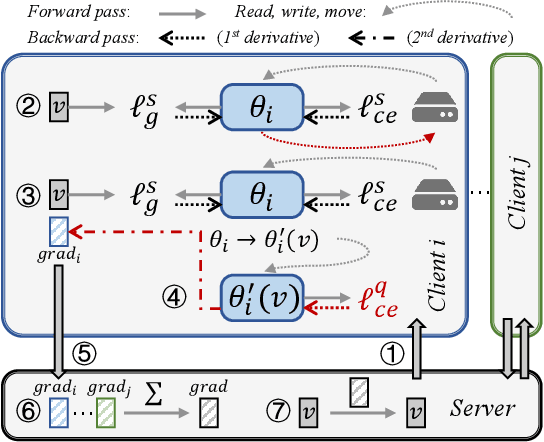
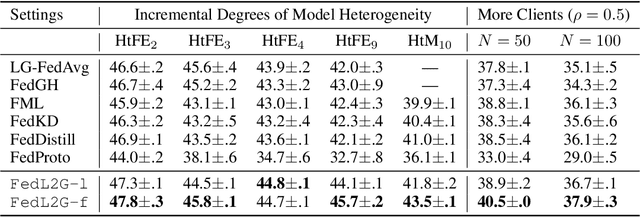
Data and model heterogeneity are two core issues in Heterogeneous Federated Learning (HtFL). In scenarios with heterogeneous model architectures, aggregating model parameters becomes infeasible, leading to the use of prototypes (i.e., class representative feature vectors) for aggregation and guidance. However, they still experience a mismatch between the extra guiding objective and the client's original local objective when aligned with global prototypes. Thus, we propose a Federated Learning-to-Guide (FedL2G) method that adaptively learns to guide local training in a federated manner and ensures the extra guidance is beneficial to clients' original tasks. With theoretical guarantees, FedL2G efficiently implements the learning-to-guide process using only first-order derivatives w.r.t. model parameters and achieves a non-convex convergence rate of O(1/T). We conduct extensive experiments on two data heterogeneity and six model heterogeneity settings using 14 heterogeneous model architectures (e.g., CNNs and ViTs) to demonstrate FedL2G's superior performance compared to six counterparts.
Improving Data Efficiency via Curating LLM-Driven Rating Systems
Oct 09, 2024
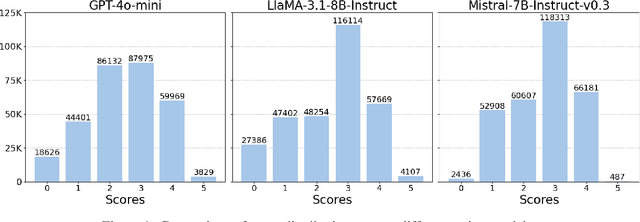


Instruction tuning is critical for adapting large language models (LLMs) to downstream tasks, and recent studies have demonstrated that small amounts of human-curated data can outperform larger datasets, challenging traditional data scaling laws. While LLM-based data quality rating systems offer a cost-effective alternative to human annotation, they often suffer from inaccuracies and biases, even in powerful models like GPT-4. In this work, we introduce DS2, a Diversity-aware Score curation method for Data Selection. By systematically modeling error patterns through a score transition matrix, DS2 corrects LLM-based scores and promotes diversity in the selected data samples. Our approach shows that a curated subset (just 3.3% of the original dataset) outperforms full-scale datasets (300k samples) across various machine-alignment benchmarks, and matches or surpasses human-aligned datasets such as LIMA with the same sample size (1k samples). These findings challenge conventional data scaling assumptions, highlighting that redundant, low-quality samples can degrade performance and reaffirming that "more can be less."
Unveiling the Backbone-Optimizer Coupling Bias in Visual Representation Learning
Oct 08, 2024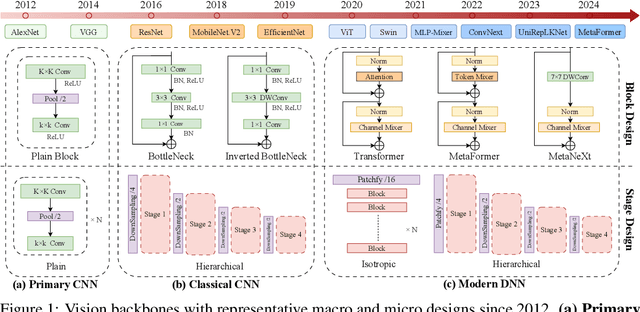
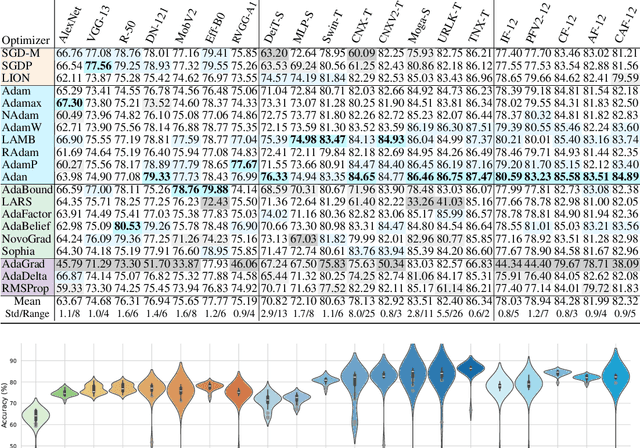
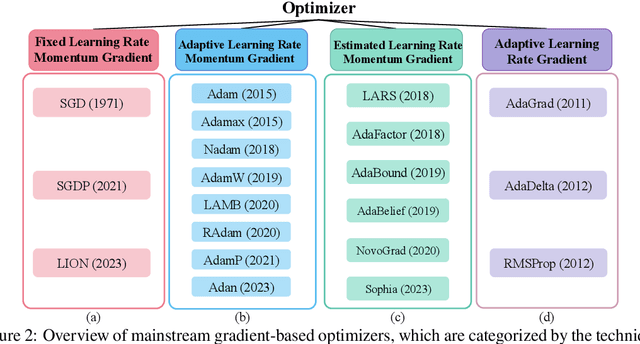
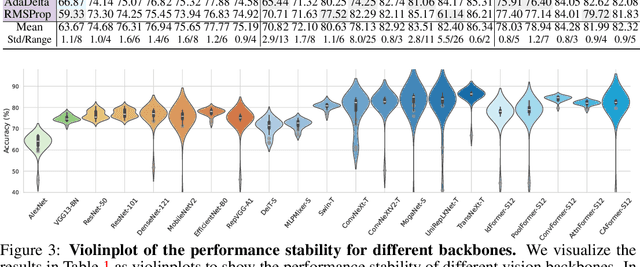
This paper delves into the interplay between vision backbones and optimizers, unvealing an inter-dependent phenomenon termed \textit{\textbf{b}ackbone-\textbf{o}ptimizer \textbf{c}oupling \textbf{b}ias} (BOCB). We observe that canonical CNNs, such as VGG and ResNet, exhibit a marked co-dependency with SGD families, while recent architectures like ViTs and ConvNeXt share a tight coupling with the adaptive learning rate ones. We further show that BOCB can be introduced by both optimizers and certain backbone designs and may significantly impact the pre-training and downstream fine-tuning of vision models. Through in-depth empirical analysis, we summarize takeaways on recommended optimizers and insights into robust vision backbone architectures. We hope this work can inspire the community to question long-held assumptions on backbones and optimizers, stimulate further explorations, and thereby contribute to more robust vision systems. The source code and models are publicly available at https://bocb-ai.github.io/.
PDF-WuKong: A Large Multimodal Model for Efficient Long PDF Reading with End-to-End Sparse Sampling
Oct 08, 2024Document understanding is a challenging task to process and comprehend large amounts of textual and visual information. Recent advances in Large Language Models (LLMs) have significantly improved the performance of this task. However, existing methods typically focus on either plain text or a limited number of document images, struggling to handle long PDF documents with interleaved text and images, especially in academic papers. In this paper, we introduce PDF-WuKong, a multimodal large language model (MLLM) which is designed to enhance multimodal question-answering (QA) for long PDF documents. PDF-WuKong incorporates a sparse sampler that operates on both text and image representations, significantly improving the efficiency and capability of the MLLM. The sparse sampler is integrated with the MLLM's image encoder and selects the paragraphs or diagrams most pertinent to user queries for processing by the language model. To effectively train and evaluate our model, we construct PaperPDF, a dataset consisting of a broad collection of academic papers sourced from arXiv, multiple strategies are proposed to generate automatically 1M QA pairs along with their corresponding evidence sources. Experimental results demonstrate the superiority and high efficiency of our approach over other models on the task of long multimodal PDF understanding, surpassing proprietary products by an average of 8.6% on F1. Our code and dataset will be released at https://github.com/yh-hust/PDF-Wukong.
ActiView: Evaluating Active Perception Ability for Multimodal Large Language Models
Oct 07, 2024Active perception, a crucial human capability, involves setting a goal based on the current understanding of the environment and performing actions to achieve that goal. Despite significant efforts in evaluating Multimodal Large Language Models (MLLMs), active perception has been largely overlooked. To address this gap, we propose a novel benchmark named ActiView to evaluate active perception in MLLMs. Since comprehensively assessing active perception is challenging, we focus on a specialized form of Visual Question Answering (VQA) that eases the evaluation yet challenging for existing MLLMs. Given an image, we restrict the perceptual field of a model, requiring it to actively zoom or shift its perceptual field based on reasoning to answer the question successfully. We conduct extensive evaluation over 27 models, including proprietary and open-source models, and observe that the ability to read and comprehend multiple images simultaneously plays a significant role in enabling active perception. Results reveal a significant gap in the active perception capability of MLLMs, indicating that this area deserves more attention. We hope that our benchmark could help develop methods for MLLMs to understand multimodal inputs in more natural and holistic ways.
OmniBuds: A Sensory Earable Platform for Advanced Bio-Sensing and On-Device Machine Learning
Oct 07, 2024Sensory earables have evolved from basic audio enhancement devices into sophisticated platforms for clinical-grade health monitoring and wellbeing management. This paper introduces OmniBuds, an advanced sensory earable platform integrating multiple biosensors and onboard computation powered by a machine learning accelerator, all within a real-time operating system (RTOS). The platform's dual-ear symmetric design, equipped with precisely positioned kinetic, acoustic, optical, and thermal sensors, enables highly accurate and real-time physiological assessments. Unlike conventional earables that rely on external data processing, OmniBuds leverage real-time onboard computation to significantly enhance system efficiency, reduce latency, and safeguard privacy by processing data locally. This capability includes executing complex machine learning models directly on the device. We provide a comprehensive analysis of OmniBuds' design, hardware and software architecture demonstrating its capacity for multi-functional applications, accurate and robust tracking of physiological parameters, and advanced human-computer interaction.
A Simple Image Segmentation Framework via In-Context Examples
Oct 07, 2024Recently, there have been explorations of generalist segmentation models that can effectively tackle a variety of image segmentation tasks within a unified in-context learning framework. However, these methods still struggle with task ambiguity in in-context segmentation, as not all in-context examples can accurately convey the task information. In order to address this issue, we present SINE, a simple image Segmentation framework utilizing in-context examples. Our approach leverages a Transformer encoder-decoder structure, where the encoder provides high-quality image representations, and the decoder is designed to yield multiple task-specific output masks to effectively eliminate task ambiguity. Specifically, we introduce an In-context Interaction module to complement in-context information and produce correlations between the target image and the in-context example and a Matching Transformer that uses fixed matching and a Hungarian algorithm to eliminate differences between different tasks. In addition, we have further perfected the current evaluation system for in-context image segmentation, aiming to facilitate a holistic appraisal of these models. Experiments on various segmentation tasks show the effectiveness of the proposed method.
Redefining Temporal Modeling in Video Diffusion: The Vectorized Timestep Approach
Oct 04, 2024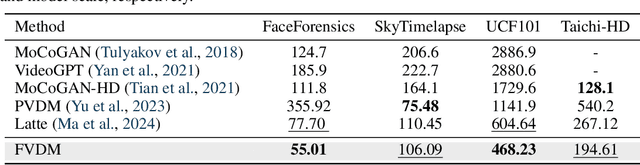


Diffusion models have revolutionized image generation, and their extension to video generation has shown promise. However, current video diffusion models~(VDMs) rely on a scalar timestep variable applied at the clip level, which limits their ability to model complex temporal dependencies needed for various tasks like image-to-video generation. To address this limitation, we propose a frame-aware video diffusion model~(FVDM), which introduces a novel vectorized timestep variable~(VTV). Unlike conventional VDMs, our approach allows each frame to follow an independent noise schedule, enhancing the model's capacity to capture fine-grained temporal dependencies. FVDM's flexibility is demonstrated across multiple tasks, including standard video generation, image-to-video generation, video interpolation, and long video synthesis. Through a diverse set of VTV configurations, we achieve superior quality in generated videos, overcoming challenges such as catastrophic forgetting during fine-tuning and limited generalizability in zero-shot methods.Our empirical evaluations show that FVDM outperforms state-of-the-art methods in video generation quality, while also excelling in extended tasks. By addressing fundamental shortcomings in existing VDMs, FVDM sets a new paradigm in video synthesis, offering a robust framework with significant implications for generative modeling and multimedia applications.