 Add to Chrome
 Add to Firefox
 Add to Edge
DFE-IANet: A Method for Polyp Image Classification Based on Dual-domain Feature Extraction and Interaction Attention
Aug 01, 2024
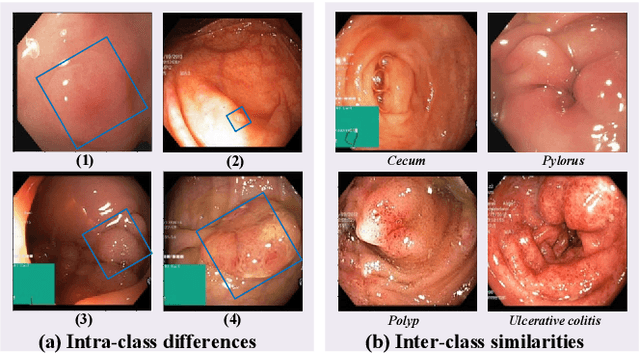
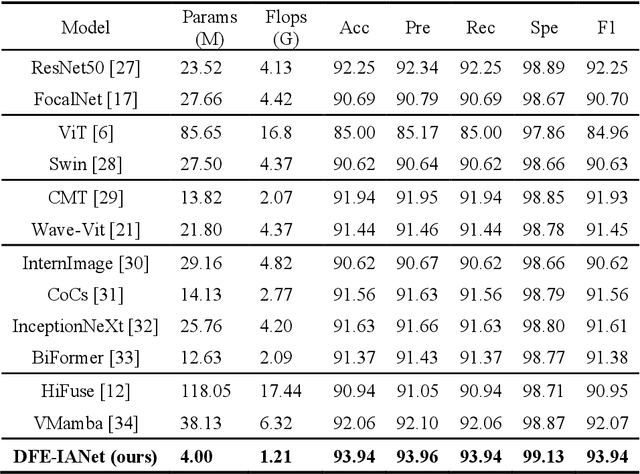
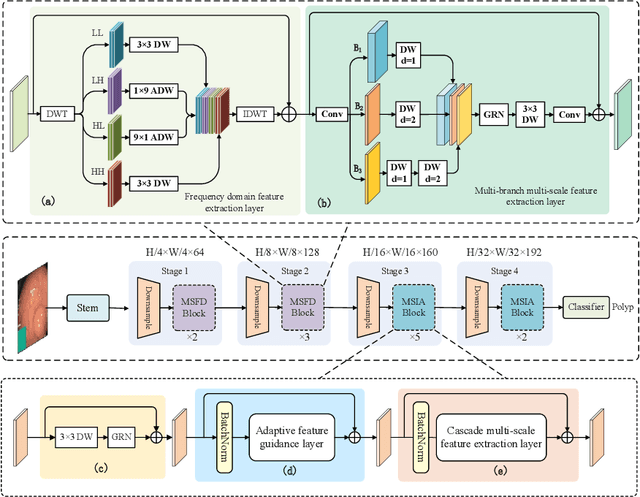
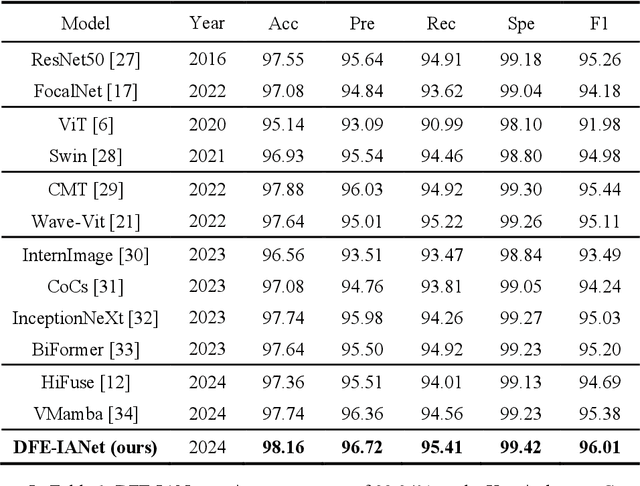
It is helpful in preventing colorectal cancer to detect and treat polyps in the gastrointestinal tract early. However, there have been few studies to date on designing polyp image classification networks that balance efficiency and accuracy. This challenge is mainly attributed to the fact that polyps are similar to other pathologies and have complex features influenced by texture, color, and morphology. In this paper, we propose a novel network DFE-IANet based on both spectral transformation and feature interaction. Firstly, to extract detailed features and multi-scale features, the features are transformed by the multi-scale frequency domain feature extraction (MSFD) block to extract texture details at the fine-grained level in the frequency domain. Secondly, the multi-scale interaction attention (MSIA) block is designed to enhance the network's capability of extracting critical features. This block introduces multi-scale features into self-attention, aiming to adaptively guide the network to concentrate on vital regions. Finally, with a compact parameter of only 4M, DFE-IANet outperforms the latest and classical networks in terms of efficiency. Furthermore, DFE-IANet achieves state-of-the-art (SOTA) results on the challenging Kvasir dataset, demonstrating a remarkable Top-1 accuracy of 93.94%. This outstanding accuracy surpasses ViT by 8.94%, ResNet50 by 1.69%, and VMamba by 1.88%. Our code is publicly available at https://github.com/PURSUETHESUN/DFE-IANet.
* This paper has been accepted by 2024 International Conference on Intelligent Computing (ICIC 2024). It can be accessed at http://poster-openaccess.com

Apple Intelligence Foundation Language Models
Jul 29, 2024
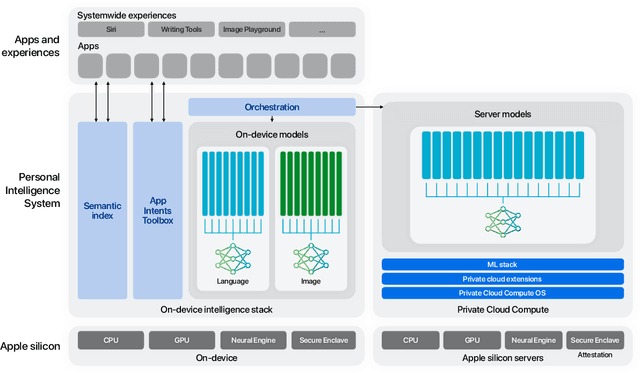


We present foundation language models developed to power Apple Intelligence features, including a ~3 billion parameter model designed to run efficiently on devices and a large server-based language model designed for Private Cloud Compute. These models are designed to perform a wide range of tasks efficiently, accurately, and responsibly. This report describes the model architecture, the data used to train the model, the training process, how the models are optimized for inference, and the evaluation results. We highlight our focus on Responsible AI and how the principles are applied throughout the model development.
RRAM-Based Bio-Inspired Circuits for Mobile Epileptic Correlation Extraction and Seizure Prediction
Jul 29, 2024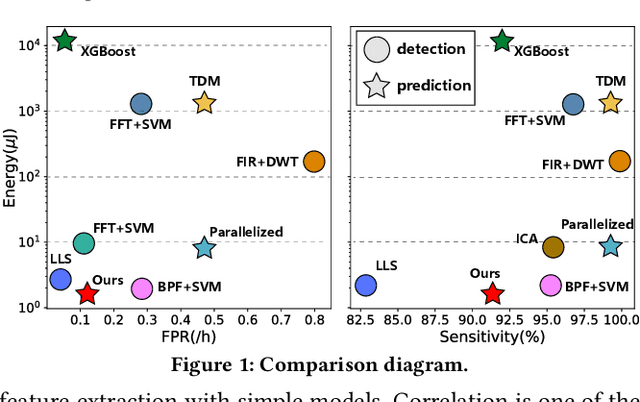
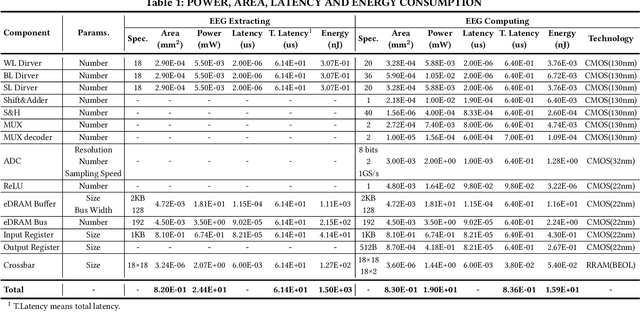
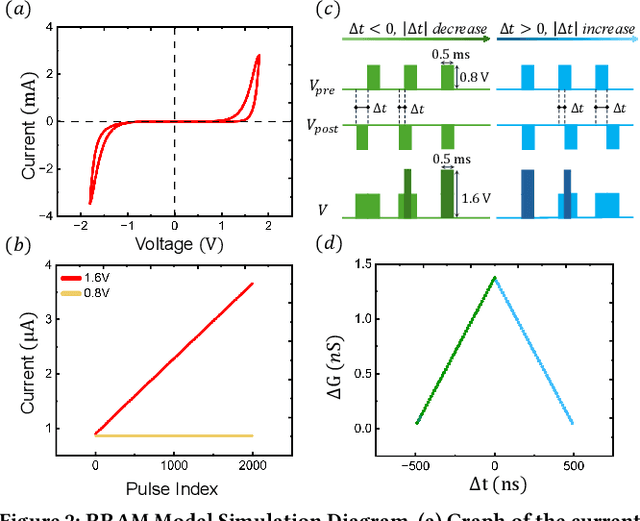
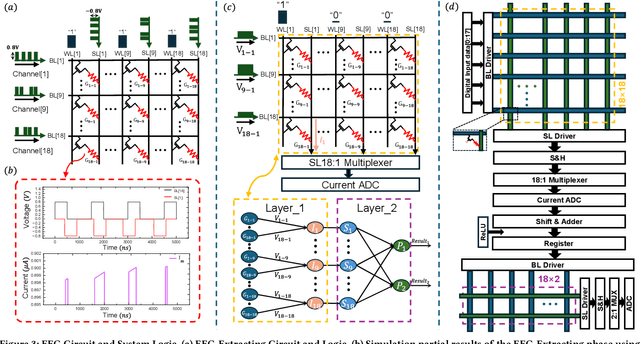
Non-invasive mobile electroencephalography (EEG) acquisition systems have been utilized for long-term monitoring of seizures, yet they suffer from limited battery life. Resistive random access memory (RRAM) is widely used in computing-in-memory(CIM) systems, which offers an ideal platform for reducing the computational energy consumption of seizure prediction algorithms, potentially solving the endurance issues of mobile EEG systems. To address this challenge, inspired by neuronal mechanisms, we propose a RRAM-based bio-inspired circuit system for correlation feature extraction and seizure prediction. This system achieves a high average sensitivity of 91.2% and a low false positive rate per hour (FPR/h) of 0.11 on the CHB-MIT seizure dataset. The chip under simulation demonstrates an area of approximately 0.83 mm2 and a latency of 62.2 {\mu}s. Power consumption is recorded at 24.4 mW during the feature extraction phase and 19.01 mW in the seizure prediction phase, with a cumulative energy consumption of 1.515 {\mu}J for a 3-second window data processing, predicting 29.2 minutes ahead. This method exhibits an 81.3% reduction in computational energy relative to the most efficient existing seizure prediction approaches, establishing a new benchmark for energy efficiency.
A Multimodal Knowledge-enhanced Whole-slide Pathology Foundation Model
Jul 22, 2024


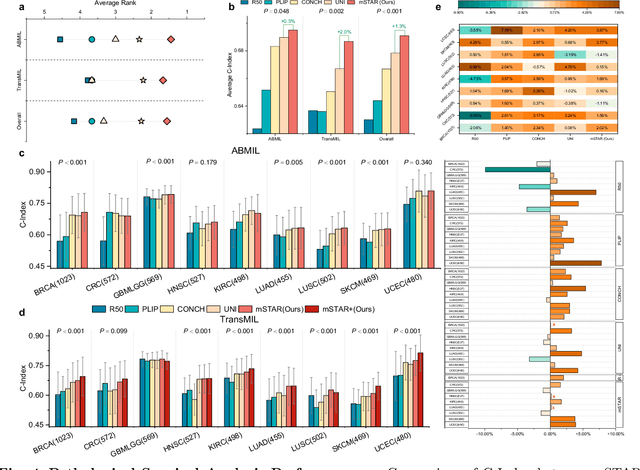
Remarkable strides in computational pathology have been made in the task-agnostic foundation model that advances the performance of a wide array of downstream clinical tasks. Despite the promising performance, there are still several challenges. First, prior works have resorted to either vision-only or vision-captions data, disregarding invaluable pathology reports and gene expression profiles which respectively offer distinct knowledge for versatile clinical applications. Second, the current progress in pathology FMs predominantly concentrates on the patch level, where the restricted context of patch-level pretraining fails to capture whole-slide patterns. Here we curated the largest multimodal dataset consisting of H\&E diagnostic whole slide images and their associated pathology reports and RNA-Seq data, resulting in 26,169 slide-level modality pairs from 10,275 patients across 32 cancer types. To leverage these data for CPath, we propose a novel whole-slide pretraining paradigm which injects multimodal knowledge at the whole-slide context into the pathology FM, called Multimodal Self-TAught PRetraining (mSTAR). The proposed paradigm revolutionizes the workflow of pretraining for CPath, which enables the pathology FM to acquire the whole-slide context. To our knowledge, this is the first attempt to incorporate multimodal knowledge at the slide level for enhancing pathology FMs, expanding the modelling context from unimodal to multimodal knowledge and from patch-level to slide-level. To systematically evaluate the capabilities of mSTAR, extensive experiments including slide-level unimodal and multimodal applications, are conducted across 7 diverse types of tasks on 43 subtasks, resulting in the largest spectrum of downstream tasks. The average performance in various slide-level applications consistently demonstrates significant performance enhancements for mSTAR compared to SOTA FMs.
Multi-sentence Video Grounding for Long Video Generation
Jul 18, 2024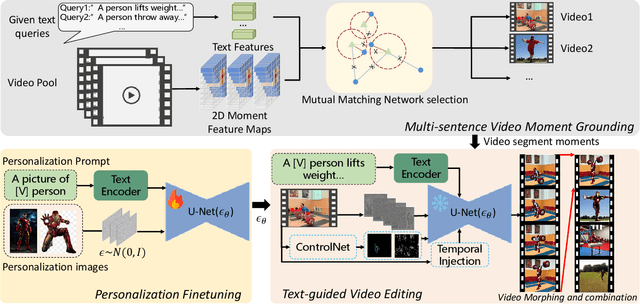
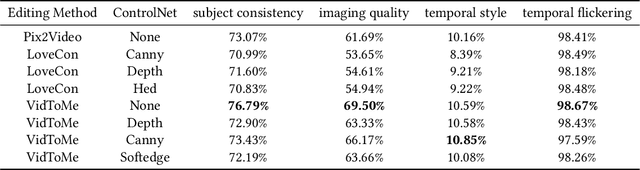
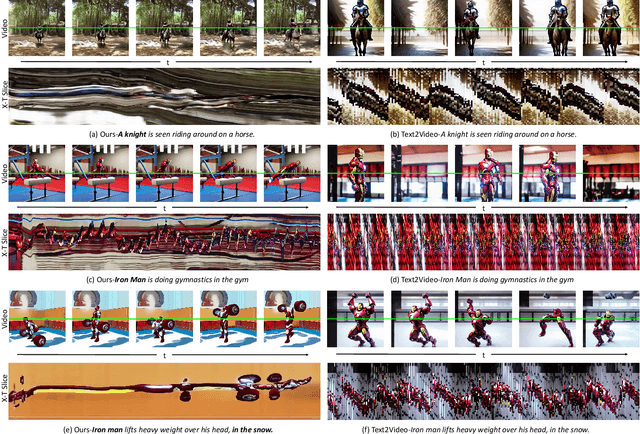
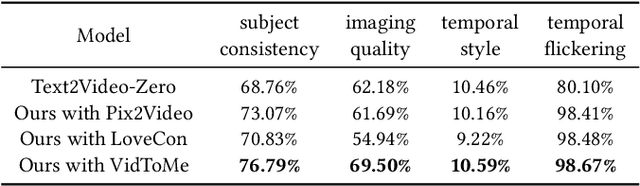
Video generation has witnessed great success recently, but their application in generating long videos still remains challenging due to the difficulty in maintaining the temporal consistency of generated videos and the high memory cost during generation. To tackle the problems, in this paper, we propose a brave and new idea of Multi-sentence Video Grounding for Long Video Generation, connecting the massive video moment retrieval to the video generation task for the first time, providing a new paradigm for long video generation. The method of our work can be summarized as three steps: (i) We design sequential scene text prompts as the queries for video grounding, utilizing the massive video moment retrieval to search for video moment segments that meet the text requirements in the video database. (ii) Based on the source frames of retrieved video moment segments, we adopt video editing methods to create new video content while preserving the temporal consistency of the retrieved video. Since the editing can be conducted segment by segment, and even frame by frame, it largely reduces the memory cost. (iii) We also attempt video morphing and personalized generation methods to improve the subject consistency of long video generation, providing ablation experimental results for the subtasks of long video generation. Our approach seamlessly extends the development in image/video editing, video morphing and personalized generation, and video grounding to the long video generation, offering effective solutions for generating long videos at low memory cost.
Spatial-spectral Cell-free Networks: A Large-scale Case Study
Jul 16, 2024


This paper studies the large-scale cell-free networks where dense distributed access points (APs) serve many users. As a promising next-generation network architecture, cell-free networks enable ultra-reliable connections and minimal fading/blockage, which are much favorable to the millimeter wave and Terahertz transmissions. However, conventional beam management with large phased arrays in a cell is very time-consuming in the higher-frequencies, and could be worsened when deploying a large number of coordinated APs in the cell-free systems. To tackle this challenge, the spatial-spectral cell-free networks with the leaky-wave antennas are established by coupling the propagation angles with frequencies. The beam training overhead in this direction can be significantly reduced through exploiting such spatial-spectral coupling effects. In the considered large-scale spatial-spectral cell-free networks, a novel subchannel allocation solution at sub-terahertz bands is proposed by leveraging the relationship between cross-entropy method and mixture model. Since initial access and AP clustering play a key role in achieving scalable large-scale cell-free networks, a hierarchical AP clustering solution is proposed to make the joint initial access and cluster formation, which is adaptive and has no need to initialize the number of AP clusters. After AP clustering, a subchannel allocation solution is devised to manage the interference between AP clusters. Numerical results are presented to confirm the efficiency of the proposed solutions and indicate that besides subchannel allocation, AP clustering can also have a big impact on the large-scale cell-free network performance at sub-terahertz bands.
The VoicePrivacy 2022 Challenge: Progress and Perspectives in Voice Anonymisation
Jul 16, 2024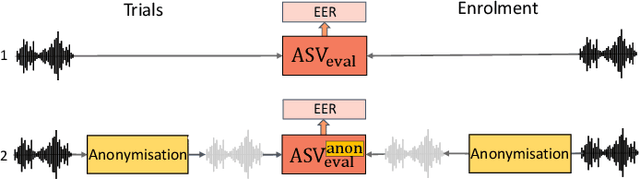
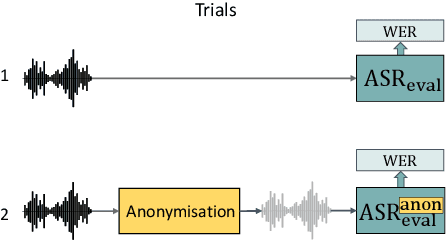


The VoicePrivacy Challenge promotes the development of voice anonymisation solutions for speech technology. In this paper we present a systematic overview and analysis of the second edition held in 2022. We describe the voice anonymisation task and datasets used for system development and evaluation, present the different attack models used for evaluation, and the associated objective and subjective metrics. We describe three anonymisation baselines, provide a summary description of the anonymisation systems developed by challenge participants, and report objective and subjective evaluation results for all. In addition, we describe post-evaluation analyses and a summary of related work reported in the open literature. Results show that solutions based on voice conversion better preserve utility, that an alternative which combines automatic speech recognition with synthesis achieves greater privacy, and that a privacy-utility trade-off remains inherent to current anonymisation solutions. Finally, we present our ideas and priorities for future VoicePrivacy Challenge editions.
A Benchmark for Multi-speaker Anonymization
Jul 08, 2024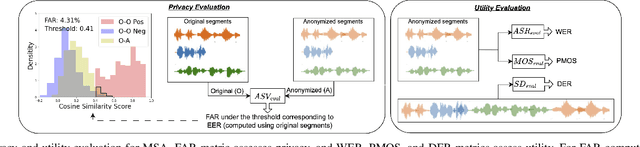
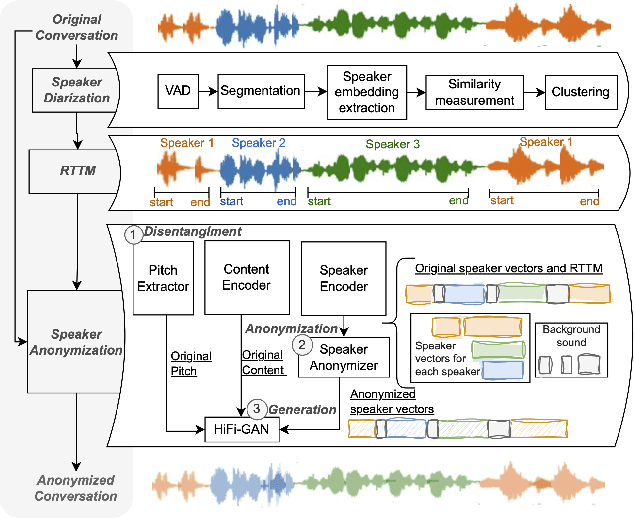
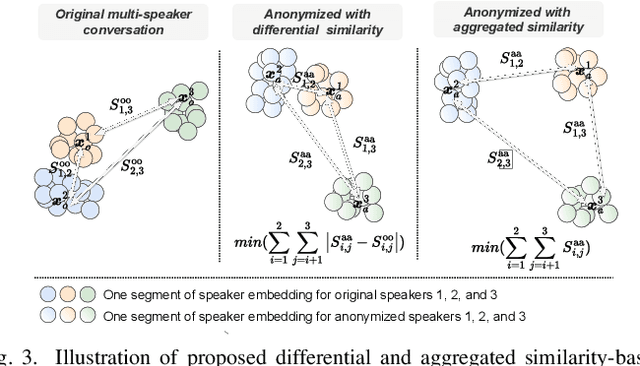
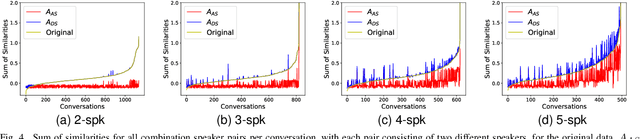
Privacy-preserving voice protection approaches primarily suppress privacy-related information derived from paralinguistic attributes while preserving the linguistic content. Existing solutions focus on single-speaker scenarios. However, they lack practicality for real-world applications, i.e., multi-speaker scenarios. In this paper, we present an initial attempt to provide a multi-speaker anonymization benchmark by defining the task and evaluation protocol, proposing benchmarking solutions, and discussing the privacy leakage of overlapping conversations. Specifically, ideal multi-speaker anonymization should preserve the number of speakers and the turn-taking structure of the conversation, ensuring accurate context conveyance while maintaining privacy. To achieve that, a cascaded system uses speaker diarization to aggregate the speech of each speaker and speaker anonymization to conceal speaker privacy and preserve speech content. Additionally, we propose two conversation-level speaker vector anonymization methods to improve the utility further. Both methods aim to make the original and corresponding pseudo-speaker identities of each speaker unlinkable while preserving or even improving the distinguishability among pseudo-speakers in a conversation. The first method minimizes the differential similarity across speaker pairs in the original and anonymized conversations to maintain original speaker relationships in the anonymized version. The other method minimizes the aggregated similarity across anonymized speakers to achieve better differentiation between speakers. Experiments conducted on both non-overlap simulated and real-world datasets demonstrate the effectiveness of the multi-speaker anonymization system with the proposed speaker anonymizers. Additionally, we analyzed overlapping speech regarding privacy leakage and provide potential solutions.
Non-Adversarial Learning: Vector-Quantized Common Latent Space for Multi-Sequence MRI
Jul 03, 2024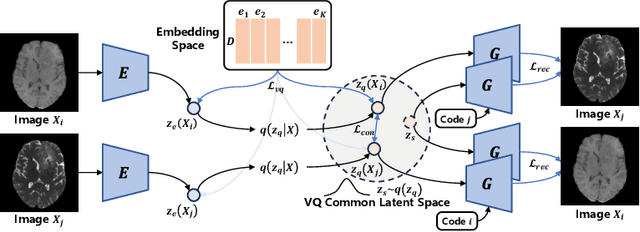
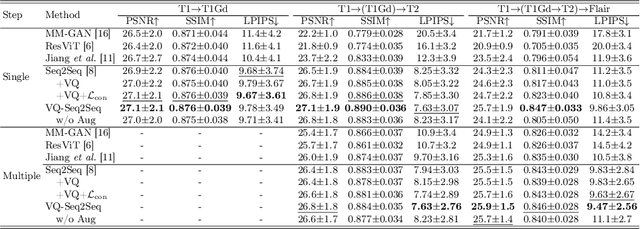
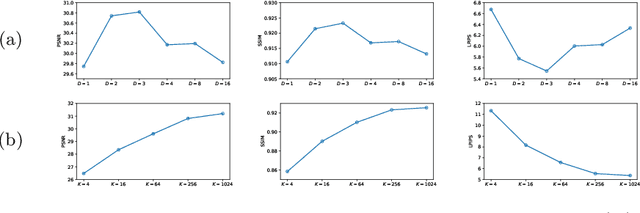
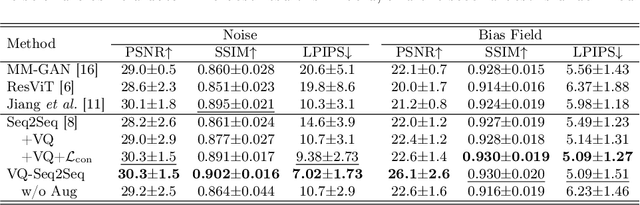
Adversarial learning helps generative models translate MRI from source to target sequence when lacking paired samples. However, implementing MRI synthesis with adversarial learning in clinical settings is challenging due to training instability and mode collapse. To address this issue, we leverage intermediate sequences to estimate the common latent space among multi-sequence MRI, enabling the reconstruction of distinct sequences from the common latent space. We propose a generative model that compresses discrete representations of each sequence to estimate the Gaussian distribution of vector-quantized common (VQC) latent space between multiple sequences. Moreover, we improve the latent space consistency with contrastive learning and increase model stability by domain augmentation. Experiments using BraTS2021 dataset show that our non-adversarial model outperforms other GAN-based methods, and VQC latent space aids our model to achieve (1) anti-interference ability, which can eliminate the effects of noise, bias fields, and artifacts, and (2) solid semantic representation ability, with the potential of one-shot segmentation. Our code is publicly available.
52B to 1T: Lessons Learned via Tele-FLM Series
Jul 03, 2024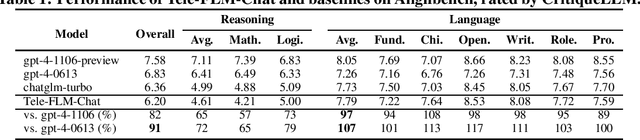



Large Language Models (LLMs) represent a significant stride toward Artificial General Intelligence. As scaling laws underscore the potential of increasing model sizes, the academic community has intensified its investigations into LLMs with capacities exceeding 50 billion parameters. This technical report builds on our prior work with Tele-FLM (also known as FLM-2), a publicly available 52-billion-parameter model. We delve into two primary areas: we first discuss our observation of Supervised Fine-tuning (SFT) on Tele-FLM-52B, which supports the "less is more" approach for SFT data construction; second, we demonstrate our experiments and analyses on the best practices for progressively growing a model from 52 billion to 102 billion, and subsequently to 1 trillion parameters. We will open-source a 1T model checkpoint, namely Tele-FLM-1T, to advance further training and research.