 Add to Chrome
 Add to Firefox
 Add to Edge
Learning to Discover Generalized Facial Expressions
Sep 30, 2024

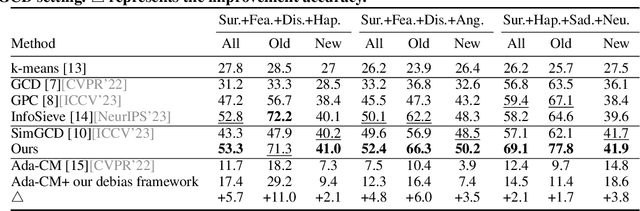

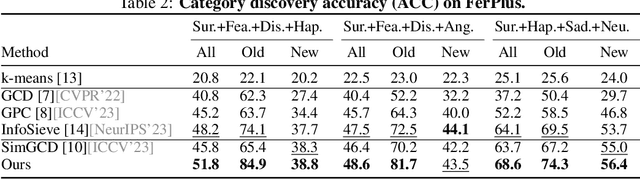
We introduce Facial Expression Category Discovery (FECD), a novel task in the domain of open-world facial expression recognition (O-FER). While Generalized Category Discovery (GCD) has been explored in natural image datasets, applying it to facial expressions presents unique challenges. Specifically, we identify two key biases to better understand these challenges: Theoretical Bias-arising from the introduction of new categories in unlabeled training data, and Practical Bias-stemming from the imbalanced and fine-grained nature of facial expression data. To address these challenges, we propose FER-GCD, an adversarial approach that integrates both implicit and explicit debiasing components. In the implicit debiasing process, we devise F-discrepancy, a novel metric used to estimate the upper bound of Theoretical Bias, helping the model minimize this upper bound through adversarial training. The explicit debiasing process further optimizes the feature generator and classifier to reduce Practical Bias. Extensive experiments on GCD-based FER datasets demonstrate that our FER-GCD framework significantly improves accuracy on both old and new categories, achieving an average improvement of 9.8% over the baseline and outperforming state-of-the-art methods.

Pioneering Reliable Assessment in Text-to-Image Knowledge Editing: Leveraging a Fine-Grained Dataset and an Innovative Criterion
Sep 26, 2024During pre-training, the Text-to-Image (T2I) diffusion models encode factual knowledge into their parameters. These parameterized facts enable realistic image generation, but they may become obsolete over time, thereby misrepresenting the current state of the world. Knowledge editing techniques aim to update model knowledge in a targeted way. However, facing the dual challenges posed by inadequate editing datasets and unreliable evaluation criterion, the development of T2I knowledge editing encounter difficulties in effectively generalizing injected knowledge. In this work, we design a T2I knowledge editing framework by comprehensively spanning on three phases: First, we curate a dataset \textbf{CAKE}, comprising paraphrase and multi-object test, to enable more fine-grained assessment on knowledge generalization. Second, we propose a novel criterion, \textbf{adaptive CLIP threshold}, to effectively filter out false successful images under the current criterion and achieve reliable editing evaluation. Finally, we introduce \textbf{MPE}, a simple but effective approach for T2I knowledge editing. Instead of tuning parameters, MPE precisely recognizes and edits the outdated part of the conditioning text-prompt to accommodate the up-to-date knowledge. A straightforward implementation of MPE (Based on in-context learning) exhibits better overall performance than previous model editors. We hope these efforts can further promote faithful evaluation of T2I knowledge editing methods.
Exploring the potential of collaborative UAV 3D mapping in Kenyan savanna for wildlife research
Sep 24, 2024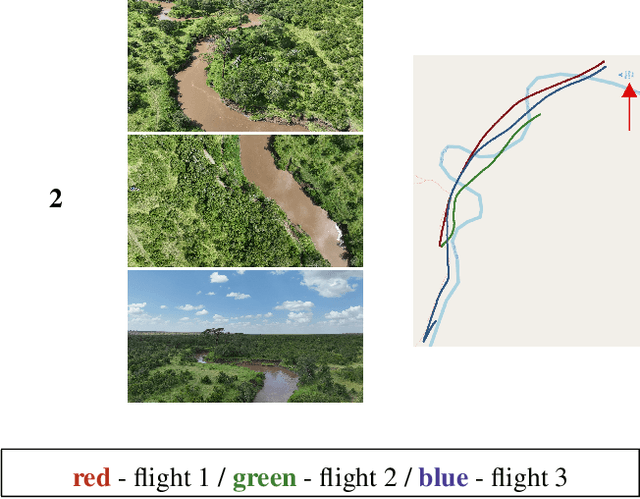
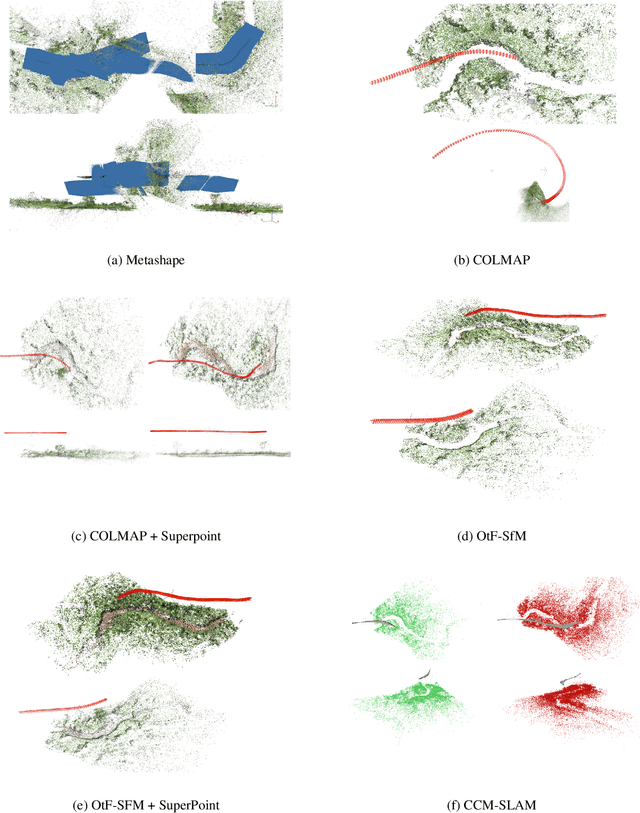
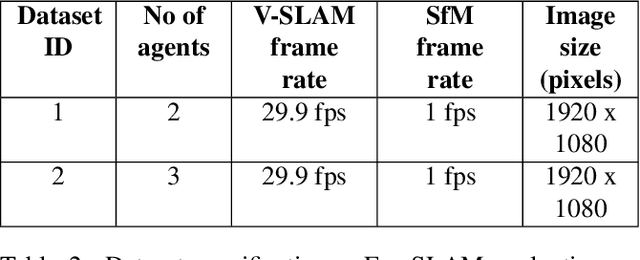
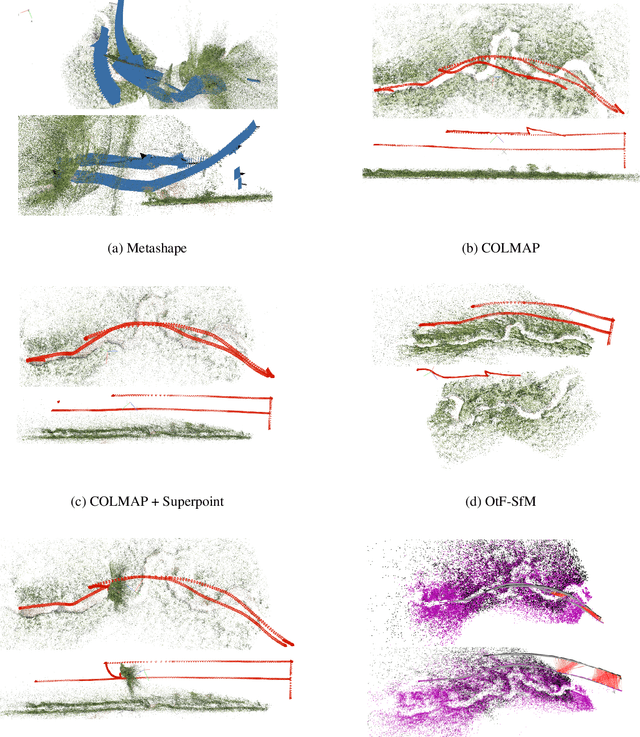
UAV-based biodiversity conservation applications have exhibited many data acquisition advantages for researchers. UAV platforms with embedded data processing hardware can support conservation challenges through 3D habitat mapping, surveillance and monitoring solutions. High-quality real-time scene reconstruction as well as real-time UAV localization can optimize the exploration vs exploitation balance of single or collaborative mission. In this work, we explore the potential of two collaborative frameworks - Visual Simultaneous Localization and Mapping (V-SLAM) and Structure-from-Motion (SfM) for 3D mapping purposes and compare results with standard offline approaches.
Causal Language Modeling Can Elicit Search and Reasoning Capabilities on Logic Puzzles
Sep 16, 2024
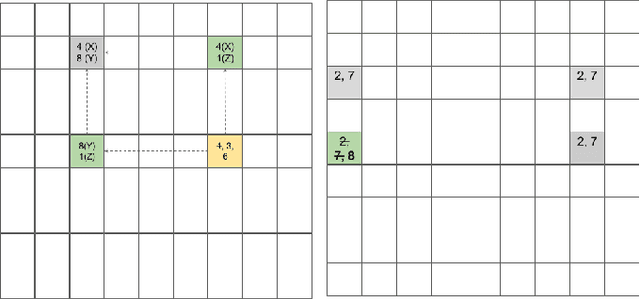
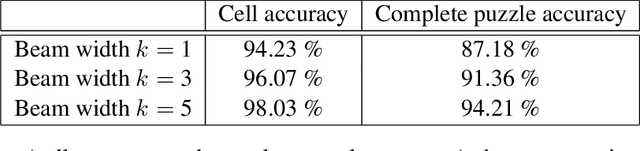
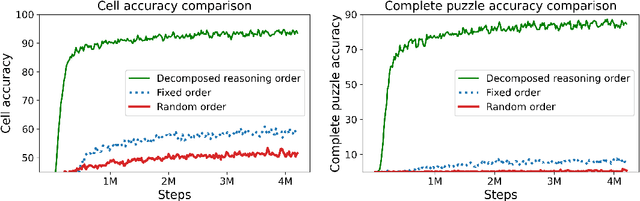
Causal language modeling using the Transformer architecture has yielded remarkable capabilities in Large Language Models (LLMs) over the last few years. However, the extent to which fundamental search and reasoning capabilities emerged within LLMs remains a topic of ongoing debate. In this work, we study if causal language modeling can learn a complex task such as solving Sudoku puzzles. To solve a Sudoku, the model is first required to search over all empty cells of the puzzle to decide on a cell to fill and then apply an appropriate strategy to fill the decided cell. Sometimes, the application of a strategy only results in thinning down the possible values in a cell rather than concluding the exact value of the cell. In such cases, multiple strategies are applied one after the other to fill a single cell. We observe that Transformer models trained on this synthetic task can indeed learn to solve Sudokus (our model solves $94.21\%$ of the puzzles fully correctly) when trained on a logical sequence of steps taken by a solver. We find that training Transformers with the logical sequence of steps is necessary and without such training, they fail to learn Sudoku. We also extend our analysis to Zebra puzzles (known as Einstein puzzles) and show that the model solves $92.04 \%$ of the puzzles fully correctly. In addition, we study the internal representations of the trained Transformer and find that through linear probing, we can decode information about the set of possible values in any given cell from them, pointing to the presence of a strong reasoning engine implicit in the Transformer weights.
Famba-V: Fast Vision Mamba with Cross-Layer Token Fusion
Sep 15, 2024


Mamba and Vision Mamba (Vim) models have shown their potential as an alternative to methods based on Transformer architecture. This work introduces Fast Mamba for Vision (Famba-V), a cross-layer token fusion technique to enhance the training efficiency of Vim models. The key idea of Famba-V is to identify and fuse similar tokens across different Vim layers based on a suit of cross-layer strategies instead of simply applying token fusion uniformly across all the layers that existing works propose. We evaluate the performance of Famba-V on CIFAR-100. Our results show that Famba-V is able to enhance the training efficiency of Vim models by reducing both training time and peak memory usage during training. Moreover, the proposed cross-layer strategies allow Famba-V to deliver superior accuracy-efficiency trade-offs. These results all together demonstrate Famba-V as a promising efficiency enhancement technique for Vim models.
Text-To-Speech Synthesis In The Wild
Sep 13, 2024Text-to-speech (TTS) systems are traditionally trained using modest databases of studio-quality, prompted or read speech collected in benign acoustic environments such as anechoic rooms. The recent literature nonetheless shows efforts to train TTS systems using data collected in the wild. While this approach allows for the use of massive quantities of natural speech, until now, there are no common datasets. We introduce the TTS In the Wild (TITW) dataset, the result of a fully automated pipeline, in this case, applied to the VoxCeleb1 dataset commonly used for speaker recognition. We further propose two training sets. TITW-Hard is derived from the transcription, segmentation, and selection of VoxCeleb1 source data. TITW-Easy is derived from the additional application of enhancement and additional data selection based on DNSMOS. We show that a number of recent TTS models can be trained successfully using TITW-Easy, but that it remains extremely challenging to produce similar results using TITW-Hard. Both the dataset and protocols are publicly available and support the benchmarking of TTS systems trained using TITW data.
Retrofitting Temporal Graph Neural Networks with Transformer
Sep 10, 2024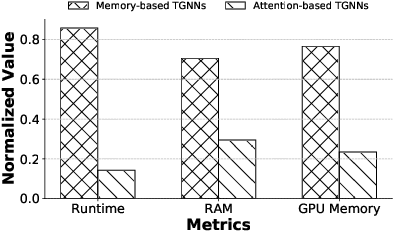
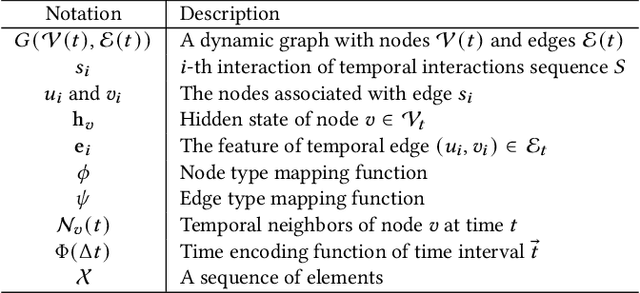

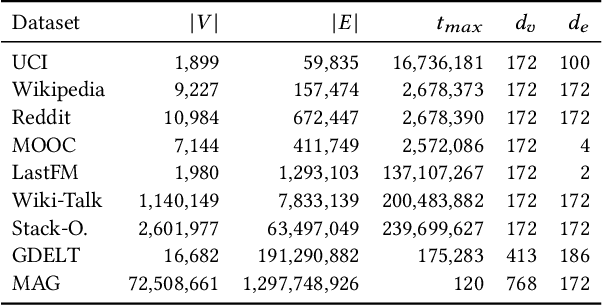
Temporal graph neural networks (TGNNs) outperform regular GNNs by incorporating time information into graph-based operations. However, TGNNs adopt specialized models (e.g., TGN, TGAT, and APAN ) and require tailored training frameworks (e.g., TGL and ETC). In this paper, we propose TF-TGN, which uses Transformer decoder as the backbone model for TGNN to enjoy Transformer's codebase for efficient training. In particular, Transformer achieves tremendous success for language modeling, and thus the community developed high-performance kernels (e.g., flash-attention and memory-efficient attention) and efficient distributed training schemes (e.g., PyTorch FSDP, DeepSpeed, and Megatron-LM). We observe that TGNN resembles language modeling, i.e., the message aggregation operation between chronologically occurring nodes and their temporal neighbors in TGNNs can be structured as sequence modeling. Beside this similarity, we also incorporate a series of algorithm designs including suffix infilling, temporal graph attention with self-loop, and causal masking self-attention to make TF-TGN work. During training, existing systems are slow in transforming the graph topology and conducting graph sampling. As such, we propose methods to parallelize the CSR format conversion and graph sampling. We also adapt Transformer codebase to train TF-TGN efficiently with multiple GPUs. We experiment with 9 graphs and compare with 2 state-of-the-art TGNN training frameworks. The results show that TF-TGN can accelerate training by over 2.20 while providing comparable or even superior accuracy to existing SOTA TGNNs. TF-TGN is available at https://github.com/qianghuangwhu/TF-TGN.
Spoofing-Aware Speaker Verification Robust Against Domain and Channel Mismatches
Sep 10, 2024In real-world applications, it is challenging to build a speaker verification system that is simultaneously robust against common threats, including spoofing attacks, channel mismatch, and domain mismatch. Traditional automatic speaker verification (ASV) systems often tackle these issues separately, leading to suboptimal performance when faced with simultaneous challenges. In this paper, we propose an integrated framework that incorporates pair-wise learning and spoofing attack simulation into the meta-learning paradigm to enhance robustness against these multifaceted threats. This novel approach employs an asymmetric dual-path model and a multi-task learning strategy to handle ASV, anti-spoofing, and spoofing-aware ASV tasks concurrently. A new testing dataset, CNComplex, is introduced to evaluate system performance under these combined threats. Experimental results demonstrate that our integrated model significantly improves performance over traditional ASV systems across various scenarios, showcasing its potential for real-world deployment. Additionally, the proposed framework's ability to generalize across different conditions highlights its robustness and reliability, making it a promising solution for practical ASV applications.
Ordinal Learning: Longitudinal Attention Alignment Model for Predicting Time to Future Breast Cancer Events from Mammograms
Sep 10, 2024Precision breast cancer (BC) risk assessment is crucial for developing individualized screening and prevention. Despite the promising potential of recent mammogram (MG) based deep learning models in predicting BC risk, they mostly overlook the 'time-to-future-event' ordering among patients and exhibit limited explorations into how they track history changes in breast tissue, thereby limiting their clinical application. In this work, we propose a novel method, named OA-BreaCR, to precisely model the ordinal relationship of the time to and between BC events while incorporating longitudinal breast tissue changes in a more explainable manner. We validate our method on public EMBED and inhouse datasets, comparing with existing BC risk prediction and time prediction methods. Our ordinal learning method OA-BreaCR outperforms existing methods in both BC risk and time-to-future-event prediction tasks. Additionally, ordinal heatmap visualizations show the model's attention over time. Our findings underscore the importance of interpretable and precise risk assessment for enhancing BC screening and prevention efforts. The code will be accessible to the public.
NESTFUL: A Benchmark for Evaluating LLMs on Nested Sequences of API Calls
Sep 04, 2024Autonomous agent applications powered by large language models (LLMs) have recently risen to prominence as effective tools for addressing complex real-world tasks. At their core, agentic workflows rely on LLMs to plan and execute the use of tools and external Application Programming Interfaces (APIs) in sequence to arrive at the answer to a user's request. Various benchmarks and leaderboards have emerged to evaluate an LLM's capabilities for tool and API use; however, most of these evaluations only track single or multiple isolated API calling capabilities. In this paper, we present NESTFUL, a benchmark to evaluate LLMs on nested sequences of API calls, i.e., sequences where the output of one API call is passed as input to a subsequent call. NESTFUL has a total of 300 human annotated samples divided into two types - executable and non-executable. The executable samples are curated manually by crawling Rapid-APIs whereas the non-executable samples are hand picked by human annotators from data synthetically generated using an LLM. We evaluate state-of-the-art LLMs with function calling abilities on NESTFUL. Our results show that most models do not perform well on nested APIs in NESTFUL as compared to their performance on the simpler problem settings available in existing benchmarks.