 Add to Chrome
 Add to Firefox
 Add to Edge
SeaLLMs 3: Open Foundation and Chat Multilingual Large Language Models for Southeast Asian Languages
Jul 29, 2024


Large Language Models (LLMs) have shown remarkable abilities across various tasks, yet their development has predominantly centered on high-resource languages like English and Chinese, leaving low-resource languages underserved. To address this disparity, we present SeaLLMs 3, the latest iteration of the SeaLLMs model family, tailored for Southeast Asian languages. This region, characterized by its rich linguistic diversity, has lacked adequate language technology support. SeaLLMs 3 aims to bridge this gap by covering a comprehensive range of languages spoken in this region, including English, Chinese, Indonesian, Vietnamese, Thai, Tagalog, Malay, Burmese, Khmer, Lao, Tamil, and Javanese. Leveraging efficient language enhancement techniques and a specially constructed instruction tuning dataset, SeaLLMs 3 significantly reduces training costs while maintaining high performance and versatility. Our model excels in tasks such as world knowledge, mathematical reasoning, translation, and instruction following, achieving state-of-the-art performance among similarly sized models. Additionally, we prioritized safety and reliability by addressing both general and culture-specific considerations and incorporated mechanisms to reduce hallucinations. This work underscores the importance of inclusive AI, showing that advanced LLM capabilities can benefit underserved linguistic and cultural communities.

Progressive Domain Adaptation for Thermal Infrared Object Tracking
Jul 28, 2024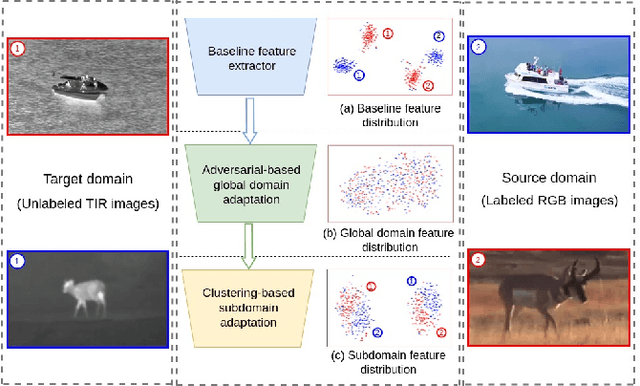
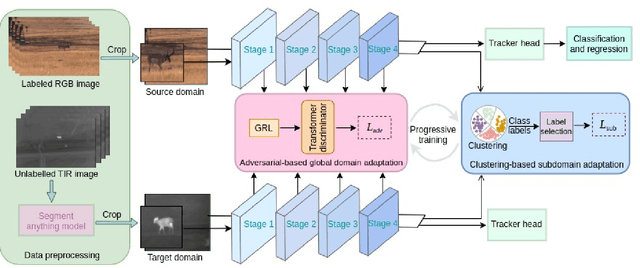
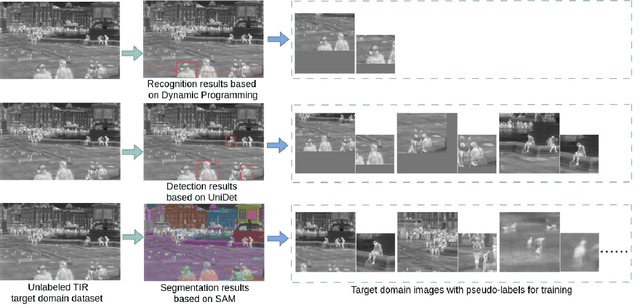
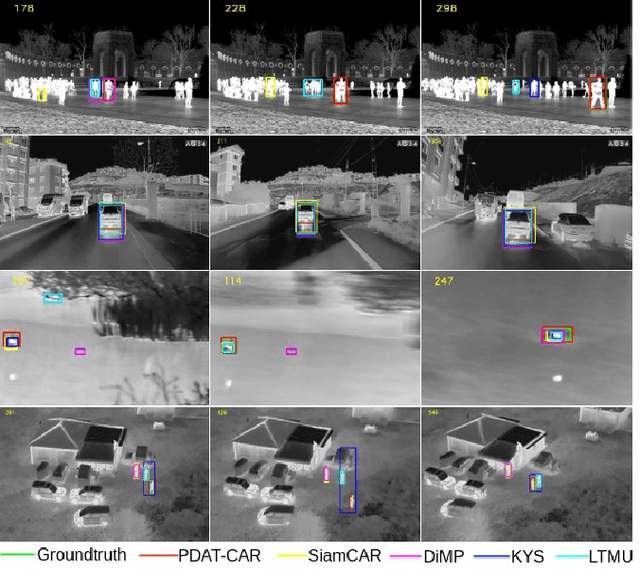
Due to the lack of large-scale labeled Thermal InfraRed (TIR) training datasets, most existing TIR trackers are trained directly on RGB datasets. However, tracking methods trained on RGB datasets suffer a significant drop-off in TIR data due to the domain shift issue. To this end, in this work, we propose a Progressive Domain Adaptation framework for TIR Tracking (PDAT), which transfers useful knowledge learned from RGB tracking to TIR tracking. The framework makes full use of large-scale labeled RGB datasets without requiring time-consuming and labor-intensive labeling of large-scale TIR data. Specifically, we first propose an adversarial-based global domain adaptation module to reduce domain gap on the feature level coarsely. Second, we design a clustering-based subdomain adaptation method to further align the feature distributions of the RGB and TIR datasets finely. These two domain adaptation modules gradually eliminate the discrepancy between the two domains, and thus learn domain-invariant fine-grained features through progressive training. Additionally, we collect a largescale TIR dataset with over 1.48 million unlabeled TIR images for training the proposed domain adaptation framework. Experimental results on five TIR tracking benchmarks show that the proposed method gains a nearly 6% success rate, demonstrating its effectiveness.
Raindrop Clarity: A Dual-Focused Dataset for Day and Night Raindrop Removal
Jul 24, 2024


Existing raindrop removal datasets have two shortcomings. First, they consist of images captured by cameras with a focus on the background, leading to the presence of blurry raindrops. To our knowledge, none of these datasets include images where the focus is specifically on raindrops, which results in a blurry background. Second, these datasets predominantly consist of daytime images, thereby lacking nighttime raindrop scenarios. Consequently, algorithms trained on these datasets may struggle to perform effectively in raindrop-focused or nighttime scenarios. The absence of datasets specifically designed for raindrop-focused and nighttime raindrops constrains research in this area. In this paper, we introduce a large-scale, real-world raindrop removal dataset called Raindrop Clarity. Raindrop Clarity comprises 15,186 high-quality pairs/triplets (raindrops, blur, and background) of images with raindrops and the corresponding clear background images. There are 5,442 daytime raindrop images and 9,744 nighttime raindrop images. Specifically, the 5,442 daytime images include 3,606 raindrop- and 1,836 background-focused images. While the 9,744 nighttime images contain 4,838 raindrop- and 4,906 background-focused images. Our dataset will enable the community to explore background-focused and raindrop-focused images, including challenges unique to daytime and nighttime conditions. Our data and code are available at: \url{https://github.com/jinyeying/RaindropClarity}
UCIP: A Universal Framework for Compressed Image Super-Resolution using Dynamic Prompt
Jul 18, 2024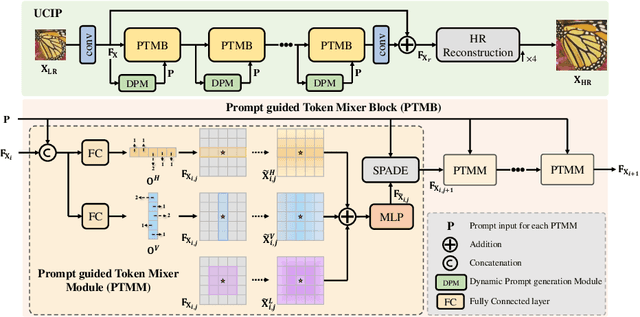
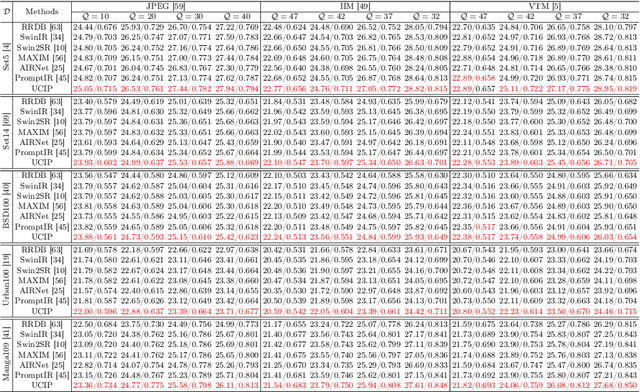
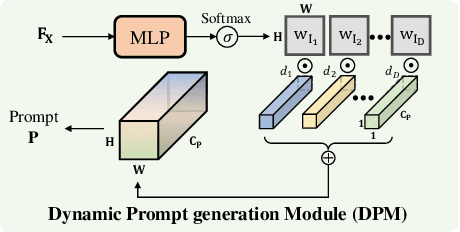
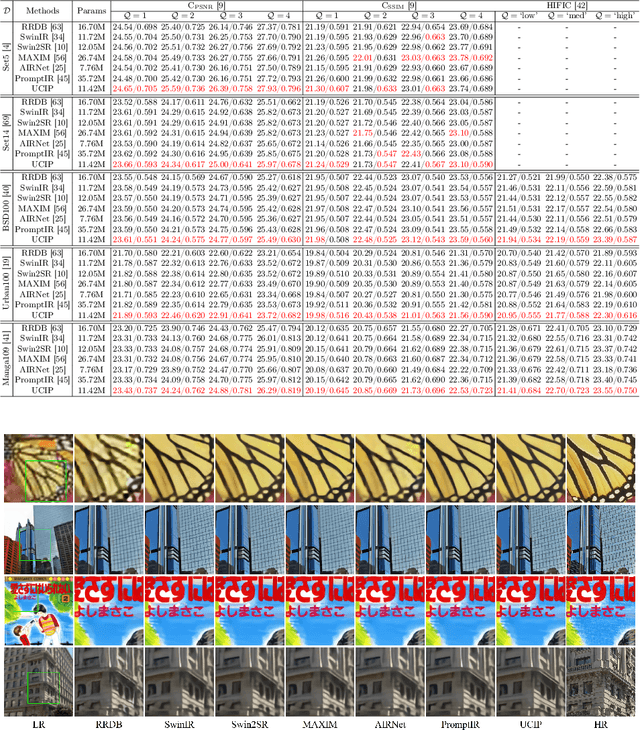
Compressed Image Super-resolution (CSR) aims to simultaneously super-resolve the compressed images and tackle the challenging hybrid distortions caused by compression. However, existing works on CSR usually focuses on a single compression codec, i.e., JPEG, ignoring the diverse traditional or learning-based codecs in the practical application, e.g., HEVC, VVC, HIFIC, etc. In this work, we propose the first universal CSR framework, dubbed UCIP, with dynamic prompt learning, intending to jointly support the CSR distortions of any compression codecs/modes. Particularly, an efficient dynamic prompt strategy is proposed to mine the content/spatial-aware task-adaptive contextual information for the universal CSR task, using only a small amount of prompts with spatial size 1x1. To simplify contextual information mining, we introduce the novel MLP-like framework backbone for our UCIP by adapting the Active Token Mixer (ATM) to CSR tasks for the first time, where the global information modeling is only taken in horizontal and vertical directions with offset prediction. We also build an all-in-one benchmark dataset for the CSR task by collecting the datasets with the popular 6 diverse traditional and learning-based codecs, including JPEG, HEVC, VVC, HIFIC, etc., resulting in 23 common degradations. Extensive experiments have shown the consistent and excellent performance of our UCIP on universal CSR tasks. The project can be found in https://lixinustc.github.io/UCIP.github.io
FocusDiffuser: Perceiving Local Disparities for Camouflaged Object Detection
Jul 18, 2024

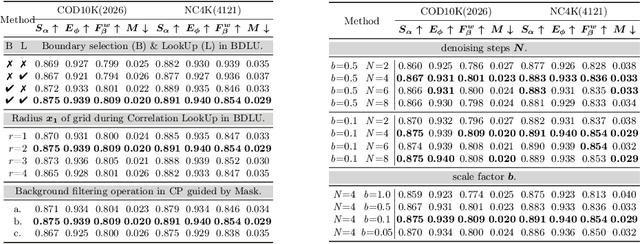

Detecting objects seamlessly blended into their surroundings represents a complex task for both human cognitive capabilities and advanced artificial intelligence algorithms. Currently, the majority of methodologies for detecting camouflaged objects mainly focus on utilizing discriminative models with various unique designs. However, it has been observed that generative models, such as Stable Diffusion, possess stronger capabilities for understanding various objects in complex environments; Yet their potential for the cognition and detection of camouflaged objects has not been extensively explored. In this study, we present a novel denoising diffusion model, namely FocusDiffuser, to investigate how generative models can enhance the detection and interpretation of camouflaged objects. We believe that the secret to spotting camouflaged objects lies in catching the subtle nuances in details. Consequently, our FocusDiffuser innovatively integrates specialized enhancements, notably the Boundary-Driven LookUp (BDLU) module and Cyclic Positioning (CP) module, to elevate standard diffusion models, significantly boosting the detail-oriented analytical capabilities. Our experiments demonstrate that FocusDiffuser, from a generative perspective, effectively addresses the challenge of camouflaged object detection, surpassing leading models on benchmarks like CAMO, COD10K and NC4K.
RBAD: A Dataset and Benchmark for Retinal Vessels Branching Angle Detection
Jul 17, 2024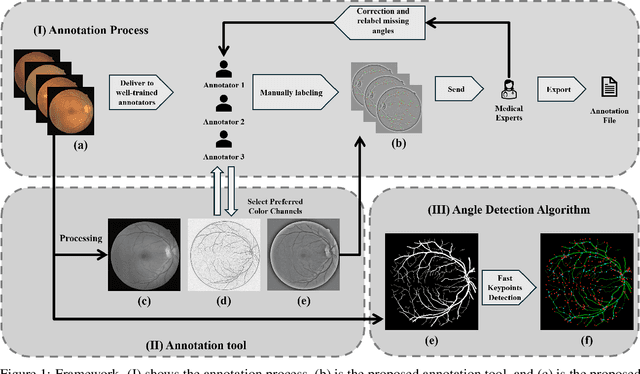
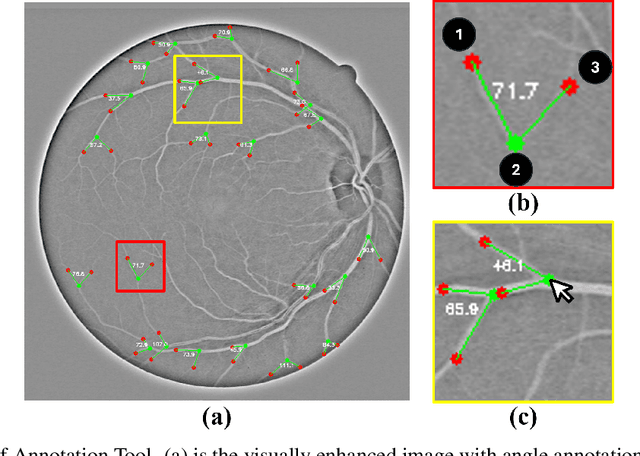


Detecting retinal image analysis, particularly the geometrical features of branching points, plays an essential role in diagnosing eye diseases. However, existing methods used for this purpose often are coarse-level and lack fine-grained analysis for efficient annotation. To mitigate these issues, this paper proposes a novel method for detecting retinal branching angles using a self-configured image processing technique. Additionally, we offer an open-source annotation tool and a benchmark dataset comprising 40 images annotated with retinal branching angles. Our methodology for retinal branching angle detection and calculation is detailed, followed by a benchmark analysis comparing our method with previous approaches. The results indicate that our method is robust under various conditions with high accuracy and efficiency, which offers a valuable instrument for ophthalmic research and clinical applications.
Blind Beamforming for Coverage Enhancement with Intelligent Reflecting Surface
Jul 17, 2024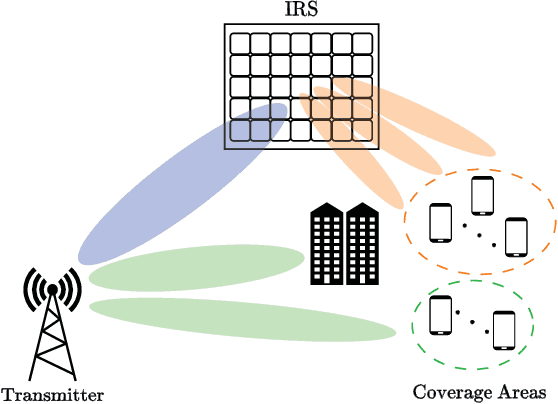
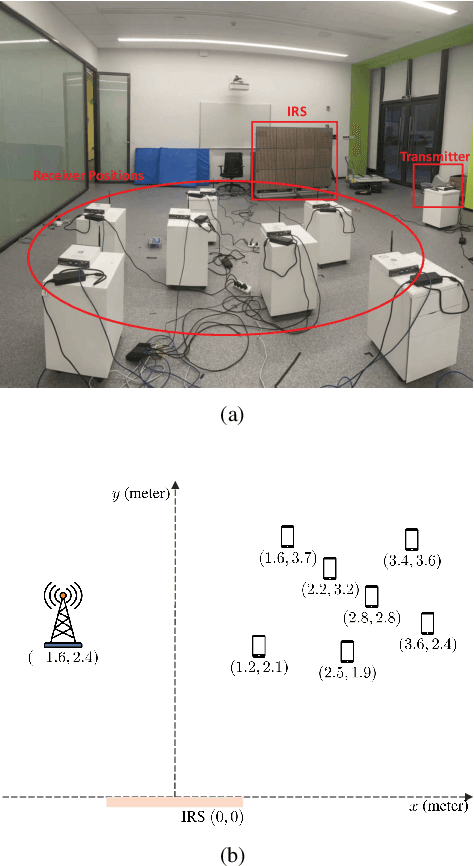
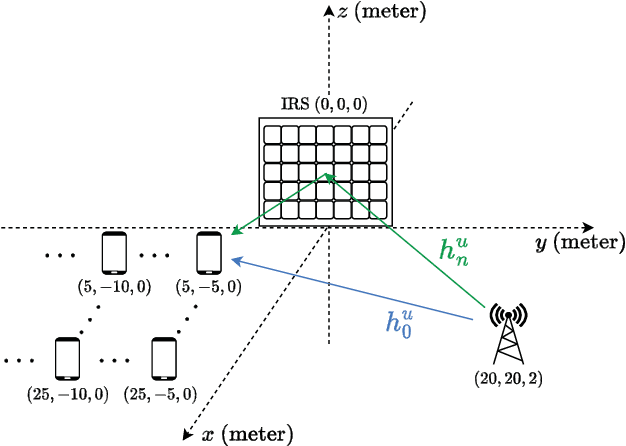
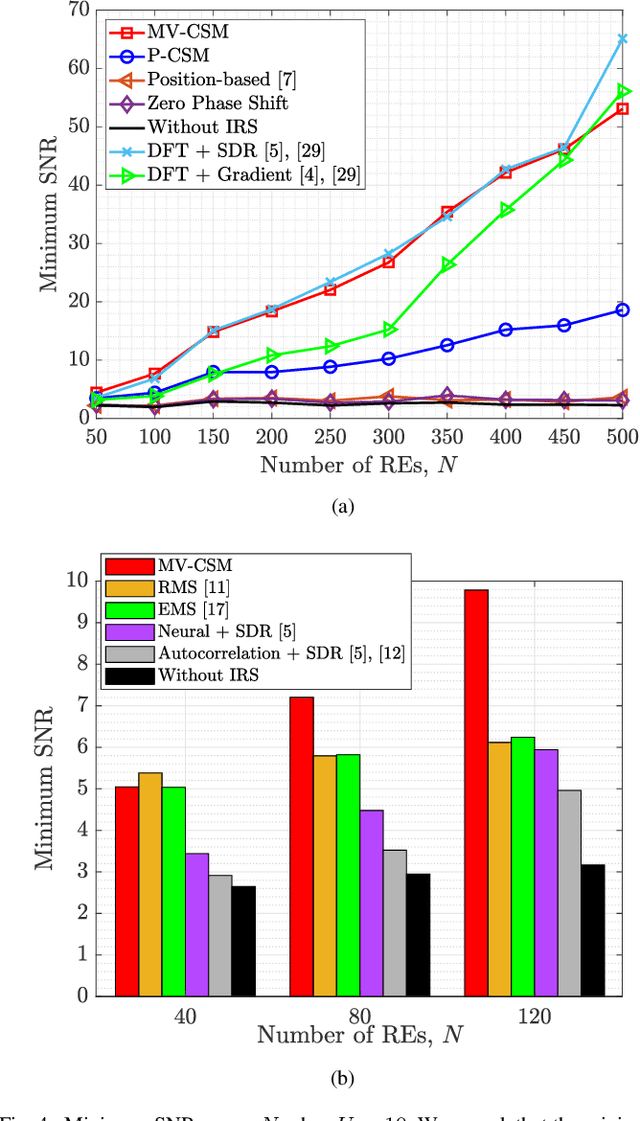
Conventional policy for configuring an intelligent reflecting surface (IRS) typically requires channel state information (CSI), thus incurring substantial overhead costs and facing incompatibility with the current network protocols. This paper proposes a blind beamforming strategy in the absence of CSI, aiming to boost the minimum signal-to-noise ratio (SNR) among all the receiver positions, namely the coverage enhancement. Although some existing works already consider the IRS-assisted coverage enhancement without CSI, they assume certain position-channel models through which the channels can be recovered from the geographic locations. In contrast, our approach solely relies on the received signal power data, not assuming any position-channel model. We examine the achievability and converse of the proposed blind beamforming method. If the IRS has $N$ reflective elements and there are $U$ receiver positions, then our method guarantees the minimum SNR of $\Omega(N^2/U)$ -- which is fairly close to the upper bound $O(N+N^2\sqrt{\ln (NU)}/\sqrt[4]{U})$. Aside from the simulation results, we justify the practical use of blind beamforming in a field test at 2.6 GHz. According to the real-world experiment, the proposed blind beamforming method boosts the minimum SNR across seven random positions in a conference room by 18.22 dB, while the position-based method yields a boost of 12.08 dB.
MoE-DiffIR: Task-customized Diffusion Priors for Universal Compressed Image Restoration
Jul 15, 2024We present MoE-DiffIR, an innovative universal compressed image restoration (CIR) method with task-customized diffusion priors. This intends to handle two pivotal challenges in the existing CIR methods: (i) lacking adaptability and universality for different image codecs, e.g., JPEG and WebP; (ii) poor texture generation capability, particularly at low bitrates. Specifically, our MoE-DiffIR develops the powerful mixture-of-experts (MoE) prompt module, where some basic prompts cooperate to excavate the task-customized diffusion priors from Stable Diffusion (SD) for each compression task. Moreover, the degradation-aware routing mechanism is proposed to enable the flexible assignment of basic prompts. To activate and reuse the cross-modality generation prior of SD, we design the visual-to-text adapter for MoE-DiffIR, which aims to adapt the embedding of low-quality images from the visual domain to the textual domain as the textual guidance for SD, enabling more consistent and reasonable texture generation. We also construct one comprehensive benchmark dataset for universal CIR, covering 21 types of degradations from 7 popular traditional and learned codecs. Extensive experiments on universal CIR have demonstrated the excellent robustness and texture restoration capability of our proposed MoE-DiffIR. The project can be found at https://renyulin-f.github.io/MoE-DiffIR.github.io/.
Learning Spatial-Semantic Features for Robust Video Object Segmentation
Jul 10, 2024
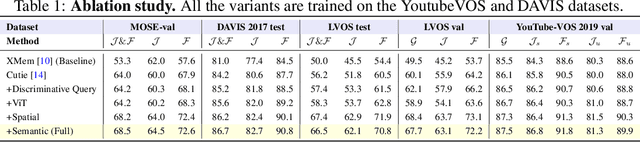

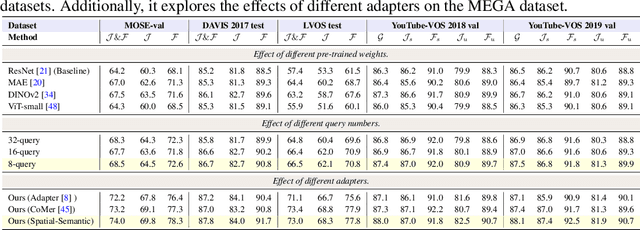
Tracking and segmenting multiple similar objects with complex or separate parts in long-term videos is inherently challenging due to the ambiguity of target parts and identity confusion caused by occlusion, background clutter, and long-term variations. In this paper, we propose a robust video object segmentation framework equipped with spatial-semantic features and discriminative object queries to address the above issues. Specifically, we construct a spatial-semantic network comprising a semantic embedding block and spatial dependencies modeling block to associate the pretrained ViT features with global semantic features and local spatial features, providing a comprehensive target representation. In addition, we develop a masked cross-attention module to generate object queries that focus on the most discriminative parts of target objects during query propagation, alleviating noise accumulation and ensuring effective long-term query propagation. The experimental results show that the proposed method set a new state-of-the-art performance on multiple datasets, including the DAVIS2017 test (89.1%), YoutubeVOS 2019 (88.5%), MOSE (75.1%), LVOS test (73.0%), and LVOS val (75.1%), which demonstrate the effectiveness and generalization capacity of the proposed method. We will make all source code and trained models publicly available.
Multimodal Chain-of-Thought Reasoning via ChatGPT to Protect Children from Age-Inappropriate Apps
Jul 08, 2024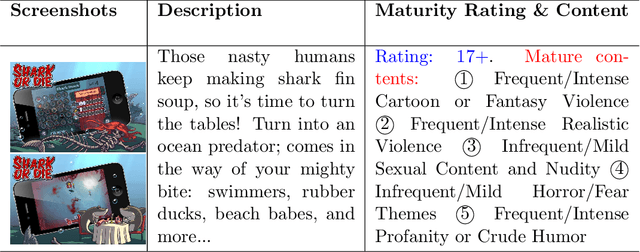

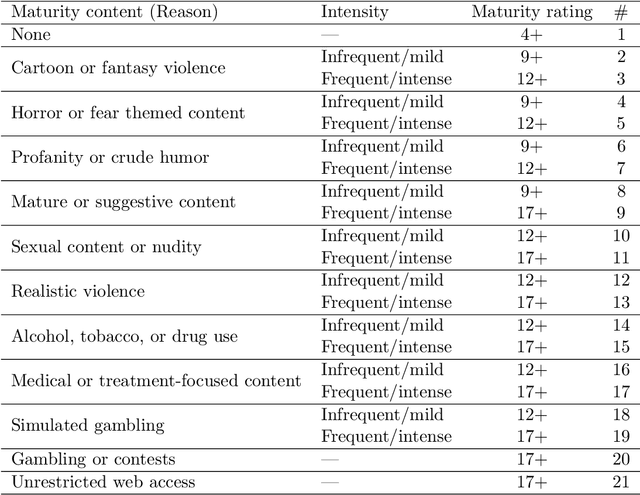
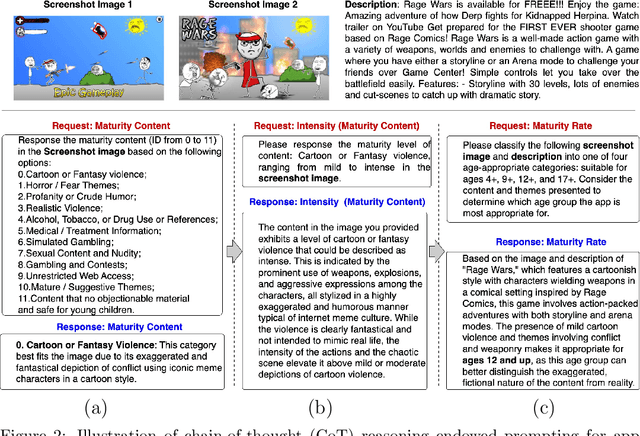
Mobile applications (Apps) could expose children to inappropriate themes such as sexual content, violence, and drug use. Maturity rating offers a quick and effective method for potential users, particularly guardians, to assess the maturity levels of apps. Determining accurate maturity ratings for mobile apps is essential to protect children's health in today's saturated digital marketplace. Existing approaches to maturity rating are either inaccurate (e.g., self-reported rating by developers) or costly (e.g., manual examination). In the literature, there are few text-mining-based approaches to maturity rating. However, each app typically involves multiple modalities, namely app description in the text, and screenshots in the image. In this paper, we present a framework for determining app maturity levels that utilize multimodal large language models (MLLMs), specifically ChatGPT-4 Vision. Powered by Chain-of-Thought (CoT) reasoning, our framework systematically leverages ChatGPT-4 to process multimodal app data (i.e., textual descriptions and screenshots) and guide the MLLM model through a step-by-step reasoning pathway from initial content analysis to final maturity rating determination. As a result, through explicitly incorporating CoT reasoning, our framework enables ChatGPT to understand better and apply maturity policies to facilitate maturity rating. Experimental results indicate that the proposed method outperforms all baseline models and other fusion strategies.