 Add to Chrome
 Add to Firefox
 Add to Edge
Integrated Sensing, Computation, and Communication for UAV-assisted Federated Edge Learning
Jun 05, 2023
Federated edge learning (FEEL) enables privacy-preserving model training through periodic communication between edge devices and the server. Unmanned Aerial Vehicle (UAV)-mounted edge devices are particularly advantageous for FEEL due to their flexibility and mobility in efficient data collection. In UAV-assisted FEEL, sensing, computation, and communication are coupled and compete for limited onboard resources, and UAV deployment also affects sensing and communication performance. Therefore, the joint design of UAV deployment and resource allocation is crucial to achieving the optimal training performance. In this paper, we address the problem of joint UAV deployment design and resource allocation for FEEL via a concrete case study of human motion recognition based on wireless sensing. We first analyze the impact of UAV deployment on the sensing quality and identify a threshold value for the sensing elevation angle that guarantees a satisfactory quality of data samples. Due to the non-ideal sensing channels, we consider the probabilistic sensing model, where the successful sensing probability of each UAV is determined by its position. Then, we derive the upper bound of the FEEL training loss as a function of the sensing probability. Theoretical results suggest that the convergence rate can be improved if UAVs have a uniform successful sensing probability. Based on this analysis, we formulate a training time minimization problem by jointly optimizing UAV deployment, integrated sensing, computation, and communication (ISCC) resources under a desirable optimality gap constraint. To solve this challenging mixed-integer non-convex problem, we apply the alternating optimization technique, and propose the bandwidth, batch size, and position optimization (BBPO) scheme to optimize these three decision variables alternately.

Heterogeneous Value Evaluation for Large Language Models
Jun 01, 2023The emergent capabilities of Large Language Models (LLMs) have made it crucial to align their values with those of humans. Current methodologies typically attempt alignment with a homogeneous human value and requires human verification, yet lack consensus on the desired aspect and depth of alignment and resulting human biases. In this paper, we propose A2EHV, an Automated Alignment Evaluation with a Heterogeneous Value system that (1) is automated to minimize individual human biases, and (2) allows assessments against various target values to foster heterogeneous agents. Our approach pivots on the concept of value rationality, which represents the ability for agents to execute behaviors that satisfy a target value the most. The quantification of value rationality is facilitated by the Social Value Orientation framework from social psychology, which partitions the value space into four categories to assess social preferences from agents' behaviors. We evaluate the value rationality of eight mainstream LLMs and observe that large models are more inclined to align neutral values compared to those with strong personal values. By examining the behavior of these LLMs, we contribute to a deeper understanding of value alignment within a heterogeneous value system.
Optimized Joint Beamforming for Wireless Powered Over-the-Air Computation
May 17, 2023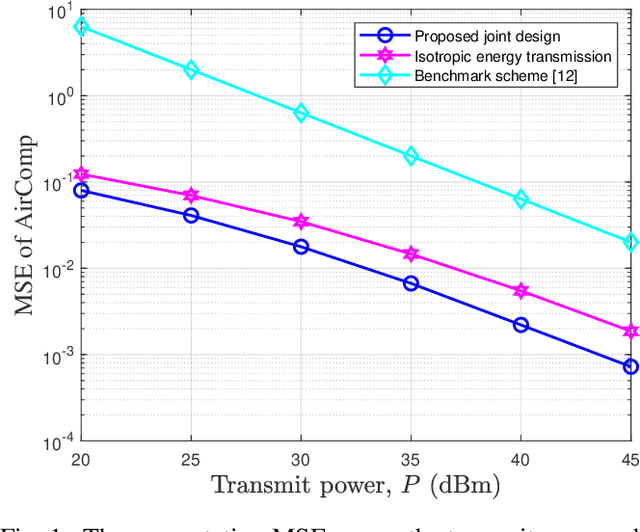
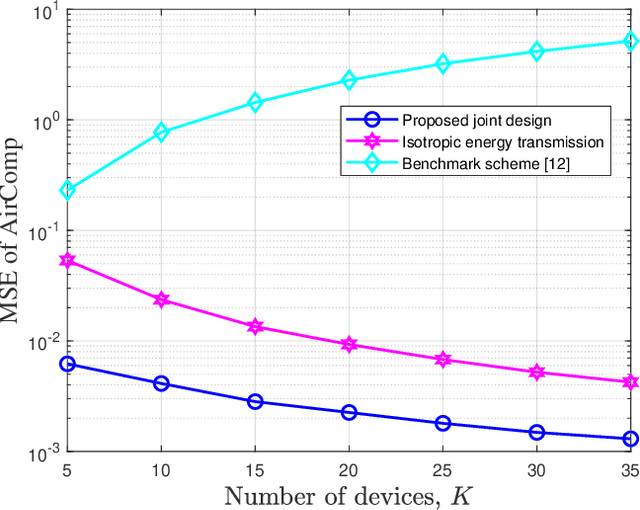
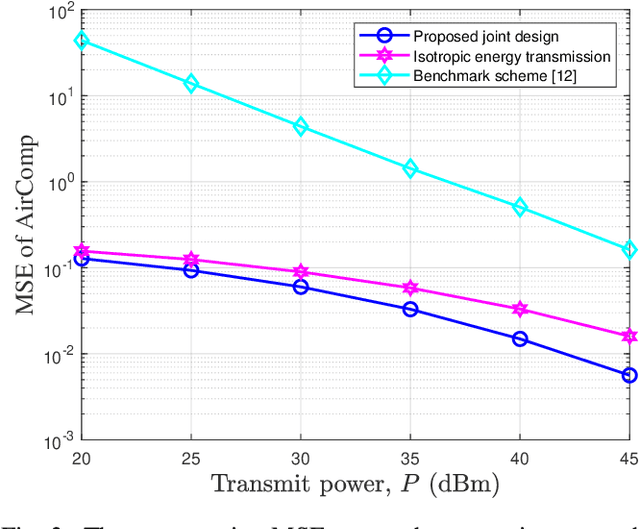
This correspondence studies the wireless powered over-the-air computation (AirComp) for achieving sustainable wireless data aggregation (WDA) by integrating AirComp and wireless power transfer (WPT) into a joint design. In particular, we consider that a multi-antenna hybrid access point (HAP) employs the transmit energy beamforming to charge multiple single-antenna low-power wireless devices (WDs) in the downlink, and the WDs use the harvested energy to simultaneously send their messages to the HAP for AirComp in the uplink. Under this setup, we minimize the computation mean square error (MSE), by jointly optimizing the transmit energy beamforming and the receive AirComp beamforming at the HAP, as well as the transmit power at the WDs, subject to the maximum transmit power constraint at the HAP and the wireless energy harvesting constraints at individual WDs. To tackle the non-convex computation MSE minimization problem, we present an efficient algorithm to find a converged high-quality solution by using the alternating optimization technique. Numerical results show that the proposed joint WPT-AirComp approach significantly reduces the computation MSE, as compared to other benchmark schemes.
SCoDA: Domain Adaptive Shape Completion for Real Scans
Apr 24, 20233D shape completion from point clouds is a challenging task, especially from scans of real-world objects. Considering the paucity of 3D shape ground truths for real scans, existing works mainly focus on benchmarking this task on synthetic data, e.g. 3D computer-aided design models. However, the domain gap between synthetic and real data limits the generalizability of these methods. Thus, we propose a new task, SCoDA, for the domain adaptation of real scan shape completion from synthetic data. A new dataset, ScanSalon, is contributed with a bunch of elaborate 3D models created by skillful artists according to scans. To address this new task, we propose a novel cross-domain feature fusion method for knowledge transfer and a novel volume-consistent self-training framework for robust learning from real data. Extensive experiments prove our method is effective to bring an improvement of 6%~7% mIoU.
Hierarchical Weight Averaging for Deep Neural Networks
Apr 23, 2023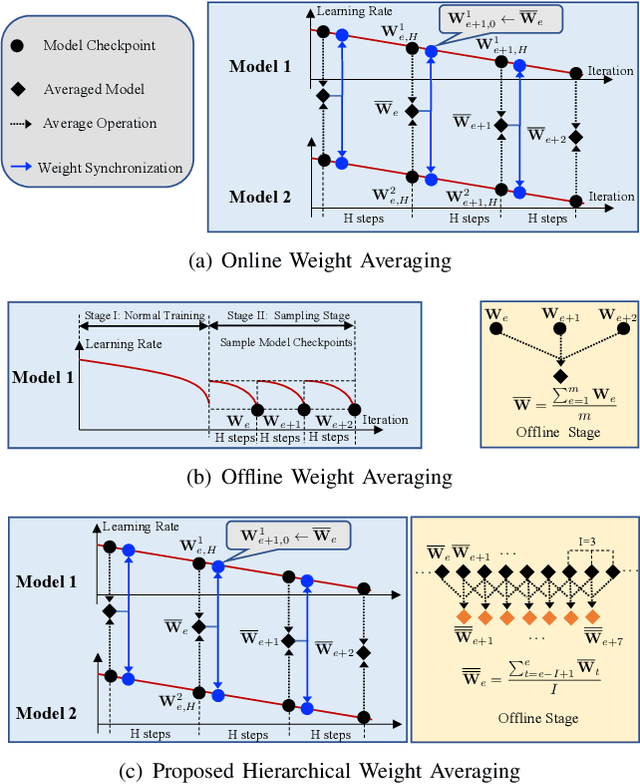
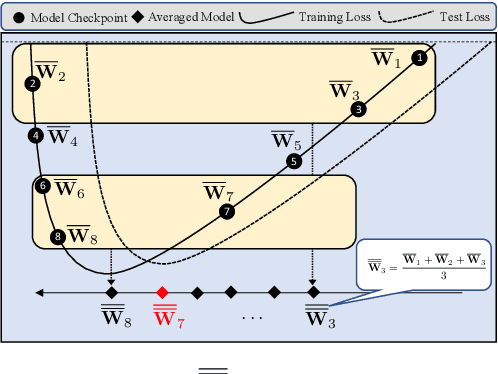
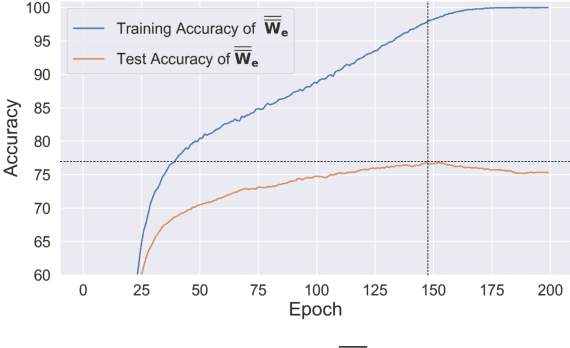
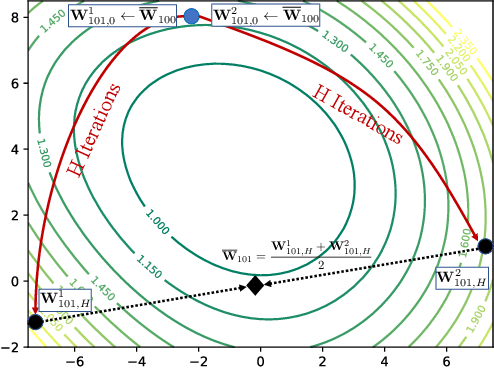
Despite the simplicity, stochastic gradient descent (SGD)-like algorithms are successful in training deep neural networks (DNNs). Among various attempts to improve SGD, weight averaging (WA), which averages the weights of multiple models, has recently received much attention in the literature. Broadly, WA falls into two categories: 1) online WA, which averages the weights of multiple models trained in parallel, is designed for reducing the gradient communication overhead of parallel mini-batch SGD, and 2) offline WA, which averages the weights of one model at different checkpoints, is typically used to improve the generalization ability of DNNs. Though online and offline WA are similar in form, they are seldom associated with each other. Besides, these methods typically perform either offline parameter averaging or online parameter averaging, but not both. In this work, we firstly attempt to incorporate online and offline WA into a general training framework termed Hierarchical Weight Averaging (HWA). By leveraging both the online and offline averaging manners, HWA is able to achieve both faster convergence speed and superior generalization performance without any fancy learning rate adjustment. Besides, we also analyze the issues faced by existing WA methods, and how our HWA address them, empirically. Finally, extensive experiments verify that HWA outperforms the state-of-the-art methods significantly.
Device Activity Detection in mMTC with Low-Resolution ADC: A New Protocol
Apr 13, 2023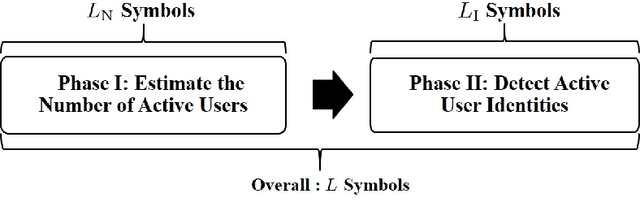
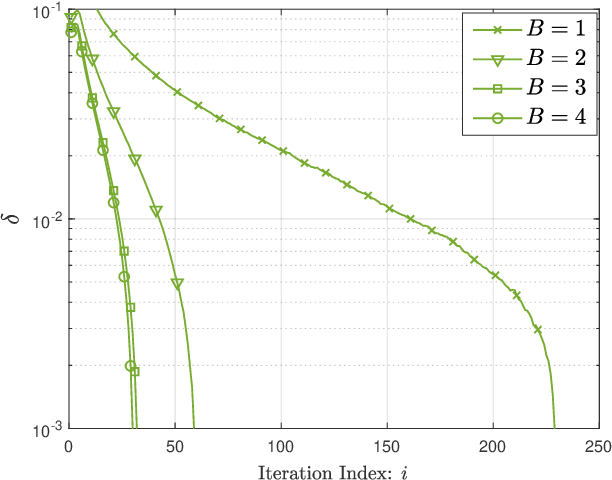
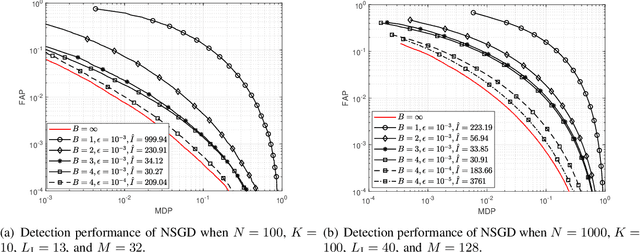
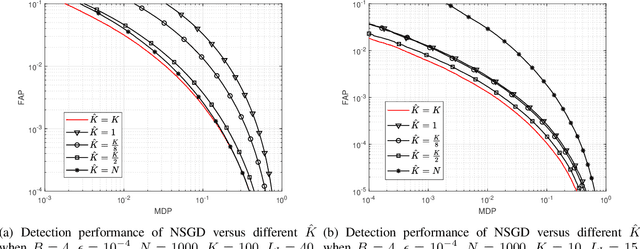
This paper investigates the effect of low-resolution analog-to-digital converters (ADCs) on device activity detection in massive machine-type communications (mMTC). The low-resolution ADCs induce two challenges on the device activity detection compared with the traditional setup with the assumption of infinite ADC resolution. First, the codebook design for signal quantization by the low-resolution ADC is particularly important since a good design of the codebook can lead to small quantization error on the received signal, which in turn has significant influence on the activity detector performance. To this end, prior information about the received signal power is needed, which depends on the number of active devices $K$. This is sharply different from the activity detection problem in traditional setups, in which the knowledge of $K$ is not required by the BS as a prerequisite. Second, the covariance-based approach achieves good activity detection performance in traditional setups while it is not clear if it can still achieve good performance in this paper. To solve the above challenges, we propose a communication protocol that consists of an estimator for $K$ and a detector for active device identities: 1) For the estimator, the technical difficulty is that the design of the ADC quantizer and the estimation of $K$ are closely intertwined and doing one needs the information/execution from the other. We propose a progressive estimator which iteratively performs the estimation of $K$ and the design of the ADC quantizer; 2) For the activity detector, we propose a custom-designed stochastic gradient descent algorithm to estimate the active device identities. Numerical results demonstrate the effectiveness of the communication protocol.
Crossword: A Semantic Approach to Data Compression via Masking
Apr 03, 2023


The traditional methods for data compression are typically based on the symbol-level statistics, with the information source modeled as a long sequence of i.i.d. random variables or a stochastic process, thus establishing the fundamental limit as entropy for lossless compression and as mutual information for lossy compression. However, the source (including text, music, and speech) in the real world is often statistically ill-defined because of its close connection to human perception, and thus the model-driven approach can be quite suboptimal. This study places careful emphasis on English text and exploits its semantic aspect to enhance the compression efficiency further. The main idea stems from the puzzle crossword, observing that the hidden words can still be precisely reconstructed so long as some key letters are provided. The proposed masking-based strategy resembles the above game. In a nutshell, the encoder evaluates the semantic importance of each word according to the semantic loss and then masks the minor ones, while the decoder aims to recover the masked words from the semantic context by means of the Transformer. Our experiments show that the proposed semantic approach can achieve much higher compression efficiency than the traditional methods such as Huffman code and UTF-8 code, while preserving the meaning in the target text to a great extent.
An Effective Motion-Centric Paradigm for 3D Single Object Tracking in Point Clouds
Mar 21, 2023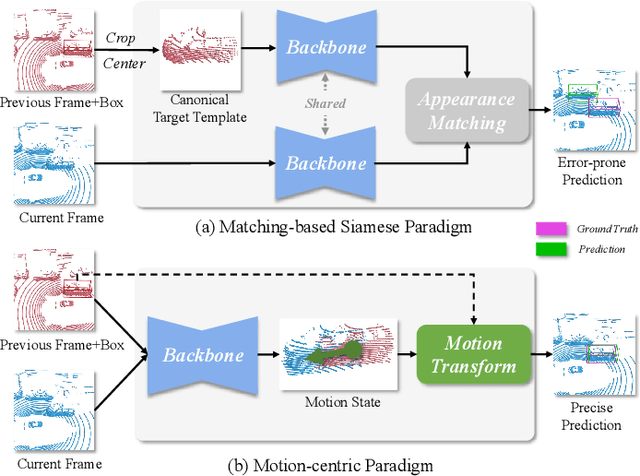
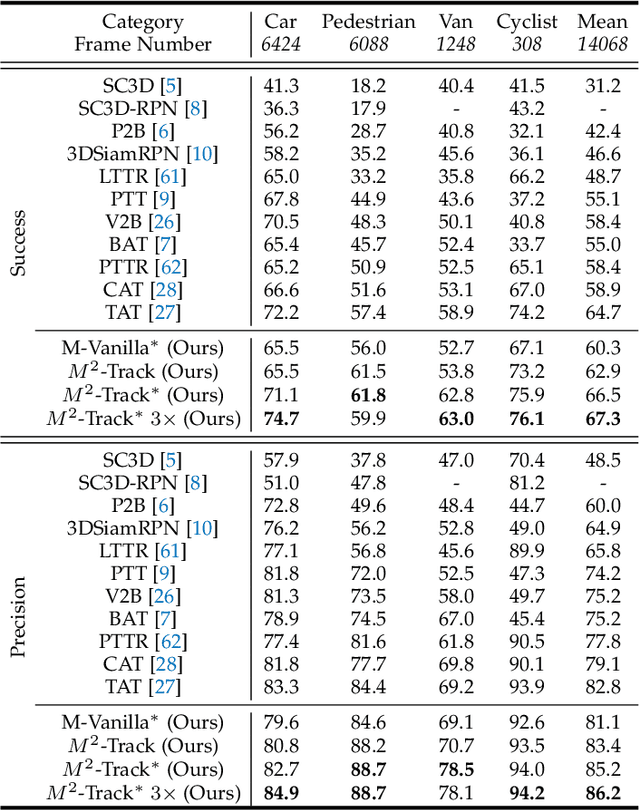
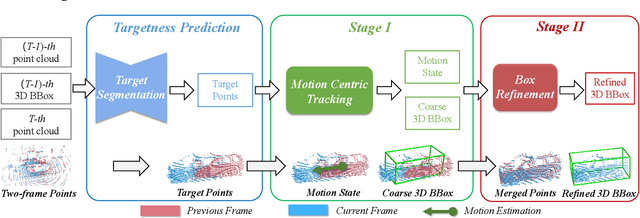
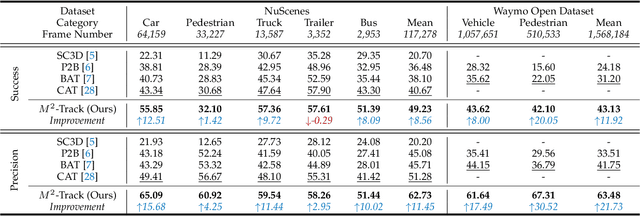
3D single object tracking in LiDAR point clouds (LiDAR SOT) plays a crucial role in autonomous driving. Current approaches all follow the Siamese paradigm based on appearance matching. However, LiDAR point clouds are usually textureless and incomplete, which hinders effective appearance matching. Besides, previous methods greatly overlook the critical motion clues among targets. In this work, beyond 3D Siamese tracking, we introduce a motion-centric paradigm to handle LiDAR SOT from a new perspective. Following this paradigm, we propose a matching-free two-stage tracker M^2-Track. At the 1st-stage, M^2-Track localizes the target within successive frames via motion transformation. Then it refines the target box through motion-assisted shape completion at the 2nd-stage. Due to the motion-centric nature, our method shows its impressive generalizability with limited training labels and provides good differentiability for end-to-end cycle training. This inspires us to explore semi-supervised LiDAR SOT by incorporating a pseudo-label-based motion augmentation and a self-supervised loss term. Under the fully-supervised setting, extensive experiments confirm that M^2-Track significantly outperforms previous state-of-the-arts on three large-scale datasets while running at 57FPS (~8%, ~17% and ~22% precision gains on KITTI, NuScenes, and Waymo Open Dataset respectively). While under the semi-supervised setting, our method performs on par with or even surpasses its fully-supervised counterpart using fewer than half labels from KITTI. Further analysis verifies each component's effectiveness and shows the motion-centric paradigm's promising potential for auto-labeling and unsupervised domain adaptation.
MVImgNet: A Large-scale Dataset of Multi-view Images
Mar 10, 2023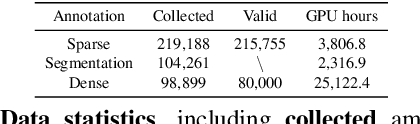
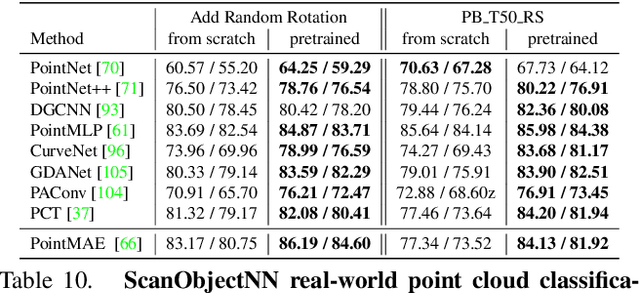
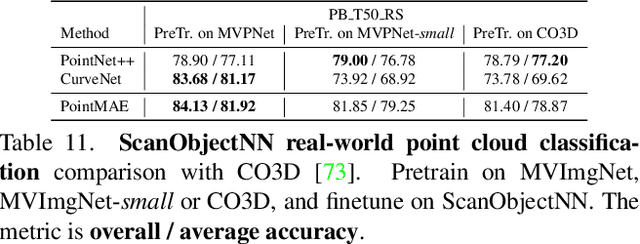

Being data-driven is one of the most iconic properties of deep learning algorithms. The birth of ImageNet drives a remarkable trend of "learning from large-scale data" in computer vision. Pretraining on ImageNet to obtain rich universal representations has been manifested to benefit various 2D visual tasks, and becomes a standard in 2D vision. However, due to the laborious collection of real-world 3D data, there is yet no generic dataset serving as a counterpart of ImageNet in 3D vision, thus how such a dataset can impact the 3D community is unraveled. To remedy this defect, we introduce MVImgNet, a large-scale dataset of multi-view images, which is highly convenient to gain by shooting videos of real-world objects in human daily life. It contains 6.5 million frames from 219,188 videos crossing objects from 238 classes, with rich annotations of object masks, camera parameters, and point clouds. The multi-view attribute endows our dataset with 3D-aware signals, making it a soft bridge between 2D and 3D vision. We conduct pilot studies for probing the potential of MVImgNet on a variety of 3D and 2D visual tasks, including radiance field reconstruction, multi-view stereo, and view-consistent image understanding, where MVImgNet demonstrates promising performance, remaining lots of possibilities for future explorations. Besides, via dense reconstruction on MVImgNet, a 3D object point cloud dataset is derived, called MVPNet, covering 87,200 samples from 150 categories, with the class label on each point cloud. Experiments show that MVPNet can benefit the real-world 3D object classification while posing new challenges to point cloud understanding. MVImgNet and MVPNet will be publicly available, hoping to inspire the broader vision community.
Efficient Large-scale Scene Representation with a Hybrid of High-resolution Grid and Plane Features
Mar 07, 2023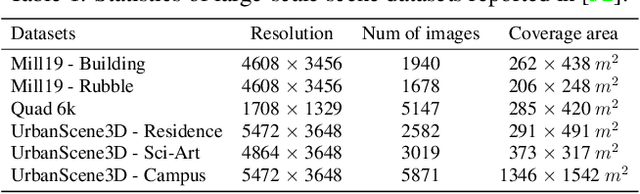
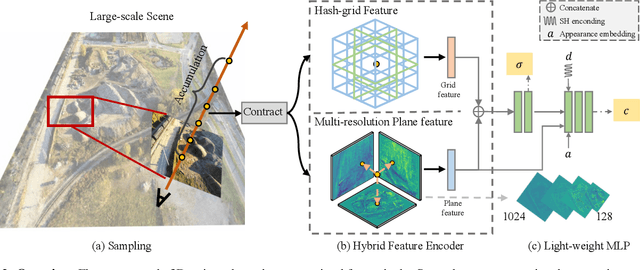

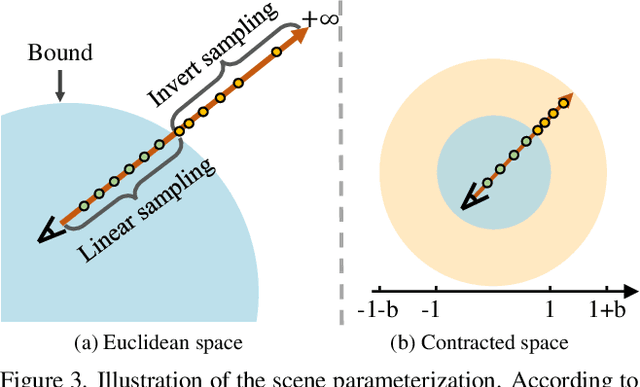
Existing neural radiance fields (NeRF) methods for large-scale scene modeling require days of training using multiple GPUs, hindering their applications in scenarios with limited computing resources. Despite fast optimization NeRF variants have been proposed based on the explicit dense or hash grid features, their effectivenesses are mainly demonstrated in object-scale scene representation. In this paper, we point out that the low feature resolution in explicit representation is the bottleneck for large-scale unbounded scene representation. To address this problem, we introduce a new and efficient hybrid feature representation for NeRF that fuses the 3D hash-grids and high-resolution 2D dense plane features. Compared with the dense-grid representation, the resolution of a dense 2D plane can be scaled up more efficiently. Based on this hybrid representation, we propose a fast optimization NeRF variant, called GP-NeRF, that achieves better rendering results while maintaining a compact model size. Extensive experiments on multiple large-scale unbounded scene datasets show that our model can converge in 1.5 hours using a single GPU while achieving results comparable to or even better than the existing method that requires about one day's training with 8 GPUs.