 Add to Chrome
 Add to Firefox
 Add to Edge
Deep Sparse Latent Feature Models for Knowledge Graph Completion
Nov 24, 2024

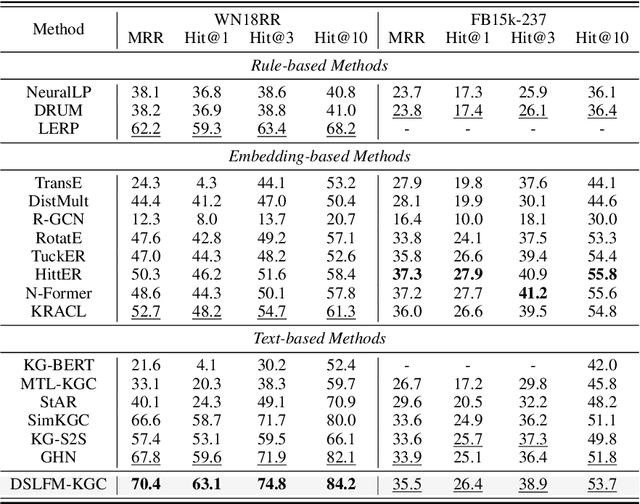

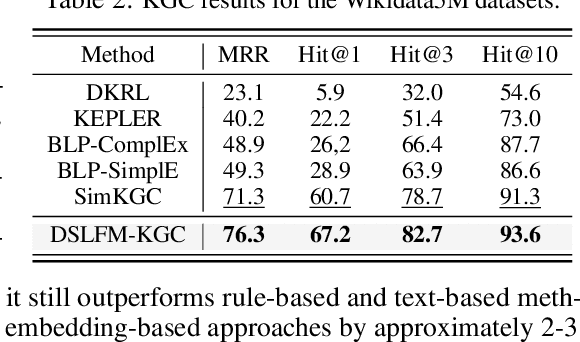
Recent progress in knowledge graph completion (KGC) has focused on text-based approaches to address the challenges of large-scale knowledge graphs (KGs). Despite their achievements, these methods often overlook the intricate interconnections between entities, a key aspect of the underlying topological structure of a KG. Stochastic blockmodels (SBMs), particularly the latent feature relational model (LFRM), offer robust probabilistic frameworks that can dynamically capture latent community structures and enhance link prediction. In this paper, we introduce a novel framework of sparse latent feature models for KGC, optimized through a deep variational autoencoder (VAE). Our approach not only effectively completes missing triples but also provides clear interpretability of the latent structures, leveraging textual information. Comprehensive experiments on the WN18RR, FB15k-237, and Wikidata5M datasets show that our method significantly improves performance by revealing latent communities and producing interpretable representations.

Geminio: Language-Guided Gradient Inversion Attacks in Federated Learning
Nov 22, 2024


Foundation models that bridge vision and language have made significant progress, inspiring numerous life-enriching applications. However, their potential for misuse to introduce new threats remains largely unexplored. This paper reveals that vision-language models (VLMs) can be exploited to overcome longstanding limitations in gradient inversion attacks (GIAs) within federated learning (FL), where an FL server reconstructs private data samples from gradients shared by victim clients. Current GIAs face challenges in reconstructing high-resolution images, especially when the victim has a large local data batch. While focusing reconstruction on valuable samples rather than the entire batch is promising, existing methods lack the flexibility to allow attackers to specify their target data. In this paper, we introduce Geminio, the first approach to transform GIAs into semantically meaningful, targeted attacks. Geminio enables a brand new privacy attack experience: attackers can describe, in natural language, the types of data they consider valuable, and Geminio will prioritize reconstruction to focus on those high-value samples. This is achieved by leveraging a pretrained VLM to guide the optimization of a malicious global model that, when shared with and optimized by a victim, retains only gradients of samples that match the attacker-specified query. Extensive experiments demonstrate Geminio's effectiveness in pinpointing and reconstructing targeted samples, with high success rates across complex datasets under FL and large batch sizes and showing resilience against existing defenses.
Paying more attention to local contrast: improving infrared small target detection performance via prior knowledge
Nov 20, 2024The data-driven method for infrared small target detection (IRSTD) has achieved promising results. However, due to the small scale of infrared small target datasets and the limited number of pixels occupied by the targets themselves, it is a challenging task for deep learning methods to directly learn from these samples. Utilizing human expert knowledge to assist deep learning methods in better learning is worthy of exploration. To effectively guide the model to focus on targets' spatial features, this paper proposes the Local Contrast Attention Enhanced infrared small target detection Network (LCAE-Net), combining prior knowledge with data-driven deep learning methods. LCAE-Net is a U-shaped neural network model which consists of two developed modules: a Local Contrast Enhancement (LCE) module and a Channel Attention Enhancement (CAE) module. The LCE module takes advantages of prior knowledge, leveraging handcrafted convolution operator to acquire Local Contrast Attention (LCA), which could realize background suppression while enhance the potential target region, thus guiding the neural network to pay more attention to potential infrared small targets' location information. To effectively utilize the response information throughout downsampling progresses, the CAE module is proposed to achieve the information fusion among feature maps' different channels. Experimental results indicate that our LCAE-Net outperforms existing state-of-the-art methods on the three public datasets NUDT-SIRST, NUAA-SIRST, and IRSTD-1K, and its detection speed could reach up to 70 fps. Meanwhile, our model has a parameter count and Floating-Point Operations (FLOPs) of 1.945M and 4.862G respectively, which is suitable for deployment on edge devices.
Attributed Graph Clustering in Collaborative Settings
Nov 19, 2024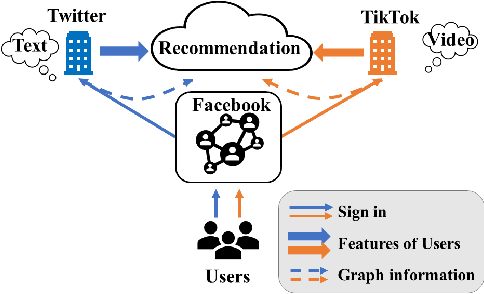
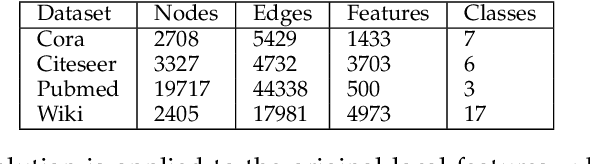
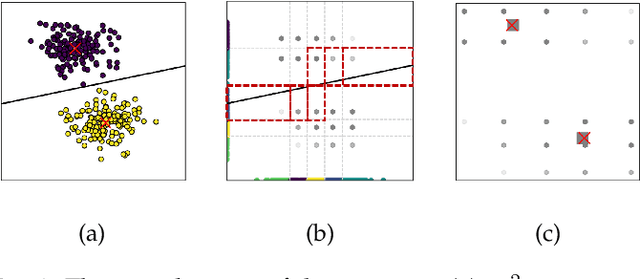
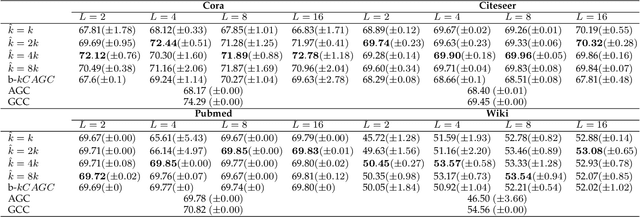
Graph clustering is an unsupervised machine learning method that partitions the nodes in a graph into different groups. Despite achieving significant progress in exploiting both attributed and structured data information, graph clustering methods often face practical challenges related to data isolation. Moreover, the absence of collaborative methods for graph clustering limits their effectiveness. In this paper, we propose a collaborative graph clustering framework for attributed graphs, supporting attributed graph clustering over vertically partitioned data with different participants holding distinct features of the same data. Our method leverages a novel technique that reduces the sample space, improving the efficiency of the attributed graph clustering method. Furthermore, we compare our method to its centralized counterpart under a proximity condition, demonstrating that the successful local results of each participant contribute to the overall success of the collaboration. We fully implement our approach and evaluate its utility and efficiency by conducting experiments on four public datasets. The results demonstrate that our method achieves comparable accuracy levels to centralized attributed graph clustering methods. Our collaborative graph clustering framework provides an efficient and effective solution for graph clustering challenges related to data isolation.
Relational Contrastive Learning and Masked Image Modeling for Scene Text Recognition
Nov 19, 2024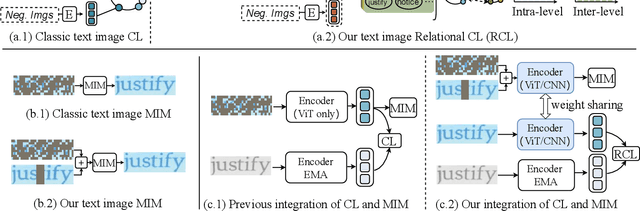
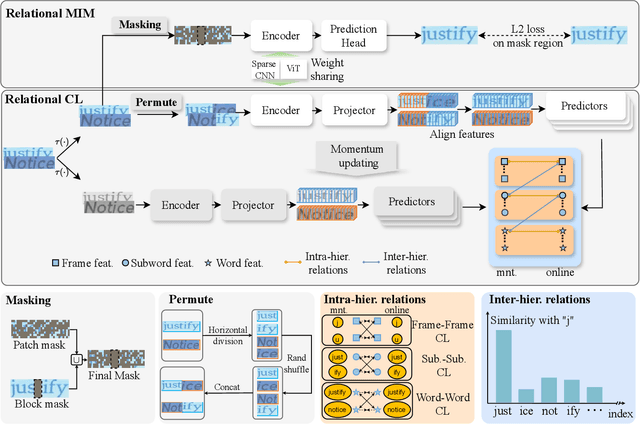
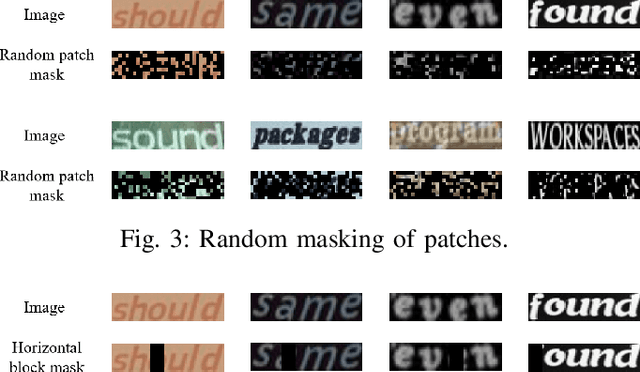
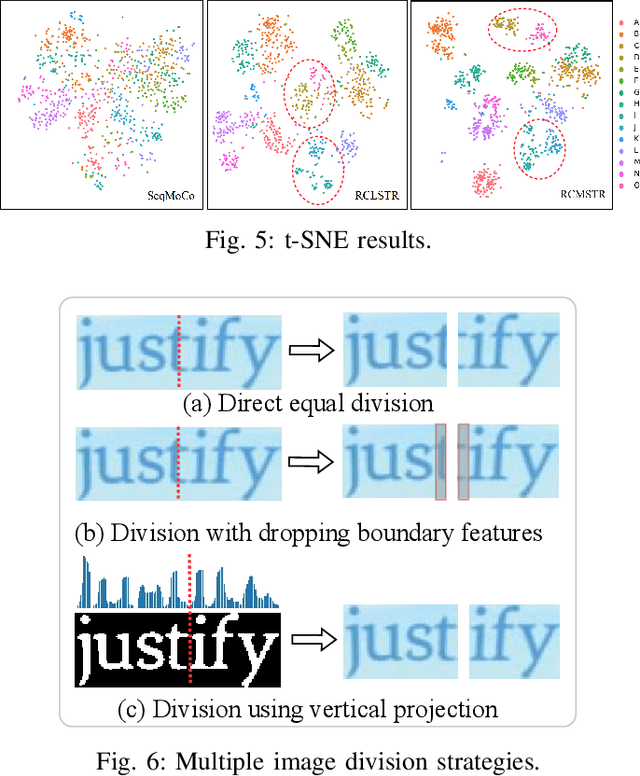
Context-aware methods have achieved remarkable advancements in supervised scene text recognition by leveraging semantic priors from words. Considering the heterogeneity of text and background in STR, we propose that such contextual priors can be reinterpreted as the relations between textual elements, serving as effective self-supervised labels for representation learning. However, textual relations are restricted to the finite size of the dataset due to lexical dependencies, which causes over-fitting problem, thus compromising the representation quality. To address this, our work introduces a unified framework of Relational Contrastive Learning and Masked Image Modeling for STR (RCMSTR), which explicitly models the enriched textual relations. For the RCL branch, we first introduce the relational rearrangement module to cultivate new relations on the fly. Based on this, we further conduct relational contrastive learning to model the intra- and inter-hierarchical relations for frames, sub-words and words. On the other hand, MIM can naturally boost the context information via masking, where we find that the block masking strategy is more effective for STR. For the effective integration of RCL and MIM, we also introduce a novel decoupling design aimed at mitigating the impact of masked images on contrastive learning. Additionally, to enhance the compatibility of MIM with CNNs, we propose the adoption of sparse convolutions and directly sharing the weights with dense convolutions in training. The proposed RCMSTR demonstrates superior performance in various evaluation protocols for different STR-related downstream tasks, outperforming the existing state-of-the-art self-supervised STR techniques. Ablation studies and qualitative experimental results further validate the effectiveness of our method. The code and pre-trained models will be available at https://github.com/ThunderVVV/RCMSTR .
RoboGSim: A Real2Sim2Real Robotic Gaussian Splatting Simulator
Nov 18, 2024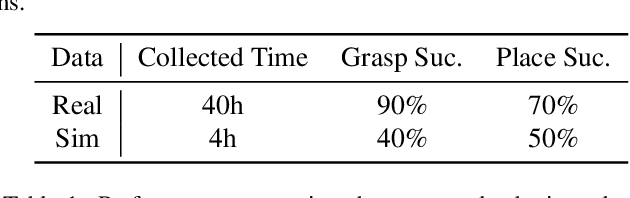
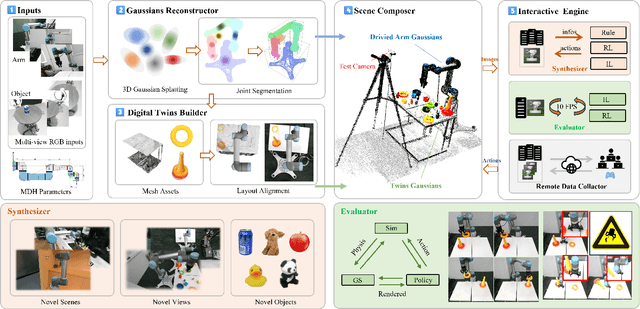
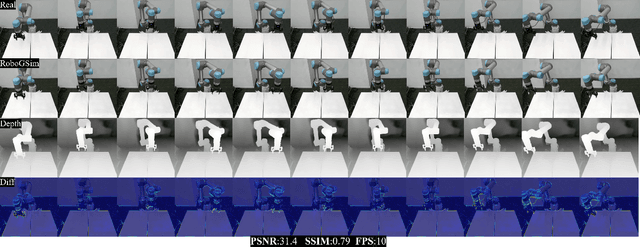
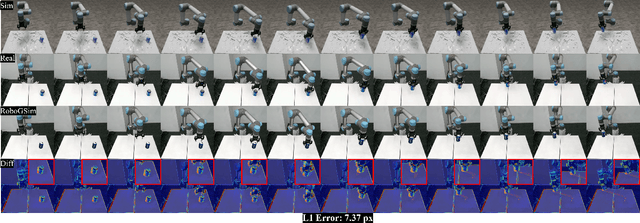
Efficient acquisition of real-world embodied data has been increasingly critical. However, large-scale demonstrations captured by remote operation tend to take extremely high costs and fail to scale up the data size in an efficient manner. Sampling the episodes under a simulated environment is a promising way for large-scale collection while existing simulators fail to high-fidelity modeling on texture and physics. To address these limitations, we introduce the RoboGSim, a real2sim2real robotic simulator, powered by 3D Gaussian Splatting and the physics engine. RoboGSim mainly includes four parts: Gaussian Reconstructor, Digital Twins Builder, Scene Composer, and Interactive Engine. It can synthesize the simulated data with novel views, objects, trajectories, and scenes. RoboGSim also provides an online, reproducible, and safe evaluation for different manipulation policies. The real2sim and sim2real transfer experiments show a high consistency in the texture and physics. Moreover, the effectiveness of synthetic data is validated under the real-world manipulated tasks. We hope RoboGSim serves as a closed-loop simulator for fair comparison on policy learning. More information can be found on our project page https://robogsim.github.io/ .
Combining Machine Learning Defenses without Conflicts
Nov 14, 2024
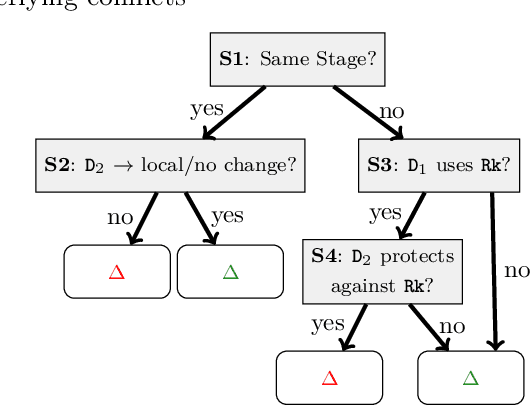

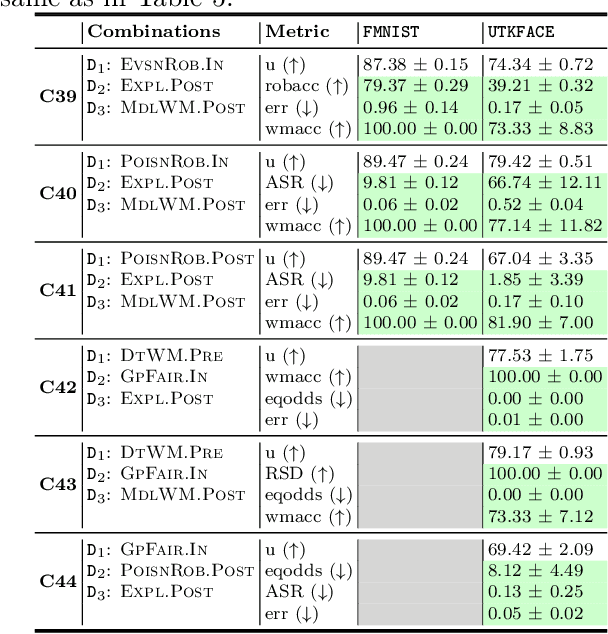
Machine learning (ML) defenses protect against various risks to security, privacy, and fairness. Real-life models need simultaneous protection against multiple different risks which necessitates combining multiple defenses. But combining defenses with conflicting interactions in an ML model can be ineffective, incurring a significant drop in the effectiveness of one or more defenses being combined. Practitioners need a way to determine if a given combination can be effective. Experimentally identifying effective combinations can be time-consuming and expensive, particularly when multiple defenses need to be combined. We need an inexpensive, easy-to-use combination technique to identify effective combinations. Ideally, a combination technique should be (a) accurate (correctly identifies whether a combination is effective or not), (b) scalable (allows combining multiple defenses), (c) non-invasive (requires no change to the defenses being combined), and (d) general (is applicable to different types of defenses). Prior works have identified several ad-hoc techniques but none satisfy all the requirements above. We propose a principled combination technique, Def\Con, to identify effective defense combinations. Def\Con meets all requirements, achieving 90% accuracy on eight combinations explored in prior work and 81% in 30 previously unexplored combinations that we empirically evaluate in this paper.
Modeling and Optimization for Rotatable Antenna Enabled Wireless Communication
Nov 14, 2024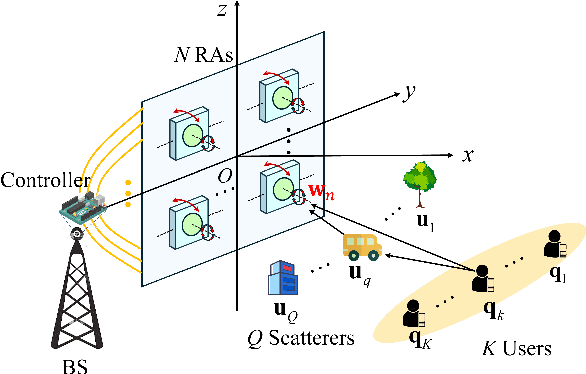
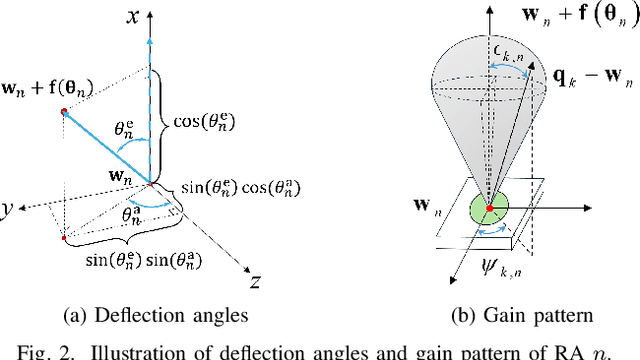
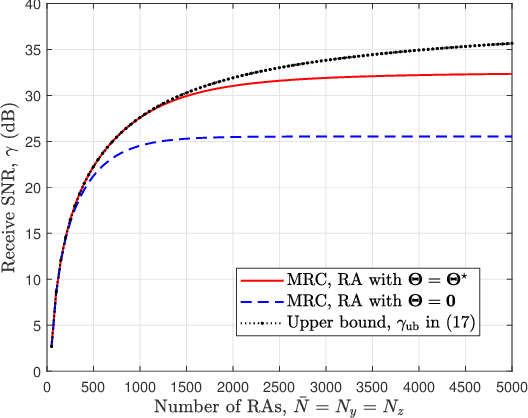
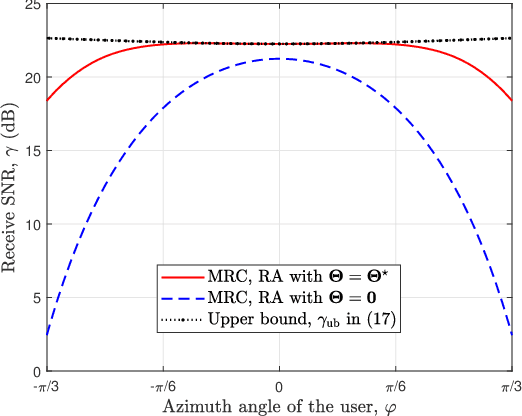
Fluid antenna system (FAS)/movable antenna (MA) has emerged as a promising technology to fully exploit the spatial degrees of freedom (DoFs). In this paper, we propose a new rotatable antenna (RA) model, as a simplified implementation of six-dimensional movable antenna (6DMA), to improve the performance of wireless communication systems. Different from conventional fixed-position antenna (FPA), the proposed RA system can independently and flexibly change the three-dimensional (3D) orientation of each antenna by adjusting its declination angles to achieve desired channel realizations. Specifically, we study an RA-enabled uplink communication system, where the receive beamforming and the declination angles of all RAs are jointly optimized to maximize the minimum signal-to-interference-plus-noise ratio (SINR) among all the users. In the special single-user and free-space propagation setup, the optimal declination angles are derived in closed form with the maximum-ratio combining (MRC) beamformer applied at the base station (BS). In the general multi-user and multi-path setup, we propose an alternating optimization (AO) algorithm to alternately optimize the receive beamforming and the declination angles in an iterative manner. Simulation results are provided to demonstrate that the proposed RA-enabled system can significantly outperform other benchmark schemes.
Verbosity $ eq$ Veracity: Demystify Verbosity Compensation Behavior of Large Language Models
Nov 12, 2024

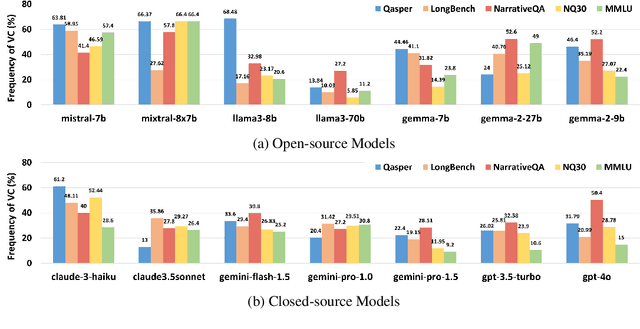

When unsure about an answer, humans often respond with more words than necessary, hoping that part of the response will be correct. We observe a similar behavior in large language models (LLMs), which we term "Verbosity Compensation" (VC). VC is harmful because it confuses the user understanding, leading to low efficiency, and influences the LLM services by increasing the latency and cost of generating useless tokens. In this paper, we present the first work that defines and analyzes Verbosity Compensation, explores its causes, and proposes a simple mitigating approach. We define Verbosity Compensation as the behavior of generating responses that can be compressed without information loss when prompted to write concisely. Our experiments, conducted on five datasets of knowledge and reasoning-based QA tasks with 14 newly developed LLMs, reveal three conclusions. 1) We reveal a pervasive presence of verbosity compensation across all models and all datasets. Notably, GPT-4 exhibits a VC frequency of 50.40%. 2) We reveal the large performance gap between verbose and concise responses, with a notable difference of 27.61% on the Qasper dataset. We also demonstrate that this difference does not naturally diminish as LLM capability increases. Both 1) and 2) highlight the urgent need to mitigate the frequency of VC behavior and disentangle verbosity with veracity. We propose a simple yet effective cascade algorithm that replaces the verbose responses with the other model-generated responses. The results show that our approach effectively alleviates the VC of the Mistral model from 63.81% to 16.16% on the Qasper dataset. 3) We also find that verbose responses exhibit higher uncertainty across all five datasets, suggesting a strong connection between verbosity and model uncertainty. Our dataset and code are available at https://github.com/psunlpgroup/VerbosityLLM.
An Overview on IRS-Enabled Sensing and Communications for 6G: Architectures, Fundamental Limits, and Joint Beamforming Designs
Nov 11, 2024


This paper presents an overview on intelligent reflecting surface (IRS)-enabled sensing and communication for the forthcoming sixth-generation (6G) wireless networks, in which IRSs are strategically deployed to proactively reconfigure wireless environments to improve both sensing and communication (S&C) performance. First, we exploit a single IRS to enable wireless sensing in the base station's (BS's) non-line-of-sight (NLoS) area. In particular, we present three IRS-enabled NLoS target sensing architectures with fully-passive, semi-passive, and active IRSs, respectively. We compare their pros and cons by analyzing the fundamental sensing performance limits for target detection and parameter estimation. Next, we consider a single IRS to facilitate integrated sensing and communication (ISAC), in which the transmit signals at the BS are used for achieving both S&C functionalities, aided by the IRS through reflective beamforming. We present joint transmit signal and receiver processing designs for realizing efficient ISAC, and jointly optimize the transmit beamforming at the BS and reflective beamforming at the IRS to balance the fundamental performance tradeoff between S&C. Furthermore, we discuss multi-IRS networked ISAC, by particularly focusing on multi-IRS-enabled multi-link ISAC, multi-region ISAC, and ISAC signal routing, respectively. Finally, we highlight various promising research topics in this area to motivate future work.