 Add to Chrome
 Add to Firefox
 Add to Edge
DecisionLLM: Large Language Models for Long Sequence Decision Exploration
Jan 15, 2026
Long-sequence decision-making, which is usually addressed through reinforcement learning (RL), is a critical component for optimizing strategic operations in dynamic environments, such as real-time bidding in computational advertising. The Decision Transformer (DT) introduced a powerful paradigm by framing RL as an autoregressive sequence modeling problem. Concurrently, Large Language Models (LLMs) have demonstrated remarkable success in complex reasoning and planning tasks. This inspires us whether LLMs, which share the same Transformer foundation, but operate at a much larger scale, can unlock new levels of performance in long-horizon sequential decision-making problem. This work investigates the application of LLMs to offline decision making tasks. A fundamental challenge in this domain is the LLMs' inherent inability to interpret continuous values, as they lack a native understanding of numerical magnitude and order when values are represented as text strings. To address this, we propose treating trajectories as a distinct modality. By learning to align trajectory data with natural language task descriptions, our model can autoregressively predict future decisions within a cohesive framework we term DecisionLLM. We establish a set of scaling laws governing this paradigm, demonstrating that performance hinges on three factors: model scale, data volume, and data quality. In offline experimental benchmarks and bidding scenarios, DecisionLLM achieves strong performance. Specifically, DecisionLLM-3B outperforms the traditional Decision Transformer (DT) by 69.4 on Maze2D umaze-v1 and by 0.085 on AuctionNet. It extends the AIGB paradigm and points to promising directions for future exploration in online bidding.

Generation-Augmented Generation: A Plug-and-Play Framework for Private Knowledge Injection in Large Language Models
Jan 13, 2026In domains such as biomedicine, materials, and finance, high-stakes deployment of large language models (LLMs) requires injecting private, domain-specific knowledge that is proprietary, fast-evolving, and under-represented in public pretraining. However, the two dominant paradigms for private knowledge injection each have pronounced drawbacks: fine-tuning is expensive to iterate, and continual updates risk catastrophic forgetting and general-capability regression; retrieval-augmented generation (RAG) keeps the base model intact but is brittle in specialized private corpora due to chunk-induced evidence fragmentation, retrieval drift, and long-context pressure that yields query-dependent prompt inflation. Inspired by how multimodal LLMs align heterogeneous modalities into a shared semantic space, we propose Generation-Augmented Generation (GAG), which treats private expertise as an additional expert modality and injects it via a compact, representation-level interface aligned to the frozen base model, avoiding prompt-time evidence serialization while enabling plug-and-play specialization and scalable multi-domain composition with reliable selective activation. Across two private scientific QA benchmarks (immunology adjuvant and catalytic materials) and mixed-domain evaluations, GAG improves specialist performance over strong RAG baselines by 15.34% and 14.86% on the two benchmarks, respectively, while maintaining performance on six open general benchmarks and enabling near-oracle selective activation for scalable multi-domain deployment.
Mimic Human Cognition, Master Multi-Image Reasoning: A Meta-Action Framework for Enhanced Visual Understanding
Jan 12, 2026While Multimodal Large Language Models (MLLMs) excel at single-image understanding, they exhibit significantly degraded performance in multi-image reasoning scenarios. Multi-image reasoning presents fundamental challenges including complex inter-relationships between images and scattered critical information across image sets. Inspired by human cognitive processes, we propose the Cognition-Inspired Meta-Action Framework (CINEMA), a novel approach that decomposes multi-image reasoning into five structured meta-actions: Global, Focus, Hint, Think, and Answer which explicitly modeling the sequential cognitive steps humans naturally employ. For cold-start training, we introduce a Retrieval-Based Tree Sampling strategy that generates high-quality meta-action trajectories to bootstrap the model with reasoning patterns. During reinforcement learning, we adopt a two-stage paradigm: an exploration phase with Diversity-Preserving Strategy to avoid entropy collapse, followed by an annealed exploitation phase with DAPO to gradually strengthen exploitation. To train our model, we construct a dataset of 57k cold-start and 58k reinforcement learning instances spanning multi-image, multi-frame, and single-image tasks. We conduct extensive evaluations on multi-image reasoning benchmarks, video understanding benchmarks, and single-image benchmarks, achieving competitive state-of-the-art performance on several key benchmarks. Our model surpasses GPT-4o on the MUIR and MVMath benchmarks and notably outperforms specialized video reasoning models on video understanding benchmarks, demonstrating the effectiveness and generalizability of our human cognition-inspired reasoning framework.
RAIR: A Rule-Aware Benchmark Uniting Challenging Long-Tail and Visual Salience Subset for E-commerce Relevance Assessment
Dec 31, 2025Search relevance plays a central role in web e-commerce. While large language models (LLMs) have shown significant results on relevance task, existing benchmarks lack sufficient complexity for comprehensive model assessment, resulting in an absence of standardized relevance evaluation metrics across the industry. To address this limitation, we propose Rule-Aware benchmark with Image for Relevance assessment(RAIR), a Chinese dataset derived from real-world scenarios. RAIR established a standardized framework for relevance assessment and provides a set of universal rules, which forms the foundation for standardized evaluation. Additionally, RAIR analyzes essential capabilities required for current relevance models and introduces a comprehensive dataset consists of three subset: (1) a general subset with industry-balanced sampling to evaluate fundamental model competencies; (2) a long-tail hard subset focus on challenging cases to assess performance limits; (3) a visual salience subset for evaluating multimodal understanding capabilities. We conducted experiments on RAIR using 14 open and closed-source models. The results demonstrate that RAIR presents sufficient challenges even for GPT-5, which achieved the best performance. RAIR data are now available, serving as an industry benchmark for relevance assessment while providing new insights into general LLM and Visual Language Model(VLM) evaluation.
QE-Catalytic: A Graph-Language Multimodal Base Model for Relaxed-Energy Prediction in Catalytic Adsorption
Dec 23, 2025Adsorption energy is a key descriptor of catalytic reactivity. It is fundamentally defined as the difference between the relaxed total energy of the adsorbate-surface system and that of an appropriate reference state; therefore, the accuracy of relaxed-energy prediction directly determines the reliability of machine-learning-driven catalyst screening. E(3)-equivariant graph neural networks (GNNs) can natively operate on three-dimensional atomic coordinates under periodic boundary conditions and have demonstrated strong performance on such tasks. In contrast, language-model-based approaches, while enabling human-readable textual descriptions and reducing reliance on explicit graph -- thereby broadening applicability -- remain insufficient in both adsorption-configuration energy prediction accuracy and in distinguishing ``the same system with different configurations,'' even with graph-assisted pretraining in the style of GAP-CATBERTa. To this end, we propose QE-Catalytic, a multimodal framework that deeply couples a large language model (\textbf{Q}wen) with an E(3)-equivariant graph Transformer (\textbf{E}quiformer-V2), enabling unified support for adsorption-configuration property prediction and inverse design on complex catalytic surfaces. During prediction, QE-Catalytic jointly leverages three-dimensional structures and structured configuration text, and injects ``3D geometric information'' into the language channel via graph-text alignment, allowing it to function as a high-performance text-based predictor when precise coordinates are unavailable, while also autoregressively generating CIF files for target-energy-driven structure design and information completion. On OC20, QE-Catalytic reduces the MAE of relaxed adsorption energy from 0.713~eV to 0.486~eV, and consistently outperforms baseline models such as CatBERTa and GAP-CATBERTa across multiple evaluation protocols.
LoFT-LLM: Low-Frequency Time-Series Forecasting with Large Language Models
Dec 23, 2025Time-series forecasting in real-world applications such as finance and energy often faces challenges due to limited training data and complex, noisy temporal dynamics. Existing deep forecasting models typically supervise predictions using full-length temporal windows, which include substantial high-frequency noise and obscure long-term trends. Moreover, auxiliary variables containing rich domain-specific information are often underutilized, especially in few-shot settings. To address these challenges, we propose LoFT-LLM, a frequency-aware forecasting pipeline that integrates low-frequency learning with semantic calibration via a large language model (LLM). Firstly, a Patch Low-Frequency forecasting Module (PLFM) extracts stable low-frequency trends from localized spectral patches. Secondly, a residual learner then models high-frequency variations. Finally, a fine-tuned LLM refines the predictions by incorporating auxiliary context and domain knowledge through structured natural language prompts. Extensive experiments on financial and energy datasets demonstrate that LoFT-LLM significantly outperforms strong baselines under both full-data and few-shot regimes, delivering superior accuracy, robustness, and interpretability.
PDE-Agent: A toolchain-augmented multi-agent framework for PDE solving
Dec 22, 2025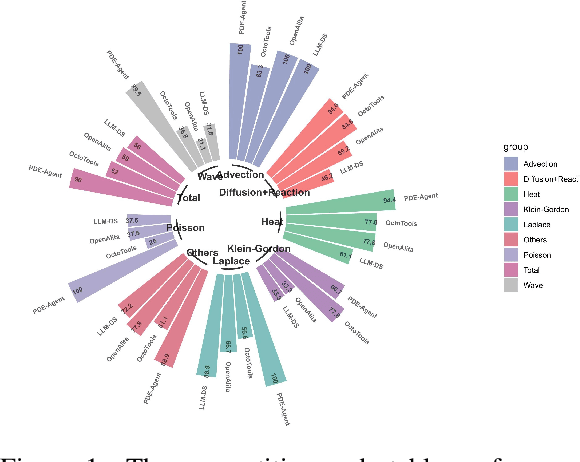
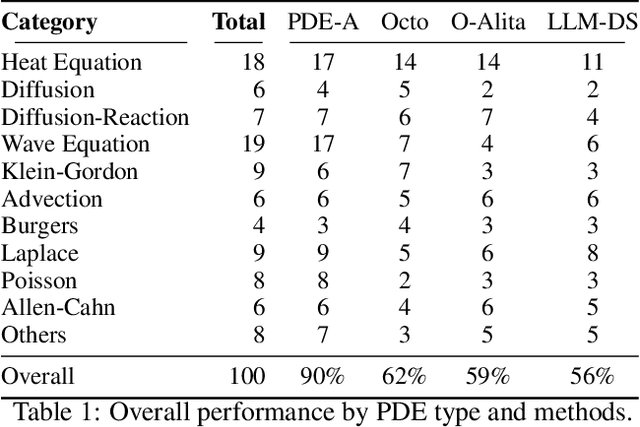
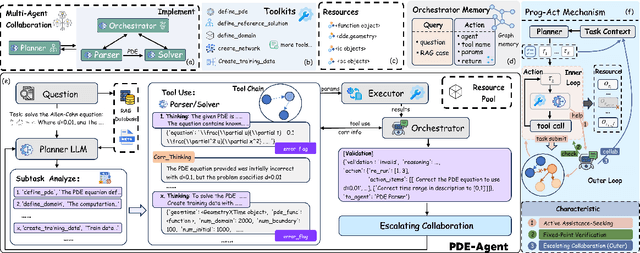
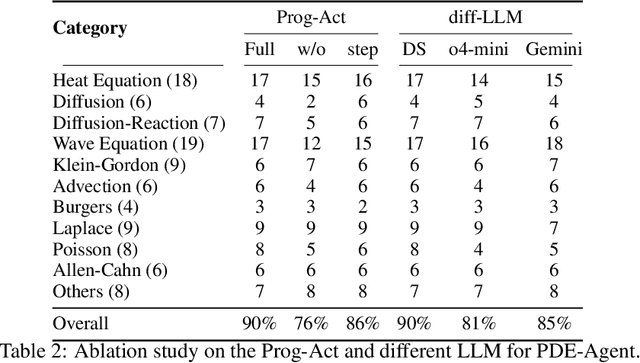
Solving Partial Differential Equations (PDEs) is a cornerstone of engineering and scientific research. Traditional methods for PDE solving are cumbersome, relying on manual setup and domain expertise. While Physics-Informed Neural Network (PINNs) introduced end-to-end neural network-based solutions, and frameworks like DeepXDE further enhanced automation, these approaches still depend on expert knowledge and lack full autonomy. In this work, we frame PDE solving as tool invocation via LLM-driven agents and introduce PDE-Agent, the first toolchain-augmented multi-agent collaboration framework, inheriting the reasoning capacity of LLMs and the controllability of external tools and enabling automated PDE solving from natural language descriptions. PDE-Agent leverages the strengths of multi-agent and multi-tool collaboration through two key innovations: (1) A Prog-Act framework with graph memory for multi-agent collaboration, which enables effective dynamic planning and error correction via dual-loop mechanisms (localized fixes and global revisions). (2) A Resource-Pool integrated with a tool-parameter separation mechanism for multi-tool collaboration. This centralizes the management of runtime artifacts and resolves inter-tool dependency gaps in existing frameworks. To validate and evaluate this new paradigm for PDE solving , we develop PDE-Bench, a multi-type PDE Benchmark for agent-based tool collaborative solving, and propose multi-level metrics for assessing tool coordination. Evaluations verify that PDE-Agent exhibits superior applicability and performance in complex multi-step, cross-step dependent tasks. This new paradigm of toolchain-augmented multi-agent PDE solving will further advance future developments in automated scientific computing. Our source code and dataset will be made publicly available.
ChartAgent: A Chart Understanding Framework with Tool Integrated Reasoning
Dec 16, 2025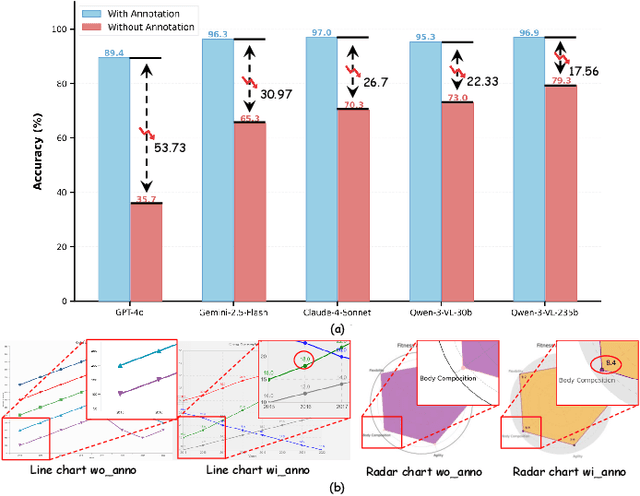
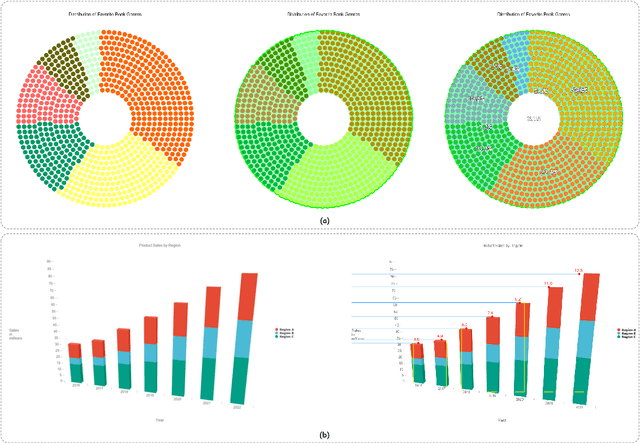
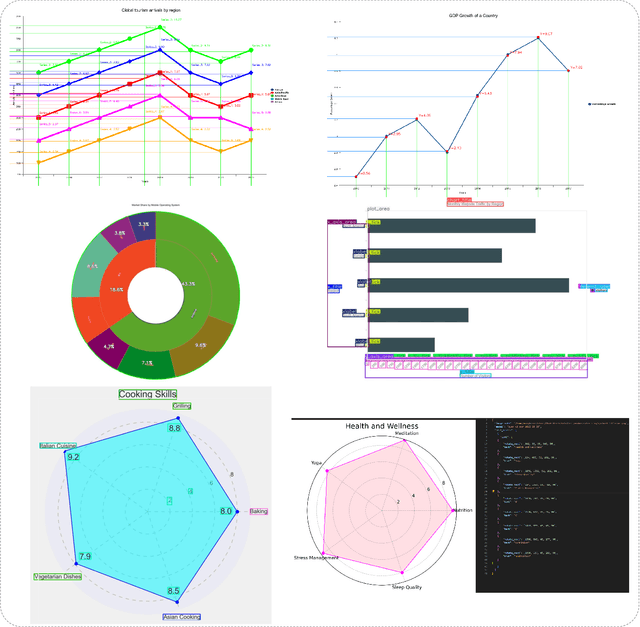
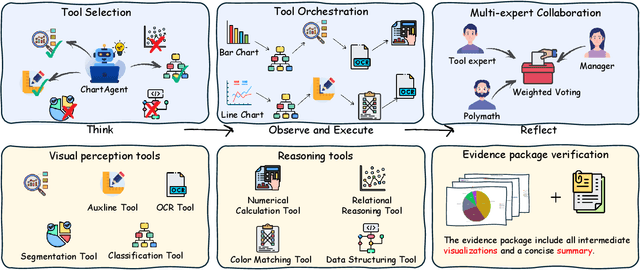
With their high information density and intuitive readability, charts have become the de facto medium for data analysis and communication across disciplines. Recent multimodal large language models (MLLMs) have made notable progress in automated chart understanding, yet they remain heavily dependent on explicit textual annotations and the performance degrades markedly when key numerals are absent. To address this limitation, we introduce ChartAgent, a chart understanding framework grounded in Tool-Integrated Reasoning (TIR). Inspired by human cognition, ChartAgent decomposes complex chart analysis into a sequence of observable, replayable steps. Supporting this architecture is an extensible, modular tool library comprising more than a dozen core tools, such as keyelement detection, instance segmentation, and optical character recognition (OCR), which the agent dynamically orchestrates to achieve systematic visual parsing across diverse chart types. Leveraging TIRs transparency and verifiability, ChartAgent moves beyond the black box paradigm by standardizing and consolidating intermediate outputs into a structured Evidence Package, providing traceable and reproducible support for final conclusions. Experiments show that ChartAgent substantially improves robustness under sparse annotation settings, offering a practical path toward trustworthy and extensible systems for chart understanding.
LLM-Auction: Generative Auction towards LLM-Native Advertising
Dec 11, 2025The rapid advancement of large language models (LLMs) necessitates novel monetization strategies, among which LLM-native advertising has emerged as a promising paradigm by naturally integrating advertisement within LLM-generated responses. However, this paradigm fundamentally shifts the auction object from discrete ad slots to the distribution over LLM outputs, posing new challenges for designing auction mechanisms. Existing mechanisms for LLM-native advertising adopt frameworks that decouple auction and generation, which either ignore externalities or require multiple LLM inferences for ad allocation, rendering them impractical for industrial scenarios. To address these challenges, we propose LLM-Auction, which to the best of our knowledge is the first learning-based generative auction mechanism that integrates auction and LLM generation for LLM-native advertising. By formulating the allocation optimization as a preference alignment problem between LLM outputs and the mechanism's objective which reflects both advertisers' expected value and user experience, we introduce Iterative Reward-Preference Optimization (IRPO) algorithm that alternately optimizes the reward model and the LLM. This approach enables the LLM to inherently model allocation externalities without any extra inference cost. We further identify the allocation monotonicity and continuity of LLM-Auction, which allows us to prove that a simple first-price payment rule exhibits favorable incentive properties. Additionally, we design an LLM-as-a-judge simulation environment to facilitate large-scale data construction and enable comprehensive quantitative evaluation of the mechanism's performance. Extensive quantitative and qualitative experiments demonstrate that LLM-Auction significantly outperforms existing baselines in allocation efficiency, while achieving the desired mechanism properties.
MUSE: A Simple Yet Effective Multimodal Search-Based Framework for Lifelong User Interest Modeling
Dec 08, 2025Lifelong user interest modeling is crucial for industrial recommender systems, yet existing approaches rely predominantly on ID-based features, suffering from poor generalization on long-tail items and limited semantic expressiveness. While recent work explores multimodal representations for behavior retrieval in the General Search Unit (GSU), they often neglect multimodal integration in the fine-grained modeling stage -- the Exact Search Unit (ESU). In this work, we present a systematic analysis of how to effectively leverage multimodal signals across both stages of the two-stage lifelong modeling framework. Our key insight is that simplicity suffices in the GSU: lightweight cosine similarity with high-quality multimodal embeddings outperforms complex retrieval mechanisms. In contrast, the ESU demands richer multimodal sequence modeling and effective ID-multimodal fusion to unlock its full potential. Guided by these principles, we propose MUSE, a simple yet effective multimodal search-based framework. MUSE has been deployed in Taobao display advertising system, enabling 100K-length user behavior sequence modeling and delivering significant gains in top-line metrics with negligible online latency overhead. To foster community research, we share industrial deployment practices and open-source the first large-scale dataset featuring ultra-long behavior sequences paired with high-quality multimodal embeddings. Our code and data is available at https://taobao-mm.github.io.