 Add to Chrome
 Add to Firefox
 Add to Edge
LifeBench: A Benchmark for Long-Horizon Multi-Source Memory
Mar 04, 2026
Long-term memory is fundamental for personalized agents capable of accumulating knowledge, reasoning over user experiences, and adapting across time. However, existing memory benchmarks primarily target declarative memory, specifically semantic and episodic types, where all information is explicitly presented in dialogues. In contrast, real-world actions are also governed by non-declarative memory, including habitual and procedural types, and need to be inferred from diverse digital traces. To bridge this gap, we introduce Lifebench, which features densely connected, long-horizon event simulation. It pushes AI agents beyond simple recall, requiring the integration of declarative and non-declarative memory reasoning across diverse and temporally extended contexts. Building such a benchmark presents two key challenges: ensuring data quality and scalability. We maintain data quality by employing real-world priors, including anonymized social surveys, map APIs, and holiday-integrated calendars, thus enforcing fidelity, diversity and behavioral rationality within the dataset. Towards scalability, we draw inspiration from cognitive science and structure events according to their partonomic hierarchy; enabling efficient parallel generation while maintaining global coherence. Performance results show that top-tier, state-of-the-art memory systems reach just 55.2\% accuracy, highlighting the inherent difficulty of long-horizon retrieval and multi-source integration within our proposed benchmark. The dataset and data synthesis code are available at https://github.com/1754955896/LifeBench.

PDE-Agent: A toolchain-augmented multi-agent framework for PDE solving
Dec 22, 2025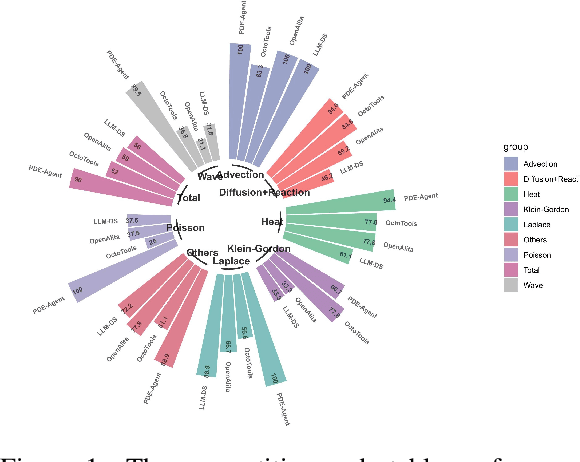
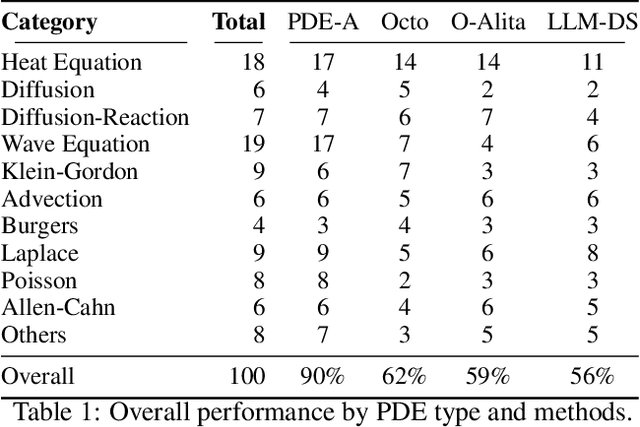
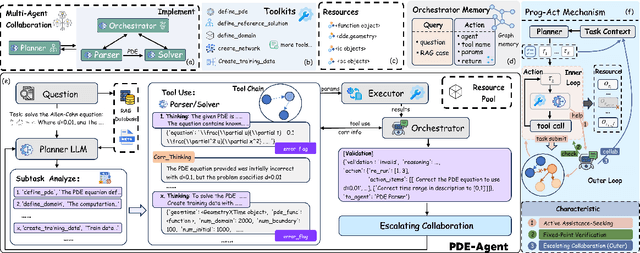
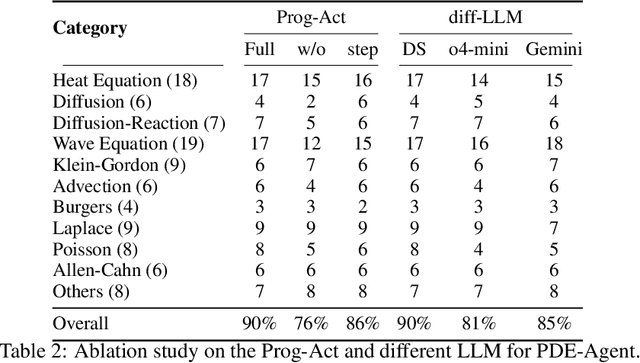
Solving Partial Differential Equations (PDEs) is a cornerstone of engineering and scientific research. Traditional methods for PDE solving are cumbersome, relying on manual setup and domain expertise. While Physics-Informed Neural Network (PINNs) introduced end-to-end neural network-based solutions, and frameworks like DeepXDE further enhanced automation, these approaches still depend on expert knowledge and lack full autonomy. In this work, we frame PDE solving as tool invocation via LLM-driven agents and introduce PDE-Agent, the first toolchain-augmented multi-agent collaboration framework, inheriting the reasoning capacity of LLMs and the controllability of external tools and enabling automated PDE solving from natural language descriptions. PDE-Agent leverages the strengths of multi-agent and multi-tool collaboration through two key innovations: (1) A Prog-Act framework with graph memory for multi-agent collaboration, which enables effective dynamic planning and error correction via dual-loop mechanisms (localized fixes and global revisions). (2) A Resource-Pool integrated with a tool-parameter separation mechanism for multi-tool collaboration. This centralizes the management of runtime artifacts and resolves inter-tool dependency gaps in existing frameworks. To validate and evaluate this new paradigm for PDE solving , we develop PDE-Bench, a multi-type PDE Benchmark for agent-based tool collaborative solving, and propose multi-level metrics for assessing tool coordination. Evaluations verify that PDE-Agent exhibits superior applicability and performance in complex multi-step, cross-step dependent tasks. This new paradigm of toolchain-augmented multi-agent PDE solving will further advance future developments in automated scientific computing. Our source code and dataset will be made publicly available.
DLMMPR:Deep Learning-based Measurement Matrix for Phase Retrieval
Nov 16, 2025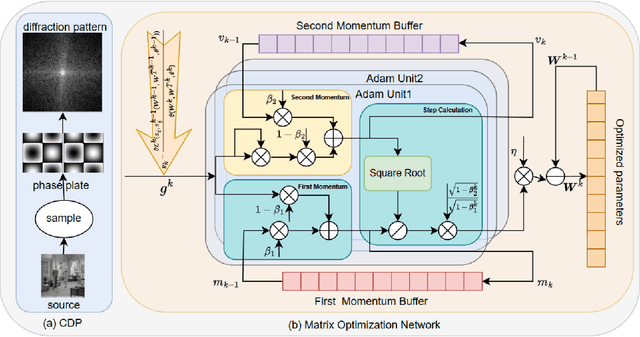
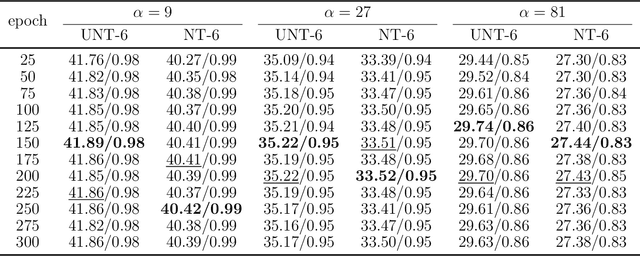
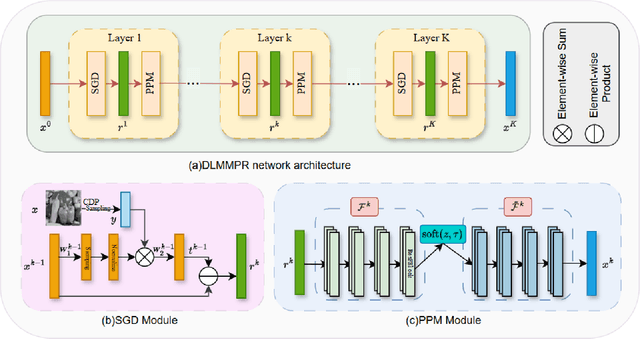
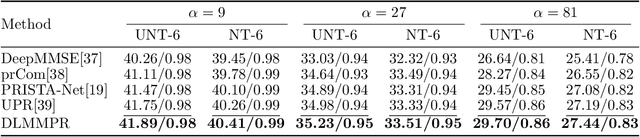
This paper pioneers the integration of learning optimization into measurement matrix design for phase retrieval. We introduce the Deep Learning-based Measurement Matrix for Phase Retrieval (DLMMPR) algorithm, which parameterizes the measurement matrix within an end-to-end deep learning architecture. Synergistically augmented with subgradient descent and proximal mapping modules for robust recovery, DLMMPR's efficacy is decisively confirmed through comprehensive empirical validation across diverse noise regimes. Benchmarked against DeepMMSE and PrComplex, our method yields substantial gains in PSNR and SSIM, underscoring its superiority.