 Add to Chrome
 Add to Firefox
 Add to Edge
LLM-Auction: Generative Auction towards LLM-Native Advertising
Dec 11, 2025
The rapid advancement of large language models (LLMs) necessitates novel monetization strategies, among which LLM-native advertising has emerged as a promising paradigm by naturally integrating advertisement within LLM-generated responses. However, this paradigm fundamentally shifts the auction object from discrete ad slots to the distribution over LLM outputs, posing new challenges for designing auction mechanisms. Existing mechanisms for LLM-native advertising adopt frameworks that decouple auction and generation, which either ignore externalities or require multiple LLM inferences for ad allocation, rendering them impractical for industrial scenarios. To address these challenges, we propose LLM-Auction, which to the best of our knowledge is the first learning-based generative auction mechanism that integrates auction and LLM generation for LLM-native advertising. By formulating the allocation optimization as a preference alignment problem between LLM outputs and the mechanism's objective which reflects both advertisers' expected value and user experience, we introduce Iterative Reward-Preference Optimization (IRPO) algorithm that alternately optimizes the reward model and the LLM. This approach enables the LLM to inherently model allocation externalities without any extra inference cost. We further identify the allocation monotonicity and continuity of LLM-Auction, which allows us to prove that a simple first-price payment rule exhibits favorable incentive properties. Additionally, we design an LLM-as-a-judge simulation environment to facilitate large-scale data construction and enable comprehensive quantitative evaluation of the mechanism's performance. Extensive quantitative and qualitative experiments demonstrate that LLM-Auction significantly outperforms existing baselines in allocation efficiency, while achieving the desired mechanism properties.

Feature Contamination: Neural Networks Learn Uncorrelated Features and Fail to Generalize
Jun 06, 2024
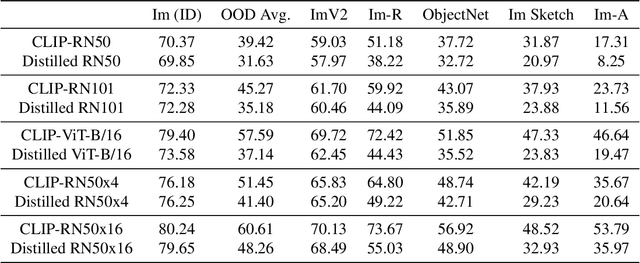

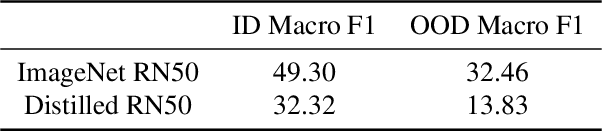
Learning representations that generalize under distribution shifts is critical for building robust machine learning models. However, despite significant efforts in recent years, algorithmic advances in this direction have been limited. In this work, we seek to understand the fundamental difficulty of out-of-distribution generalization with deep neural networks. We first empirically show that perhaps surprisingly, even allowing a neural network to explicitly fit the representations obtained from a teacher network that can generalize out-of-distribution is insufficient for the generalization of the student network. Then, by a theoretical study of two-layer ReLU networks optimized by stochastic gradient descent (SGD) under a structured feature model, we identify a fundamental yet unexplored feature learning proclivity of neural networks, feature contamination: neural networks can learn uncorrelated features together with predictive features, resulting in generalization failure under distribution shifts. Notably, this mechanism essentially differs from the prevailing narrative in the literature that attributes the generalization failure to spurious correlations. Overall, our results offer new insights into the non-linear feature learning dynamics of neural networks and highlight the necessity of considering inductive biases in out-of-distribution generalization.
Preserving Silent Features for Domain Generalization
Jan 06, 2024Domain generalization (DG) aims to improve the generalization ability of the model trained on several known training domains over unseen test domains. Previous work has shown that self-supervised contrastive pre-training improves the robustness of the model on downstream tasks. However, in this paper, we find that self-supervised models do not exhibit better generalization performance than supervised models pre-trained on the same dataset in the DG setting. We argue that this is owing to the fact that the richer intra-class discriminative features extracted by self-supervised contrastive learning, which we term silent features, are suppressed during supervised fine-tuning. These silent features are likely to contain features that are more generalizable on the test domain. In this work, we model and analyze this feature suppression phenomenon and theoretically prove that preserving silent features can achieve lower expected test domain risk under certain conditions. In light of this, we propose a simple yet effective method termed STEP (Silent Feature Preservation) to improve the generalization performance of the self-supervised contrastive learning pre-trained model by alleviating the suppression of silent features during the supervised fine-tuning process. Experimental results show that STEP exhibits state-of-the-art performance on standard DG benchmarks with significant distribution shifts.