 Add to Chrome
 Add to Firefox
 Add to Edge
Occlusion-Aware Seamless Segmentation
Jul 02, 2024
Panoramic images can broaden the Field of View (FoV), occlusion-aware prediction can deepen the understanding of the scene, and domain adaptation can transfer across viewing domains. In this work, we introduce a novel task, Occlusion-Aware Seamless Segmentation (OASS), which simultaneously tackles all these three challenges. For benchmarking OASS, we establish a new human-annotated dataset for Blending Panoramic Amodal Seamless Segmentation, i.e., BlendPASS. Besides, we propose the first solution UnmaskFormer, aiming at unmasking the narrow FoV, occlusions, and domain gaps all at once. Specifically, UnmaskFormer includes the crucial designs of Unmasking Attention (UA) and Amodal-oriented Mix (AoMix). Our method achieves state-of-the-art performance on the BlendPASS dataset, reaching a remarkable mAPQ of 26.58% and mIoU of 43.66%. On public panoramic semantic segmentation datasets, i.e., SynPASS and DensePASS, our method outperforms previous methods and obtains 45.34% and 48.08% in mIoU, respectively. The fresh BlendPASS dataset and our source code will be made publicly available at https://github.com/yihong-97/OASS.

SegNet4D: Effective and Efficient 4D LiDAR Semantic Segmentation in Autonomous Driving Environments
Jun 24, 2024


4D LiDAR semantic segmentation, also referred to as multi-scan semantic segmentation, plays a crucial role in enhancing the environmental understanding capabilities of autonomous vehicles. It entails identifying the semantic category of each point in the LiDAR scan and distinguishing whether it is dynamic, a critical aspect in downstream tasks such as path planning and autonomous navigation. Existing methods for 4D semantic segmentation often rely on computationally intensive 4D convolutions for multi-scan input, resulting in poor real-time performance. In this article, we introduce SegNet4D, a novel real-time multi-scan semantic segmentation method leveraging a projection-based approach for fast motion feature encoding, showcasing outstanding performance. SegNet4D treats 4D semantic segmentation as two distinct tasks: single-scan semantic segmentation and moving object segmentation, each addressed by dedicated head. These results are then fused in the proposed motion-semantic fusion module to achieve comprehensive multi-scan semantic segmentation. Besides, we propose extracting instance information from the current scan and incorporating it into the network for instance-aware segmentation. Our approach exhibits state-of-the-art performance across multiple datasets and stands out as a real-time multi-scan semantic segmentation method. The implementation of SegNet4D will be made available at \url{https://github.com/nubot-nudt/SegNet4D}.
Is Your HD Map Constructor Reliable under Sensor Corruptions?
Jun 18, 2024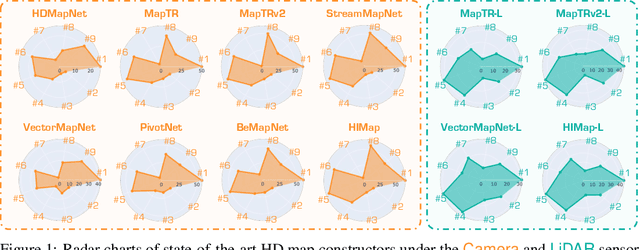
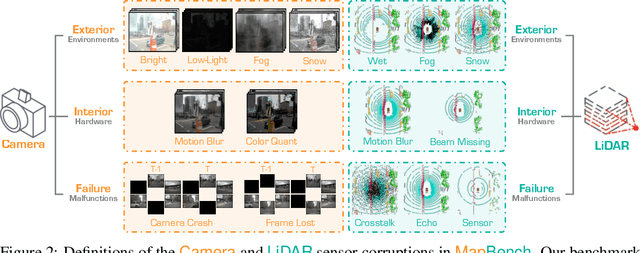
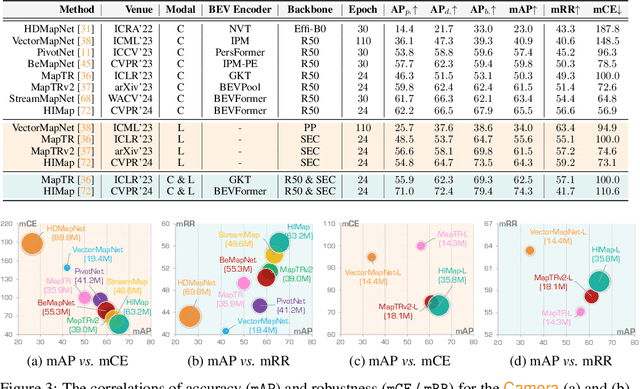
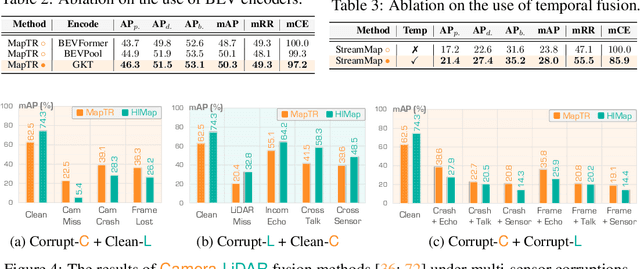
Driving systems often rely on high-definition (HD) maps for precise environmental information, which is crucial for planning and navigation. While current HD map constructors perform well under ideal conditions, their resilience to real-world challenges, \eg, adverse weather and sensor failures, is not well understood, raising safety concerns. This work introduces MapBench, the first comprehensive benchmark designed to evaluate the robustness of HD map construction methods against various sensor corruptions. Our benchmark encompasses a total of 29 types of corruptions that occur from cameras and LiDAR sensors. Extensive evaluations across 31 HD map constructors reveal significant performance degradation of existing methods under adverse weather conditions and sensor failures, underscoring critical safety concerns. We identify effective strategies for enhancing robustness, including innovative approaches that leverage multi-modal fusion, advanced data augmentation, and architectural techniques. These insights provide a pathway for developing more reliable HD map construction methods, which are essential for the advancement of autonomous driving technology. The benchmark toolkit and affiliated code and model checkpoints have been made publicly accessible.
Teaching with Uncertainty: Unleashing the Potential of Knowledge Distillation in Object Detection
Jun 11, 2024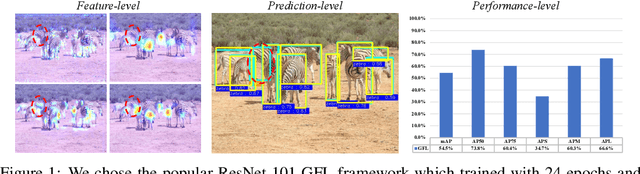
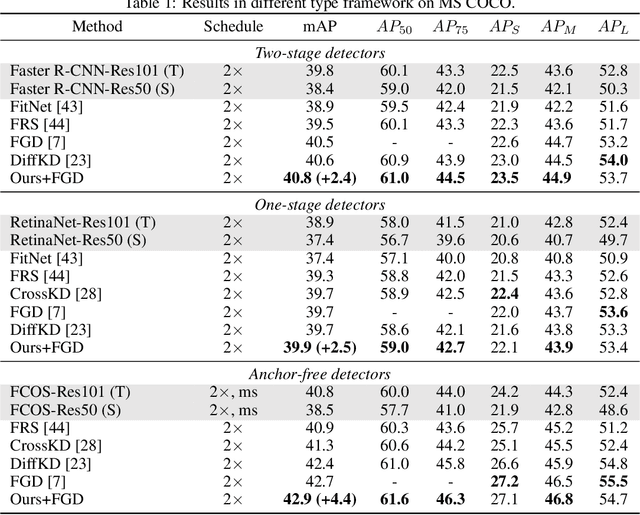
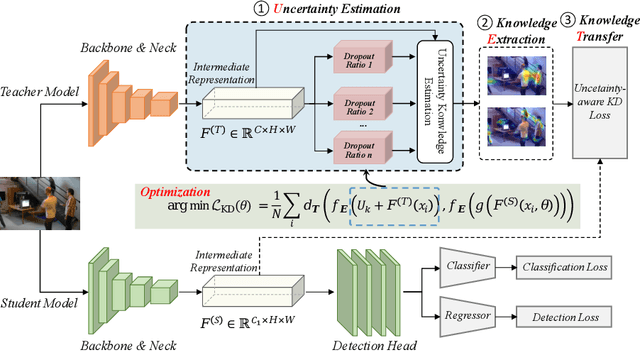
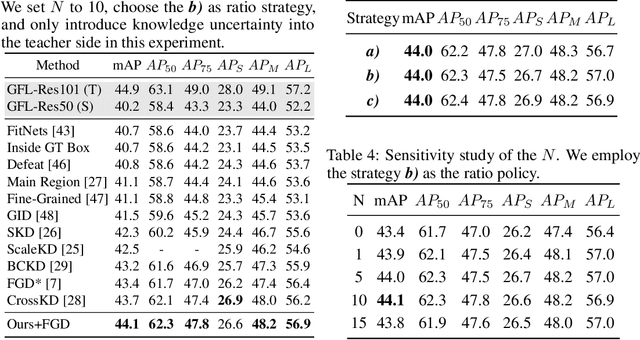
Knowledge distillation (KD) is a widely adopted and effective method for compressing models in object detection tasks. Particularly, feature-based distillation methods have shown remarkable performance. Existing approaches often ignore the uncertainty in the teacher model's knowledge, which stems from data noise and imperfect training. This limits the student model's ability to learn latent knowledge, as it may overly rely on the teacher's imperfect guidance. In this paper, we propose a novel feature-based distillation paradigm with knowledge uncertainty for object detection, termed "Uncertainty Estimation-Discriminative Knowledge Extraction-Knowledge Transfer (UET)", which can seamlessly integrate with existing distillation methods. By leveraging the Monte Carlo dropout technique, we introduce knowledge uncertainty into the training process of the student model, facilitating deeper exploration of latent knowledge. Our method performs effectively during the KD process without requiring intricate structures or extensive computational resources. Extensive experiments validate the effectiveness of our proposed approach across various distillation strategies, detectors, and backbone architectures. Specifically, following our proposed paradigm, the existing FGD method achieves state-of-the-art (SoTA) performance, with ResNet50-based GFL achieving 44.1% mAP on the COCO dataset, surpassing the baselines by 3.9%.
Nacala-Roof-Material: Drone Imagery for Roof Detection, Classification, and Segmentation to Support Mosquito-borne Disease Risk Assessment
Jun 07, 2024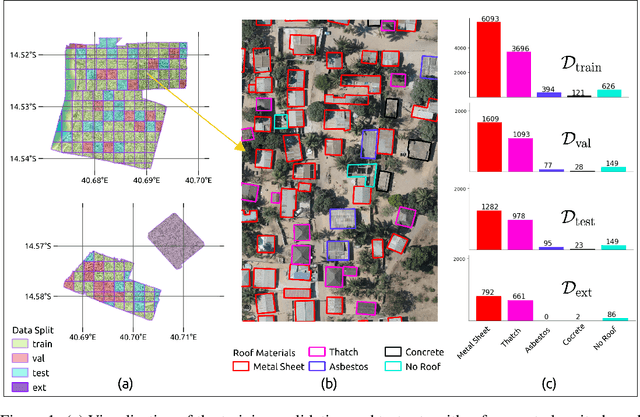
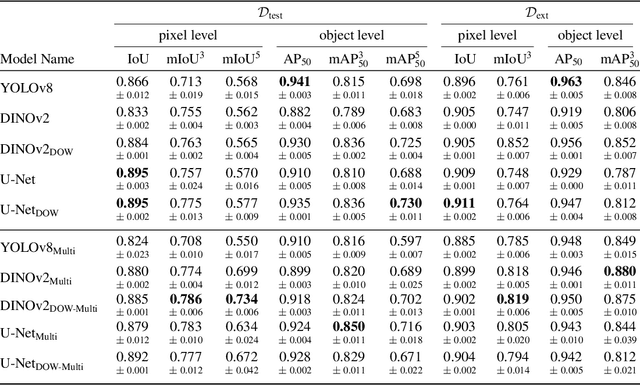
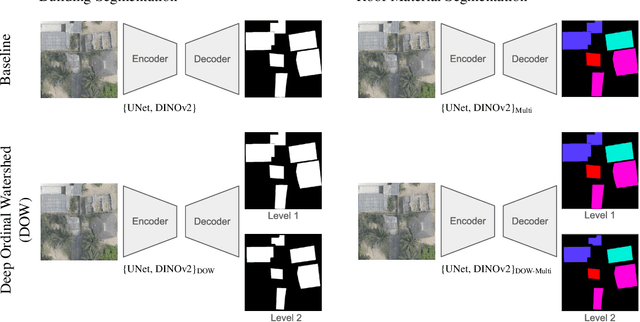
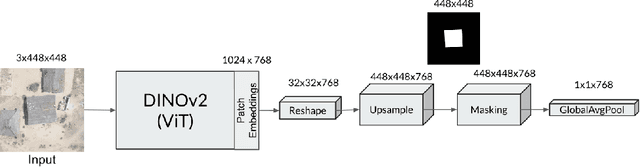
As low-quality housing and in particular certain roof characteristics are associated with an increased risk of malaria, classification of roof types based on remote sensing imagery can support the assessment of malaria risk and thereby help prevent the disease. To support research in this area, we release the Nacala-Roof-Material dataset, which contains high-resolution drone images from Mozambique with corresponding labels delineating houses and specifying their roof types. The dataset defines a multi-task computer vision problem, comprising object detection, classification, and segmentation. In addition, we benchmarked various state-of-the-art approaches on the dataset. Canonical U-Nets, YOLOv8, and a custom decoder on pretrained DINOv2 served as baselines. We show that each of the methods has its advantages but none is superior on all tasks, which highlights the potential of our dataset for future research in multi-task learning. While the tasks are closely related, accurate segmentation of objects does not necessarily imply accurate instance separation, and vice versa. We address this general issue by introducing a variant of the deep ordinal watershed (DOW) approach that additionally separates the interior of objects, allowing for improved object delineation and separation. We show that our DOW variant is a generic approach that improves the performance of both U-Net and DINOv2 backbones, leading to a better trade-off between semantic segmentation and instance segmentation.
All-In-One Medical Image Restoration via Task-Adaptive Routing
May 30, 2024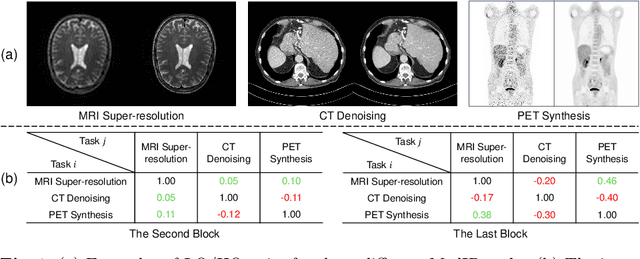
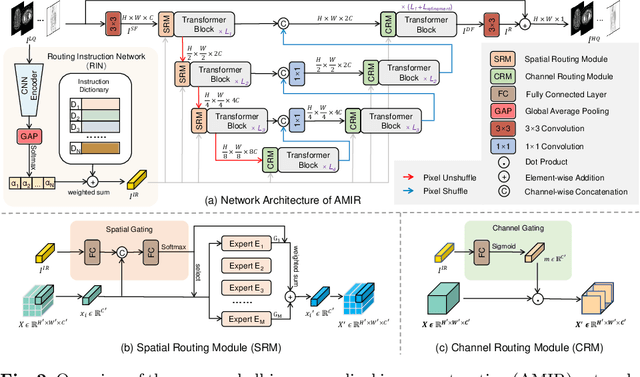
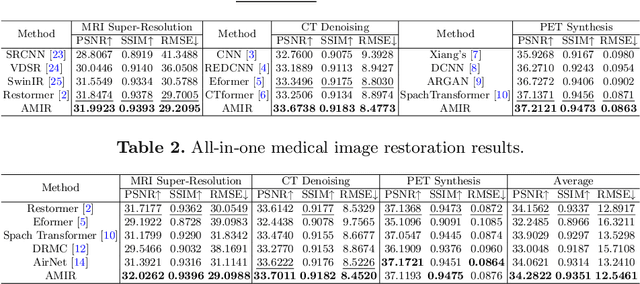
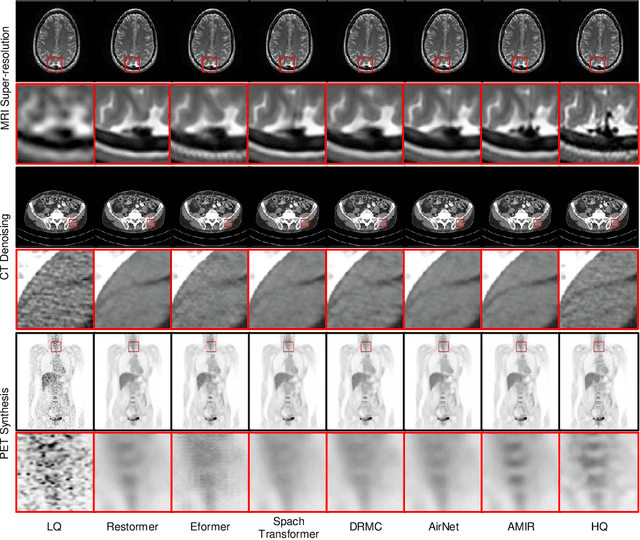
Although single-task medical image restoration (MedIR) has witnessed remarkable success, the limited generalizability of these methods poses a substantial obstacle to wider application. In this paper, we focus on the task of all-in-one medical image restoration, aiming to address multiple distinct MedIR tasks with a single universal model. Nonetheless, due to significant differences between different MedIR tasks, training a universal model often encounters task interference issues, where different tasks with shared parameters may conflict with each other in the gradient update direction. This task interference leads to deviation of the model update direction from the optimal path, thereby affecting the model's performance. To tackle this issue, we propose a task-adaptive routing strategy, allowing conflicting tasks to select different network paths in spatial and channel dimensions, thereby mitigating task interference. Experimental results demonstrate that our proposed \textbf{A}ll-in-one \textbf{M}edical \textbf{I}mage \textbf{R}estoration (\textbf{AMIR}) network achieves state-of-the-art performance in three MedIR tasks: MRI super-resolution, CT denoising, and PET synthesis, both in single-task and all-in-one settings. The code and data will be available at \href{https://github.com/Yaziwel/All-In-One-Medical-Image-Restoration-via-Task-Adaptive-Routing.git}{https://github.com/Yaziwel/AMIR}.
Dynamic Identity-Guided Attention Network for Visible-Infrared Person Re-identification
May 21, 2024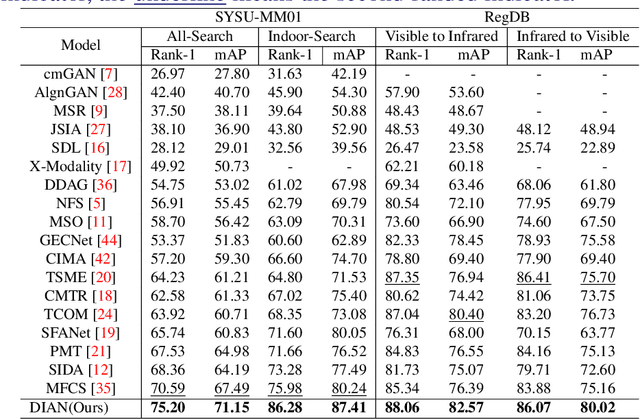
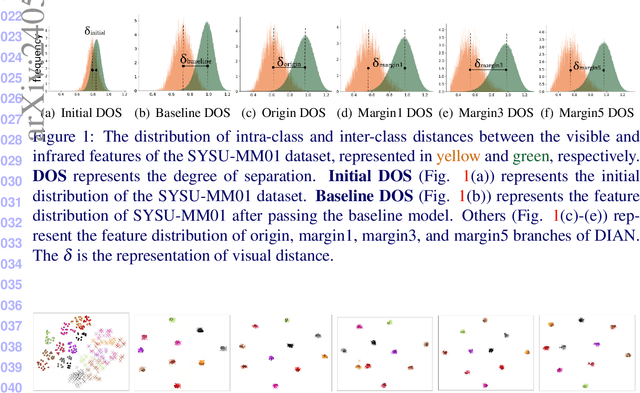
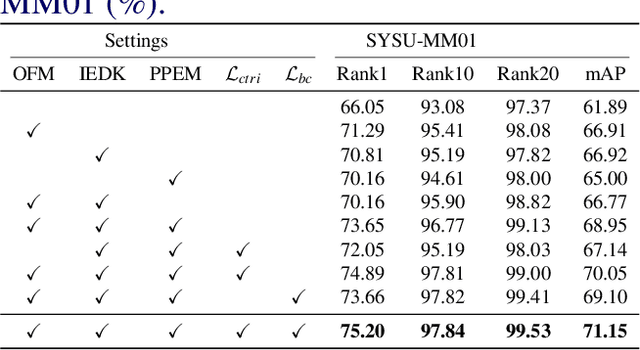
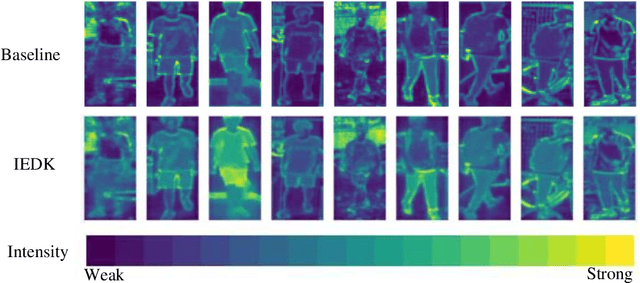
Visible-infrared person re-identification (VI-ReID) aims to match people with the same identity between visible and infrared modalities. VI-ReID is a challenging task due to the large differences in individual appearance under different modalities. Existing methods generally try to bridge the cross-modal differences at image or feature level, which lacks exploring the discriminative embeddings. Effectively minimizing these cross-modal discrepancies relies on obtaining representations that are guided by identity and consistent across modalities, while also filtering out representations that are irrelevant to identity. To address these challenges, we introduce a dynamic identity-guided attention network (DIAN) to mine identity-guided and modality-consistent embeddings, facilitating effective bridging the gap between different modalities. Specifically, in DIAN, to pursue a semantically richer representation, we first use orthogonal projection to fuse the features from two connected coarse and fine layers. Furthermore, we first use dynamic convolution kernels to mine identity-guided and modality-consistent representations. More notably, a cross embedding balancing loss is introduced to effectively bridge cross-modal discrepancies by above embeddings. Experimental results on SYSU-MM01 and RegDB datasets show that DIAN achieves state-of-the-art performance. Specifically, for indoor search on SYSU-MM01, our method achieves 86.28% rank-1 accuracy and 87.41% mAP, respectively. Our code will be available soon.
Team Samsung-RAL: Technical Report for 2024 RoboDrive Challenge-Robust Map Segmentation Track
May 17, 2024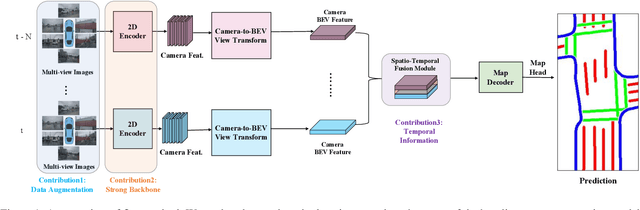

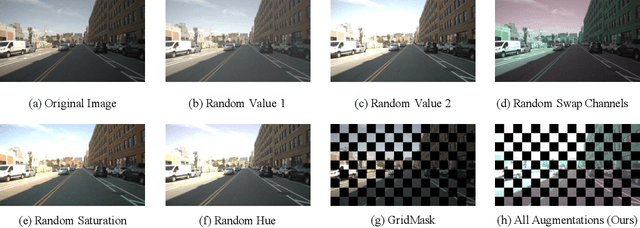

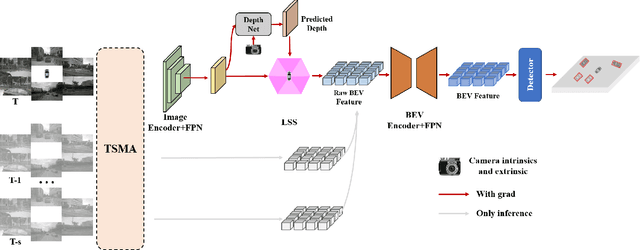
In this report, we describe the technical details of our submission to the 2024 RoboDrive Challenge Robust Map Segmentation Track. The Robust Map Segmentation track focuses on the segmentation of complex driving scene elements in BEV maps under varied driving conditions. Semantic map segmentation provides abundant and precise static environmental information crucial for autonomous driving systems' planning and navigation. While current methods excel in ideal circumstances, e.g., clear daytime conditions and fully functional sensors, their resilience to real-world challenges like adverse weather and sensor failures remains unclear, raising concerns about system safety. In this paper, we explored several methods to improve the robustness of the map segmentation task. The details are as follows: 1) Robustness analysis of utilizing temporal information; 2) Robustness analysis of utilizing different backbones; and 3) Data Augmentation to boost corruption robustness. Based on the evaluation results, we draw several important findings including 1) The temporal fusion module is effective in improving the robustness of the map segmentation model; 2) A strong backbone is effective for improving the corruption robustness; and 3) Some data augmentation methods are effective in improving the robustness of map segmentation models. These novel findings allowed us to achieve promising results in the 2024 RoboDrive Challenge-Robust Map Segmentation Track.
Eddeep: Fast eddy-current distortion correction for diffusion MRI with deep learning
May 17, 2024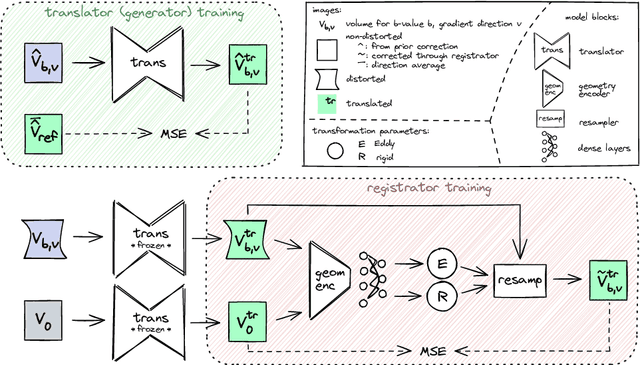
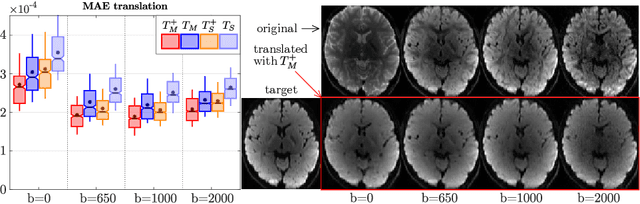

Modern diffusion MRI sequences commonly acquire a large number of volumes with diffusion sensitization gradients of differing strengths or directions. Such sequences rely on echo-planar imaging (EPI) to achieve reasonable scan duration. However, EPI is vulnerable to off-resonance effects, leading to tissue susceptibility and eddy-current induced distortions. The latter is particularly problematic because it causes misalignment between volumes, disrupting downstream modelling and analysis. The essential correction of eddy distortions is typically done post-acquisition, with image registration. However, this is non-trivial because correspondence between volumes can be severely disrupted due to volume-specific signal attenuations induced by varying directions and strengths of the applied gradients. This challenge has been successfully addressed by the popular FSL~Eddy tool but at considerable computational cost. We propose an alternative approach, leveraging recent advances in image processing enabled by deep learning (DL). It consists of two convolutional neural networks: 1) An image translator to restore correspondence between images; 2) A registration model to align the translated images. Results demonstrate comparable distortion estimates to FSL~Eddy, while requiring only modest training sample sizes. This work, to the best of our knowledge, is the first to tackle this problem with deep learning. Together with recently developed DL-based susceptibility correction techniques, they pave the way for real-time preprocessing of diffusion MRI, facilitating its wider uptake in the clinic.
The RoboDrive Challenge: Drive Anytime Anywhere in Any Condition
May 14, 2024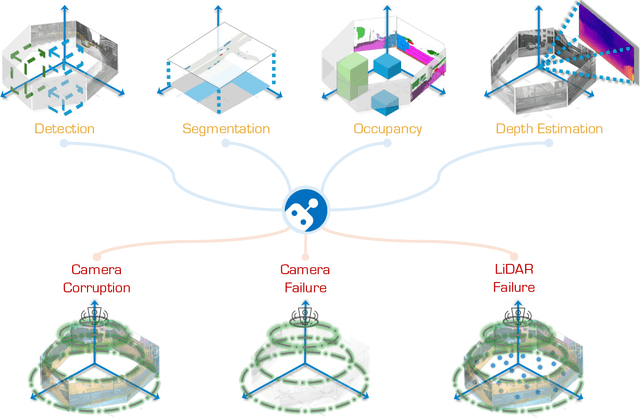


In the realm of autonomous driving, robust perception under out-of-distribution conditions is paramount for the safe deployment of vehicles. Challenges such as adverse weather, sensor malfunctions, and environmental unpredictability can severely impact the performance of autonomous systems. The 2024 RoboDrive Challenge was crafted to propel the development of driving perception technologies that can withstand and adapt to these real-world variabilities. Focusing on four pivotal tasks -- BEV detection, map segmentation, semantic occupancy prediction, and multi-view depth estimation -- the competition laid down a gauntlet to innovate and enhance system resilience against typical and atypical disturbances. This year's challenge consisted of five distinct tracks and attracted 140 registered teams from 93 institutes across 11 countries, resulting in nearly one thousand submissions evaluated through our servers. The competition culminated in 15 top-performing solutions, which introduced a range of innovative approaches including advanced data augmentation, multi-sensor fusion, self-supervised learning for error correction, and new algorithmic strategies to enhance sensor robustness. These contributions significantly advanced the state of the art, particularly in handling sensor inconsistencies and environmental variability. Participants, through collaborative efforts, pushed the boundaries of current technologies, showcasing their potential in real-world scenarios. Extensive evaluations and analyses provided insights into the effectiveness of these solutions, highlighting key trends and successful strategies for improving the resilience of driving perception systems. This challenge has set a new benchmark in the field, providing a rich repository of techniques expected to guide future research in this field.