 Add to Chrome
 Add to Firefox
 Add to Edge
Eddeep: a deep-learning framework for fast eddy-current distortion correction in diffusion MRI
Jul 28, 2026
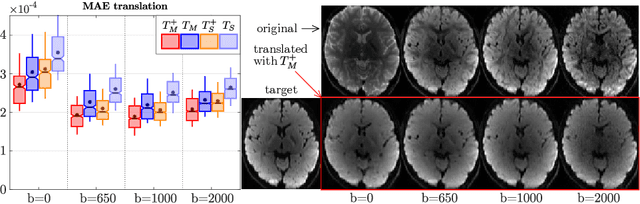
Diffusion MRI (dMRI) relies on diffusion-weighted echo-planar imaging, which is highly susceptible to eddy-current-induced geometric distortions. These distortions vary across diffusion volumes according to gradient strength and direction, causing between-volume misalignment that can bias downstream microstructural analyses. Current state-of-the-art correction methods, such as FSL Eddy, achieve high-quality correction through iterative prediction-correction schemes but are computationally expensive. We propose Eddeep, a deep-learning framework for fast eddy-current distortion correction in dMRI. Eddeep decomposes the problem into two stages. First, a supervised image translation network standardises the appearance of diffusion-weighted and b=0 images, removing contrast differences that hinder reliable registration. Second, an unsupervised registration network estimates both eddy-current distortion and between-volume head motion parameters under a physics-constrained quadratic distortion model, enabling correction in a single forward pass. The method was trained on UK Biobank data and evaluated on both in-domain (UK Biobank) and out-of-domain (Memodyn) datasets. Across a range of complementary metrics, including between-volume jitter, diffusion kurtosis imaging residuals, signal irregularity, and mutual information, Eddeep achieved correction quality comparable to that of FSL Eddy while substantially reducing inference time. These results demonstrate that deep learning can provide accurate and efficient eddy-current distortion correction without relying on iterative optimisation, supporting the development of faster diffusion MRI processing pipelines for large-scale studies and clinical deployment. The code is available at: https://github.com/CIG-UCL/eddeep.

Eddeep: Fast eddy-current distortion correction for diffusion MRI with deep learning
May 17, 2024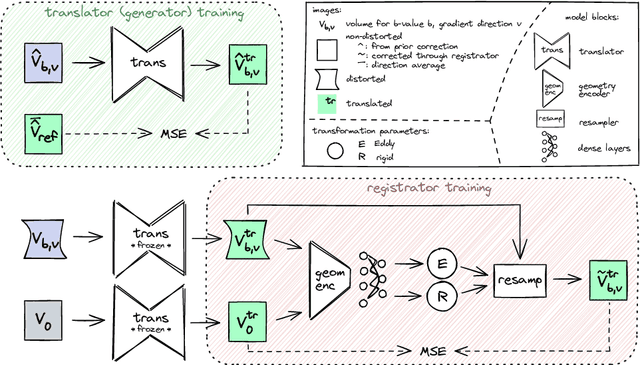

Modern diffusion MRI sequences commonly acquire a large number of volumes with diffusion sensitization gradients of differing strengths or directions. Such sequences rely on echo-planar imaging (EPI) to achieve reasonable scan duration. However, EPI is vulnerable to off-resonance effects, leading to tissue susceptibility and eddy-current induced distortions. The latter is particularly problematic because it causes misalignment between volumes, disrupting downstream modelling and analysis. The essential correction of eddy distortions is typically done post-acquisition, with image registration. However, this is non-trivial because correspondence between volumes can be severely disrupted due to volume-specific signal attenuations induced by varying directions and strengths of the applied gradients. This challenge has been successfully addressed by the popular FSL~Eddy tool but at considerable computational cost. We propose an alternative approach, leveraging recent advances in image processing enabled by deep learning (DL). It consists of two convolutional neural networks: 1) An image translator to restore correspondence between images; 2) A registration model to align the translated images. Results demonstrate comparable distortion estimates to FSL~Eddy, while requiring only modest training sample sizes. This work, to the best of our knowledge, is the first to tackle this problem with deep learning. Together with recently developed DL-based susceptibility correction techniques, they pave the way for real-time preprocessing of diffusion MRI, facilitating its wider uptake in the clinic.