 Add to Chrome
 Add to Firefox
 Add to Edge
High-Precision Dichotomous Image Segmentation via Probing Diffusion Capacity
Oct 14, 2024

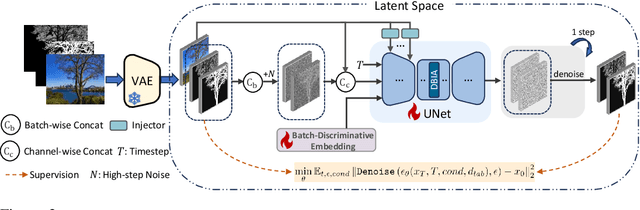
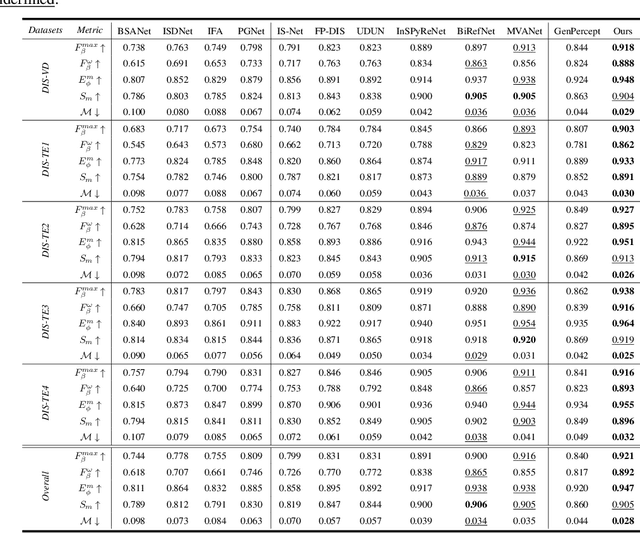
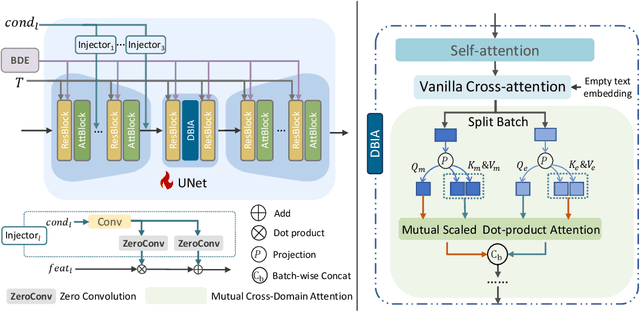
In the realm of high-resolution (HR), fine-grained image segmentation, the primary challenge is balancing broad contextual awareness with the precision required for detailed object delineation, capturing intricate details and the finest edges of objects. Diffusion models, trained on vast datasets comprising billions of image-text pairs, such as SD V2.1, have revolutionized text-to-image synthesis by delivering exceptional quality, fine detail resolution, and strong contextual awareness, making them an attractive solution for high-resolution image segmentation. To this end, we propose DiffDIS, a diffusion-driven segmentation model that taps into the potential of the pre-trained U-Net within diffusion models, specifically designed for high-resolution, fine-grained object segmentation. By leveraging the robust generalization capabilities and rich, versatile image representation prior of the SD models, coupled with a task-specific stable one-step denoising approach, we significantly reduce the inference time while preserving high-fidelity, detailed generation. Additionally, we introduce an auxiliary edge generation task to not only enhance the preservation of fine details of the object boundaries, but reconcile the probabilistic nature of diffusion with the deterministic demands of segmentation. With these refined strategies in place, DiffDIS serves as a rapid object mask generation model, specifically optimized for generating detailed binary maps at high resolutions, while demonstrating impressive accuracy and swift processing. Experiments on the DIS5K dataset demonstrate the superiority of DiffDIS, achieving state-of-the-art results through a streamlined inference process. Our code will be made publicly available.

FSOS-AMC: Few-Shot Open-Set Learning for Automatic Modulation Classification
Oct 14, 2024
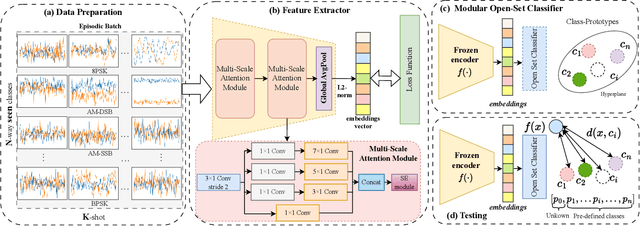
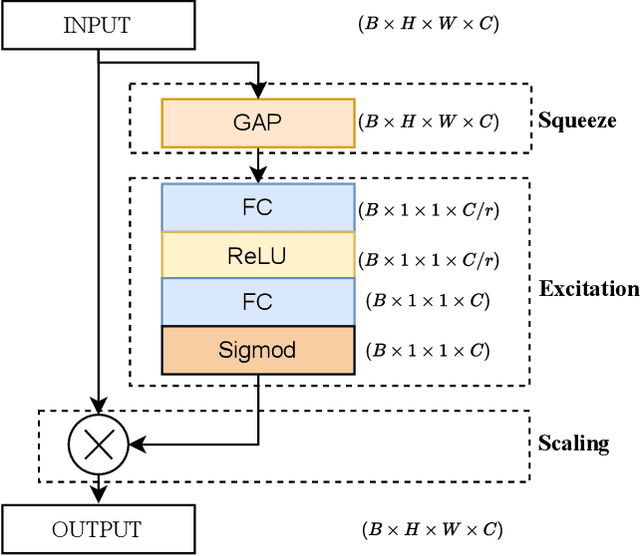
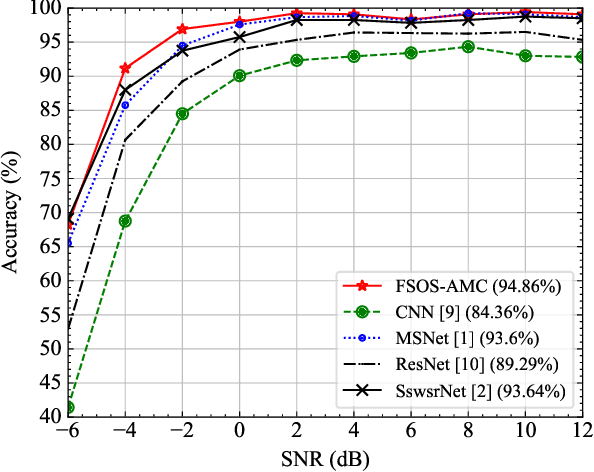
Automatic modulation classification (AMC) is essential for the advancement and efficiency of future wireless communication networks. Deep learning (DL)-based AMC frameworks have garnered extensive attention for their impressive classification performance. However, existing DL-based AMC frameworks rely on two assumptions, large-scale training data and the same class pool between the training and testing data, which are not suitable for \emph{few-shot and open-set} scenarios. To address this issue, a novel few-shot open-set automatic modulation classification (FSOS-AMC) framework is proposed by exploiting a multi-scale attention network, meta-prototype training, and a modular open-set classifier. The multi-scale attention network is used to extract the features from the input signal, the meta-prototype training is adopted to train the feature extractor and the modular open-set classifier can be utilized to classify the testing data into one of the known modulations or potential unknown modulations. Extensive simulation results demonstrate that the proposed FSOS-AMC framework can achieve higher classification accuracy than the state-of-the-art methods for known modulations and unknown modulations in terms of accuracy and area under the receiver operating characteristic curve (AUROC). Moreover, the performance of the proposed FSOS-AMC framework under low signal-to-noise ratio (SNR) conditions is much better than the compared schemes.
Scalable Weibull Graph Attention Autoencoder for Modeling Document Networks
Oct 13, 2024
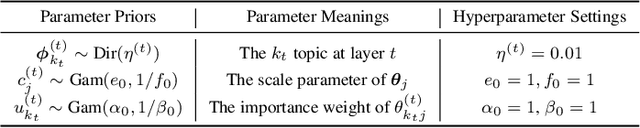
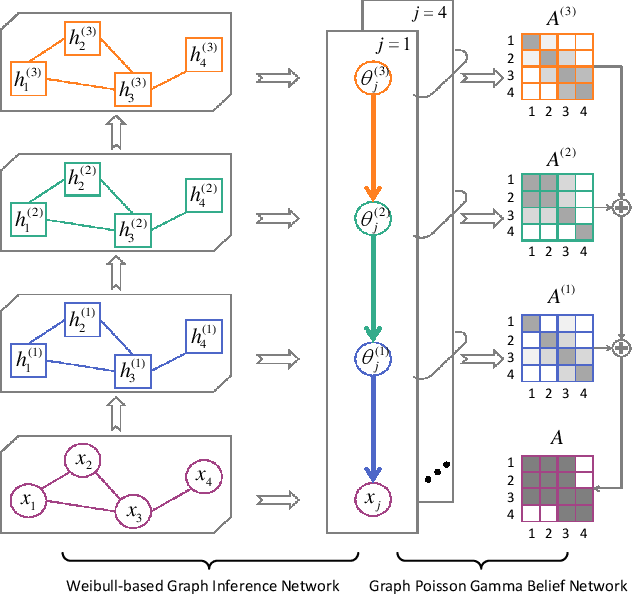

Although existing variational graph autoencoders (VGAEs) have been widely used for modeling and generating graph-structured data, most of them are still not flexible enough to approximate the sparse and skewed latent node representations, especially those of document relational networks (DRNs) with discrete observations. To analyze a collection of interconnected documents, a typical branch of Bayesian models, specifically relational topic models (RTMs), has proven their efficacy in describing both link structures and document contents of DRNs, which motives us to incorporate RTMs with existing VGAEs to alleviate their potential issues when modeling the generation of DRNs. In this paper, moving beyond the sophisticated approximate assumptions of traditional RTMs, we develop a graph Poisson factor analysis (GPFA), which provides analytic conditional posteriors to improve the inference accuracy, and extend GPFA to a multi-stochastic-layer version named graph Poisson gamma belief network (GPGBN) to capture the hierarchical document relationships at multiple semantic levels. Then, taking GPGBN as the decoder, we combine it with various Weibull-based graph inference networks, resulting in two variants of Weibull graph auto-encoder (WGAE), equipped with model inference algorithms. Experimental results demonstrate that our models can extract high-quality hierarchical latent document representations and achieve promising performance on various graph analytic tasks.
GALA: Geometry-Aware Local Adaptive Grids for Detailed 3D Generation
Oct 13, 2024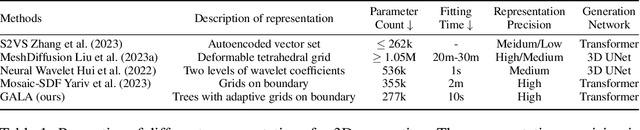


We propose GALA, a novel representation of 3D shapes that (i) excels at capturing and reproducing complex geometry and surface details, (ii) is computationally efficient, and (iii) lends itself to 3D generative modelling with modern, diffusion-based schemes. The key idea of GALA is to exploit both the global sparsity of surfaces within a 3D volume and their local surface properties. Sparsity is promoted by covering only the 3D object boundaries, not empty space, with an ensemble of tree root voxels. Each voxel contains an octree to further limit storage and compute to regions that contain surfaces. Adaptivity is achieved by fitting one local and geometry-aware coordinate frame in each non-empty leaf node. Adjusting the orientation of the local grid, as well as the anisotropic scales of its axes, to the local surface shape greatly increases the amount of detail that can be stored in a given amount of memory, which in turn allows for quantization without loss of quality. With our optimized C++/CUDA implementation, GALA can be fitted to an object in less than 10 seconds. Moreover, the representation can efficiently be flattened and manipulated with transformer networks. We provide a cascaded generation pipeline capable of generating 3D shapes with great geometric detail.
UnSeg: One Universal Unlearnable Example Generator is Enough against All Image Segmentation
Oct 13, 2024


Image segmentation is a crucial vision task that groups pixels within an image into semantically meaningful segments, which is pivotal in obtaining a fine-grained understanding of real-world scenes. However, an increasing privacy concern exists regarding training large-scale image segmentation models on unauthorized private data. In this work, we exploit the concept of unlearnable examples to make images unusable to model training by generating and adding unlearnable noise into the original images. Particularly, we propose a novel Unlearnable Segmentation (UnSeg) framework to train a universal unlearnable noise generator that is capable of transforming any downstream images into their unlearnable version. The unlearnable noise generator is finetuned from the Segment Anything Model (SAM) via bilevel optimization on an interactive segmentation dataset towards minimizing the training error of a surrogate model that shares the same architecture with SAM but is trained from scratch. We empirically verify the effectiveness of UnSeg across 6 mainstream image segmentation tasks, 10 widely used datasets, and 7 different network architectures, and show that the unlearnable images can reduce the segmentation performance by a large margin. Our work provides useful insights into how to leverage foundation models in a data-efficient and computationally affordable manner to protect images against image segmentation models.
Reverse Modeling in Large Language Models
Oct 13, 2024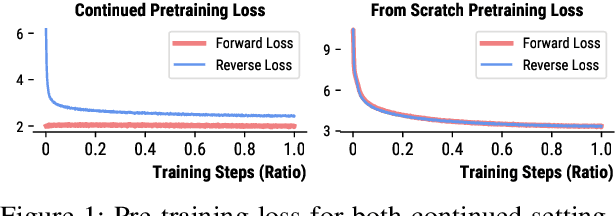
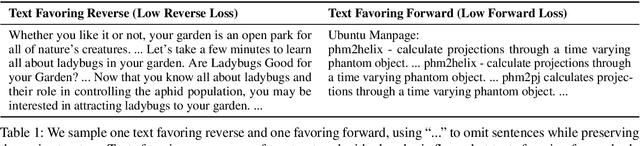
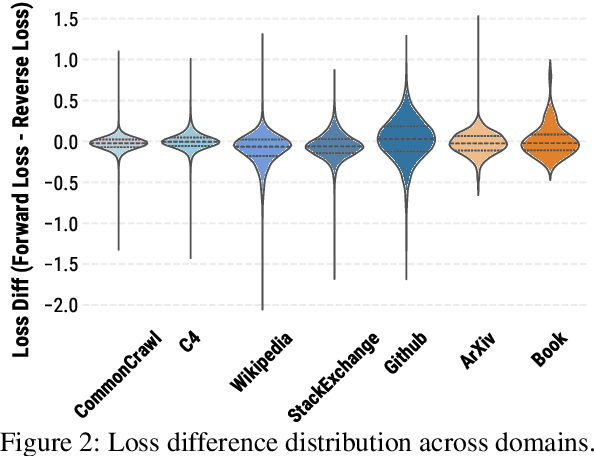
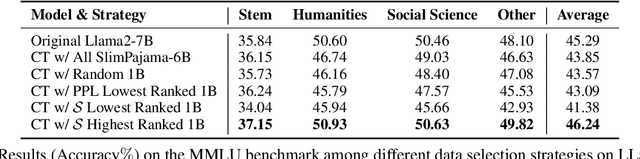
Humans are accustomed to reading and writing in a forward manner, and this natural bias extends to text understanding in auto-regressive large language models (LLMs). This paper investigates whether LLMs, like humans, struggle with reverse modeling, specifically with reversed text inputs. We found that publicly available pre-trained LLMs cannot understand such inputs. However, LLMs trained from scratch with both forward and reverse texts can understand them equally well during inference. Our case study shows that different-content texts result in different losses if input (to LLMs) in different directions -- some get lower losses for forward while some for reverse. This leads us to a simple and nice solution for data selection based on the loss differences between forward and reverse directions. Using our selected data in continued pretraining can boost LLMs' performance by a large margin across different language understanding benchmarks.
Towards Natural Image Matting in the Wild via Real-Scenario Prior
Oct 09, 2024


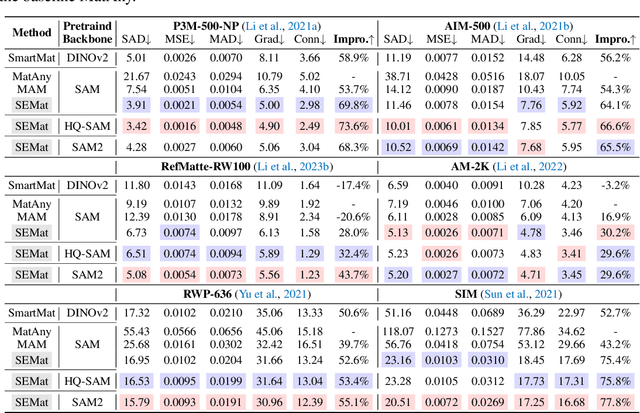
Recent approaches attempt to adapt powerful interactive segmentation models, such as SAM, to interactive matting and fine-tune the models based on synthetic matting datasets. However, models trained on synthetic data fail to generalize to complex and occlusion scenes. We address this challenge by proposing a new matting dataset based on the COCO dataset, namely COCO-Matting. Specifically, the construction of our COCO-Matting includes accessory fusion and mask-to-matte, which selects real-world complex images from COCO and converts semantic segmentation masks to matting labels. The built COCO-Matting comprises an extensive collection of 38,251 human instance-level alpha mattes in complex natural scenarios. Furthermore, existing SAM-based matting methods extract intermediate features and masks from a frozen SAM and only train a lightweight matting decoder by end-to-end matting losses, which do not fully exploit the potential of the pre-trained SAM. Thus, we propose SEMat which revamps the network architecture and training objectives. For network architecture, the proposed feature-aligned transformer learns to extract fine-grained edge and transparency features. The proposed matte-aligned decoder aims to segment matting-specific objects and convert coarse masks into high-precision mattes. For training objectives, the proposed regularization and trimap loss aim to retain the prior from the pre-trained model and push the matting logits extracted from the mask decoder to contain trimap-based semantic information. Extensive experiments across seven diverse datasets demonstrate the superior performance of our method, proving its efficacy in interactive natural image matting. We open-source our code, models, and dataset at https://github.com/XiaRho/SEMat.
Learning Recommender Systems with Soft Target: A Decoupled Perspective
Oct 09, 2024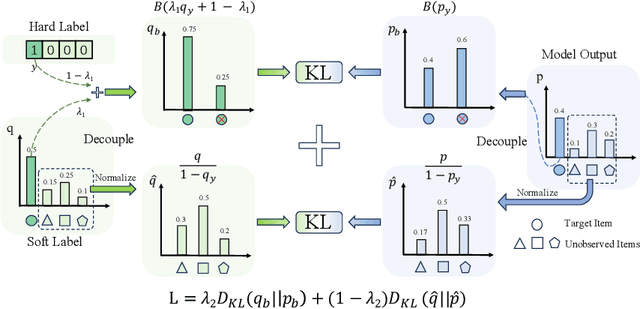

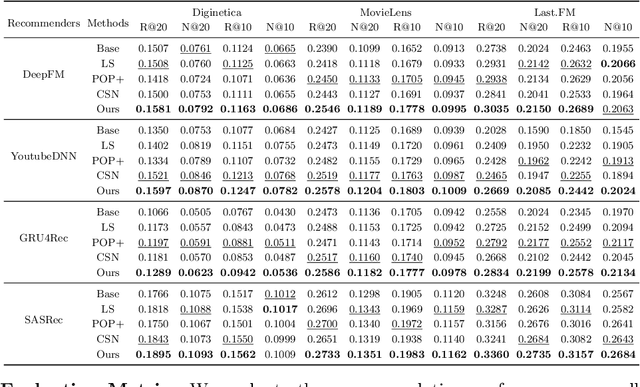
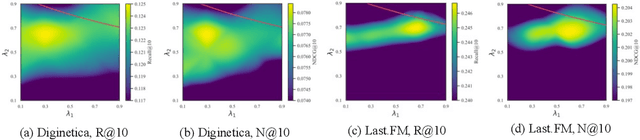
Learning recommender systems with multi-class optimization objective is a prevalent setting in recommendation. However, as observed user feedback often accounts for a tiny fraction of the entire item pool, the standard Softmax loss tends to ignore the difference between potential positive feedback and truly negative feedback. To address this challenge, we propose a novel decoupled soft label optimization framework to consider the objectives as two aspects by leveraging soft labels, including target confidence and the latent interest distribution of non-target items. Futhermore, based on our carefully theoretical analysis, we design a decoupled loss function to flexibly adjust the importance of these two aspects. To maximize the performance of the proposed method, we additionally present a sensible soft-label generation algorithm that models a label propagation algorithm to explore users' latent interests in unobserved feedback via neighbors. We conduct extensive experiments on various recommendation system models and public datasets, the results demonstrate the effectiveness and generality of the proposed method.
Frame-Voyager: Learning to Query Frames for Video Large Language Models
Oct 07, 2024Video Large Language Models (Video-LLMs) have made remarkable progress in video understanding tasks. However, they are constrained by the maximum length of input tokens, making it impractical to input entire videos. Existing frame selection approaches, such as uniform frame sampling and text-frame retrieval, fail to account for the information density variations in the videos or the complex instructions in the tasks, leading to sub-optimal performance. In this paper, we propose Frame-Voyager that learns to query informative frame combinations, based on the given textual queries in the task. To train Frame-Voyager, we introduce a new data collection and labeling pipeline, by ranking frame combinations using a pre-trained Video-LLM. Given a video of M frames, we traverse its T-frame combinations, feed them into a Video-LLM, and rank them based on Video-LLM's prediction losses. Using this ranking as supervision, we train Frame-Voyager to query the frame combinations with lower losses. In experiments, we evaluate Frame-Voyager on four Video Question Answering benchmarks by plugging it into two different Video-LLMs. The experimental results demonstrate that Frame-Voyager achieves impressive results in all settings, highlighting its potential as a plug-and-play solution for Video-LLMs.
PalmBench: A Comprehensive Benchmark of Compressed Large Language Models on Mobile Platforms
Oct 05, 2024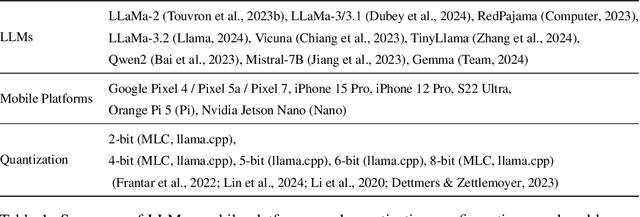

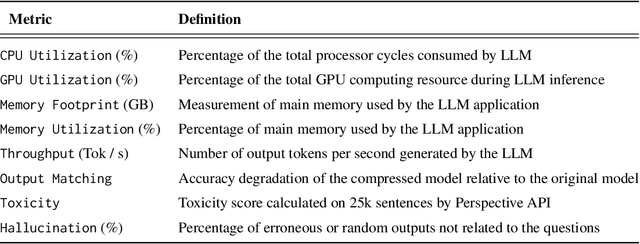

Deploying large language models (LLMs) locally on mobile devices is advantageous in scenarios where transmitting data to remote cloud servers is either undesirable due to privacy concerns or impractical due to network connection. Recent advancements (MLC, 2023a; Gerganov, 2023) have facilitated the local deployment of LLMs. However, local deployment also presents challenges, particularly in balancing quality (generative performance), latency, and throughput within the hardware constraints of mobile devices. In this paper, we introduce our lightweight, all-in-one automated benchmarking framework that allows users to evaluate LLMs on mobile devices. We provide a comprehensive benchmark of various popular LLMs with different quantization configurations (both weights and activations) across multiple mobile platforms with varying hardware capabilities. Unlike traditional benchmarks that assess full-scale models on high-end GPU clusters, we focus on evaluating resource efficiency (memory and power consumption) and harmful output for compressed models on mobile devices. Our key observations include i) differences in energy efficiency and throughput across mobile platforms; ii) the impact of quantization on memory usage, GPU execution time, and power consumption; and iii) accuracy and performance degradation of quantized models compared to their non-quantized counterparts; and iv) the frequency of hallucinations and toxic content generated by compressed LLMs on mobile devices.