 Add to Chrome
 Add to Firefox
 Add to Edge
GARDO: Reinforcing Diffusion Models without Reward Hacking
Dec 30, 2025
Fine-tuning diffusion models via online reinforcement learning (RL) has shown great potential for enhancing text-to-image alignment. However, since precisely specifying a ground-truth objective for visual tasks remains challenging, the models are often optimized using a proxy reward that only partially captures the true goal. This mismatch often leads to reward hacking, where proxy scores increase while real image quality deteriorates and generation diversity collapses. While common solutions add regularization against the reference policy to prevent reward hacking, they compromise sample efficiency and impede the exploration of novel, high-reward regions, as the reference policy is usually sub-optimal. To address the competing demands of sample efficiency, effective exploration, and mitigation of reward hacking, we propose Gated and Adaptive Regularization with Diversity-aware Optimization (GARDO), a versatile framework compatible with various RL algorithms. Our key insight is that regularization need not be applied universally; instead, it is highly effective to selectively penalize a subset of samples that exhibit high uncertainty. To address the exploration challenge, GARDO introduces an adaptive regularization mechanism wherein the reference model is periodically updated to match the capabilities of the online policy, ensuring a relevant regularization target. To address the mode collapse issue in RL, GARDO amplifies the rewards for high-quality samples that also exhibit high diversity, encouraging mode coverage without destabilizing the optimization process. Extensive experiments across diverse proxy rewards and hold-out unseen metrics consistently show that GARDO mitigates reward hacking and enhances generation diversity without sacrificing sample efficiency or exploration, highlighting its effectiveness and robustness.

Kling-Omni Technical Report
Dec 18, 2025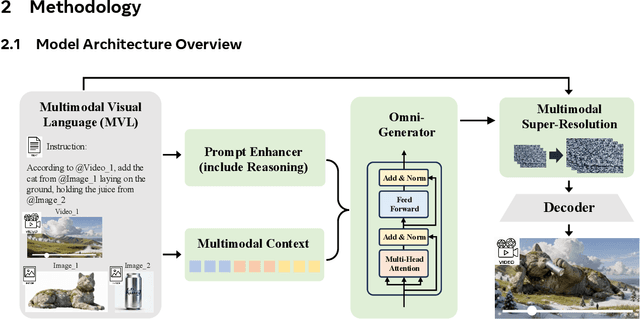
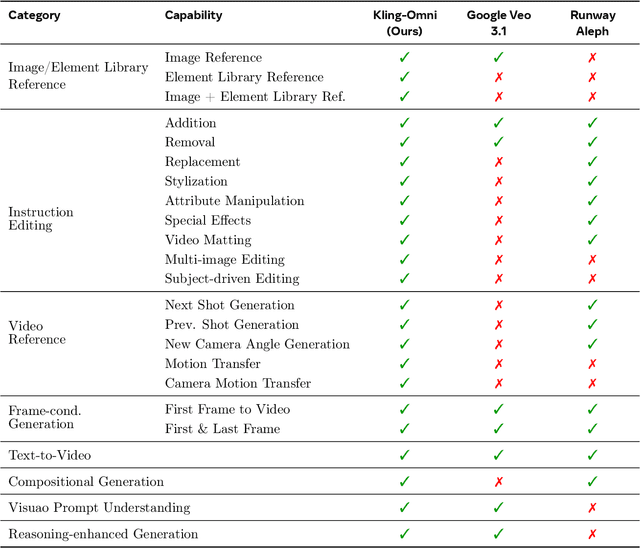
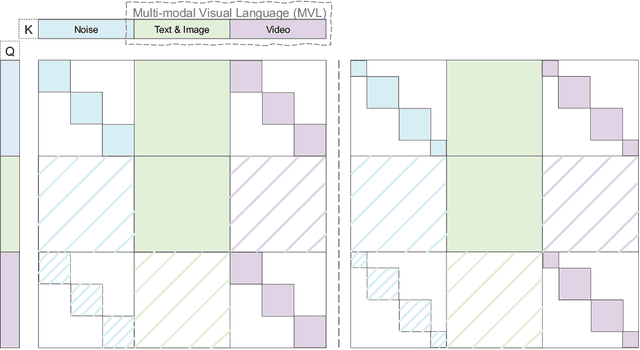
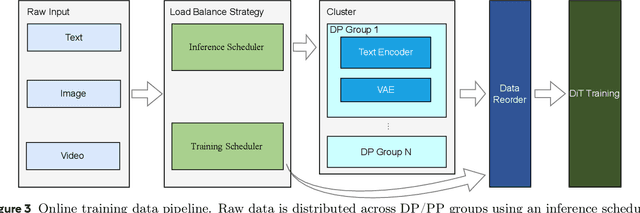
We present Kling-Omni, a generalist generative framework designed to synthesize high-fidelity videos directly from multimodal visual language inputs. Adopting an end-to-end perspective, Kling-Omni bridges the functional separation among diverse video generation, editing, and intelligent reasoning tasks, integrating them into a holistic system. Unlike disjointed pipeline approaches, Kling-Omni supports a diverse range of user inputs, including text instructions, reference images, and video contexts, processing them into a unified multimodal representation to deliver cinematic-quality and highly-intelligent video content creation. To support these capabilities, we constructed a comprehensive data system that serves as the foundation for multimodal video creation. The framework is further empowered by efficient large-scale pre-training strategies and infrastructure optimizations for inference. Comprehensive evaluations reveal that Kling-Omni demonstrates exceptional capabilities in in-context generation, reasoning-based editing, and multimodal instruction following. Moving beyond a content creation tool, we believe Kling-Omni is a pivotal advancement toward multimodal world simulators capable of perceiving, reasoning, generating and interacting with the dynamic and complex worlds.
GPG: Generalized Policy Gradient Theorem for Transformer-based Policies
Dec 11, 2025We present the Generalized Policy Gradient (GPG) Theorem, specifically designed for Transformer-based policies. Notably, we demonstrate that both standard Policy Gradient Theorem and GRPO emerge as special cases within our GPG framework. Furthermore, we explore its practical applications in training Large Language Models (LLMs), offering new insights into efficient policy optimization.
Tool-Star: Empowering LLM-Brained Multi-Tool Reasoner via Reinforcement Learning
May 22, 2025Recently, large language models (LLMs) have shown remarkable reasoning capabilities via large-scale reinforcement learning (RL). However, leveraging the RL algorithm to empower effective multi-tool collaborative reasoning in LLMs remains an open challenge. In this paper, we introduce Tool-Star, an RL-based framework designed to empower LLMs to autonomously invoke multiple external tools during stepwise reasoning. Tool-Star integrates six types of tools and incorporates systematic designs in both data synthesis and training. To address the scarcity of tool-use data, we propose a general tool-integrated reasoning data synthesis pipeline, which combines tool-integrated prompting with hint-based sampling to automatically and scalably generate tool-use trajectories. A subsequent quality normalization and difficulty-aware classification process filters out low-quality samples and organizes the dataset from easy to hard. Furthermore, we propose a two-stage training framework to enhance multi-tool collaborative reasoning by: (1) cold-start fine-tuning, which guides LLMs to explore reasoning patterns via tool-invocation feedback; and (2) a multi-tool self-critic RL algorithm with hierarchical reward design, which reinforces reward understanding and promotes effective tool collaboration. Experimental analyses on over 10 challenging reasoning benchmarks highlight the effectiveness and efficiency of Tool-Star. The code is available at https://github.com/dongguanting/Tool-Star.
NGENT: Next-Generation AI Agents Must Integrate Multi-Domain Abilities to Achieve Artificial General Intelligence
Apr 30, 2025This paper argues that the next generation of AI agent (NGENT) should integrate across-domain abilities to advance toward Artificial General Intelligence (AGI). Although current AI agents are effective in specialized tasks such as robotics, role-playing, and tool-using, they remain confined to narrow domains. We propose that future AI agents should synthesize the strengths of these specialized systems into a unified framework capable of operating across text, vision, robotics, reinforcement learning, emotional intelligence, and beyond. This integration is not only feasible but also essential for achieving the versatility and adaptability that characterize human intelligence. The convergence of technologies across AI domains, coupled with increasing user demand for cross-domain capabilities, suggests that such integration is within reach. Ultimately, the development of these versatile agents is a critical step toward realizing AGI. This paper explores the rationale for this shift, potential pathways for achieving it.
DualRAG: A Dual-Process Approach to Integrate Reasoning and Retrieval for Multi-Hop Question Answering
Apr 25, 2025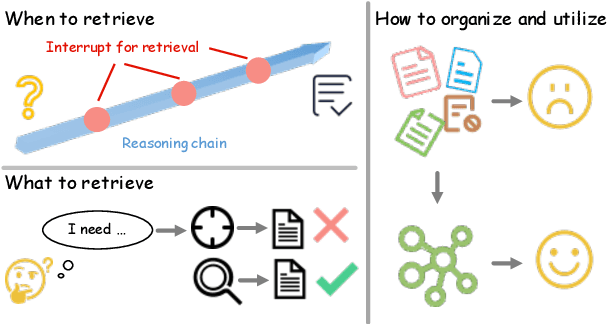
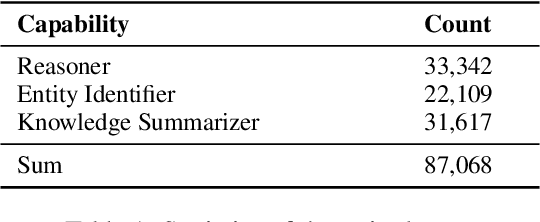

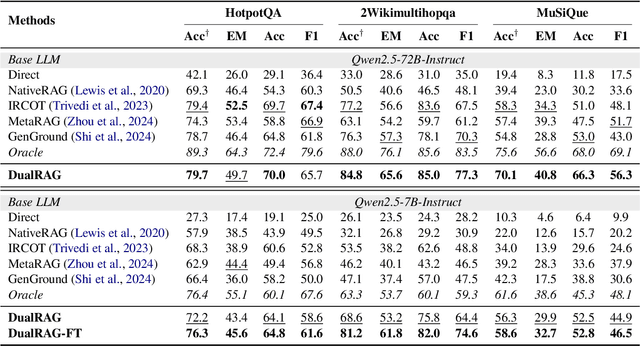
Multi-Hop Question Answering (MHQA) tasks permeate real-world applications, posing challenges in orchestrating multi-step reasoning across diverse knowledge domains. While existing approaches have been improved with iterative retrieval, they still struggle to identify and organize dynamic knowledge. To address this, we propose DualRAG, a synergistic dual-process framework that seamlessly integrates reasoning and retrieval. DualRAG operates through two tightly coupled processes: Reasoning-augmented Querying (RaQ) and progressive Knowledge Aggregation (pKA). They work in concert: as RaQ navigates the reasoning path and generates targeted queries, pKA ensures that newly acquired knowledge is systematically integrated to support coherent reasoning. This creates a virtuous cycle of knowledge enrichment and reasoning refinement. Through targeted fine-tuning, DualRAG preserves its sophisticated reasoning and retrieval capabilities even in smaller-scale models, demonstrating its versatility and core advantages across different scales. Extensive experiments demonstrate that this dual-process approach substantially improves answer accuracy and coherence, approaching, and in some cases surpassing, the performance achieved with oracle knowledge access. These results establish DualRAG as a robust and efficient solution for complex multi-hop reasoning tasks.
From Chaos to Order: The Atomic Reasoner Framework for Fine-grained Reasoning in Large Language Models
Mar 20, 2025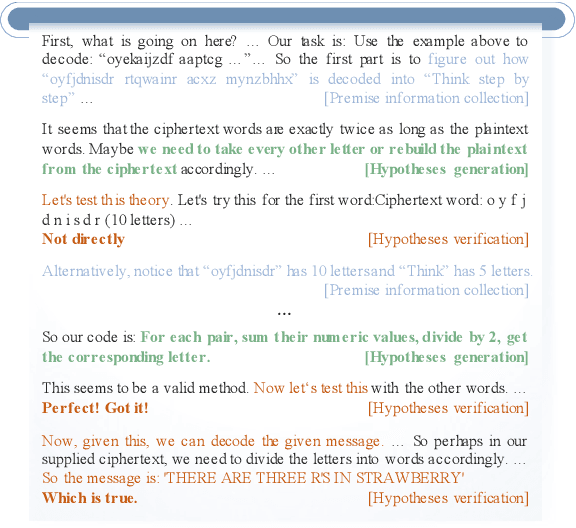
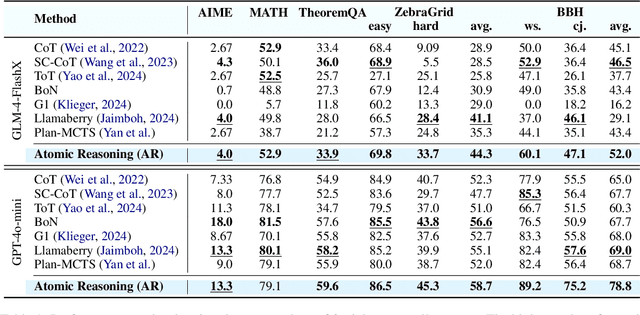
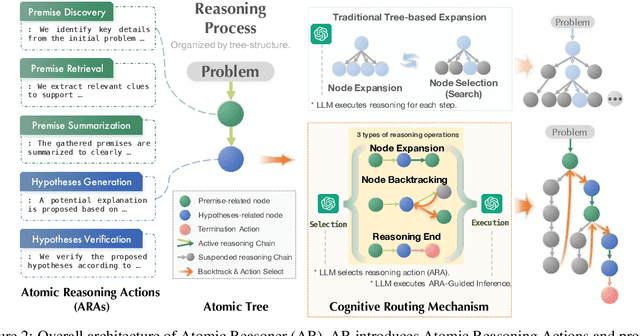

Recent advances in large language models (LLMs) have shown remarkable progress, yet their capacity for logical ``slow-thinking'' reasoning persists as a critical research frontier. Current inference scaling paradigms suffer from two fundamental constraints: fragmented thought flows compromising logical coherence, and intensively computational complexity that escalates with search space dimensions. To overcome these limitations, we present \textbf{Atomic Reasoner} (\textbf{AR}), a cognitive inference strategy that enables fine-grained reasoning through systematic atomic-level operations. AR decomposes the reasoning process into atomic cognitive units, employing a cognitive routing mechanism to dynamically construct reasoning representations and orchestrate inference pathways. This systematic methodology implements stepwise, structured cognition, which ensures logical coherence while significantly reducing cognitive load, effectively simulating the cognitive patterns observed in human deep thinking processes. Extensive experimental results demonstrate AR's superior reasoning capabilities without the computational burden of exhaustive solution searches, particularly excelling in linguistic logic puzzles. These findings substantiate AR's effectiveness in enhancing LLMs' capacity for robust, long-sequence logical reasoning and deliberation.
DMQR-RAG: Diverse Multi-Query Rewriting for RAG
Nov 20, 2024Large language models often encounter challenges with static knowledge and hallucinations, which undermine their reliability. Retrieval-augmented generation (RAG) mitigates these issues by incorporating external information. However, user queries frequently contain noise and intent deviations, necessitating query rewriting to improve the relevance of retrieved documents. In this paper, we introduce DMQR-RAG, a Diverse Multi-Query Rewriting framework designed to improve the performance of both document retrieval and final responses in RAG. Specifically, we investigate how queries with varying information quantities can retrieve a diverse array of documents, presenting four rewriting strategies that operate at different levels of information to enhance the performance of baseline approaches. Additionally, we propose an adaptive strategy selection method that minimizes the number of rewrites while optimizing overall performance. Our methods have been rigorously validated through extensive experiments conducted in both academic and industry settings.
SkillTree: Explainable Skill-Based Deep Reinforcement Learning for Long-Horizon Control Tasks
Nov 19, 2024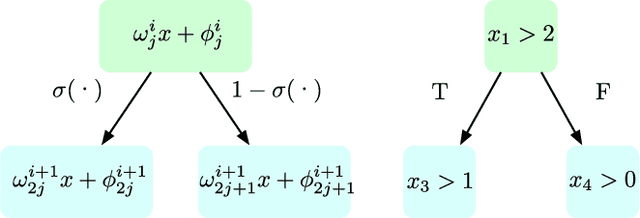

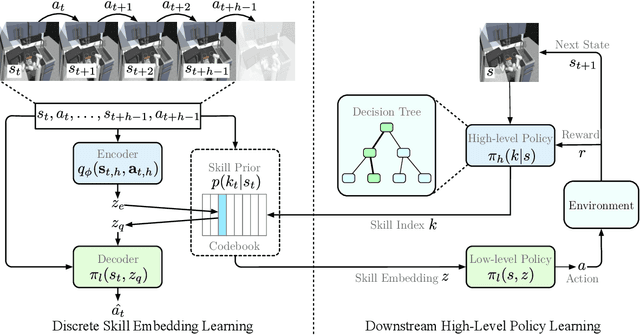
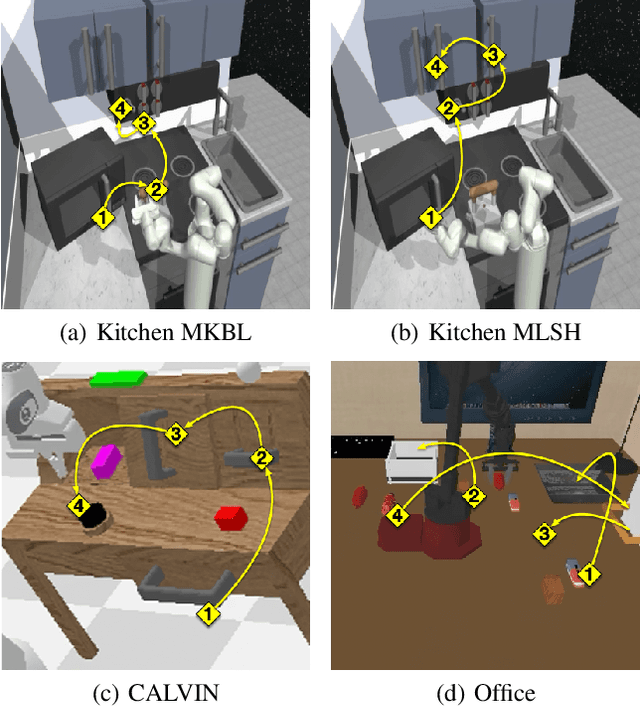
Deep reinforcement learning (DRL) has achieved remarkable success in various research domains. However, its reliance on neural networks results in a lack of transparency, which limits its practical applications. To achieve explainability, decision trees have emerged as a popular and promising alternative to neural networks. Nonetheless, due to their limited expressiveness, traditional decision trees struggle with high-dimensional long-horizon continuous control tasks. In this paper, we proposes SkillTree, a novel framework that reduces complex continuous action spaces into discrete skill spaces. Our hierarchical approach integrates a differentiable decision tree within the high-level policy to generate skill embeddings, which subsequently guide the low-level policy in executing skills. By making skill decisions explainable, we achieve skill-level explainability, enhancing the understanding of the decision-making process in complex tasks. Experimental results demonstrate that our method achieves performance comparable to skill-based neural networks in complex robotic arm control domains. Furthermore, SkillTree offers explanations at the skill level, thereby increasing the transparency of the decision-making process.
Mimicking Human Intuition: Cognitive Belief-Driven Q-Learning
Oct 02, 2024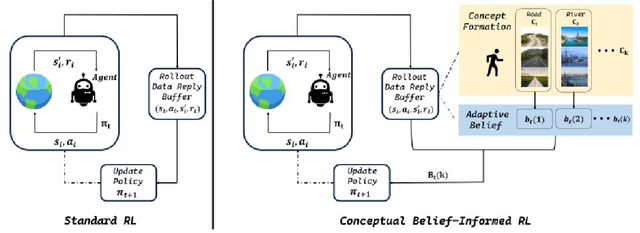
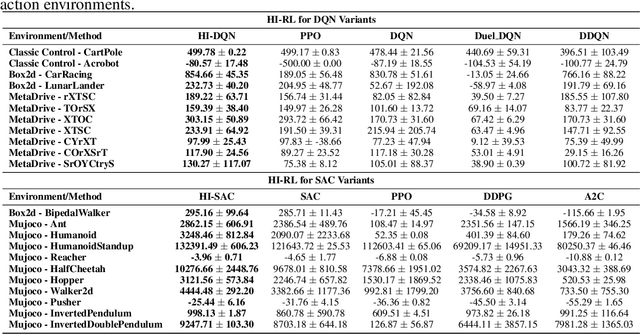
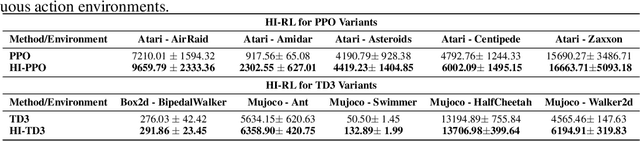
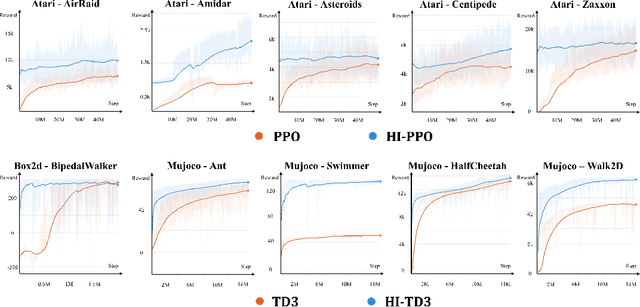
Reinforcement learning encounters challenges in various environments related to robustness and explainability. Traditional Q-learning algorithms cannot effectively make decisions and utilize the historical learning experience. To overcome these limitations, we propose Cognitive Belief-Driven Q-Learning (CBDQ), which integrates subjective belief modeling into the Q-learning framework, enhancing decision-making accuracy by endowing agents with human-like learning and reasoning capabilities. Drawing inspiration from cognitive science, our method maintains a subjective belief distribution over the expectation of actions, leveraging a cluster-based subjective belief model that enables agents to reason about the potential probability associated with each decision. CBDQ effectively mitigates overestimated phenomena and optimizes decision-making policies by integrating historical experiences with current contextual information, mimicking the dynamics of human decision-making. We evaluate the proposed method on discrete control benchmark tasks in various complicate environments. The results demonstrate that CBDQ exhibits stronger adaptability, robustness, and human-like characteristics in handling these environments, outperforming other baselines. We hope this work will give researchers a fresh perspective on understanding and explaining Q-learning.