 Add to Chrome
 Add to Firefox
 Add to Edge
Leveraging Variation Theory in Counterfactual Data Augmentation for Optimized Active Learning
Aug 07, 2024
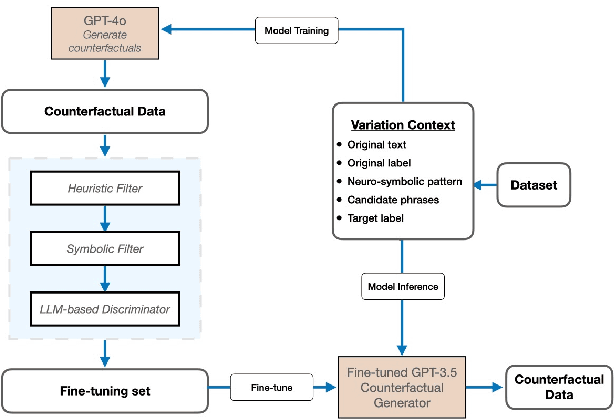
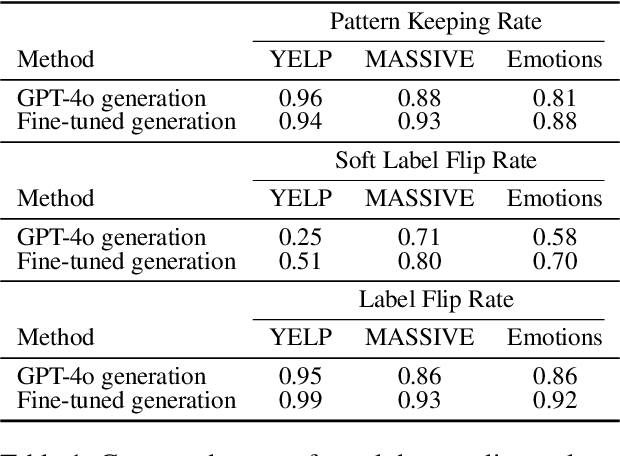
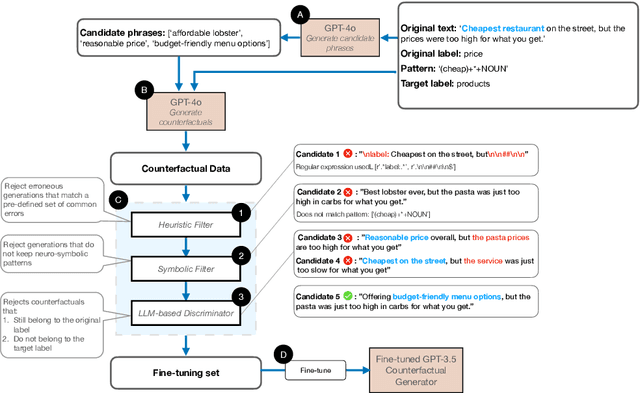

Active Learning (AL) allows models to learn interactively from user feedback. This paper introduces a counterfactual data augmentation approach to AL, particularly addressing the selection of datapoints for user querying, a pivotal concern in enhancing data efficiency. Our approach is inspired by Variation Theory, a theory of human concept learning that emphasizes the essential features of a concept by focusing on what stays the same and what changes. Instead of just querying with existing datapoints, our approach synthesizes artificial datapoints that highlight potential key similarities and differences among labels using a neuro-symbolic pipeline combining large language models (LLMs) and rule-based models. Through an experiment in the example domain of text classification, we show that our approach achieves significantly higher performance when there are fewer annotated data. As the annotated training data gets larger the impact of the generated data starts to diminish showing its capability to address the cold start problem in AL. This research sheds light on integrating theories of human learning into the optimization of AL.

Towards Reliable Advertising Image Generation Using Human Feedback
Aug 01, 2024



In the e-commerce realm, compelling advertising images are pivotal for attracting customer attention. While generative models automate image generation, they often produce substandard images that may mislead customers and require significant labor costs to inspect. This paper delves into increasing the rate of available generated images. We first introduce a multi-modal Reliable Feedback Network (RFNet) to automatically inspect the generated images. Combining the RFNet into a recurrent process, Recurrent Generation, results in a higher number of available advertising images. To further enhance production efficiency, we fine-tune diffusion models with an innovative Consistent Condition regularization utilizing the feedback from RFNet (RFFT). This results in a remarkable increase in the available rate of generated images, reducing the number of attempts in Recurrent Generation, and providing a highly efficient production process without sacrificing visual appeal. We also construct a Reliable Feedback 1 Million (RF1M) dataset which comprises over one million generated advertising images annotated by human, which helps to train RFNet to accurately assess the availability of generated images and faithfully reflect the human feedback. Generally speaking, our approach offers a reliable solution for advertising image generation.
Unified Lexical Representation for Interpretable Visual-Language Alignment
Jul 25, 2024


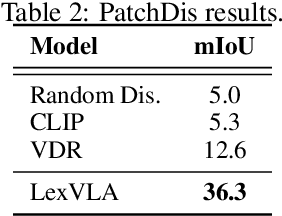
Visual-Language Alignment (VLA) has gained a lot of attention since CLIP's groundbreaking work. Although CLIP performs well, the typical direct latent feature alignment lacks clarity in its representation and similarity scores. On the other hand, lexical representation, a vector whose element represents the similarity between the sample and a word from the vocabulary, is a natural sparse representation and interpretable, providing exact matches for individual words. However, lexical representations is difficult to learn due to no ground-truth supervision and false-discovery issues, and thus requires complex design to train effectively. In this paper, we introduce LexVLA, a more interpretable VLA framework by learning a unified lexical representation for both modalities without complex design. We use DINOv2 as our visual model for its local-inclined features and Llama 2, a generative language model, to leverage its in-context lexical prediction ability. To avoid the false discovery, we propose an overuse penalty to refrain the lexical representation from falsely frequently activating meaningless words. We demonstrate that these two pre-trained uni-modal models can be well-aligned by fine-tuning on modest multi-modal dataset and avoid intricate training configurations. On cross-modal retrieval benchmarks, LexVLA, trained on the CC-12M multi-modal dataset, outperforms baselines fine-tuned on larger datasets (e.g., YFCC15M) and those trained from scratch on even bigger datasets (e.g., 1.1B data, including CC-12M). We conduct extensive experiments to analyze LexVLA.
Separable Operator Networks
Jul 15, 2024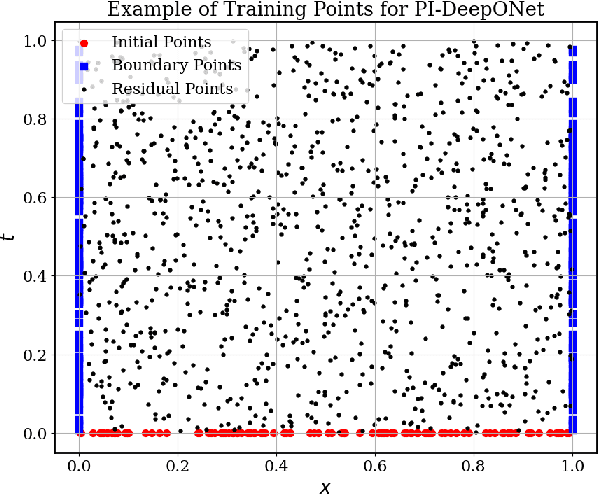


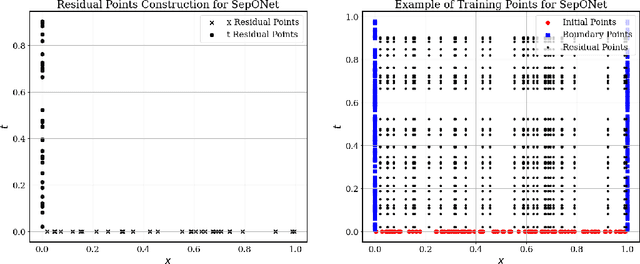
Operator learning has become a powerful tool in machine learning for modeling complex physical systems. Although Deep Operator Networks (DeepONet) show promise, they require extensive data acquisition. Physics-informed DeepONets (PI-DeepONet) mitigate data scarcity but suffer from inefficient training processes. We introduce Separable Operator Networks (SepONet), a novel framework that significantly enhances the efficiency of physics-informed operator learning. SepONet uses independent trunk networks to learn basis functions separately for different coordinate axes, enabling faster and more memory-efficient training via forward-mode automatic differentiation. We provide theoretical guarantees for SepONet using the universal approximation theorem and validate its performance through comprehensive benchmarking against PI-DeepONet. Our results demonstrate that for the 1D time-dependent advection equation, when targeting a mean relative $\ell_{2}$ error of less than 6% on 100 unseen variable coefficients, SepONet provides up to $112 \times$ training speed-up and $82 \times$ GPU memory usage reduction compared to PI-DeepONet. Similar computational advantages are observed across various partial differential equations, with SepONet's efficiency gains scaling favorably as problem complexity increases. This work paves the way for extreme-scale learning of continuous mappings between infinite-dimensional function spaces.
Joint Optimization of Age of Information and Energy Consumption in NR-V2X System based on Deep Reinforcement Learning
Jul 11, 2024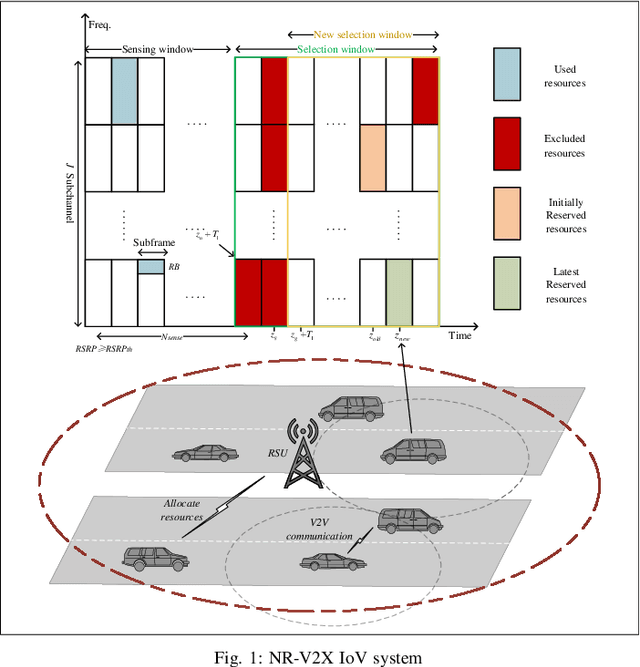
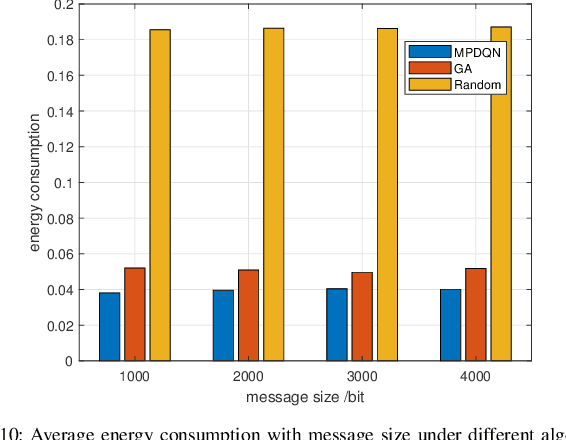
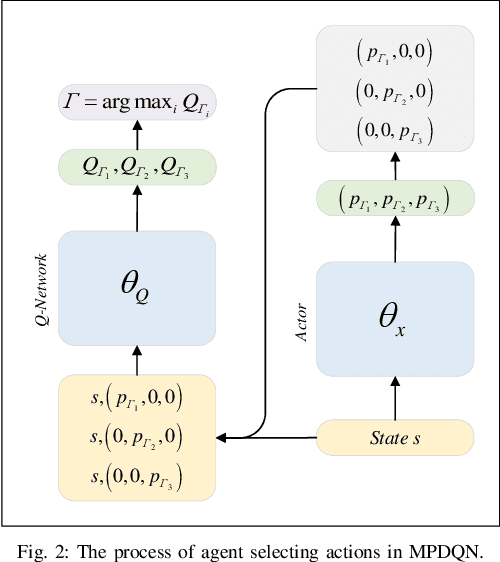
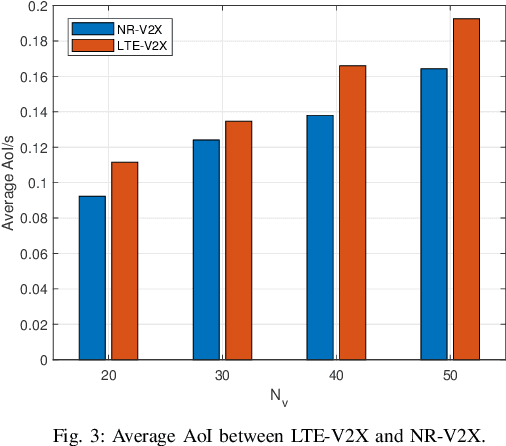
Autonomous driving may be the most important application scenario of next generation, the development of wireless access technologies enabling reliable and low-latency vehicle communication becomes crucial. To address this, 3GPP has developed Vehicle-to-Everything (V2X) specifications based on 5G New Radio (NR) technology, where Mode 2 Side-Link (SL) communication resembles Mode 4 in LTE-V2X, allowing direct communication between vehicles. This supplements SL communication in LTE-V2X and represents the latest advancement in cellular V2X (C-V2X) with improved performance of NR-V2X. However, in NR-V2X Mode 2, resource collisions still occur, and thus degrade the age of information (AOI). Therefore, a interference cancellation method is employed to mitigate this impact by combining NR-V2X with Non-Orthogonal multiple access (NOMA) technology. In NR-V2X, when vehicles select smaller resource reservation interval (RRI), higher-frequency transmissions take ore energy to reduce AoI. Hence, it is important to jointly consider AoI and communication energy consumption based on NR-V2X communication. Then, we formulate such an optimization problem and employ the Deep Reinforcement Learning (DRL) algorithm to compute the optimal transmission RRI and transmission power for each transmitting vehicle to reduce the energy consumption of each transmitting vehicle and the AoI of each receiving vehicle. Extensive simulations have demonstrated the performance of our proposed algorithm.
Learning to Complement and to Defer to Multiple Users
Jul 09, 2024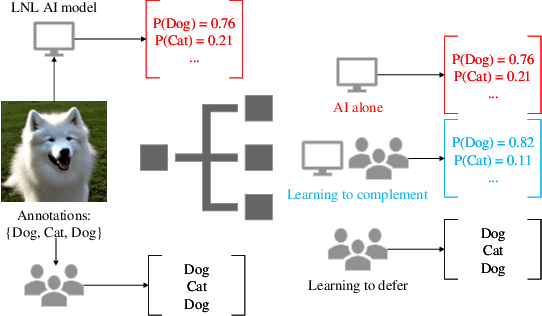
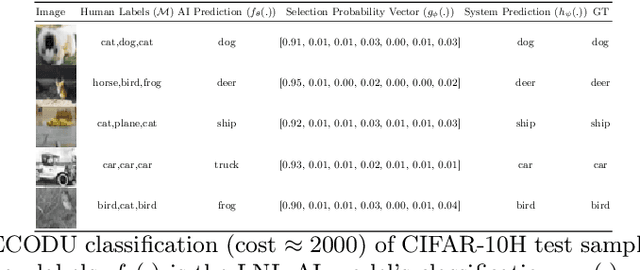


With the development of Human-AI Collaboration in Classification (HAI-CC), integrating users and AI predictions becomes challenging due to the complex decision-making process. This process has three options: 1) AI autonomously classifies, 2) learning to complement, where AI collaborates with users, and 3) learning to defer, where AI defers to users. Despite their interconnected nature, these options have been studied in isolation rather than as components of a unified system. In this paper, we address this weakness with the novel HAI-CC methodology, called Learning to Complement and to Defer to Multiple Users (LECODU). LECODU not only combines learning to complement and learning to defer strategies, but it also incorporates an estimation of the optimal number of users to engage in the decision process. The training of LECODU maximises classification accuracy and minimises collaboration costs associated with user involvement. Comprehensive evaluations across real-world and synthesized datasets demonstrate LECODU's superior performance compared to state-of-the-art HAI-CC methods. Remarkably, even when relying on unreliable users with high rates of label noise, LECODU exhibits significant improvement over both human decision-makers alone and AI alone.
A Survey of Models for Cognitive Diagnosis: New Developments and Future Directions
Jul 07, 2024


Cognitive diagnosis has been developed for decades as an effective measurement tool to evaluate human cognitive status such as ability level and knowledge mastery. It has been applied to a wide range of fields including education, sport, psychological diagnosis, etc. By providing better awareness of cognitive status, it can serve as the basis for personalized services such as well-designed medical treatment, teaching strategy and vocational training. This paper aims to provide a survey of current models for cognitive diagnosis, with more attention on new developments using machine learning-based methods. By comparing the model structures, parameter estimation algorithms, model evaluation methods and applications, we provide a relatively comprehensive review of the recent trends in cognitive diagnosis models. Further, we discuss future directions that are worthy of exploration. In addition, we release two Python libraries: EduData for easy access to some relevant public datasets we have collected, and EduCDM that implements popular CDMs to facilitate both applications and research purposes.
SpikeLLM: Scaling up Spiking Neural Network to Large Language Models via Saliency-based Spiking
Jul 05, 2024


The recent advancements in large language models (LLMs) with billions of parameters have significantly boosted their performance across various real-world applications. However, the inference processes for these models require substantial energy and computational resources, presenting considerable deployment challenges. In contrast, human brains, which contain approximately 86 billion biological neurons, exhibit significantly greater energy efficiency compared to LLMs with a similar number of parameters. Inspired by this, we redesign 7 to 70 billion parameter LLMs using bio-plausible spiking mechanisms, emulating the efficient behavior of the human brain. We propose the first spiking large language model as recent LLMs termed SpikeLLM. Coupled with the proposed model, a novel spike-driven quantization framework named Optimal Brain Spiking is introduced to reduce the energy cost and accelerate inference speed via two essential approaches: first (second)-order differentiation-based salient channel detection, and per-channel salient outlier expansion with Generalized Integrate-and-Fire neurons. Our proposed spike-driven quantization can plug in main streams of quantization training methods. In the OmniQuant pipeline, SpikeLLM significantly reduces 25.51% WikiText2 perplexity and improves 3.08% average accuracy of 6 zero-shot datasets on a LLAMA2-7B 4A4W model. In the GPTQ pipeline, SpikeLLM realizes a sparse ternary quantization, which achieves additive in all linear layers. Compared with PB-LLM with similar operations, SpikeLLM also exceeds significantly. We will release our code on GitHub.
52B to 1T: Lessons Learned via Tele-FLM Series
Jul 03, 2024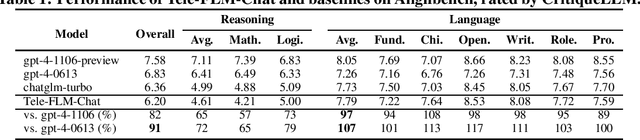



Large Language Models (LLMs) represent a significant stride toward Artificial General Intelligence. As scaling laws underscore the potential of increasing model sizes, the academic community has intensified its investigations into LLMs with capacities exceeding 50 billion parameters. This technical report builds on our prior work with Tele-FLM (also known as FLM-2), a publicly available 52-billion-parameter model. We delve into two primary areas: we first discuss our observation of Supervised Fine-tuning (SFT) on Tele-FLM-52B, which supports the "less is more" approach for SFT data construction; second, we demonstrate our experiments and analyses on the best practices for progressively growing a model from 52 billion to 102 billion, and subsequently to 1 trillion parameters. We will open-source a 1T model checkpoint, namely Tele-FLM-1T, to advance further training and research.
AdaZeta: Adaptive Zeroth-Order Tensor-Train Adaption for Memory-Efficient Large Language Models Fine-Tuning
Jun 26, 2024


Fine-tuning large language models (LLMs) has achieved remarkable performance across various natural language processing tasks, yet it demands more and more memory as model sizes keep growing. To address this issue, the recently proposed Memory-efficient Zeroth-order (MeZO) methods attempt to fine-tune LLMs using only forward passes, thereby avoiding the need for a backpropagation graph. However, significant performance drops and a high risk of divergence have limited their widespread adoption. In this paper, we propose the Adaptive Zeroth-order Tensor-Train Adaption (AdaZeta) framework, specifically designed to improve the performance and convergence of the ZO methods. To enhance dimension-dependent ZO estimation accuracy, we introduce a fast-forward, low-parameter tensorized adapter. To tackle the frequently observed divergence issue in large-scale ZO fine-tuning tasks, we propose an adaptive query number schedule that guarantees convergence. Detailed theoretical analysis and extensive experimental results on Roberta-Large and Llama-2-7B models substantiate the efficacy of our AdaZeta framework in terms of accuracy, memory efficiency, and convergence speed.