 Add to Chrome
 Add to Firefox
 Add to Edge
Subgraph Retrieval Enhanced by Graph-Text Alignment for Commonsense Question Answering
Nov 11, 2024
Commonsense question answering is a crucial task that requires machines to employ reasoning according to commonsense. Previous studies predominantly employ an extracting-and-modeling paradigm to harness the information in KG, which first extracts relevant subgraphs based on pre-defined rules and then proceeds to design various strategies aiming to improve the representations and fusion of the extracted structural knowledge. Despite their effectiveness, there are still two challenges. On one hand, subgraphs extracted by rule-based methods may have the potential to overlook critical nodes and result in uncontrollable subgraph size. On the other hand, the misalignment between graph and text modalities undermines the effectiveness of knowledge fusion, ultimately impacting the task performance. To deal with the problems above, we propose a novel framework: \textbf{S}ubgraph R\textbf{E}trieval Enhanced by Gra\textbf{P}h-\textbf{T}ext \textbf{A}lignment, named \textbf{SEPTA}. Firstly, we transform the knowledge graph into a database of subgraph vectors and propose a BFS-style subgraph sampling strategy to avoid information loss, leveraging the analogy between BFS and the message-passing mechanism. In addition, we propose a bidirectional contrastive learning approach for graph-text alignment, which effectively enhances both subgraph retrieval and knowledge fusion. Finally, all the retrieved information is combined for reasoning in the prediction module. Extensive experiments on five datasets demonstrate the effectiveness and robustness of our framework.

Diffusion Models as Network Optimizers: Explorations and Analysis
Nov 04, 2024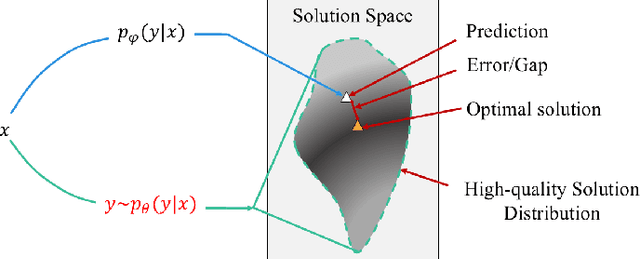
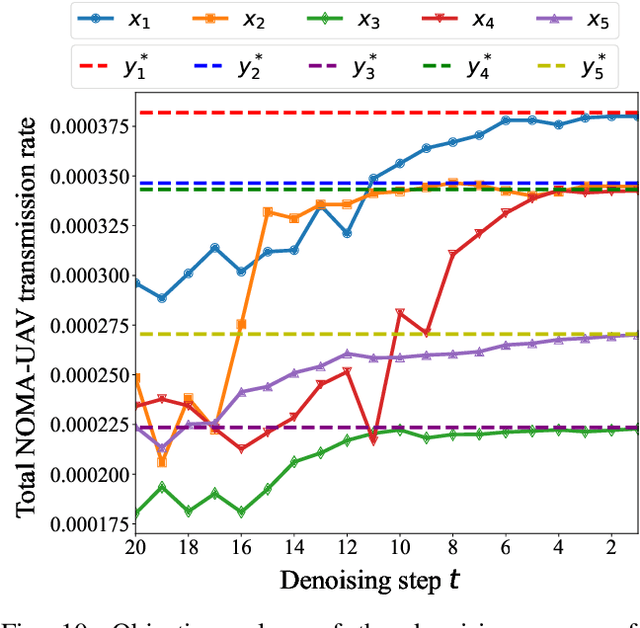
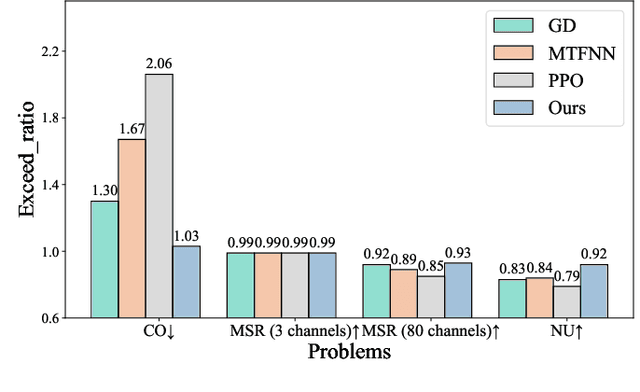

Network optimization is a fundamental challenge in the Internet of Things (IoT) network, often characterized by complex features that make it difficult to solve these problems. Recently, generative diffusion models (GDMs) have emerged as a promising new approach to network optimization, with the potential to directly address these optimization problems. However, the application of GDMs in this field is still in its early stages, and there is a noticeable lack of theoretical research and empirical findings. In this study, we first explore the intrinsic characteristics of generative models. Next, we provide a concise theoretical proof and intuitive demonstration of the advantages of generative models over discriminative models in network optimization. Based on this exploration, we implement GDMs as optimizers aimed at learning high-quality solution distributions for given inputs, sampling from these distributions during inference to approximate or achieve optimal solutions. Specifically, we utilize denoising diffusion probabilistic models (DDPMs) and employ a classifier-free guidance mechanism to manage conditional guidance based on input parameters. We conduct extensive experiments across three challenging network optimization problems. By investigating various model configurations and the principles of GDMs as optimizers, we demonstrate the ability to overcome prediction errors and validate the convergence of generated solutions to optimal solutions.We provide code and data at https://github.com/qiyu3816/DiffSG.
RLE: A Unified Perspective of Data Augmentation for Cross-Spectral Re-identification
Nov 02, 2024
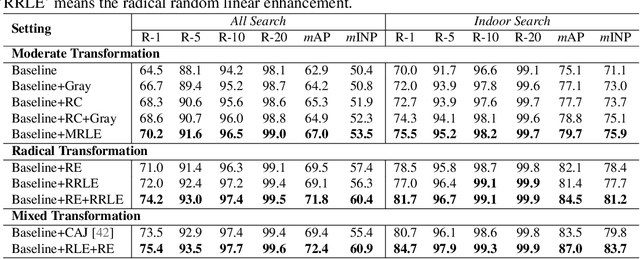

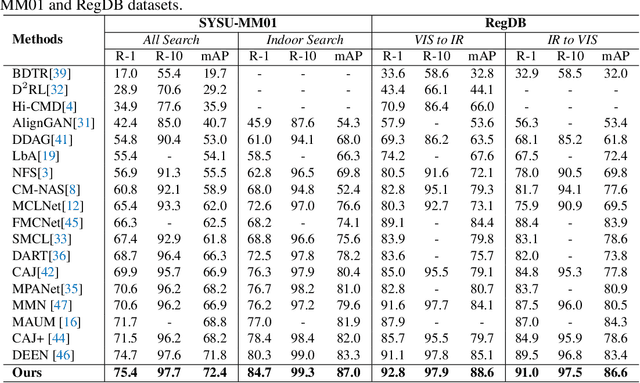
This paper makes a step towards modeling the modality discrepancy in the cross-spectral re-identification task. Based on the Lambertain model, we observe that the non-linear modality discrepancy mainly comes from diverse linear transformations acting on the surface of different materials. From this view, we unify all data augmentation strategies for cross-spectral re-identification by mimicking such local linear transformations and categorizing them into moderate transformation and radical transformation. By extending the observation, we propose a Random Linear Enhancement (RLE) strategy which includes Moderate Random Linear Enhancement (MRLE) and Radical Random Linear Enhancement (RRLE) to push the boundaries of both types of transformation. Moderate Random Linear Enhancement is designed to provide diverse image transformations that satisfy the original linear correlations under constrained conditions, whereas Radical Random Linear Enhancement seeks to generate local linear transformations directly without relying on external information. The experimental results not only demonstrate the superiority and effectiveness of RLE but also confirm its great potential as a general-purpose data augmentation for cross-spectral re-identification. The code is available at \textcolor{magenta}{\url{https://github.com/stone96123/RLE}}.
CRAT: A Multi-Agent Framework for Causality-Enhanced Reflective and Retrieval-Augmented Translation with Large Language Models
Oct 28, 2024
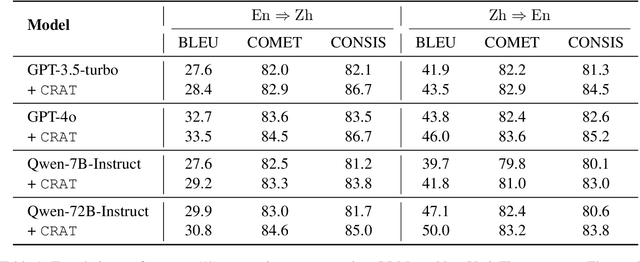
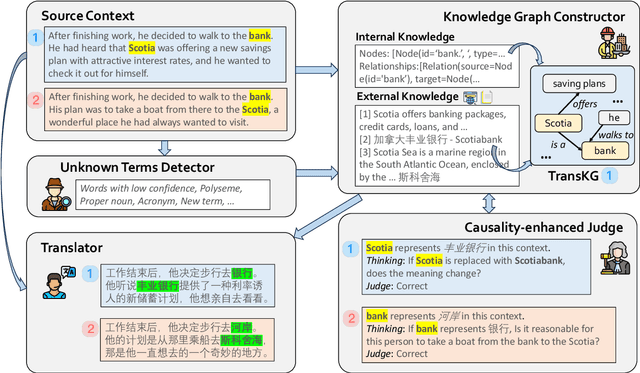
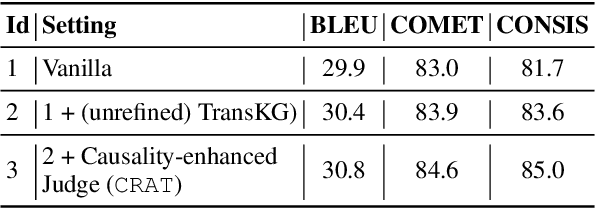
Large language models (LLMs) have shown great promise in machine translation, but they still struggle with contextually dependent terms, such as new or domain-specific words. This leads to inconsistencies and errors that are difficult to address. Existing solutions often depend on manual identification of such terms, which is impractical given the complexity and evolving nature of language. While Retrieval-Augmented Generation (RAG) could provide some assistance, its application to translation is limited by issues such as hallucinations from information overload. In this paper, we propose CRAT, a novel multi-agent translation framework that leverages RAG and causality-enhanced self-reflection to address these challenges. This framework consists of several specialized agents: the Unknown Terms Identification agent detects unknown terms within the context, the Knowledge Graph (KG) Constructor agent extracts relevant internal knowledge about these terms and retrieves bilingual information from external sources, the Causality-enhanced Judge agent validates the accuracy of the information, and the Translator agent incorporates the refined information into the final output. This automated process allows for more precise and consistent handling of key terms during translation. Our results show that CRAT significantly improves translation accuracy, particularly in handling context-sensitive terms and emerging vocabulary.
Coherence-guided Preference Disentanglement for Cross-domain Recommendations
Oct 27, 2024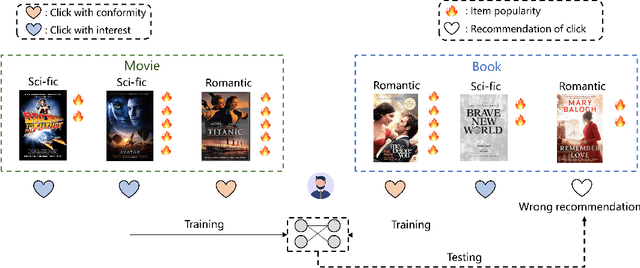
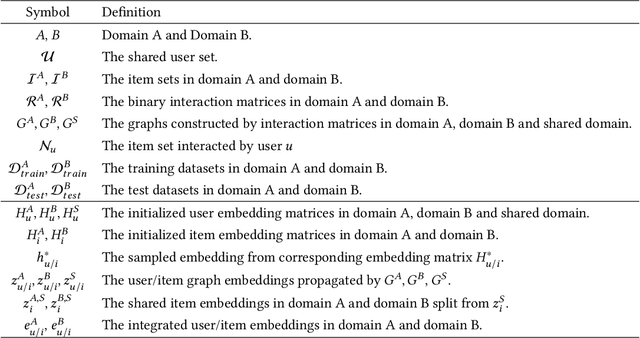
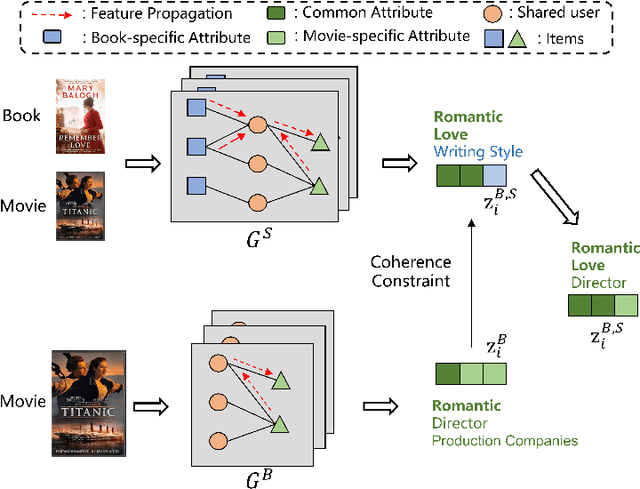
Discovering user preferences across different domains is pivotal in cross-domain recommendation systems, particularly when platforms lack comprehensive user-item interactive data. The limited presence of shared users often hampers the effective modeling of common preferences. While leveraging shared items' attributes, such as category and popularity, can enhance cross-domain recommendation performance, the scarcity of shared items between domains has limited research in this area. To address this, we propose a Coherence-guided Preference Disentanglement (CoPD) method aimed at improving cross-domain recommendation by i) explicitly extracting shared item attributes to guide the learning of shared user preferences and ii) disentangling these preferences to identify specific user interests transferred between domains. CoPD introduces coherence constraints on item embeddings of shared and specific domains, aiding in extracting shared attributes. Moreover, it utilizes these attributes to guide the disentanglement of user preferences into separate embeddings for interest and conformity through a popularity-weighted loss. Experiments conducted on real-world datasets demonstrate the superior performance of our proposed CoPD over existing competitive baselines, highlighting its effectiveness in enhancing cross-domain recommendation performance.
Lodge++: High-quality and Long Dance Generation with Vivid Choreography Patterns
Oct 27, 2024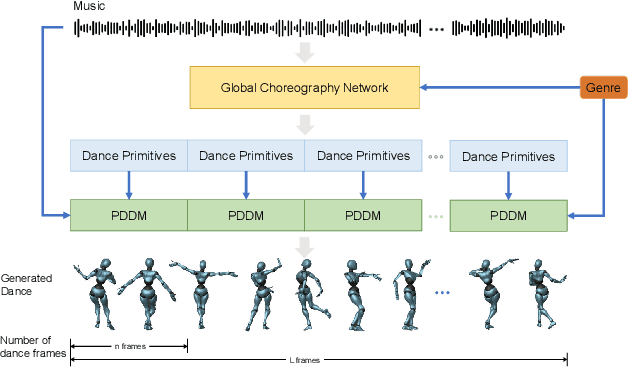

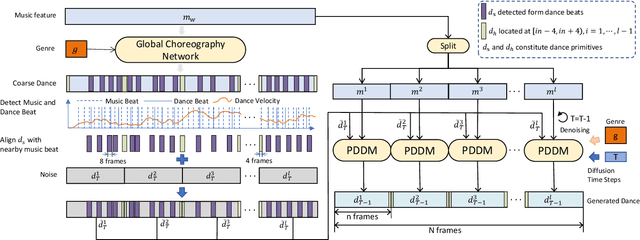
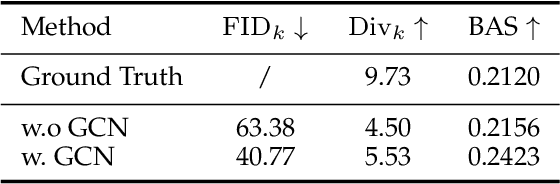
We propose Lodge++, a choreography framework to generate high-quality, ultra-long, and vivid dances given the music and desired genre. To handle the challenges in computational efficiency, the learning of complex and vivid global choreography patterns, and the physical quality of local dance movements, Lodge++ adopts a two-stage strategy to produce dances from coarse to fine. In the first stage, a global choreography network is designed to generate coarse-grained dance primitives that capture complex global choreography patterns. In the second stage, guided by these dance primitives, a primitive-based dance diffusion model is proposed to further generate high-quality, long-sequence dances in parallel, faithfully adhering to the complex choreography patterns. Additionally, to improve the physical plausibility, Lodge++ employs a penetration guidance module to resolve character self-penetration, a foot refinement module to optimize foot-ground contact, and a multi-genre discriminator to maintain genre consistency throughout the dance. Lodge++ is validated by extensive experiments, which show that our method can rapidly generate ultra-long dances suitable for various dance genres, ensuring well-organized global choreography patterns and high-quality local motion.
Modality-Fair Preference Optimization for Trustworthy MLLM Alignment
Oct 20, 2024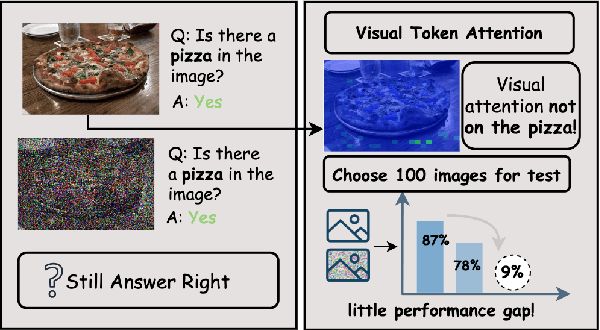
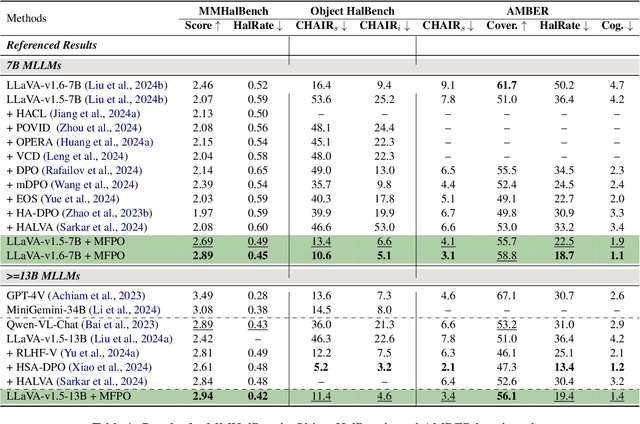
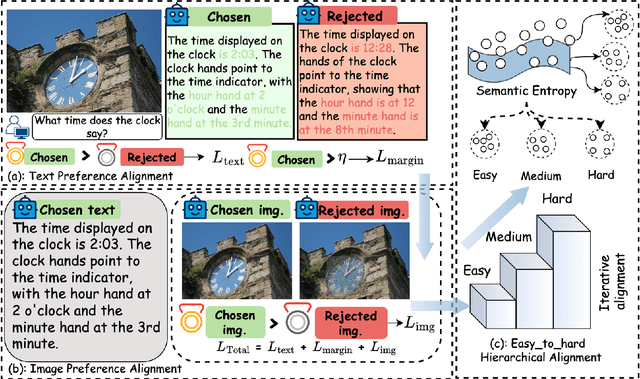

Direct Preference Optimization (DPO) is effective for aligning large language models (LLMs), but when applied to multimodal models (MLLMs), it often favors text over image information, leading to unreliable outputs and visual hallucinations. To address this, we propose Modality-Fair Preference Optimization (MFPO) to balance text and image preferences. First, we found that the lack of image-related rewards in preference data biases optimization toward text, so we created automated, fine-grained image preference data to correct this. Then, we designed a learning objective to ensure the model captures both text and image preferences while maintaining high-quality outputs. Finally, we use a multi-stage alignment approach to stabilize training and improve learning across both modalities. Extensive experiments demonstrate that MFPO significantly enhances MLLM trustworthiness. On models like LLaVA-v1.5 (7B, 13B), our approach reduces hallucinations substantially. On the 7B model, MFPO outperforms GPT-4V and achieves a nearly 40\% improvement over previous methods on Object HalBench, as well as achieving state-of-the-art performance on both Object HalBench and AMBER when combined with the latest LLaVA-v1.6. Code will be released.
Transfer Reinforcement Learning in Heterogeneous Action Spaces using Subgoal Mapping
Oct 18, 2024


In this paper, we consider a transfer reinforcement learning problem involving agents with different action spaces. Specifically, for any new unseen task, the goal is to use a successful demonstration of this task by an expert agent in its action space to enable a learner agent learn an optimal policy in its own different action space with fewer samples than those required if the learner was learning on its own. Existing transfer learning methods across different action spaces either require handcrafted mappings between those action spaces provided by human experts, which can induce bias in the learning procedure, or require the expert agent to share its policy parameters with the learner agent, which does not generalize well to unseen tasks. In this work, we propose a method that learns a subgoal mapping between the expert agent policy and the learner agent policy. Since the expert agent and the learner agent have different action spaces, their optimal policies can have different subgoal trajectories. We learn this subgoal mapping by training a Long Short Term Memory (LSTM) network for a distribution of tasks and then use this mapping to predict the learner subgoal sequence for unseen tasks, thereby improving the speed of learning by biasing the agent's policy towards the predicted learner subgoal sequence. Through numerical experiments, we demonstrate that the proposed learning scheme can effectively find the subgoal mapping underlying the given distribution of tasks. Moreover, letting the learner agent imitate the expert agent's policy with the learnt subgoal mapping can significantly improve the sample efficiency and training time of the learner agent in unseen new tasks.
AdaSwitch: Adaptive Switching between Small and Large Agents for Effective Cloud-Local Collaborative Learning
Oct 17, 2024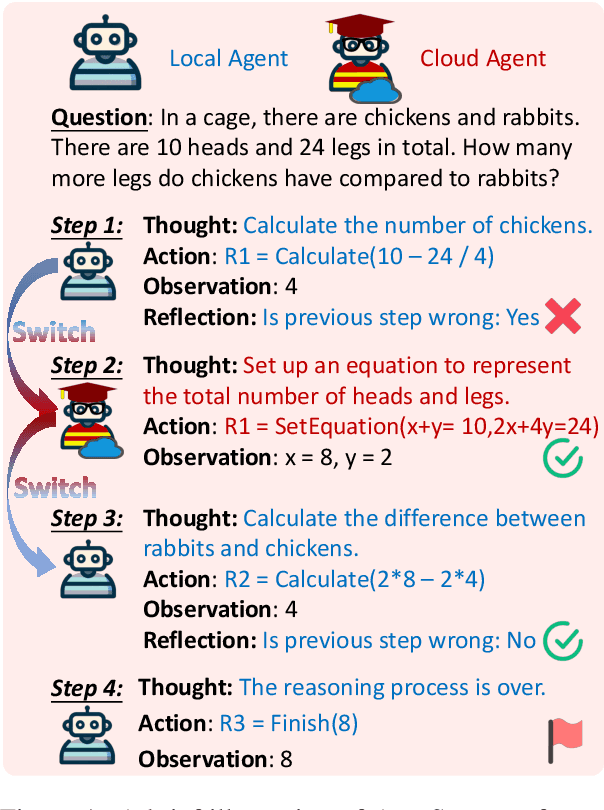

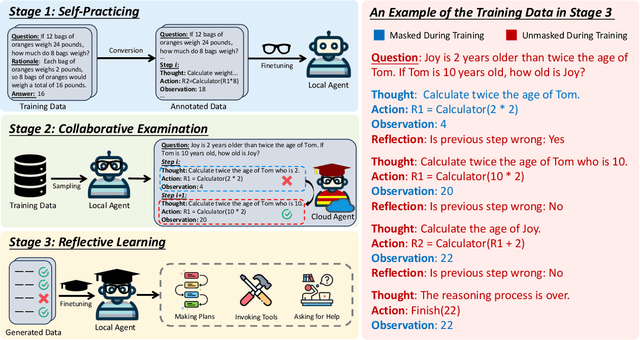

Recent advancements in large language models (LLMs) have been remarkable. Users face a choice between using cloud-based LLMs for generation quality and deploying local-based LLMs for lower computational cost. The former option is typically costly and inefficient, while the latter usually fails to deliver satisfactory performance for reasoning steps requiring deliberate thought processes. In this work, we propose a novel LLM utilization paradigm that facilitates the collaborative operation of large cloud-based LLMs and smaller local-deployed LLMs. Our framework comprises two primary modules: the local agent instantiated with a relatively smaller LLM, handling less complex reasoning steps, and the cloud agent equipped with a larger LLM, managing more intricate reasoning steps. This collaborative processing is enabled through an adaptive mechanism where the local agent introspectively identifies errors and proactively seeks assistance from the cloud agent, thereby effectively integrating the strengths of both locally-deployed and cloud-based LLMs, resulting in significant enhancements in task completion performance and efficiency. We evaluate AdaSwitch across 7 benchmarks, ranging from mathematical reasoning and complex question answering, using various types of LLMs to instantiate the local and cloud agents. The empirical results show that AdaSwitch effectively improves the performance of the local agent, and sometimes achieves competitive results compared to the cloud agent while utilizing much less computational overhead.
Boosting CLIP Adaptation for Image Quality Assessment via Meta-Prompt Learning and Gradient Regularization
Sep 09, 2024
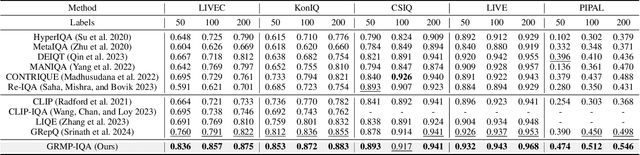


Image Quality Assessment (IQA) remains an unresolved challenge in the field of computer vision, due to complex distortion conditions, diverse image content, and limited data availability. The existing Blind IQA (BIQA) methods heavily rely on extensive human annotations to train models, which is both labor-intensive and costly due to the demanding nature of creating IQA datasets. To mitigate the dependence on labeled samples, this paper introduces a novel Gradient-Regulated Meta-Prompt IQA Framework (GRMP-IQA). This framework aims to fast adapt the powerful visual-language pre-trained model, CLIP, to downstream IQA tasks, significantly improving accuracy in scenarios with limited data. Specifically, the GRMP-IQA comprises two key modules: Meta-Prompt Pre-training Module and Quality-Aware Gradient Regularization. The Meta Prompt Pre-training Module leverages a meta-learning paradigm to pre-train soft prompts with shared meta-knowledge across different distortions, enabling rapid adaptation to various IQA tasks. On the other hand, the Quality-Aware Gradient Regularization is designed to adjust the update gradients during fine-tuning, focusing the model's attention on quality-relevant features and preventing overfitting to semantic information. Extensive experiments on five standard BIQA datasets demonstrate the superior performance to the state-of-the-art BIQA methods under limited data setting, i.e., achieving SRCC values of 0.836 (vs. 0.760 on LIVEC) and 0.853 (vs. 0.812 on KonIQ). Notably, utilizing just 20\% of the training data, our GRMP-IQA outperforms most existing fully supervised BIQA methods.