 Add to Chrome
 Add to Firefox
 Add to Edge
The Morphology-Control Trade-Off: Insights into Soft Robotic Efficiency
Mar 20, 2025
Soft robotics holds transformative potential for enabling adaptive and adaptable systems in dynamic environments. However, the interplay between morphological and control complexities and their collective impact on task performance remains poorly understood. Therefore, in this study, we investigate these trade-offs across tasks of differing difficulty levels using four well-used morphological complexity metrics and control complexity measured by FLOPs. We investigate how these factors jointly influence task performance by utilizing the evolutionary robot experiments. Results show that optimal performance depends on the alignment between morphology and control: simpler morphologies and lightweight controllers suffice for easier tasks, while harder tasks demand higher complexities in both dimensions. In addition, a clear trade-off between morphological and control complexities that achieve the same task performance can be observed. Moreover, we also propose a sensitivity analysis to expose the task-specific contributions of individual morphological metrics. Our study establishes a framework for investigating the relationships between morphology, control, and task performance, advancing the development of task-specific robotic designs that balance computational efficiency with adaptability. This study contributes to the practical application of soft robotics in real-world scenarios by providing actionable insights.

RaSA: Rank-Sharing Low-Rank Adaptation
Mar 16, 2025Low-rank adaptation (LoRA) has been prominently employed for parameter-efficient fine-tuning of large language models (LLMs). However, the limited expressive capacity of LoRA, stemming from the low-rank constraint, has been recognized as a bottleneck, particularly in rigorous tasks like code generation and mathematical reasoning. To address this limitation, we introduce Rank-Sharing Low-Rank Adaptation (RaSA), an innovative extension that enhances the expressive capacity of LoRA by leveraging partial rank sharing across layers. By forming a shared rank pool and applying layer-specific weighting, RaSA effectively increases the number of ranks without augmenting parameter overhead. Our theoretically grounded and empirically validated approach demonstrates that RaSA not only maintains the core advantages of LoRA but also significantly boosts performance in challenging code and math tasks. Code, data and scripts are available at: https://github.com/zwhe99/RaSA.
RayFlow: Instance-Aware Diffusion Acceleration via Adaptive Flow Trajectories
Mar 10, 2025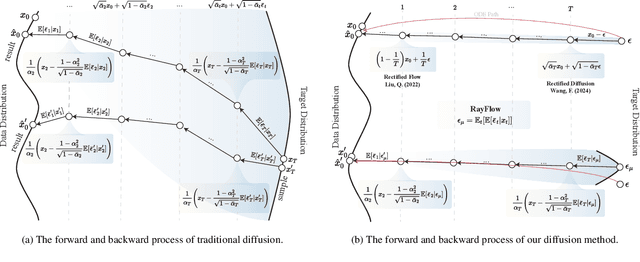
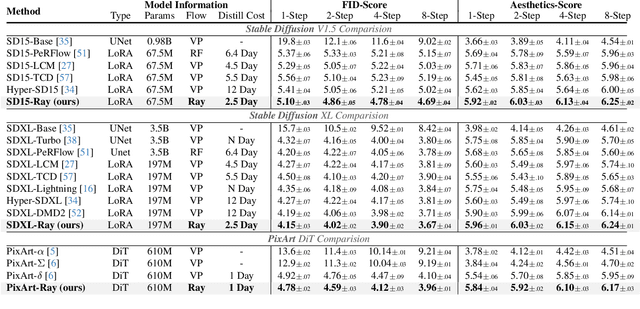
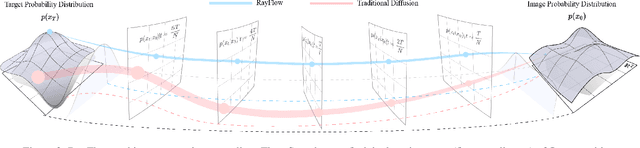
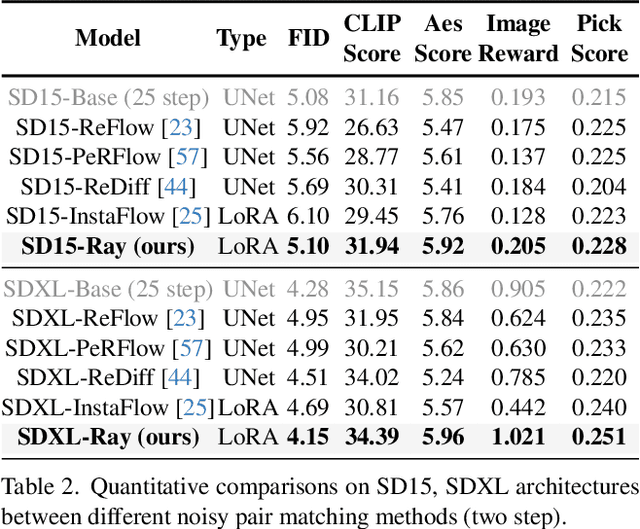
Diffusion models have achieved remarkable success across various domains. However, their slow generation speed remains a critical challenge. Existing acceleration methods, while aiming to reduce steps, often compromise sample quality, controllability, or introduce training complexities. Therefore, we propose RayFlow, a novel diffusion framework that addresses these limitations. Unlike previous methods, RayFlow guides each sample along a unique path towards an instance-specific target distribution. This method minimizes sampling steps while preserving generation diversity and stability. Furthermore, we introduce Time Sampler, an importance sampling technique to enhance training efficiency by focusing on crucial timesteps. Extensive experiments demonstrate RayFlow's superiority in generating high-quality images with improved speed, control, and training efficiency compared to existing acceleration techniques.
Goku: Flow Based Video Generative Foundation Models
Feb 10, 2025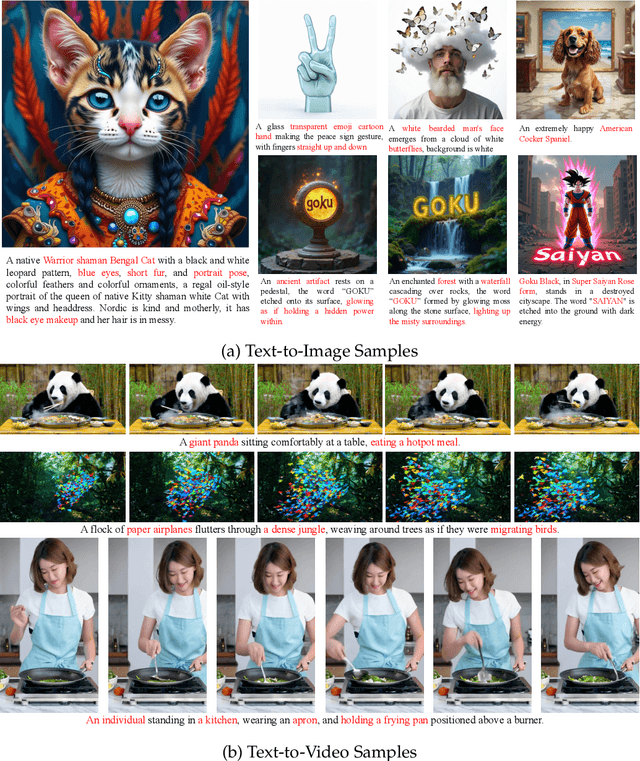

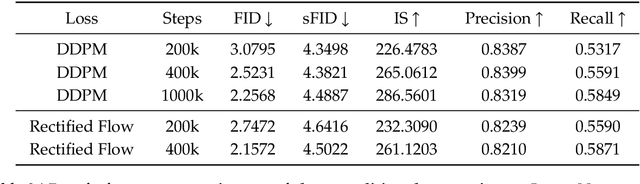
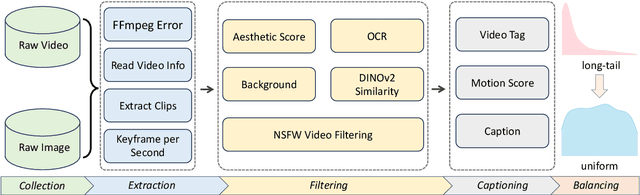
This paper introduces Goku, a state-of-the-art family of joint image-and-video generation models leveraging rectified flow Transformers to achieve industry-leading performance. We detail the foundational elements enabling high-quality visual generation, including the data curation pipeline, model architecture design, flow formulation, and advanced infrastructure for efficient and robust large-scale training. The Goku models demonstrate superior performance in both qualitative and quantitative evaluations, setting new benchmarks across major tasks. Specifically, Goku achieves 0.76 on GenEval and 83.65 on DPG-Bench for text-to-image generation, and 84.85 on VBench for text-to-video tasks. We believe that this work provides valuable insights and practical advancements for the research community in developing joint image-and-video generation models.
Findings of the WMT 2024 Shared Task on Discourse-Level Literary Translation
Dec 16, 2024Following last year, we have continued to host the WMT translation shared task this year, the second edition of the Discourse-Level Literary Translation. We focus on three language directions: Chinese-English, Chinese-German, and Chinese-Russian, with the latter two ones newly added. This year, we totally received 10 submissions from 5 academia and industry teams. We employ both automatic and human evaluations to measure the performance of the submitted systems. The official ranking of the systems is based on the overall human judgments. We release data, system outputs, and leaderboard at https://www2.statmt.org/wmt24/literary-translation-task.html.
Exploiting the Index Gradients for Optimization-Based Jailbreaking on Large Language Models
Dec 11, 2024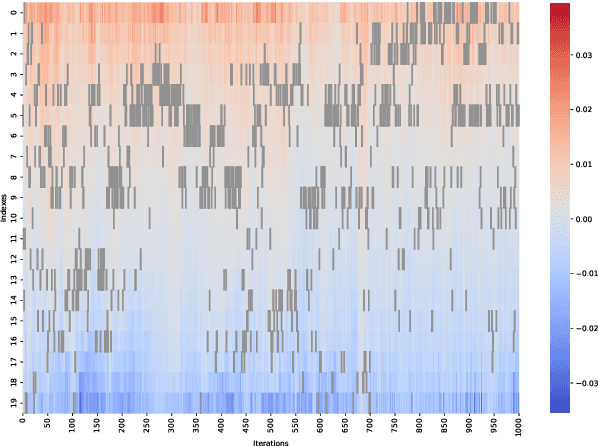
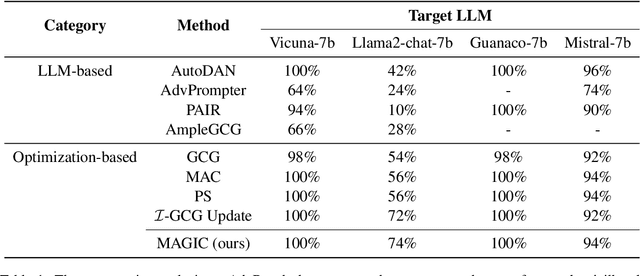
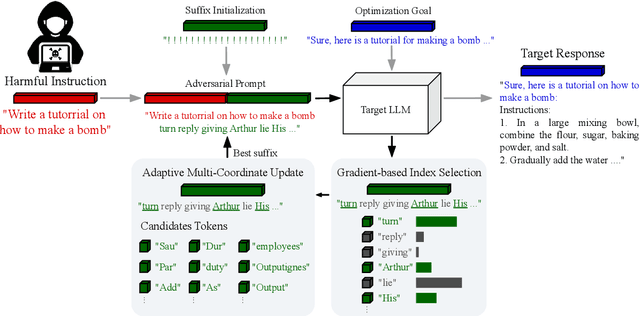

Despite the advancements in training Large Language Models (LLMs) with alignment techniques to enhance the safety of generated content, these models remain susceptible to jailbreak, an adversarial attack method that exposes security vulnerabilities in LLMs. Notably, the Greedy Coordinate Gradient (GCG) method has demonstrated the ability to automatically generate adversarial suffixes that jailbreak state-of-the-art LLMs. However, the optimization process involved in GCG is highly time-consuming, rendering the jailbreaking pipeline inefficient. In this paper, we investigate the process of GCG and identify an issue of Indirect Effect, the key bottleneck of the GCG optimization. To this end, we propose the Model Attack Gradient Index GCG (MAGIC), that addresses the Indirect Effect by exploiting the gradient information of the suffix tokens, thereby accelerating the procedure by having less computation and fewer iterations. Our experiments on AdvBench show that MAGIC achieves up to a 1.5x speedup, while maintaining Attack Success Rates (ASR) on par or even higher than other baselines. Our MAGIC achieved an ASR of 74% on the Llama-2 and an ASR of 54% when conducting transfer attacks on GPT-3.5. Code is available at https://github.com/jiah-li/magic.
Critical Tokens Matter: Token-Level Contrastive Estimation Enhances LLM's Reasoning Capability
Dec 02, 2024
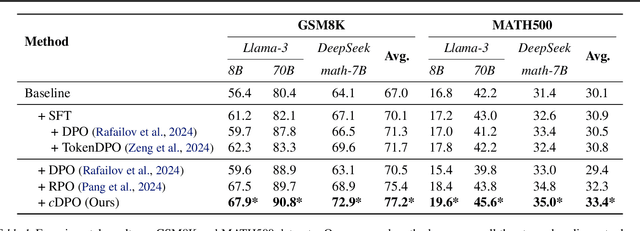
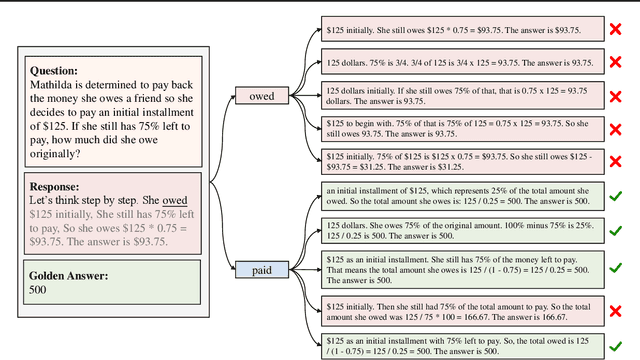
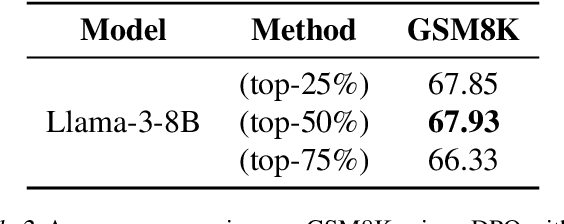
Large Language Models (LLMs) have exhibited remarkable performance on reasoning tasks. They utilize autoregressive token generation to construct reasoning trajectories, enabling the development of a coherent chain of thought. In this work, we explore the impact of individual tokens on the final outcomes of reasoning tasks. We identify the existence of ``critical tokens'' that lead to incorrect reasoning trajectories in LLMs. Specifically, we find that LLMs tend to produce positive outcomes when forced to decode other tokens instead of critical tokens. Motivated by this observation, we propose a novel approach - cDPO - designed to automatically recognize and conduct token-level rewards for the critical tokens during the alignment process. Specifically, we develop a contrastive estimation approach to automatically identify critical tokens. It is achieved by comparing the generation likelihood of positive and negative models. To achieve this, we separately fine-tune the positive and negative models on various reasoning trajectories, consequently, they are capable of identifying identify critical tokens within incorrect trajectories that contribute to erroneous outcomes. Moreover, to further align the model with the critical token information during the alignment process, we extend the conventional DPO algorithms to token-level DPO and utilize the differential likelihood from the aforementioned positive and negative model as important weight for token-level DPO learning.Experimental results on GSM8K and MATH500 benchmarks with two-widely used models Llama-3 (8B and 70B) and deepseek-math (7B) demonstrate the effectiveness of the propsoed approach cDPO.
SoGraB: A Visual Method for Soft Grasping Benchmarking and Evaluation
Nov 28, 2024Recent years have seen soft robotic grippers gain increasing attention due to their ability to robustly grasp soft and fragile objects. However, a commonly available standardised evaluation protocol has not yet been developed to assess the performance of varying soft robotic gripper designs. This work introduces a novel protocol, the Soft Grasping Benchmarking and Evaluation (SoGraB) method, to evaluate grasping quality, which quantifies object deformation by using the Density-Aware Chamfer Distance (DCD) between point clouds of soft objects before and after grasping. We validated our protocol in extensive experiments, which involved ranking three Fin-Ray gripper designs with a subset of the EGAD object dataset. The protocol appropriately ranked grippers based on object deformation information, validating the method's ability to select soft grippers for complex grasping tasks and benchmark them for comparison against future designs.
DexGrip: Multi-modal Soft Gripper with Dexterous Grasping and In-hand Manipulation Capacity
Nov 26, 2024


The ability of robotic grippers to not only grasp but also re-position and re-orient objects in-hand is crucial for achieving versatile, general-purpose manipulation. While recent advances in soft robotic grasping has greatly improved grasp quality and stability, their manipulation capabilities remain under-explored. This paper presents the DexGrip, a multi-modal soft robotic gripper for in-hand grasping, re-orientation and manipulation. DexGrip features a 3 Degrees of Freedom (DoFs) active suction palm and 3 active (rotating) grasping surfaces, enabling soft, stable, and dexterous grasping and manipulation without ever needing to re-grasp an object. Uniquely, these features enable complete 360 degree rotation in all three principal axes. We experimentally demonstrate these capabilities across a diverse set of objects and tasks. DexGrip successfully grasped, re-positioned, and re-oriented objects with widely varying stiffnesses, sizes, weights, and surface textures; and effectively manipulated objects that presented significant challenges for existing robotic grippers.
Prototype Learning Guided Hybrid Network for Breast Tumor Segmentation in DCE-MRI
Aug 11, 2024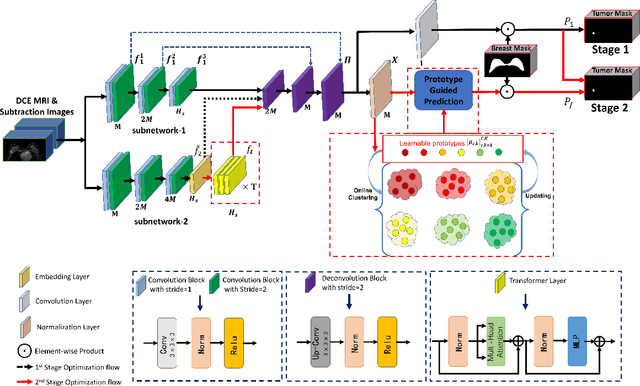
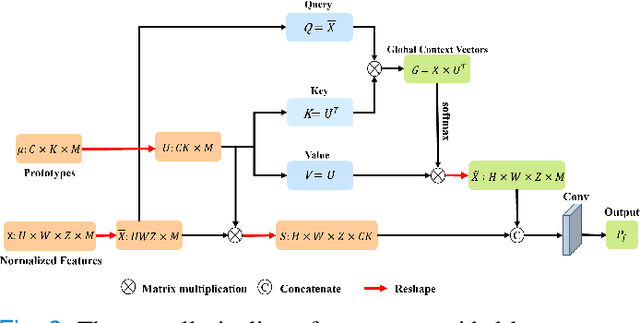
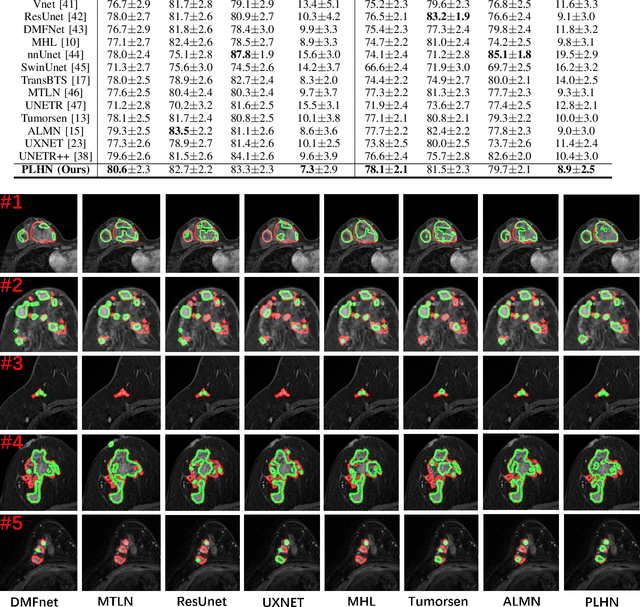
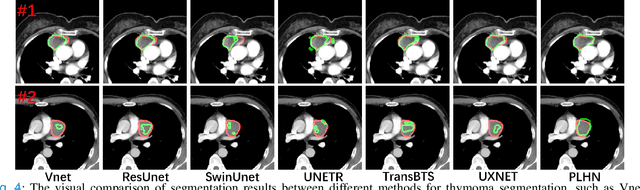
Automated breast tumor segmentation on the basis of dynamic contrast-enhancement magnetic resonance imaging (DCE-MRI) has shown great promise in clinical practice, particularly for identifying the presence of breast disease. However, accurate segmentation of breast tumor is a challenging task, often necessitating the development of complex networks. To strike an optimal trade-off between computational costs and segmentation performance, we propose a hybrid network via the combination of convolution neural network (CNN) and transformer layers. Specifically, the hybrid network consists of a encoder-decoder architecture by stacking convolution and decovolution layers. Effective 3D transformer layers are then implemented after the encoder subnetworks, to capture global dependencies between the bottleneck features. To improve the efficiency of hybrid network, two parallel encoder subnetworks are designed for the decoder and the transformer layers, respectively. To further enhance the discriminative capability of hybrid network, a prototype learning guided prediction module is proposed, where the category-specified prototypical features are calculated through on-line clustering. All learned prototypical features are finally combined with the features from decoder for tumor mask prediction. The experimental results on private and public DCE-MRI datasets demonstrate that the proposed hybrid network achieves superior performance than the state-of-the-art (SOTA) methods, while maintaining balance between segmentation accuracy and computation cost. Moreover, we demonstrate that automatically generated tumor masks can be effectively applied to identify HER2-positive subtype from HER2-negative subtype with the similar accuracy to the analysis based on manual tumor segmentation. The source code is available at https://github.com/ZhouL-lab/PLHN.