 Add to Chrome
 Add to Firefox
 Add to Edge
Learning to Align Multi-Faceted Evaluation: A Unified and Robust Framework
Feb 26, 2025
Large Language Models (LLMs) are being used more and more extensively for automated evaluation in various scenarios. Previous studies have attempted to fine-tune open-source LLMs to replicate the evaluation explanations and judgments of powerful proprietary models, such as GPT-4. However, these methods are largely limited to text-based analyses under predefined general criteria, resulting in reduced adaptability for unseen instructions and demonstrating instability in evaluating adherence to quantitative and structural constraints. To address these limitations, we propose a novel evaluation framework, ARJudge, that adaptively formulates evaluation criteria and synthesizes both text-based and code-driven analyses to evaluate LLM responses. ARJudge consists of two components: a fine-tuned Analyzer that generates multi-faceted evaluation analyses and a tuning-free Refiner that combines and refines all analyses to make the final judgment. We construct a Composite Analysis Corpus that integrates tasks for evaluation criteria generation alongside text-based and code-driven analysis generation to train the Analyzer. Our results demonstrate that ARJudge outperforms existing fine-tuned evaluators in effectiveness and robustness. Furthermore, it demonstrates the importance of multi-faceted evaluation and code-driven analyses in enhancing evaluation capabilities.

Self-Adjust Softmax
Feb 25, 2025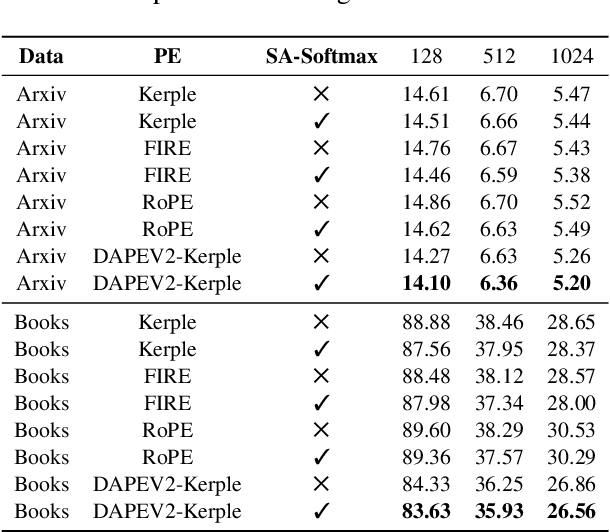
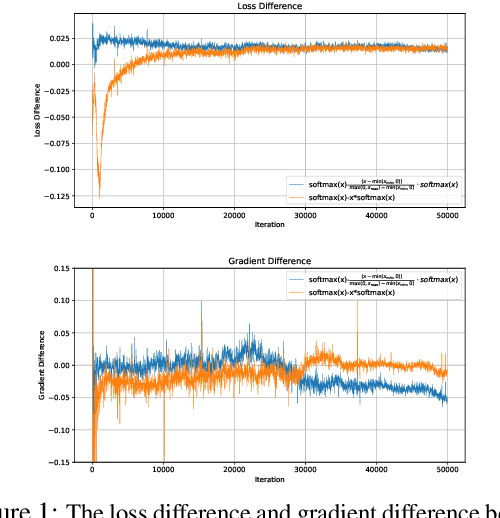
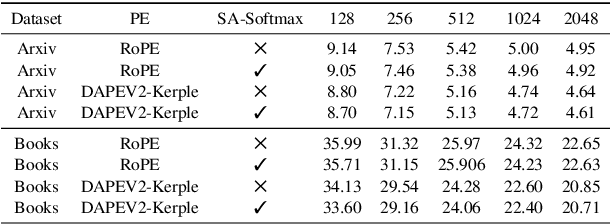
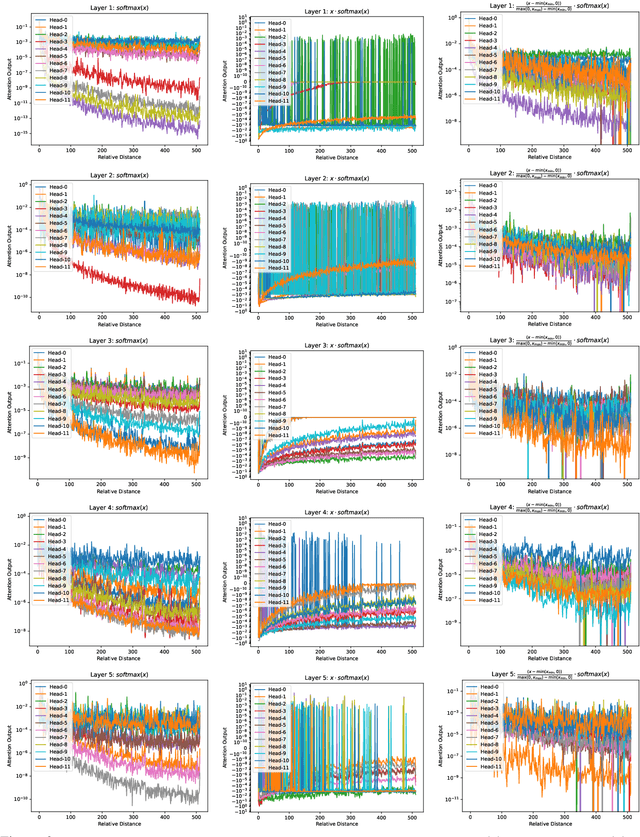
The softmax function is crucial in Transformer attention, which normalizes each row of the attention scores with summation to one, achieving superior performances over other alternative functions. However, the softmax function can face a gradient vanishing issue when some elements of the attention scores approach extreme values, such as probabilities close to one or zero. In this paper, we propose Self-Adjust Softmax (SA-Softmax) to address this issue by modifying $softmax(x)$ to $x \cdot softmax(x)$ and its normalized variant $\frac{(x - min(x_{\min},0))}{max(0,x_{max})-min(x_{min},0)} \cdot softmax(x)$. We theoretically show that SA-Softmax provides enhanced gradient properties compared to the vanilla softmax function. Moreover, SA-Softmax Attention can be seamlessly integrated into existing Transformer models to their attention mechanisms with minor adjustments. We conducted experiments to evaluate the empirical performance of Transformer models using SA-Softmax compared to the vanilla softmax function. These experiments, involving models with up to 2.7 billion parameters, are conducted across diverse datasets, language tasks, and positional encoding methods.
Crowd Comparative Reasoning: Unlocking Comprehensive Evaluations for LLM-as-a-Judge
Feb 18, 2025


LLM-as-a-Judge, which generates chain-of-thought (CoT) judgments, has become a widely adopted auto-evaluation method. However, its reliability is compromised by the CoT reasoning's inability to capture comprehensive and deeper details, often leading to incomplete outcomes. Existing methods mainly rely on majority voting or criteria expansion, which is insufficient to address the limitation in CoT. We propose Crowd-based Comparative Evaluation, which introduces additional crowd responses to compare with the candidate responses, thereby exposing deeper and more comprehensive details within the candidate responses. This process effectively guides LLM-as-a-Judge to provide a more detailed CoT judgment. Extensive experiments demonstrate that our approach enhances evaluation reliability, achieving an average accuracy gain of 6.7% across five benchmarks. Moreover, our method produces higher-quality CoTs that facilitate judge distillation and exhibit superior performance in rejection sampling for supervised fine-tuning (SFT), referred to as crowd rejection sampling, thereby enabling more efficient SFT. Our analysis confirms that CoTs generated by ours are more comprehensive and of higher quality, and evaluation accuracy improves as inference scales.
SepLLM: Accelerate Large Language Models by Compressing One Segment into One Separator
Dec 16, 2024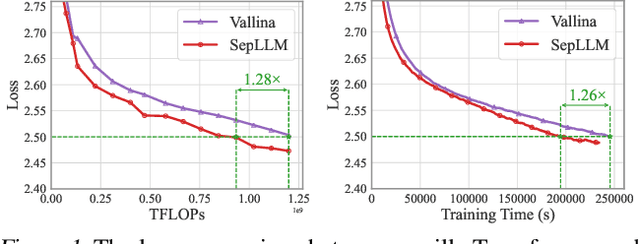

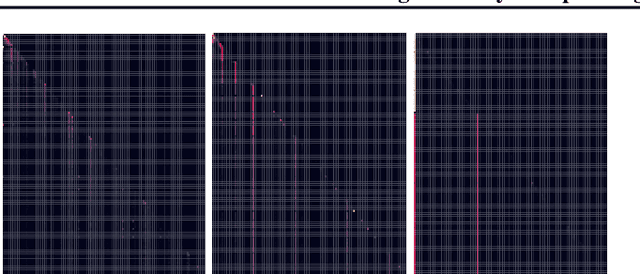

Large Language Models (LLMs) have exhibited exceptional performance across a spectrum of natural language processing tasks. However, their substantial sizes pose considerable challenges, particularly in computational demands and inference speed, due to their quadratic complexity. In this work, we have identified a key pattern: certain seemingly meaningless special tokens (i.e., separators) contribute disproportionately to attention scores compared to semantically meaningful tokens. This observation suggests that information of the segments between these separator tokens can be effectively condensed into the separator tokens themselves without significant information loss. Guided by this insight, we introduce SepLLM, a plug-and-play framework that accelerates inference by compressing these segments and eliminating redundant tokens. Additionally, we implement efficient kernels for training acceleration. Experimental results across training-free, training-from-scratch, and post-training settings demonstrate SepLLM's effectiveness. Notably, using the Llama-3-8B backbone, SepLLM achieves over 50% reduction in KV cache on the GSM8K-CoT benchmark while maintaining comparable performance. Furthermore, in streaming settings, SepLLM effectively processes sequences of up to 4 million tokens or more while maintaining consistent language modeling capabilities.
CognitionCapturer: Decoding Visual Stimuli From Human EEG Signal With Multimodal Information
Dec 13, 2024

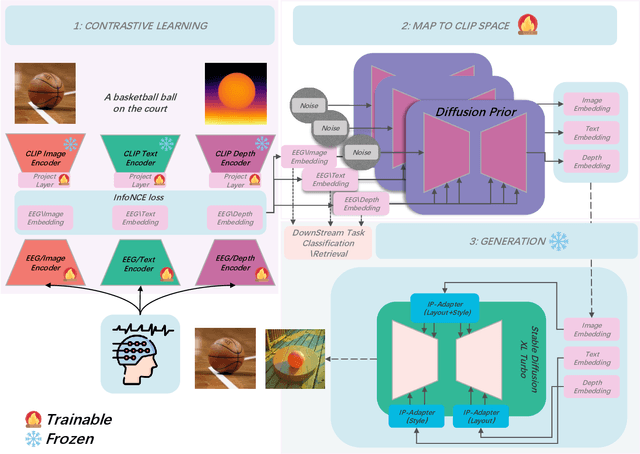
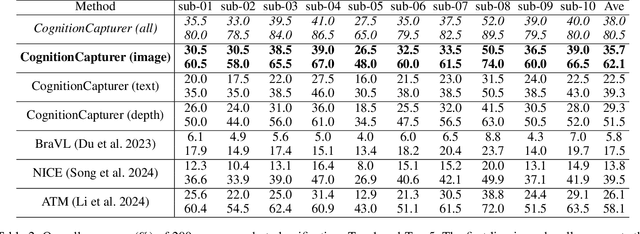
Electroencephalogram (EEG) signals have attracted significant attention from researchers due to their non-invasive nature and high temporal sensitivity in decoding visual stimuli. However, most recent studies have focused solely on the relationship between EEG and image data pairs, neglecting the valuable ``beyond-image-modality" information embedded in EEG signals. This results in the loss of critical multimodal information in EEG. To address this limitation, we propose CognitionCapturer, a unified framework that fully leverages multimodal data to represent EEG signals. Specifically, CognitionCapturer trains Modality Expert Encoders for each modality to extract cross-modal information from the EEG modality. Then, it introduces a diffusion prior to map the EEG embedding space to the CLIP embedding space, followed by using a pretrained generative model, the proposed framework can reconstruct visual stimuli with high semantic and structural fidelity. Notably, the framework does not require any fine-tuning of the generative models and can be extended to incorporate more modalities. Through extensive experiments, we demonstrate that CognitionCapturer outperforms state-of-the-art methods both qualitatively and quantitatively. Code: https://github.com/XiaoZhangYES/CognitionCapturer.
Scaling Law for Language Models Training Considering Batch Size
Dec 02, 2024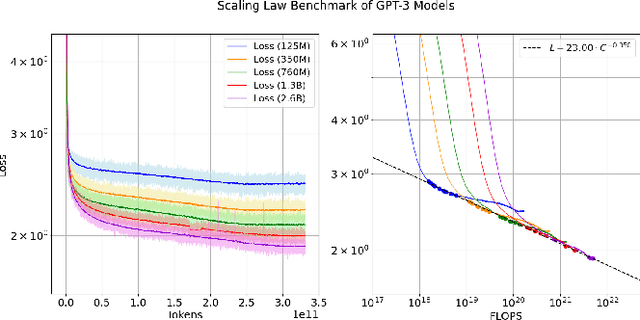
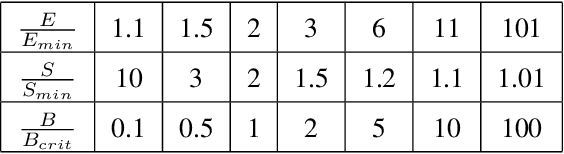

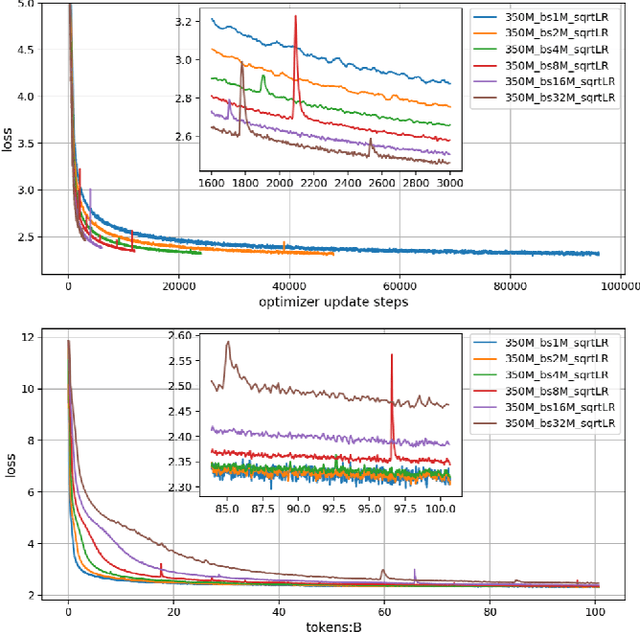
Large language models (LLMs) have made remarkable advances in recent years, with scaling laws playing a critical role in this rapid progress. In this paper, we empirically investigate how a critical hyper-parameter, i.e., the global batch size, influences the LLM training prdocess. We begin by training language models ranging from 125 million to 2.6 billion parameters, using up to 300 billion high-quality tokens. Through these experiments, we establish a basic scaling law on model size and training data amount. We then examine how varying batch sizes and learning rates affect the convergence and generalization of these models. Our analysis yields batch size scaling laws under two different cases: with a fixed compute budget, and with a fixed amount of training data. Extrapolation experiments on models of increasing sizes validate our predicted laws, which provides guidance for optimizing LLM training strategies under specific resource constraints.
Efficient Multi-modal Large Language Models via Visual Token Grouping
Nov 26, 2024


The development of Multi-modal Large Language Models (MLLMs) enhances Large Language Models (LLMs) with the ability to perceive data formats beyond text, significantly advancing a range of downstream applications, such as visual question answering and image captioning. However, the substantial computational costs associated with processing high-resolution images and videos pose a barrier to their broader adoption. To address this challenge, compressing vision tokens in MLLMs has emerged as a promising approach to reduce inference costs. While existing methods conduct token reduction in the feature alignment phase. In this paper, we introduce VisToG, a novel grouping mechanism that leverages the capabilities of pre-trained vision encoders to group similar image segments without the need for segmentation masks. Specifically, we concatenate semantic tokens to represent image semantic segments after the linear projection layer before feeding into the vision encoder. Besides, with the isolated attention we adopt, VisToG can identify and eliminate redundant visual tokens utilizing the prior knowledge in the pre-trained vision encoder, which effectively reduces computational demands. Extensive experiments demonstrate the effectiveness of VisToG, maintaining 98.1% of the original performance while achieving a reduction of over 27\% inference time.
ToolFlow: Boosting LLM Tool-Calling Through Natural and Coherent Dialogue Synthesis
Oct 24, 2024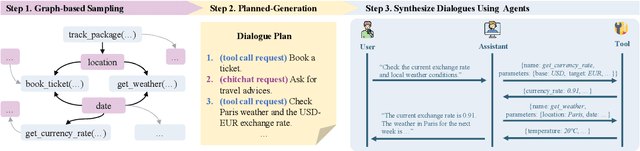
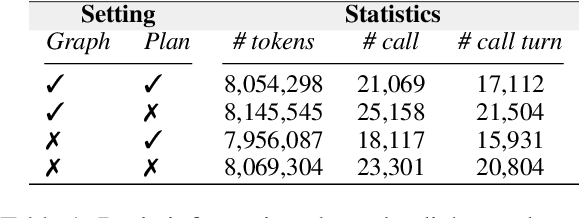
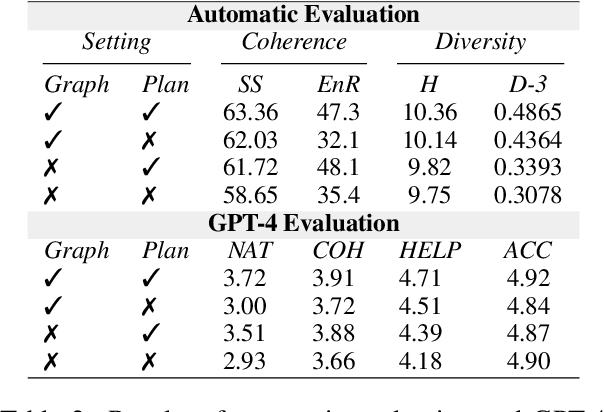
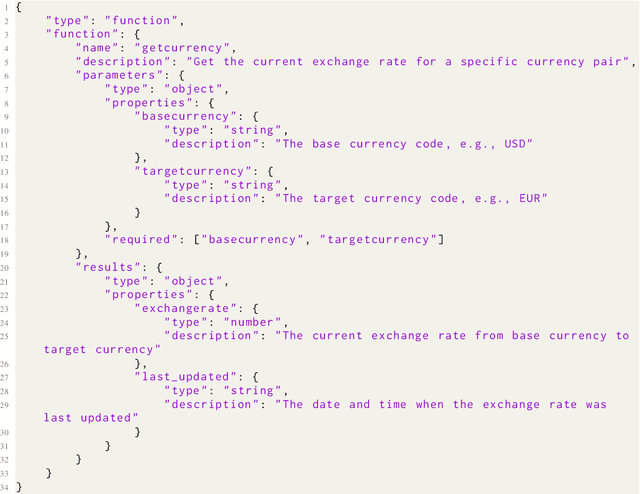
Supervised fine-tuning (SFT) is a common method to enhance the tool calling capabilities of Large Language Models (LLMs), with the training data often being synthesized. The current data synthesis process generally involves sampling a set of tools, formulating a requirement based on these tools, and generating the call statements. However, tools sampled randomly lack relevance, making them difficult to combine and thus reducing the diversity of the data. Additionally, current work overlooks the coherence between turns of dialogues, leading to a gap between the synthesized data and real-world scenarios. To address these issues, we propose a Graph-based Sampling strategy to sample more relevant tool combinations, and a Planned-generation strategy to create plans that guide the synthesis of coherent dialogues. We integrate these two strategies and enable multiple agents to synthesize the dialogue data interactively, resulting in our tool-calling data synthesis pipeline ToolFlow. Data quality assessments demonstrate improvements in the naturalness and coherence of our synthesized dialogues. Finally, we apply SFT on LLaMA-3.1-8B using 8,000 synthetic dialogues generated with ToolFlow. Results show that the model achieves tool-calling performance comparable to or even surpassing GPT-4, while maintaining strong general capabilities.
Forewarned is Forearmed: Leveraging LLMs for Data Synthesis through Failure-Inducing Exploration
Oct 22, 2024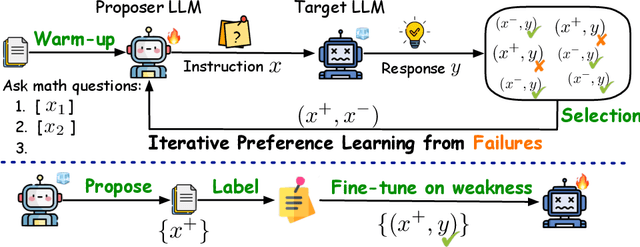
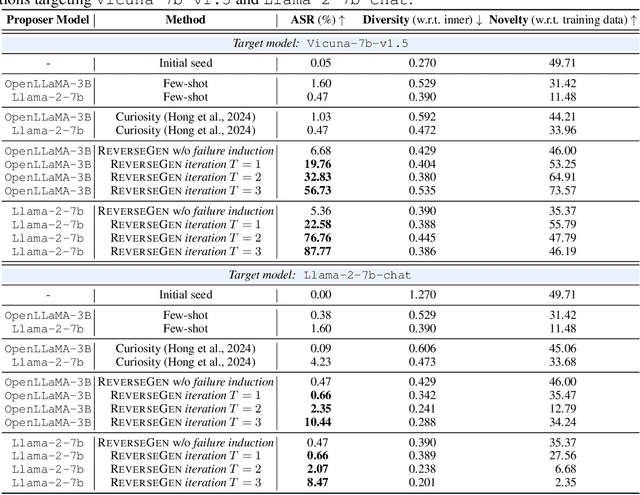
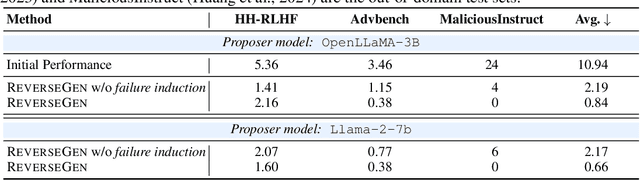
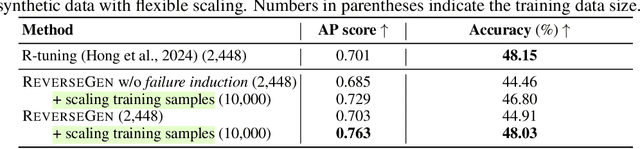
Large language models (LLMs) have significantly benefited from training on diverse, high-quality task-specific data, leading to impressive performance across a range of downstream applications. Current methods often rely on human-annotated data or predefined task templates to direct powerful LLMs in synthesizing task-relevant data for effective model training. However, this dependence on manually designed components may constrain the scope of generated data, potentially overlooking critical edge cases or novel scenarios that could challenge the model. In this paper, we present a novel approach, ReverseGen, designed to automatically generate effective training samples that expose the weaknesses of LLMs. Specifically, we introduce a dedicated proposer trained to produce queries that lead target models to generate unsatisfactory responses. These failure-inducing queries are then used to construct training data, helping to address the models' shortcomings and improve overall performance. Our approach is flexible and can be applied to models of various scales (3B, 7B, and 8B). We evaluate ReverseGen on three key applications (safety, honesty, and math), demonstrating that our generated data is both highly effective and diverse. Models fine-tuned with ReverseGen-generated data consistently outperform those trained on human-annotated or general model-generated data, offering a new perspective on data synthesis for task-specific LLM enhancement.
Beyond Autoregression: Discrete Diffusion for Complex Reasoning and Planning
Oct 18, 2024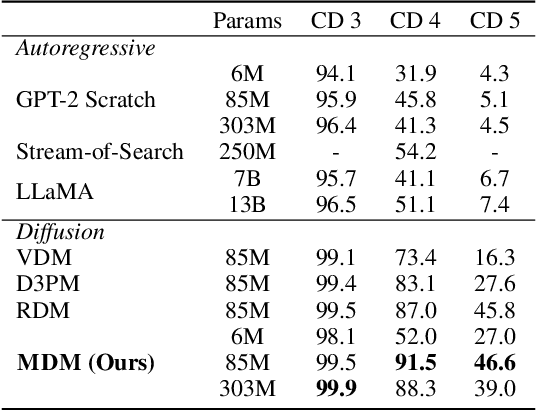
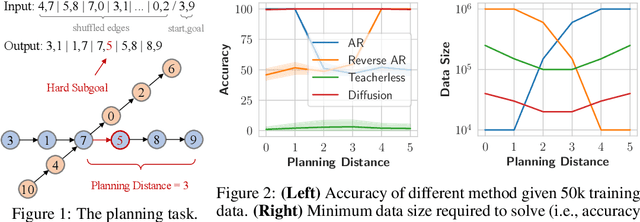
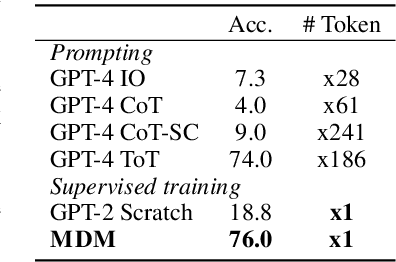
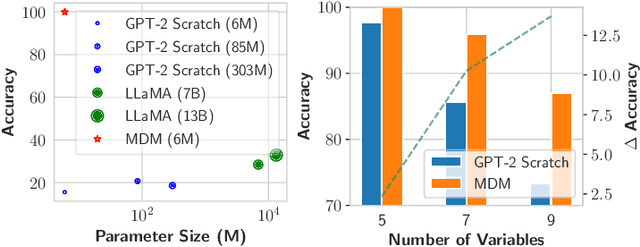
Autoregressive language models, despite their impressive capabilities, struggle with complex reasoning and long-term planning tasks. We introduce discrete diffusion models as a novel solution to these challenges. Through the lens of subgoal imbalance, we demonstrate how diffusion models effectively learn difficult subgoals that elude autoregressive approaches. We propose Multi-granularity Diffusion Modeling (MDM), which prioritizes subgoals based on difficulty during learning. On complex tasks like Countdown, Sudoku, and Boolean Satisfiability Problems, MDM significantly outperforms autoregressive models without using search techniques. For instance, MDM achieves 91.5\% and 100\% accuracy on Countdown and Sudoku, respectively, compared to 45.8\% and 20.7\% for autoregressive models. Our work highlights the potential of diffusion-based approaches in advancing AI capabilities for sophisticated language understanding and problem-solving tasks.