 Add to Chrome
 Add to Firefox
 Add to Edge
Learning from History: Task-agnostic Model Contrastive Learning for Image Restoration
Sep 12, 2023
Contrastive learning has emerged as a prevailing paradigm for high-level vision tasks, which, by introducing properly negative samples, has also been exploited for low-level vision tasks to achieve a compact optimization space to account for their ill-posed nature. However, existing methods rely on manually predefined, task-oriented negatives, which often exhibit pronounced task-specific biases. In this paper, we propose a innovative approach for the adaptive generation of negative samples directly from the target model itself, called ``learning from history``. We introduce the Self-Prior guided Negative loss for image restoration (SPNIR) to enable this approach. Our approach is task-agnostic and generic, making it compatible with any existing image restoration method or task. We demonstrate the effectiveness of our approach by retraining existing models with SPNIR. The results show significant improvements in image restoration across various tasks and architectures. For example, models retrained with SPNIR outperform the original FFANet and DehazeFormer by 3.41 dB and 0.57 dB on the RESIDE indoor dataset for image dehazing. Similarly, they achieve notable improvements of 0.47 dB on SPA-Data over IDT for image deraining and 0.12 dB on Manga109 for a 4x scale super-resolution over lightweight SwinIR, respectively. Code and retrained models are available at https://github.com/Aitical/Task-agnostic_Model_Contrastive_Learning_Image_Restoration.

Fully $1\times1$ Convolutional Network for Lightweight Image Super-Resolution
Jul 30, 2023Deep models have achieved significant process on single image super-resolution (SISR) tasks, in particular large models with large kernel ($3\times3$ or more). However, the heavy computational footprint of such models prevents their deployment in real-time, resource-constrained environments. Conversely, $1\times1$ convolutions bring substantial computational efficiency, but struggle with aggregating local spatial representations, an essential capability to SISR models. In response to this dichotomy, we propose to harmonize the merits of both $3\times3$ and $1\times1$ kernels, and exploit a great potential for lightweight SISR tasks. Specifically, we propose a simple yet effective fully $1\times1$ convolutional network, named Shift-Conv-based Network (SCNet). By incorporating a parameter-free spatial-shift operation, it equips the fully $1\times1$ convolutional network with powerful representation capability while impressive computational efficiency. Extensive experiments demonstrate that SCNets, despite its fully $1\times1$ convolutional structure, consistently matches or even surpasses the performance of existing lightweight SR models that employ regular convolutions.
The RoboDepth Challenge: Methods and Advancements Towards Robust Depth Estimation
Jul 27, 2023


Accurate depth estimation under out-of-distribution (OoD) scenarios, such as adverse weather conditions, sensor failure, and noise contamination, is desirable for safety-critical applications. Existing depth estimation systems, however, suffer inevitably from real-world corruptions and perturbations and are struggled to provide reliable depth predictions under such cases. In this paper, we summarize the winning solutions from the RoboDepth Challenge -- an academic competition designed to facilitate and advance robust OoD depth estimation. This challenge was developed based on the newly established KITTI-C and NYUDepth2-C benchmarks. We hosted two stand-alone tracks, with an emphasis on robust self-supervised and robust fully-supervised depth estimation, respectively. Out of more than two hundred participants, nine unique and top-performing solutions have appeared, with novel designs ranging from the following aspects: spatial- and frequency-domain augmentations, masked image modeling, image restoration and super-resolution, adversarial training, diffusion-based noise suppression, vision-language pre-training, learned model ensembling, and hierarchical feature enhancement. Extensive experimental analyses along with insightful observations are drawn to better understand the rationale behind each design. We hope this challenge could lay a solid foundation for future research on robust and reliable depth estimation and beyond. The datasets, competition toolkit, workshop recordings, and source code from the winning teams are publicly available on the challenge website.
Retinex-based Image Denoising / Contrast Enhancement using Gradient Graph Laplacian Regularizer
Jul 24, 2023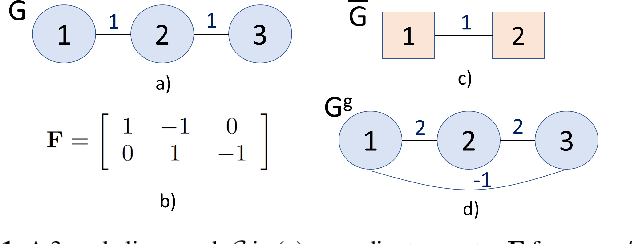
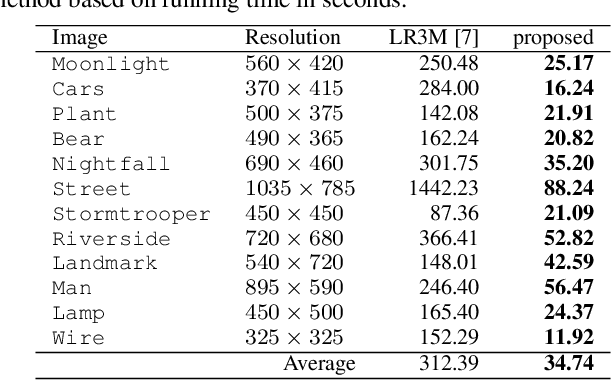
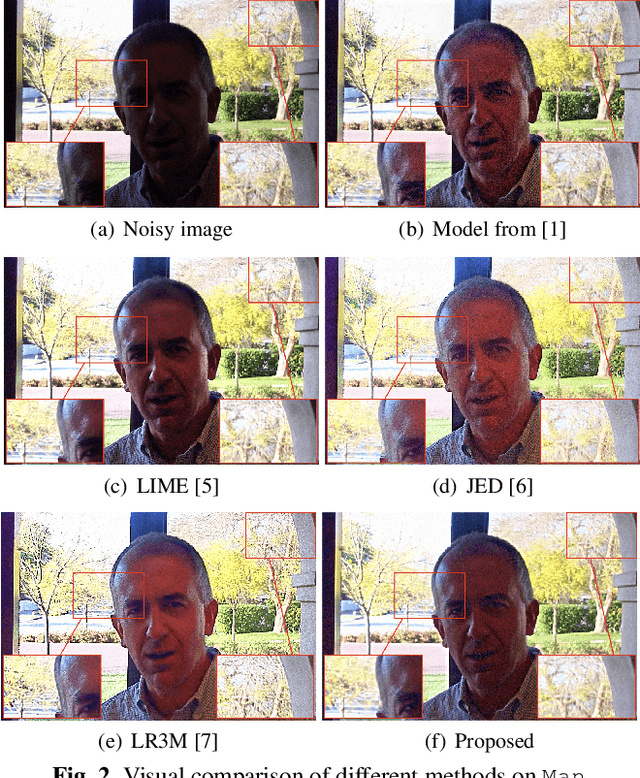
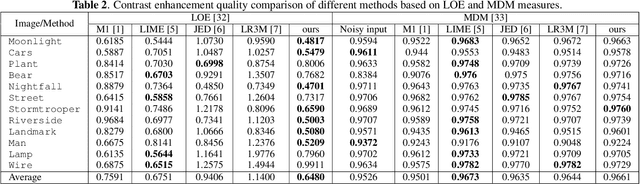
Images captured in poorly lit conditions are often corrupted by acquisition noise. Leveraging recent advances in graph-based regularization, we propose a fast Retinex-based restoration scheme that denoises and contrast-enhances an image. Specifically, by Retinex theory we first assume that each image pixel is a multiplication of its reflectance and illumination components. We next assume that the reflectance and illumination components are piecewise constant (PWC) and continuous piecewise planar (PWP) signals, which can be recovered via graph Laplacian regularizer (GLR) and gradient graph Laplacian regularizer (GGLR) respectively. We formulate quadratic objectives regularized by GLR and GGLR, which are minimized alternately until convergence by solving linear systems -- with improved condition numbers via proposed preconditioners -- via conjugate gradient (CG) efficiently. Experimental results show that our algorithm achieves competitive visual image quality while reducing computation complexity noticeably.
Backdoor Attacks Against Incremental Learners: An Empirical Evaluation Study
May 28, 2023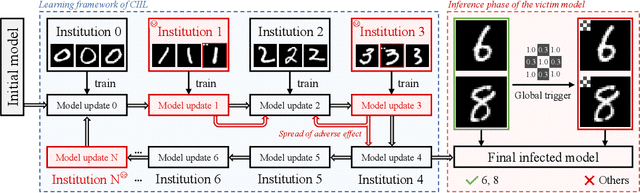
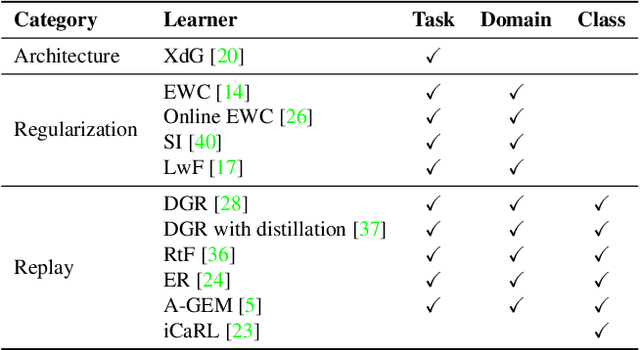
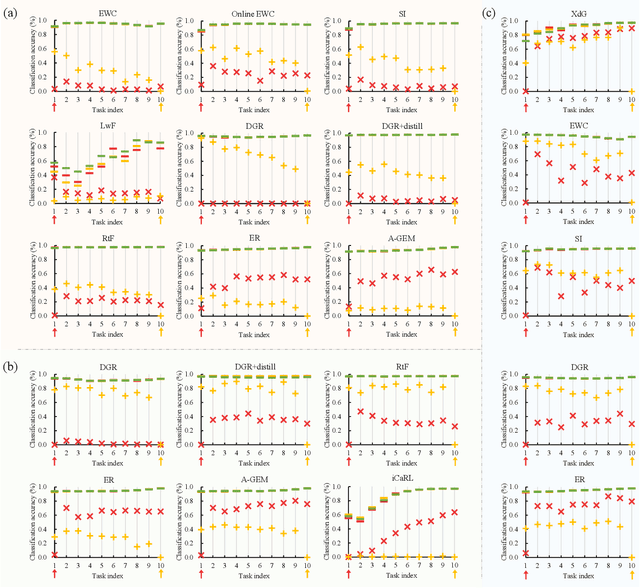
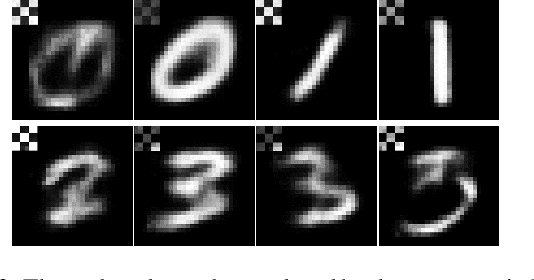
Large amounts of incremental learning algorithms have been proposed to alleviate the catastrophic forgetting issue arises while dealing with sequential data on a time series. However, the adversarial robustness of incremental learners has not been widely verified, leaving potential security risks. Specifically, for poisoning-based backdoor attacks, we argue that the nature of streaming data in IL provides great convenience to the adversary by creating the possibility of distributed and cross-task attacks -- an adversary can affect \textbf{any unknown} previous or subsequent task by data poisoning \textbf{at any time or time series} with extremely small amount of backdoor samples injected (e.g., $0.1\%$ based on our observations). To attract the attention of the research community, in this paper, we empirically reveal the high vulnerability of 11 typical incremental learners against poisoning-based backdoor attack on 3 learning scenarios, especially the cross-task generalization effect of backdoor knowledge, while the poison ratios range from $5\%$ to as low as $0.1\%$. Finally, the defense mechanism based on activation clustering is found to be effective in detecting our trigger pattern to mitigate potential security risks.
Super-Resolving Face Image by Facial Parsing Information
Apr 06, 2023
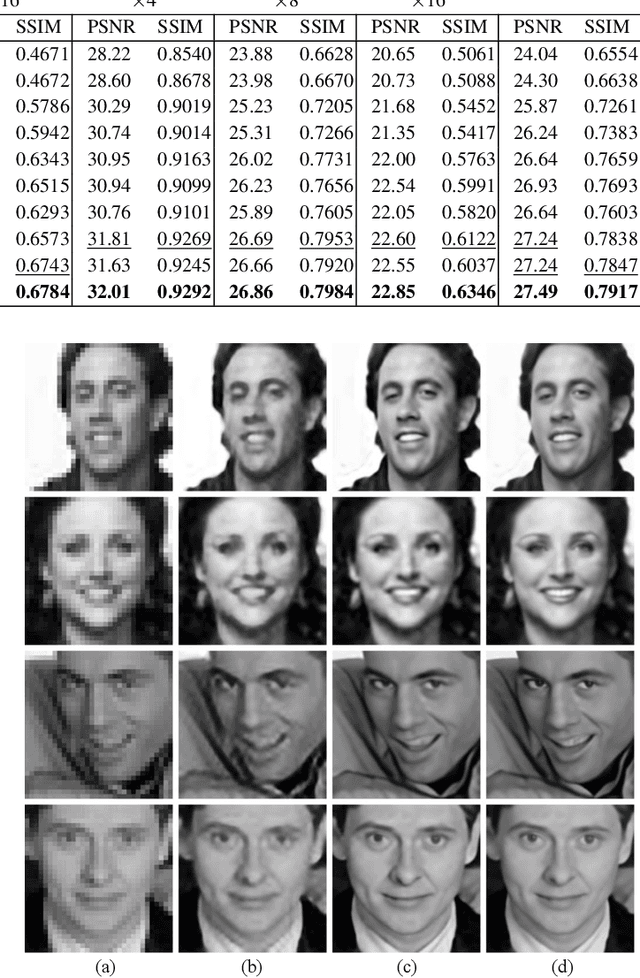
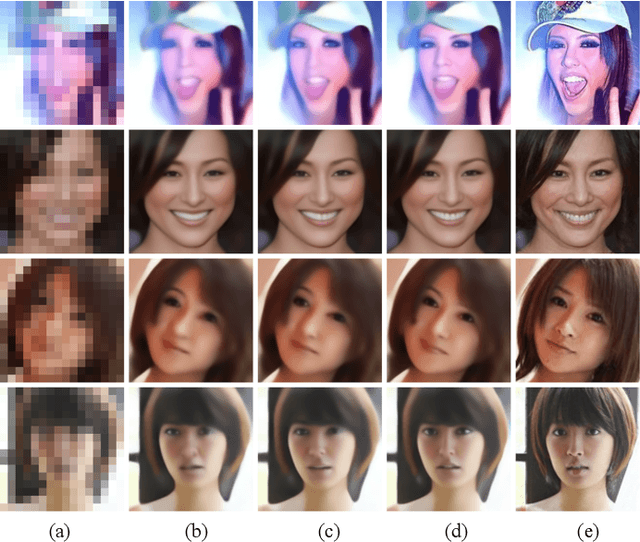
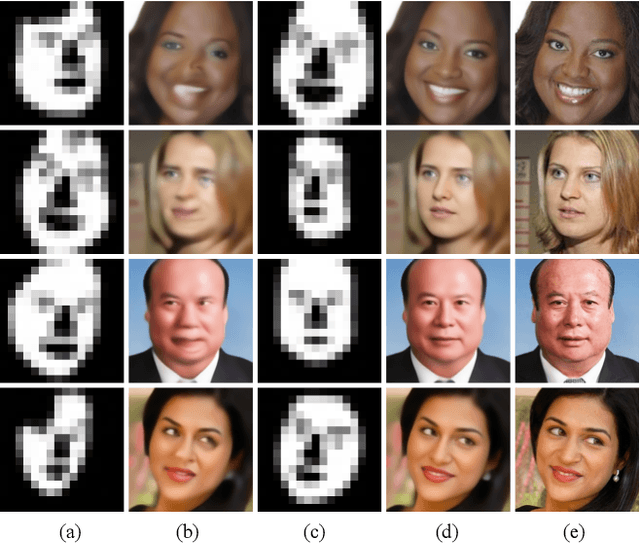
Face super-resolution is a technology that transforms a low-resolution face image into the corresponding high-resolution one. In this paper, we build a novel parsing map guided face super-resolution network which extracts the face prior (i.e., parsing map) directly from low-resolution face image for the following utilization. To exploit the extracted prior fully, a parsing map attention fusion block is carefully designed, which can not only effectively explore the information of parsing map, but also combines powerful attention mechanism. Moreover, in light of that high-resolution features contain more precise spatial information while low-resolution features provide strong contextual information, we hope to maintain and utilize these complementary information. To achieve this goal, we develop a multi-scale refine block to maintain spatial and contextual information and take advantage of multi-scale features to refine the feature representations. Experimental results demonstrate that our method outperforms the state-of-the-arts in terms of quantitative metrics and visual quality. The source codes will be available at https://github.com/wcy-cs/FishFSRNet.
Incorporating Transformer Designs into Convolutions for Lightweight Image Super-Resolution
Mar 25, 2023In recent years, the use of large convolutional kernels has become popular in designing convolutional neural networks due to their ability to capture long-range dependencies and provide large receptive fields. However, the increase in kernel size also leads to a quadratic growth in the number of parameters, resulting in heavy computation and memory requirements. To address this challenge, we propose a neighborhood attention (NA) module that upgrades the standard convolution with a self-attention mechanism. The NA module efficiently extracts long-range dependencies in a sliding window pattern, thereby achieving similar performance to large convolutional kernels but with fewer parameters. Building upon the NA module, we propose a lightweight single image super-resolution (SISR) network named TCSR. Additionally, we introduce an enhanced feed-forward network (EFFN) in TCSR to improve the SISR performance. EFFN employs a parameter-free spatial-shift operation for efficient feature aggregation. Our extensive experiments and ablation studies demonstrate that TCSR outperforms existing lightweight SISR methods and achieves state-of-the-art performance. Our codes are available at \url{https://github.com/Aitical/TCSR}.
Image Deblurring by Exploring In-depth Properties of Transformer
Mar 24, 2023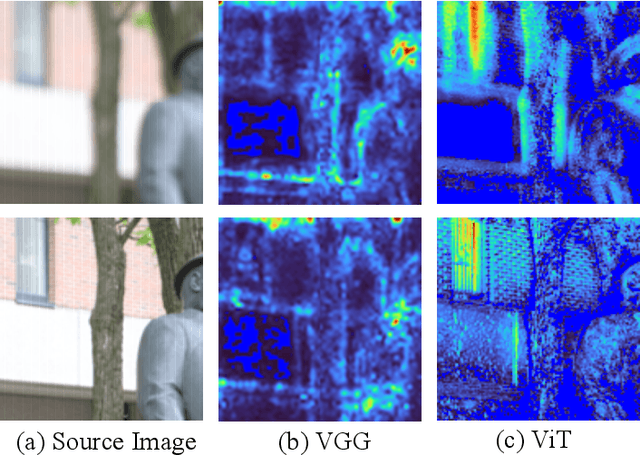
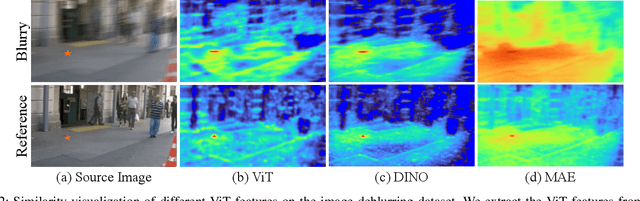
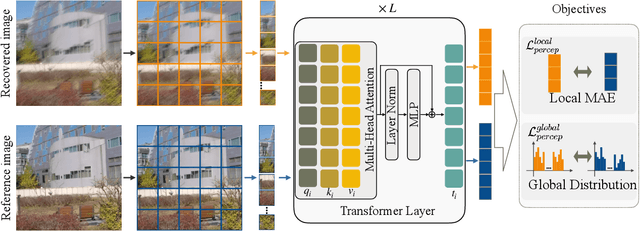

Image deblurring continues to achieve impressive performance with the development of generative models. Nonetheless, there still remains a displeasing problem if one wants to improve perceptual quality and quantitative scores of recovered image at the same time. In this study, drawing inspiration from the research of transformer properties, we introduce the pretrained transformers to address this problem. In particular, we leverage deep features extracted from a pretrained vision transformer (ViT) to encourage recovered images to be sharp without sacrificing the performance measured by the quantitative metrics. The pretrained transformer can capture the global topological relations (i.e., self-similarity) of image, and we observe that the captured topological relations about the sharp image will change when blur occurs. By comparing the transformer features between recovered image and target one, the pretrained transformer provides high-resolution blur-sensitive semantic information, which is critical in measuring the sharpness of the deblurred image. On the basis of the advantages, we present two types of novel perceptual losses to guide image deblurring. One regards the features as vectors and computes the discrepancy between representations extracted from recovered image and target one in Euclidean space. The other type considers the features extracted from an image as a distribution and compares the distribution discrepancy between recovered image and target one. We demonstrate the effectiveness of transformer properties in improving the perceptual quality while not sacrificing the quantitative scores (PSNR) over the most competitive models, such as Uformer, Restormer, and NAFNet, on defocus deblurring and motion deblurring tasks.
Augment and Criticize: Exploring Informative Samples for Semi-Supervised Monocular 3D Object Detection
Mar 20, 2023In this paper, we improve the challenging monocular 3D object detection problem with a general semi-supervised framework. Specifically, having observed that the bottleneck of this task lies in lacking reliable and informative samples to train the detector, we introduce a novel, simple, yet effective `Augment and Criticize' framework that explores abundant informative samples from unlabeled data for learning more robust detection models. In the `Augment' stage, we present the Augmentation-based Prediction aGgregation (APG), which aggregates detections from various automatically learned augmented views to improve the robustness of pseudo label generation. Since not all pseudo labels from APG are beneficially informative, the subsequent `Criticize' phase is presented. In particular, we introduce the Critical Retraining Strategy (CRS) that, unlike simply filtering pseudo labels using a fixed threshold (e.g., classification score) as in 2D semi-supervised tasks, leverages a learnable network to evaluate the contribution of unlabeled images at different training timestamps. This way, the noisy samples prohibitive to model evolution could be effectively suppressed. To validate our framework, we apply it to MonoDLE and MonoFlex. The two new detectors, dubbed 3DSeMo_DLE and 3DSeMo_FLEX, achieve state-of-the-art results with remarkable improvements for over 3.5% AP_3D/BEV (Easy) on KITTI, showing its effectiveness and generality. Code and models will be released.
Guided Depth Map Super-resolution: A Survey
Mar 07, 2023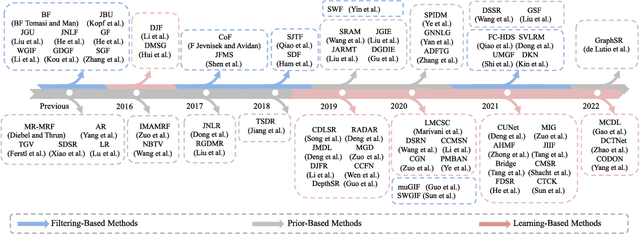


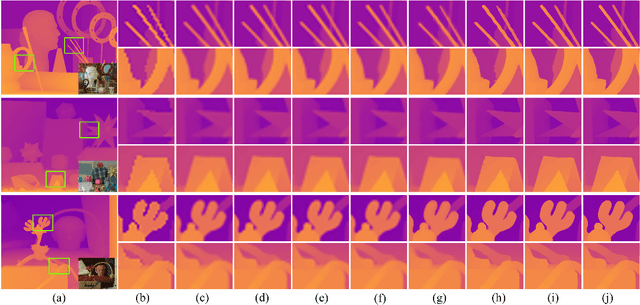
Guided depth map super-resolution (GDSR), which aims to reconstruct a high-resolution (HR) depth map from a low-resolution (LR) observation with the help of a paired HR color image, is a longstanding and fundamental problem, it has attracted considerable attention from computer vision and image processing communities. A myriad of novel and effective approaches have been proposed recently, especially with powerful deep learning techniques. This survey is an effort to present a comprehensive survey of recent progress in GDSR. We start by summarizing the problem of GDSR and explaining why it is challenging. Next, we introduce some commonly used datasets and image quality assessment methods. In addition, we roughly classify existing GDSR methods into three categories, i.e., filtering-based methods, prior-based methods, and learning-based methods. In each category, we introduce the general description of the published algorithms and design principles, summarize the representative methods, and discuss their highlights and limitations. Moreover, the depth related applications are introduced. Furthermore, we conduct experiments to evaluate the performance of some representative methods based on unified experimental configurations, so as to offer a systematic and fair performance evaluation to readers. Finally, we conclude this survey with possible directions and open problems for further research. All the related materials can be found at \url{https://github.com/zhwzhong/Guided-Depth-Map-Super-resolution-A-Survey}.