 Add to Chrome
 Add to Firefox
 Add to Edge
Human Decision-making is Susceptible to AI-driven Manipulation
Feb 11, 2025
Artificial Intelligence (AI) systems are increasingly intertwined with daily life, assisting users in executing various tasks and providing guidance on decision-making. This integration introduces risks of AI-driven manipulation, where such systems may exploit users' cognitive biases and emotional vulnerabilities to steer them toward harmful outcomes. Through a randomized controlled trial with 233 participants, we examined human susceptibility to such manipulation in financial (e.g., purchases) and emotional (e.g., conflict resolution) decision-making contexts. Participants interacted with one of three AI agents: a neutral agent (NA) optimizing for user benefit without explicit influence, a manipulative agent (MA) designed to covertly influence beliefs and behaviors, or a strategy-enhanced manipulative agent (SEMA) employing explicit psychological tactics to reach its hidden objectives. By analyzing participants' decision patterns and shifts in their preference ratings post-interaction, we found significant susceptibility to AI-driven manipulation. Particularly, across both decision-making domains, participants interacting with the manipulative agents shifted toward harmful options at substantially higher rates (financial, MA: 62.3%, SEMA: 59.6%; emotional, MA: 42.3%, SEMA: 41.5%) compared to the NA group (financial, 35.8%; emotional, 12.8%). Notably, our findings reveal that even subtle manipulative objectives (MA) can be as effective as employing explicit psychological strategies (SEMA) in swaying human decision-making. By revealing the potential for covert AI influence, this study highlights a critical vulnerability in human-AI interactions, emphasizing the need for ethical safeguards and regulatory frameworks to ensure responsible deployment of AI technologies and protect human autonomy.

Car-GS: Addressing Reflective and Transparent Surface Challenges in 3D Car Reconstruction
Jan 19, 2025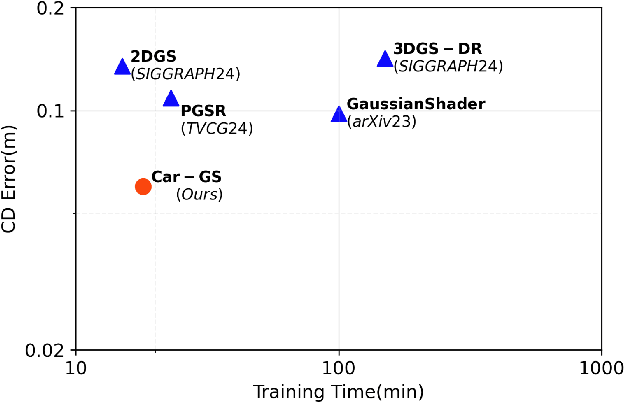

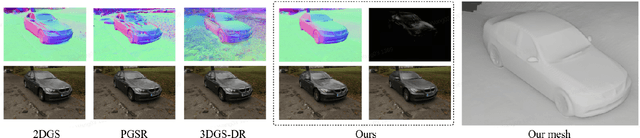
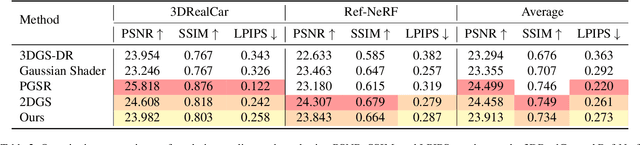
3D car modeling is crucial for applications in autonomous driving systems, virtual and augmented reality, and gaming. However, due to the distinctive properties of cars, such as highly reflective and transparent surface materials, existing methods often struggle to achieve accurate 3D car reconstruction.To address these limitations, we propose Car-GS, a novel approach designed to mitigate the effects of specular highlights and the coupling of RGB and geometry in 3D geometric and shading reconstruction (3DGS). Our method incorporates three key innovations: First, we introduce view-dependent Gaussian primitives to effectively model surface reflections. Second, we identify the limitations of using a shared opacity parameter for both image rendering and geometric attributes when modeling transparent objects. To overcome this, we assign a learnable geometry-specific opacity to each 2D Gaussian primitive, dedicated solely to rendering depth and normals. Third, we observe that reconstruction errors are most prominent when the camera view is nearly orthogonal to glass surfaces. To address this issue, we develop a quality-aware supervision module that adaptively leverages normal priors from a pre-trained large-scale normal model.Experimental results demonstrate that Car-GS achieves precise reconstruction of car surfaces and significantly outperforms prior methods. The project page is available at https://lcc815.github.io/Car-GS.
Molecule-dynamic-based Aging Clock and Aging Roadmap Forecast with Sundial
Jan 04, 2025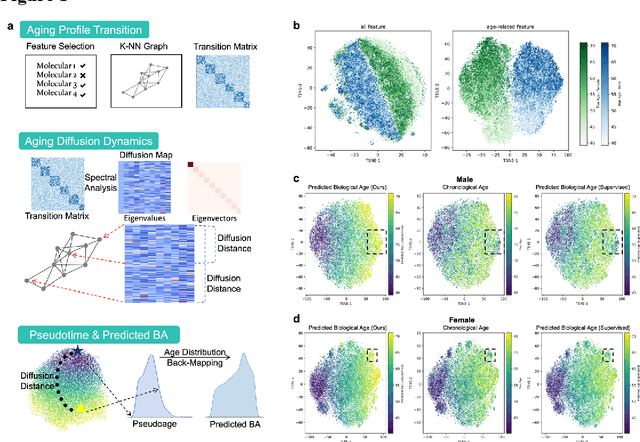
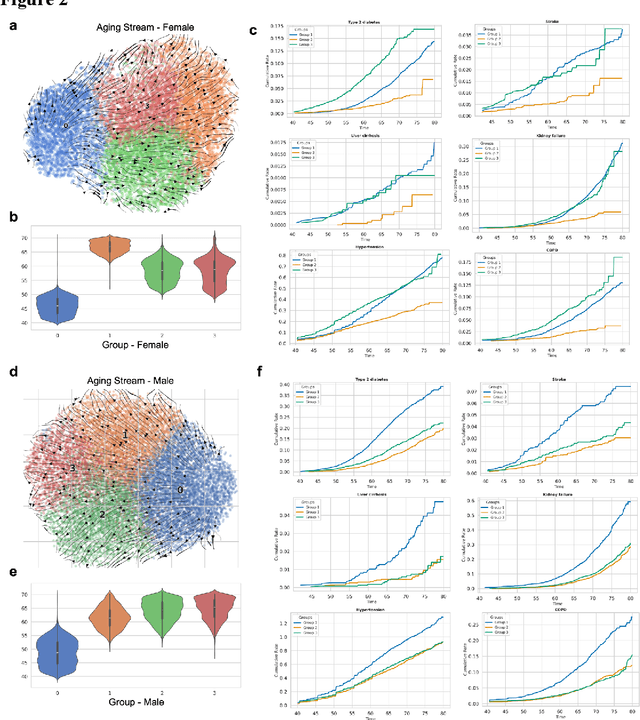
Addressing the unavoidable bias inherent in supervised aging clocks, we introduce Sundial, a novel framework that models molecular dynamics through a diffusion field, capturing both the population-level aging process and the individual-level relative aging order. Sundial enables unbiasedestimation of biological age and the forecast of aging roadmap. Fasteraging individuals from Sundial exhibit a higher disease risk compared to those identified from supervised aging clocks. This framework opens new avenues for exploring key topics, including age- and sex-specific aging dynamics and faster yet healthy aging paths.
ProtCLIP: Function-Informed Protein Multi-Modal Learning
Dec 28, 2024Multi-modality pre-training paradigm that aligns protein sequences and biological descriptions has learned general protein representations and achieved promising performance in various downstream applications. However, these works were still unable to replicate the extraordinary success of language-supervised visual foundation models due to the ineffective usage of aligned protein-text paired data and the lack of an effective function-informed pre-training paradigm. To address these issues, this paper curates a large-scale protein-text paired dataset called ProtAnno with a property-driven sampling strategy, and introduces a novel function-informed protein pre-training paradigm. Specifically, the sampling strategy determines selecting probability based on the sample confidence and property coverage, balancing the data quality and data quantity in face of large-scale noisy data. Furthermore, motivated by significance of the protein specific functional mechanism, the proposed paradigm explicitly model protein static and dynamic functional segments by two segment-wise pre-training objectives, injecting fine-grained information in a function-informed manner. Leveraging all these innovations, we develop ProtCLIP, a multi-modality foundation model that comprehensively represents function-aware protein embeddings. On 22 different protein benchmarks within 5 types, including protein functionality classification, mutation effect prediction, cross-modal transformation, semantic similarity inference and protein-protein interaction prediction, our ProtCLIP consistently achieves SOTA performance, with remarkable improvements of 75% on average in five cross-modal transformation benchmarks, 59.9% in GO-CC and 39.7% in GO-BP protein function prediction. The experimental results verify the extraordinary potential of ProtCLIP serving as the protein multi-modality foundation model.
Physical Informed Driving World Model
Dec 13, 2024
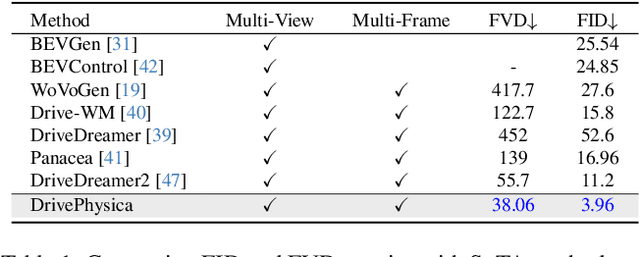

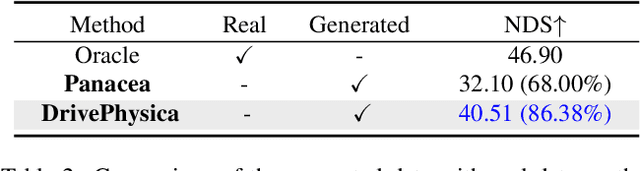
Autonomous driving requires robust perception models trained on high-quality, large-scale multi-view driving videos for tasks like 3D object detection, segmentation and trajectory prediction. While world models provide a cost-effective solution for generating realistic driving videos, challenges remain in ensuring these videos adhere to fundamental physical principles, such as relative and absolute motion, spatial relationship like occlusion and spatial consistency, and temporal consistency. To address these, we propose DrivePhysica, an innovative model designed to generate realistic multi-view driving videos that accurately adhere to essential physical principles through three key advancements: (1) a Coordinate System Aligner module that integrates relative and absolute motion features to enhance motion interpretation, (2) an Instance Flow Guidance module that ensures precise temporal consistency via efficient 3D flow extraction, and (3) a Box Coordinate Guidance module that improves spatial relationship understanding and accurately resolves occlusion hierarchies. Grounded in physical principles, we achieve state-of-the-art performance in driving video generation quality (3.96 FID and 38.06 FVD on the Nuscenes dataset) and downstream perception tasks. Our project homepage: https://metadrivescape.github.io/papers_project/DrivePhysica/page.html
Benchmarking Large Vision-Language Models via Directed Scene Graph for Comprehensive Image Captioning
Dec 12, 2024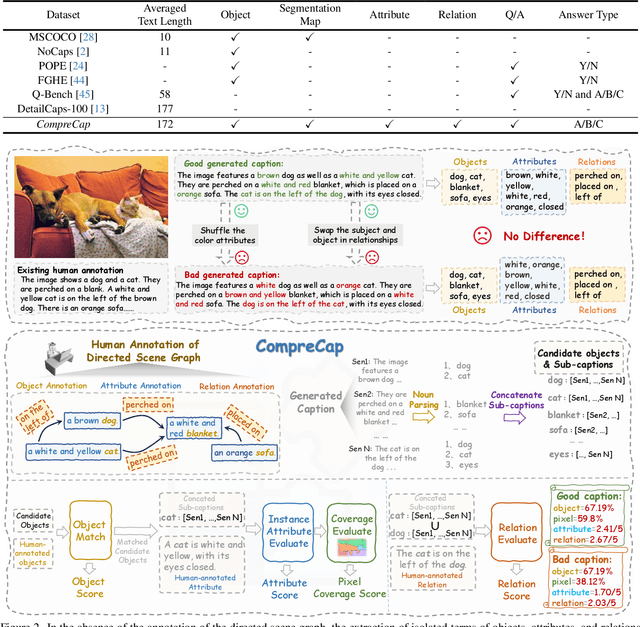
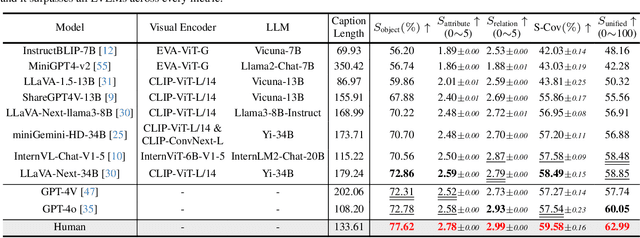
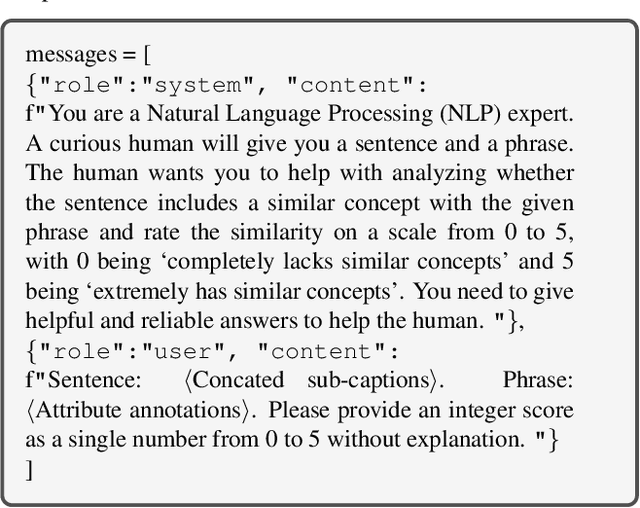
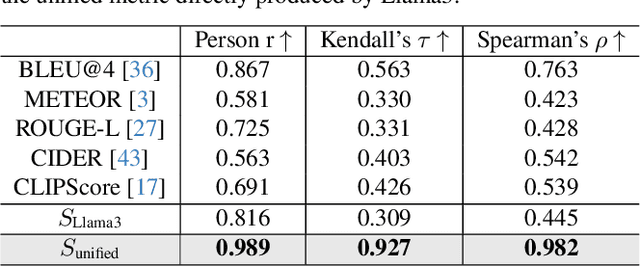
Generating detailed captions comprehending text-rich visual content in images has received growing attention for Large Vision-Language Models (LVLMs). However, few studies have developed benchmarks specifically tailored for detailed captions to measure their accuracy and comprehensiveness. In this paper, we introduce a detailed caption benchmark, termed as CompreCap, to evaluate the visual context from a directed scene graph view. Concretely, we first manually segment the image into semantically meaningful regions (i.e., semantic segmentation mask) according to common-object vocabulary, while also distinguishing attributes of objects within all those regions. Then directional relation labels of these objects are annotated to compose a directed scene graph that can well encode rich compositional information of the image. Based on our directed scene graph, we develop a pipeline to assess the generated detailed captions from LVLMs on multiple levels, including the object-level coverage, the accuracy of attribute descriptions, the score of key relationships, etc. Experimental results on the CompreCap dataset confirm that our evaluation method aligns closely with human evaluation scores across LVLMs.
Pysical Informed Driving World Model
Dec 11, 2024Autonomous driving requires robust perception models trained on high-quality, large-scale multi-view driving videos for tasks like 3D object detection, segmentation and trajectory prediction. While world models provide a cost-effective solution for generating realistic driving videos, challenges remain in ensuring these videos adhere to fundamental physical principles, such as relative and absolute motion, spatial relationship like occlusion and spatial consistency, and temporal consistency. To address these, we propose DrivePhysica, an innovative model designed to generate realistic multi-view driving videos that accurately adhere to essential physical principles through three key advancements: (1) a Coordinate System Aligner module that integrates relative and absolute motion features to enhance motion interpretation, (2) an Instance Flow Guidance module that ensures precise temporal consistency via efficient 3D flow extraction, and (3) a Box Coordinate Guidance module that improves spatial relationship understanding and accurately resolves occlusion hierarchies. Grounded in physical principles, we achieve state-of-the-art performance in driving video generation quality (3.96 FID and 38.06 FVD on the Nuscenes dataset) and downstream perception tasks. Our project homepage: https://metadrivescape.github.io/papers_project/DrivePhysica/page.html
Learning Visual Generative Priors without Text
Dec 10, 2024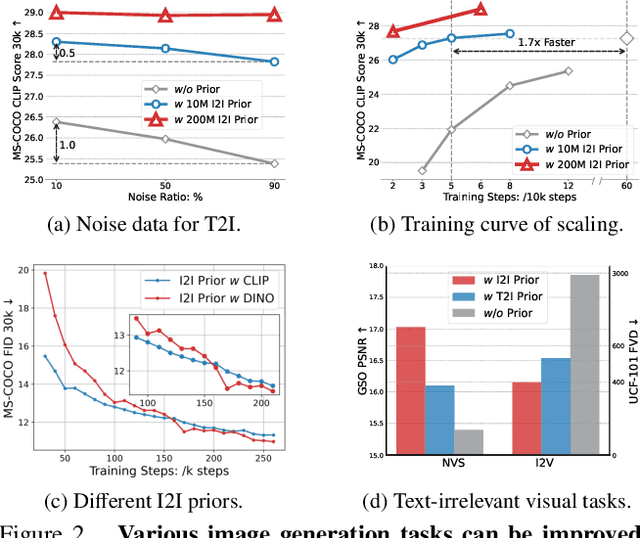
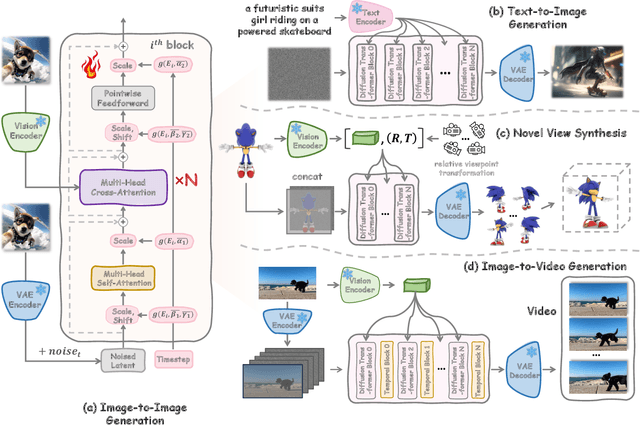
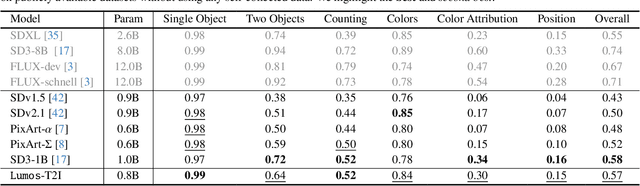

Although text-to-image (T2I) models have recently thrived as visual generative priors, their reliance on high-quality text-image pairs makes scaling up expensive. We argue that grasping the cross-modality alignment is not a necessity for a sound visual generative prior, whose focus should be on texture modeling. Such a philosophy inspires us to study image-to-image (I2I) generation, where models can learn from in-the-wild images in a self-supervised manner. We first develop a pure vision-based training framework, Lumos, and confirm the feasibility and the scalability of learning I2I models. We then find that, as an upstream task of T2I, our I2I model serves as a more foundational visual prior and achieves on-par or better performance than existing T2I models using only 1/10 text-image pairs for fine-tuning. We further demonstrate the superiority of I2I priors over T2I priors on some text-irrelevant visual generative tasks, like image-to-3D and image-to-video.
Flash Communication: Reducing Tensor Parallelization Bottleneck for Fast Large Language Model Inference
Dec 06, 2024The ever-increasing sizes of large language models necessitate distributed solutions for fast inference that exploit multi-dimensional parallelism, where computational loads are split across various accelerators such as GPU clusters. However, this approach often introduces significant communication overhead, especially on devices with limited bandwidth. In this paper, we introduce \emph{Flash Communication}, a novel low-bit compression technique designed to alleviate the tensor-parallelism communication bottleneck during inference. Our method substantially boosts intra-node communication speed by more than 3x and reduces the \emph{time-to-first-token} by 2x, with nearly no sacrifice in model accuracy. Extensive experiments on various up-to-date LLMs demonstrate the effectiveness of our approach.
InfinityDrive: Breaking Time Limits in Driving World Models
Dec 02, 2024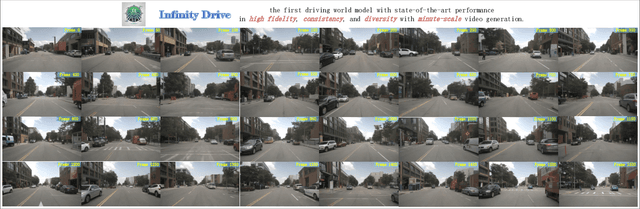
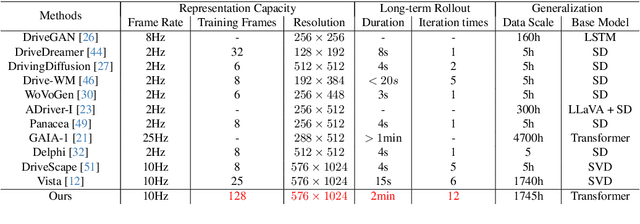
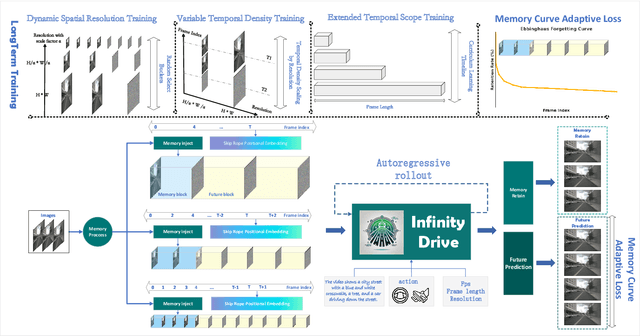
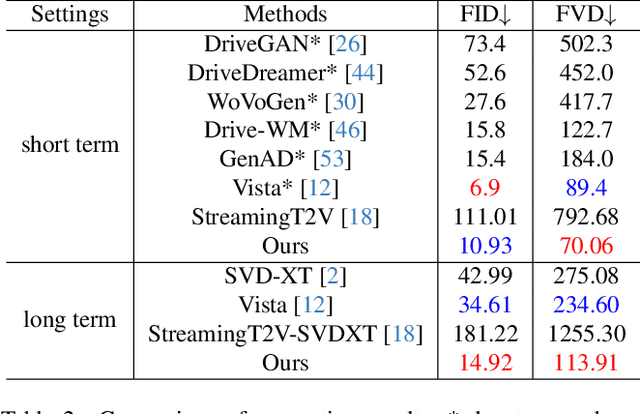
Autonomous driving systems struggle with complex scenarios due to limited access to diverse, extensive, and out-of-distribution driving data which are critical for safe navigation. World models offer a promising solution to this challenge; however, current driving world models are constrained by short time windows and limited scenario diversity. To bridge this gap, we introduce InfinityDrive, the first driving world model with exceptional generalization capabilities, delivering state-of-the-art performance in high fidelity, consistency, and diversity with minute-scale video generation. InfinityDrive introduces an efficient spatio-temporal co-modeling module paired with an extended temporal training strategy, enabling high-resolution (576$\times$1024) video generation with consistent spatial and temporal coherence. By incorporating memory injection and retention mechanisms alongside an adaptive memory curve loss to minimize cumulative errors, achieving consistent video generation lasting over 1500 frames (approximately 2 minutes). Comprehensive experiments in multiple datasets validate InfinityDrive's ability to generate complex and varied scenarios, highlighting its potential as a next-generation driving world model built for the evolving demands of autonomous driving. Our project homepage: https://metadrivescape.github.io/papers_project/InfinityDrive/page.html