 Add to Chrome
 Add to Firefox
 Add to Edge
Phase-Time Array Enabled Multistatic Sensing with Multi-Level Fusion for UAV Localization
May 06, 2026
Multistatic collaborative sensing eliminates self-interference, achieves spatial diversity gains, and enables wide-range seamless integrated sensing and communication (ISAC). However, conventional data fusion methods suffer from severe error amplification in geometry-sensitive regions. In addition, the conventional analog phased array solution introduces large beam sweeping overhead, whereas the fully digital arrays request high hardware cost. We propose a multistatic sensing framework enabled by a phase-time array (PTA). The rainbow beamforming maps spatial directions to orthogonal frequency division multiplexing (OFDM) subcarriers, achieving wide-angle coverage with a single radio frequency (RF) chain. We develop two parameter-level schemes-a geometry-aware analytical estimator (GDOP-WLS) and a lightweight multilayer perceptron (PF-MLP)-to mitigate the effects of topological singularities. Additionally, an end-to-end signal-level convolutional neural network (SF-CNN) directly estimates target coordinates from raw signals, avoiding cascaded estimation errors. The results demonstrate that the parameter-level schemes ensure robust convergence under adverse geometric conditions with minimal computational latency. Conversely, the signal-level scheme achieves sub-meter precision but requires an increased computational load. Consequently, the proposed framework establishes a scalable solution for collaborative surveillance of unmanned aerial vehicles (UAVs), providing flexible trade-offs among hardware complexity, latency, and accuracy.

Negative Advantage Is a Double-Edged Sword: Calibrating Advantage in GRPO for Deep Search
Apr 20, 2026Deep search agents can autonomously initiate multi-turn interactions with search engines, thereby exhibiting strong question-answering capabilities. Such performance critically relies on Group Relative Policy Optimization (GRPO) as its core training algorithm. However, GRPO still faces several challenges in deep search settings. First, there exists a substantial mismatch between the correctness of intermediate steps and the reward signal, causing numerous correct intermediate steps to be incorrectly penalized when the final answer is wrong. Second, training is highly unstable, often resulting in degradation of natural language ability or even catastrophic training collapse. Our analysis attributes these issues to coarse-grained advantage assignment and an imbalance between positive and negative advantages. To address these problems, we propose CalibAdv, an advantage calibration method specifically designed for deep search tasks. Specifically, CalibAdv leverages the correctness of intermediate steps to downscale excessive negative advantages at a fine-grained level. It then rebalances positive and negative advantages in the answer component. Extensive experiments across three models and seven benchmarks demonstrate that CalibAdv improves both model performance and training stability. Our code is available at https://github.com/wujwyi/CalibAdv.
Not All Negative Samples Are Equal: LLMs Learn Better from Plausible Reasoning
Feb 03, 2026Learning from negative samples holds great promise for improving Large Language Model (LLM) reasoning capability, yet existing methods treat all incorrect responses as equally informative, overlooking the crucial role of sample quality. To address this, we propose Plausible Negative Samples (PNS), a method that synthesizes high-quality negative samples exhibiting expected format and structural coherence while ultimately yielding incorrect answers. PNS trains a dedicated model via reverse reinforcement learning (RL) guided by a composite reward combining format compliance, accuracy inversion, reward model assessment, and chain-of-thought evaluation, generating responses nearly indistinguishable from correct solutions. We further validate PNS as a plug-and-play data source for preference optimization across three backbone models on seven mathematical reasoning benchmarks. Results demonstrate that PNS consistently outperforms other negative sample synthesis methods, achieving an average improvement of 2.03% over RL-trained models.
Towards Instance-wise Personalized Federated Learning via Semi-Implicit Bayesian Prompt Tuning
Aug 27, 2025Federated learning (FL) is a privacy-preserving machine learning paradigm that enables collaborative model training across multiple distributed clients without disclosing their raw data. Personalized federated learning (pFL) has gained increasing attention for its ability to address data heterogeneity. However, most existing pFL methods assume that each client's data follows a single distribution and learn one client-level personalized model for each client. This assumption often fails in practice, where a single client may possess data from multiple sources or domains, resulting in significant intra-client heterogeneity and suboptimal performance. To tackle this challenge, we propose pFedBayesPT, a fine-grained instance-wise pFL framework based on visual prompt tuning. Specifically, we formulate instance-wise prompt generation from a Bayesian perspective and model the prompt posterior as an implicit distribution to capture diverse visual semantics. We derive a variational training objective under the semi-implicit variational inference framework. Extensive experiments on benchmark datasets demonstrate that pFedBayesPT consistently outperforms existing pFL methods under both feature and label heterogeneity settings.
Integrating LLM-Derived Multi-Semantic Intent into Graph Model for Session-based Recommendation
Jul 27, 2025Session-based recommendation (SBR) is mainly based on anonymous user interaction sequences to recommend the items that the next user is most likely to click. Currently, the most popular and high-performing SBR methods primarily leverage graph neural networks (GNNs), which model session sequences as graph-structured data to effectively capture user intent. However, most GNNs-based SBR methods primarily focus on modeling the ID sequence information of session sequences, while neglecting the rich semantic information embedded within them. This limitation significantly hampers model's ability to accurately infer users' true intention. To address above challenge, this paper proposes a novel SBR approach called Integrating LLM-Derived Multi-Semantic Intent into Graph Model for Session-based Recommendation (LLM-DMsRec). The method utilizes a pre-trained GNN model to select the top-k items as candidate item sets and designs prompts along with a large language model (LLM) to infer multi-semantic intents from these candidate items. Specifically, we propose an alignment mechanism that effectively integrates the semantic intent inferred by the LLM with the structural intent captured by GNNs. Extensive experiments conducted on the Beauty and ML-1M datasets demonstrate that the proposed method can be seamlessly integrated into GNNs framework, significantly enhancing its recommendation performance.
CFMD: Dynamic Cross-layer Feature Fusion for Salient Object Detection
Apr 02, 2025Cross-layer feature pyramid networks (CFPNs) have achieved notable progress in multi-scale feature fusion and boundary detail preservation for salient object detection. However, traditional CFPNs still suffer from two core limitations: (1) a computational bottleneck caused by complex feature weighting operations, and (2) degraded boundary accuracy due to feature blurring in the upsampling process. To address these challenges, we propose CFMD, a novel cross-layer feature pyramid network that introduces two key innovations. First, we design a context-aware feature aggregation module (CFLMA), which incorporates the state-of-the-art Mamba architecture to construct a dynamic weight distribution mechanism. This module adaptively adjusts feature importance based on image context, significantly improving both representation efficiency and generalization. Second, we introduce an adaptive dynamic upsampling unit (CFLMD) that preserves spatial details during resolution recovery. By adjusting the upsampling range dynamically and initializing with a bilinear strategy, the module effectively reduces feature overlap and maintains fine-grained boundary structures. Extensive experiments on three standard benchmarks using three mainstream backbone networks demonstrate that CFMD achieves substantial improvements in pixel-level accuracy and boundary segmentation quality, especially in complex scenes. The results validate the effectiveness of CFMD in jointly enhancing computational efficiency and segmentation performance, highlighting its strong potential in salient object detection tasks.
PA-RAG: RAG Alignment via Multi-Perspective Preference Optimization
Dec 19, 2024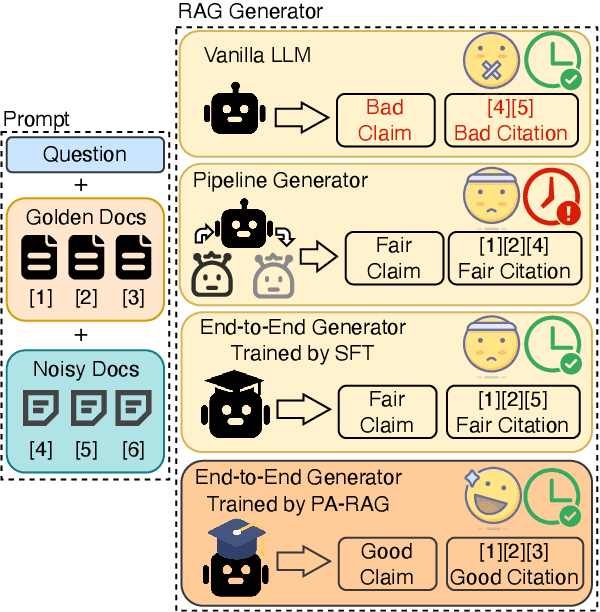

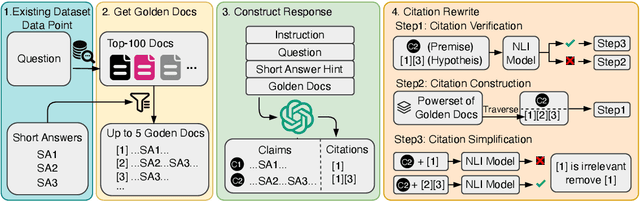
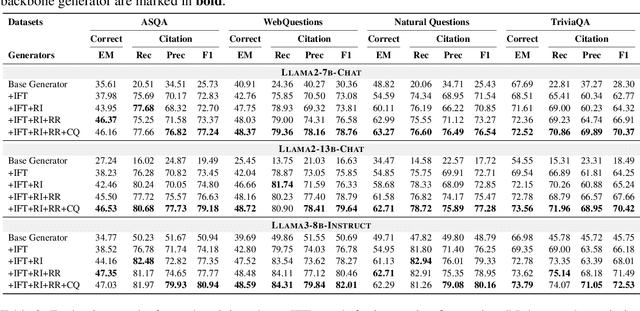
The emergence of Retrieval-augmented generation (RAG) has alleviated the issues of outdated and hallucinatory content in the generation of large language models (LLMs), yet it still reveals numerous limitations. When a general-purpose LLM serves as the RAG generator, it often suffers from inadequate response informativeness, response robustness, and citation quality. Past approaches to tackle these limitations, either by incorporating additional steps beyond generating responses or optimizing the generator through supervised fine-tuning (SFT), still failed to align with the RAG requirement thoroughly. Consequently, optimizing the RAG generator from multiple preference perspectives while maintaining its end-to-end LLM form remains a challenge. To bridge this gap, we propose Multiple Perspective Preference Alignment for Retrieval-Augmented Generation (PA-RAG), a method for optimizing the generator of RAG systems to align with RAG requirements comprehensively. Specifically, we construct high-quality instruction fine-tuning data and multi-perspective preference data by sampling varied quality responses from the generator across different prompt documents quality scenarios. Subsequently, we optimize the generator using SFT and Direct Preference Optimization (DPO). Extensive experiments conducted on four question-answer datasets across three LLMs demonstrate that PA-RAG can significantly enhance the performance of RAG generators. Our code and datasets are available at https://github.com/wujwyi/PA-RAG.
Cross-model Control: Improving Multiple Large Language Models in One-time Training
Oct 23, 2024


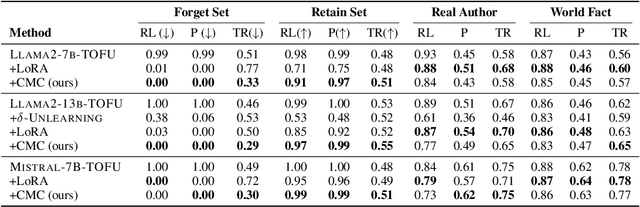
The number of large language models (LLMs) with varying parameter scales and vocabularies is increasing. While they deliver powerful performance, they also face a set of common optimization needs to meet specific requirements or standards, such as instruction following or avoiding the output of sensitive information from the real world. However, how to reuse the fine-tuning outcomes of one model to other models to reduce training costs remains a challenge. To bridge this gap, we introduce Cross-model Control (CMC), a method that improves multiple LLMs in one-time training with a portable tiny language model. Specifically, we have observed that the logit shift before and after fine-tuning is remarkably similar across different models. Based on this insight, we incorporate a tiny language model with a minimal number of parameters. By training alongside a frozen template LLM, the tiny model gains the capability to alter the logits output by the LLMs. To make this tiny language model applicable to models with different vocabularies, we propose a novel token mapping strategy named PM-MinED. We have conducted extensive experiments on instruction tuning and unlearning tasks, demonstrating the effectiveness of CMC. Our code is available at https://github.com/wujwyi/CMC.
A Time Series is Worth Five Experts: Heterogeneous Mixture of Experts for Traffic Flow Prediction
Sep 26, 2024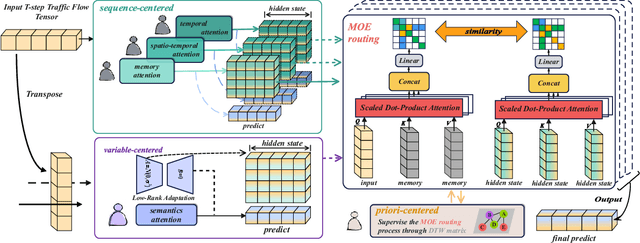
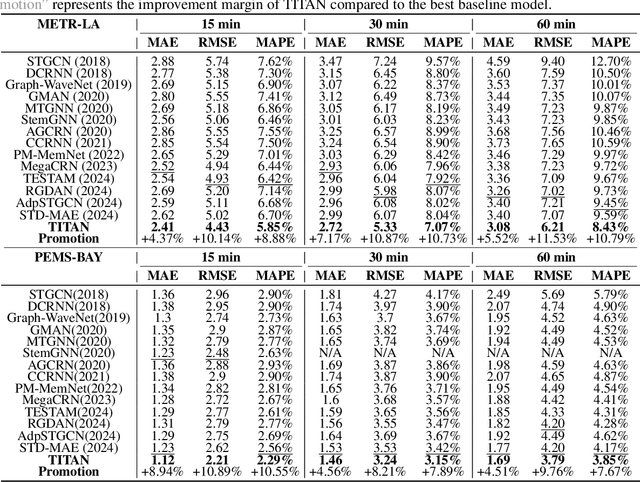

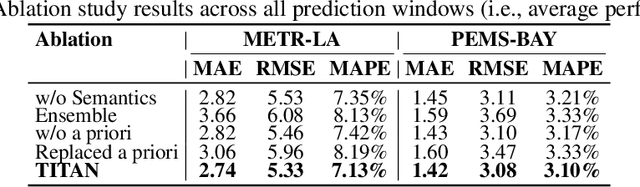
Accurate traffic prediction faces significant challenges, necessitating a deep understanding of both temporal and spatial cues and their complex interactions across multiple variables. Recent advancements in traffic prediction systems are primarily due to the development of complex sequence-centric models. However, existing approaches often embed multiple variables and spatial relationships at each time step, which may hinder effective variable-centric learning, ultimately leading to performance degradation in traditional traffic prediction tasks. To overcome these limitations, we introduce variable-centric and prior knowledge-centric modeling techniques. Specifically, we propose a Heterogeneous Mixture of Experts (TITAN) model for traffic flow prediction. TITAN initially consists of three experts focused on sequence-centric modeling. Then, designed a low-rank adaptive method, TITAN simultaneously enables variable-centric modeling. Furthermore, we supervise the gating process using a prior knowledge-centric modeling strategy to ensure accurate routing. Experiments on two public traffic network datasets, METR-LA and PEMS-BAY, demonstrate that TITAN effectively captures variable-centric dependencies while ensuring accurate routing. Consequently, it achieves improvements in all evaluation metrics, ranging from approximately 4.37\% to 11.53\%, compared to previous state-of-the-art (SOTA) models. The code is open at \href{https://github.com/sqlcow/TITAN}{https://github.com/sqlcow/TITAN}.
Expert-level vision-language foundation model for real-world radiology and comprehensive evaluation
Sep 24, 2024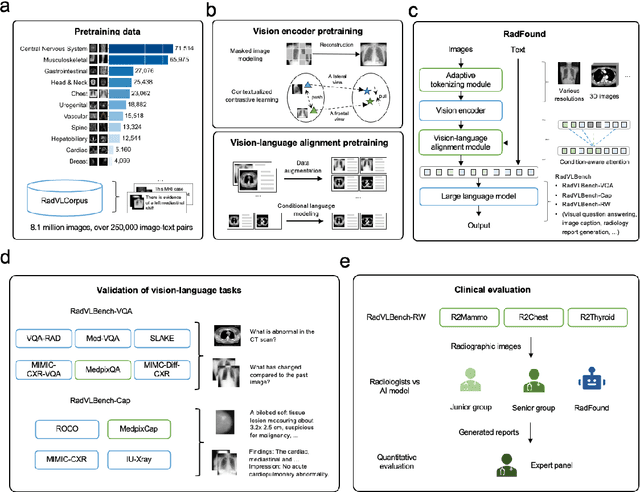
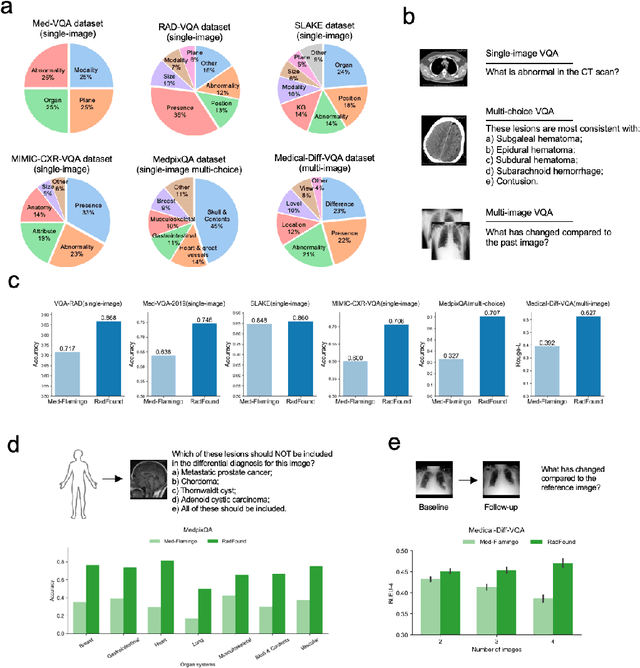
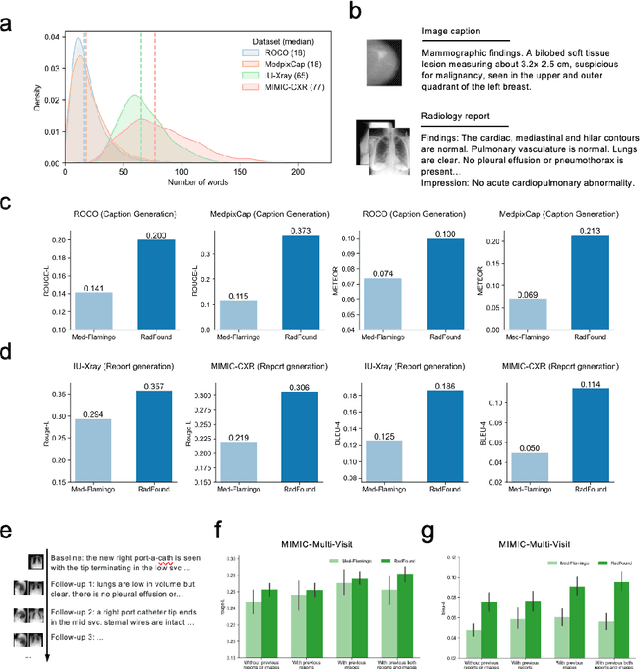
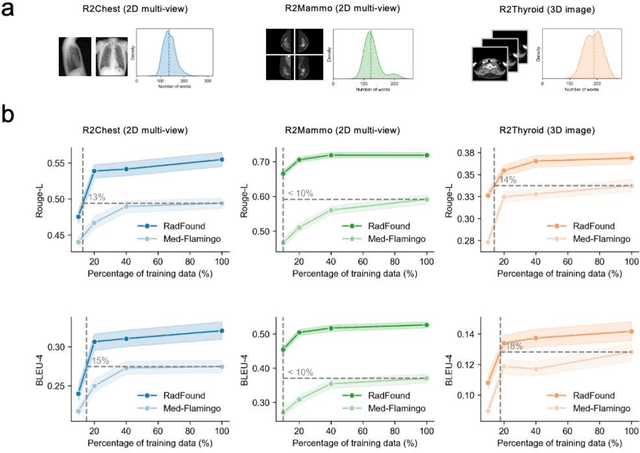
Radiology is a vital and complex component of modern clinical workflow and covers many tasks. Recently, vision-language (VL) foundation models in medicine have shown potential in processing multimodal information, offering a unified solution for various radiology tasks. However, existing studies either pre-trained VL models on natural data or did not fully integrate vision-language architecture and pretraining, often neglecting the unique multimodal complexity in radiology images and their textual contexts. Additionally, their practical applicability in real-world scenarios remains underexplored. Here, we present RadFound, a large and open-source vision-language foundation model tailored for radiology, that is trained on the most extensive dataset of over 8.1 million images and 250,000 image-text pairs, covering 19 major organ systems and 10 imaging modalities. To establish expert-level multimodal perception and generation capabilities, RadFound introduces an enhanced vision encoder to capture intra-image local features and inter-image contextual information, and a unified cross-modal learning design tailored to radiology. To fully assess the models' capability, we construct a benchmark, RadVLBench, including radiology interpretation tasks like medical vision-language question-answering, as well as text generation tasks ranging from captioning to report generation. We also propose a human evaluation framework. When evaluated on the real-world benchmark involving three representative modalities, 2D images (chest X-rays), multi-view images (mammograms), and 3D images (thyroid CT scans), RadFound significantly outperforms other VL foundation models on both quantitative metrics and human evaluation. In summary, the development of RadFound represents an advancement in radiology generalists, demonstrating broad applicability potential for integration into clinical workflows.