 Add to Chrome
 Add to Firefox
 Add to Edge
Inpaint Anything: Segment Anything Meets Image Inpainting
Apr 13, 2023

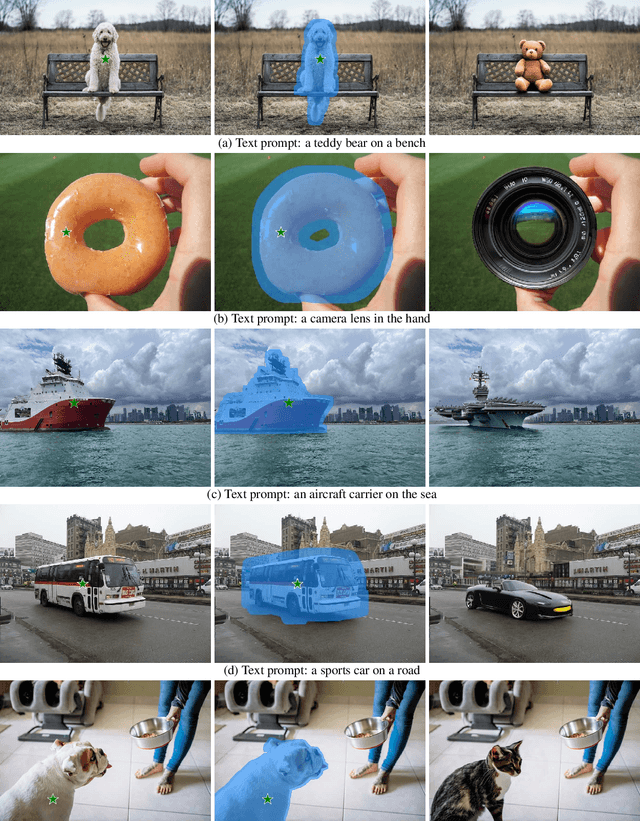

Modern image inpainting systems, despite the significant progress, often struggle with mask selection and holes filling. Based on Segment-Anything Model (SAM), we make the first attempt to the mask-free image inpainting and propose a new paradigm of ``clicking and filling'', which is named as Inpaint Anything (IA). The core idea behind IA is to combine the strengths of different models in order to build a very powerful and user-friendly pipeline for solving inpainting-related problems. IA supports three main features: (i) Remove Anything: users could click on an object and IA will remove it and smooth the ``hole'' with the context; (ii) Fill Anything: after certain objects removal, users could provide text-based prompts to IA, and then it will fill the hole with the corresponding generative content via driving AIGC models like Stable Diffusion; (iii) Replace Anything: with IA, users have another option to retain the click-selected object and replace the remaining background with the newly generated scenes. We are also very willing to help everyone share and promote new projects based on our Inpaint Anything (IA). Our codes are available at https://github.com/geekyutao/Inpaint-Anything.

Hi Sheldon! Creating Deep Personalized Characters from TV Shows
Apr 09, 2023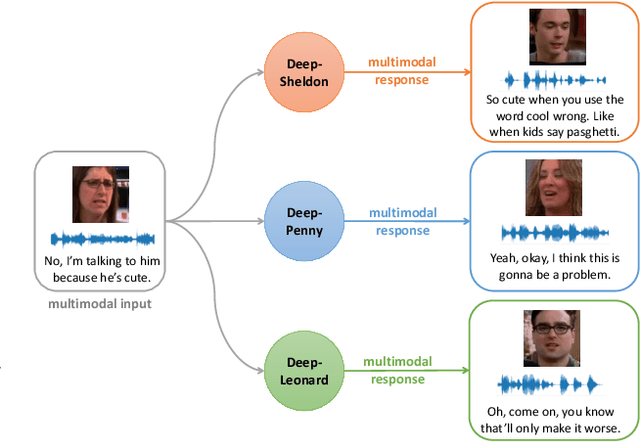
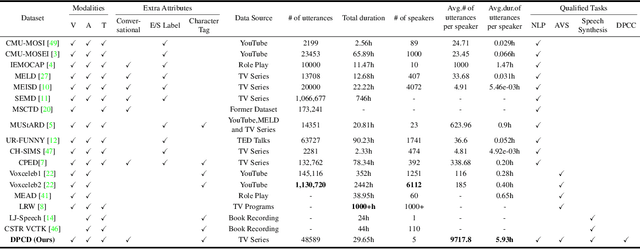
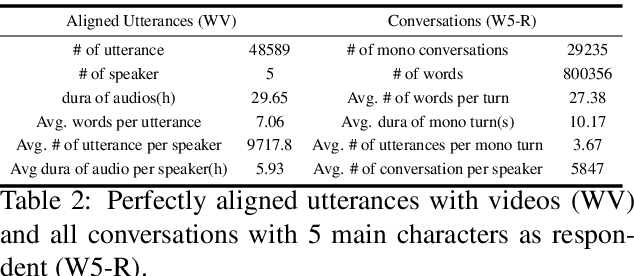
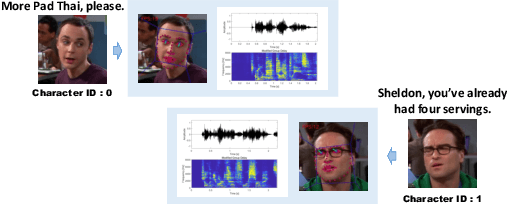
Imagine an interesting multimodal interactive scenario that you can see, hear, and chat with an AI-generated digital character, who is capable of behaving like Sheldon from The Big Bang Theory, as a DEEP copy from appearance to personality. Towards this fantastic multimodal chatting scenario, we propose a novel task, named Deep Personalized Character Creation (DPCC): creating multimodal chat personalized characters from multimodal data such as TV shows. Specifically, given a single- or multi-modality input (text, audio, video), the goal of DPCC is to generate a multi-modality (text, audio, video) response, which should be well-matched the personality of a specific character such as Sheldon, and of high quality as well. To support this novel task, we further collect a character centric multimodal dialogue dataset, named Deep Personalized Character Dataset (DPCD), from TV shows. DPCD contains character-specific multimodal dialogue data of ~10k utterances and ~6 hours of audio/video per character, which is around 10 times larger compared to existing related datasets.On DPCD, we present a baseline method for the DPCC task and create 5 Deep personalized digital Characters (DeepCharacters) from Big Bang TV Shows. We conduct both subjective and objective experiments to evaluate the multimodal response from DeepCharacters in terms of characterization and quality. The results demonstrates that, on our collected DPCD dataset, the proposed baseline can create personalized digital characters for generating multimodal response.Our collected DPCD dataset, the code of data collection and our baseline will be published soon.
ZBS: Zero-shot Background Subtraction via Instance-level Background Modeling and Foreground Selection
Mar 26, 2023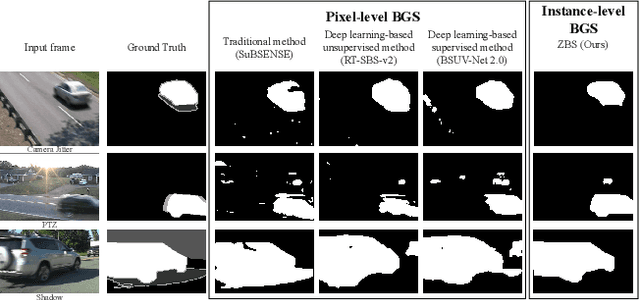
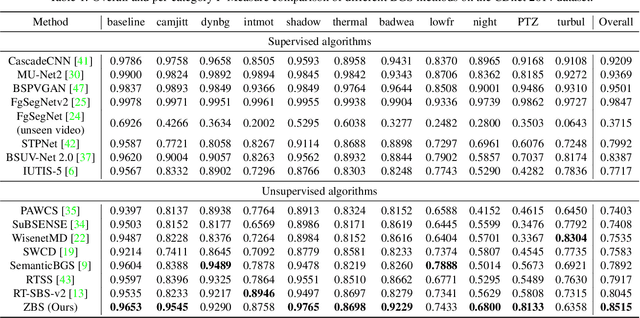

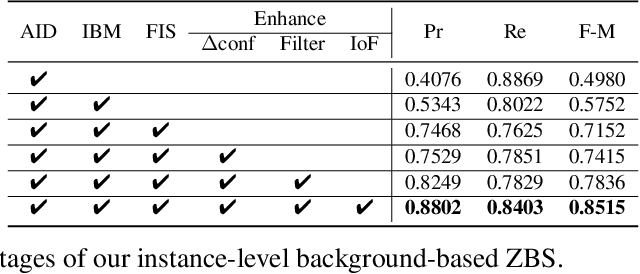
Background subtraction (BGS) aims to extract all moving objects in the video frames to obtain binary foreground segmentation masks. Deep learning has been widely used in this field. Compared with supervised-based BGS methods, unsupervised methods have better generalization. However, previous unsupervised deep learning BGS algorithms perform poorly in sophisticated scenarios such as shadows or night lights, and they cannot detect objects outside the pre-defined categories. In this work, we propose an unsupervised BGS algorithm based on zero-shot object detection called Zero-shot Background Subtraction (ZBS). The proposed method fully utilizes the advantages of zero-shot object detection to build the open-vocabulary instance-level background model. Based on it, the foreground can be effectively extracted by comparing the detection results of new frames with the background model. ZBS performs well for sophisticated scenarios, and it has rich and extensible categories. Furthermore, our method can easily generalize to other tasks, such as abandoned object detection in unseen environments. We experimentally show that ZBS surpasses state-of-the-art unsupervised BGS methods by 4.70% F-Measure on the CDnet 2014 dataset. The code is released at https://github.com/CASIA-IVA-Lab/ZBS.
Automated Self-Supervised Learning for Recommendation
Mar 21, 2023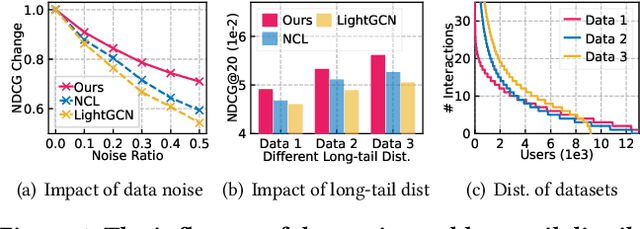
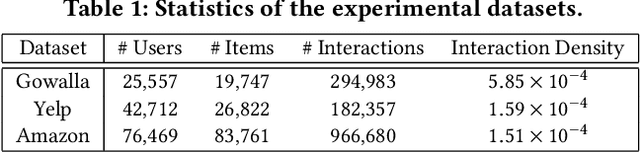

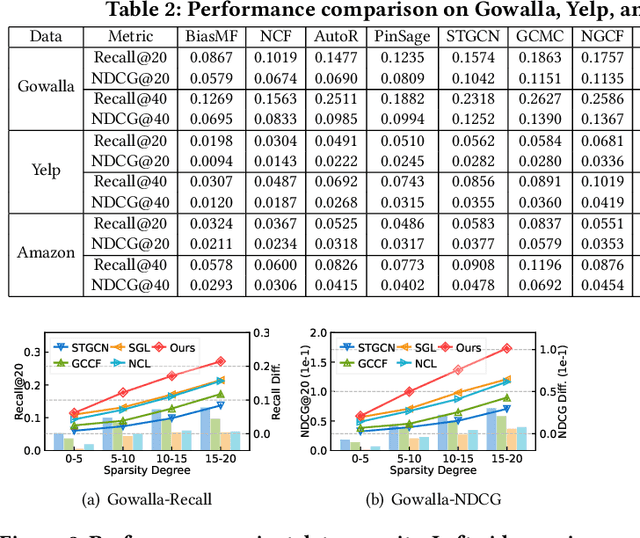
Graph neural networks (GNNs) have emerged as the state-of-the-art paradigm for collaborative filtering (CF). To improve the representation quality over limited labeled data, contrastive learning has attracted attention in recommendation and benefited graph-based CF model recently. However, the success of most contrastive methods heavily relies on manually generating effective contrastive views for heuristic-based data augmentation. This does not generalize across different datasets and downstream recommendation tasks, which is difficult to be adaptive for data augmentation and robust to noise perturbation. To fill this crucial gap, this work proposes a unified Automated Collaborative Filtering (AutoCF) to automatically perform data augmentation for recommendation. Specifically, we focus on the generative self-supervised learning framework with a learnable augmentation paradigm that benefits the automated distillation of important self-supervised signals. To enhance the representation discrimination ability, our masked graph autoencoder is designed to aggregate global information during the augmentation via reconstructing the masked subgraph structures. Experiments and ablation studies are performed on several public datasets for recommending products, venues, and locations. Results demonstrate the superiority of AutoCF against various baseline methods. We release the model implementation at https://github.com/HKUDS/AutoCF.
TEA-PSE 3.0: Tencent-Ethereal-Audio-Lab Personalized Speech Enhancement System For ICASSP 2023 DNS Challenge
Mar 14, 2023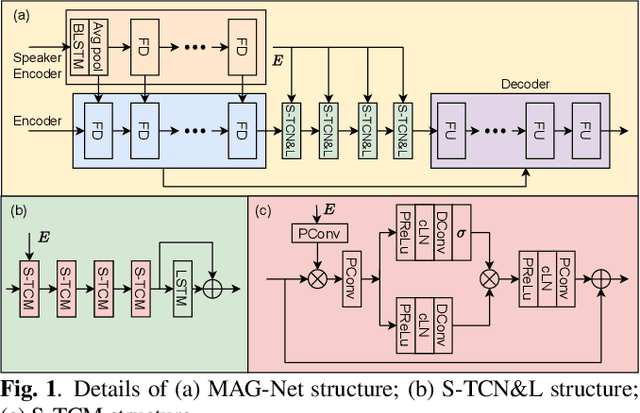


This paper introduces the Unbeatable Team's submission to the ICASSP 2023 Deep Noise Suppression (DNS) Challenge. We expand our previous work, TEA-PSE, to its upgraded version -- TEA-PSE 3.0. Specifically, TEA-PSE 3.0 incorporates a residual LSTM after squeezed temporal convolution network (S-TCN) to enhance sequence modeling capabilities. Additionally, the local-global representation (LGR) structure is introduced to boost speaker information extraction, and multi-STFT resolution loss is used to effectively capture the time-frequency characteristics of the speech signals. Moreover, retraining methods are employed based on the freeze training strategy to fine-tune the system. According to the official results, TEA-PSE 3.0 ranks 1st in both ICASSP 2023 DNS-Challenge track 1 and track 2.
Compositional Exemplars for In-context Learning
Feb 11, 2023Large pretrained language models (LMs) have shown impressive In-Context Learning (ICL) ability, where the model learns to do an unseen task via a prompt consisting of input-output examples as the demonstration, without any parameter updates. The performance of ICL is highly dominated by the quality of the selected in-context examples. However, previous selection methods are mostly based on simple heuristics, leading to sub-optimal performance. In this work, we formulate in-context example selection as a subset selection problem. We propose CEIL(Compositional Exemplars for In-context Learning), which is instantiated by Determinantal Point Processes (DPPs) to model the interaction between the given input and in-context examples, and optimized through a carefully-designed contrastive learning objective to obtain preference from LMs. We validate CEIL on 12 classification and generation datasets from 7 distinct NLP tasks, including sentiment analysis, paraphrase detection, natural language inference, commonsense reasoning, open-domain question answering, code generation, and semantic parsing. Extensive experiments demonstrate not only the state-of-the-art performance but also the transferability and compositionality of CEIL, shedding new light on effective and efficient in-context learning. Our code is released at https://github.com/HKUNLP/icl-ceil.
Batch Prompting: Efficient Inference with Large Language Model APIs
Jan 19, 2023Performing inference on hundreds of thousands of samples with large language models (LLMs) can be computationally and financially costly. We propose batch prompting, a simple alternative prompting approach that enables the LLM to run inference in batches, instead of one sample at a time. Our method reduces both token and time costs while retaining downstream performance. We theoretically demonstrate that under a few-shot in-context learning setting, the inference costs decrease almost inverse linearly with the number of samples in each batch. We extensively validate the effectiveness of batch prompting on ten datasets across commonsense QA, arithmetic reasoning, and NLI/NLU: batch prompting significantly~(up to $5\times$ with six samples in batch) reduces the LLM (Codex) inference token and time costs while achieving better or comparable performance. Our analysis shows that the number of samples in each batch and the complexity of tasks affect its performance. Further, batch prompting can be applied across different LLMs and reasoning methods.
One Embedder, Any Task: Instruction-Finetuned Text Embeddings
Dec 20, 2022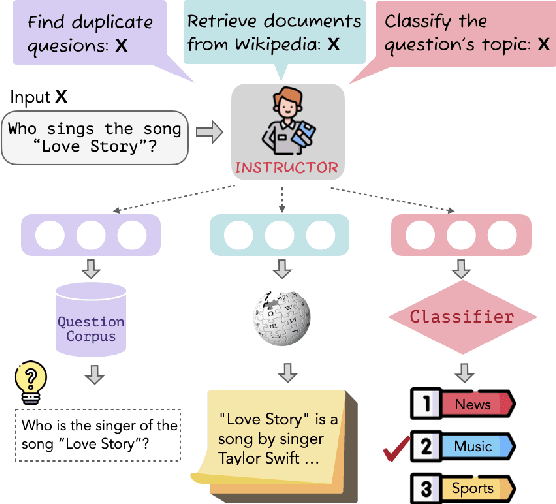
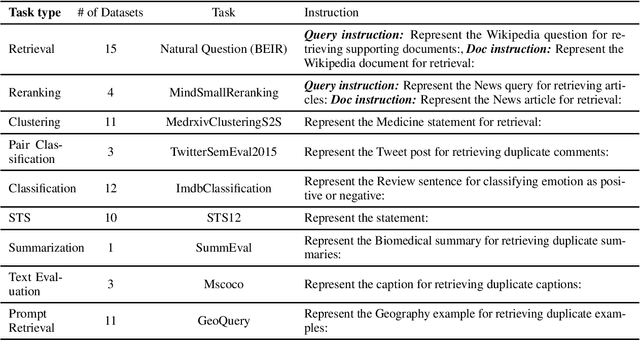
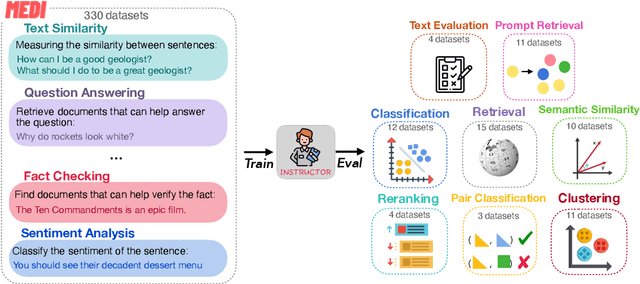
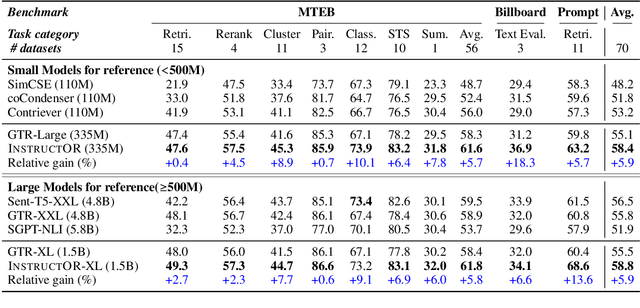
We introduce INSTRUCTOR, a new method for computing text embeddings given task instructions: every text input is embedded together with instructions explaining the use case (e.g., task and domain descriptions). Unlike encoders from prior work that are more specialized, INSTRUCTOR is a single embedder that can generate text embeddings tailored to different downstream tasks and domains, without any further training. We first annotate instructions for 330 diverse tasks and train INSTRUCTOR on this multitask mixture with a contrastive loss. We evaluate INSTRUCTOR on 70 embedding evaluation tasks (66 of which are unseen during training), ranging from classification and information retrieval to semantic textual similarity and text generation evaluation. INSTRUCTOR, while having an order of magnitude fewer parameters than the previous best model, achieves state-of-the-art performance, with an average improvement of 3.4% compared to the previous best results on the 70 diverse datasets. Our analysis suggests that INSTRUCTOR is robust to changes in instructions, and that instruction finetuning mitigates the challenge of training a single model on diverse datasets. Our model, code, and data are available at https://instructor-embedding.github.io.
Realization Scheme for Visual Cryptography with Computer-generated Holograms
Dec 10, 2022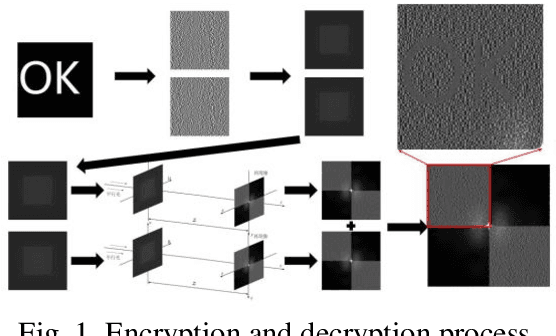

We propose to realize visual cryptography in an indirect way with the help of computer-generated hologram. At present, the recovery method of visual cryptography is mainly superimposed on transparent film or superimposed by computer equipment, which greatly limits the application range of visual cryptography. In this paper, the shares of the visual cryptography were encoded with computer-generated hologram, and the shares is reproduced by optical means, and then superimposed and decrypted. This method can expand the application range of visual cryptography and further increase the security of visual cryptography.
Coder Reviewer Reranking for Code Generation
Nov 29, 2022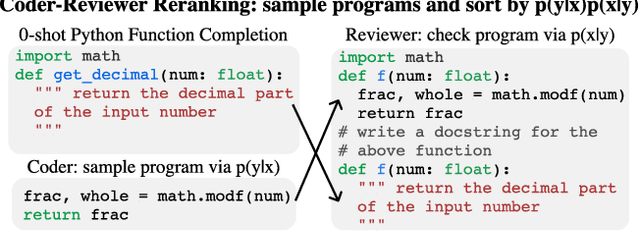
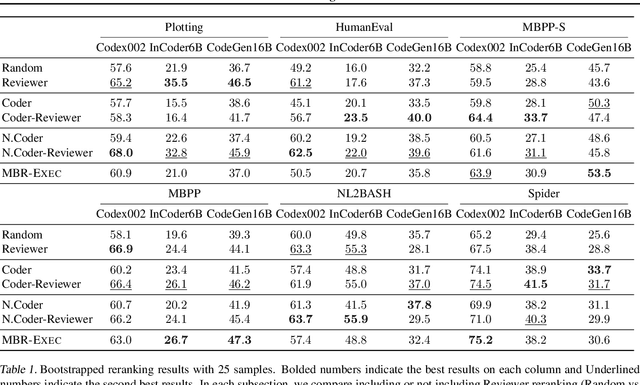
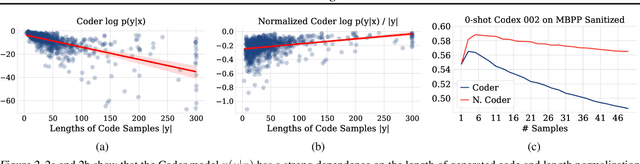
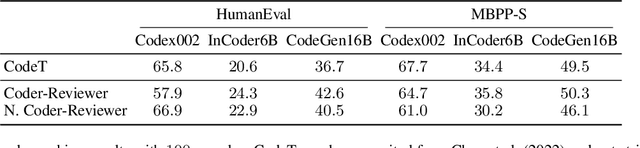
Sampling diverse programs from a code language model and reranking with model likelihood is a popular method for code generation but it is prone to preferring degenerate solutions. Inspired by collaborative programming, we propose Coder-Reviewer reranking. We augment Coder language models from past work, which generate programs given language instructions, with Reviewer models, which evaluate the likelihood of the instruction given the generated programs. We perform an extensive study across six datasets with eight models from three model families. Experimental results show that Coder-Reviewer reranking leads to consistent and significant improvement (up to 17% absolute accuracy gain) over reranking with the Coder model only. When combined with executability filtering, Coder-Reviewer reranking can often outperform the minimum Bayes risk method. Coder-Reviewer reranking is easy to implement by prompting, can generalize to different programming languages, and works well with off-the-shelf hyperparameters.