 Add to Chrome
 Add to Firefox
 Add to Edge
Enhance Image Classification via Inter-Class Image Mixup with Diffusion Model
Mar 28, 2024
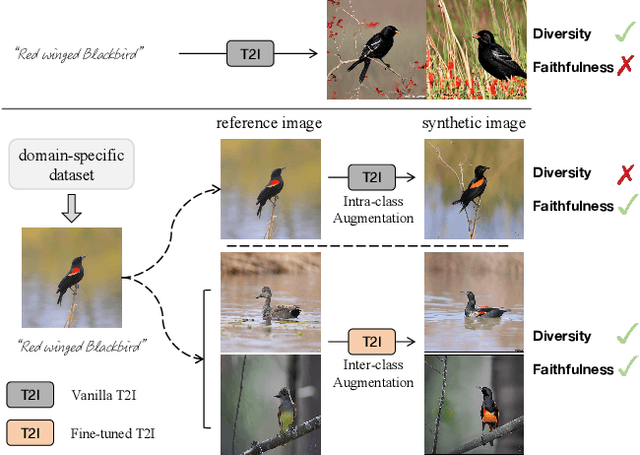

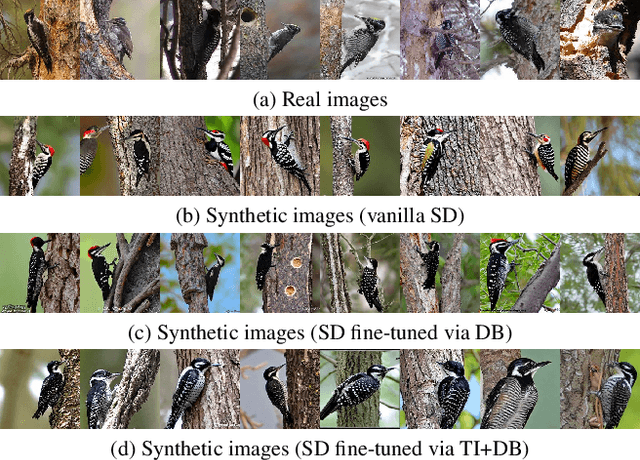
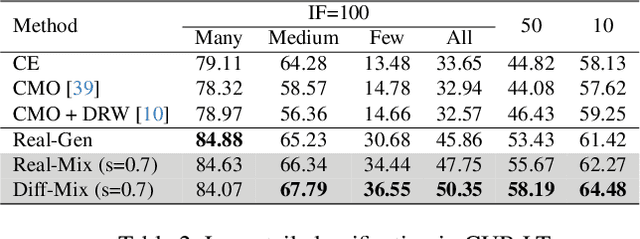
Text-to-image (T2I) generative models have recently emerged as a powerful tool, enabling the creation of photo-realistic images and giving rise to a multitude of applications. However, the effective integration of T2I models into fundamental image classification tasks remains an open question. A prevalent strategy to bolster image classification performance is through augmenting the training set with synthetic images generated by T2I models. In this study, we scrutinize the shortcomings of both current generative and conventional data augmentation techniques. Our analysis reveals that these methods struggle to produce images that are both faithful (in terms of foreground objects) and diverse (in terms of background contexts) for domain-specific concepts. To tackle this challenge, we introduce an innovative inter-class data augmentation method known as Diff-Mix (https://github.com/Zhicaiwww/Diff-Mix), which enriches the dataset by performing image translations between classes. Our empirical results demonstrate that Diff-Mix achieves a better balance between faithfulness and diversity, leading to a marked improvement in performance across diverse image classification scenarios, including few-shot, conventional, and long-tail classifications for domain-specific datasets.

DELTA: Pre-train a Discriminative Encoder for Legal Case Retrieval via Structural Word Alignment
Mar 27, 2024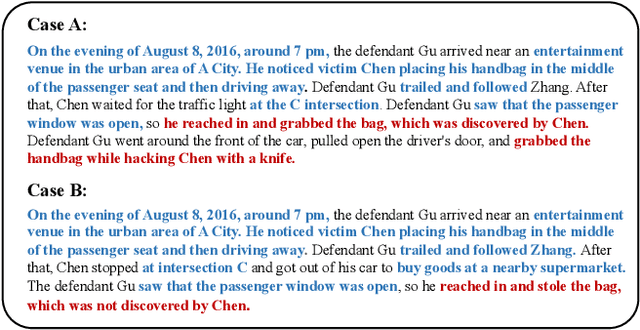
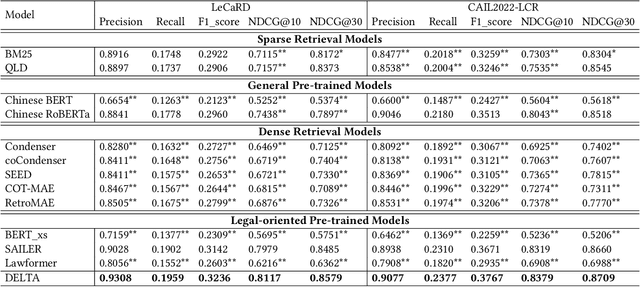
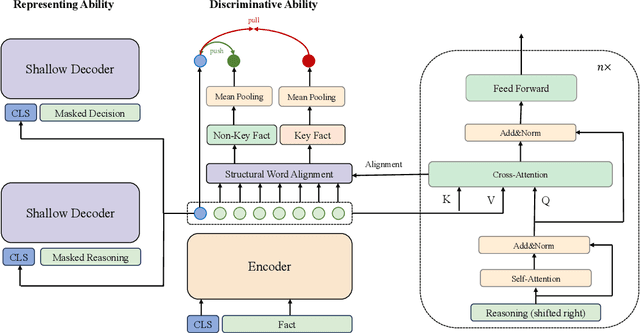
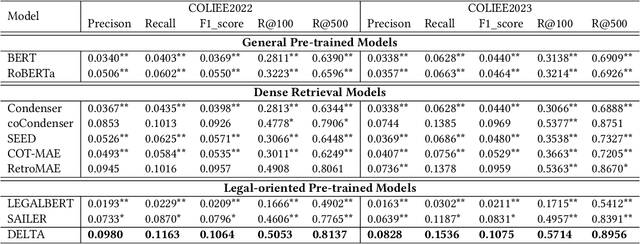
Recent research demonstrates the effectiveness of using pre-trained language models for legal case retrieval. Most of the existing works focus on improving the representation ability for the contextualized embedding of the [CLS] token and calculate relevance using textual semantic similarity. However, in the legal domain, textual semantic similarity does not always imply that the cases are relevant enough. Instead, relevance in legal cases primarily depends on the similarity of key facts that impact the final judgment. Without proper treatments, the discriminative ability of learned representations could be limited since legal cases are lengthy and contain numerous non-key facts. To this end, we introduce DELTA, a discriminative model designed for legal case retrieval. The basic idea involves pinpointing key facts in legal cases and pulling the contextualized embedding of the [CLS] token closer to the key facts while pushing away from the non-key facts, which can warm up the case embedding space in an unsupervised manner. To be specific, this study brings the word alignment mechanism to the contextual masked auto-encoder. First, we leverage shallow decoders to create information bottlenecks, aiming to enhance the representation ability. Second, we employ the deep decoder to enable translation between different structures, with the goal of pinpointing key facts to enhance discriminative ability. Comprehensive experiments conducted on publicly available legal benchmarks show that our approach can outperform existing state-of-the-art methods in legal case retrieval. It provides a new perspective on the in-depth understanding and processing of legal case documents.
BLADE: Enhancing Black-box Large Language Models with Small Domain-Specific Models
Mar 27, 2024
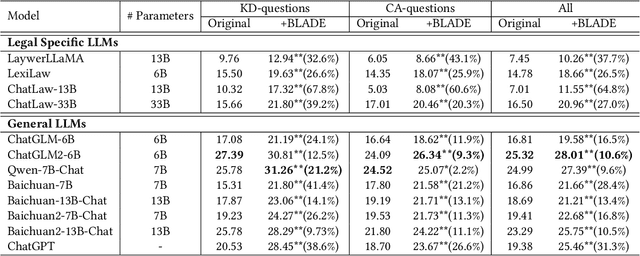

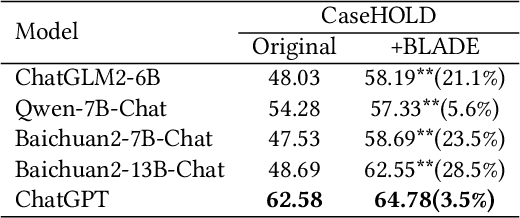
Large Language Models (LLMs) like ChatGPT and GPT-4 are versatile and capable of addressing a diverse range of tasks. However, general LLMs, which are developed on open-domain data, may lack the domain-specific knowledge essential for tasks in vertical domains, such as legal, medical, etc. To address this issue, previous approaches either conduct continuous pre-training with domain-specific data or employ retrieval augmentation to support general LLMs. Unfortunately, these strategies are either cost-intensive or unreliable in practical applications. To this end, we present a novel framework named BLADE, which enhances Black-box LArge language models with small Domain-spEcific models. BLADE consists of a black-box LLM and a small domain-specific LM. The small LM preserves domain-specific knowledge and offers specialized insights, while the general LLM contributes robust language comprehension and reasoning capabilities. Specifically, our method involves three steps: 1) pre-training the small LM with domain-specific data, 2) fine-tuning this model using knowledge instruction data, and 3) joint Bayesian optimization of the general LLM and the small LM. Extensive experiments conducted on public legal and medical benchmarks reveal that BLADE significantly outperforms existing approaches. This shows the potential of BLADE as an effective and cost-efficient solution in adapting general LLMs for vertical domains.
GaussianObject: Just Taking Four Images to Get A High-Quality 3D Object with Gaussian Splatting
Feb 20, 2024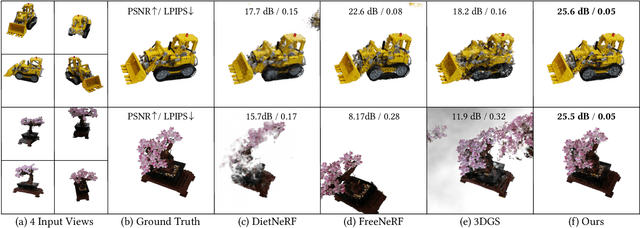
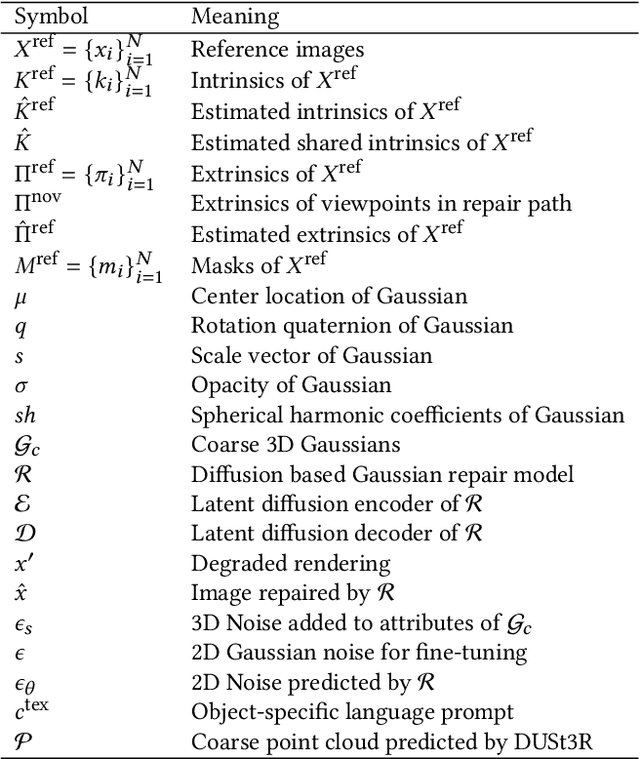
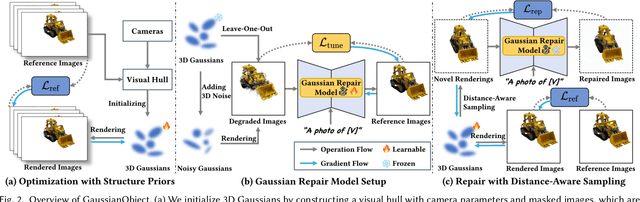
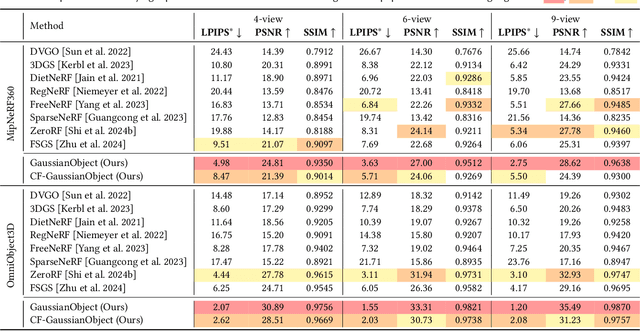
Reconstructing and rendering 3D objects from highly sparse views is of critical importance for promoting applications of 3D vision techniques and improving user experience. However, images from sparse views only contain very limited 3D information, leading to two significant challenges: 1) Difficulty in building multi-view consistency as images for matching are too few; 2) Partially omitted or highly compressed object information as view coverage is insufficient. To tackle these challenges, we propose GaussianObject, a framework to represent and render the 3D object with Gaussian splatting, that achieves high rendering quality with only 4 input images. We first introduce techniques of visual hull and floater elimination which explicitly inject structure priors into the initial optimization process for helping build multi-view consistency, yielding a coarse 3D Gaussian representation. Then we construct a Gaussian repair model based on diffusion models to supplement the omitted object information, where Gaussians are further refined. We design a self-generating strategy to obtain image pairs for training the repair model. Our GaussianObject is evaluated on several challenging datasets, including MipNeRF360, OmniObject3D, and OpenIllumination, achieving strong reconstruction results from only 4 views and significantly outperforming previous state-of-the-art methods.
Towards 3D Molecule-Text Interpretation in Language Models
Jan 25, 2024Language Models (LMs) have greatly influenced diverse domains. However, their inherent limitation in comprehending 3D molecular structures has considerably constrained their potential in the biomolecular domain. To bridge this gap, we focus on 3D molecule-text interpretation, and propose 3D-MoLM: 3D-Molecular Language Modeling. Specifically, 3D-MoLM enables an LM to interpret and analyze 3D molecules by equipping the LM with a 3D molecular encoder. This integration is achieved by a 3D molecule-text projector, bridging the 3D molecular encoder's representation space and the LM's input space. Moreover, to enhance 3D-MoLM's ability of cross-modal molecular understanding and instruction following, we meticulously curated a 3D molecule-centric instruction tuning dataset -- 3D-MoIT. Through 3D molecule-text alignment and 3D molecule-centric instruction tuning, 3D-MoLM establishes an integration of 3D molecular encoder and LM. It significantly surpasses existing baselines on downstream tasks, including molecule-text retrieval, molecule captioning, and more challenging open-text molecular QA tasks, especially focusing on 3D-dependent properties.
ChatterBox: Multi-round Multimodal Referring and Grounding
Jan 24, 2024In this study, we establish a baseline for a new task named multimodal multi-round referring and grounding (MRG), opening up a promising direction for instance-level multimodal dialogues. We present a new benchmark and an efficient vision-language model for this purpose. The new benchmark, named CB-300K, spans challenges including multi-round dialogue, complex spatial relationships among multiple instances, and consistent reasoning, which are beyond those shown in existing benchmarks. The proposed model, named ChatterBox, utilizes a two-branch architecture to collaboratively handle vision and language tasks. By tokenizing instance regions, the language branch acquires the ability to perceive referential information. Meanwhile, ChatterBox feeds a query embedding in the vision branch to a token receiver for visual grounding. A two-stage optimization strategy is devised, making use of both CB-300K and auxiliary external data to improve the model's stability and capacity for instance-level understanding. Experiments show that ChatterBox outperforms existing models in MRG both quantitatively and qualitatively, paving a new path towards multimodal dialogue scenarios with complicated and precise interactions. Code, data, and model are available at: https://github.com/sunsmarterjie/ChatterBox.
UMG-CLIP: A Unified Multi-Granularity Vision Generalist for Open-World Understanding
Jan 18, 2024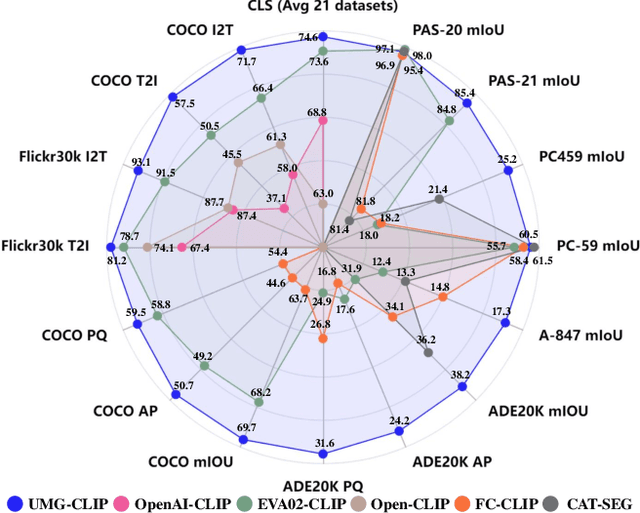
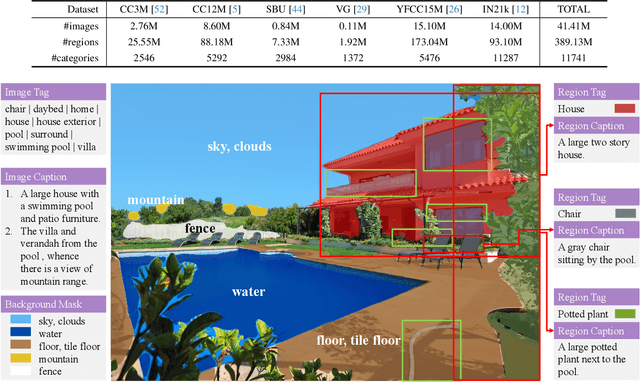
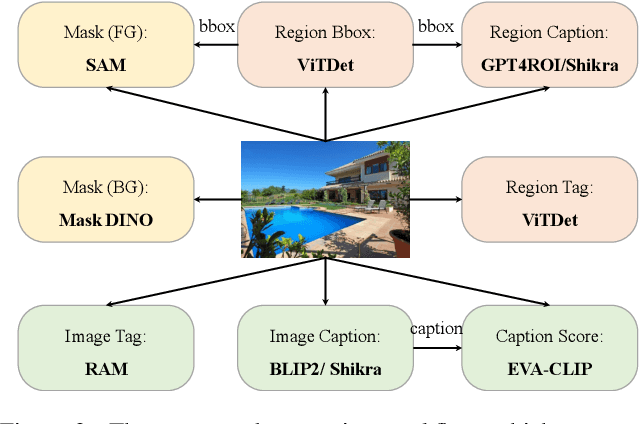
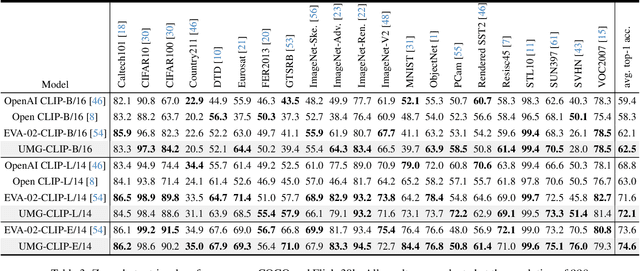
Vision-language foundation models, represented by Contrastive language-image pre-training (CLIP), have gained increasing attention for jointly understanding both vision and textual tasks. However, existing approaches primarily focus on training models to match global image representations with textual descriptions, thereby overlooking the critical alignment between local regions and corresponding text tokens. This paper extends CLIP with multi-granularity alignment. Notably, we deliberately construct a new dataset comprising pseudo annotations at various levels of granularities, encompassing image-level, region-level, and pixel-level captions/tags. Accordingly, we develop a unified multi-granularity learning framework, named UMG-CLIP, that simultaneously empowers the model with versatile perception abilities across different levels of detail. Equipped with parameter efficient tuning, UMG-CLIP surpasses current widely used CLIP models and achieves state-of-the-art performance on diverse image understanding benchmarks, including open-world recognition, retrieval, semantic segmentation, and panoptic segmentation tasks. We hope UMG-CLIP can serve as a valuable option for advancing vision-language foundation models.
Incorporating Visual Experts to Resolve the Information Loss in Multimodal Large Language Models
Jan 13, 2024Multimodal Large Language Models (MLLMs) are experiencing rapid growth, yielding a plethora of noteworthy contributions in recent months. The prevailing trend involves adopting data-driven methodologies, wherein diverse instruction-following datasets are collected. However, a prevailing challenge persists in these approaches, specifically in relation to the limited visual perception ability, as CLIP-like encoders employed for extracting visual information from inputs. Though these encoders are pre-trained on billions of image-text pairs, they still grapple with the information loss dilemma, given that textual captions only partially capture the contents depicted in images. To address this limitation, this paper proposes to improve the visual perception ability of MLLMs through a mixture-of-experts knowledge enhancement mechanism. Specifically, we introduce a novel method that incorporates multi-task encoders and visual tools into the existing MLLMs training and inference pipeline, aiming to provide a more comprehensive and accurate summarization of visual inputs. Extensive experiments have evaluated its effectiveness of advancing MLLMs, showcasing improved visual perception achieved through the integration of visual experts.
Seek for Incantations: Towards Accurate Text-to-Image Diffusion Synthesis through Prompt Engineering
Jan 12, 2024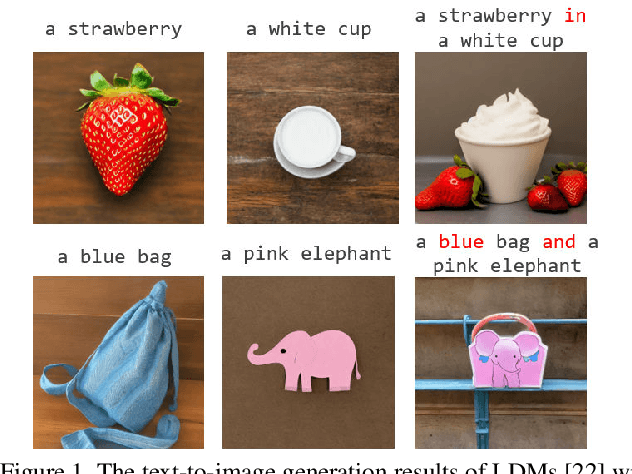
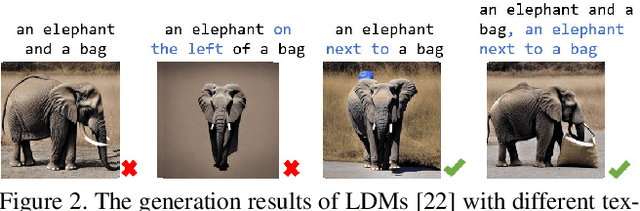
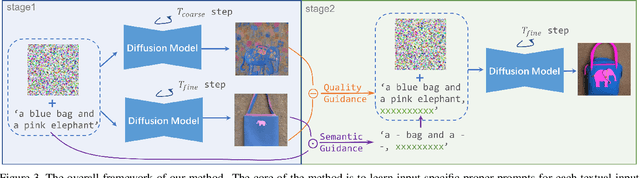
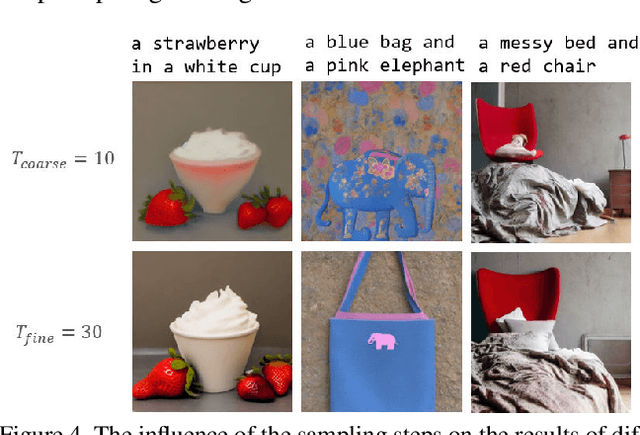
The text-to-image synthesis by diffusion models has recently shown remarkable performance in generating high-quality images. Although performs well for simple texts, the models may get confused when faced with complex texts that contain multiple objects or spatial relationships. To get the desired images, a feasible way is to manually adjust the textual descriptions, i.e., narrating the texts or adding some words, which is labor-consuming. In this paper, we propose a framework to learn the proper textual descriptions for diffusion models through prompt learning. By utilizing the quality guidance and the semantic guidance derived from the pre-trained diffusion model, our method can effectively learn the prompts to improve the matches between the input text and the generated images. Extensive experiments and analyses have validated the effectiveness of the proposed method.
LogFormer: A Pre-train and Tuning Pipeline for Log Anomaly Detection
Jan 09, 2024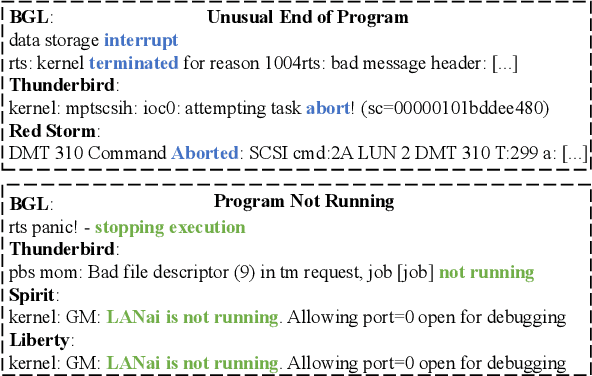
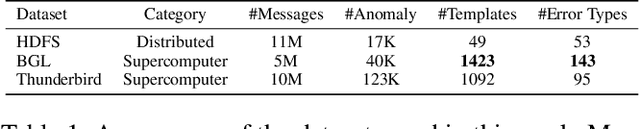
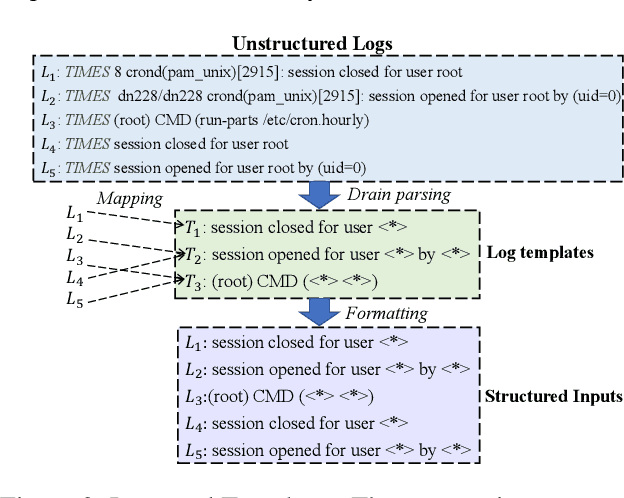
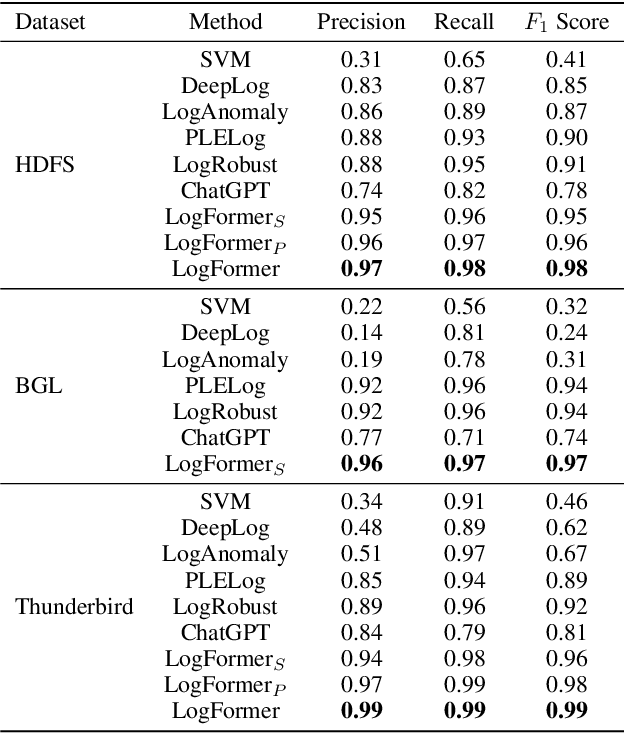
Log anomaly detection is a key component in the field of artificial intelligence for IT operations (AIOps). Considering log data of variant domains, retraining the whole network for unknown domains is inefficient in real industrial scenarios. However, previous deep models merely focused on extracting the semantics of log sequences in the same domain, leading to poor generalization on multi-domain logs. To alleviate this issue, we propose a unified Transformer-based framework for Log anomaly detection (LogFormer) to improve the generalization ability across different domains, where we establish a two-stage process including the pre-training and adapter-based tuning stage. Specifically, our model is first pre-trained on the source domain to obtain shared semantic knowledge of log data. Then, we transfer such knowledge to the target domain via shared parameters. Besides, the Log-Attention module is proposed to supplement the information ignored by the log-paring. The proposed method is evaluated on three public and one real-world datasets. Experimental results on multiple benchmarks demonstrate the effectiveness of our LogFormer with fewer trainable parameters and lower training costs.