 Add to Chrome
 Add to Firefox
 Add to Edge
Rethinking Modality Reliability in Multimodal Sentiment Analysis with Incomplete Observations
Aug 04, 2026
Multimodal Sentiment Analysis (MSA) integrates text, audio, and vision to infer human affect, yet real-world multimodal observations are often incomplete. Existing methods for incomplete-observation MSA mainly follow two paradigms. Reconstruction-based methods recover missing information from observed modalities, while joint-representation methods learn directly from incomplete inputs. Although effective, these methods usually treat modality reliability only implicitly within representation learning or fusion design rather than modeling it explicitly. We argue that modality reliability is a central variable in incomplete-observation settings. Failure to model it explicitly gives rise to two related issues. The first is reliability mismatch, in which the affective evidence retained by each modality varies across samples and missing rates. The second is reliability propagation bias, in which messages from degraded modalities may adversely affect cross-modal interaction and predictive performance. To address these issues, we propose MRCF, a Modality Reliability-Calibrated Framework for MSA with incomplete observations. MRCF contains a Reliability-Aware Branch that estimates sample-specific modality reliability from intramodal quality cues and cross-modal semantic consistency, a Reliability-Guided Interaction Branch that uses the estimated scores to modulate cross-modal information flow, and a Reliability-Calibrated Fusion Module that integrates reliability and semantic cues for final prediction. Experiments on CMU-MOSI, CMU-MOSEI, and CH-SIMS show that MRCF achieves strong performance under standard incomplete-observation protocols. Further analyses provide evidence that explicit reliability modeling helps mitigate reliability mismatch and reliability propagation bias during interaction and fusion.

Staleness-Learning Rate Scaling Laws for Asynchronous RLHF
Jul 01, 2026High-throughput RLHF systems often decouple rollout generation from policy optimization, leading to the use of stale rollouts during learner updates. In this work, we study the effect of such staleness in asynchronous GRPO. We make the behavior policy explicit in the GRPO surrogate objective and distinguish between the surrogate-gradient mapping used by the learner and the true total derivative of a distribution-dependent population objective. Under assumptions of local boundedness, distributional smoothness, and behavior-policy smoothness, we show that stale rollouts introduce a per-step surrogate-gradient bias of order O(S * eta), where S denotes the maximum rollout lag and eta denotes the learning rate. We further derive a conditional collapse-time scaling law: when within-cycle drift remains below a batch-level clipping radius, collapse is governed primarily by cumulative learner drift T * eta; when the stale-rollout constraint is active, stability instead depends explicitly on S * eta. This yields a two-constraint stability condition eta << min{R_batch / (S * G_upd), R_crit / (T * G_upd)}, explaining why the maximum stable learning rate may appear weakly dependent on staleness in the horizon-limited regime.
MOSAIC: Orchestrating Collaborative Knowledge Tracing with Hierarchical Semantic Alignment
Jun 27, 2026Knowledge Tracing (KT) is important for personalized education but traditionally suffers from two key limitations: a reliance on shallow ID-based representations that neglect semantic depth and a restriction to single-granularity mastery estimation that overlooks hierarchical knowledge dependencies. To address these challenges, we propose MOSAIC (Multi-granularity Online Semantic AI for Collaborative Knowledge), a novel framework that orchestrates LLM-driven semantic alignment with sequential modeling. Unlike methods that use LLMs solely as predictors, MOSAIC leverages a frozen LLM to generate dynamic, context-aware embeddings and hierarchical prediction prompts, explicitly capturing collaborative signals and peer interactions. Furthermore, we introduce a cross-granularity consistency objective that jointly regularizes mastery estimation across concept, topic-cluster, and global proficiency levels. Extensive experiments on ASSISTments, EdNet, and a newly collected large-scale MOOC dataset demonstrate that MOSAIC establishes new state-of-the-art results. Specifically, our method achieves AUC improvements of up to 3.4\% and Accuracy gains of up to 2.5 \% across all benchmarks. Notably, MOSAIC exhibits superior robustness in collaboration-rich environments and long-sequence scenarios (AUC 0.862 on MOOC), offering both high predictive precision and semantically grounded interpretability.
CACR:Reinforcing Temporal Answer Grounding in Instructional Video via Candidate-Aware Causal Reasoning
Jun 11, 2026The task of temporal answer grounding in instructional video (TAGV), which aims to locate precise video segments that respond to natural language queries, is increasingly important for direct video answer retrieval. This task remains challenging due to the need to comprehend semantically complex questions and to address the significant length mismatch between untrimmed videos and short target moments. Existing methods often suffer from sensitivity to irrelevant content or insufficient visual reasoning capabilities. To tackle these limitations, we propose a Candidate-Aware Causal Reasoning (CACR) framework. Our approach first employs a Visual-Language Pre-training based Candidate Selection (VBCS) algorithm to efficiently generate K candidate segments, then applies a temporal logic reasoning module enhanced by a rejection reward mechanism and optimized via Group Relative Policy Optimization (GRPO) for robust inference. Extensive experiments on six benchmarks demonstrate that our method achieves state-of-the-art performance in terms of mean Intersection-over-Union (mIoU), providing a new perspective for reasoning-based retrieval in long videos.
Reinforcing Temporal Answer Grounding in Instructional Video via Candidate-Aware Causal Reasoning
Jun 07, 2026The task of temporal answer grounding in instructional video (TAGV), which aims to locate precise video segments that respond to natural language queries, is increasingly important for direct video answer retrieval. This task remains challenging due to the need to comprehend semantically complex questions and to address the significant length mismatch between untrimmed videos and short target moments. Existing methods often suffer from sensitivity to irrelevant content or insufficient visual reasoning capabilities. To tackle these limitations, we propose a Candidate-Aware Causal Reasoning (CACR) framework. Our approach first employs a Visual-Language Pre-training based Candidate Selection (VBCS) algorithm to efficiently generate K candidate segments, then applies a temporal logic reasoning module enhanced by a rejection reward mechanism and optimized via Group Relative Policy Optimization (GRPO) for robust inference. Extensive experiments on six benchmarks demonstrate that our method achieves state-of-the-art performance in terms of mean Intersection-over-Union (mIoU), providing a new perspective for reasoning-based retrieval in long videos.
IstGPT: LLM-based Anomaly Detection for Spatial-Temporal Graph in Industrial Systems
Jun 01, 2026Industrial Internet systems face increasing threats from sophisticated industrial control system (ICS) attacks, resulting in critical safety incidents. However, existing tools exhibit limited effectiveness in real-time anomaly detection due to the complex dependencies among sensors and actuators. To tackle this, we present IstGPT, the first industrial anomaly detection tool based on LLMs and graph learning to provide real-time protection against a wide range of ICS attacks. IstGPT achieves fine-grained and precise modeling on spatial-temporal dependencies in industrial cyber-physical systems. It first leverages industrial multi-modal knowledge, including operational data, technical documents, and system diagrams, to extract sensor-actuator dependency graphs via multi-stage prompt engineering. Then, LLM-Optimation iteratively refines the graph based on node accuracy, edge consistency, and logical coherence. Finally, IstGPT integrated improved graph neural networks with an encoder-decoder architecture to detect anomalies via reconstruction errors. We evaluate IstGPT against 12 state-of-the-art baselines on 9 datasets, including 2 public, 6 simulated, and a real-world robotic arm dataset. IstGPT achieves the best F1-scores and eTaF1 (a newer time-aware metric) across nine datasets. We further discuss the feasibility of deploying IstGPT in real-world industrial scenarios.
ProtoFlow: Mitigating Forgetting in Class-Incremental Remote Sensing Segmentation via Low-Curvature Prototype Flow
Apr 03, 2026Remote sensing segmentation in real deployment is inherently continual: new semantic categories emerge, and acquisition conditions shift across seasons, cities, and sensors. Despite recent progress, many incremental approaches still treat training steps as isolated updates, which leaves representation drift and forgetting insufficiently controlled. We present ProtoFlow, a time-aware prototype dynamics framework that models class prototypes as trajectories and learns their evolution with an explicit temporal vector field. By jointly enforcing low-curvature motion and inter-class separation, ProtoFlow stabilizes prototype geometry throughout incremental learning. Experiments on standard class- and domain-incremental remote sensing benchmarks show consistent gains over strong baselines, including up to 1.5-2.0 points improvement in mIoUall, together with reduced forgetting. These results suggest that explicitly modeling temporal prototype evolution is a practical and interpretable strategy for robust continual remote sensing segmentation.
NeRF-Based defect detection
Mar 31, 2025The rapid growth of industrial automation has highlighted the need for precise and efficient defect detection in large-scale machinery. Traditional inspection techniques, involving manual procedures such as scaling tall structures for visual evaluation, are labor-intensive, subjective, and often hazardous. To overcome these challenges, this paper introduces an automated defect detection framework built on Neural Radiance Fields (NeRF) and the concept of digital twins. The system utilizes UAVs to capture images and reconstruct 3D models of machinery, producing both a standard reference model and a current-state model for comparison. Alignment of the models is achieved through the Iterative Closest Point (ICP) algorithm, enabling precise point cloud analysis to detect deviations that signify potential defects. By eliminating manual inspection, this method improves accuracy, enhances operational safety, and offers a scalable solution for defect detection. The proposed approach demonstrates great promise for reliable and efficient industrial applications.
Collaborative Optimization in Financial Data Mining Through Deep Learning and ResNeXt
Dec 23, 2024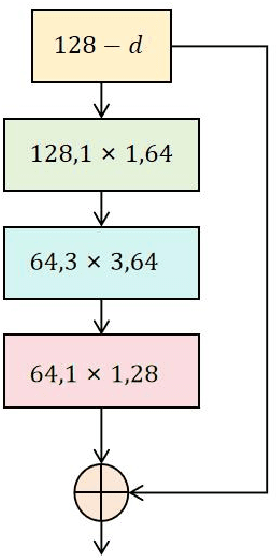
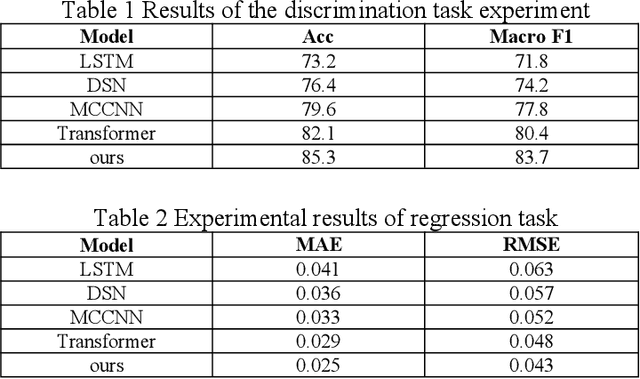
This study proposes a multi-task learning framework based on ResNeXt, aiming to solve the problem of feature extraction and task collaborative optimization in financial data mining. Financial data usually has the complex characteristics of high dimensionality, nonlinearity, and time series, and is accompanied by potential correlations between multiple tasks, making it difficult for traditional methods to meet the needs of data mining. This study introduces the ResNeXt model into the multi-task learning framework and makes full use of its group convolution mechanism to achieve efficient extraction of local patterns and global features of financial data. At the same time, through the design of task sharing layers and dedicated layers, it is established between multiple related tasks. Deep collaborative optimization relationships. Through flexible multi-task loss weight design, the model can effectively balance the learning needs of different tasks and improve overall performance. Experiments are conducted on a real S&P 500 financial data set, verifying the significant advantages of the proposed framework in classification and regression tasks. The results indicate that, when compared to other conventional deep learning models, the proposed method delivers superior performance in terms of accuracy, F1 score, root mean square error, and other metrics, highlighting its outstanding effectiveness and robustness in handling complex financial data. This research provides an efficient and adaptable solution for financial data mining, and at the same time opens up a new research direction for the combination of multi-task learning and deep learning, which has important theoretical significance and practical application value.