 Add to Chrome
 Add to Firefox
 Add to Edge
Twin Rollouts: Noise-Coupled Counterfactual Branching in Interactive Video World Models
Aug 10, 2026
Interactive video world models generate rollouts autoregressively under an action stream, yet they are trained and evaluated almost exclusively on factual prediction. We study counterfactual generation inside the rollout: given a trajectory the model has itself generated, what would have happened had the actions differed from step t* onward? We formalize noise-coupled twin rollouts --- a factual and a counterfactual branch sharing the generated prefix and the future exogenous noise sequence, diverging only in the action stream at an intervention point. Because the factual branch is self-generated, its exogenous noise is known exactly: the abduction step of Pearl's counterfactual procedure is exact by construction, sidestepping the approximate-inversion problem faced by editing-based pipelines. Noise coupling further turns the minimal-change principle into a per-sample verifiable property: we define a spatiotemporal locality metric that penalizes divergence outside the causal descendants of the intervention, computable against simulator ground truth without a learned judge. Forking the simulator state at t* yields ground-truth counterfactual re-renders, which we use as verifiable rewards for post-training. This note establishes the formal framework, metric definitions, and positioning; experiments are forthcoming.

When Skills Meet Safety: Benchmarking and Characterizing the Adaptive Jailbreak Robustness of Skill-Merged LLMs
Aug 09, 2026Model merging has become the default way to give an aligned language model new skills without retraining: a practitioner folds task vectors from math, code, or domain specialists into a safety-aligned base using task arithmetic, TIES, or DARE. This convenience is known to carry a safety cost, but almost all of that evidence rests on static refusal tests: fixed harmful prompts scored for compliance. We argue this is misleading. Because safety alignment is "shallow," concentrated in the first few generated tokens, a merged model's static refusal can stay clean while a real adaptive attack still breaks it. We introduce SkillSafe-Bench, a controlled benchmark that scores skill-merged models on static refusal, adaptive jailbreak robustness, and capability retention under a conservative two-judge AND rule. Across six open-weight bases (five families, two scales), static safety does not predict robustness to attack: under a semantic template attack, safe-looking merges on the fragile bases (both Qwen scales and Gemma) are jailbroken 60-76% of the time while others (Llama, Phi-4) stay robust. We further show the static effect of merging is base-conditional, characterize same-recipe abliteration-style safety erosion through a data-free geometric signal (the overlap of a task vector with a safety subspace), and outline SubSafe-Merge, which projects this overlap away to remove that erosion at held capability. Adaptive evaluation is not optional for merged LLMs: the models that most need it look safe under static screening.
MOSAIC: Orchestrating Collaborative Knowledge Tracing with Hierarchical Semantic Alignment
Jun 27, 2026Knowledge Tracing (KT) is important for personalized education but traditionally suffers from two key limitations: a reliance on shallow ID-based representations that neglect semantic depth and a restriction to single-granularity mastery estimation that overlooks hierarchical knowledge dependencies. To address these challenges, we propose MOSAIC (Multi-granularity Online Semantic AI for Collaborative Knowledge), a novel framework that orchestrates LLM-driven semantic alignment with sequential modeling. Unlike methods that use LLMs solely as predictors, MOSAIC leverages a frozen LLM to generate dynamic, context-aware embeddings and hierarchical prediction prompts, explicitly capturing collaborative signals and peer interactions. Furthermore, we introduce a cross-granularity consistency objective that jointly regularizes mastery estimation across concept, topic-cluster, and global proficiency levels. Extensive experiments on ASSISTments, EdNet, and a newly collected large-scale MOOC dataset demonstrate that MOSAIC establishes new state-of-the-art results. Specifically, our method achieves AUC improvements of up to 3.4\% and Accuracy gains of up to 2.5 \% across all benchmarks. Notably, MOSAIC exhibits superior robustness in collaboration-rich environments and long-sequence scenarios (AUC 0.862 on MOOC), offering both high predictive precision and semantically grounded interpretability.
LGVSC: A Large-Model-Driven Generative Video Semantic Communication Framework
Jun 11, 2026Driven by the massive video transmission requirements in the Internet of Everything, semantic communication holds great promise for striking a balance between transmission efficiency and quality. This paper introduces a large-model-driven generative video semantic communication (LGVSC) framework, enabling efficient video semantic transmission under extremely low bandwidth conditions. First, by decoupling the encoder and decoder as well as exposing explicit intermediate semantic representations, LGVSC maintains interpretability, avoiding the black-box behavior commonly observed in end-to-end systems. Next, we introduce a new metric, i.e., the probability-based semantic similarity score (PSSS), which quantifies semantic similarity for complex modalities within a continuous range, allowing for more precise evaluation of semantic content. Building on PSSS, we propose a semantic-guided keyframe extraction module driven by a multimodal large model. This module can enhance fine-grained semantic consistency during keyframe selection at the transmitter, optimizing transmission bandwidth without compromising semantic fidelity. Additionally, we design a generative large-model-driven dynamic semantic-adaptive decoder at the receiver, which can adapt to videos of arbitrary lengths. Simulation results demonstrate that LGVSC significantly outperforms traditional schemes, achieving a channel bandwidth ratio on the order of 10^-4 to 10^-3, while maintaining strong zero-shot generalization across downstream tasks.
The Midas Touch for Metric Depth
May 12, 2026Recent advances have markedly improved the cross-scene generalization of relative depth estimation, yet its practical applicability remains limited by the absence of metric scale, local inconsistencies, and low computational efficiency. To address these issues, we present \emph{\textbf{M}idas \textbf{T}ouch for \textbf{D}epth} (MTD), a mathematically interpretable approach that converts relative depth into metric depth using only extremely sparse 3D data. To eliminate local scale inconsistencies, it applies a segment-wise recovery strategy via sparse graph optimization, followed by a pixel-wise refinement strategy using a discontinuity-aware geodesic cost. MTD exhibits strong generalization and achieves substantial accuracy improvements over previous depth completion and depth estimation methods. Moreover, its lightweight, plug-and-play design facilitates deployment and integration on diverse downstream 3D tasks. Project page is available at https://mias.group/MTD.
FAST: A Synergistic Framework of Attention and State-space Models for Spatiotemporal Traffic Prediction
Apr 15, 2026Traffic forecasting requires modeling complex temporal dynamics and long-range spatial dependencies over large sensor networks. Existing methods typically face a trade-off between expressiveness and efficiency: Transformer-based models capture global dependencies well but suffer from quadratic complexity, while recent selective state-space models are computationally efficient yet less effective at modeling spatial interactions in graph-structured traffic data. We propose FAST, a unified framework that combines attention and state-space modeling for scalable spatiotemporal traffic forecasting. FAST adopts a Temporal-Spatial-Temporal architecture, where temporal attention modules capture both short- and long-term temporal patterns, and a Mamba-based spatial module models long-range inter-sensor dependencies with linear complexity. To better represent heterogeneous traffic contexts, FAST further introduces a learnable multi-source spatiotemporal embedding that integrates historical traffic flow, temporal context, and node-level information, together with a multi-level skip prediction mechanism for hierarchical feature fusion. Experiments on PeMS04, PeMS07, and PeMS08 show that FAST consistently outperforms strong baselines from Transformer-, GNN-, attention-, and Mamba-based families. In particular, FAST achieves the best MAE and RMSE on all three benchmarks, with up to 4.3\% lower RMSE and 2.8\% lower MAE than the strongest baseline, demonstrating a favorable balance between accuracy, scalability, and generalization.
An Instance-Centric Panoptic Occupancy Prediction Benchmark for Autonomous Driving
Mar 28, 2026Panoptic occupancy prediction aims to jointly infer voxel-wise semantics and instance identities within a unified 3D scene representation. Nevertheless, progress in this field remains constrained by the absence of high-quality 3D mesh resources, instance-level annotations, and physically consistent occupancy datasets. Existing benchmarks typically provide incomplete and low-resolution geometry without instance-level annotations, limiting the development of models capable of achieving precise geometric reconstruction, reliable occlusion reasoning, and holistic 3D understanding. To address these challenges, this paper presents an instance-centric benchmark for the 3D panoptic occupancy prediction task. Specifically, we introduce ADMesh, the first unified 3D mesh library tailored for autonomous driving, which integrates over 15K high-quality 3D models with diverse textures and rich semantic annotations. Building upon ADMesh, we further construct CarlaOcc, a large-scale, physically consistent panoptic occupancy dataset generated using the CARLA simulator. This dataset contains over 100K frames with fine-grained, instance-level occupancy ground truth at voxel resolutions as fine as 0.05 m. Furthermore, standardized evaluation metrics are introduced to quantify the quality of existing occupancy datasets. Finally, a systematic benchmark of representative models is established on the proposed dataset, which provides a unified platform for fair comparison and reproducible research in the field of 3D panoptic perception. Code and dataset are available at https://mias.group/CarlaOcc.
Task-Specific Efficiency Analysis: When Small Language Models Outperform Large Language Models
Mar 22, 2026Large Language Models achieve remarkable performance but incur substantial computational costs unsuitable for resource-constrained deployments. This paper presents the first comprehensive task-specific efficiency analysis comparing 16 language models across five diverse NLP tasks. We introduce the Performance-Efficiency Ratio (PER), a novel metric integrating accuracy, throughput, memory, and latency through geometric mean normalization. Our systematic evaluation reveals that small models (0.5--3B parameters) achieve superior PER scores across all given tasks. These findings establish quantitative foundations for deploying small models in production environments prioritizing inference efficiency over marginal accuracy gains.
Spectral Analysis of Hard-Constraint PINNs: The Spatial Modulation Mechanism of Boundary Functions
Dec 29, 2025Physics-Informed Neural Networks with hard constraints (HC-PINNs) are increasingly favored for their ability to strictly enforce boundary conditions via a trial function ansatz $\tilde{u} = A + B \cdot N$, yet the theoretical mechanisms governing their training dynamics have remained unexplored. Unlike soft-constrained formulations where boundary terms act as additive penalties, this work reveals that the boundary function $B$ introduces a multiplicative spatial modulation that fundamentally alters the learning landscape. A rigorous Neural Tangent Kernel (NTK) framework for HC-PINNs is established, deriving the explicit kernel composition law. This relationship demonstrates that the boundary function $B(\vec{x})$ functions as a spectral filter, reshaping the eigenspectrum of the neural network's native kernel. Through spectral analysis, the effective rank of the residual kernel is identified as a deterministic predictor of training convergence, superior to classical condition numbers. It is shown that widely used boundary functions can inadvertently induce spectral collapse, leading to optimization stagnation despite exact boundary satisfaction. Validated across multi-dimensional benchmarks, this framework transforms the design of boundary functions from a heuristic choice into a principled spectral optimization problem, providing a solid theoretical foundation for geometric hard constraints in scientific machine learning.
Early Warning Index for Patient Deteriorations in Hospitals
Dec 16, 2025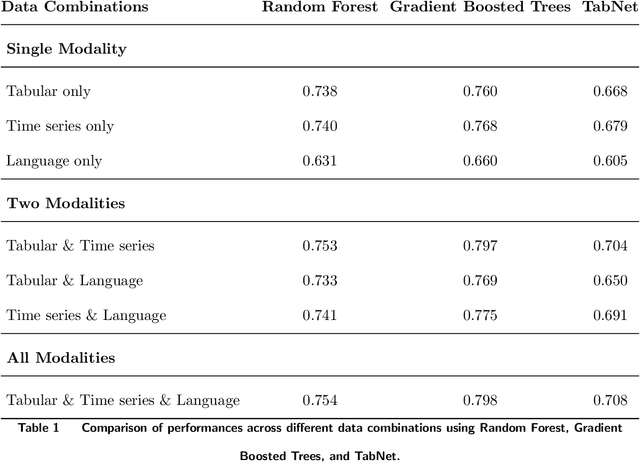
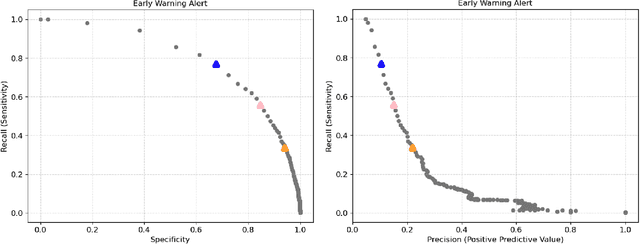
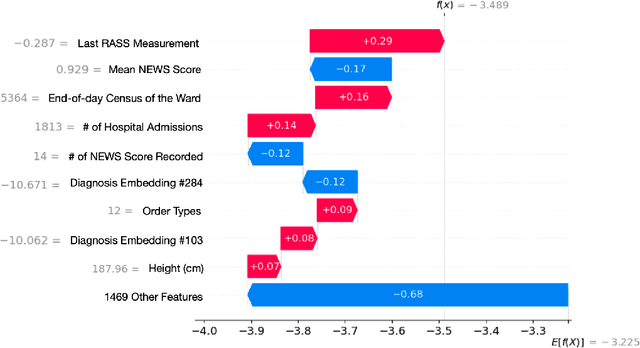
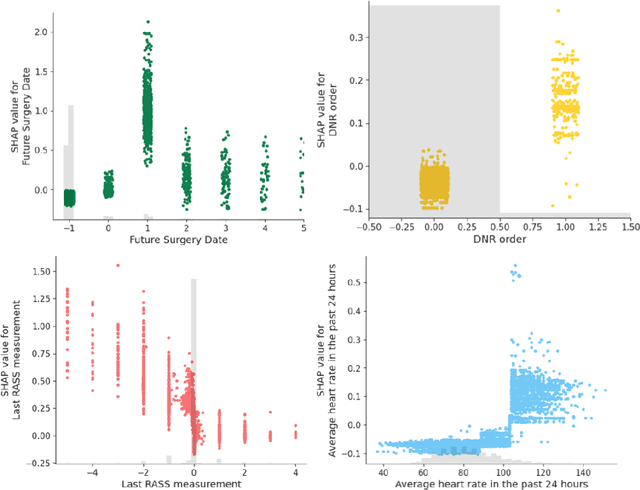
Hospitals lack automated systems to harness the growing volume of heterogeneous clinical and operational data to effectively forecast critical events. Early identification of patients at risk for deterioration is essential not only for patient care quality monitoring but also for physician care management. However, translating varied data streams into accurate and interpretable risk assessments poses significant challenges due to inconsistent data formats. We develop a multimodal machine learning framework, the Early Warning Index (EWI), to predict the aggregate risk of ICU admission, emergency response team dispatch, and mortality. Key to EWI's design is a human-in-the-loop process: clinicians help determine alert thresholds and interpret model outputs, which are enhanced by explainable outputs using Shapley Additive exPlanations (SHAP) to highlight clinical and operational factors (e.g., scheduled surgeries, ward census) driving each patient's risk. We deploy EWI in a hospital dashboard that stratifies patients into three risk tiers. Using a dataset of 18,633 unique patients at a large U.S. hospital, our approach automatically extracts features from both structured and unstructured electronic health record (EHR) data and achieves C-statistics of 0.796. It is currently used as a triage tool for proactively managing at-risk patients. The proposed approach saves physicians valuable time by automatically sorting patients of varying risk levels, allowing them to concentrate on patient care rather than sifting through complex EHR data. By further pinpointing specific risk drivers, the proposed model provides data-informed adjustments to caregiver scheduling and allocation of critical resources. As a result, clinicians and administrators can avert downstream complications, including costly procedures or high readmission rates and improve overall patient flow.