 Add to Chrome
 Add to Firefox
 Add to Edge
CACR:Reinforcing Temporal Answer Grounding in Instructional Video via Candidate-Aware Causal Reasoning
Jun 11, 2026
The task of temporal answer grounding in instructional video (TAGV), which aims to locate precise video segments that respond to natural language queries, is increasingly important for direct video answer retrieval. This task remains challenging due to the need to comprehend semantically complex questions and to address the significant length mismatch between untrimmed videos and short target moments. Existing methods often suffer from sensitivity to irrelevant content or insufficient visual reasoning capabilities. To tackle these limitations, we propose a Candidate-Aware Causal Reasoning (CACR) framework. Our approach first employs a Visual-Language Pre-training based Candidate Selection (VBCS) algorithm to efficiently generate K candidate segments, then applies a temporal logic reasoning module enhanced by a rejection reward mechanism and optimized via Group Relative Policy Optimization (GRPO) for robust inference. Extensive experiments on six benchmarks demonstrate that our method achieves state-of-the-art performance in terms of mean Intersection-over-Union (mIoU), providing a new perspective for reasoning-based retrieval in long videos.

Reinforcing Temporal Answer Grounding in Instructional Video via Candidate-Aware Causal Reasoning
Jun 07, 2026The task of temporal answer grounding in instructional video (TAGV), which aims to locate precise video segments that respond to natural language queries, is increasingly important for direct video answer retrieval. This task remains challenging due to the need to comprehend semantically complex questions and to address the significant length mismatch between untrimmed videos and short target moments. Existing methods often suffer from sensitivity to irrelevant content or insufficient visual reasoning capabilities. To tackle these limitations, we propose a Candidate-Aware Causal Reasoning (CACR) framework. Our approach first employs a Visual-Language Pre-training based Candidate Selection (VBCS) algorithm to efficiently generate K candidate segments, then applies a temporal logic reasoning module enhanced by a rejection reward mechanism and optimized via Group Relative Policy Optimization (GRPO) for robust inference. Extensive experiments on six benchmarks demonstrate that our method achieves state-of-the-art performance in terms of mean Intersection-over-Union (mIoU), providing a new perspective for reasoning-based retrieval in long videos.
A Pathology Foundation Model for Gastric Cancer with Real-World Validation
Jun 03, 2026Gastric cancer remains a major cause of cancer mortality, yet its histological and molecular heterogeneity complicates diagnosis and risk stratification. General-purpose pathology foundation models (PFMs) often plateau on fine-grained endpoints central to gastric cancer care, and few have undergone rigorous prospective validation or clinical reader studies. We present GRACE, a Gastric-specific foundation model for Real-world Assessment and Clinical dEcision support. GRACE was developed from multicenter gastric pathology datasets totaling 48,364 primarily HE-stained whole-slide images from 37,493 patients. When evaluated on 28 clinically relevant tasks, GRACE consistently outperformed representative pancancer PFMs, achieving a macro-AUC of 0.9188, with strong performance for precancerous lesion diagnosis (macro-AUC 0.9322), tumor histopathological assessment (macro-AUC 0.9119), molecular profiling (macro-AUC 0.8682), and prognostic prediction. Beyond benchmarking, GRACE's translational value was substantiated through a rigorous evidence chain. Under safety-gated criteria requiring 100% NPV for rule-out and 100% PPV for rule-in, GRACE streamlined review for up to 69.6% of malignancy-diagnosis cases and triaged 46.8% of MMR-IHC follow-up requests. This translational feasibility was further strengthened by a randomized crossover reader study of pathologist-AI collaboration. With GRACE assistance, diagnostic accuracy improved from 82.0% to 89.9%, yielding nearly twofold higher adjusted odds of a correct diagnosis (OR 1.987) alongside concurrent gains in sensitivity and specificity. AI assistance also reduced diagnostic time by 14.9%, elevated diagnostic confidence by 9.0%, and markedly improved inter-rater agreement. When calibrated to maintain non-inferior performance to senior pathologists, the AI-assisted workflow could triage 60.7% of atrophy and 82.7% of intestinal metaplasia cases.
A Clinically Validated Foundation Model for Comprehensive Lung Pathology Interpretation
May 25, 2026Pathological assessment guides lung cancer diagnosis, treatment selection, and prognostic evaluation, yet current CPath approaches rely on task-specific models for isolated objectives. Although pan-cancer foundation models offer versatility, they lack subspecialty-level depth and have not been evaluated across clinical workflows or prospectively validated in real-world settings. We introduce PulmoFoundation, a multi-center, prospectively validated, randomized controlled trial (RCT)-evaluated foundation model for comprehensive lung pathology assessment across pre-operative, intra-operative, and post-operative care. Built upon Virchow2 via subspecialty-specific pretraining using ~40,000 diagnostic H&E-stained whole-slide images (WSIs), PulmoFoundation was systematically evaluated on ~26,000 WSIs across 32 clinically relevant tasks. In addition to accurately predicting molecular markers and patient survival, our model achieves clinical-grade performance in core diagnostic tasks across biopsy, frozen section, and surgical resection slides. In a registered prospective study of 1,357 patients across 11 diagnostic tasks, our model achieved an average AUC of 92.3%. Using pre-specified triage thresholds, PulmoFoundation could reduce additional second-review burden for 68.8% of biopsies and 83.0% of frozen sections, and defer 44.5% of IHC stain orders, with PPVs of 1.0, 0.991, and 0.966. Beyond prospective validation, we conducted a crossover RCT with eight pathologists, in which AI assistance improved diagnostic accuracy across 4,928 case-reader pairs (91.7% w/ AI vs. 83.8% w/o AI). AI assistance also reduced median diagnostic time by 19.6%, increased diagnostic confidence by 8.7%, and improved inter-rater agreement from moderate (kappa = 0.56) to substantial (kappa = 0.76). Together, these evaluations support PulmoFoundation as a clinically validated decision-support system for lung pathology.
Projection-Free Evolution Strategies for Continuous Prompt Search
Mar 14, 2026Continuous prompt search offers a computationally efficient alternative to conventional parameter tuning in natural language processing tasks. Nevertheless, its practical effectiveness can be significantly hindered by the black-box nature and the inherent high-dimensionality of the objective landscapes. Existing methods typically mitigate these challenges by restricting the search to a randomly projected low-dimensional subspace. However, the effectiveness and underlying motivation of the projection mechanism remain ambiguous. In this paper, we first empirically demonstrate that despite the prompt space possessing a low-dimensional structure, random projections fail to adequately capture this essential structure. Motivated by this finding, we propose a projection-free prompt search method based on evolutionary strategies. By directly optimizing in the full prompt space with an adaptation mechanism calibrated to the intrinsic dimension, our method achieves competitive search capabilities without additional computational overhead. Furthermore, to bridge the generalization gap in few-shot scenarios, we introduce a confidence-based regularization mechanism that systematically enhances the model's confidence in the target verbalizers. Experimental results on seven natural language understanding tasks from the GLUE benchmark demonstrate that our proposed approach significantly outperforms existing baselines.
A Deployment-Friendly Foundational Framework for Efficient Computational Pathology
Feb 15, 2026Pathology foundation models (PFMs) have enabled robust generalization in computational pathology through large-scale datasets and expansive architectures, but their substantial computational cost, particularly for gigapixel whole slide images, limits clinical accessibility and scalability. Here, we present LitePath, a deployment-friendly foundational framework designed to mitigate model over-parameterization and patch level redundancy. LitePath integrates LiteFM, a compact model distilled from three large PFMs (Virchow2, H-Optimus-1 and UNI2) using 190 million patches, and the Adaptive Patch Selector (APS), a lightweight component for task-specific patch selection. The framework reduces model parameters by 28x and lowers FLOPs by 403.5x relative to Virchow2, enabling deployment on low-power edge hardware such as the NVIDIA Jetson Orin Nano Super. On this device, LitePath processes 208 slides per hour, 104.5x faster than Virchow2, and consumes 0.36 kWh per 3,000 slides, 171x lower than Virchow2 on an RTX3090 GPU. We validated accuracy using 37 cohorts across four organs and 26 tasks (26 internal, 9 external, and 2 prospective), comprising 15,672 slides from 9,808 patients disjoint from the pretraining data. LitePath ranks second among 19 evaluated models and outperforms larger models including H-Optimus-1, mSTAR, UNI2 and GPFM, while retaining 99.71% of the AUC of Virchow2 on average. To quantify the balance between accuracy and efficiency, we propose the Deployability Score (D-Score), defined as the weighted geometric mean of normalized AUC and normalized FLOP, where LitePath achieves the highest value, surpassing Virchow2 by 10.64%. These results demonstrate that LitePath enables rapid, cost-effective and energy-efficient pathology image analysis on accessible hardware while maintaining accuracy comparable to state-of-the-art PFMs and reducing the carbon footprint of AI deployment.
Alada: Alternating Adaptation of Momentum Method for Memory-Efficient Matrix Optimization
Dec 15, 2025This work proposes Alada, an adaptive momentum method for stochastic optimization over large-scale matrices. Alada employs a rank-one factorization approach to estimate the second moment of gradients, where factors are updated alternatively to minimize the estimation error. Alada achieves sublinear memory overheads and can be readily extended to optimizing tensor-shaped variables.We also equip Alada with a first moment estimation rule, which enhances the algorithm's robustness without incurring additional memory overheads. The theoretical performance of Alada aligns with that of traditional methods such as Adam. Numerical studies conducted on several natural language processing tasks demonstrate the reduction in memory overheads and the robustness in training large models relative to Adam and its variants.
Symmetric observations without symmetric causal explanations
Feb 20, 2025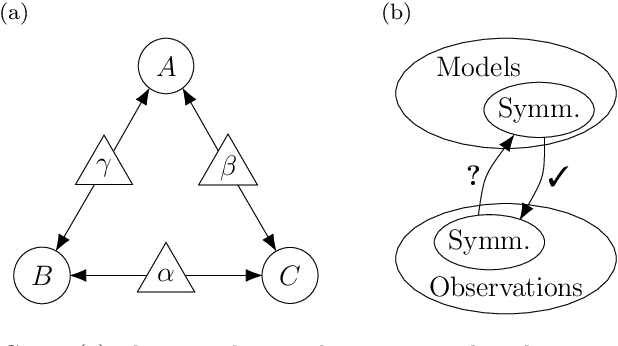
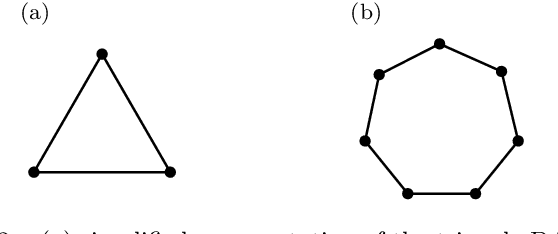
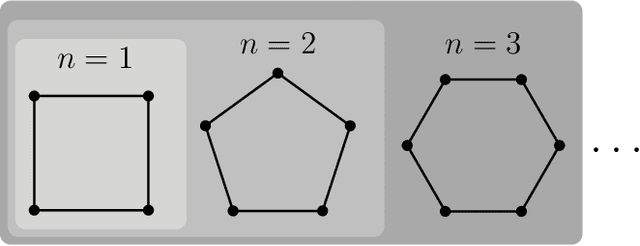
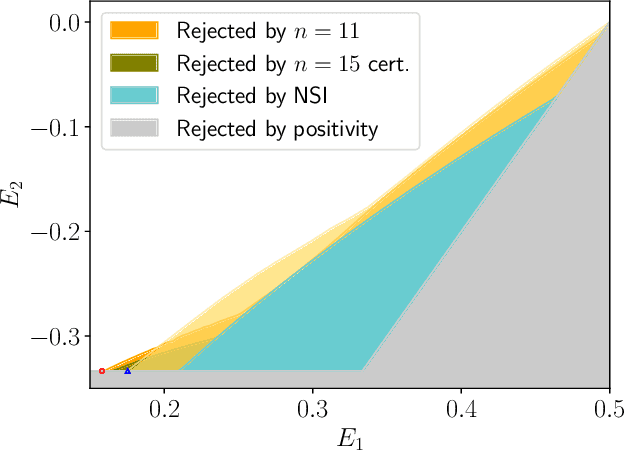
Inferring causal models from observed correlations is a challenging task, crucial to many areas of science. In order to alleviate the effort, it is important to know whether symmetries in the observations correspond to symmetries in the underlying realization. Via an explicit example, we answer this question in the negative. We use a tripartite probability distribution over binary events that is realized by using three (different) independent sources of classical randomness. We prove that even removing the condition that the sources distribute systems described by classical physics, the requirements that i) the sources distribute the same physical systems, ii) these physical systems respect relativistic causality, and iii) the correlations are the observed ones, are incompatible.
PRTGS: Precomputed Radiance Transfer of Gaussian Splats for Real-Time High-Quality Relighting
Aug 07, 2024We proposed Precomputed RadianceTransfer of GaussianSplats (PRTGS), a real-time high-quality relighting method for Gaussian splats in low-frequency lighting environments that captures soft shadows and interreflections by precomputing 3D Gaussian splats' radiance transfer. Existing studies have demonstrated that 3D Gaussian splatting (3DGS) outperforms neural fields' efficiency for dynamic lighting scenarios. However, the current relighting method based on 3DGS still struggles to compute high-quality shadow and indirect illumination in real time for dynamic light, leading to unrealistic rendering results. We solve this problem by precomputing the expensive transport simulations required for complex transfer functions like shadowing, the resulting transfer functions are represented as dense sets of vectors or matrices for every Gaussian splat. We introduce distinct precomputing methods tailored for training and rendering stages, along with unique ray tracing and indirect lighting precomputation techniques for 3D Gaussian splats to accelerate training speed and compute accurate indirect lighting related to environment light. Experimental analyses demonstrate that our approach achieves state-of-the-art visual quality while maintaining competitive training times and allows high-quality real-time (30+ fps) relighting for dynamic light and relatively complex scenes at 1080p resolution.
Towards A Generalizable Pathology Foundation Model via Unified Knowledge Distillation
Jul 26, 2024

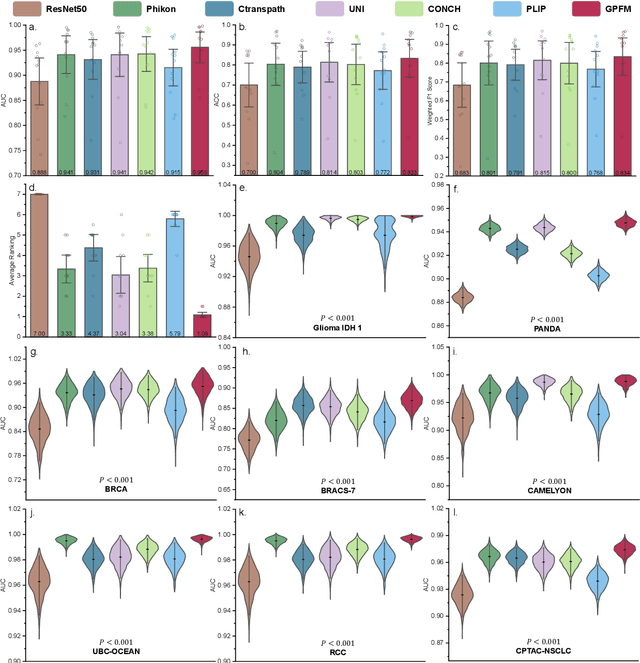

Foundation models pretrained on large-scale datasets are revolutionizing the field of computational pathology (CPath). The generalization ability of foundation models is crucial for the success in various downstream clinical tasks. However, current foundation models have only been evaluated on a limited type and number of tasks, leaving their generalization ability and overall performance unclear. To address this gap, we established a most comprehensive benchmark to evaluate the performance of off-the-shelf foundation models across six distinct clinical task types, encompassing a total of 39 specific tasks. Our findings reveal that existing foundation models excel at certain task types but struggle to effectively handle the full breadth of clinical tasks. To improve the generalization of pathology foundation models, we propose a unified knowledge distillation framework consisting of both expert and self knowledge distillation, where the former allows the model to learn from the knowledge of multiple expert models, while the latter leverages self-distillation to enable image representation learning via local-global alignment. Based on this framework, a Generalizable Pathology Foundation Model (GPFM) is pretrained on a large-scale dataset consisting of 190 million images from around 86,000 public H\&E whole slides across 34 major tissue types. Evaluated on the established benchmark, GPFM achieves an impressive average rank of 1.36, with 29 tasks ranked 1st, while the the second-best model, UNI, attains an average rank of 2.96, with only 4 tasks ranked 1st. The superior generalization of GPFM demonstrates its exceptional modeling capabilities across a wide range of clinical tasks, positioning it as a new cornerstone for feature representation in CPath.