 Add to Chrome
 Add to Firefox
 Add to Edge
Latency-Quality Routing for Functionally Equivalent Tools in LLM Agents
May 14, 2026
Tool-augmented LLM agents increasingly access the same tool type through multiple functionally equivalent providers, such as web-search APIs, retrievers, or LLM backends exposed behind a shared interface. This creates a provider-routing problem under runtime load: the router must choose among providers that differ in latency, reliability, and answer quality, often without gold labels at deployment time. We introduce LQM-ContextRoute, a contextual bandit router for same-function tool providers. Its key design is latency-quality matching: instead of letting low latency offset poor answers in an additive reward, the router ranks providers by expected answer quality per service cycle. It combines this capacity-aware score with query-specific quality estimation and LLM-as-judge feedback, allowing it to adapt online to both load changes and provider-quality differences. On the main web-search load benchmark, LQM-ContextRoute improves F1 by +2.18 pp over SW-UCB while staying on the latency-quality frontier. In a high-heterogeneity StrategyQA setting, LQM-ContextRoute avoids additive-reward collapse and improves accuracy by up to +18 pp over SW-UCB; on heterogeneous retriever pools, it improves NDCG by +2.91--+3.22 pp over SW-UCB. These results show that same-function tool routing benefits from treating latency as service capacity, especially when runtime pressure and provider-quality heterogeneity coexist.

HyperEdit: Unlocking Instruction-based Text Editing in LLMs via Hypernetworks
Dec 14, 2025Instruction-based text editing is increasingly critical for real-world applications such as code editors (e.g., Cursor), but Large Language Models (LLMs) continue to struggle with this task. Unlike free-form generation, editing requires faithfully implementing user instructions while preserving unchanged content, as even minor unintended modifications can break functionality. Existing approaches treat editing as generic text generation, leading to two key failures: they struggle to faithfully align edits with diverse user intents, and they often over-edit unchanged regions. We propose HyperEdit to address both issues. First, we introduce hypernetwork-based dynamic adaptation that generates request-specific parameters, enabling the model to tailor its editing strategy to each instruction. Second, we develop difference-aware regularization that focuses supervision on modified spans, preventing over-editing while ensuring precise, minimal changes. HyperEdit achieves a 9%--30% relative improvement in BLEU on modified regions over state-of-the-art baselines, despite utilizing only 3B parameters.
Dynamic Expert Quantization for Scalable Mixture-of-Experts Inference
Nov 19, 2025Mixture-of-Experts (MoE) models scale LLM capacity efficiently, but deployment on consumer GPUs is limited by the large memory footprint of inactive experts. Static post-training quantization reduces storage costs but cannot adapt to shifting activation patterns, causing accuracy loss under aggressive compression. So we present DynaExq, a runtime system that treats expert precision as a first-class, dynamically managed resource. DynaExq combines (1) a hotness-aware precision controller that continuously aligns expert bit-widths with long-term activation statistics, (2) a fully asynchronous precision-switching pipeline that overlaps promotion and demotion with MoE computation, and (3) a fragmentation-free memory pooling mechanism that supports hybrid-precision experts with deterministic allocation. Together, these components enable stable, non-blocking precision transitions under strict HBM budgets. Across Qwen3-30B and Qwen3-80B MoE models and six representative benchmarks, DynaExq deploys large LLMs on single RTX 5090 and A6000 GPUs and improves accuracy by up to 4.03 points over static low-precision baselines. The results show that adaptive, workload-aware quantization is an effective strategy for memory-constrained MoE serving.
ExpertFlow: Adaptive Expert Scheduling and Memory Coordination for Efficient MoE Inference
Oct 30, 2025The expansion of large language models is increasingly limited by the constrained memory capacity of modern GPUs. To mitigate this, Mixture-of-Experts (MoE) architectures activate only a small portion of parameters during inference, significantly lowering both memory demand and computational overhead. However, conventional MoE inference approaches, which select active experts independently at each layer, often introduce considerable latency because of frequent parameter transfers between host and GPU memory. In addition, current cross-layer prediction strategies, which are typically based on fixed steps, lack adaptability across different hardware platforms and workloads, thereby reducing their robustness and effectiveness. To address these challenges, we present ExpertFlow, a runtime system for MoE inference that combines adaptive expert prefetching and cache-aware routing. ExpertFlow continuously adjusts its prediction horizon for expert activation by leveraging runtime statistics such as transfer bandwidth, parameter dimensionality, and model feedback signals. Furthermore, it incorporates a hybrid cross-layer prediction scheme that fuses pregating information with intermediate computational states to anticipate future expert needs. By adaptively refining prefetching decisions and aligning them with actual usage behavior, ExpertFlow effectively decreases cache misses and removes latency caused by expert swap-ins. Our evaluation demonstrates that ExpertFlow reduces model stall time to less than 0.1% of the baseline, highlighting its capability to optimize MoE inference under stringent memory constraints.
PromptSculptor: Multi-Agent Based Text-to-Image Prompt Optimization
Sep 15, 2025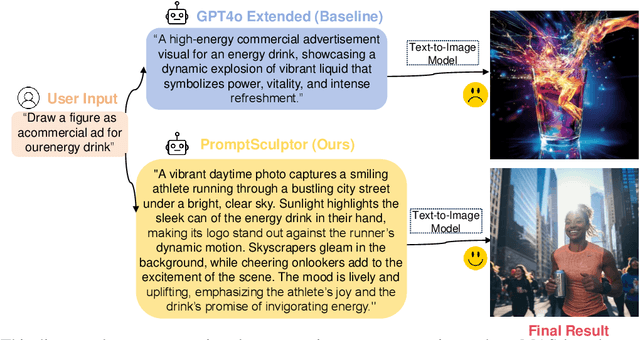
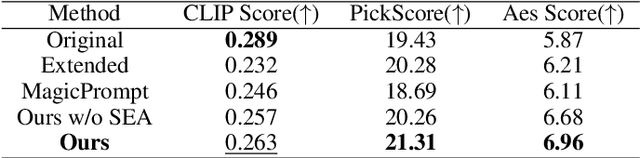
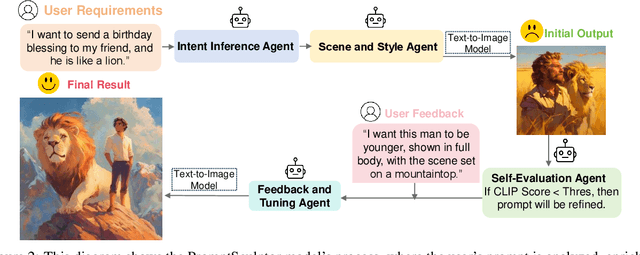
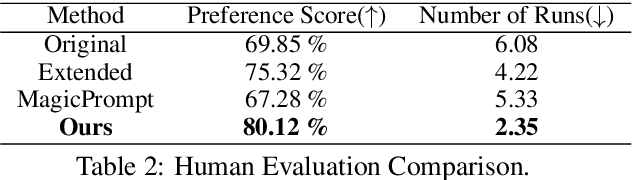
The rapid advancement of generative AI has democratized access to powerful tools such as Text-to-Image models. However, to generate high-quality images, users must still craft detailed prompts specifying scene, style, and context-often through multiple rounds of refinement. We propose PromptSculptor, a novel multi-agent framework that automates this iterative prompt optimization process. Our system decomposes the task into four specialized agents that work collaboratively to transform a short, vague user prompt into a comprehensive, refined prompt. By leveraging Chain-of-Thought reasoning, our framework effectively infers hidden context and enriches scene and background details. To iteratively refine the prompt, a self-evaluation agent aligns the modified prompt with the original input, while a feedback-tuning agent incorporates user feedback for further refinement. Experimental results demonstrate that PromptSculptor significantly enhances output quality and reduces the number of iterations needed for user satisfaction. Moreover, its model-agnostic design allows seamless integration with various T2I models, paving the way for industrial applications.
Selective KV-Cache Sharing to Mitigate Timing Side-Channels in LLM Inference
Aug 11, 2025Global KV-cache sharing has emerged as a key optimization for accelerating large language model (LLM) inference. However, it exposes a new class of timing side-channel attacks, enabling adversaries to infer sensitive user inputs via shared cache entries. Existing defenses, such as per-user isolation, eliminate leakage but degrade performance by up to 38.9% in time-to-first-token (TTFT), making them impractical for high-throughput deployment. To address this gap, we introduce SafeKV (Secure and Flexible KV Cache Sharing), a privacy-aware KV-cache management framework that selectively shares non-sensitive entries while confining sensitive content to private caches. SafeKV comprises three components: (i) a hybrid, multi-tier detection pipeline that integrates rule-based pattern matching, a general-purpose privacy detector, and context-aware validation; (ii) a unified radix-tree index that manages public and private entries across heterogeneous memory tiers (HBM, DRAM, SSD); and (iii) entropy-based access monitoring to detect and mitigate residual information leakage. Our evaluation shows that SafeKV mitigates 94% - 97% of timing-based side-channel attacks. Compared to per-user isolation method, SafeKV improves TTFT by up to 40.58% and throughput by up to 2.66X across diverse LLMs and workloads. SafeKV reduces cache-induced TTFT overhead from 50.41% to 11.74% on Qwen3-235B. By combining fine-grained privacy control with high cache reuse efficiency, SafeKV reclaims the performance advantages of global sharing while providing robust runtime privacy guarantees for LLM inference.
AI-Driven Prognostics for State of Health Prediction in Li-ion Batteries: A Comprehensive Analysis with Validation
Apr 08, 2025
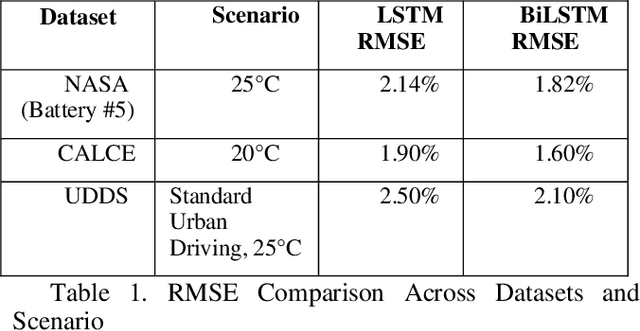
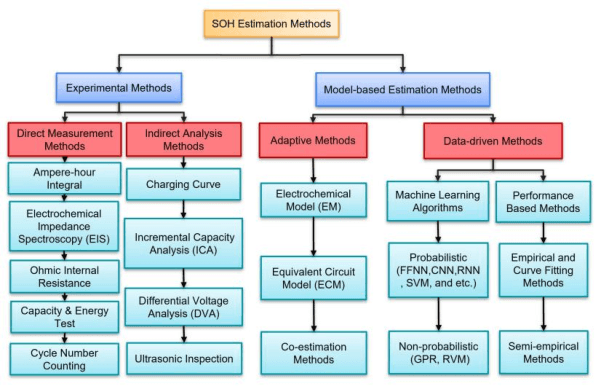
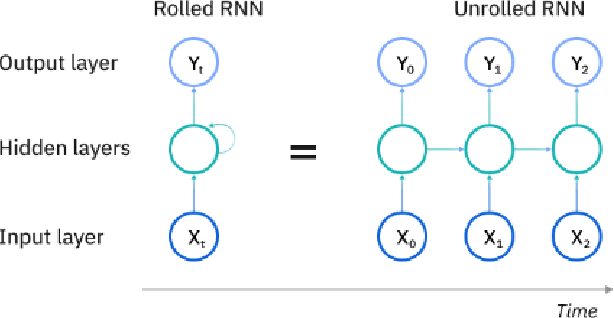
This paper presents a comprehensive review of AI-driven prognostics for State of Health (SoH) prediction in lithium-ion batteries. We compare the effectiveness of various AI algorithms, including FFNN, LSTM, and BiLSTM, across multiple datasets (CALCE, NASA, UDDS) and scenarios (e.g., varying temperatures and driving conditions). Additionally, we analyze the factors influencing SoH fluctuations, such as temperature and charge-discharge rates, and validate our findings through simulations. The results demonstrate that BiLSTM achieves the highest accuracy, with an average RMSE reduction of 15% compared to LSTM, highlighting its robustness in real-world applications.
GKAN: Explainable Diagnosis of Alzheimer's Disease Using Graph Neural Network with Kolmogorov-Arnold Networks
Apr 01, 2025Alzheimer's Disease (AD) is a progressive neurodegenerative disorder that poses significant diagnostic challenges due to its complex etiology. Graph Convolutional Networks (GCNs) have shown promise in modeling brain connectivity for AD diagnosis, yet their reliance on linear transformations limits their ability to capture intricate nonlinear patterns in neuroimaging data. To address this, we propose GCN-KAN, a novel single-modal framework that integrates Kolmogorov-Arnold Networks (KAN) into GCNs to enhance both diagnostic accuracy and interpretability. Leveraging structural MRI data, our model employs learnable spline-based transformations to better represent brain region interactions. Evaluated on the Alzheimer's Disease Neuroimaging Initiative (ADNI) dataset, GCN-KAN outperforms traditional GCNs by 4-8% in classification accuracy while providing interpretable insights into key brain regions associated with AD. This approach offers a robust and explainable tool for early AD diagnosis.
Neural Pruning for 3D Scene Reconstruction: Efficient NeRF Acceleration
Apr 01, 2025Neural Radiance Fields (NeRF) have become a popular 3D reconstruction approach in recent years. While they produce high-quality results, they also demand lengthy training times, often spanning days. This paper studies neural pruning as a strategy to address these concerns. We compare pruning approaches, including uniform sampling, importance-based methods, and coreset-based techniques, to reduce the model size and speed up training. Our findings show that coreset-driven pruning can achieve a 50% reduction in model size and a 35% speedup in training, with only a slight decrease in accuracy. These results suggest that pruning can be an effective method for improving the efficiency of NeRF models in resource-limited settings.
NeRF-Based defect detection
Mar 31, 2025The rapid growth of industrial automation has highlighted the need for precise and efficient defect detection in large-scale machinery. Traditional inspection techniques, involving manual procedures such as scaling tall structures for visual evaluation, are labor-intensive, subjective, and often hazardous. To overcome these challenges, this paper introduces an automated defect detection framework built on Neural Radiance Fields (NeRF) and the concept of digital twins. The system utilizes UAVs to capture images and reconstruct 3D models of machinery, producing both a standard reference model and a current-state model for comparison. Alignment of the models is achieved through the Iterative Closest Point (ICP) algorithm, enabling precise point cloud analysis to detect deviations that signify potential defects. By eliminating manual inspection, this method improves accuracy, enhances operational safety, and offers a scalable solution for defect detection. The proposed approach demonstrates great promise for reliable and efficient industrial applications.