 Add to Chrome
 Add to Firefox
 Add to Edge
Privacy for Fairness: Information Obfuscation for Fair Representation Learning with Local Differential Privacy
Feb 16, 2024
As machine learning (ML) becomes more prevalent in human-centric applications, there is a growing emphasis on algorithmic fairness and privacy protection. While previous research has explored these areas as separate objectives, there is a growing recognition of the complex relationship between privacy and fairness. However, previous works have primarily focused on examining the interplay between privacy and fairness through empirical investigations, with limited attention given to theoretical exploration. This study aims to bridge this gap by introducing a theoretical framework that enables a comprehensive examination of their interrelation. We shall develop and analyze an information bottleneck (IB) based information obfuscation method with local differential privacy (LDP) for fair representation learning. In contrast to many empirical studies on fairness in ML, we show that the incorporation of LDP randomizers during the encoding process can enhance the fairness of the learned representation. Our analysis will demonstrate that the disclosure of sensitive information is constrained by the privacy budget of the LDP randomizer, thereby enabling the optimization process within the IB framework to effectively suppress sensitive information while preserving the desired utility through obfuscation. Based on the proposed method, we further develop a variational representation encoding approach that simultaneously achieves fairness and LDP. Our variational encoding approach offers practical advantages. It is trained using a non-adversarial method and does not require the introduction of any variational prior. Extensive experiments will be presented to validate our theoretical results and demonstrate the ability of our proposed approach to achieve both LDP and fairness while preserving adequate utility.

Private Knowledge Sharing in Distributed Learning: A Survey
Feb 08, 2024The rise of Artificial Intelligence (AI) has revolutionized numerous industries and transformed the way society operates. Its widespread use has led to the distribution of AI and its underlying data across many intelligent systems. In this light, it is crucial to utilize information in learning processes that are either distributed or owned by different entities. As a result, modern data-driven services have been developed to integrate distributed knowledge entities into their outcomes. In line with this goal, the latest AI models are frequently trained in a decentralized manner. Distributed learning involves multiple entities working together to make collective predictions and decisions. However, this collaboration can also bring about security vulnerabilities and challenges. This paper provides an in-depth survey on private knowledge sharing in distributed learning, examining various knowledge components utilized in leading distributed learning architectures. Our analysis sheds light on the most critical vulnerabilities that may arise when using these components in a distributed setting. We further identify and examine defensive strategies for preserving the privacy of these knowledge components and preventing malicious parties from manipulating or accessing the knowledge information. Finally, we highlight several key limitations of knowledge sharing in distributed learning and explore potential avenues for future research.
CogCoM: Train Large Vision-Language Models Diving into Details through Chain of Manipulations
Feb 06, 2024

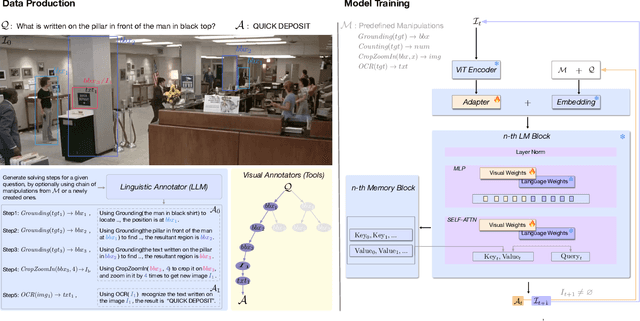

Vision-Language Models (VLMs) have demonstrated their widespread viability thanks to extensive training in aligning visual instructions to answers. However, this conclusive alignment leads models to ignore critical visual reasoning, and further result in failures on meticulous visual problems and unfaithful responses. In this paper, we propose Chain of Manipulations, a mechanism that enables VLMs to solve problems with a series of manipulations, where each manipulation refers to an operation on the visual input, either from intrinsic abilities (e.g., grounding) acquired through prior training or from imitating human-like behaviors (e.g., zoom in). This mechanism encourages VLMs to generate faithful responses with evidential visual reasoning, and permits users to trace error causes in the interpretable paths. We thus train CogCoM, a general 17B VLM with a memory-based compatible architecture endowed this reasoning mechanism. Experiments show that our model achieves the state-of-the-art performance across 8 benchmarks from 3 categories, and a limited number of training steps with the data swiftly gains a competitive performance. The code and data are publicly available at https://github.com/THUDM/CogCoM.
CogAgent: A Visual Language Model for GUI Agents
Dec 21, 2023
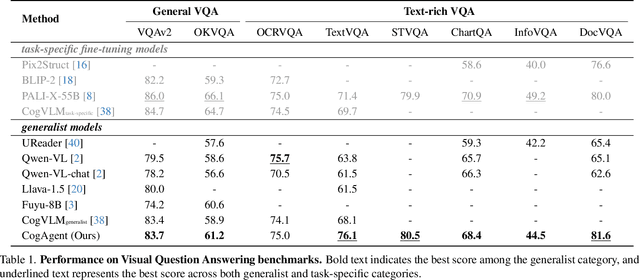
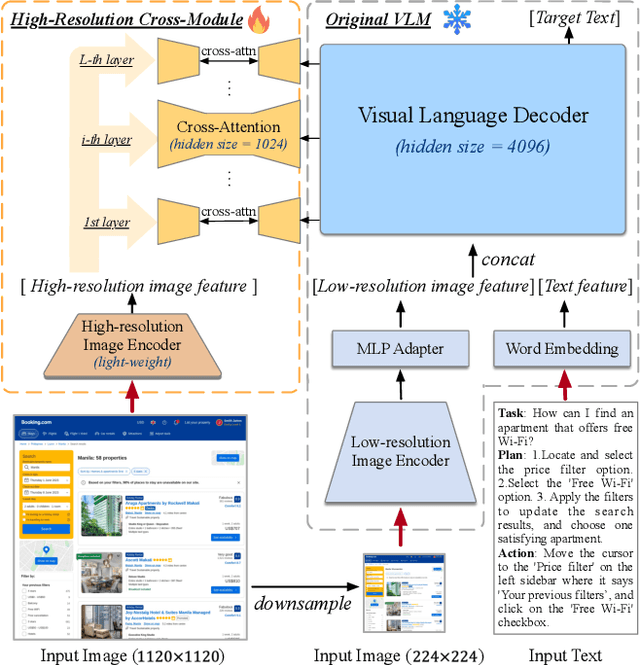

People are spending an enormous amount of time on digital devices through graphical user interfaces (GUIs), e.g., computer or smartphone screens. Large language models (LLMs) such as ChatGPT can assist people in tasks like writing emails, but struggle to understand and interact with GUIs, thus limiting their potential to increase automation levels. In this paper, we introduce CogAgent, an 18-billion-parameter visual language model (VLM) specializing in GUI understanding and navigation. By utilizing both low-resolution and high-resolution image encoders, CogAgent supports input at a resolution of 1120*1120, enabling it to recognize tiny page elements and text. As a generalist visual language model, CogAgent achieves the state of the art on five text-rich and four general VQA benchmarks, including VQAv2, OK-VQA, Text-VQA, ST-VQA, ChartQA, infoVQA, DocVQA, MM-Vet, and POPE. CogAgent, using only screenshots as input, outperforms LLM-based methods that consume extracted HTML text on both PC and Android GUI navigation tasks -- Mind2Web and AITW, advancing the state of the art. The model and codes are available at https://github.com/THUDM/CogVLM .
PnPNet: Pull-and-Push Networks for Volumetric Segmentation with Boundary Confusion
Dec 13, 2023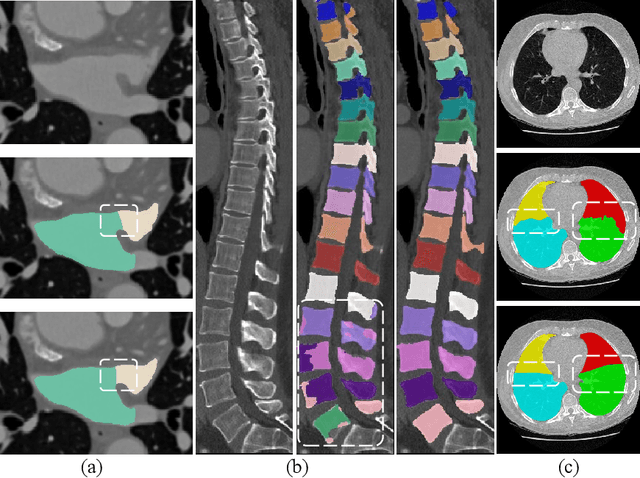
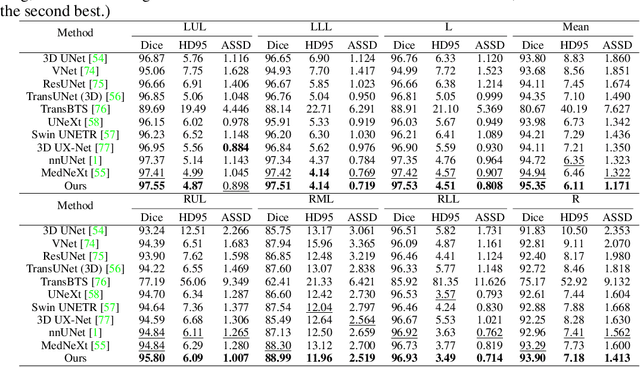
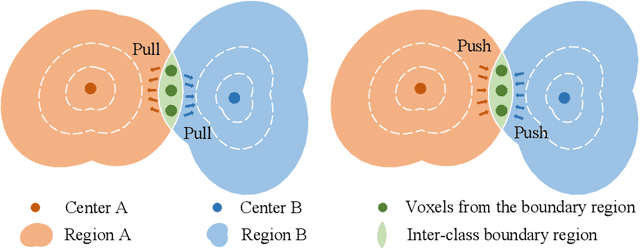
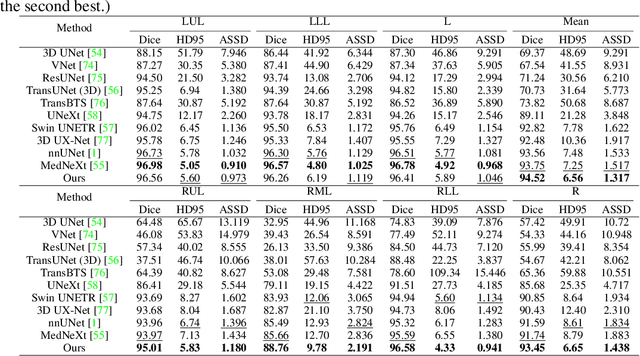
Precise boundary segmentation of volumetric images is a critical task for image-guided diagnosis and computer-assisted intervention, especially for boundary confusion in clinical practice. However, U-shape networks cannot effectively resolve this challenge due to the lack of boundary shape constraints. Besides, existing methods of refining boundaries overemphasize the slender structure, which results in the overfitting phenomenon due to networks' limited abilities to model tiny objects. In this paper, we reconceptualize the mechanism of boundary generation by encompassing the interaction dynamics with adjacent regions. Moreover, we propose a unified network termed PnPNet to model shape characteristics of the confused boundary region. Core ingredients of PnPNet contain the pushing and pulling branches. Specifically, based on diffusion theory, we devise the semantic difference module (SDM) from the pushing branch to squeeze the boundary region. Explicit and implicit differential information inside SDM significantly boost representation abilities for inter-class boundaries. Additionally, motivated by the K-means algorithm, the class clustering module (CCM) from the pulling branch is introduced to stretch the intersected boundary region. Thus, pushing and pulling branches will shrink and enlarge the boundary uncertainty respectively. They furnish two adversarial forces to promote models to output a more precise delineation of boundaries. We carry out experiments on three challenging public datasets and one in-house dataset, containing three types of boundary confusion in model predictions. Experimental results demonstrate the superiority of PnPNet over other segmentation networks, especially on evaluation metrics of HD and ASSD. Besides, pushing and pulling branches can serve as plug-and-play modules to enhance classic U-shape baseline models. Codes are available.
Refine, Discriminate and Align: Stealing Encoders via Sample-Wise Prototypes and Multi-Relational Extraction
Dec 01, 2023
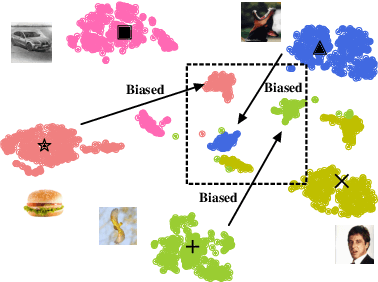
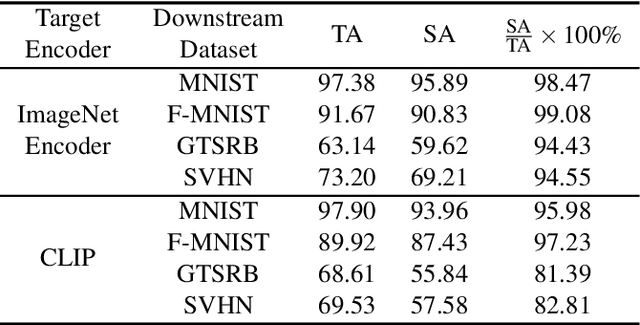

This paper introduces RDA, a pioneering approach designed to address two primary deficiencies prevalent in previous endeavors aiming at stealing pre-trained encoders: (1) suboptimal performances attributed to biased optimization objectives, and (2) elevated query costs stemming from the end-to-end paradigm that necessitates querying the target encoder every epoch. Specifically, we initially Refine the representations of the target encoder for each training sample, thereby establishing a less biased optimization objective before the steal-training phase. This is accomplished via a sample-wise prototype, which consolidates the target encoder's representations for a given sample's various perspectives. Demanding exponentially fewer queries compared to the end-to-end approach, prototypes can be instantiated to guide subsequent query-free training. For more potent efficacy, we develop a multi-relational extraction loss that trains the surrogate encoder to Discriminate mismatched embedding-prototype pairs while Aligning those matched ones in terms of both amplitude and angle. In this way, the trained surrogate encoder achieves state-of-the-art results across the board in various downstream datasets with limited queries. Moreover, RDA is shown to be robust to multiple widely-used defenses.
DRUformer: Enhancing the driving scene Important object detection with driving relationship self-understanding
Nov 11, 2023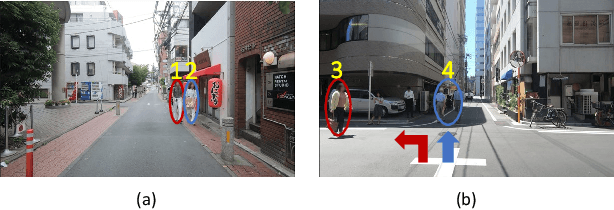


Traffic accidents frequently lead to fatal injuries, contributing to over 50 million deaths until 2023. To mitigate driving hazards and ensure personal safety, it is crucial to assist vehicles in anticipating important objects during travel. Previous research on important object detection primarily assessed the importance of individual participants, treating them as independent entities and frequently overlooking the connections between these participants. Unfortunately, this approach has proven less effective in detecting important objects in complex scenarios. In response, we introduce Driving scene Relationship self-Understanding transformer (DRUformer), designed to enhance the important object detection task. The DRUformer is a transformer-based multi-modal important object detection model that takes into account the relationships between all the participants in the driving scenario. Recognizing that driving intention also significantly affects the detection of important objects during driving, we have incorporated a module for embedding driving intention. To assess the performance of our approach, we conducted a comparative experiment on the DRAMA dataset, pitting our model against other state-of-the-art (SOTA) models. The results demonstrated a noteworthy 16.2\% improvement in mIoU and a substantial 12.3\% boost in ACC compared to SOTA methods. Furthermore, we conducted a qualitative analysis of our model's ability to detect important objects across different road scenarios and classes, highlighting its effectiveness in diverse contexts. Finally, we conducted various ablation studies to assess the efficiency of the proposed modules in our DRUformer model.
FD-MIA: Efficient Attacks on Fairness-enhanced Models
Nov 07, 2023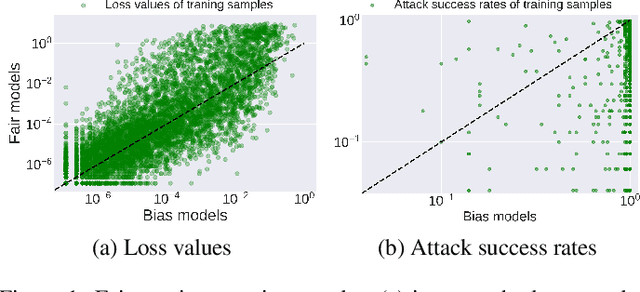

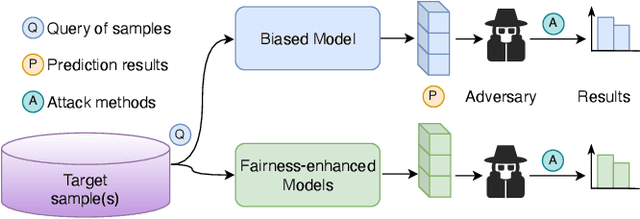
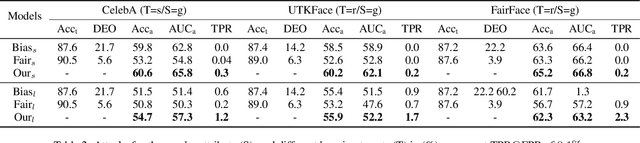
Previous studies have developed fairness methods for biased models that exhibit discriminatory behaviors towards specific subgroups. While these models have shown promise in achieving fair predictions, recent research has identified their potential vulnerability to score-based membership inference attacks (MIAs). In these attacks, adversaries can infer whether a particular data sample was used during training by analyzing the model's prediction scores. However, our investigations reveal that these score-based MIAs are ineffective when targeting fairness-enhanced models in binary classifications. The attack models trained to launch the MIAs degrade into simplistic threshold models, resulting in lower attack performance. Meanwhile, we observe that fairness methods often lead to prediction performance degradation for the majority subgroups of the training data. This raises the barrier to successful attacks and widens the prediction gaps between member and non-member data. Building upon these insights, we propose an efficient MIA method against fairness-enhanced models based on fairness discrepancy results (FD-MIA). It leverages the difference in the predictions from both the original and fairness-enhanced models and exploits the observed prediction gaps as attack clues. We also explore potential strategies for mitigating privacy leakages. Extensive experiments validate our findings and demonstrate the efficacy of the proposed method.
CogVLM: Visual Expert for Pretrained Language Models
Nov 06, 2023We introduce CogVLM, a powerful open-source visual language foundation model. Different from the popular shallow alignment method which maps image features into the input space of language model, CogVLM bridges the gap between the frozen pretrained language model and image encoder by a trainable visual expert module in the attention and FFN layers. As a result, CogVLM enables deep fusion of vision language features without sacrificing any performance on NLP tasks. CogVLM-17B achieves state-of-the-art performance on 10 classic cross-modal benchmarks, including NoCaps, Flicker30k captioning, RefCOCO, RefCOCO+, RefCOCOg, Visual7W, GQA, ScienceQA, VizWiz VQA and TDIUC, and ranks the 2nd on VQAv2, OKVQA, TextVQA, COCO captioning, etc., surpassing or matching PaLI-X 55B. Codes and checkpoints are available at https://github.com/THUDM/CogVLM.
Federated Meta-Learning for Few-Shot Fault Diagnosis with Representation Encoding
Oct 13, 2023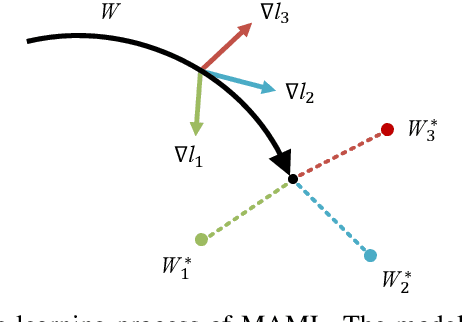
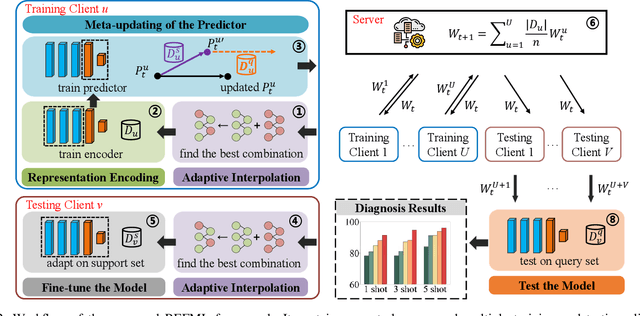
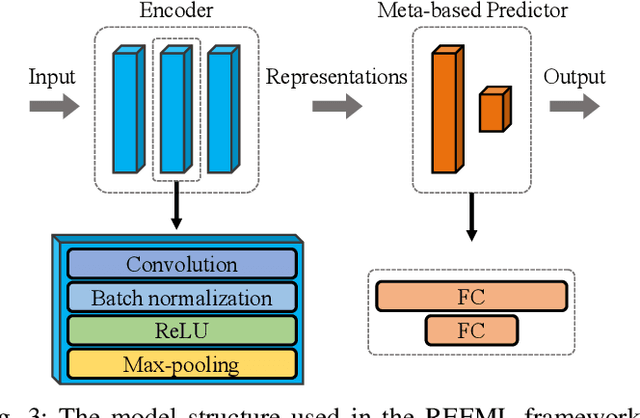
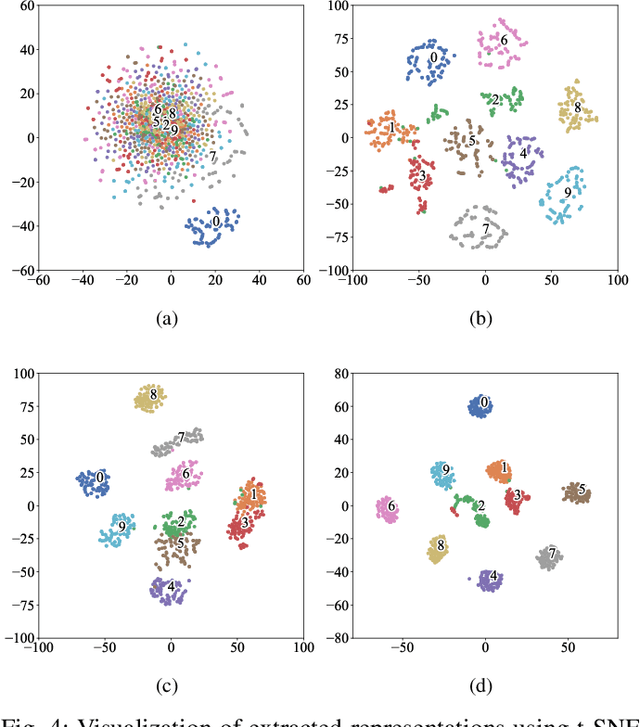
Deep learning-based fault diagnosis (FD) approaches require a large amount of training data, which are difficult to obtain since they are located across different entities. Federated learning (FL) enables multiple clients to collaboratively train a shared model with data privacy guaranteed. However, the domain discrepancy and data scarcity problems among clients deteriorate the performance of the global FL model. To tackle these issues, we propose a novel framework called representation encoding-based federated meta-learning (REFML) for few-shot FD. First, a novel training strategy based on representation encoding and meta-learning is developed. It harnesses the inherent heterogeneity among training clients, effectively transforming it into an advantage for out-of-distribution generalization on unseen working conditions or equipment types. Additionally, an adaptive interpolation method that calculates the optimal combination of local and global models as the initialization of local training is proposed. This helps to further utilize local information to mitigate the negative effects of domain discrepancy. As a result, high diagnostic accuracy can be achieved on unseen working conditions or equipment types with limited training data. Compared with the state-of-the-art methods, such as FedProx, the proposed REFML framework achieves an increase in accuracy by 2.17%-6.50% when tested on unseen working conditions of the same equipment type and 13.44%-18.33% when tested on totally unseen equipment types, respectively.