 Add to Chrome
 Add to Firefox
 Add to Edge
MLOW: Interpretable Low-Rank Frequency Magnitude Decomposition of Multiple Effects for Time Series Forecasting
Mar 19, 2026
Separating multiple effects in time series is fundamental yet challenging for time-series forecasting (TSF). However, existing TSF models cannot effectively learn interpretable multi-effect decomposition by their smoothing-based temporal techniques. Here, a new interpretable frequency-based decomposition pipeline MLOW captures the insight: a time series can be represented as a magnitude spectrum multiplied by the corresponding phase-aware basis functions, and the magnitude spectrum distribution of a time series always exhibits observable patterns for different effects. MLOW learns a low-rank representation of the magnitude spectrum to capture dominant trending and seasonal effects. We explore low-rank methods, including PCA, NMF, and Semi-NMF, and find that none can simultaneously achieve interpretable, efficient and generalizable decomposition. Thus, we propose hyperplane-nonnegative matrix factorization (Hyperplane-NMF). Further, to address the frequency (spectral) leakage restricting high-quality low-rank decomposition, MLOW enables a flexible selection of input horizons and frequency levels via a mathematical mechanism. Visual analysis demonstrates that MLOW enables interpretable and hierarchical multiple-effect decomposition, robust to noises. It can also enable plug-and-play in existing TSF backbones with remarkable performance improvement but minimal architectural modifications.

TubeMLLM: A Foundation Model for Topology Knowledge Exploration in Vessel-like Anatomy
Mar 10, 2026Modeling medical vessel-like anatomy is challenging due to its intricate topology and sensitivity to dataset shifts. Consequently, task-specific models often suffer from topological inconsistencies, including artificial disconnections and spurious merges. Motivated by the promise of multimodal large language models (MLLMs) for zero-shot generalization, we propose TubeMLLM, a unified foundation model that couples structured understanding with controllable generation for medical vessel-like anatomy. By integrating topological priors through explicit natural language prompting and aligning them with visual representations in a shared-attention architecture, TubeMLLM significantly enhances topology-aware perception. Furthermore, we construct TubeMData, a pionner multimodal benchmark comprising comprehensive topology-centric tasks, and introduce an adaptive loss weighting strategy to emphasize topology-critical regions during training. Extensive experiments on fifteen diverse datasets demonstrate our superiority. Quantitatively, TubeMLLM achieves state-of-the-art out-of-distribution performance, substantially reducing global topological discrepancies on color fundus photography (decreasing the $β_{0}$ number error from 37.42 to 8.58 compared to baselines). Notably, TubeMLLM exhibits exceptional zero-shot cross-modality transferring ability on unseen X-ray angiography, achieving a Dice score of 67.50% while significantly reducing the $β_{0}$ error to 1.21. TubeMLLM also maintains robustness against degradations such as blur, noise, and low resolution. Furthermore, in topology-aware understanding tasks, the model achieves 97.38% accuracy in evaluating mask topological quality, significantly outperforming standard vision-language baselines.
MMNavAgent: Multi-Magnification WSI Navigation Agent for Clinically Consistent Whole-Slide Analysis
Mar 02, 2026Recent AI navigation approaches aim to improve Whole-Slide Image (WSI) diagnosis by modeling spatial exploration and selecting diagnostically relevant regions, yet most operate at a single fixed magnification or rely on predefined magnification traversal. In clinical practice, pathologists examine slides across multiple magnifications and selectively inspect only necessary scales, dynamically integrating global and cellular evidence in a sequential manner. This mismatch prevents existing methods from modeling cross-magnification interactions and adaptive magnification selection inherent to real diagnostic workflows. To these, we propose a clinically consistent Multi-Magnification WSI Navigation Agent (MMNavAgent) that explicitly models multi magnification interaction and adaptive magnification selection. Specifically, we introduce a Cross-Magnification navigation Tool (CMT) that aggregates contextual information from adjacent magnifications to enhance discriminative representations along the navigation path. We further introduce a Magnification Selection Tool (MST) that leverages memory-driven reasoning within the agent framework to enable interactive and adaptive magnification selection, mimicking the sequential decision process of pathologists. Extensive experiments on a public dataset demonstrate improved diagnostic performance, with 1.45% gain of AUC and 2.93% gain of BACC over a non-agent baseline. Code will be public upon acceptance.
PRAGMA: A Profiling-Reasoned Multi-Agent Framework for Automatic Kernel Optimization
Nov 09, 2025Designing high-performance kernels requires expert-level tuning and a deep understanding of hardware characteristics. Recent advances in large language models (LLMs) have enabled automated kernel generation, yet most existing systems rely solely on correctness or execution time feedback, lacking the ability to reason about low-level performance bottlenecks. In this paper, we introduce PRAGMA, a profile-guided AI kernel generation framework that integrates execution feedback and fine-grained hardware profiling into the reasoning loop. PRAGMA enables LLMs to identify performance bottlenecks, preserve historical best versions, and iteratively refine code quality. We evaluate PRAGMA on KernelBench, covering GPU and CPU backends. Results show that PRAGMA consistently outperforms baseline AIKG without profiling enabled and achieves 2.81$\times$ and 2.30$\times$ averaged speedups against Torch on CPU and GPU platforms, respectively.
TopoSculpt: Betti-Steered Topological Sculpting of 3D Fine-grained Tubular Shapes
Sep 04, 2025Medical tubular anatomical structures are inherently three-dimensional conduits with lumens, enclosing walls, and complex branching topologies. Accurate reconstruction of their geometry and topology is crucial for applications such as bronchoscopic navigation and cerebral arterial connectivity assessment. Existing methods often rely on voxel-wise overlap measures, which fail to capture topological correctness and completeness. Although topology-aware losses and persistent homology constraints have shown promise, they are usually applied patch-wise and cannot guarantee global preservation or correct geometric errors at inference. To address these limitations, we propose a novel TopoSculpt, a framework for topological refinement of 3D fine-grained tubular structures. TopoSculpt (i) adopts a holistic whole-region modeling strategy to capture full spatial context, (ii) first introduces a Topological Integrity Betti (TIB) constraint that jointly enforces Betti number priors and global integrity, and (iii) employs a curriculum refinement scheme with persistent homology to progressively correct errors from coarse to fine scales. Extensive experiments on challenging pulmonary airway and Circle of Willis datasets demonstrate substantial improvements in both geometry and topology. For instance, $\beta_{0}$ errors are reduced from 69.00 to 3.40 on the airway dataset and from 1.65 to 0.30 on the CoW dataset, with Tree length detected and branch detected rates improving by nearly 10\%. These results highlight the effectiveness of TopoSculpt in correcting critical topological errors and advancing the high-fidelity modeling of complex 3D tubular anatomy. The project homepage is available at: https://github.com/Puzzled-Hui/TopoSculpt.
Shape-aware Sampling Matters in the Modeling of Multi-Class Tubular Structures
Jun 14, 2025Accurate multi-class tubular modeling is critical for precise lesion localization and optimal treatment planning. Deep learning methods enable automated shape modeling by prioritizing volumetric overlap accuracy. However, the inherent complexity of fine-grained semantic tubular shapes is not fully emphasized by overlap accuracy, resulting in reduced topological preservation. To address this, we propose the Shapeaware Sampling (SAS), which optimizes patchsize allocation for online sampling and extracts a topology-preserved skeletal representation for the objective function. Fractal Dimension-based Patchsize (FDPS) is first introduced to quantify semantic tubular shape complexity through axis-specific fractal dimension analysis. Axes with higher fractal complexity are then sampled with smaller patchsizes to capture fine-grained features and resolve structural intricacies. In addition, Minimum Path-Cost Skeletonization (MPC-Skel) is employed to sample topologically consistent skeletal representations of semantic tubular shapes for skeleton-weighted objective functions. MPC-Skel reduces artifacts from conventional skeletonization methods and directs the focus to critical topological regions, enhancing tubular topology preservation. SAS is computationally efficient and easily integrable into optimization pipelines. Evaluation on two semantic tubular datasets showed consistent improvements in both volumetric overlap and topological integrity metrics.
Temporal Differential Fields for 4D Motion Modeling via Image-to-Video Synthesis
May 22, 2025Temporal modeling on regular respiration-induced motions is crucial to image-guided clinical applications. Existing methods cannot simulate temporal motions unless high-dose imaging scans including starting and ending frames exist simultaneously. However, in the preoperative data acquisition stage, the slight movement of patients may result in dynamic backgrounds between the first and last frames in a respiratory period. This additional deviation can hardly be removed by image registration, thus affecting the temporal modeling. To address that limitation, we pioneeringly simulate the regular motion process via the image-to-video (I2V) synthesis framework, which animates with the first frame to forecast future frames of a given length. Besides, to promote the temporal consistency of animated videos, we devise the Temporal Differential Diffusion Model to generate temporal differential fields, which measure the relative differential representations between adjacent frames. The prompt attention layer is devised for fine-grained differential fields, and the field augmented layer is adopted to better interact these fields with the I2V framework, promoting more accurate temporal variation of synthesized videos. Extensive results on ACDC cardiac and 4D Lung datasets reveal that our approach simulates 4D videos along the intrinsic motion trajectory, rivaling other competitive methods on perceptual similarity and temporal consistency. Codes will be available soon.
Multi-Class Segmentation of Aortic Branches and Zones in Computed Tomography Angiography: The AortaSeg24 Challenge
Feb 07, 2025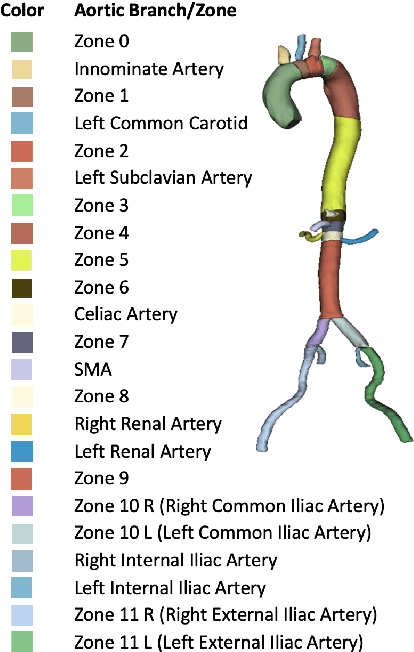
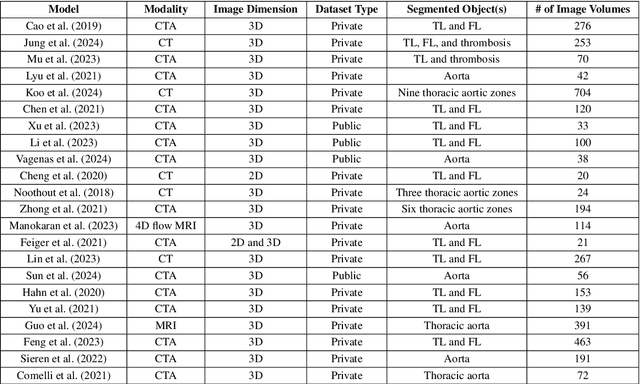
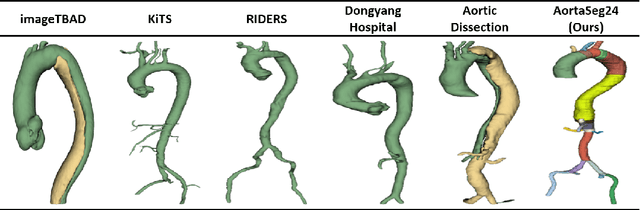
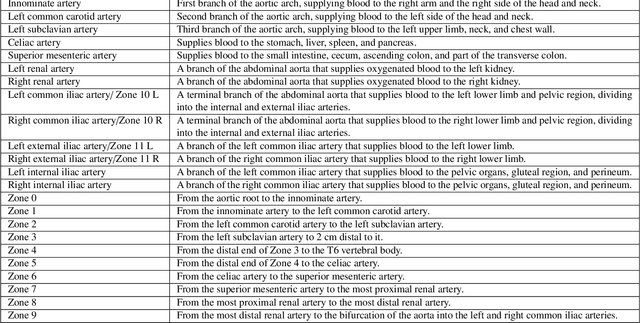
Multi-class segmentation of the aorta in computed tomography angiography (CTA) scans is essential for diagnosing and planning complex endovascular treatments for patients with aortic dissections. However, existing methods reduce aortic segmentation to a binary problem, limiting their ability to measure diameters across different branches and zones. Furthermore, no open-source dataset is currently available to support the development of multi-class aortic segmentation methods. To address this gap, we organized the AortaSeg24 MICCAI Challenge, introducing the first dataset of 100 CTA volumes annotated for 23 clinically relevant aortic branches and zones. This dataset was designed to facilitate both model development and validation. The challenge attracted 121 teams worldwide, with participants leveraging state-of-the-art frameworks such as nnU-Net and exploring novel techniques, including cascaded models, data augmentation strategies, and custom loss functions. We evaluated the submitted algorithms using the Dice Similarity Coefficient (DSC) and Normalized Surface Distance (NSD), highlighting the approaches adopted by the top five performing teams. This paper presents the challenge design, dataset details, evaluation metrics, and an in-depth analysis of the top-performing algorithms. The annotated dataset, evaluation code, and implementations of the leading methods are publicly available to support further research. All resources can be accessed at https://aortaseg24.grand-challenge.org.
Topology-Aware Exploration of Circle of Willis for CTA and MRA: Segmentation, Detection, and Classification
Oct 21, 2024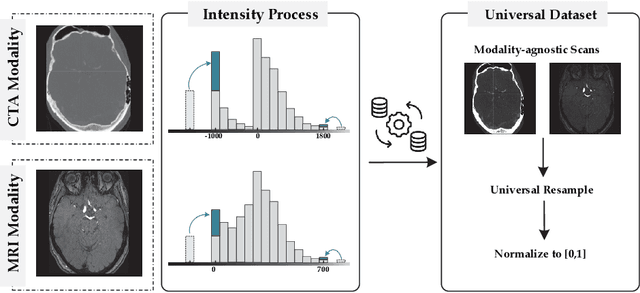
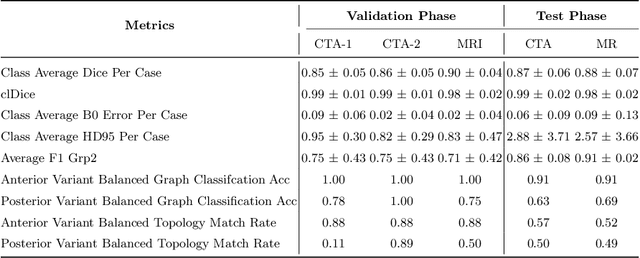
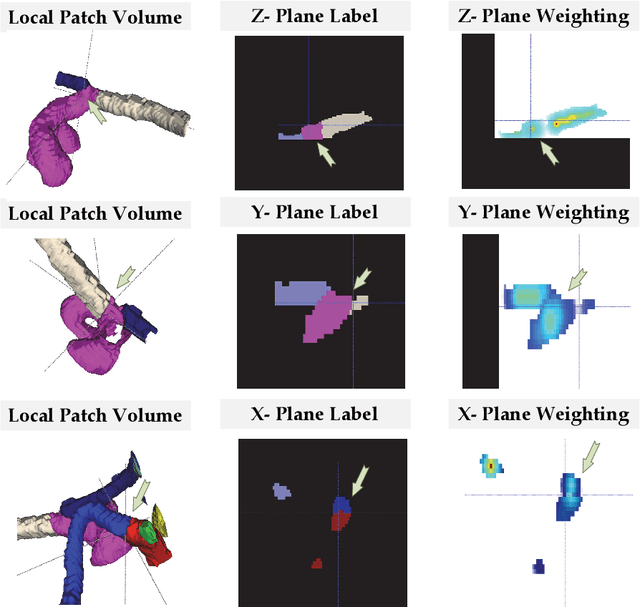
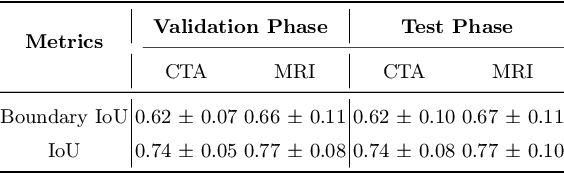
The Circle of Willis (CoW) vessels is critical to connecting major circulations of the brain. The topology of the vascular structure is clinical significance to evaluate the risk, severity of the neuro-vascular diseases. The CoW has two representative angiographic imaging modalities, computed tomography angiography (CTA) and magnetic resonance angiography (MRA). TopCow24 provided 125 paired CTA-MRA dataset for the analysis of CoW. To explore both CTA and MRA images in a unified framework to learn the inherent topology of Cow, we construct the universal dataset via independent intensity preprocess, followed by joint resampling and normarlization. Then, we utilize the topology-aware loss to enhance the topology completeness of the CoW and the discrimination between different classes. A complementary topology-aware refinement is further conducted to enhance the connectivity within the same class. Our method was evaluated on all the three tasks and two modalities, achieving competitive results. In the final test phase of TopCow24 Challenge, we achieved the second place in the CTA-Seg-Task, the third palce in the CTA-Box-Task, the first place in the CTA-Edg-Task, the second place in the MRA-Seg-Task, the third palce in the MRA-Box-Task, the second place in the MRA-Edg-Task.
PASS:Test-Time Prompting to Adapt Styles and Semantic Shapes in Medical Image Segmentation
Oct 02, 2024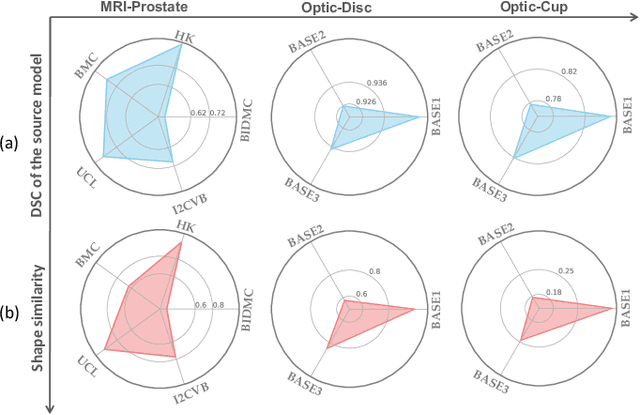
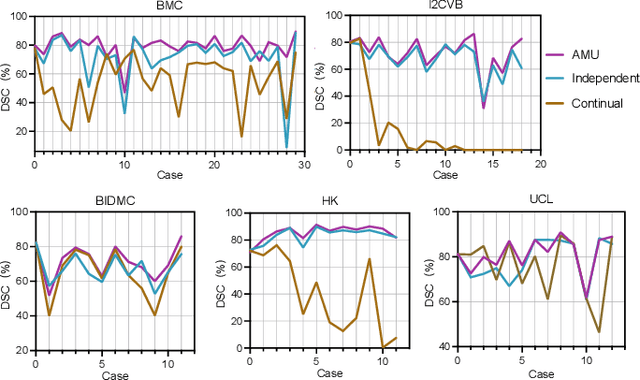
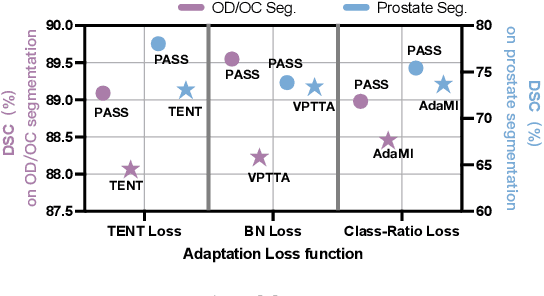
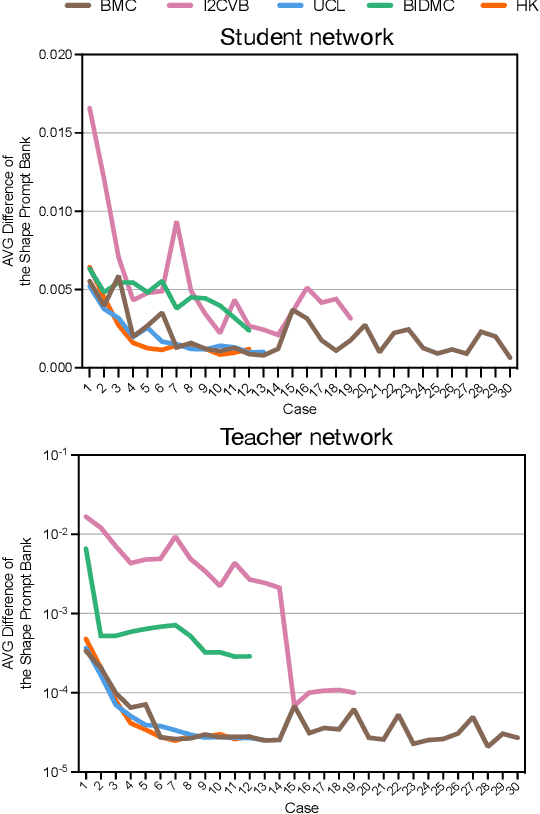
Test-time adaptation (TTA) has emerged as a promising paradigm to handle the domain shifts at test time for medical images from different institutions without using extra training data. However, existing TTA solutions for segmentation tasks suffer from (1) dependency on modifying the source training stage and access to source priors or (2) lack of emphasis on shape-related semantic knowledge that is crucial for segmentation tasks.Recent research on visual prompt learning achieves source-relaxed adaptation by extended parameter space but still neglects the full utilization of semantic features, thus motivating our work on knowledge-enriched deep prompt learning. Beyond the general concern of image style shifts, we reveal that shape variability is another crucial factor causing the performance drop. To address this issue, we propose a TTA framework called PASS (Prompting to Adapt Styles and Semantic shapes), which jointly learns two types of prompts: the input-space prompt to reformulate the style of the test image to fit into the pretrained model and the semantic-aware prompts to bridge high-level shape discrepancy across domains. Instead of naively imposing a fixed prompt, we introduce an input decorator to generate the self-regulating visual prompt conditioned on the input data. To retrieve the knowledge representations and customize target-specific shape prompts for each test sample, we propose a cross-attention prompt modulator, which performs interaction between target representations and an enriched shape prompt bank. Extensive experiments demonstrate the superior performance of PASS over state-of-the-art methods on multiple medical image segmentation datasets. The code is available at https://github.com/EndoluminalSurgicalVision-IMR/PASS.