 Add to Chrome
 Add to Firefox
 Add to Edge
Differentiable Collision-Supervised Tooth Arrangement Network with a Decoupling Perspective
Sep 18, 2024
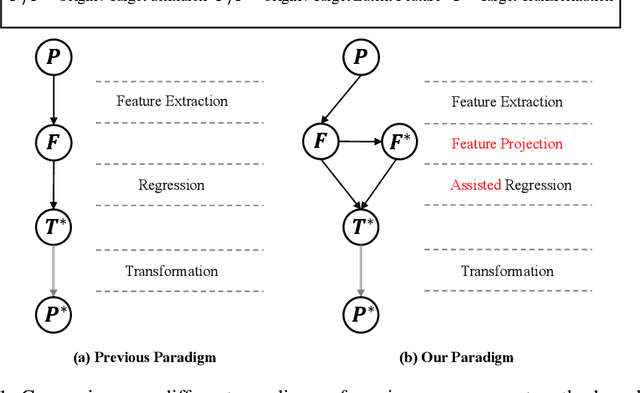

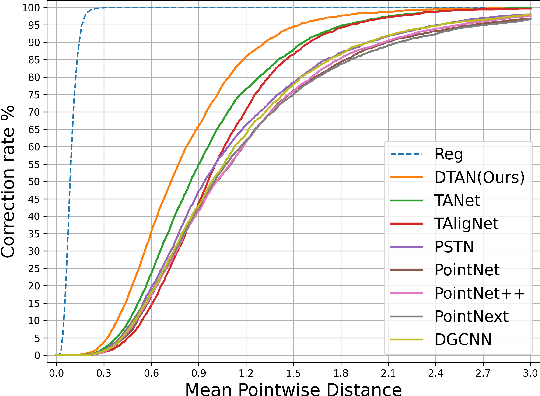

Tooth arrangement is an essential step in the digital orthodontic planning process. Existing learning-based methods use hidden teeth features to directly regress teeth motions, which couples target pose perception and motion regression. It could lead to poor perceptions of three-dimensional transformation. They also ignore the possible overlaps or gaps between teeth of predicted dentition, which is generally unacceptable. Therefore, we propose DTAN, a differentiable collision-supervised tooth arrangement network, decoupling predicting tasks and feature modeling. DTAN decouples the tooth arrangement task by first predicting the hidden features of the final teeth poses and then using them to assist in regressing the motions between the beginning and target teeth. To learn the hidden features better, DTAN also decouples the teeth-hidden features into geometric and positional features, which are further supervised by feature consistency constraints. Furthermore, we propose a novel differentiable collision loss function for point cloud data to constrain the related gestures between teeth, which can be easily extended to other 3D point cloud tasks. We propose an arch-width guided tooth arrangement network, named C-DTAN, to make the results controllable. We construct three different tooth arrangement datasets and achieve drastically improved performance on accuracy and speed compared with existing methods.

Closed-Loop Visuomotor Control with Generative Expectation for Robotic Manipulation
Sep 13, 2024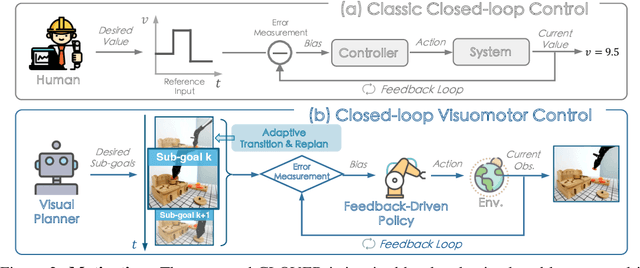
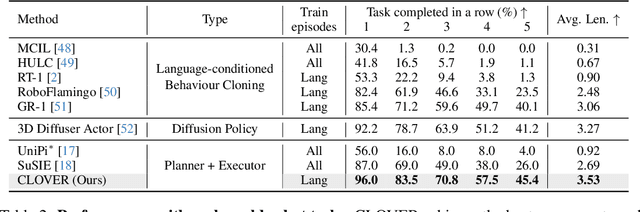
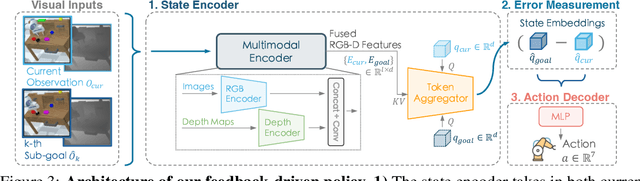
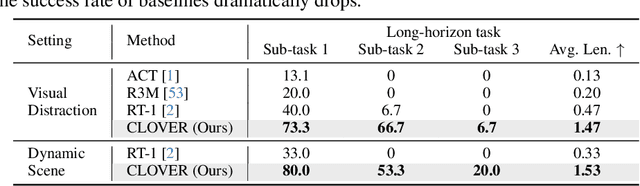
Despite significant progress in robotics and embodied AI in recent years, deploying robots for long-horizon tasks remains a great challenge. Majority of prior arts adhere to an open-loop philosophy and lack real-time feedback, leading to error accumulation and undesirable robustness. A handful of approaches have endeavored to establish feedback mechanisms leveraging pixel-level differences or pre-trained visual representations, yet their efficacy and adaptability have been found to be constrained. Inspired by classic closed-loop control systems, we propose CLOVER, a closed-loop visuomotor control framework that incorporates feedback mechanisms to improve adaptive robotic control. CLOVER consists of a text-conditioned video diffusion model for generating visual plans as reference inputs, a measurable embedding space for accurate error quantification, and a feedback-driven controller that refines actions from feedback and initiates replans as needed. Our framework exhibits notable advancement in real-world robotic tasks and achieves state-of-the-art on CALVIN benchmark, improving by 8% over previous open-loop counterparts. Code and checkpoints are maintained at https://github.com/OpenDriveLab/CLOVER.
Multiplex Graph Contrastive Learning with Soft Negatives
Sep 12, 2024Graph Contrastive Learning (GCL) seeks to learn nodal or graph representations that contain maximal consistent information from graph-structured data. While node-level contrasting modes are dominating, some efforts commence to explore consistency across different scales. Yet, they tend to lose consistent information and be contaminated by disturbing features. Here, we introduce MUX-GCL, a novel cross-scale contrastive learning paradigm that utilizes multiplex representations as effective patches. While this learning mode minimizes contaminating noises, a commensurate contrasting strategy using positional affinities further avoids information loss by correcting false negative pairs across scales. Extensive downstream experiments demonstrate that MUX-GCL yields multiple state-of-the-art results on public datasets. Our theoretical analysis further guarantees the new objective function as a stricter lower bound of mutual information of raw input features and output embeddings, which rationalizes this paradigm. Code is available at https://github.com/MUX-GCL/Code.
Exploiting Student Parallelism for Low-latency GPU Inference of BERT-like Models in Online Services
Aug 22, 2024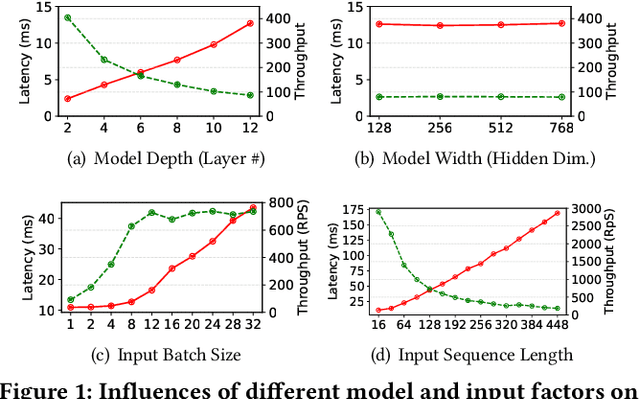
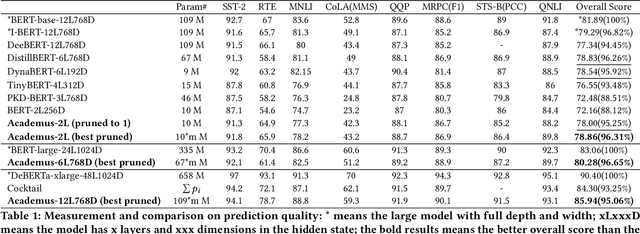
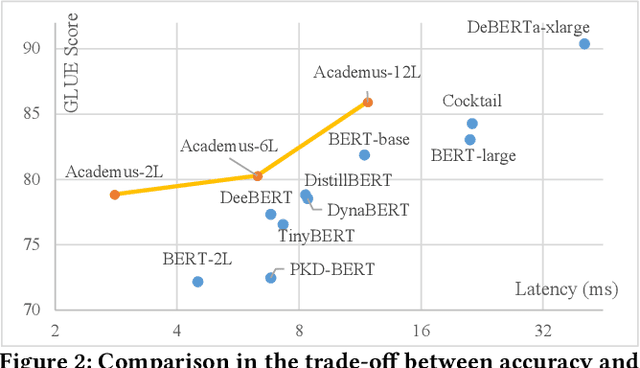
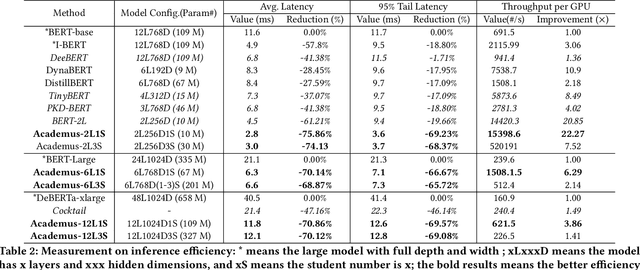
Due to high accuracy, BERT-like models have been widely adopted by discriminative text mining and web searching. However, large BERT-like models suffer from inefficient online inference, as they face the following two problems on GPUs. First, they rely on the large model depth to achieve high accuracy, which linearly increases the sequential computation on GPUs. Second, stochastic and dynamic online workloads cause extra costs. In this paper, we present Academus for low-latency online inference of BERT-like models. At the core of Academus is the novel student parallelism, which adopts boosting ensemble and stacking distillation to distill the original deep model into an equivalent group of parallel and shallow student models. This enables Academus to achieve the lower model depth (e.g., two layers) than baselines and consequently the lowest inference latency without affecting the accuracy.For occasional workload bursts, it can temporarily decrease the number of students with minimal accuracy loss to improve throughput. Additionally, it employs specialized system designs for student parallelism to better handle stochastic online workloads. We conduct comprehensive experiments to verify the effectiveness. The results show that Academus outperforms the baselines by 4.1X~1.6X in latency without compromising accuracy, and achieves up to 22.27X higher throughput for workload bursts.
Comparison of Large Language Models for Generating Contextually Relevant Questions
Jul 30, 2024This study explores the effectiveness of Large Language Models (LLMs) for Automatic Question Generation in educational settings. Three LLMs are compared in their ability to create questions from university slide text without fine-tuning. Questions were obtained in a two-step pipeline: first, answer phrases were extracted from slides using Llama 2-Chat 13B; then, the three models generated questions for each answer. To analyze whether the questions would be suitable in educational applications for students, a survey was conducted with 46 students who evaluated a total of 246 questions across five metrics: clarity, relevance, difficulty, slide relation, and question-answer alignment. Results indicate that GPT-3.5 and Llama 2-Chat 13B outperform Flan T5 XXL by a small margin, particularly in terms of clarity and question-answer alignment. GPT-3.5 especially excels at tailoring questions to match the input answers. The contribution of this research is the analysis of the capacity of LLMs for Automatic Question Generation in education.
FedClust: Tackling Data Heterogeneity in Federated Learning through Weight-Driven Client Clustering
Jul 09, 2024Federated learning (FL) is an emerging distributed machine learning paradigm that enables collaborative training of machine learning models over decentralized devices without exposing their local data. One of the major challenges in FL is the presence of uneven data distributions across client devices, violating the well-known assumption of independent-and-identically-distributed (IID) training samples in conventional machine learning. To address the performance degradation issue incurred by such data heterogeneity, clustered federated learning (CFL) shows its promise by grouping clients into separate learning clusters based on the similarity of their local data distributions. However, state-of-the-art CFL approaches require a large number of communication rounds to learn the distribution similarities during training until the formation of clusters is stabilized. Moreover, some of these algorithms heavily rely on a predefined number of clusters, thus limiting their flexibility and adaptability. In this paper, we propose {\em FedClust}, a novel approach for CFL that leverages the correlation between local model weights and the data distribution of clients. {\em FedClust} groups clients into clusters in a one-shot manner by measuring the similarity degrees among clients based on the strategically selected partial weights of locally trained models. We conduct extensive experiments on four benchmark datasets with different non-IID data settings. Experimental results demonstrate that {\em FedClust} achieves higher model accuracy up to $\sim$45\% as well as faster convergence with a significantly reduced communication cost up to 2.7$\times$ compared to its state-of-the-art counterparts.
T-CorresNet: Template Guided 3D Point Cloud Completion with Correspondence Pooling Query Generation Strategy
Jul 06, 2024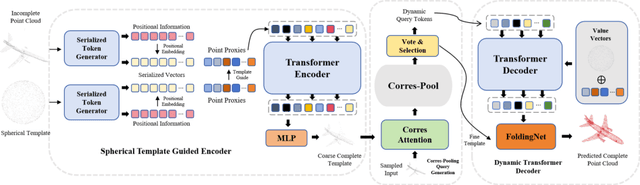
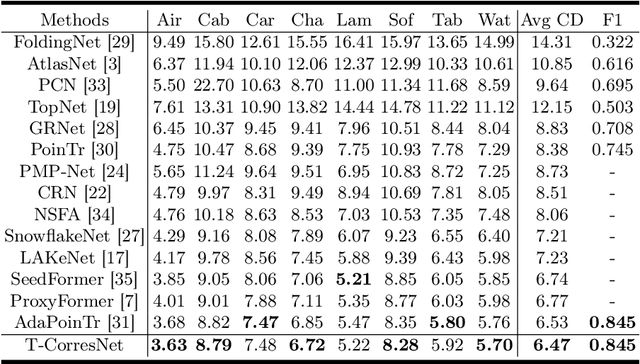
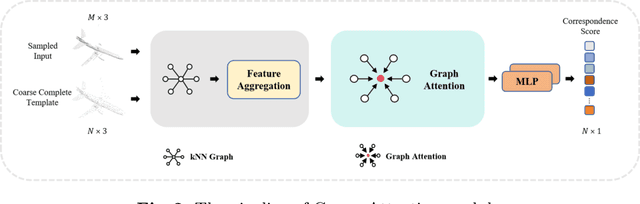
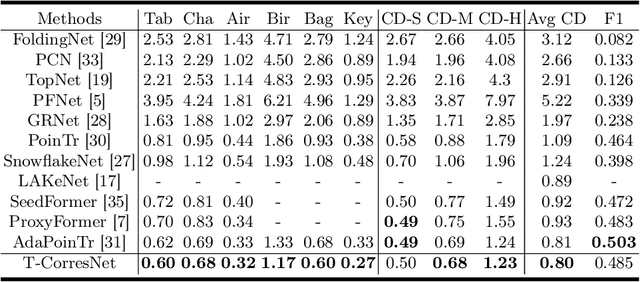
Point clouds are commonly used in various practical applications such as autonomous driving and the manufacturing industry. However, these point clouds often suffer from incompleteness due to limited perspectives, scanner resolution and occlusion. Therefore the prediction of missing parts performs a crucial task. In this paper, we propose a novel method for point cloud completion. We utilize a spherical template to guide the generation of the coarse complete template and generate the dynamic query tokens through a correspondence pooling (Corres-Pooling) query generator. Specifically, we first generate the coarse complete template by embedding a Gaussian spherical template into the partial input and transforming the template to best match the input. Then we use the Corres-Pooling query generator to refine the coarse template and generate dynamic query tokens which could be used to predict the complete point proxies. Finally, we generate the complete point cloud with a FoldingNet following the coarse-to-fine paradigm, according to the fine template and the predicted point proxies. Experimental results demonstrate that our T-CorresNet outperforms the state-of-the-art methods on several benchmarks. Our Codes are available at https://github.com/df-boy/T-CorresNet.
Pistis-RAG: A Scalable Cascading Framework Towards Trustworthy Retrieval-Augmented Generation
Jun 21, 2024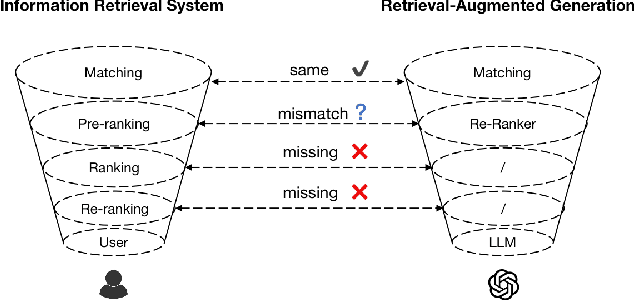


In Greek mythology, Pistis symbolized good faith, trust, and reliability, echoing the core principles of RAG in LLM systems. Pistis-RAG, a scalable multi-stage framework, effectively addresses the challenges of large-scale retrieval-augmented generation (RAG). Each stage plays a distinct role: matching refines the search space, pre-ranking prioritizes semantically relevant documents, and ranking aligns with the large language model's (LLM) preferences. The reasoning and aggregating stage supports the implementation of complex chain-of-thought (CoT) methods within this cascading structure. We argue that the lack of strong alignment between LLMs and the external knowledge ranking methods used in RAG tasks is relevant to the reliance on the model-centric paradigm in RAG frameworks. A content-centric approach would prioritize seamless integration between the LLMs and external information sources, optimizing the content transformation process for each specific task. Critically, our ranking stage deviates from traditional RAG approaches by recognizing that semantic relevance alone may not directly translate to improved generation. This is due to the sensitivity of the few-shot prompt order, as highlighted in prior work \cite{lu2021fantastically}. Current RAG frameworks fail to account for this crucial factor. We introduce a novel ranking stage specifically designed for RAG systems. It adheres to information retrieval principles while considering the unique business scenario captured by LLM preferences and user feedback. Our approach integrates in-context learning (ICL) methods and reasoning steps to incorporate user feedback, ensuring efficient alignment. Experiments on the MMLU benchmark demonstrate a 9.3\% performance improvement. The model and code will be open-sourced on GitHub. Experiments on real-world, large-scale data validate our framework's scalability.
FontStudio: Shape-Adaptive Diffusion Model for Coherent and Consistent Font Effect Generation
Jun 12, 2024
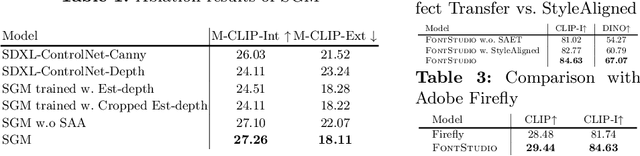
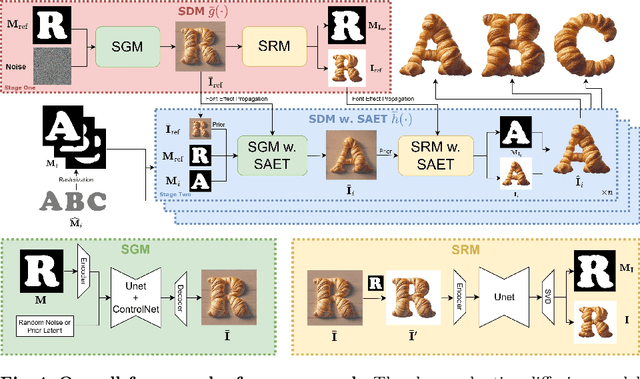
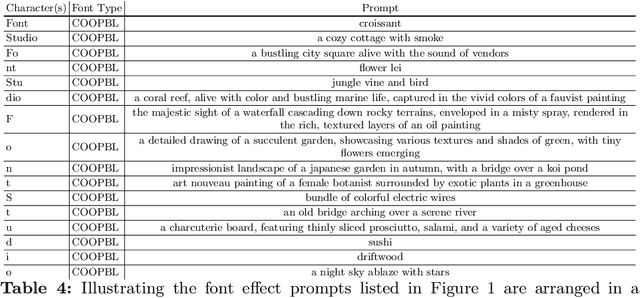
Recently, the application of modern diffusion-based text-to-image generation models for creating artistic fonts, traditionally the domain of professional designers, has garnered significant interest. Diverging from the majority of existing studies that concentrate on generating artistic typography, our research aims to tackle a novel and more demanding challenge: the generation of text effects for multilingual fonts. This task essentially requires generating coherent and consistent visual content within the confines of a font-shaped canvas, as opposed to a traditional rectangular canvas. To address this task, we introduce a novel shape-adaptive diffusion model capable of interpreting the given shape and strategically planning pixel distributions within the irregular canvas. To achieve this, we curate a high-quality shape-adaptive image-text dataset and incorporate the segmentation mask as a visual condition to steer the image generation process within the irregular-canvas. This approach enables the traditionally rectangle canvas-based diffusion model to produce the desired concepts in accordance with the provided geometric shapes. Second, to maintain consistency across multiple letters, we also present a training-free, shape-adaptive effect transfer method for transferring textures from a generated reference letter to others. The key insights are building a font effect noise prior and propagating the font effect information in a concatenated latent space. The efficacy of our FontStudio system is confirmed through user preference studies, which show a marked preference (78% win-rates on aesthetics) for our system even when compared to the latest unrivaled commercial product, Adobe Firefly.
Fairness-Aware Meta-Learning via Nash Bargaining
Jun 11, 2024


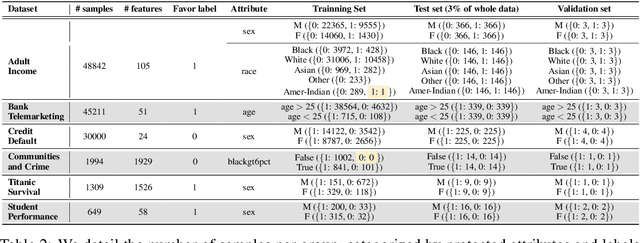
To address issues of group-level fairness in machine learning, it is natural to adjust model parameters based on specific fairness objectives over a sensitive-attributed validation set. Such an adjustment procedure can be cast within a meta-learning framework. However, naive integration of fairness goals via meta-learning can cause hypergradient conflicts for subgroups, resulting in unstable convergence and compromising model performance and fairness. To navigate this issue, we frame the resolution of hypergradient conflicts as a multi-player cooperative bargaining game. We introduce a two-stage meta-learning framework in which the first stage involves the use of a Nash Bargaining Solution (NBS) to resolve hypergradient conflicts and steer the model toward the Pareto front, and the second stage optimizes with respect to specific fairness goals. Our method is supported by theoretical results, notably a proof of the NBS for gradient aggregation free from linear independence assumptions, a proof of Pareto improvement, and a proof of monotonic improvement in validation loss. We also show empirical effects across various fairness objectives in six key fairness datasets and two image classification tasks.