 Add to Chrome
 Add to Firefox
 Add to Edge
Grounding DINO 1.5: Advance the "Edge" of Open-Set Object Detection
May 16, 2024


This paper introduces Grounding DINO 1.5, a suite of advanced open-set object detection models developed by IDEA Research, which aims to advance the "Edge" of open-set object detection. The suite encompasses two models: Grounding DINO 1.5 Pro, a high-performance model designed for stronger generalization capability across a wide range of scenarios, and Grounding DINO 1.5 Edge, an efficient model optimized for faster speed demanded in many applications requiring edge deployment. The Grounding DINO 1.5 Pro model advances its predecessor by scaling up the model architecture, integrating an enhanced vision backbone, and expanding the training dataset to over 20 million images with grounding annotations, thereby achieving a richer semantic understanding. The Grounding DINO 1.5 Edge model, while designed for efficiency with reduced feature scales, maintains robust detection capabilities by being trained on the same comprehensive dataset. Empirical results demonstrate the effectiveness of Grounding DINO 1.5, with the Grounding DINO 1.5 Pro model attaining a 54.3 AP on the COCO detection benchmark and a 55.7 AP on the LVIS-minival zero-shot transfer benchmark, setting new records for open-set object detection. Furthermore, the Grounding DINO 1.5 Edge model, when optimized with TensorRT, achieves a speed of 75.2 FPS while attaining a zero-shot performance of 36.2 AP on the LVIS-minival benchmark, making it more suitable for edge computing scenarios. Model examples and demos with API will be released at https://github.com/IDEA-Research/Grounding-DINO-1.5-API

NTIRE 2024 Restore Any Image Model in the Wild Challenge
May 16, 2024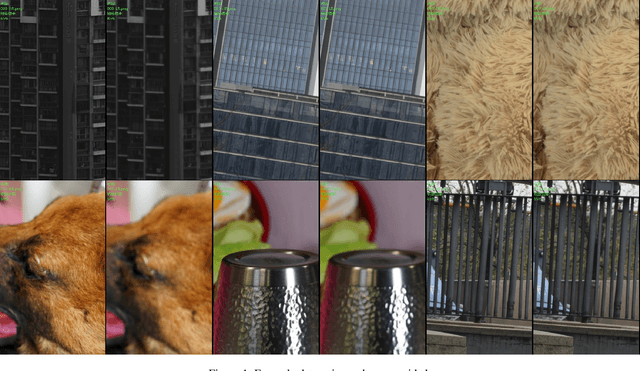
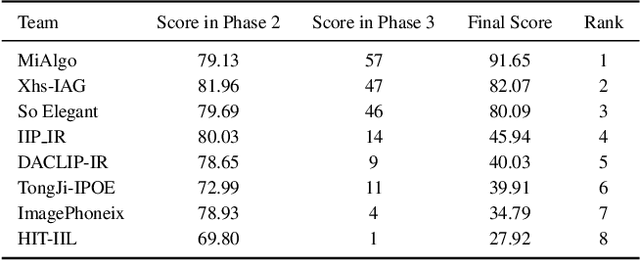
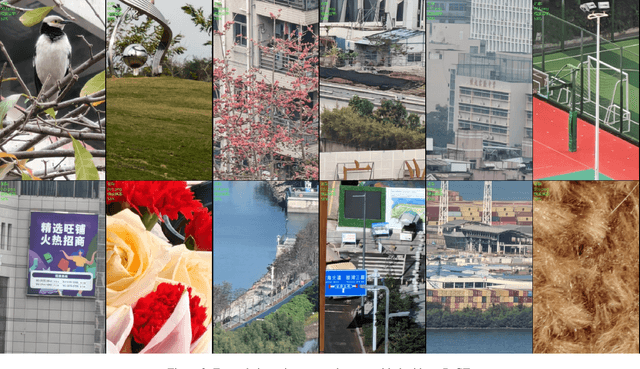
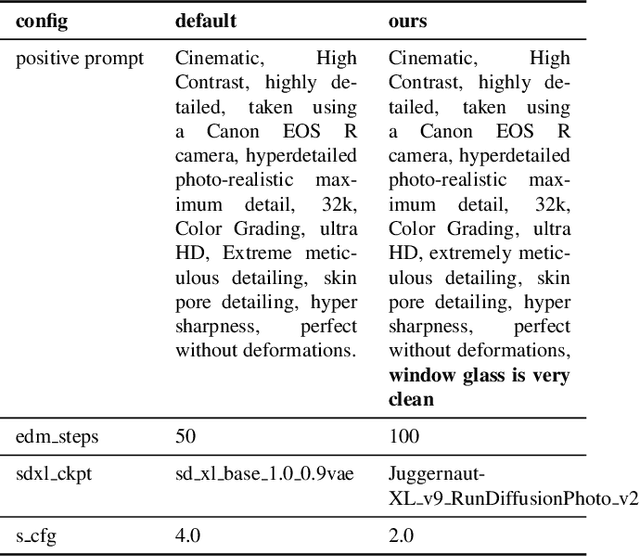
In this paper, we review the NTIRE 2024 challenge on Restore Any Image Model (RAIM) in the Wild. The RAIM challenge constructed a benchmark for image restoration in the wild, including real-world images with/without reference ground truth in various scenarios from real applications. The participants were required to restore the real-captured images from complex and unknown degradation, where generative perceptual quality and fidelity are desired in the restoration result. The challenge consisted of two tasks. Task one employed real referenced data pairs, where quantitative evaluation is available. Task two used unpaired images, and a comprehensive user study was conducted. The challenge attracted more than 200 registrations, where 39 of them submitted results with more than 400 submissions. Top-ranked methods improved the state-of-the-art restoration performance and obtained unanimous recognition from all 18 judges. The proposed datasets are available at https://drive.google.com/file/d/1DqbxUoiUqkAIkExu3jZAqoElr_nu1IXb/view?usp=sharing and the homepage of this challenge is at https://codalab.lisn.upsaclay.fr/competitions/17632.
DoLLM: How Large Language Models Understanding Network Flow Data to Detect Carpet Bombing DDoS
May 13, 2024

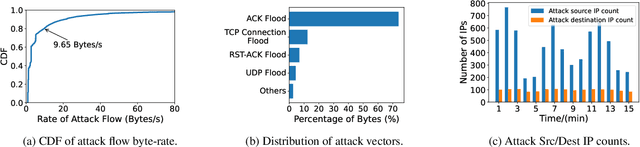
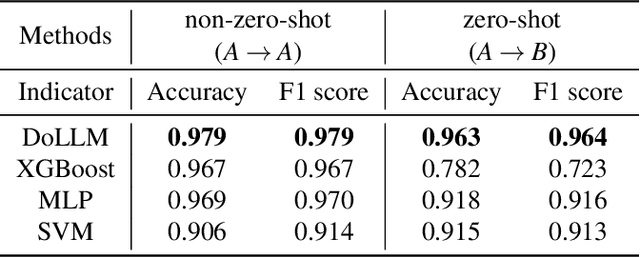
It is an interesting question Can and How Large Language Models (LLMs) understand non-language network data, and help us detect unknown malicious flows. This paper takes Carpet Bombing as a case study and shows how to exploit LLMs' powerful capability in the networking area. Carpet Bombing is a new DDoS attack that has dramatically increased in recent years, significantly threatening network infrastructures. It targets multiple victim IPs within subnets, causing congestion on access links and disrupting network services for a vast number of users. Characterized by low-rates, multi-vectors, these attacks challenge traditional DDoS defenses. We propose DoLLM, a DDoS detection model utilizes open-source LLMs as backbone. By reorganizing non-contextual network flows into Flow-Sequences and projecting them into LLMs semantic space as token embeddings, DoLLM leverages LLMs' contextual understanding to extract flow representations in overall network context. The representations are used to improve the DDoS detection performance. We evaluate DoLLM with public datasets CIC-DDoS2019 and real NetFlow trace from Top-3 countrywide ISP. The tests have proven that DoLLM possesses strong detection capabilities. Its F1 score increased by up to 33.3% in zero-shot scenarios and by at least 20.6% in real ISP traces.
PCLMix: Weakly Supervised Medical Image Segmentation via Pixel-Level Contrastive Learning and Dynamic Mix Augmentation
May 10, 2024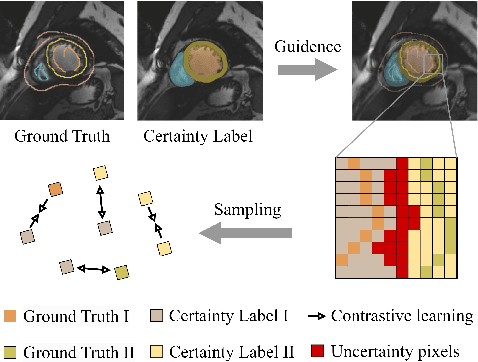
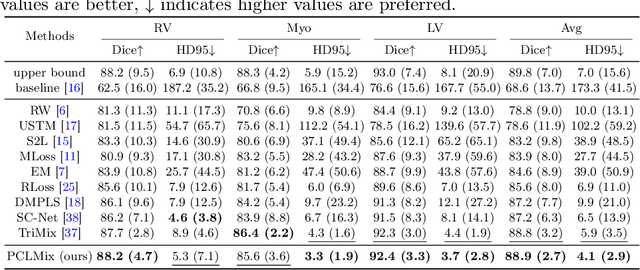

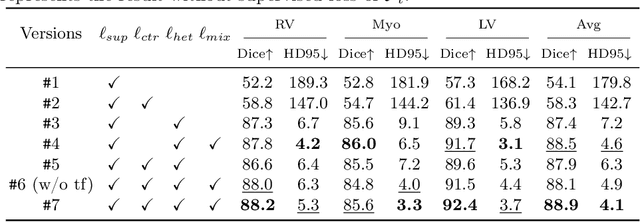
In weakly supervised medical image segmentation, the absence of structural priors and the discreteness of class feature distribution present a challenge, i.e., how to accurately propagate supervision signals from local to global regions without excessively spreading them to other irrelevant regions? To address this, we propose a novel weakly supervised medical image segmentation framework named PCLMix, comprising dynamic mix augmentation, pixel-level contrastive learning, and consistency regularization strategies. Specifically, PCLMix is built upon a heterogeneous dual-decoder backbone, addressing the absence of structural priors through a strategy of dynamic mix augmentation during training. To handle the discrete distribution of class features, PCLMix incorporates pixel-level contrastive learning based on prediction uncertainty, effectively enhancing the model's ability to differentiate inter-class pixel differences and intra-class consistency. Furthermore, to reinforce segmentation consistency and robustness, PCLMix employs an auxiliary decoder for dual consistency regularization. In the inference phase, the auxiliary decoder will be dropped and no computation complexity is increased. Extensive experiments on the ACDC dataset demonstrate that PCLMix appropriately propagates local supervision signals to the global scale, further narrowing the gap between weakly supervised and fully supervised segmentation methods. Our code is available at https://github.com/Torpedo2648/PCLMix.
MasterWeaver: Taming Editability and Identity for Personalized Text-to-Image Generation
May 10, 2024Text-to-image (T2I) diffusion models have shown significant success in personalized text-to-image generation, which aims to generate novel images with human identities indicated by the reference images. Despite promising identity fidelity has been achieved by several tuning-free methods, they usually suffer from overfitting issues. The learned identity tends to entangle with irrelevant information, resulting in unsatisfied text controllability, especially on faces. In this work, we present MasterWeaver, a test-time tuning-free method designed to generate personalized images with both faithful identity fidelity and flexible editability. Specifically, MasterWeaver adopts an encoder to extract identity features and steers the image generation through additional introduced cross attention. To improve editability while maintaining identity fidelity, we propose an editing direction loss for training, which aligns the editing directions of our MasterWeaver with those of the original T2I model. Additionally, a face-augmented dataset is constructed to facilitate disentangled identity learning, and further improve the editability. Extensive experiments demonstrate that our MasterWeaver can not only generate personalized images with faithful identity, but also exhibit superiority in text controllability. Our code will be publicly available at https://github.com/csyxwei/MasterWeaver.
Sora Detector: A Unified Hallucination Detection for Large Text-to-Video Models
May 07, 2024


The rapid advancement in text-to-video (T2V) generative models has enabled the synthesis of high-fidelity video content guided by textual descriptions. Despite this significant progress, these models are often susceptible to hallucination, generating contents that contradict the input text, which poses a challenge to their reliability and practical deployment. To address this critical issue, we introduce the SoraDetector, a novel unified framework designed to detect hallucinations across diverse large T2V models, including the cutting-edge Sora model. Our framework is built upon a comprehensive analysis of hallucination phenomena, categorizing them based on their manifestation in the video content. Leveraging the state-of-the-art keyframe extraction techniques and multimodal large language models, SoraDetector first evaluates the consistency between extracted video content summary and textual prompts, then constructs static and dynamic knowledge graphs (KGs) from frames to detect hallucination both in single frames and across frames. Sora Detector provides a robust and quantifiable measure of consistency, static and dynamic hallucination. In addition, we have developed the Sora Detector Agent to automate the hallucination detection process and generate a complete video quality report for each input video. Lastly, we present a novel meta-evaluation benchmark, T2VHaluBench, meticulously crafted to facilitate the evaluation of advancements in T2V hallucination detection. Through extensive experiments on videos generated by Sora and other large T2V models, we demonstrate the efficacy of our approach in accurately detecting hallucinations. The code and dataset can be accessed via GitHub.
Vision Mamba: A Comprehensive Survey and Taxonomy
May 07, 2024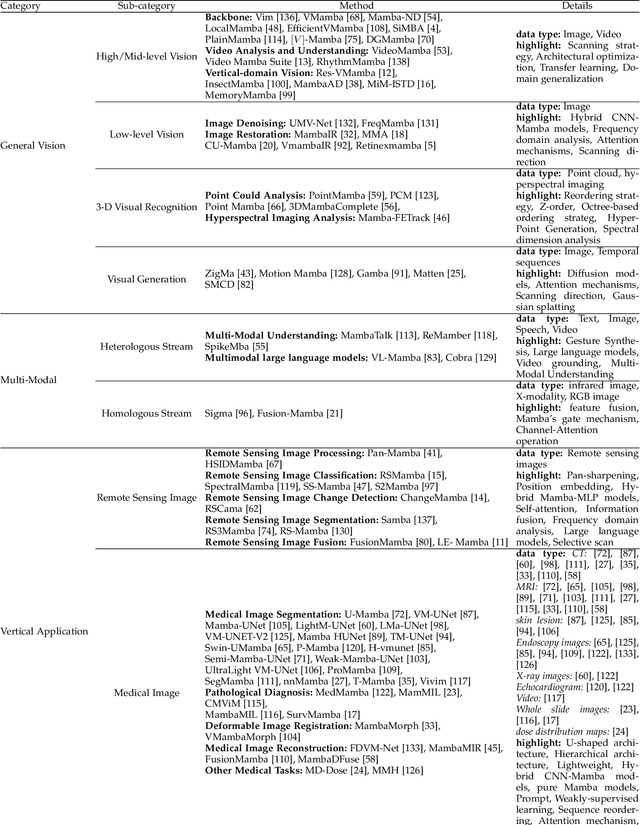
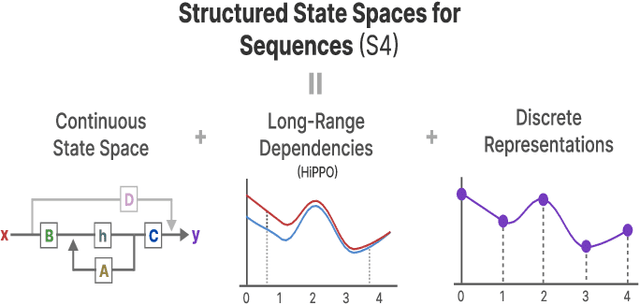
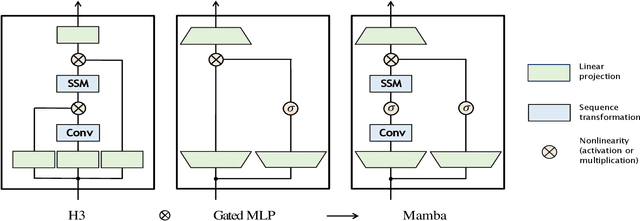
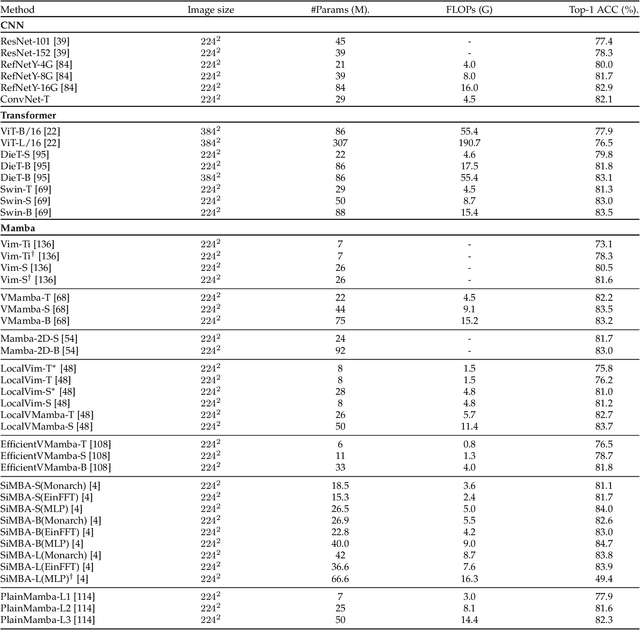
State Space Model (SSM) is a mathematical model used to describe and analyze the behavior of dynamic systems. This model has witnessed numerous applications in several fields, including control theory, signal processing, economics and machine learning. In the field of deep learning, state space models are used to process sequence data, such as time series analysis, natural language processing (NLP) and video understanding. By mapping sequence data to state space, long-term dependencies in the data can be better captured. In particular, modern SSMs have shown strong representational capabilities in NLP, especially in long sequence modeling, while maintaining linear time complexity. Notably, based on the latest state-space models, Mamba merges time-varying parameters into SSMs and formulates a hardware-aware algorithm for efficient training and inference. Given its impressive efficiency and strong long-range dependency modeling capability, Mamba is expected to become a new AI architecture that may outperform Transformer. Recently, a number of works have attempted to study the potential of Mamba in various fields, such as general vision, multi-modal, medical image analysis and remote sensing image analysis, by extending Mamba from natural language domain to visual domain. To fully understand Mamba in the visual domain, we conduct a comprehensive survey and present a taxonomy study. This survey focuses on Mamba's application to a variety of visual tasks and data types, and discusses its predecessors, recent advances and far-reaching impact on a wide range of domains. Since Mamba is now on an upward trend, please actively notice us if you have new findings, and new progress on Mamba will be included in this survey in a timely manner and updated on the Mamba project at https://github.com/lx6c78/Vision-Mamba-A-Comprehensive-Survey-and-Taxonomy.
Joint ADS-B in 5G for Hierarchical Aerial Networks: Performance Analysis and Optimization
Apr 29, 2024Unmanned aerial vehicles (UAVs) are widely applied in multiple fields, which emphasizes the challenge of obtaining UAV flight information to ensure the airspace safety. UAVs equipped with automatic dependent surveillance-broadcast (ADS-B) devices are capable of sending flight information to nearby aircrafts and ground stations (GSs). However, the saturation of limited frequency bands of ADS-B leads to interferences among UAVs and impairs the monitoring performance of GS to civil planes. To address this issue, the integration of the 5th generation mobile communication technology (5G) with ADS-B is proposed for UAV operations in this paper. Specifically, a hierarchical structure is proposed, in which the high-altitude central UAV is equipped with ADS-B and the low-altitude central UAV utilizes 5G modules to transmit flight information. Meanwhile, based on the mobile edge computing technique, the flight information of sub-UAVs is offloaded to the central UAV for further processing, and then transmitted to GS. We present the deterministic model and stochastic geometry based model to build the air-to-ground channel and air-to-air channel, respectively. The effectiveness of the proposed monitoring system is verified via simulations and experiments. This research contributes to improving the airspace safety and advancing the air traffic flow management.
DIG3D: Marrying Gaussian Splatting with Deformable Transformer for Single Image 3D Reconstruction
Apr 25, 2024


In this paper, we study the problem of 3D reconstruction from a single-view RGB image and propose a novel approach called DIG3D for 3D object reconstruction and novel view synthesis. Our method utilizes an encoder-decoder framework which generates 3D Gaussians in decoder with the guidance of depth-aware image features from encoder. In particular, we introduce the use of deformable transformer, allowing efficient and effective decoding through 3D reference point and multi-layer refinement adaptations. By harnessing the benefits of 3D Gaussians, our approach offers an efficient and accurate solution for 3D reconstruction from single-view images. We evaluate our method on the ShapeNet SRN dataset, getting PSNR of 24.21 and 24.98 in car and chair dataset, respectively. The result outperforming the recent method by around 2.25%, demonstrating the effectiveness of our method in achieving superior results.
Multi-fingered Robotic Hand Grasping in Cluttered Environments through Hand-object Contact Semantic Mapping
Apr 12, 2024The integration of optimization method and generative models has significantly advanced dexterous manipulation techniques for five-fingered hand grasping. Yet, the application of these techniques in cluttered environments is a relatively unexplored area. To address this research gap, we have developed a novel method for generating five-fingered hand grasp samples in cluttered settings. This method emphasizes simulated grasp quality and the nuanced interaction between the hand and surrounding objects. A key aspect of our approach is our data generation method, capable of estimating contact spatial and semantic representations and affordance grasps based on object affordance information. Furthermore, our Contact Semantic Conditional Variational Autoencoder (CoSe-CVAE) network is adept at creating comprehensive contact maps from point clouds, incorporating both spatial and semantic data. We introduce a unique grasp detection technique that efficiently formulates mechanical hand grasp poses from these maps. Additionally, our evaluation model is designed to assess grasp quality and collision probability, significantly improving the practicality of five-fingered hand grasping in complex scenarios. Our data generation method outperforms previous datasets in grasp diversity, scene diversity, modality diversity. Our grasp generation method has demonstrated remarkable success, outperforming established baselines with 81.0% average success rate in real-world single-object grasping and 75.3% success rate in multi-object grasping. The dataset and supplementary materials can be found at https://sites.google.com/view/ffh-clutteredgrasping, and we will release the code upon publication.