 Add to Chrome
 Add to Firefox
 Add to Edge
NTIRE 2026 The 3rd Restore Any Image Model (RAIM) Challenge: Professional Image Quality Assessment (Track 1)
Apr 14, 2026
In this paper, we present an overview of the NTIRE 2026 challenge on the 3rd Restore Any Image Model in the Wild, specifically focusing on Track 1: Professional Image Quality Assessment. Conventional Image Quality Assessment (IQA) typically relies on scalar scores. By compressing complex visual characteristics into a single number, these methods fundamentally struggle to distinguish subtle differences among uniformly high-quality images. Furthermore, they fail to articulate why one image is superior, lacking the reasoning capabilities required to provide guidance for vision tasks. To bridge this gap, recent advancements in Multimodal Large Language Models (MLLMs) offer a promising paradigm. Inspired by this potential, our challenge establishes a novel benchmark exploring the ability of MLLMs to mimic human expert cognition in evaluating high-quality image pairs. Participants were tasked with overcoming critical bottlenecks in professional scenarios, centering on two primary objectives: (1) Comparative Quality Selection: reliably identifying the visually superior image within a high-quality pair; and (2) Interpretative Reasoning: generating grounded, expert-level explanations that detail the rationale behind the selection. In total, the challenge attracted nearly 200 registrations and over 2,500 submissions. The top-performing methods significantly advanced the state of the art in professional IQA. The challenge dataset is available at https://github.com/narthchin/RAIM-PIQA, and the official homepage is accessible at https://www.codabench.org/competitions/12789/.

It Takes Two: A Duet of Periodicity and Directionality for Burst Flicker Removal
Mar 24, 2026Flicker artifacts, arising from unstable illumination and row-wise exposure inconsistencies, pose a significant challenge in short-exposure photography, severely degrading image quality. Unlike typical artifacts, e.g., noise and low-light, flicker is a structured degradation with specific spatial-temporal patterns, which are not accounted for in current generic restoration frameworks, leading to suboptimal flicker suppression and ghosting artifacts. In this work, we reveal that flicker artifacts exhibit two intrinsic characteristics, periodicity and directionality, and propose Flickerformer, a transformer-based architecture that effectively removes flicker without introducing ghosting. Specifically, Flickerformer comprises three key components: a phase-based fusion module (PFM), an autocorrelation feed-forward network (AFFN), and a wavelet-based directional attention module (WDAM). Based on the periodicity, PFM performs inter-frame phase correlation to adaptively aggregate burst features, while AFFN exploits intra-frame structural regularities through autocorrelation, jointly enhancing the network's ability to perceive spatially recurring patterns. Moreover, motivated by the directionality of flicker artifacts, WDAM leverages high-frequency variations in the wavelet domain to guide the restoration of low-frequency dark regions, yielding precise localization of flicker artifacts. Extensive experiments demonstrate that Flickerformer outperforms state-of-the-art approaches in both quantitative metrics and visual quality. The source code is available at https://github.com/qulishen/Flickerformer.
Knob: A Physics-Inspired Gating Interface for Interpretable and Controllable Neural Dynamics
Feb 26, 2026Existing neural network calibration methods often treat calibration as a static, post-hoc optimization task. However, this neglects the dynamic and temporal nature of real-world inference. Moreover, existing methods do not provide an intuitive interface enabling human operators to dynamically adjust model behavior under shifting conditions. In this work, we propose Knob, a framework that connects deep learning with classical control theory by mapping neural gating dynamics to a second-order mechanical system. By establishing correspondences between physical parameters -- damping ratio ($ζ$) and natural frequency ($ω_n$) -- and neural gating, we create a tunable "safety valve". The core mechanism employs a logit-level convex fusion, functioning as an input-adaptive temperature scaling. It tends to reduce model confidence particularly when model branches produce conflicting predictions. Furthermore, by imposing second-order dynamics (Knob-ODE), we enable a \textit{dual-mode} inference: standard i.i.d. processing for static tasks, and state-preserving processing for continuous streams. Our framework allows operators to tune "stability" and "sensitivity" through familiar physical analogues. This paper presents an exploratory architectural interface; we focus on demonstrating the concept and validating its control-theoretic properties rather than claiming state-of-the-art calibration performance. Experiments on CIFAR-10-C validate the calibration mechanism and demonstrate that, in Continuous Mode, the gate responses are consistent with standard second-order control signatures (step settling and low-pass attenuation), paving the way for predictable human-in-the-loop tuning.
Noise-Aware Quantum Architecture Search Based on NSGA-II Algorithm
Jan 16, 2026Quantum architecture search (QAS) has emerged to automate the design of high-performance quantum circuits under specific tasks and hardware constraints. We propose a noise-aware quantum architecture search (NA-QAS) framework based on variational quantum circuit design. By incorporating a noise model into the training of parameterized quantum circuits (PQCs) , the proposed framework identifies the noise-robust architectures. We introduce a hybrid Hamiltonian $\varepsilon$ -greedy strategy to optimize evaluation costs and circumvent local optima. Furthermore, an enhanced variable-depth NSGA-II algorithm is employed to navigate the vast search space, enabling an automated trade-off between architectural expressibility and quantum hardware overhead. The effectiveness of the framework is validated through binary classification and iris multi-classification tasks under a noisy condition. Compared to existing approaches, our framework can search for quantum architectures with superior performance and greater resource efficiency under a noisy condition.
Lethe: Layer- and Time-Adaptive KV Cache Pruning for Reasoning-Intensive LLM Serving
Nov 12, 2025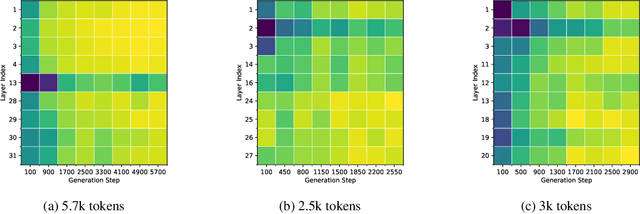
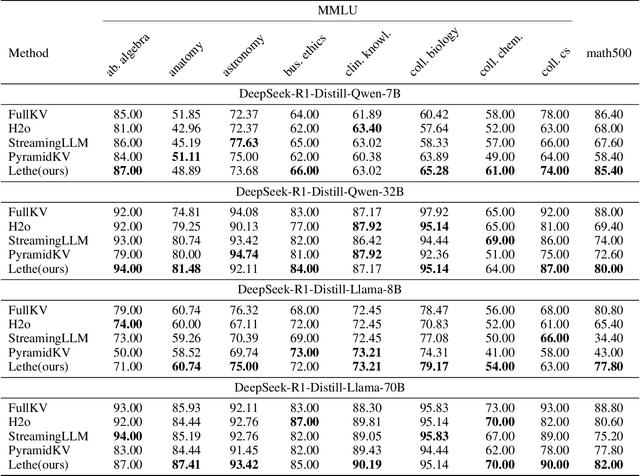
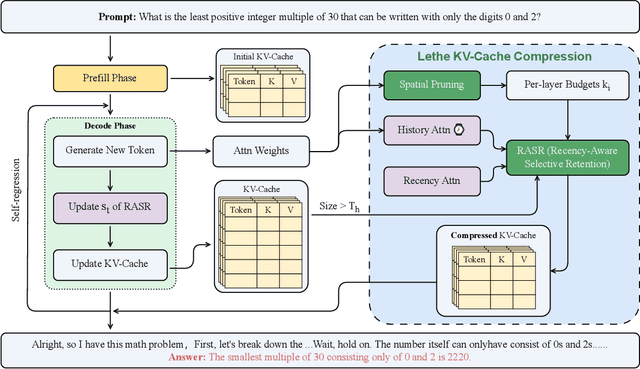
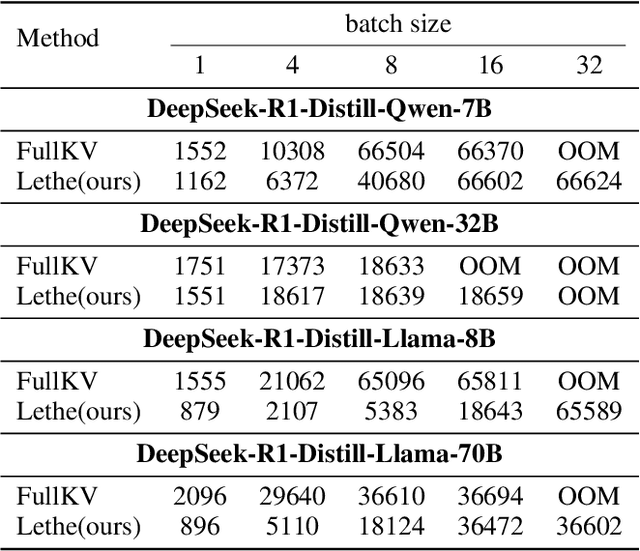
Generative reasoning with large language models (LLMs) often involves long decoding sequences, leading to substantial memory and latency overheads from accumulating key-value (KV) caches. While existing KV compression methods primarily focus on reducing prefill memory from long input sequences, they fall short in addressing the dynamic and layer-sensitive nature of long-form generation, which is central to reasoning tasks. We propose Lethe, a dynamic KV cache management framework that introduces adaptivity along both the spatial and temporal dimensions of decoding. Along the spatial dimension, Lethe performs layerwise sparsity-aware allocation, assigning token pruning budgets to each transformer layer based on estimated attention redundancy. Along the temporal dimension, Lethe conducts multi-round token pruning during generation, driven by a Recency-Aware Selective Retention} (RASR) mechanism. RASR extends traditional recency-based heuristics by also considering token relevance derived from evolving attention patterns, enabling informed decisions about which tokens to retain or evict. Empirical results demonstrate that Lethe achieves a favorable balance between efficiency and generation quality across diverse models and tasks, increases throughput by up to 2.56x.
Everywhere Attack: Attacking Locally and Globally to Boost Targeted Transferability
Jan 01, 2025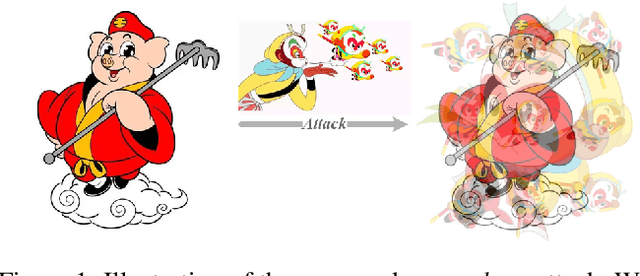
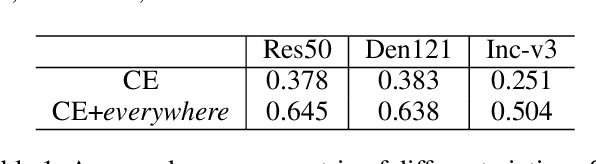
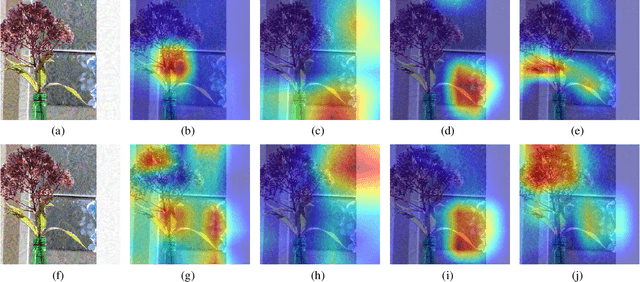
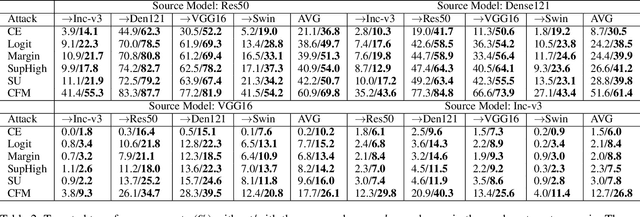
Adversarial examples' (AE) transferability refers to the phenomenon that AEs crafted with one surrogate model can also fool other models. Notwithstanding remarkable progress in untargeted transferability, its targeted counterpart remains challenging. This paper proposes an everywhere scheme to boost targeted transferability. Our idea is to attack a victim image both globally and locally. We aim to optimize 'an army of targets' in every local image region instead of the previous works that optimize a high-confidence target in the image. Specifically, we split a victim image into non-overlap blocks and jointly mount a targeted attack on each block. Such a strategy mitigates transfer failures caused by attention inconsistency between surrogate and victim models and thus results in stronger transferability. Our approach is method-agnostic, which means it can be easily combined with existing transferable attacks for even higher transferability. Extensive experiments on ImageNet demonstrate that the proposed approach universally improves the state-of-the-art targeted attacks by a clear margin, e.g., the transferability of the widely adopted Logit attack can be improved by 28.8%-300%.We also evaluate the crafted AEs on a real-world platform: Google Cloud Vision. Results further support the superiority of the proposed method.
Two Heads Are Better Than One: Averaging along Fine-Tuning to Improve Targeted Transferability
Dec 30, 2024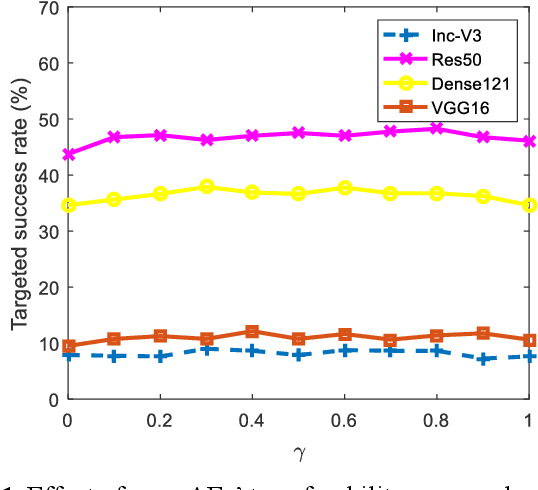


With much longer optimization time than that of untargeted attacks notwithstanding, the transferability of targeted attacks is still far from satisfactory. Recent studies reveal that fine-tuning an existing adversarial example (AE) in feature space can efficiently boost its targeted transferability. However, existing fine-tuning schemes only utilize the endpoint and ignore the valuable information in the fine-tuning trajectory. Noting that the vanilla fine-tuning trajectory tends to oscillate around the periphery of a flat region of the loss surface, we propose averaging over the fine-tuning trajectory to pull the crafted AE towards a more centered region. We compare the proposed method with existing fine-tuning schemes by integrating them with state-of-the-art targeted attacks in various attacking scenarios. Experimental results uphold the superiority of the proposed method in boosting targeted transferability. The code is available at github.com/zengh5/Avg_FT.
MetaTrading: An Immersion-Aware Model Trading Framework for Vehicular Metaverse Services
Oct 25, 2024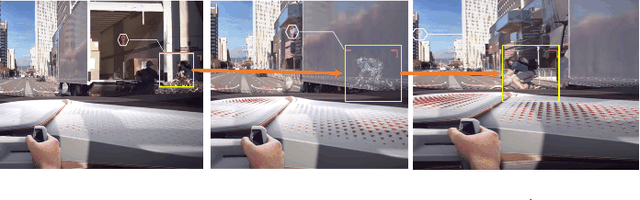

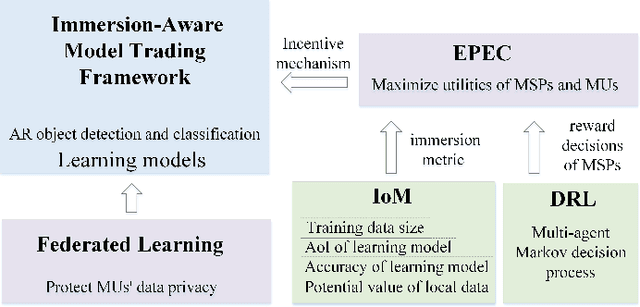

Updates of extensive Internet of Things (IoT) data are critical to the immersion of vehicular metaverse services. However, providing high-quality and sustainable data in unstable and resource-constrained vehicular networks remains a significant challenge. To address this problem, we put forth a novel immersion-aware model trading framework that incentivizes metaverse users (MUs) to contribute learning models trained by their latest local data for augmented reality (AR) services in the vehicular metaverse, while preserving their privacy through federated learning. To comprehensively evaluate the contribution of locally trained learning models provided by MUs to AR services, we design a new immersion metric that captures service immersion by considering the freshness and accuracy of learning models, as well as the amount and potential value of raw data used for training. We model the trading interactions between metaverse service providers (MSPs) and MUs as an equilibrium problem with equilibrium constraints (EPEC) to analyze and balance their costs and gains. Moreover, considering dynamic network conditions and privacy concerns, we formulate the reward decisions of MSPs as a multi-agent Markov decision process. Then, a fully distributed dynamic reward method based on deep reinforcement learning is presented, which operates without any private information about MUs and other MSPs. Experimental results demonstrate that the proposed framework can effectively provide higher-value models for object detection and classification in AR services on real AR-related vehicle datasets compared to benchmark schemes.
NTIRE 2024 Restore Any Image Model in the Wild Challenge
May 16, 2024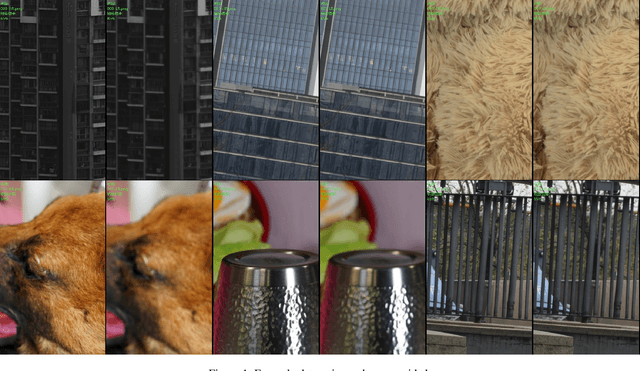
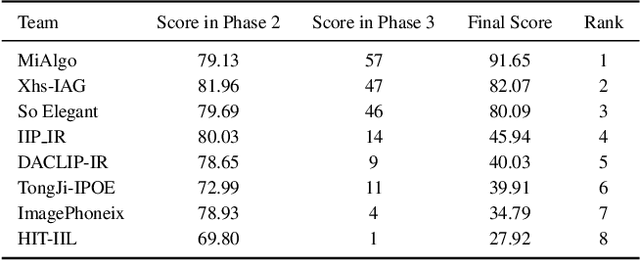

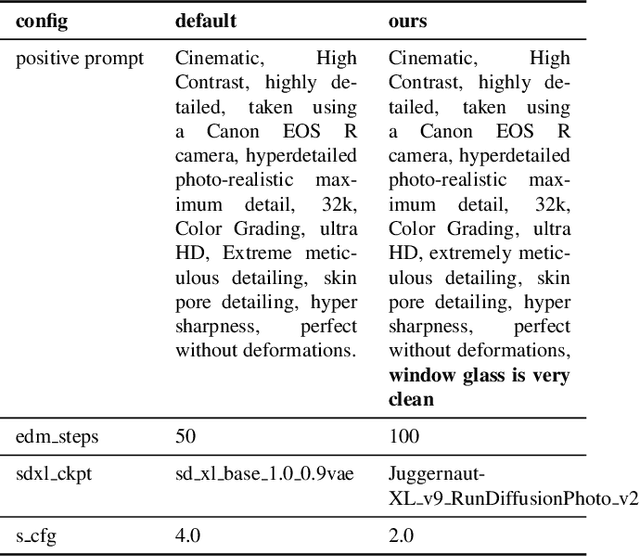
In this paper, we review the NTIRE 2024 challenge on Restore Any Image Model (RAIM) in the Wild. The RAIM challenge constructed a benchmark for image restoration in the wild, including real-world images with/without reference ground truth in various scenarios from real applications. The participants were required to restore the real-captured images from complex and unknown degradation, where generative perceptual quality and fidelity are desired in the restoration result. The challenge consisted of two tasks. Task one employed real referenced data pairs, where quantitative evaluation is available. Task two used unpaired images, and a comprehensive user study was conducted. The challenge attracted more than 200 registrations, where 39 of them submitted results with more than 400 submissions. Top-ranked methods improved the state-of-the-art restoration performance and obtained unanimous recognition from all 18 judges. The proposed datasets are available at https://drive.google.com/file/d/1DqbxUoiUqkAIkExu3jZAqoElr_nu1IXb/view?usp=sharing and the homepage of this challenge is at https://codalab.lisn.upsaclay.fr/competitions/17632.
Enhancing targeted transferability via feature space fine-tuning
Jan 13, 2024



Adversarial examples (AEs) have been extensively studied due to their potential for privacy protection and inspiring robust neural networks. Yet, making a targeted AE transferable across unknown models remains challenging. In this paper, to alleviate the overfitting dilemma common in an AE crafted by existing simple iterative attacks, we propose fine-tuning it in the feature space. Specifically, starting with an AE generated by a baseline attack, we encourage the features conducive to the target class and discourage the features to the original class in a middle layer of the source model. Extensive experiments demonstrate that only a few iterations of fine-tuning can boost existing attacks' targeted transferability nontrivially and universally. Our results also verify that the simple iterative attacks can yield comparable or even better transferability than the resource-intensive methods, which rest on training target-specific classifiers or generators with additional data. The code is available at: github.com/zengh5/TA_feature_FT.