 Add to Chrome
 Add to Firefox
 Add to Edge
Pre-VLA: Preemptive Runtime Verification for Reliable Vision-Language-Action and World-Model Rollouts
May 21, 2026
While large vision-language-action (VLA) models and generative world models (WM) have advanced long-horizon embodied intelligence, their practical deployment remains challenged by uncertainty in learning-based action generation. Low-quality actions may cause physical failures during execution or lead to misleading world-model rollouts with redundant rendering costs. To address this issue, we propose Pre-VLA, a unified runtime verification architecture that performs preemptive action validity assessment before physical execution or world-model imagination. Pre-VLA leverages an efficient multimodal backbone with modality-aware pooling and a lightweight dual-branch head to predict both safety confidence and critic-derived advantage scores for candidate action chunks. To handle severe class imbalance and unstable boundary decisions, we train Pre-VLA with a multi-task objective combining Focal classification, advantage regression, and soft-threshold calibration. During deployment, a dual-mode preemptive resampling scheduler filters low-quality actions and triggers adaptive resampling under a limited computation budget. Experiments on the LIBERO benchmark show that Pre-VLA improves the average closed-loop success rate across four suites from 30.79\% to 37.62\% over RynnVLA-002, reduces task execution steps, achieves 183.9 ms average forward verification time per action chunk, and mitigates error accumulation in world-model rollouts.

D-VLA: A High-Concurrency Distributed Asynchronous Reinforcement Learning Framework for Vision-Language-Action Models
May 14, 2026The rapid evolution of Embodied AI has enabled Vision-Language-Action (VLA) models to excel in multimodal perception and task execution. However, applying Reinforcement Learning (RL) to these massive models in large-scale distributed environments faces severe systemic bottlenecks, primarily due to the resource conflict between high-fidelity physical simulation and the intensive VRAM/bandwidth demands of deep learning. This conflict often leaves overall throughput constrained by execution-phase inefficiencies. To address these challenges, we propose D-VLA, a high-concurrency, low-latency distributed RL framework for large-scale embodied foundation models. D-VLA introduces "Plane Decoupling," physically isolating high-frequency training data from low-frequency weight control to eliminate interference between simulation and optimization. We further design a four-thread asynchronous "Swimlane" pipeline, enabling full parallel overlap of sampling, inference, gradient computation, and parameter distribution. Additionally, a dual-pool VRAM management model and topology-aware replication resolve memory fragmentation and optimize communication efficiency. Experiments on benchmarks like LIBERO show that D-VLA significantly outperforms mainstream RL frameworks in throughput and sampling efficiency for billion-parameter VLA models. In trillion-parameter scalability tests, our framework maintains exceptional stability and linear speedup, providing a robust system for high-performance general-purpose embodied agents.
JoyAI-RA 0.1: A Foundation Model for Robotic Autonomy
Apr 22, 2026Robotic autonomy in open-world environments is fundamentally limited by insufficient data diversity and poor cross-embodiment generalization. Existing robotic datasets are often limited in scale and task coverage, while relatively large differences across robot embodiments impede effective behavior knowledge transfer. To address these challenges, we propose JoyAI-RA, a vision-language-action (VLA) embodied foundation model tailored for generalizable robotic manipulation. JoyAI-RA presents a multi-source multi-level pretraining framework that integrates web data, large-scale egocentric human manipulation videos, simulation-generated trajectories, and real-robot data. Through training on heterogeneous multi-source data with explicit action-space unification, JoyAI-RA effectively bridges embodiment gaps, particularly between human manipulation and robotic control, thereby enhancing cross-embodiment behavior learning. JoyAI-RA outperforms state-of-the-art methods in both simulation and real-world benchmarks, especially on diverse tasks with generalization demands.
JoyAI-LLM Flash: Advancing Mid-Scale LLMs with Token Efficiency
Apr 03, 2026We introduce JoyAI-LLM Flash, an efficient Mixture-of-Experts (MoE) language model designed to redefine the trade-off between strong performance and token efficiency in the sub-50B parameter regime. JoyAI-LLM Flash is pretrained on a massive corpus of 20 trillion tokens and further optimized through a rigorous post-training pipeline, including supervised fine-tuning (SFT), Direct Preference Optimization (DPO), and large-scale reinforcement learning (RL) across diverse environments. To improve token efficiency, JoyAI-LLM Flash strategically balances \emph{thinking} and \emph{non-thinking} cognitive modes and introduces FiberPO, a novel RL algorithm inspired by fibration theory that decomposes trust-region maintenance into global and local components, providing unified multi-scale stability control for LLM policy optimization. To enhance architectural sparsity, the model comprises 48B total parameters while activating only 2.7B parameters per forward pass, achieving a substantially higher sparsity ratio than contemporary industry leading models of comparable scale. To further improve inference throughput, we adopt a joint training-inference co-design that incorporates dense Multi-Token Prediction (MTP) and Quantization-Aware Training (QAT). We release the checkpoints for both JoyAI-LLM-48B-A3B Base and its post-trained variants on Hugging Face to support the open-source community.
Thousand-GPU Large-Scale Training and Optimization Recipe for AI-Native Cloud Embodied Intelligence Infrastructure
Mar 11, 2026Embodied intelligence is a key step towards Artificial General Intelligence (AGI), yet its development faces multiple challenges including data, frameworks, infrastructure, and evaluation systems. To address these issues, we have, for the first time in the industry, launched a cloud-based, thousand-GPU distributed training platform for embodied intelligence, built upon the widely adopted LeRobot framework, and have systematically overcome bottlenecks across the entire pipeline. At the data layer, we have restructured the data pipeline to optimize the flow of embodied training data. In terms of training, for the GR00T-N1.5 model, utilizing thousand-GPU clusters and data at the scale of hundreds of millions, the single-round training time has been reduced from 15 hours to just 22 minutes, achieving a 40-fold speedup. At the model layer, by combining variable-length FlashAttention and Data Packing, we have moved from sample redundancy to sequence integration, resulting in a 188% speed increase; π-0.5 attention optimization has accelerated training by 165%; and FP8 quantization has delivered a 140% speedup. On the infrastructure side, relying on high-performance storage, a 3.2T RDMA network, and a Ray-driven elastic AI data lake, we have achieved deep synergy among data, storage, communication, and computation. We have also built an end-to-end evaluation system, creating a closed loop from training to simulation to assessment. This framework has already been fully validated on thousand-GPU clusters, laying a crucial technical foundation for the development and application of next-generation autonomous intelligent robots, and is expected to accelerate the arrival of the era of human-machine integration.
RL-VLA$^3$: Reinforcement Learning VLA Accelerating via Full Asynchronism
Feb 05, 2026In recent years, Vision-Language-Action (VLA) models have emerged as a crucial pathway towards general embodied intelligence, yet their training efficiency has become a key bottleneck. Although existing reinforcement learning (RL)-based training frameworks like RLinf can enhance model generalization, they still rely on synchronous execution, leading to severe resource underutilization and throughput limitations during environment interaction, policy generation (rollout), and model update phases (actor). To overcome this challenge, this paper, for the first time, proposes and implements a fully-asynchronous policy training framework encompassing the entire pipeline from environment interaction, rollout generation, to actor policy updates. Systematically drawing inspiration from asynchronous optimization ideas in large model RL, our framework designs a multi-level decoupled architecture. This includes asynchronous parallelization of environment interaction and trajectory collection, streaming execution for policy generation, and decoupled scheduling for training updates. We validated the effectiveness of our method across diverse VLA models and environments. On the LIBERO benchmark, the framework achieves throughput improvements of up to 59.25\% compared to existing synchronous strategies. When deeply optimizing separation strategies, throughput can be increased by as much as 126.67\%. We verified the effectiveness of each asynchronous component via ablation studies. Scaling law validation across 8 to 256 GPUs demonstrates our method's excellent scalability under most conditions.
Ring-lite: Scalable Reasoning via C3PO-Stabilized Reinforcement Learning for LLMs
Jun 18, 2025We present Ring-lite, a Mixture-of-Experts (MoE)-based large language model optimized via reinforcement learning (RL) to achieve efficient and robust reasoning capabilities. Built upon the publicly available Ling-lite model, a 16.8 billion parameter model with 2.75 billion activated parameters, our approach matches the performance of state-of-the-art (SOTA) small-scale reasoning models on challenging benchmarks (e.g., AIME, LiveCodeBench, GPQA-Diamond) while activating only one-third of the parameters required by comparable models. To accomplish this, we introduce a joint training pipeline integrating distillation with RL, revealing undocumented challenges in MoE RL training. First, we identify optimization instability during RL training, and we propose Constrained Contextual Computation Policy Optimization(C3PO), a novel approach that enhances training stability and improves computational throughput via algorithm-system co-design methodology. Second, we empirically demonstrate that selecting distillation checkpoints based on entropy loss for RL training, rather than validation metrics, yields superior performance-efficiency trade-offs in subsequent RL training. Finally, we develop a two-stage training paradigm to harmonize multi-domain data integration, addressing domain conflicts that arise in training with mixed dataset. We will release the model, dataset, and code.
AI Agents Under Threat: A Survey of Key Security Challenges and Future Pathways
Jun 04, 2024
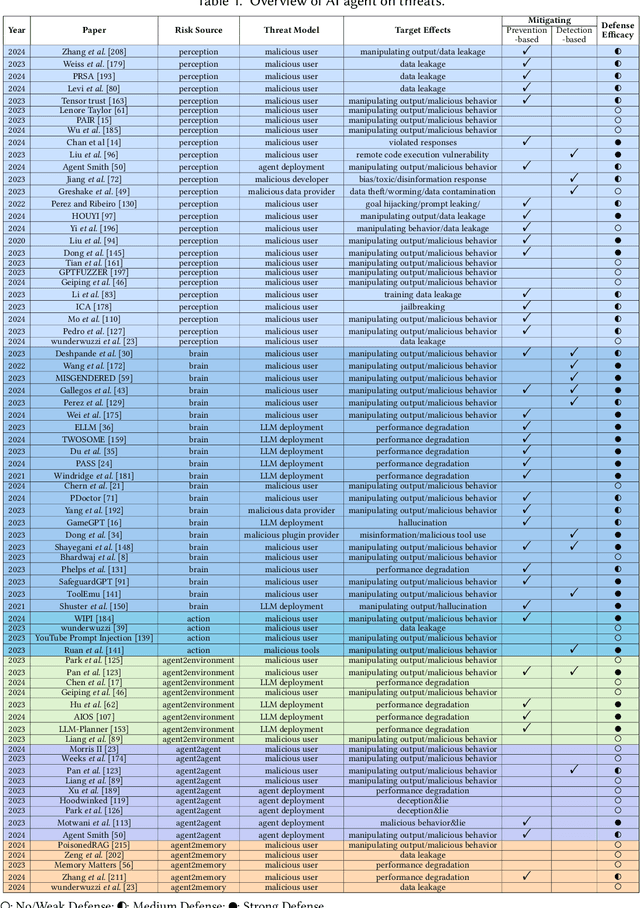
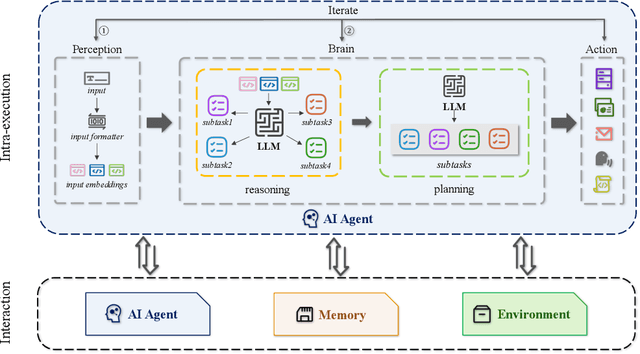
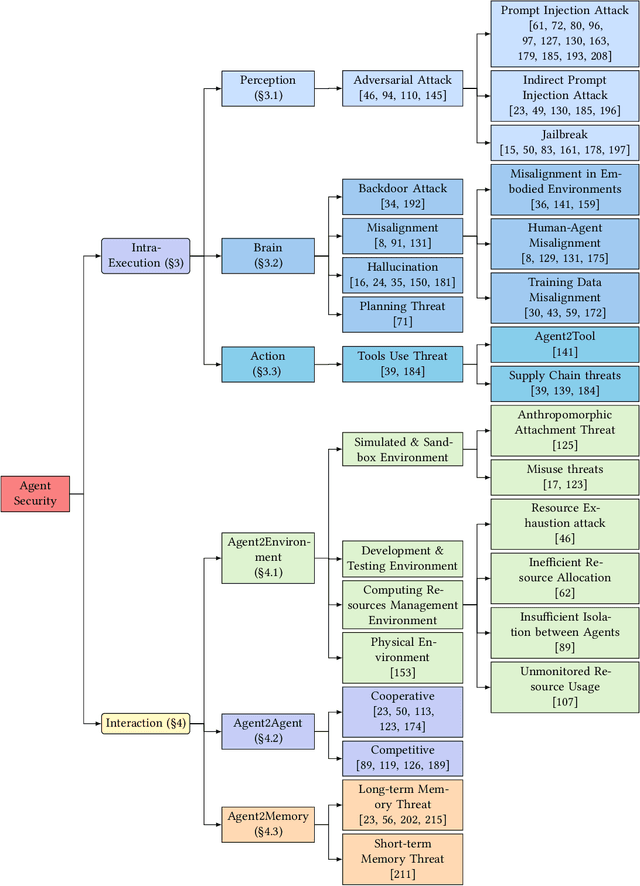
An Artificial Intelligence (AI) agent is a software entity that autonomously performs tasks or makes decisions based on pre-defined objectives and data inputs. AI agents, capable of perceiving user inputs, reasoning and planning tasks, and executing actions, have seen remarkable advancements in algorithm development and task performance. However, the security challenges they pose remain under-explored and unresolved. This survey delves into the emerging security threats faced by AI agents, categorizing them into four critical knowledge gaps: unpredictability of multi-step user inputs, complexity in internal executions, variability of operational environments, and interactions with untrusted external entities. By systematically reviewing these threats, this paper highlights both the progress made and the existing limitations in safeguarding AI agents. The insights provided aim to inspire further research into addressing the security threats associated with AI agents, thereby fostering the development of more robust and secure AI agent applications.
Hummer: Towards Limited Competitive Preference Dataset
May 21, 2024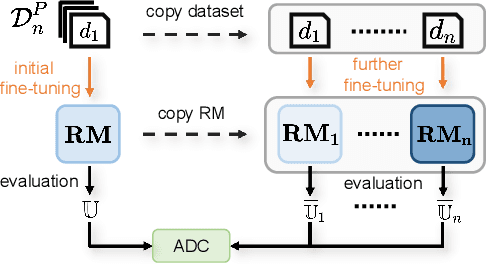

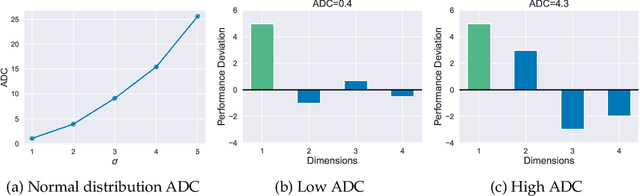
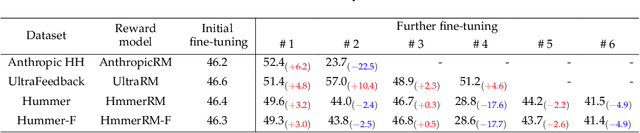
Preference datasets are essential for incorporating human preferences into pre-trained language models, playing a key role in the success of Reinforcement Learning from Human Feedback. However, these datasets often demonstrate conflicting alignment objectives, leading to increased vulnerability to jailbreak attacks and challenges in adapting downstream tasks to prioritize specific alignment objectives without negatively impacting others. In this work, we introduce a novel statistical metric, Alignment Dimension Conflict, to quantify the degree of conflict within preference datasets. We then present \texttt{Hummer} and its fine-grained variant, \texttt{Hummer-F}, as innovative pairwise preference datasets with reduced-conflict alignment objectives. \texttt{Hummer} is built based on UltraFeedback and is enhanced by AI feedback from GPT-4, marking as the first preference dataset aimed at reducing the competition between alignment objectives. Furthermore, we develop reward models, HummerRM and HummerRM-F, which employ a hybrid sampling approach to balance diverse alignment objectives effectively. This sampling method positions HummerRM as an ideal model for domain-specific further fine-tuning and reducing vulnerabilities to attacks.
Risk Taxonomy, Mitigation, and Assessment Benchmarks of Large Language Model Systems
Jan 11, 2024


Large language models (LLMs) have strong capabilities in solving diverse natural language processing tasks. However, the safety and security issues of LLM systems have become the major obstacle to their widespread application. Many studies have extensively investigated risks in LLM systems and developed the corresponding mitigation strategies. Leading-edge enterprises such as OpenAI, Google, Meta, and Anthropic have also made lots of efforts on responsible LLMs. Therefore, there is a growing need to organize the existing studies and establish comprehensive taxonomies for the community. In this paper, we delve into four essential modules of an LLM system, including an input module for receiving prompts, a language model trained on extensive corpora, a toolchain module for development and deployment, and an output module for exporting LLM-generated content. Based on this, we propose a comprehensive taxonomy, which systematically analyzes potential risks associated with each module of an LLM system and discusses the corresponding mitigation strategies. Furthermore, we review prevalent benchmarks, aiming to facilitate the risk assessment of LLM systems. We hope that this paper can help LLM participants embrace a systematic perspective to build their responsible LLM systems.