 Add to Chrome
 Add to Firefox
 Add to Edge
UltraVR: A Diagnostic Ultra-Resolution Image-VQA Benchmark for Evidence-Grounded Reasoning
Jun 04, 2026
Vision-language models (VLMs) excel on visual question answering and multimodal reasoning benchmarks. Yet their capability on ultra-resolution images - where critical evidence is tiny, subtle, spatially distant, or distributed - remains unclear. Existing evaluations largely report final-answer accuracy, offering limited insight into whether models acquire and integrate the necessary visual evidence. We introduce UltraVR, a diagnostic benchmark for evidence-grounded visual reasoning over ultra-resolution images. UltraVR spans four high-value scenarios: CCTV surveillance, remote sensing (RS), whole-slide image (WSI) pathology, and industrial anomaly detection (AD). These domains pose complementary challenges: fine-grained object grounding in crowded CCTV scenes, long-range spatial comparison in RS, multi-scale evidence navigation in WSI, and subtle irregularity detection in repetitive industrial layouts. Beyond standard QA triples, each instance includes a structured ground-truth chain of thought with step-level questions, intermediate answers, and reasoning labels. These labels decompose reasoning into evidence grounding, local perception, quantification, evidence integration, and decision inference, enabling process-level diagnosis over black-box scoring. Using UltraVR, we evaluate frontier VLMs and show that current models remain far from reliable on ultra-resolution reasoning. Importantly, the structured annotations allow us to localize failures across the visual-to-decision pipeline: errors concentrate in evidence grounding and local perception, while downstream inference often recovers when intermediate visual facts are supplied. These findings demonstrate UltraVR as a diagnostic testbed for measuring not only whether VLMs answer correctly, but where their ultra-resolution reasoning process breaks.

JoyAI-RA 0.1: A Foundation Model for Robotic Autonomy
Apr 22, 2026Robotic autonomy in open-world environments is fundamentally limited by insufficient data diversity and poor cross-embodiment generalization. Existing robotic datasets are often limited in scale and task coverage, while relatively large differences across robot embodiments impede effective behavior knowledge transfer. To address these challenges, we propose JoyAI-RA, a vision-language-action (VLA) embodied foundation model tailored for generalizable robotic manipulation. JoyAI-RA presents a multi-source multi-level pretraining framework that integrates web data, large-scale egocentric human manipulation videos, simulation-generated trajectories, and real-robot data. Through training on heterogeneous multi-source data with explicit action-space unification, JoyAI-RA effectively bridges embodiment gaps, particularly between human manipulation and robotic control, thereby enhancing cross-embodiment behavior learning. JoyAI-RA outperforms state-of-the-art methods in both simulation and real-world benchmarks, especially on diverse tasks with generalization demands.
LoViF 2026 The First Challenge on Weather Removal in Videos
Apr 14, 2026This paper presents a review of the LoViF 2026 Challenge on Weather Removal in Videos. The challenge encourages the development of methods for restoring clean videos from inputs degraded by adverse weather conditions such as rain and snow, with an emphasis on achieving visually plausible and temporally consistent results while preserving scene structure and motion dynamics. To support this task, we introduce a new short-form WRV dataset tailored for video weather removal. It consists of 18 videos 1,216 synthesized frames paired with 1,216 real-world ground-truth frames at a resolution of 832 x 480, and is split into training, validation, and test sets with a ratio of 1:1:1. The goal of this challenge is to advance robust and realistic video restoration under real-world weather conditions, with evaluation protocols that jointly consider fidelity and perceptual quality. The challenge attracted 37 participants and received 5 valid final submissions with corresponding fact sheets, contributing to progress in weather removal for videos. The project is publicly available at https://www.codabench.org/competitions/13462/.
Thousand-GPU Large-Scale Training and Optimization Recipe for AI-Native Cloud Embodied Intelligence Infrastructure
Mar 11, 2026Embodied intelligence is a key step towards Artificial General Intelligence (AGI), yet its development faces multiple challenges including data, frameworks, infrastructure, and evaluation systems. To address these issues, we have, for the first time in the industry, launched a cloud-based, thousand-GPU distributed training platform for embodied intelligence, built upon the widely adopted LeRobot framework, and have systematically overcome bottlenecks across the entire pipeline. At the data layer, we have restructured the data pipeline to optimize the flow of embodied training data. In terms of training, for the GR00T-N1.5 model, utilizing thousand-GPU clusters and data at the scale of hundreds of millions, the single-round training time has been reduced from 15 hours to just 22 minutes, achieving a 40-fold speedup. At the model layer, by combining variable-length FlashAttention and Data Packing, we have moved from sample redundancy to sequence integration, resulting in a 188% speed increase; π-0.5 attention optimization has accelerated training by 165%; and FP8 quantization has delivered a 140% speedup. On the infrastructure side, relying on high-performance storage, a 3.2T RDMA network, and a Ray-driven elastic AI data lake, we have achieved deep synergy among data, storage, communication, and computation. We have also built an end-to-end evaluation system, creating a closed loop from training to simulation to assessment. This framework has already been fully validated on thousand-GPU clusters, laying a crucial technical foundation for the development and application of next-generation autonomous intelligent robots, and is expected to accelerate the arrival of the era of human-machine integration.
A Privacy by Design Framework for Large Language Model-Based Applications for Children
Feb 19, 2026Children are increasingly using technologies powered by Artificial Intelligence (AI). However, there are growing concerns about privacy risks, particularly for children. Although existing privacy regulations require companies and organizations to implement protections, doing so can be challenging in practice. To address this challenge, this article proposes a framework based on Privacy-by-Design (PbD), which guides designers and developers to take on a proactive and risk-averse approach to technology design. Our framework includes principles from several privacy regulations, such as the General Data Protection Regulation (GDPR) from the European Union, the Personal Information Protection and Electronic Documents Act (PIPEDA) from Canada, and the Children's Online Privacy Protection Act (COPPA) from the United States. We map these principles to various stages of applications that use Large Language Models (LLMs), including data collection, model training, operational monitoring, and ongoing validation. For each stage, we discuss the operational controls found in the recent academic literature to help AI service providers and developers reduce privacy risks while meeting legal standards. In addition, the framework includes design guidelines for children, drawing from the United Nations Convention on the Rights of the Child (UNCRC), the UK's Age-Appropriate Design Code (AADC), and recent academic research. To demonstrate how this framework can be applied in practice, we present a case study of an LLM-based educational tutor for children under 13. Through our analysis and the case study, we show that by using data protection strategies such as technical and organizational controls and making age-appropriate design decisions throughout the LLM life cycle, we can support the development of AI applications for children that provide privacy protections and comply with legal requirements.
RL-VLA$^3$: Reinforcement Learning VLA Accelerating via Full Asynchronism
Feb 05, 2026In recent years, Vision-Language-Action (VLA) models have emerged as a crucial pathway towards general embodied intelligence, yet their training efficiency has become a key bottleneck. Although existing reinforcement learning (RL)-based training frameworks like RLinf can enhance model generalization, they still rely on synchronous execution, leading to severe resource underutilization and throughput limitations during environment interaction, policy generation (rollout), and model update phases (actor). To overcome this challenge, this paper, for the first time, proposes and implements a fully-asynchronous policy training framework encompassing the entire pipeline from environment interaction, rollout generation, to actor policy updates. Systematically drawing inspiration from asynchronous optimization ideas in large model RL, our framework designs a multi-level decoupled architecture. This includes asynchronous parallelization of environment interaction and trajectory collection, streaming execution for policy generation, and decoupled scheduling for training updates. We validated the effectiveness of our method across diverse VLA models and environments. On the LIBERO benchmark, the framework achieves throughput improvements of up to 59.25\% compared to existing synchronous strategies. When deeply optimizing separation strategies, throughput can be increased by as much as 126.67\%. We verified the effectiveness of each asynchronous component via ablation studies. Scaling law validation across 8 to 256 GPUs demonstrates our method's excellent scalability under most conditions.
OSDEnhancer: Taming Real-World Space-Time Video Super-Resolution with One-Step Diffusion
Jan 28, 2026Diffusion models (DMs) have demonstrated exceptional success in video super-resolution (VSR), showcasing a powerful capacity for generating fine-grained details. However, their potential for space-time video super-resolution (STVSR), which necessitates not only recovering realistic visual content from low-resolution to high-resolution but also improving the frame rate with coherent temporal dynamics, remains largely underexplored. Moreover, existing STVSR methods predominantly address spatiotemporal upsampling under simplified degradation assumptions, which often struggle in real-world scenarios with complex unknown degradations. Such a high demand for reconstruction fidelity and temporal consistency makes the development of a robust STVSR framework particularly non-trivial. To address these challenges, we propose OSDEnhancer, a novel framework that, to the best of our knowledge, represents the first method to achieve real-world STVSR through an efficient one-step diffusion process. OSDEnhancer initializes essential spatiotemporal structures through a linear pre-interpolation strategy and pivots on training temporal refinement and spatial enhancement mixture of experts (TR-SE MoE), which allows distinct expert pathways to progressively learn robust, specialized representations for temporal coherence and spatial detail, further collaboratively reinforcing each other during inference. A bidirectional deformable variational autoencoder (VAE) decoder is further introduced to perform recurrent spatiotemporal aggregation and propagation, enhancing cross-frame reconstruction fidelity. Experiments demonstrate that the proposed method achieves state-of-the-art performance while maintaining superior generalization capability in real-world scenarios.
RLSLM: A Hybrid Reinforcement Learning Framework Aligning Rule-Based Social Locomotion Model with Human Social Norms
Nov 14, 2025Navigating human-populated environments without causing discomfort is a critical capability for socially-aware agents. While rule-based approaches offer interpretability through predefined psychological principles, they often lack generalizability and flexibility. Conversely, data-driven methods can learn complex behaviors from large-scale datasets, but are typically inefficient, opaque, and difficult to align with human intuitions. To bridge this gap, we propose RLSLM, a hybrid Reinforcement Learning framework that integrates a rule-based Social Locomotion Model, grounded in empirical behavioral experiments, into the reward function of a reinforcement learning framework. The social locomotion model generates an orientation-sensitive social comfort field that quantifies human comfort across space, enabling socially aligned navigation policies with minimal training. RLSLM then jointly optimizes mechanical energy and social comfort, allowing agents to avoid intrusions into personal or group space. A human-agent interaction experiment using an immersive VR-based setup demonstrates that RLSLM outperforms state-of-the-art rule-based models in user experience. Ablation and sensitivity analyses further show the model's significantly improved interpretability over conventional data-driven methods. This work presents a scalable, human-centered methodology that effectively integrates cognitive science and machine learning for real-world social navigation.
CRAG-MM: Multi-modal Multi-turn Comprehensive RAG Benchmark
Oct 30, 2025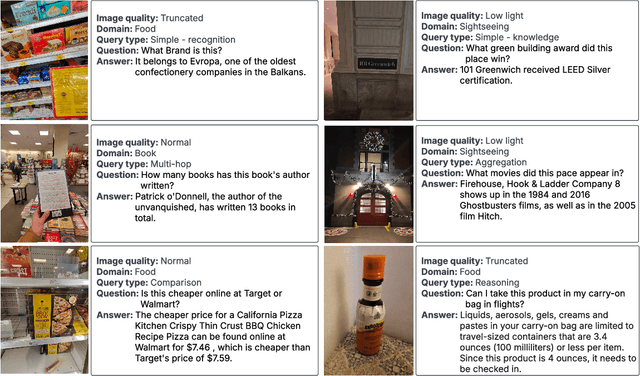
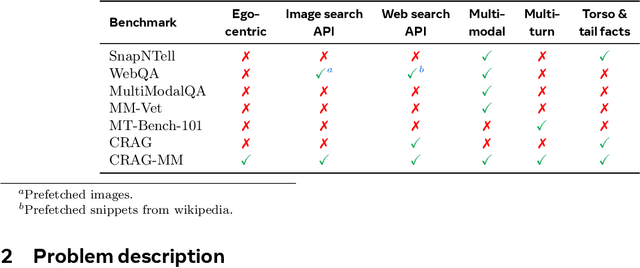
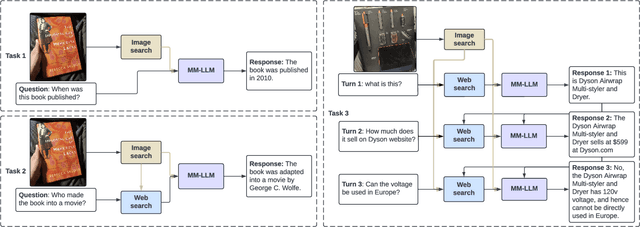
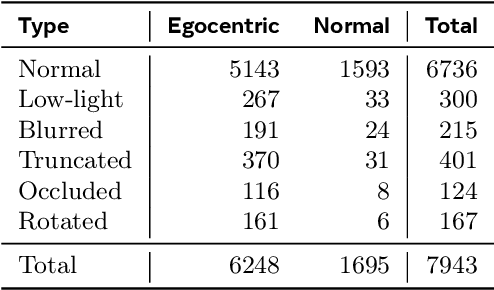
Wearable devices such as smart glasses are transforming the way people interact with their surroundings, enabling users to seek information regarding entities in their view. Multi-Modal Retrieval-Augmented Generation (MM-RAG) plays a key role in supporting such questions, yet there is still no comprehensive benchmark for this task, especially regarding wearables scenarios. To fill this gap, we present CRAG-MM -- a Comprehensive RAG benchmark for Multi-modal Multi-turn conversations. CRAG-MM contains a diverse set of 6.5K (image, question, answer) triplets and 2K visual-based multi-turn conversations across 13 domains, including 6.2K egocentric images designed to mimic captures from wearable devices. We carefully constructed the questions to reflect real-world scenarios and challenges, including five types of image-quality issues, six question types, varying entity popularity, differing information dynamism, and different conversation turns. We design three tasks: single-source augmentation, multi-source augmentation, and multi-turn conversations -- each paired with an associated retrieval corpus and APIs for both image-KG retrieval and webpage retrieval. Our evaluation shows that straightforward RAG approaches achieve only 32% and 43% truthfulness on CRAG-MM single- and multi-turn QA, respectively, whereas state-of-the-art industry solutions have similar quality (32%/45%), underscoring ample room for improvement. The benchmark has hosted KDD Cup 2025, attracting about 1K participants and 5K submissions, with winning solutions improving baseline performance by 28%, highlighting its early impact on advancing the field.
A Large-scale Benchmark on Geological Fault Delineation Models: Domain Shift, Training Dynamics, Generalizability, Evaluation and Inferential Behavior
May 13, 2025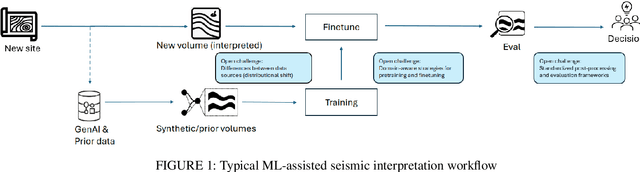
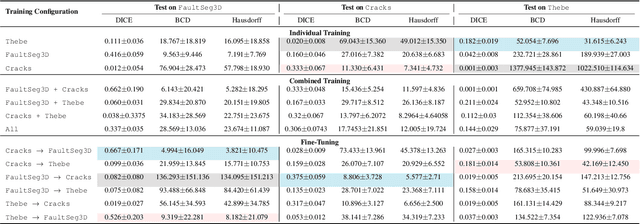
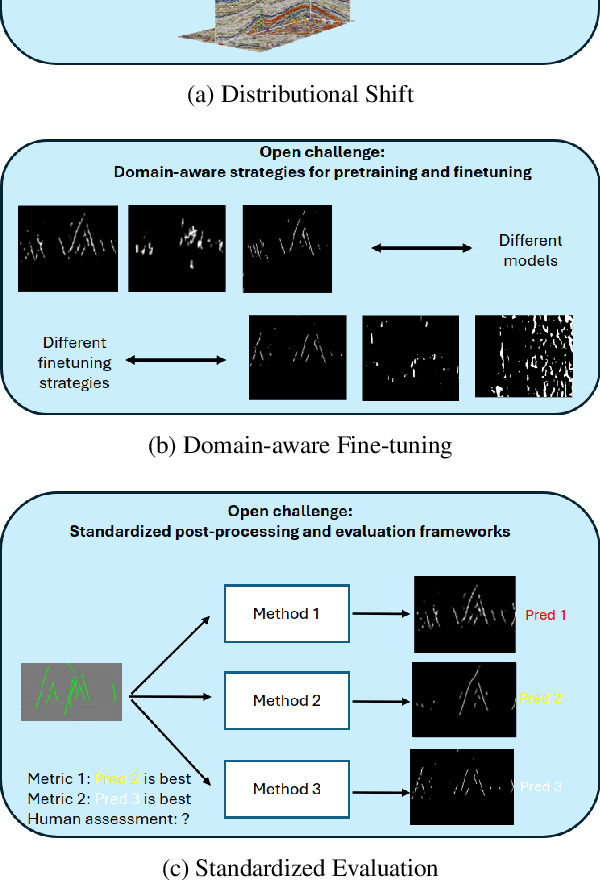
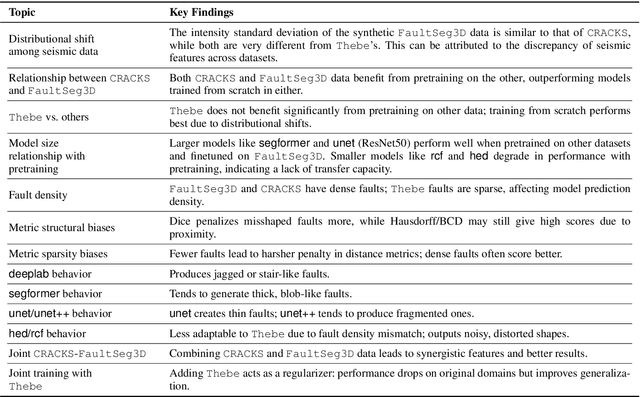
Machine learning has taken a critical role in seismic interpretation workflows, especially in fault delineation tasks. However, despite the recent proliferation of pretrained models and synthetic datasets, the field still lacks a systematic understanding of the generalizability limits of these models across seismic data representing a variety of geologic, acquisition and processing settings. Distributional shifts between different data sources, limitations in fine-tuning strategies and labeled data accessibility, and inconsistent evaluation protocols all represent major roadblocks in the deployment of reliable and robust models in real-world exploration settings. In this paper, we present the first large-scale benchmarking study explicitly designed to provide answers and guidelines for domain shift strategies in seismic interpretation. Our benchmark encompasses over $200$ models trained and evaluated on three heterogeneous datasets (synthetic and real data) including FaultSeg3D, CRACKS, and Thebe. We systematically assess pretraining, fine-tuning, and joint training strategies under varying degrees of domain shift. Our analysis highlights the fragility of current fine-tuning practices, the emergence of catastrophic forgetting, and the challenges of interpreting performance in a systematic manner. We establish a robust experimental baseline to provide insights into the tradeoffs inherent to current fault delineation workflows, and shed light on directions for developing more generalizable, interpretable and effective machine learning models for seismic interpretation. The insights and analyses reported provide a set of guidelines on the deployment of fault delineation models within seismic interpretation workflows.