 Add to Chrome
 Add to Firefox
 Add to Edge
Trajectory-Refined Distillation
Jun 07, 2026
On-policy distillation (OPD) has become a central post-training tool for large language models (LLMs), providing dense per-token teacher supervision along the student's own rollouts. In this work, we identify a common structural cause underlying OPD, which we call prefix failure. Under prefix failure, dense per-token supervision induces a bimodal teacher mixture and fragmented gradients that token-level loss truncation or reweighting fail to address. This observation motivates us to move beyond token-level loss interventions toward trajectory-level output corrections. We thus propose Trajectory-Refined Distillation (TRD), a trajectory-level correction method that revises the student's rollout under the teacher guidance while within on-policy support. By correcting problematic prefixes before distillation, TRD mitigates prefix failure at its source. Moreover, TRD improves the exploration by exposing the student to alternative valid derivations under teacher guidance, even when the original rolls are already correct. TRD can also be applied to on-policy self-distillation (OPSD), a parameter-sharing variant that uses the student model conditioned on privileged informations as the teacher. Across a wide range of benchmarks and base models at multiple scales, TRD consistently outperforms prior baselines, improving single-attempt accuracy and broadening reasoning coverage. Code is available at https://github.com/louieworth/trd

Hummer: Towards Limited Competitive Preference Dataset
May 21, 2024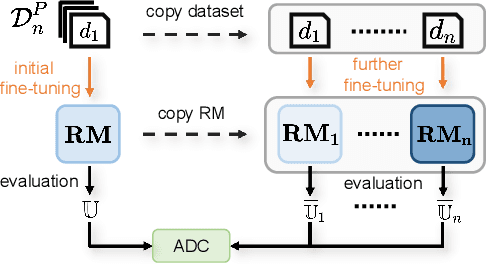

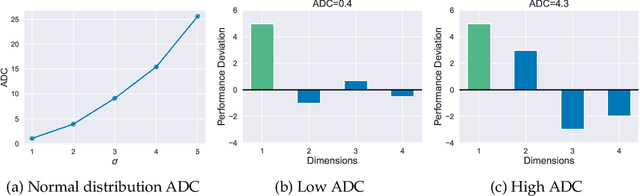
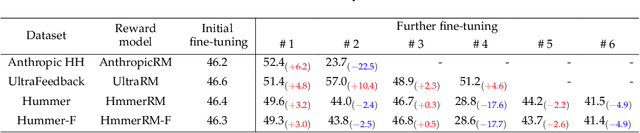
Preference datasets are essential for incorporating human preferences into pre-trained language models, playing a key role in the success of Reinforcement Learning from Human Feedback. However, these datasets often demonstrate conflicting alignment objectives, leading to increased vulnerability to jailbreak attacks and challenges in adapting downstream tasks to prioritize specific alignment objectives without negatively impacting others. In this work, we introduce a novel statistical metric, Alignment Dimension Conflict, to quantify the degree of conflict within preference datasets. We then present \texttt{Hummer} and its fine-grained variant, \texttt{Hummer-F}, as innovative pairwise preference datasets with reduced-conflict alignment objectives. \texttt{Hummer} is built based on UltraFeedback and is enhanced by AI feedback from GPT-4, marking as the first preference dataset aimed at reducing the competition between alignment objectives. Furthermore, we develop reward models, HummerRM and HummerRM-F, which employ a hybrid sampling approach to balance diverse alignment objectives effectively. This sampling method positions HummerRM as an ideal model for domain-specific further fine-tuning and reducing vulnerabilities to attacks.
A High-fidelity, Machine-learning Enhanced Queueing Network Simulation Model for Hospital Ultrasound Operations
Apr 12, 2021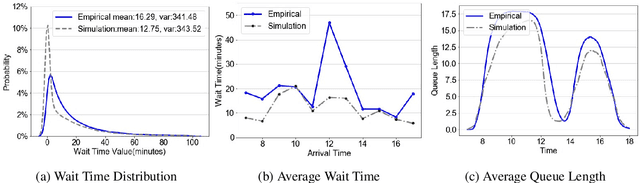
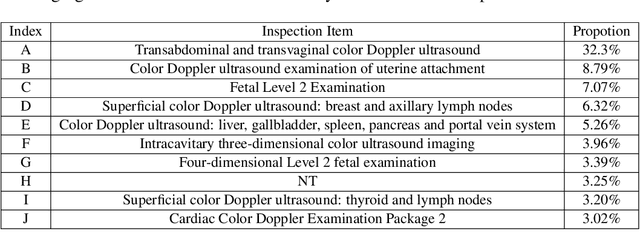
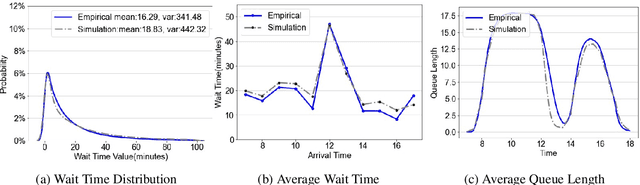
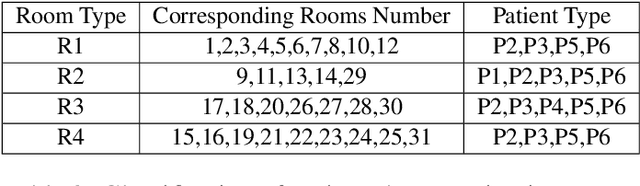
We collaborate with a large teaching hospital in Shenzhen, China and build a high-fidelity simulation model for its ultrasound center to predict key performance metrics, including the distributions of queue length, waiting time and sojourn time, with high accuracy. The key challenge to build an accurate simulation model is to understanding the complicated patient routing at the ultrasound center. To address the issue, we propose a novel two-level routing component to the queueing network model. We apply machine learning tools to calibrate the key components of the queueing model from data with enhanced accuracy.