 Add to Chrome
 Add to Firefox
 Add to Edge
Exploiting Multimodal Spatial-temporal Patterns for Video Object Tracking
Dec 20, 2024
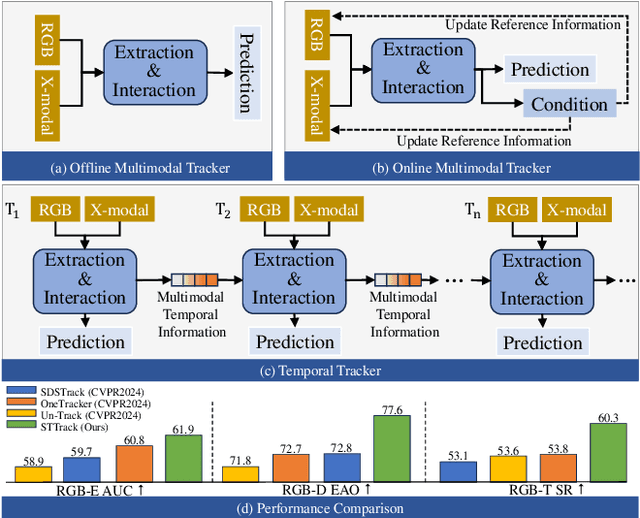
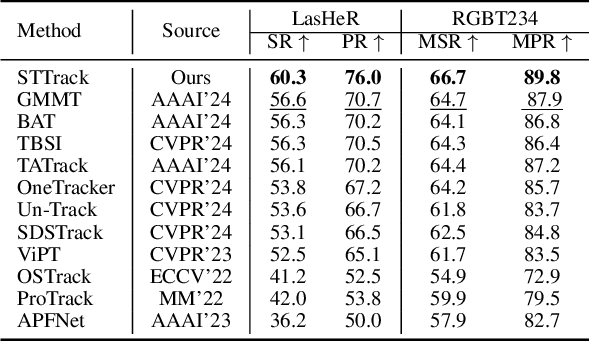
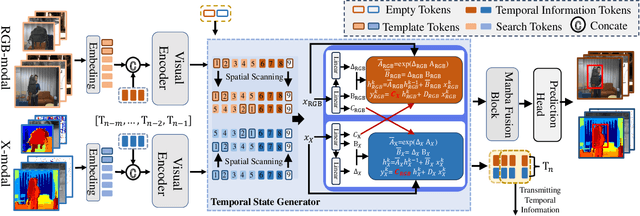
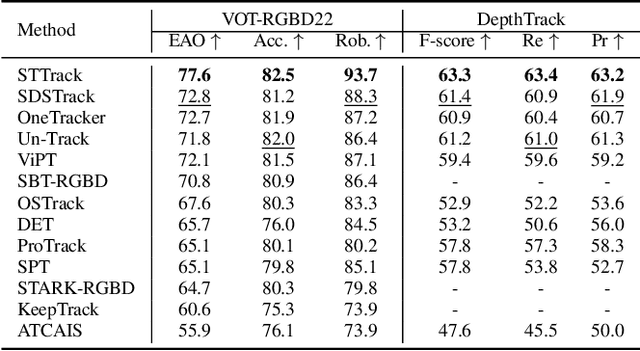
Multimodal tracking has garnered widespread attention as a result of its ability to effectively address the inherent limitations of traditional RGB tracking. However, existing multimodal trackers mainly focus on the fusion and enhancement of spatial features or merely leverage the sparse temporal relationships between video frames. These approaches do not fully exploit the temporal correlations in multimodal videos, making it difficult to capture the dynamic changes and motion information of targets in complex scenarios. To alleviate this problem, we propose a unified multimodal spatial-temporal tracking approach named STTrack. In contrast to previous paradigms that solely relied on updating reference information, we introduced a temporal state generator (TSG) that continuously generates a sequence of tokens containing multimodal temporal information. These temporal information tokens are used to guide the localization of the target in the next time state, establish long-range contextual relationships between video frames, and capture the temporal trajectory of the target. Furthermore, at the spatial level, we introduced the mamba fusion and background suppression interactive (BSI) modules. These modules establish a dual-stage mechanism for coordinating information interaction and fusion between modalities. Extensive comparisons on five benchmark datasets illustrate that STTrack achieves state-of-the-art performance across various multimodal tracking scenarios. Code is available at: https://github.com/NJU-PCALab/STTrack.

Efficient Self-Supervised Video Hashing with Selective State Spaces
Dec 19, 2024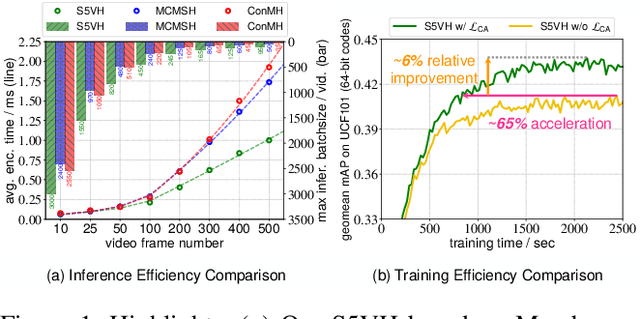


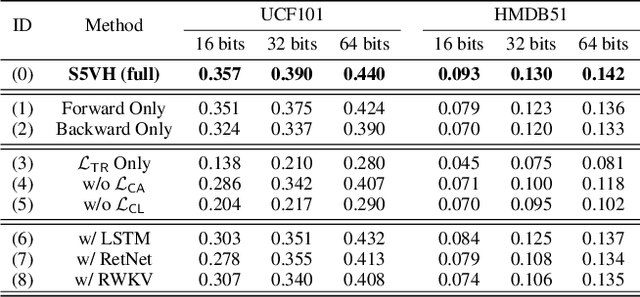
Self-supervised video hashing (SSVH) is a practical task in video indexing and retrieval. Although Transformers are predominant in SSVH for their impressive temporal modeling capabilities, they often suffer from computational and memory inefficiencies. Drawing inspiration from Mamba, an advanced state-space model, we explore its potential in SSVH to achieve a better balance between efficacy and efficiency. We introduce S5VH, a Mamba-based video hashing model with an improved self-supervised learning paradigm. Specifically, we design bidirectional Mamba layers for both the encoder and decoder, which are effective and efficient in capturing temporal relationships thanks to the data-dependent selective scanning mechanism with linear complexity. In our learning strategy, we transform global semantics in the feature space into semantically consistent and discriminative hash centers, followed by a center alignment loss as a global learning signal. Our self-local-global (SLG) paradigm significantly improves learning efficiency, leading to faster and better convergence. Extensive experiments demonstrate S5VH's improvements over state-of-the-art methods, superior transferability, and scalable advantages in inference efficiency. Code is available at https://github.com/gimpong/AAAI25-S5VH.
Pre-training a Density-Aware Pose Transformer for Robust LiDAR-based 3D Human Pose Estimation
Dec 18, 2024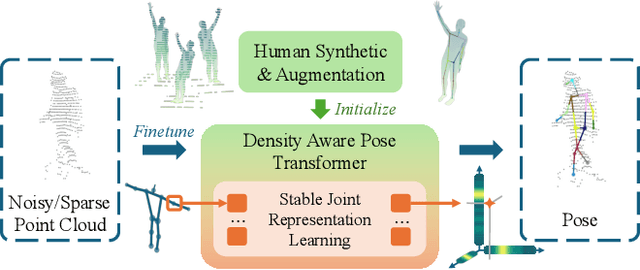

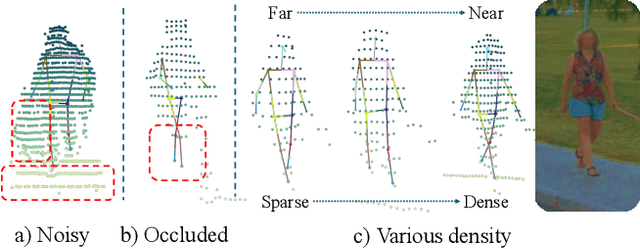
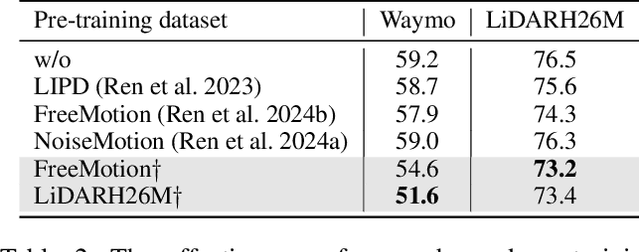
With the rapid development of autonomous driving, LiDAR-based 3D Human Pose Estimation (3D HPE) is becoming a research focus. However, due to the noise and sparsity of LiDAR-captured point clouds, robust human pose estimation remains challenging. Most of the existing methods use temporal information, multi-modal fusion, or SMPL optimization to correct biased results. In this work, we try to obtain sufficient information for 3D HPE only by modeling the intrinsic properties of low-quality point clouds. Hence, a simple yet powerful method is proposed, which provides insights both on modeling and augmentation of point clouds. Specifically, we first propose a concise and effective density-aware pose transformer (DAPT) to get stable keypoint representations. By using a set of joint anchors and a carefully designed exchange module, valid information is extracted from point clouds with different densities. Then 1D heatmaps are utilized to represent the precise locations of the keypoints. Secondly, a comprehensive LiDAR human synthesis and augmentation method is proposed to pre-train the model, enabling it to acquire a better human body prior. We increase the diversity of point clouds by randomly sampling human positions and orientations and by simulating occlusions through the addition of laser-level masks. Extensive experiments have been conducted on multiple datasets, including IMU-annotated LidarHuman26M, SLOPER4D, and manually annotated Waymo Open Dataset v2.0 (Waymo), HumanM3. Our method demonstrates SOTA performance in all scenarios. In particular, compared with LPFormer on Waymo, we reduce the average MPJPE by $10.0mm$. Compared with PRN on SLOPER4D, we notably reduce the average MPJPE by $20.7mm$.
Depth-Centric Dehazing and Depth-Estimation from Real-World Hazy Driving Video
Dec 16, 2024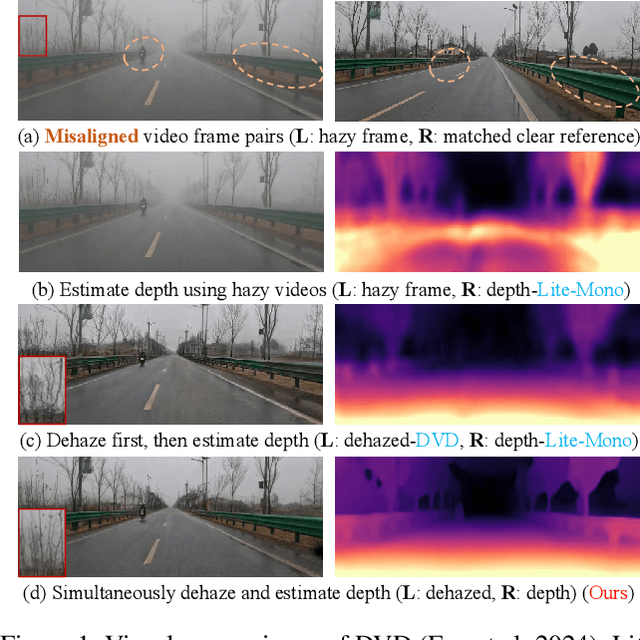
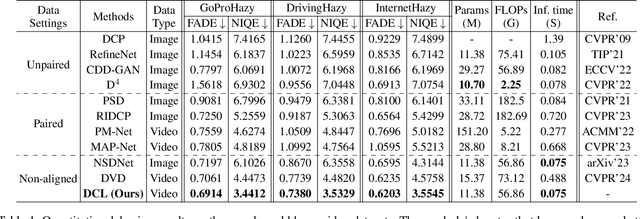
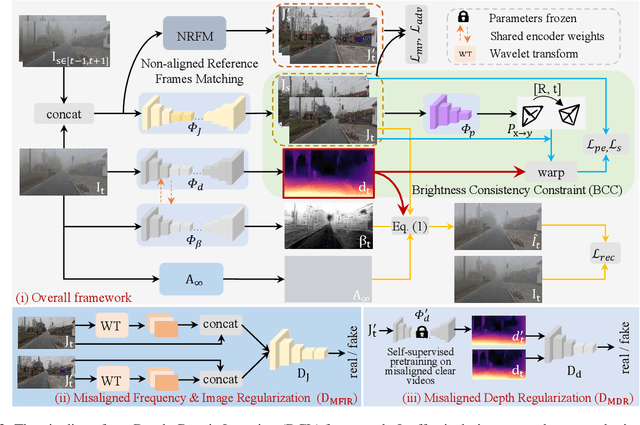
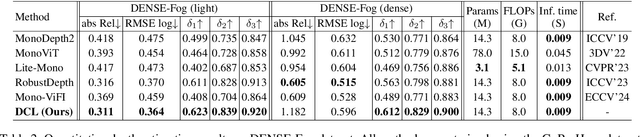
In this paper, we study the challenging problem of simultaneously removing haze and estimating depth from real monocular hazy videos. These tasks are inherently complementary: enhanced depth estimation improves dehazing via the atmospheric scattering model (ASM), while superior dehazing contributes to more accurate depth estimation through the brightness consistency constraint (BCC). To tackle these intertwined tasks, we propose a novel depth-centric learning framework that integrates the ASM model with the BCC constraint. Our key idea is that both ASM and BCC rely on a shared depth estimation network. This network simultaneously exploits adjacent dehazed frames to enhance depth estimation via BCC and uses the refined depth cues to more effectively remove haze through ASM. Additionally, we leverage a non-aligned clear video and its estimated depth to independently regularize the dehazing and depth estimation networks. This is achieved by designing two discriminator networks: $D_{MFIR}$ enhances high-frequency details in dehazed videos, and $D_{MDR}$ reduces the occurrence of black holes in low-texture regions. Extensive experiments demonstrate that the proposed method outperforms current state-of-the-art techniques in both video dehazing and depth estimation tasks, especially in real-world hazy scenes. Project page: https://fanjunkai1.github.io/projectpage/DCL/index.html.
Neural Garment Dynamic Super-Resolution
Dec 09, 2024Achieving efficient, high-fidelity, high-resolution garment simulation is challenging due to its computational demands. Conversely, low-resolution garment simulation is more accessible and ideal for low-budget devices like smartphones. In this paper, we introduce a lightweight, learning-based method for garment dynamic super-resolution, designed to efficiently enhance high-resolution, high-frequency details in low-resolution garment simulations. Starting with low-resolution garment simulation and underlying body motion, we utilize a mesh-graph-net to compute super-resolution features based on coarse garment dynamics and garment-body interactions. These features are then used by a hyper-net to construct an implicit function of detailed wrinkle residuals for each coarse mesh triangle. Considering the influence of coarse garment shapes on detailed wrinkle performance, we correct the coarse garment shape and predict detailed wrinkle residuals using these implicit functions. Finally, we generate detailed high-resolution garment geometry by applying the detailed wrinkle residuals to the corrected coarse garment. Our method enables roll-out prediction by iteratively using its predictions as input for subsequent frames, producing fine-grained wrinkle details to enhance the low-resolution simulation. Despite training on a small dataset, our network robustly generalizes to different body shapes, motions, and garment types not present in the training data. We demonstrate significant improvements over state-of-the-art alternatives, particularly in enhancing the quality of high-frequency, fine-grained wrinkle details.
Learning Based MPC for Autonomous Driving Using a Low Dimensional Residual Model
Dec 05, 2024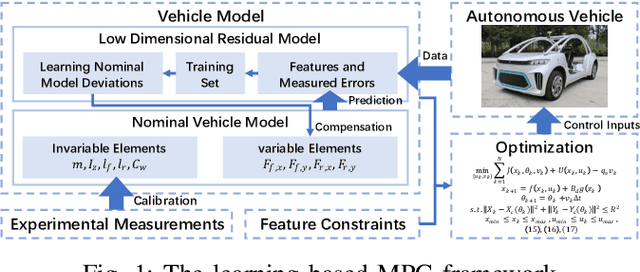
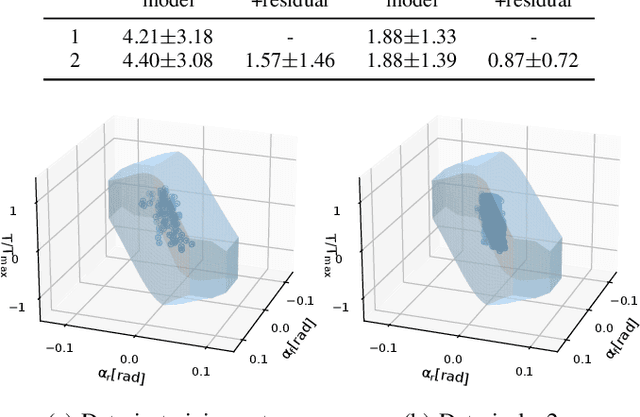
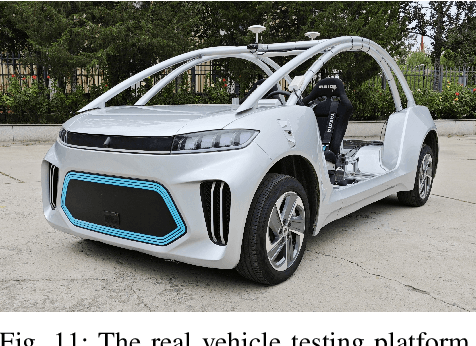
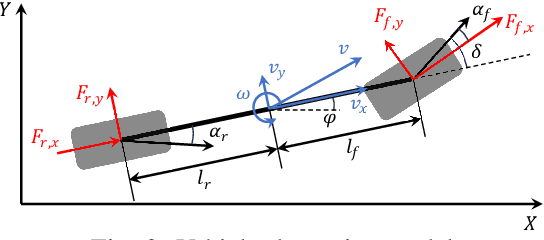
In this paper, a learning based Model Predictive Control (MPC) using a low dimensional residual model is proposed for autonomous driving. One of the critical challenge in autonomous driving is the complexity of vehicle dynamics, which impedes the formulation of accurate vehicle model. Inaccurate vehicle model can significantly impact the performance of MPC controller. To address this issue, this paper decomposes the nominal vehicle model into invariable and variable elements. The accuracy of invariable component is ensured by calibration, while the deviations in the variable elements are learned by a low-dimensional residual model. The features of residual model are selected as the physical variables most correlated with nominal model errors. Physical constraints among these features are formulated to explicitly define the valid region within the feature space. The formulated model and constraints are incorporated into the MPC framework and validated through both simulation and real vehicle experiments. The results indicate that the proposed method significantly enhances the model accuracy and controller performance.
IRS Aided Federated Learning: Multiple Access and Fundamental Tradeoff
Nov 30, 2024


This paper investigates an intelligent reflecting surface (IRS) aided wireless federated learning (FL) system, where an access point (AP) coordinates multiple edge devices to train a machine leaning model without sharing their own raw data. During the training process, we exploit the joint channel reconfiguration via IRS and resource allocation design to reduce the latency of a FL task. Particularly, we propose three transmission protocols for assisting the local model uploading from multiple devices to an AP, namely IRS aided time division multiple access (I-TDMA), IRS aided frequency division multiple access (I-FDMA), and IRS aided non-orthogonal multiple access (INOMA), to investigate the impact of IRS on the multiple access for FL. Under the three protocols, we minimize the per-round latency subject to a given training loss by jointly optimizing the device scheduling, IRS phase-shifts, and communicationcomputation resource allocation. For the associated problem under I-TDMA, an efficient algorithm is proposed to solve it optimally by exploiting its intrinsic structure, whereas the highquality solutions of the problems under I-FDMA and I-NOMA are obtained by invoking a successive convex approximation (SCA) based approach. Then, we further develop a theoretical framework for the performance comparison of the proposed three transmission protocols. Sufficient conditions for ensuring that I-TDMA outperforms I-NOMA and those of its opposite are unveiled, which is fundamentally different from that NOMA always outperforms TDMA in the system without IRS. Simulation results validate our theoretical findings and also demonstrate the usefulness of IRS for enhancing the fundamental tradeoff between the learning latency and learning accuracy.
V2X-Radar: A Multi-modal Dataset with 4D Radar for Cooperative Perception
Nov 17, 2024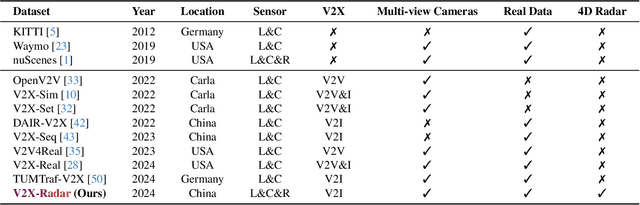
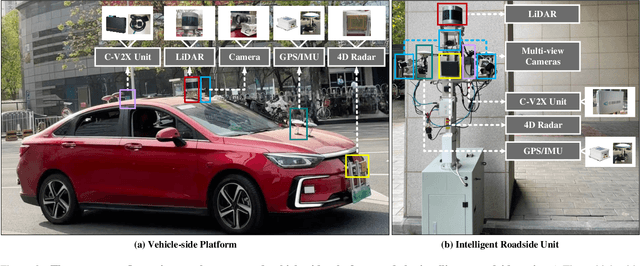
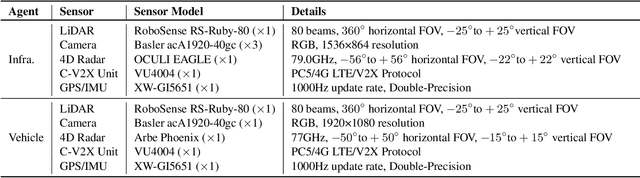
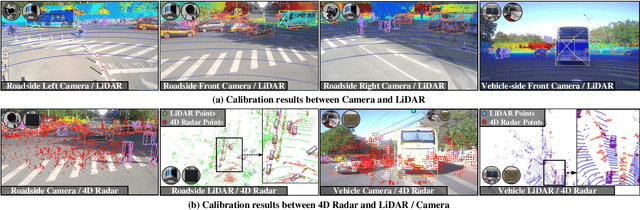
Modern autonomous vehicle perception systems often struggle with occlusions and limited perception range. Previous studies have demonstrated the effectiveness of cooperative perception in extending the perception range and overcoming occlusions, thereby improving the safety of autonomous driving. In recent years, a series of cooperative perception datasets have emerged. However, these datasets only focus on camera and LiDAR, overlooking 4D Radar, a sensor employed in single-vehicle autonomous driving for robust perception in adverse weather conditions. In this paper, to bridge the gap of missing 4D Radar datasets in cooperative perception, we present V2X-Radar, the first large real-world multi-modal dataset featuring 4D Radar. Our V2X-Radar dataset is collected using a connected vehicle platform and an intelligent roadside unit equipped with 4D Radar, LiDAR, and multi-view cameras. The collected data includes sunny and rainy weather conditions, spanning daytime, dusk, and nighttime, as well as typical challenging scenarios. The dataset comprises 20K LiDAR frames, 40K camera images, and 20K 4D Radar data, with 350K annotated bounding boxes across five categories. To facilitate diverse research domains, we establish V2X-Radar-C for cooperative perception, V2X-Radar-I for roadside perception, and V2X-Radar-V for single-vehicle perception. We further provide comprehensive benchmarks of recent perception algorithms on the above three sub-datasets. The dataset and benchmark codebase will be available at \url{http://openmpd.com/column/V2X-Radar}.
Region-Aware Text-to-Image Generation via Hard Binding and Soft Refinement
Nov 15, 2024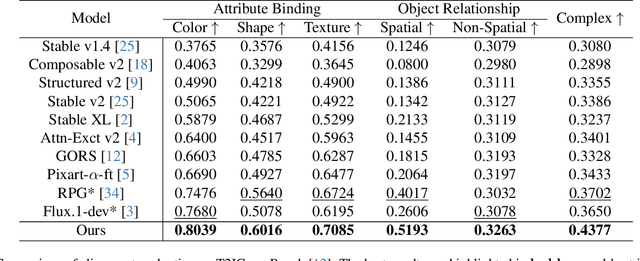
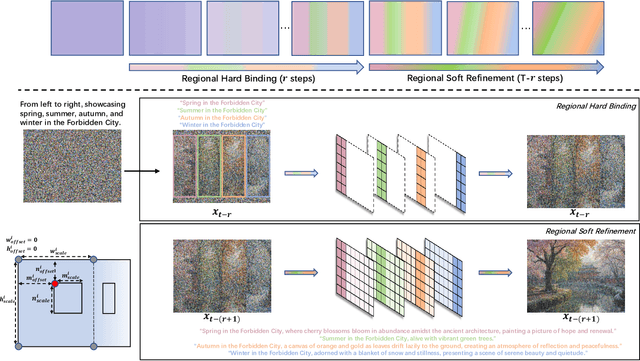
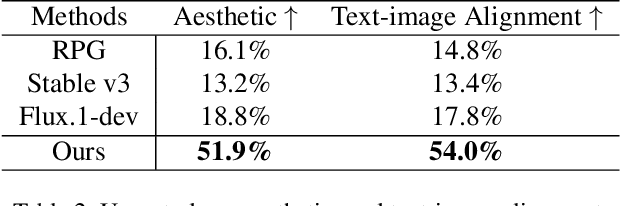
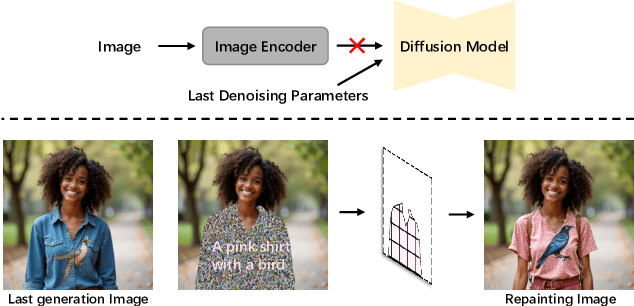
Regional prompting, or compositional generation, which enables fine-grained spatial control, has gained increasing attention for its practicality in real-world applications. However, previous methods either introduce additional trainable modules, thus only applicable to specific models, or manipulate on score maps within cross-attention layers using attention masks, resulting in limited control strength when the number of regions increases. To handle these limitations, we present RAG, a Regional-Aware text-to-image Generation method conditioned on regional descriptions for precise layout composition. RAG decouple the multi-region generation into two sub-tasks, the construction of individual region (Regional Hard Binding) that ensures the regional prompt is properly executed, and the overall detail refinement (Regional Soft Refinement) over regions that dismiss the visual boundaries and enhance adjacent interactions. Furthermore, RAG novelly makes repainting feasible, where users can modify specific unsatisfied regions in the last generation while keeping all other regions unchanged, without relying on additional inpainting models. Our approach is tuning-free and applicable to other frameworks as an enhancement to the prompt following property. Quantitative and qualitative experiments demonstrate that RAG achieves superior performance over attribute binding and object relationship than previous tuning-free methods.
Try-On-Adapter: A Simple and Flexible Try-On Paradigm
Nov 15, 2024

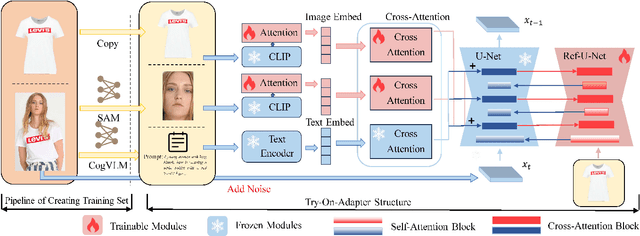
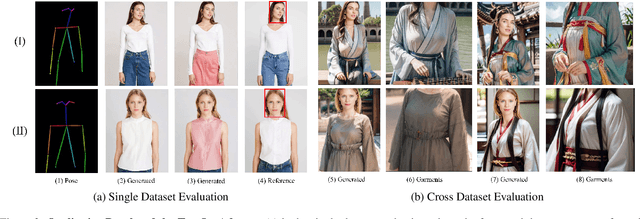
Image-based virtual try-on, widely used in online shopping, aims to generate images of a naturally dressed person conditioned on certain garments, providing significant research and commercial potential. A key challenge of try-on is to generate realistic images of the model wearing the garments while preserving the details of the garments. Previous methods focus on masking certain parts of the original model's standing image, and then inpainting on masked areas to generate realistic images of the model wearing corresponding reference garments, which treat the try-on task as an inpainting task. However, such implements require the user to provide a complete, high-quality standing image, which is user-unfriendly in practical applications. In this paper, we propose Try-On-Adapter (TOA), an outpainting paradigm that differs from the existing inpainting paradigm. Our TOA can preserve the given face and garment, naturally imagine the rest parts of the image, and provide flexible control ability with various conditions, e.g., garment properties and human pose. In the experiments, TOA shows excellent performance on the virtual try-on task even given relatively low-quality face and garment images in qualitative comparisons. Additionally, TOA achieves the state-of-the-art performance of FID scores 5.56 and 7.23 for paired and unpaired on the VITON-HD dataset in quantitative comparisons.