 Add to Chrome
 Add to Firefox
 Add to Edge
Watch Out for Your Agents! Investigating Backdoor Threats to LLM-Based Agents
Feb 17, 2024
Leveraging the rapid development of Large Language Models LLMs, LLM-based agents have been developed to handle various real-world applications, including finance, healthcare, and shopping, etc. It is crucial to ensure the reliability and security of LLM-based agents during applications. However, the safety issues of LLM-based agents are currently under-explored. In this work, we take the first step to investigate one of the typical safety threats, backdoor attack, to LLM-based agents. We first formulate a general framework of agent backdoor attacks, then we present a thorough analysis on the different forms of agent backdoor attacks. Specifically, from the perspective of the final attacking outcomes, the attacker can either choose to manipulate the final output distribution, or only introduce malicious behavior in the intermediate reasoning process, while keeping the final output correct. Furthermore, the former category can be divided into two subcategories based on trigger locations: the backdoor trigger can be hidden either in the user query or in an intermediate observation returned by the external environment. We propose the corresponding data poisoning mechanisms to implement the above variations of agent backdoor attacks on two typical agent tasks, web shopping and tool utilization. Extensive experiments show that LLM-based agents suffer severely from backdoor attacks, indicating an urgent need for further research on the development of defenses against backdoor attacks on LLM-based agents. Warning: This paper may contain biased content.

Tell Me More! Towards Implicit User Intention Understanding of Language Model Driven Agents
Feb 15, 2024Current language model-driven agents often lack mechanisms for effective user participation, which is crucial given the vagueness commonly found in user instructions. Although adept at devising strategies and performing tasks, these agents struggle with seeking clarification and grasping precise user intentions. To bridge this gap, we introduce Intention-in-Interaction (IN3), a novel benchmark designed to inspect users' implicit intentions through explicit queries. Next, we propose the incorporation of model experts as the upstream in agent designs to enhance user-agent interaction. Employing IN3, we empirically train Mistral-Interact, a powerful model that proactively assesses task vagueness, inquires user intentions, and refines them into actionable goals before starting downstream agent task execution. Integrating it into the XAgent framework, we comprehensively evaluate the enhanced agent system regarding user instruction understanding and execution, revealing that our approach notably excels at identifying vague user tasks, recovering and summarizing critical missing information, setting precise and necessary agent execution goals, and minimizing redundant tool usage, thus boosting overall efficiency. All the data and codes are released.
Previously on the Stories: Recap Snippet Identification for Story Reading
Feb 11, 2024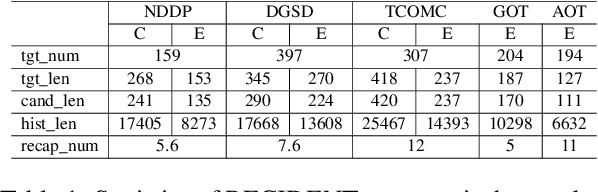
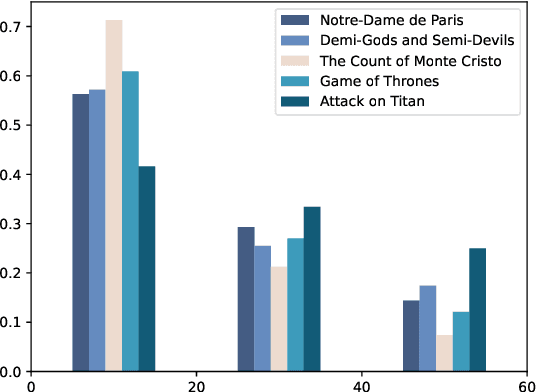

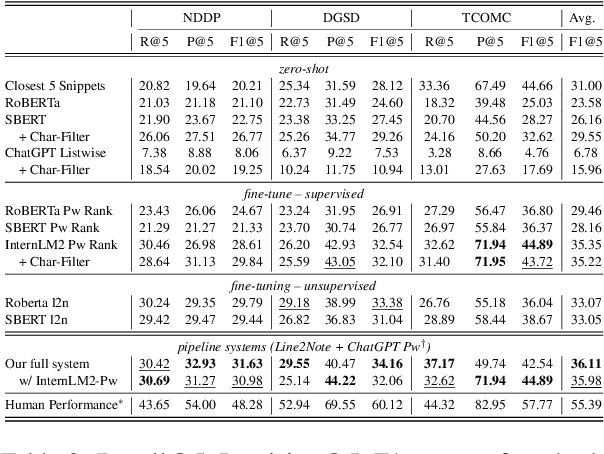
Similar to the "previously-on" scenes in TV shows, recaps can help book reading by recalling the readers' memory about the important elements in previous texts to better understand the ongoing plot. Despite its usefulness, this application has not been well studied in the NLP community. We propose the first benchmark on this useful task called Recap Snippet Identification with a hand-crafted evaluation dataset. Our experiments show that the proposed task is challenging to PLMs, LLMs, and proposed methods as the task requires a deep understanding of the plot correlation between snippets.
NPSVC++: Nonparallel Classifiers Encounter Representation Learning
Feb 08, 2024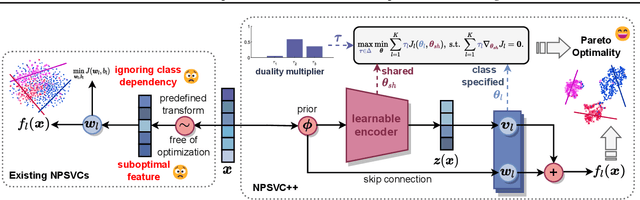
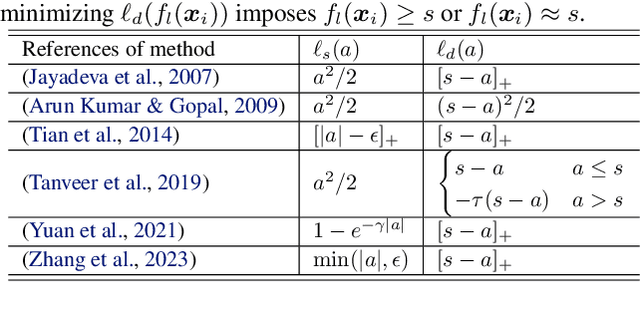
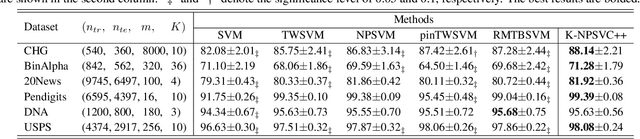

This paper focuses on a specific family of classifiers called nonparallel support vector classifiers (NPSVCs). Different from typical classifiers, the training of an NPSVC involves the minimization of multiple objectives, resulting in the potential concerns of feature suboptimality and class dependency. Consequently, no effective learning scheme has been established to improve NPSVCs' performance through representation learning, especially deep learning. To break this bottleneck, we develop NPSVC++ based on multi-objective optimization, enabling the end-to-end learning of NPSVC and its features. By pursuing Pareto optimality, NPSVC++ theoretically ensures feature optimality across classes, hence effectively overcoming the two issues above. A general learning procedure via duality optimization is proposed, based on which we provide two applicable instances, K-NPSVC++ and D-NPSVC++. The experiments show their superiority over the existing methods and verify the efficacy of NPSVC++.
Prompt-Driven LLM Safeguarding via Directed Representation Optimization
Jan 31, 2024


Prepending model inputs with safety prompts is a common practice of safeguarding large language models (LLMs) from complying with queries that contain harmful intents. However, the working mechanisms of safety prompts have not yet been fully understood, which hinders the potential for automatically optimizing them for improved LLM safety. Motivated by this problem, we investigate the impact of safety prompts from the perspective of model representations. We find that in models' representation space, harmful and harmless queries can be largely distinguished, but this is not noticeably enhanced by safety prompts. Instead, the queries' representations are moved by different safety prompts in similar directions, where models become more prone to refusal (i.e., refusing to provide assistance) even when the queries are harmless. Inspired by these findings, we propose a method called DRO (Directed Representation Optimization) for automatic safety prompt optimization. DRO treats safety prompts as continuous, trainable embeddings and learns to move the representations of harmful/harmless queries along/opposite the direction in which the model's refusal probability increases. We demonstrate that DRO remarkably improves the safeguarding performance of human-crafted safety prompts and outperforms strong baselines, as evaluated on out-of-domain benchmarks, without compromising the general model capability.
Path Choice Matters for Clear Attribution in Path Methods
Jan 19, 2024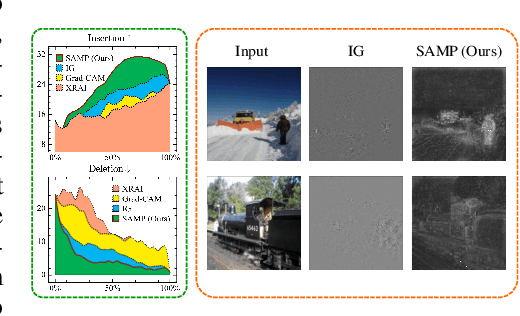
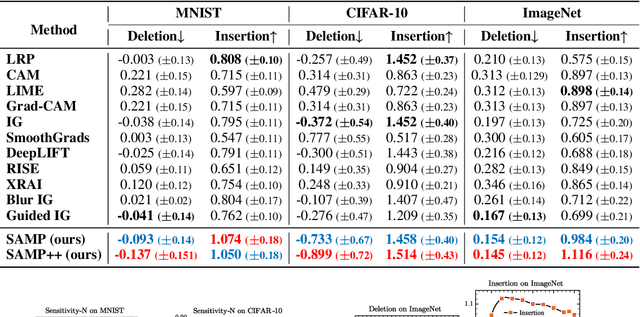
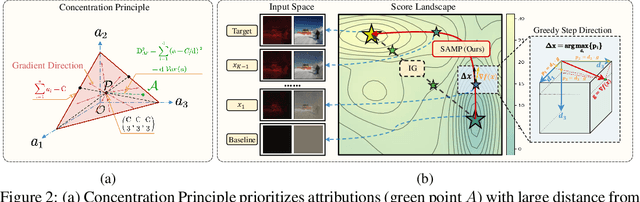
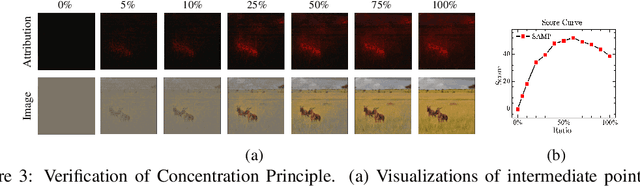
Rigorousness and clarity are both essential for interpretations of DNNs to engender human trust. Path methods are commonly employed to generate rigorous attributions that satisfy three axioms. However, the meaning of attributions remains ambiguous due to distinct path choices. To address the ambiguity, we introduce \textbf{Concentration Principle}, which centrally allocates high attributions to indispensable features, thereby endowing aesthetic and sparsity. We then present \textbf{SAMP}, a model-agnostic interpreter, which efficiently searches the near-optimal path from a pre-defined set of manipulation paths. Moreover, we propose the infinitesimal constraint (IC) and momentum strategy (MS) to improve the rigorousness and optimality. Visualizations show that SAMP can precisely reveal DNNs by pinpointing salient image pixels. We also perform quantitative experiments and observe that our method significantly outperforms the counterparts. Code: https://github.com/zbr17/SAMP.
MM-Interleaved: Interleaved Image-Text Generative Modeling via Multi-modal Feature Synchronizer
Jan 18, 2024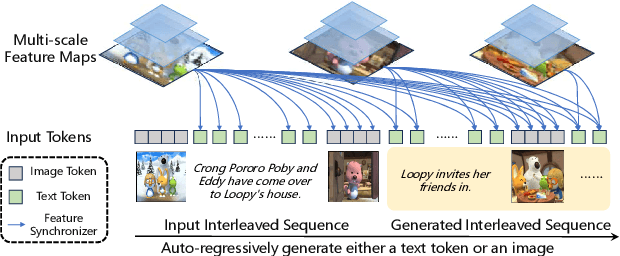


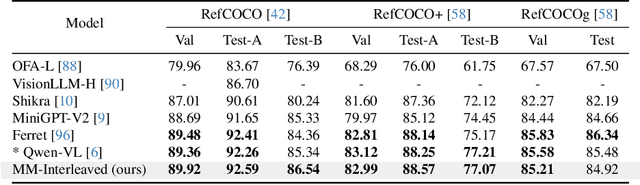
Developing generative models for interleaved image-text data has both research and practical value. It requires models to understand the interleaved sequences and subsequently generate images and text. However, existing attempts are limited by the issue that the fixed number of visual tokens cannot efficiently capture image details, which is particularly problematic in the multi-image scenarios. To address this, this paper presents MM-Interleaved, an end-to-end generative model for interleaved image-text data. It introduces a multi-scale and multi-image feature synchronizer module, allowing direct access to fine-grained image features in the previous context during the generation process. MM-Interleaved is end-to-end pre-trained on both paired and interleaved image-text corpora. It is further enhanced through a supervised fine-tuning phase, wherein the model improves its ability to follow complex multi-modal instructions. Experiments demonstrate the versatility of MM-Interleaved in recognizing visual details following multi-modal instructions and generating consistent images following both textual and visual conditions. Code and models are available at \url{https://github.com/OpenGVLab/MM-Interleaved}.
Generative Multi-Modal Knowledge Retrieval with Large Language Models
Jan 16, 2024


Knowledge retrieval with multi-modal queries plays a crucial role in supporting knowledge-intensive multi-modal applications. However, existing methods face challenges in terms of their effectiveness and training efficiency, especially when it comes to training and integrating multiple retrievers to handle multi-modal queries. In this paper, we propose an innovative end-to-end generative framework for multi-modal knowledge retrieval. Our framework takes advantage of the fact that large language models (LLMs) can effectively serve as virtual knowledge bases, even when trained with limited data. We retrieve knowledge via a two-step process: 1) generating knowledge clues related to the queries, and 2) obtaining the relevant document by searching databases using the knowledge clue. In particular, we first introduce an object-aware prefix-tuning technique to guide multi-grained visual learning. Then, we align multi-grained visual features into the textual feature space of the LLM, employing the LLM to capture cross-modal interactions. Subsequently, we construct instruction data with a unified format for model training. Finally, we propose the knowledge-guided generation strategy to impose prior constraints in the decoding steps, thereby promoting the generation of distinctive knowledge clues. Through experiments conducted on three benchmarks, we demonstrate significant improvements ranging from 3.0% to 14.6% across all evaluation metrics when compared to strong baselines.
Efficient Deformable ConvNets: Rethinking Dynamic and Sparse Operator for Vision Applications
Jan 11, 2024


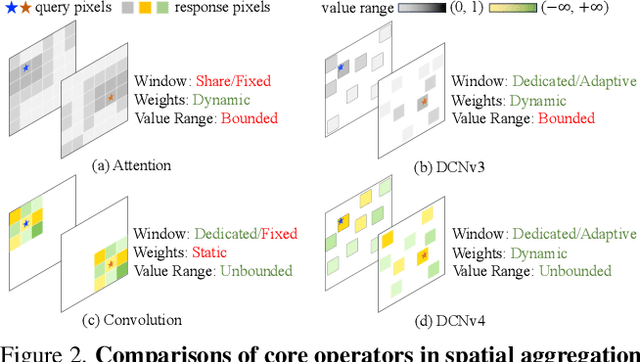
We introduce Deformable Convolution v4 (DCNv4), a highly efficient and effective operator designed for a broad spectrum of vision applications. DCNv4 addresses the limitations of its predecessor, DCNv3, with two key enhancements: 1. removing softmax normalization in spatial aggregation to enhance its dynamic property and expressive power and 2. optimizing memory access to minimize redundant operations for speedup. These improvements result in a significantly faster convergence compared to DCNv3 and a substantial increase in processing speed, with DCNv4 achieving more than three times the forward speed. DCNv4 demonstrates exceptional performance across various tasks, including image classification, instance and semantic segmentation, and notably, image generation. When integrated into generative models like U-Net in the latent diffusion model, DCNv4 outperforms its baseline, underscoring its possibility to enhance generative models. In practical applications, replacing DCNv3 with DCNv4 in the InternImage model to create FlashInternImage results in up to 80% speed increase and further performance improvement without further modifications. The advancements in speed and efficiency of DCNv4, combined with its robust performance across diverse vision tasks, show its potential as a foundational building block for future vision models.
Domain Similarity-Perceived Label Assignment for Domain Generalized Underwater Object Detection
Dec 20, 2023The inherent characteristics and light fluctuations of water bodies give rise to the huge difference between different layers and regions in underwater environments. When the test set is collected in a different marine area from the training set, the issue of domain shift emerges, significantly compromising the model's ability to generalize. The Domain Adversarial Learning (DAL) training strategy has been previously utilized to tackle such challenges. However, DAL heavily depends on manually one-hot domain labels, which implies no difference among the samples in the same domain. Such an assumption results in the instability of DAL. This paper introduces the concept of Domain Similarity-Perceived Label Assignment (DSP). The domain label for each image is regarded as its similarity to the specified domains. Through domain-specific data augmentation techniques, we achieved state-of-the-art results on the underwater cross-domain object detection benchmark S-UODAC2020. Furthermore, we validated the effectiveness of our method in the Cityscapes dataset.