 Add to Chrome
 Add to Firefox
 Add to Edge
APAR: LLMs Can Do Auto-Parallel Auto-Regressive Decoding
Jan 12, 2024
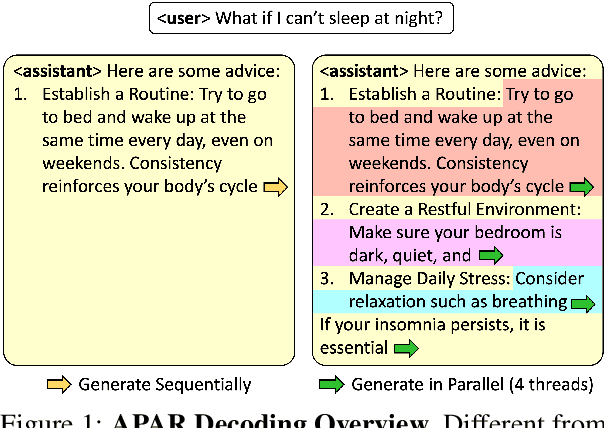
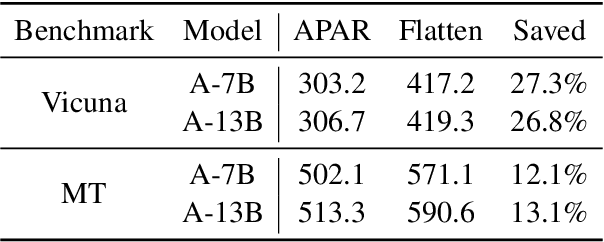

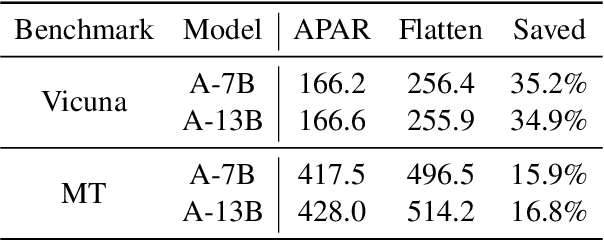
The massive adoption of large language models (LLMs) demands efficient deployment strategies. However, the auto-regressive decoding process, which is fundamental to how most LLMs generate text, poses challenges to achieve efficient serving. In this work, we introduce a parallel auto-regressive generation method. By instruct-tuning on general domain data that contains hierarchical structures, we enable LLMs to independently plan their generation process and perform auto-parallel auto-regressive (APAR) generation, significantly reducing the number of generation steps. APAR alone can achieve up to 2x speed-up, and when combined with speculative decoding, the speed-up can reach up to 4x. In addition, APAR reduces the key-value cache consumption and attention computation during generation. This leads to a throughput increase of 20-70% and a latency reduce of 20-35% in high-throughput scenarios, compared to state-of-the-art serving frameworks.

xTrimoPGLM: Unified 100B-Scale Pre-trained Transformer for Deciphering the Language of Protein
Jan 11, 2024Protein language models have shown remarkable success in learning biological information from protein sequences. However, most existing models are limited by either autoencoding or autoregressive pre-training objectives, which makes them struggle to handle protein understanding and generation tasks concurrently. We propose a unified protein language model, xTrimoPGLM, to address these two types of tasks simultaneously through an innovative pre-training framework. Our key technical contribution is an exploration of the compatibility and the potential for joint optimization of the two types of objectives, which has led to a strategy for training xTrimoPGLM at an unprecedented scale of 100 billion parameters and 1 trillion training tokens. Our extensive experiments reveal that 1) xTrimoPGLM significantly outperforms other advanced baselines in 18 protein understanding benchmarks across four categories. The model also facilitates an atomic-resolution view of protein structures, leading to an advanced 3D structural prediction model that surpasses existing language model-based tools. 2) xTrimoPGLM not only can generate de novo protein sequences following the principles of natural ones, but also can perform programmable generation after supervised fine-tuning (SFT) on curated sequences. These results highlight the substantial capability and versatility of xTrimoPGLM in understanding and generating protein sequences, contributing to the evolving landscape of foundation models in protein science.
CogAgent: A Visual Language Model for GUI Agents
Dec 21, 2023
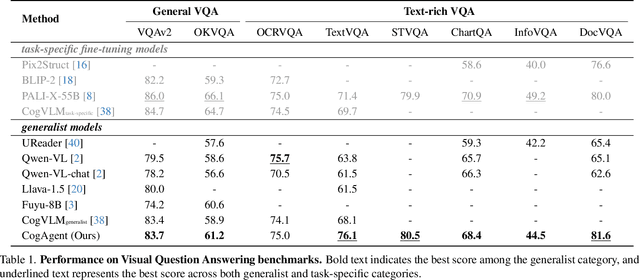
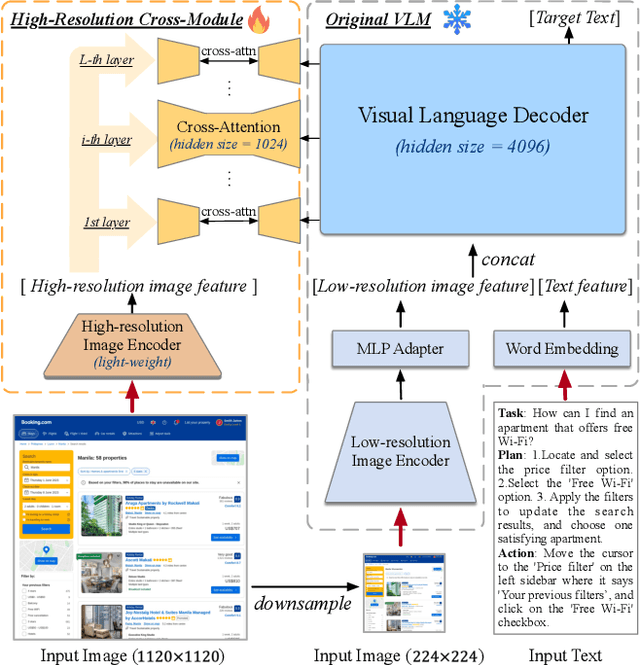

People are spending an enormous amount of time on digital devices through graphical user interfaces (GUIs), e.g., computer or smartphone screens. Large language models (LLMs) such as ChatGPT can assist people in tasks like writing emails, but struggle to understand and interact with GUIs, thus limiting their potential to increase automation levels. In this paper, we introduce CogAgent, an 18-billion-parameter visual language model (VLM) specializing in GUI understanding and navigation. By utilizing both low-resolution and high-resolution image encoders, CogAgent supports input at a resolution of 1120*1120, enabling it to recognize tiny page elements and text. As a generalist visual language model, CogAgent achieves the state of the art on five text-rich and four general VQA benchmarks, including VQAv2, OK-VQA, Text-VQA, ST-VQA, ChartQA, infoVQA, DocVQA, MM-Vet, and POPE. CogAgent, using only screenshots as input, outperforms LLM-based methods that consume extracted HTML text on both PC and Android GUI navigation tasks -- Mind2Web and AITW, advancing the state of the art. The model and codes are available at https://github.com/THUDM/CogVLM .
CogCartoon: Towards Practical Story Visualization
Dec 17, 2023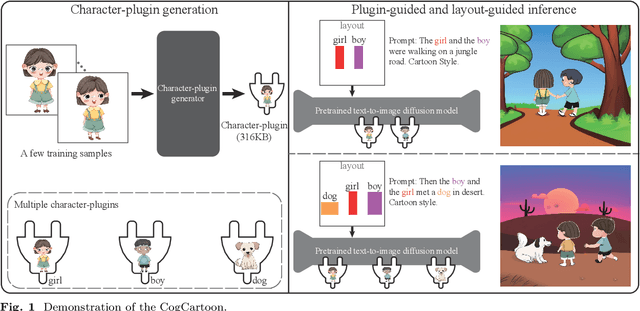
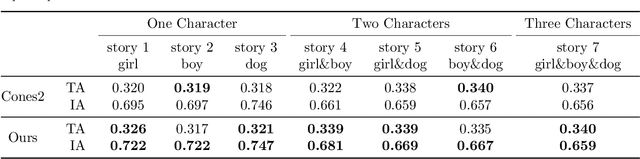
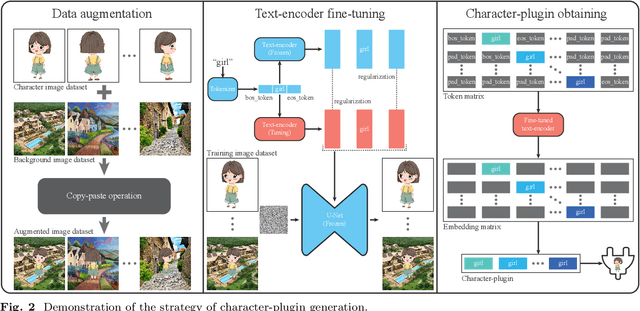
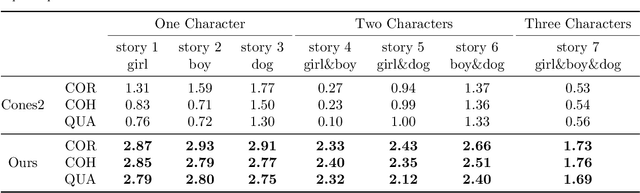
The state-of-the-art methods for story visualization demonstrate a significant demand for training data and storage, as well as limited flexibility in story presentation, thereby rendering them impractical for real-world applications. We introduce CogCartoon, a practical story visualization method based on pre-trained diffusion models. To alleviate dependence on data and storage, we propose an innovative strategy of character-plugin generation that can represent a specific character as a compact 316 KB plugin by using a few training samples. To facilitate enhanced flexibility, we employ a strategy of plugin-guided and layout-guided inference, enabling users to seamlessly incorporate new characters and custom layouts into the generated image results at their convenience. We have conducted comprehensive qualitative and quantitative studies, providing compelling evidence for the superiority of CogCartoon over existing methodologies. Moreover, CogCartoon demonstrates its power in tackling challenging tasks, including long story visualization and realistic style story visualization.
AlignBench: Benchmarking Chinese Alignment of Large Language Models
Dec 05, 2023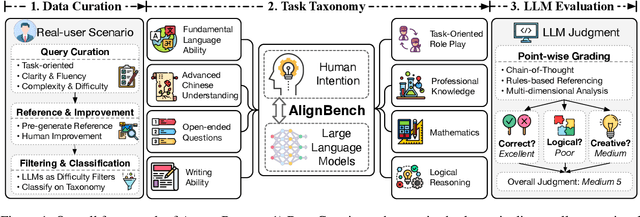
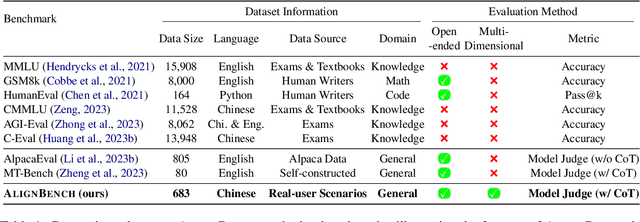
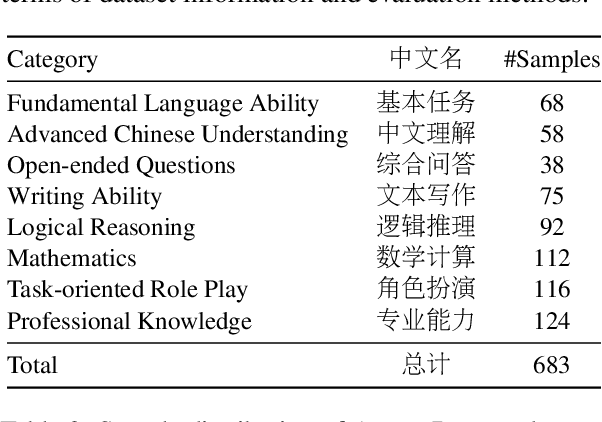
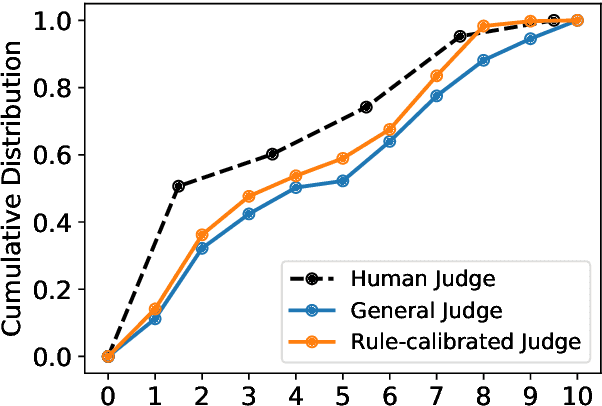
Alignment has become a critical step for instruction-tuned Large Language Models (LLMs) to become helpful assistants. However, effective evaluation of alignment for emerging Chinese LLMs is still significantly lacking, calling for real-scenario grounded, open-ended, challenging and automatic evaluations tailored for alignment. To fill in this gap, we introduce AlignBench, a comprehensive multi-dimensional benchmark for evaluating LLMs' alignment in Chinese. Equipped with a human-in-the-loop data curation pipeline, our benchmark employs a rule-calibrated multi-dimensional LLM-as-Judge with Chain-of-Thought to generate explanations and final ratings as evaluations, ensuring high reliability and interpretability. Furthermore, we report AlignBench evaluated by CritiqueLLM, a dedicated Chinese evaluator LLM that recovers 95% of GPT-4's evaluation ability. We will provide public APIs for evaluating AlignBench with CritiqueLLM to facilitate the evaluation of LLMs' Chinese alignment. All evaluation codes, data, and LLM generations are available at \url{https://github.com/THUDM/AlignBench}.
Intelligent Reflecting Surface-Aided Electromagnetic Stealth Against Radar Detection
Dec 04, 2023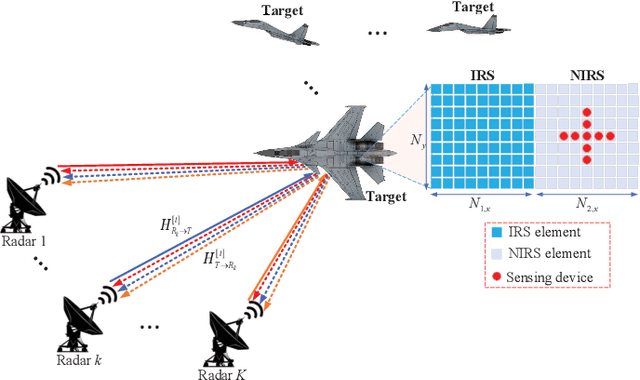
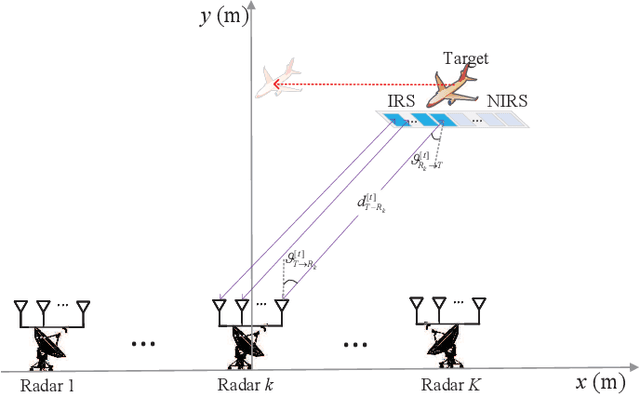
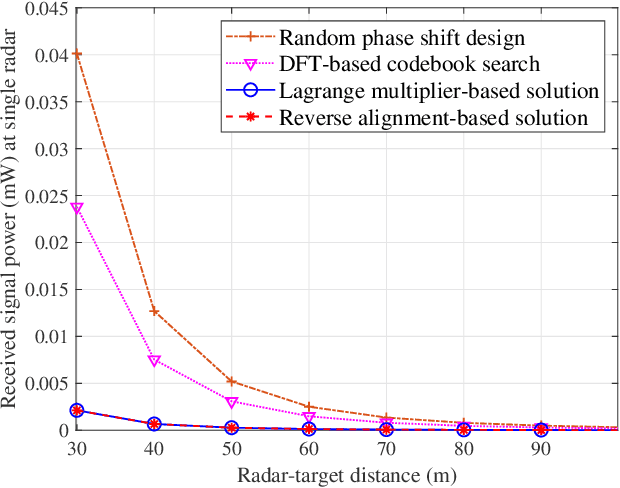
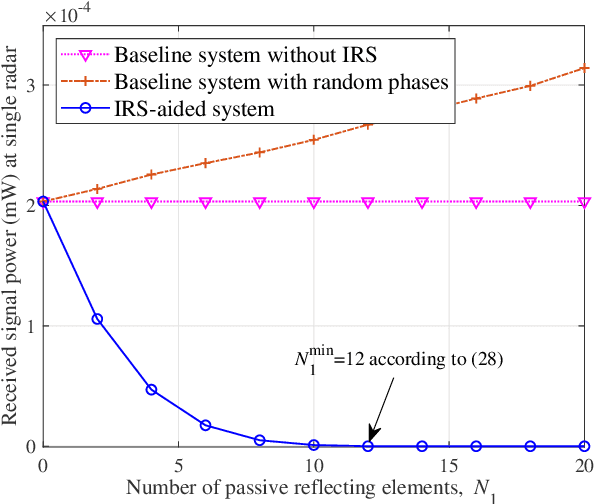
While traditional electromagnetic stealth materials/metasurfaces can render a target virtually invisible to some extent, they lack flexibility and adaptability, and can only operate within a limited frequency and angle/direction range, making it challenging to ensure the expected stealth performance. In view of this, we propose in this paper a new intelligent reflecting surface (IRS)-aided electromagnetic stealth system mounted on targets to evade radar detection, by utilizing the tunable passive reflecting elements of IRS to achieve flexible and adaptive electromagnetic stealth in a cost-effective manner. Specifically, we optimize the IRS's reflection at the target to minimize the sum received signal power of all adversary radars. We first address the IRS's reflection optimization problem using the Lagrange multiplier method and derive a semi-closed-form optimal solution for the single-radar setup, which is then generalized to the multi-radar case. To meet real-time processing requirements, we further propose low-complexity closed-form solutions based on the reverse alignment/cancellation and minimum mean-square error (MMSE) criteria for the single-radar and multi-radar cases, respectively. Additionally, we propose practical low-complexity estimation schemes at the target to acquire angle-of-arrival (AoA) and/or path gain information via a small number of receive sensing devices. Simulation results validate the performance advantages of our proposed IRS-aided electromagnetic stealth system with the proposed IRS reflection designs.
CritiqueLLM: Scaling LLM-as-Critic for Effective and Explainable Evaluation of Large Language Model Generation
Nov 30, 2023Since the natural language processing (NLP) community started to make large language models (LLMs), such as GPT-4, act as a critic to evaluate the quality of generated texts, most of them only train a critique generation model of a specific scale on specific datasets. We argue that a comprehensive investigation on the key factor of LLM-based evaluation models, such as scaling properties, is lacking, so that it is still inconclusive whether these models have potential to replace GPT-4's evaluation in practical scenarios. In this paper, we propose a new critique generation model called CritiqueLLM, which includes a dialogue-based prompting method for high-quality referenced / reference-free evaluation data. Experimental results show that our model can achieve comparable evaluation performance to GPT-4 especially in system-level correlations, and even outperform GPT-4 in 3 out of 8 tasks in a challenging reference-free setting. We conduct detailed analysis to show promising scaling properties of our model in the quality of generated critiques. We also demonstrate that our generated critiques can act as scalable feedback to directly improve the generation quality of LLMs.
CharacterGLM: Customizing Chinese Conversational AI Characters with Large Language Models
Nov 28, 2023


In this paper, we present CharacterGLM, a series of models built upon ChatGLM, with model sizes ranging from 6B to 66B parameters. Our CharacterGLM is designed for generating Character-based Dialogues (CharacterDial), which aims to equip a conversational AI system with character customization for satisfying people's inherent social desires and emotional needs. On top of CharacterGLM, we can customize various AI characters or social agents by configuring their attributes (identities, interests, viewpoints, experiences, achievements, social relationships, etc.) and behaviors (linguistic features, emotional expressions, interaction patterns, etc.). Our model outperforms most mainstream close-source large langauge models, including the GPT series, especially in terms of consistency, human-likeness, and engagement according to manual evaluations. We will release our 6B version of CharacterGLM and a subset of training data to facilitate further research development in the direction of character-based dialogue generation.
Black-Box Prompt Optimization: Aligning Large Language Models without Model Training
Nov 08, 2023Large language models (LLMs) have shown impressive success in various applications. However, these models are often not well aligned with human intents, which calls for additional treatments on them, that is, the alignment problem. To make LLMs better follow user instructions, existing alignment methods mostly focus on further training them. However, the extra training of LLMs are usually expensive in terms of GPU compute; worse still, LLMs of interest are oftentimes not accessible for user-demanded training, such as GPTs. In this work, we take a different perspective -- Black-Box Prompt Optimization (BPO) -- to perform alignments. The idea is to optimize user prompts to suit LLMs' input understanding, so as to best realize users' intents without updating LLMs' parameters. BPO is model-agnostic and the empirical results demonstrate that the BPO-aligned ChatGPT yields a 22% increase in the win rate against its original version, and 10% for GPT-4. Importantly, the BPO-aligned LLMs can outperform the same models aligned by PPO and DPO, and it also brings additional performance gains when combining BPO with PPO or DPO. Code and datasets are released at https://github.com/thu-coai/BPO.
CogVLM: Visual Expert for Pretrained Language Models
Nov 06, 2023We introduce CogVLM, a powerful open-source visual language foundation model. Different from the popular shallow alignment method which maps image features into the input space of language model, CogVLM bridges the gap between the frozen pretrained language model and image encoder by a trainable visual expert module in the attention and FFN layers. As a result, CogVLM enables deep fusion of vision language features without sacrificing any performance on NLP tasks. CogVLM-17B achieves state-of-the-art performance on 10 classic cross-modal benchmarks, including NoCaps, Flicker30k captioning, RefCOCO, RefCOCO+, RefCOCOg, Visual7W, GQA, ScienceQA, VizWiz VQA and TDIUC, and ranks the 2nd on VQAv2, OKVQA, TextVQA, COCO captioning, etc., surpassing or matching PaLI-X 55B. Codes and checkpoints are available at https://github.com/THUDM/CogVLM.