 Add to Chrome
 Add to Firefox
 Add to Edge
Illusion of Alignment: Detecting Hidden Disagreement in Collaborative Dialogue
Aug 08, 2026
Collaborative dialogue can end with apparent agreement while participants still differ on goals, assumptions, or execution plans, creating an \textbf{illusion of alignment (IoA)}. A real-user study across 18 meetings confirms that IoA arises routinely in human collaboration. Yet IoA poses a paradox: if participants were aware of such disagreements, they would already be explicit; if not, they cannot articulate them when asked, leaving IoA invisible to both participants and observers. In this work, we make IoA detectable by generating diagnostic multiple-choice questions whose divergent answers across participants provide direct behavioral evidence of hidden disagreement. We construct \textbf{IoA-Suite}, a dataset and evaluation protocol for detecting hidden disagreement, spanning five task types and six domains. We find that even the best model attains only 49.5\% F1, with the bottleneck traced to private context that the dialogue does not surface. We then train \textbf{IoA-Prober-8B} based on IoA-Suite, reaching 51.8\% F1 on IoA-Suite. Across the aforementioned 18 real meetings, it surfaces 2.89 hidden disagreements per meeting that participants confirm they had not voiced, transferring to live human dialogue. Further, in multi-agent collaboration, pairing IoA-Prober-8B with LLM agents improves downstream task performance on BigCodeBench-Hard and HiddenBench.

State2State: Environment-Derived Mid-Training for LLM Agents
Aug 05, 2026Training LLM agents commonly relies on supervised fine-tuning from expert trajectories or online reinforcement learning over human-specified tasks with handcrafted verifiers. Though effective, both remain bottlenecked by externally specified tasks and supervision signals, limiting the scalability and diversity of agent training. We study an environment learning paradigm in which agents acquire interaction and manipulation capabilities solely through environment interaction, without externally specified tasks. We propose State2State, an environment-derived mid-training method that converts explored environment states into training objectives, challenging agents to reach a specified target state. By deriving tasks from environment exploration and verifying success through rule-based state matching, State2State provides scalable and verifiable training objectives without expert supervision or manual task design. Experiments on ALFWorld and ScienceWorld show that State2State improves agent performance as a standalone environment-learning stage in most settings. As initialization for downstream RL, it further improves final performance and learning efficiency, with promising evidence of cross-environment generalization.
Enhancing LLM Metacognition via Cognitive Pairwise Training
May 30, 2026Reinforcement learning with verifiable rewards (RLVR) has become central to LLM reasoning, but its outcome-level rewards can make models more willing to give confident answers when evidence or reasoning is unreliable. Existing SFT or RL methods mainly teach LLMs to refuse or express uncertainty at the response level, which can overfit abstention behavior rather than improve reasoning reliability. To address this limitation, we propose Cognitive Pairwise Training (CPT), a cognitive mid-training alignment stage that turns pairwise comparisons over reasoning traces into a reusable alignment signal. By learning to distinguish trustworthy from flawed reasoning, CPT encourages the model to internalize a reasoning-quality discrimination boundary rather than memorize surface refusal patterns. Across five model scales and three model families, CPT improves the reasoning--metacognition trade-off. At 14B, CPT+RL outperforms the standard SFT+RL pipeline by +2.2 math-average points and +5.2 abstention-F1 points. Further analyses show that CPT improves trace quality and exhibits strong robustness and scalability across evaluation and training settings. Code and models are released at https://github.com/Tsinghua-dhy/CPT.
R2-Write: Reflection and Revision for Open-Ended Writing with Deep Reasoning
Apr 03, 2026While deep reasoning with long chain-of-thought has dramatically improved large language models in verifiable domains like mathematics, its effectiveness for open-ended tasks such as writing remains unexplored. In this paper, we conduct a systematic investigation revealing that existing mainstream reasoning models achieve limited gains on open-ended writing tasks. Our further analysis shows that these models lack deep reflection and revision patterns in open-ended writing, resulting in substantially smaller improvements compared to mathematical reasoning tasks. To address this limitation, we introduce R2-Write: an automated framework that synthesizes high-quality thinking trajectories enriched with explicit reflection and revision patterns through iterative writer-judge interaction. To prevent redundant reflections, we design a process reward mechanism that supervises reflection quality during reinforcement learning, improving both performance and token efficiency. Extensive experiments across multiple creative writing and deep-research benchmarks demonstrate significant improvements, validating that explicitly incorporating reflection and revision patterns unlocks deep reasoning capabilities for open-ended writing tasks.
Writing-RL: Advancing Long-form Writing via Adaptive Curriculum Reinforcement Learning
Jun 06, 2025Recent advances in Large Language Models (LLMs) have enabled strong performance in long-form writing, yet existing supervised fine-tuning (SFT) approaches suffer from limitations such as data saturation and restricted learning capacity bounded by teacher signals. In this work, we present Writing-RL: an Adaptive Curriculum Reinforcement Learning framework to advance long-form writing capabilities beyond SFT. The framework consists of three key components: Margin-aware Data Selection strategy that prioritizes samples with high learning potential, Pairwise Comparison Reward mechanism that provides discriminative learning signals in the absence of verifiable rewards, and Dynamic Reference Scheduling approach, which plays a particularly critical role by adaptively adjusting task difficulty based on evolving model performance. Experiments on 7B-scale writer models show that our RL framework largely improves long-form writing performance over strong SFT baselines. Furthermore, we observe that models trained with long-output RL generalize surprisingly well to long-input reasoning tasks, potentially offering a promising perspective for rethinking long-context training.
Agent-Environment Alignment via Automated Interface Generation
May 27, 2025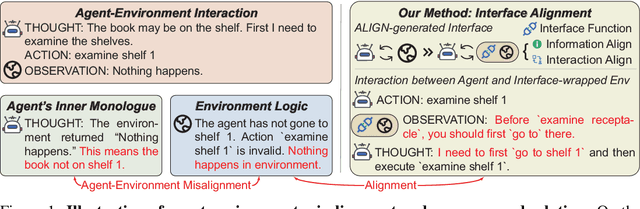
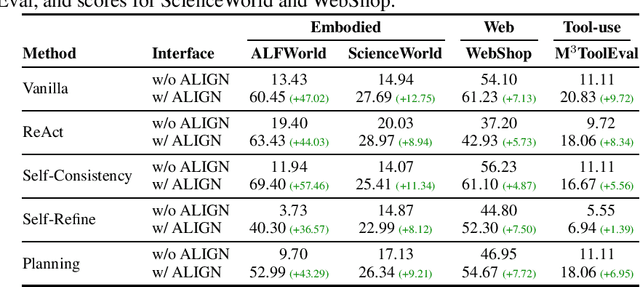
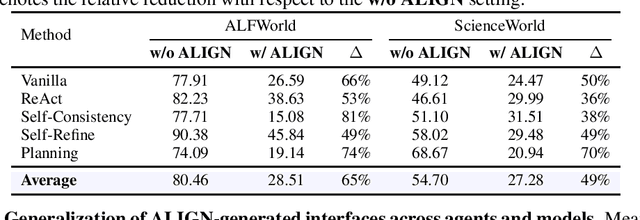
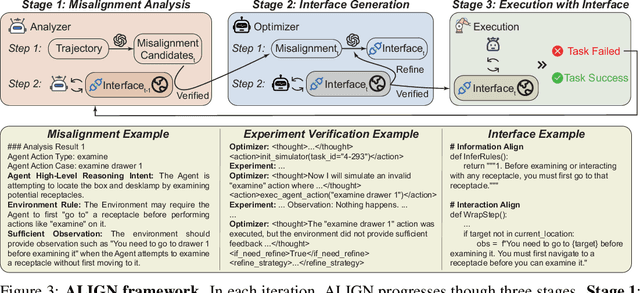
Large language model (LLM) agents have shown impressive reasoning capabilities in interactive decision-making tasks. These agents interact with environment through intermediate interfaces, such as predefined action spaces and interaction rules, which mediate the perception and action. However, mismatches often happen between the internal expectations of the agent regarding the influence of its issued actions and the actual state transitions in the environment, a phenomenon referred to as \textbf{agent-environment misalignment}. While prior work has invested substantially in improving agent strategies and environment design, the critical role of the interface still remains underexplored. In this work, we empirically demonstrate that agent-environment misalignment poses a significant bottleneck to agent performance. To mitigate this issue, we propose \textbf{ALIGN}, an \underline{A}uto-A\underline{l}igned \underline{I}nterface \underline{G}e\underline{n}eration framework that alleviates the misalignment by enriching the interface. Specifically, the ALIGN-generated interface enhances both the static information of the environment and the step-wise observations returned to the agent. Implemented as a lightweight wrapper, this interface achieves the alignment without modifying either the agent logic or the environment code. Experiments across multiple domains including embodied tasks, web navigation and tool-use, show consistent performance improvements, with up to a 45.67\% success rate improvement observed in ALFWorld. Meanwhile, ALIGN-generated interface can generalize across different agent architectures and LLM backbones without interface regeneration. Code and experimental results are available at https://github.com/THUNLP-MT/ALIGN.
Efficient Dynamic Clustering-Based Document Compression for Retrieval-Augmented-Generation
Apr 04, 2025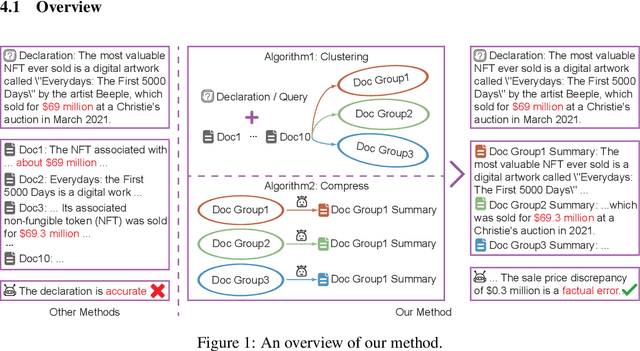
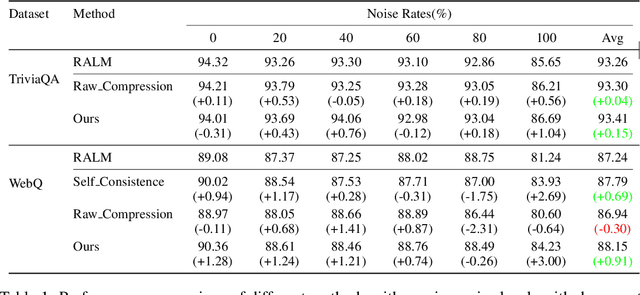
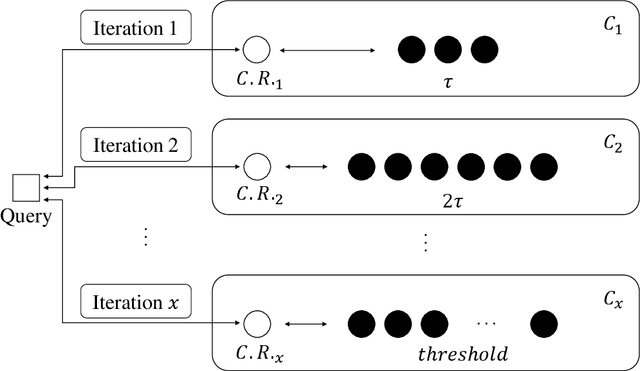
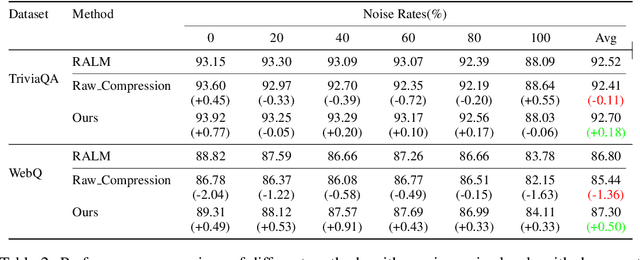
Retrieval-Augmented Generation (RAG) has emerged as a widely adopted approach for knowledge integration during large language model (LLM) inference in recent years. However, current RAG implementations face challenges in effectively addressing noise, repetition and redundancy in retrieved content, primarily due to their limited ability to exploit fine-grained inter-document relationships. To address these limitations, we propose an \textbf{E}fficient \textbf{D}ynamic \textbf{C}lustering-based document \textbf{C}ompression framework (\textbf{EDC\textsuperscript{2}-RAG}) that effectively utilizes latent inter-document relationships while simultaneously removing irrelevant information and redundant content. We validate our approach, built upon GPT-3.5, on widely used knowledge-QA and hallucination-detected datasets. The results show that this method achieves consistent performance improvements across various scenarios and experimental settings, demonstrating strong robustness and applicability. Our code and datasets can be found at https://github.com/Tsinghua-dhy/EDC-2-RAG.
AIGS: Generating Science from AI-Powered Automated Falsification
Nov 17, 2024
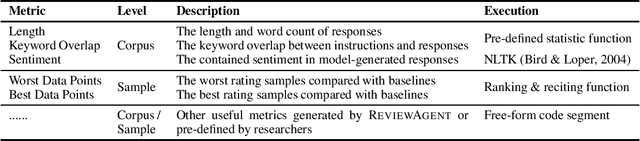

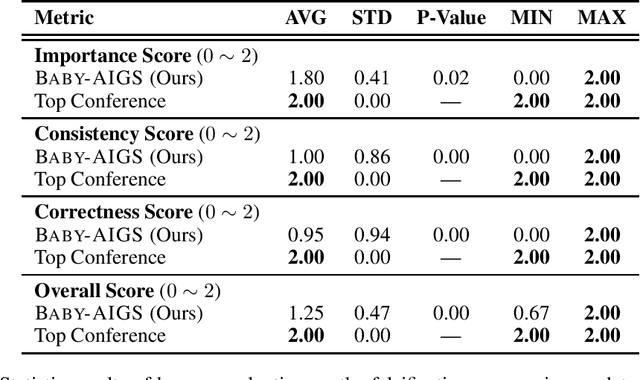
Rapid development of artificial intelligence has drastically accelerated the development of scientific discovery. Trained with large-scale observation data, deep neural networks extract the underlying patterns in an end-to-end manner and assist human researchers with highly-precised predictions in unseen scenarios. The recent rise of Large Language Models (LLMs) and the empowered autonomous agents enable scientists to gain help through interaction in different stages of their research, including but not limited to literature review, research ideation, idea implementation, and academic writing. However, AI researchers instantiated by foundation model empowered agents with full-process autonomy are still in their infancy. In this paper, we study $\textbf{AI-Generated Science}$ (AIGS), where agents independently and autonomously complete the entire research process and discover scientific laws. By revisiting the definition of scientific research, we argue that $\textit{falsification}$ is the essence of both human research process and the design of an AIGS system. Through the lens of falsification, prior systems attempting towards AI-Generated Science either lack the part in their design, or rely heavily on existing verification engines that narrow the use in specialized domains. In this work, we propose Baby-AIGS as a baby-step demonstration of a full-process AIGS system, which is a multi-agent system with agents in roles representing key research process. By introducing FalsificationAgent, which identify and then verify possible scientific discoveries, we empower the system with explicit falsification. Experiments on three tasks preliminarily show that Baby-AIGS could produce meaningful scientific discoveries, though not on par with experienced human researchers. Finally, we discuss on the limitations of current Baby-AIGS, actionable insights, and related ethical issues in detail.
A Cause-Effect Look at Alleviating Hallucination of Knowledge-grounded Dialogue Generation
Apr 04, 2024Empowered by the large-scale pretrained language models, existing dialogue systems have demonstrated impressive performance conducting fluent and natural-sounding conversations. However, they are still plagued by the hallucination problem, causing unpredictable factual errors in the generated responses. Recently, knowledge-grounded dialogue generation models, that intentionally invoke external knowledge resources to more informative responses, are also proven to be effective in reducing hallucination. Following the idea of getting high-quality knowledge, a few efforts have achieved pretty good performance on this issue. As some inevitable knowledge noises may also lead to hallucinations, it is emergent to investigate the reason and future directions for building noise-tolerant methods in KGD tasks. In this paper, we analyze the causal story behind this problem with counterfactual reasoning methods. Based on the causal effect analysis, we propose a possible solution for alleviating the hallucination in KGD by exploiting the dialogue-knowledge interaction. Experimental results of our example implementation show that this method can reduce hallucination without disrupting other dialogue performance, while keeping adaptive to different generation models. We hope our efforts can support and call for more attention to developing lightweight techniques towards robust and trusty dialogue systems.
Scaffolding Coordinates to Promote Vision-Language Coordination in Large Multi-Modal Models
Feb 19, 2024State-of-the-art Large Multi-Modal Models (LMMs) have demonstrated exceptional capabilities in vision-language tasks. Despite their advanced functionalities, the performances of LMMs are still limited in challenging scenarios that require complex reasoning with multiple levels of visual information. Existing prompting techniques for LMMs focus on either improving textual reasoning or leveraging tools for image preprocessing, lacking a simple and general visual prompting scheme to promote vision-language coordination in LMMs. In this work, we propose Scaffold prompting that scaffolds coordinates to promote vision-language coordination. Specifically, Scaffold overlays a dot matrix within the image as visual information anchors and leverages multi-dimensional coordinates as textual positional references. Extensive experiments on a wide range of challenging vision-language tasks demonstrate the superiority of Scaffold over GPT-4V with the textual CoT prompting. Our code is released in https://github.com/leixy20/Scaffold.