 Add to Chrome
 Add to Firefox
 Add to Edge
MiMo-V2-Flash Technical Report
Jan 08, 2026
We present MiMo-V2-Flash, a Mixture-of-Experts (MoE) model with 309B total parameters and 15B active parameters, designed for fast, strong reasoning and agentic capabilities. MiMo-V2-Flash adopts a hybrid attention architecture that interleaves Sliding Window Attention (SWA) with global attention, with a 128-token sliding window under a 5:1 hybrid ratio. The model is pre-trained on 27 trillion tokens with Multi-Token Prediction (MTP), employing a native 32k context length and subsequently extended to 256k. To efficiently scale post-training compute, MiMo-V2-Flash introduces a novel Multi-Teacher On-Policy Distillation (MOPD) paradigm. In this framework, domain-specialized teachers (e.g., trained via large-scale reinforcement learning) provide dense and token-level reward, enabling the student model to perfectly master teacher expertise. MiMo-V2-Flash rivals top-tier open-weight models such as DeepSeek-V3.2 and Kimi-K2, despite using only 1/2 and 1/3 of their total parameters, respectively. During inference, by repurposing MTP as a draft model for speculative decoding, MiMo-V2-Flash achieves up to 3.6 acceptance length and 2.6x decoding speedup with three MTP layers. We open-source both the model weights and the three-layer MTP weights to foster open research and community collaboration.

Advanced Global Wildfire Activity Modeling with Hierarchical Graph ODE
Jan 04, 2026Wildfires, as an integral component of the Earth system, are governed by a complex interplay of atmospheric, oceanic, and terrestrial processes spanning a vast range of spatiotemporal scales. Modeling their global activity on large timescales is therefore a critical yet challenging task. While deep learning has recently achieved significant breakthroughs in global weather forecasting, its potential for global wildfire behavior prediction remains underexplored. In this work, we reframe this problem and introduce the Hierarchical Graph ODE (HiGO), a novel framework designed to learn the multi-scale, continuous-time dynamics of wildfires. Specifically, we represent the Earth system as a multi-level graph hierarchy and propose an adaptive filtering message passing mechanism for both intra- and inter-level information flow, enabling more effective feature extraction and fusion. Furthermore, we incorporate GNN-parameterized Neural ODE modules at multiple levels to explicitly learn the continuous dynamics inherent to each scale. Through extensive experiments on the SeasFire Cube dataset, we demonstrate that HiGO significantly outperforms state-of-the-art baselines on long-range wildfire forecasting. Moreover, its continuous-time predictions exhibit strong observational consistency, highlighting its potential for real-world applications.
Bridging the Perception-Cognition Gap:Re-engineering SAM2 with Hilbert-Mamba for Robust VLM-based Medical Diagnosis
Dec 30, 2025Recent studies suggest that Visual Language Models (VLMs) hold great potential for tasks such as automated medical diagnosis. However, processing complex three-dimensional (3D) multimodal medical images poses significant challenges - specifically, the effective integration of complementary information and the occasional oversight of subtle yet critical pathological features. To address these issues, we present a novel two-stage fusion framework termed Hilbert-VLM. This framework leverages the HilbertMed-SAM module for precise lesion segmentation, with the generated multimodal enhanced prompts then guiding the VLM toward accurate disease classification. Our key innovation lies in the systematic redesign of the Segment Anything Model 2 (SAM2) architecture: we incorporate Hilbert space-filling curves into the scanning mechanism of the Mamba State Space Model (SSM) to maximize the preservation of spatial locality in 3D data, a property critical for medical image analysis. We also introduce a novel Hilbert-Mamba Cross-Attention (HMCA) mechanism and a scale-aware decoder to capture fine-grained details. Meanwhile, the prompt enhancement module unifies segmentation masks and their corresponding textual attributes into an information-dense prompt to support VLM inference. Extensive experiments were conducted to validate the effectiveness of the Hilbert-VLM model. On the BraTS2021 segmentation benchmark, it achieves a Dice score of 82.35 percent, with a diagnostic classification accuracy (ACC) of 78.85 percent. These results demonstrate that the proposed model offers substantial potential to improve the accuracy and reliability of medical VLM-based analysis.
Scoring, Reasoning, and Selecting the Best! Ensembling Large Language Models via a Peer-Review Process
Dec 29, 2025We propose LLM-PeerReview, an unsupervised LLM Ensemble method that selects the most ideal response from multiple LLM-generated candidates for each query, harnessing the collective wisdom of multiple models with diverse strengths. LLM-PeerReview is built on a novel, peer-review-inspired framework that offers a clear and interpretable mechanism, while remaining fully unsupervised for flexible adaptability and generalization. Specifically, it operates in three stages: For scoring, we use the emerging LLM-as-a-Judge technique to evaluate each response by reusing multiple LLMs at hand; For reasoning, we can apply a principled graphical model-based truth inference algorithm or a straightforward averaging strategy to aggregate multiple scores to produce a final score for each response; Finally, the highest-scoring response is selected as the best ensemble output. LLM-PeerReview is conceptually simple and empirically powerful. The two variants of the proposed approach obtain strong results across four datasets, including outperforming the recent advanced model Smoothie-Global by 6.9% and 7.3% points, respectively.
Towards Ancient Plant Seed Classification: A Benchmark Dataset and Baseline Model
Dec 20, 2025Understanding the dietary preferences of ancient societies and their evolution across periods and regions is crucial for revealing human-environment interactions. Seeds, as important archaeological artifacts, represent a fundamental subject of archaeobotanical research. However, traditional studies rely heavily on expert knowledge, which is often time-consuming and inefficient. Intelligent analysis methods have made progress in various fields of archaeology, but there remains a research gap in data and methods in archaeobotany, especially in the classification task of ancient plant seeds. To address this, we construct the first Ancient Plant Seed Image Classification (APS) dataset. It contains 8,340 images from 17 genus- or species-level seed categories excavated from 18 archaeological sites across China. In addition, we design a framework specifically for the ancient plant seed classification task (APSNet), which introduces the scale feature (size) of seeds based on learning fine-grained information to guide the network in discovering key "evidence" for sufficient classification. Specifically, we design a Size Perception and Embedding (SPE) module in the encoder part to explicitly extract size information for the purpose of complementing fine-grained information. We propose an Asynchronous Decoupled Decoding (ADD) architecture based on traditional progressive learning to decode features from both channel and spatial perspectives, enabling efficient learning of discriminative features. In both quantitative and qualitative analyses, our approach surpasses existing state-of-the-art image classification methods, achieving an accuracy of 90.5%. This demonstrates that our work provides an effective tool for large-scale, systematic archaeological research.
Step-GUI Technical Report
Dec 19, 2025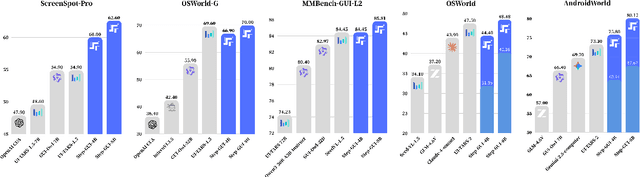
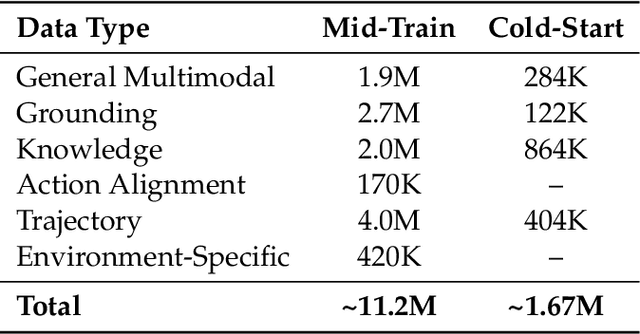
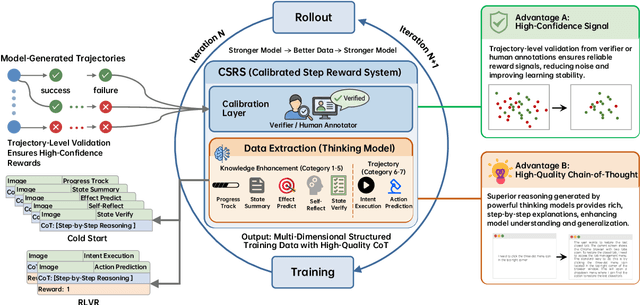
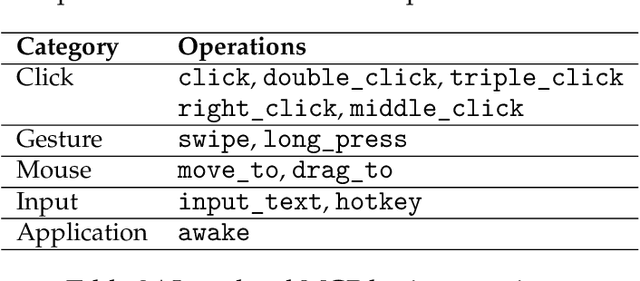
Recent advances in multimodal large language models unlock unprecedented opportunities for GUI automation. However, a fundamental challenge remains: how to efficiently acquire high-quality training data while maintaining annotation reliability? We introduce a self-evolving training pipeline powered by the Calibrated Step Reward System, which converts model-generated trajectories into reliable training signals through trajectory-level calibration, achieving >90% annotation accuracy with 10-100x lower cost. Leveraging this pipeline, we introduce Step-GUI, a family of models (4B/8B) that achieves state-of-the-art GUI performance (8B: 80.2% AndroidWorld, 48.5% OSWorld, 62.6% ScreenShot-Pro) while maintaining robust general capabilities. As GUI agent capabilities improve, practical deployment demands standardized interfaces across heterogeneous devices while protecting user privacy. To this end, we propose GUI-MCP, the first Model Context Protocol for GUI automation with hierarchical architecture that combines low-level atomic operations and high-level task delegation to local specialist models, enabling high-privacy execution where sensitive data stays on-device. Finally, to assess whether agents can handle authentic everyday usage, we introduce AndroidDaily, a benchmark grounded in real-world mobile usage patterns with 3146 static actions and 235 end-to-end tasks across high-frequency daily scenarios (8B: static 89.91%, end-to-end 52.50%). Our work advances the development of practical GUI agents and demonstrates strong potential for real-world deployment in everyday digital interactions.
Sharpness-aware Second-order Latent Factor Model for High-dimensional and Incomplete Data
Dec 18, 2025Second-order Latent Factor (SLF) model, a class of low-rank representation learning methods, has proven effective at extracting node-to-node interaction patterns from High-dimensional and Incomplete (HDI) data. However, its optimization is notoriously difficult due to its bilinear and non-convex nature. Sharpness-aware Minimization (SAM) has recently proposed to find flat local minima when minimizing non-convex objectives, thereby improving the generalization of representation-learning models. To address this challenge, we propose a Sharpness-aware SLF (SSLF) model. SSLF embodies two key ideas: (1) acquiring second-order information via Hessian-vector products; and (2) injecting a sharpness term into the curvature (Hessian) through the designed Hessian-vector products. Experiments on multiple industrial datasets demonstrate that the proposed model consistently outperforms state-of-the-art baselines.
Probing Scientific General Intelligence of LLMs with Scientist-Aligned Workflows
Dec 18, 2025Despite advances in scientific AI, a coherent framework for Scientific General Intelligence (SGI)-the ability to autonomously conceive, investigate, and reason across scientific domains-remains lacking. We present an operational SGI definition grounded in the Practical Inquiry Model (PIM: Deliberation, Conception, Action, Perception) and operationalize it via four scientist-aligned tasks: deep research, idea generation, dry/wet experiments, and experimental reasoning. SGI-Bench comprises over 1,000 expert-curated, cross-disciplinary samples inspired by Science's 125 Big Questions, enabling systematic evaluation of state-of-the-art LLMs. Results reveal gaps: low exact match (10--20%) in deep research despite step-level alignment; ideas lacking feasibility and detail; high code executability but low execution result accuracy in dry experiments; low sequence fidelity in wet protocols; and persistent multimodal comparative-reasoning challenges. We further introduce Test-Time Reinforcement Learning (TTRL), which optimizes retrieval-augmented novelty rewards at inference, enhancing hypothesis novelty without reference answer. Together, our PIM-grounded definition, workflow-centric benchmark, and empirical insights establish a foundation for AI systems that genuinely participate in scientific discovery.
A Systematic Study of Code Obfuscation Against LLM-based Vulnerability Detection
Dec 18, 2025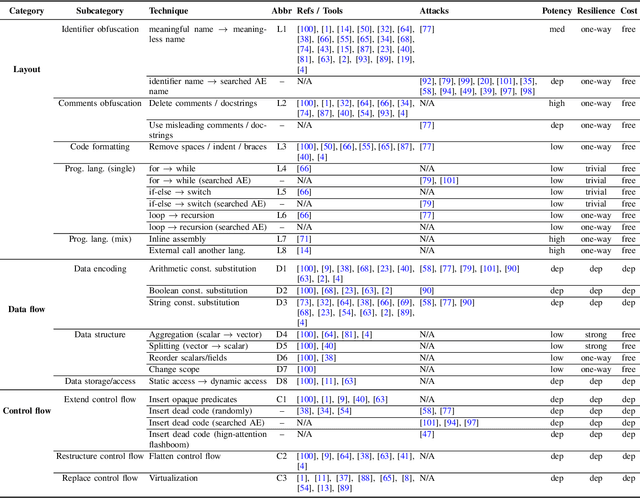
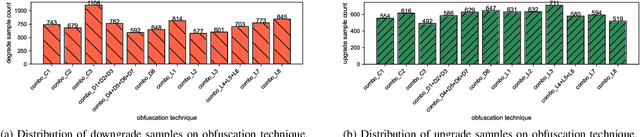
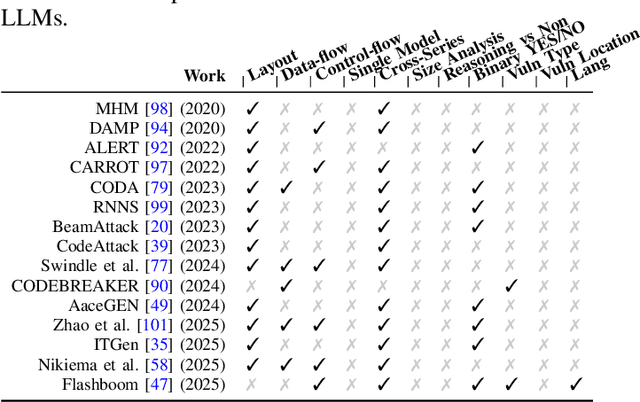
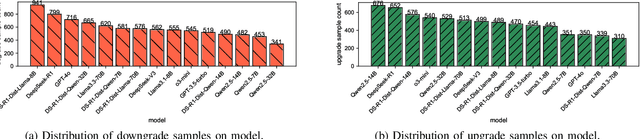
As large language models (LLMs) are increasingly adopted for code vulnerability detection, their reliability and robustness across diverse vulnerability types have become a pressing concern. In traditional adversarial settings, code obfuscation has long been used as a general strategy to bypass auditing tools, preserving exploitability without tampering with the tools themselves. Numerous efforts have explored obfuscation methods and tools, yet their capabilities differ in terms of supported techniques, granularity, and programming languages, making it difficult to systematically assess their impact on LLM-based vulnerability detection. To address this gap, we provide a structured systematization of obfuscation techniques and evaluate them under a unified framework. Specifically, we categorize existing obfuscation methods into three major classes (layout, data flow, and control flow) covering 11 subcategories and 19 concrete techniques. We implement these techniques across four programming languages (Solidity, C, C++, and Python) using a consistent LLM-driven approach, and evaluate their effects on 15 LLMs spanning four model families (DeepSeek, OpenAI, Qwen, and LLaMA), as well as on two coding agents (GitHub Copilot and Codex). Our findings reveal both positive and negative impacts of code obfuscation on LLM-based vulnerability detection, highlighting conditions under which obfuscation leads to performance improvements or degradations. We further analyze these outcomes with respect to vulnerability characteristics, code properties, and model attributes. Finally, we outline several open problems and propose future directions to enhance the robustness of LLMs for real-world vulnerability detection.
NeuralOGCM: Differentiable Ocean Modeling with Learnable Physics
Dec 12, 2025High-precision scientific simulation faces a long-standing trade-off between computational efficiency and physical fidelity. To address this challenge, we propose NeuralOGCM, an ocean modeling framework that fuses differentiable programming with deep learning. At the core of NeuralOGCM is a fully differentiable dynamical solver, which leverages physics knowledge as its core inductive bias. The learnable physics integration captures large-scale, deterministic physical evolution, and transforms key physical parameters (e.g., diffusion coefficients) into learnable parameters, enabling the model to autonomously optimize its physical core via end-to-end training. Concurrently, a deep neural network learns to correct for subgrid-scale processes and discretization errors not captured by the physics model. Both components work in synergy, with their outputs integrated by a unified ODE solver. Experiments demonstrate that NeuralOGCM maintains long-term stability and physical consistency, significantly outperforming traditional numerical models in speed and pure AI baselines in accuracy. Our work paves a new path for building fast, stable, and physically-plausible models for scientific computing.