 Add to Chrome
 Add to Firefox
 Add to Edge
Evaluation of OpenAI o1: Opportunities and Challenges of AGI
Sep 27, 2024
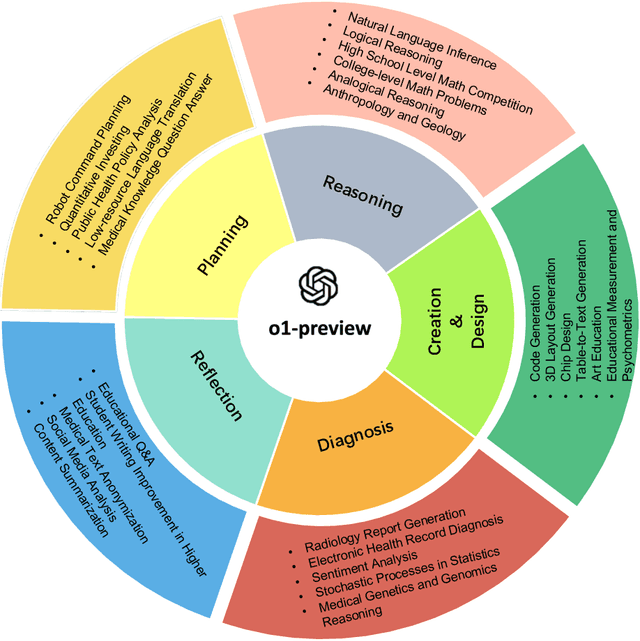
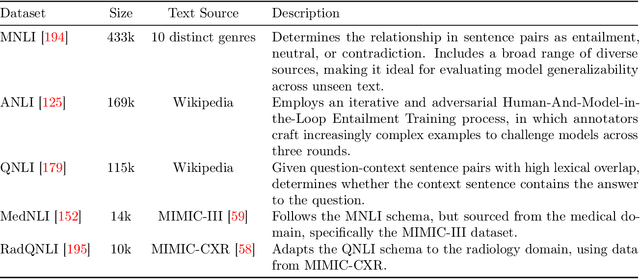


This comprehensive study evaluates the performance of OpenAI's o1-preview large language model across a diverse array of complex reasoning tasks, spanning multiple domains, including computer science, mathematics, natural sciences, medicine, linguistics, and social sciences. Through rigorous testing, o1-preview demonstrated remarkable capabilities, often achieving human-level or superior performance in areas ranging from coding challenges to scientific reasoning and from language processing to creative problem-solving. Key findings include: -83.3% success rate in solving complex competitive programming problems, surpassing many human experts. -Superior ability in generating coherent and accurate radiology reports, outperforming other evaluated models. -100% accuracy in high school-level mathematical reasoning tasks, providing detailed step-by-step solutions. -Advanced natural language inference capabilities across general and specialized domains like medicine. -Impressive performance in chip design tasks, outperforming specialized models in areas such as EDA script generation and bug analysis. -Remarkable proficiency in anthropology and geology, demonstrating deep understanding and reasoning in these specialized fields. -Strong capabilities in quantitative investing. O1 has comprehensive financial knowledge and statistical modeling skills. -Effective performance in social media analysis, including sentiment analysis and emotion recognition. The model excelled particularly in tasks requiring intricate reasoning and knowledge integration across various fields. While some limitations were observed, including occasional errors on simpler problems and challenges with certain highly specialized concepts, the overall results indicate significant progress towards artificial general intelligence.

Multi-Output Distributional Fairness via Post-Processing
Aug 31, 2024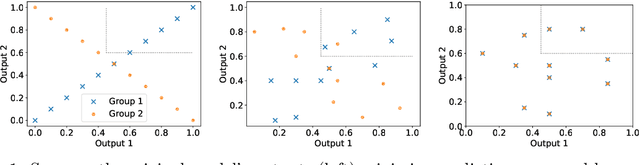
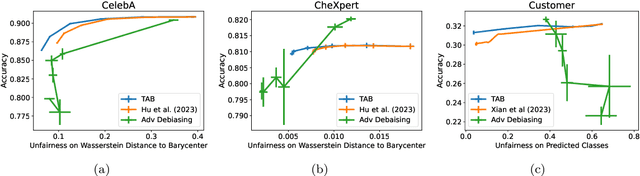
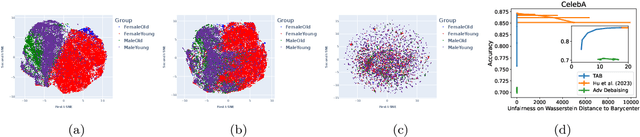

The post-processing approaches are becoming prominent techniques to enhance machine learning models' fairness because of their intuitiveness, low computational cost, and excellent scalability. However, most existing post-processing methods are designed for task-specific fairness measures and are limited to single-output models. In this paper, we introduce a post-processing method for multi-output models, such as the ones used for multi-task/multi-class classification and representation learning, to enhance a model's distributional parity, a task-agnostic fairness measure. Existing techniques to achieve distributional parity are based on the (inverse) cumulative density function of a model's output, which is limited to single-output models. Extending previous works, our method employs an optimal transport mapping to move a model's outputs across different groups towards their empirical Wasserstein barycenter. An approximation technique is applied to reduce the complexity of computing the exact barycenter and a kernel regression method is proposed for extending this process to out-of-sample data. Our empirical studies, which compare our method to current existing post-processing baselines on multi-task/multi-class classification and representation learning tasks, demonstrate the effectiveness of the proposed approach.
Leveraging Open Knowledge for Advancing Task Expertise in Large Language Models
Aug 28, 2024

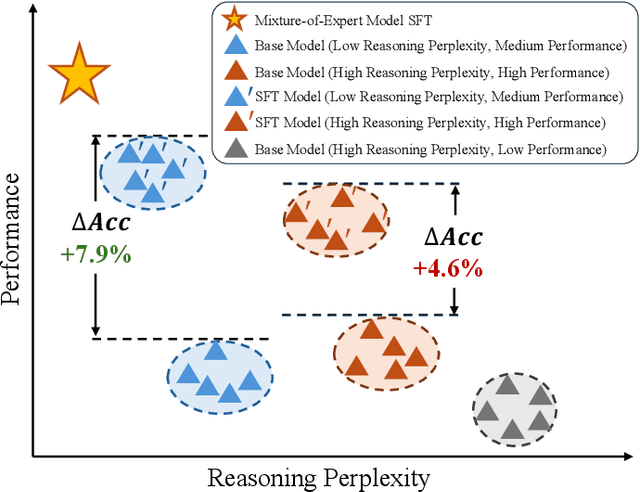

The cultivation of expertise for large language models (LLMs) to solve tasks of specific areas often requires special-purpose tuning with calibrated behaviors on the expected stable outputs. To avoid huge cost brought by manual preparation of instruction datasets and training resources up to hundreds of hours, the exploitation of open knowledge including a wealth of low rank adaptation (LoRA) models and instruction datasets serves as a good starting point. However, existing methods on model and data selection focus on the performance of general-purpose capabilities while neglecting the knowledge gap exposed in domain-specific deployment. In the present study, we propose to bridge such gap by introducing few human-annotated samples (i.e., K-shot) for advancing task expertise of LLMs with open knowledge. Specifically, we develop an efficient and scalable pipeline to cost-efficiently produce task experts where K-shot data intervene in selecting the most promising expert candidates and the task-relevant instructions. A mixture-of-expert (MoE) system is built to make the best use of individual-yet-complementary knowledge between multiple experts. We unveil the two keys to the success of a MoE system, 1) the abidance by K-shot, and 2) the insistence on diversity. For the former, we ensure that models that truly possess problem-solving abilities on K-shot are selected rather than those blind guessers. Besides, during data selection, instructions that share task-relevant contexts with K-shot are prioritized. For the latter, we highlight the diversity of constituting experts and that of the fine-tuning instructions throughout the model and data selection process. Extensive experimental results confirm the superiority of our approach over existing methods on utilization of open knowledge across various tasks. Codes and models will be released later.
GLIMMER: Incorporating Graph and Lexical Features in Unsupervised Multi-Document Summarization
Aug 19, 2024
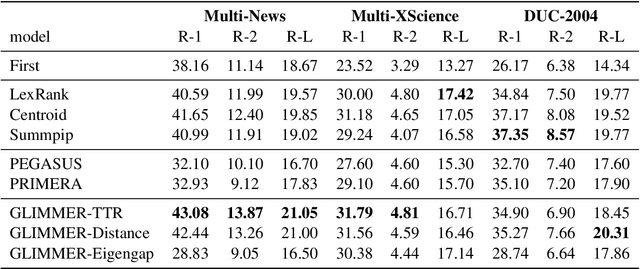
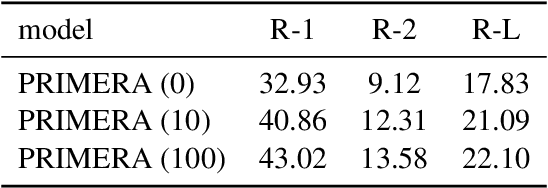

Pre-trained language models are increasingly being used in multi-document summarization tasks. However, these models need large-scale corpora for pre-training and are domain-dependent. Other non-neural unsupervised summarization approaches mostly rely on key sentence extraction, which can lead to information loss. To address these challenges, we propose a lightweight yet effective unsupervised approach called GLIMMER: a Graph and LexIcal features based unsupervised Multi-docuMEnt summaRization approach. It first constructs a sentence graph from the source documents, then automatically identifies semantic clusters by mining low-level features from raw texts, thereby improving intra-cluster correlation and the fluency of generated sentences. Finally, it summarizes clusters into natural sentences. Experiments conducted on Multi-News, Multi-XScience and DUC-2004 demonstrate that our approach outperforms existing unsupervised approaches. Furthermore, it surpasses state-of-the-art pre-trained multi-document summarization models (e.g. PEGASUS and PRIMERA) under zero-shot settings in terms of ROUGE scores. Additionally, human evaluations indicate that summaries generated by GLIMMER achieve high readability and informativeness scores. Our code is available at https://github.com/Oswald1997/GLIMMER.
Unleashing the Power of Data Tsunami: A Comprehensive Survey on Data Assessment and Selection for Instruction Tuning of Language Models
Aug 07, 2024


Instruction tuning plays a critical role in aligning large language models (LLMs) with human preference. Despite the vast amount of open instruction datasets, naively training a LLM on all existing instructions may not be optimal and practical. To pinpoint the most beneficial datapoints, data assessment and selection methods have been proposed in the fields of natural language processing (NLP) and deep learning. However, under the context of instruction tuning, there still exists a gap in knowledge on what kind of data evaluation metrics can be employed and how they can be integrated into the selection mechanism. To bridge this gap, we present a comprehensive review on existing literature of data assessment and selection especially for instruction tuning of LLMs. We systematically categorize all applicable methods into quality-based, diversity-based, and importance-based ones where a unified, fine-grained taxonomy is structured. For each category, representative methods are elaborated to describe the landscape of relevant research. In addition, comparison between latest methods is conducted on their officially reported results to provide in-depth discussions on their limitations. Finally, we summarize the open challenges and propose the promosing avenues for future studies. All related contents are available at https://github.com/yuleiqin/fantastic-data-engineering.
UICrit: Enhancing Automated Design Evaluation with a UICritique Dataset
Jul 11, 2024Automated UI evaluation can be beneficial for the design process; for example, to compare different UI designs, or conduct automated heuristic evaluation. LLM-based UI evaluation, in particular, holds the promise of generalizability to a wide variety of UI types and evaluation tasks. However, current LLM-based techniques do not yet match the performance of human evaluators. We hypothesize that automatic evaluation can be improved by collecting a targeted UI feedback dataset and then using this dataset to enhance the performance of general-purpose LLMs. We present a targeted dataset of 3,059 design critiques and quality ratings for 983 mobile UIs, collected from seven experienced designers. We carried out an in-depth analysis to characterize the dataset's features. We then applied this dataset to achieve a 55% performance gain in LLM-generated UI feedback via various few-shot and visual prompting techniques. We also discuss future applications of this dataset, including training a reward model for generative UI techniques, and fine-tuning a tool-agnostic multi-modal LLM that automates UI evaluation.
RULE: Reliable Multimodal RAG for Factuality in Medical Vision Language Models
Jul 06, 2024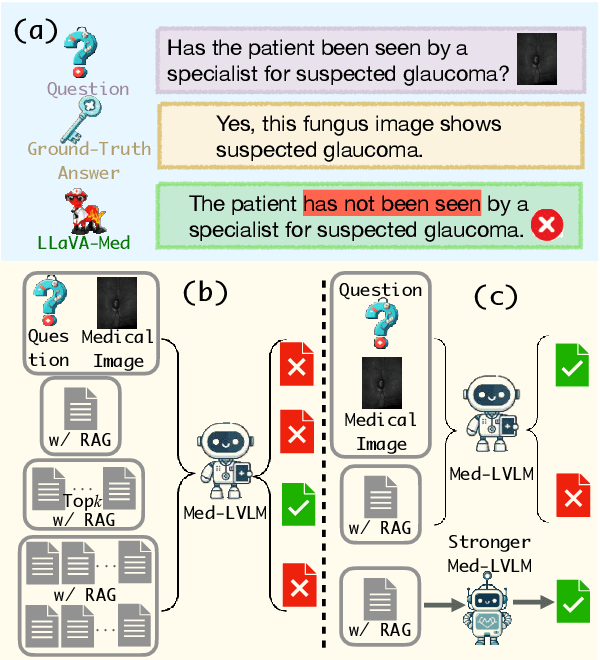
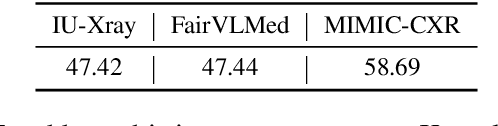
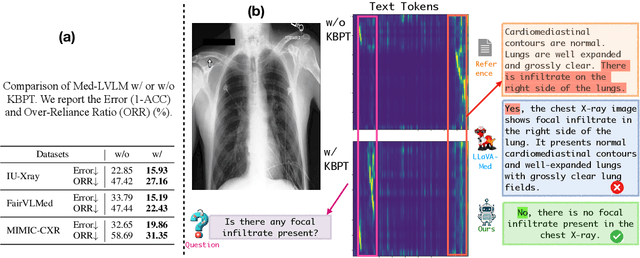
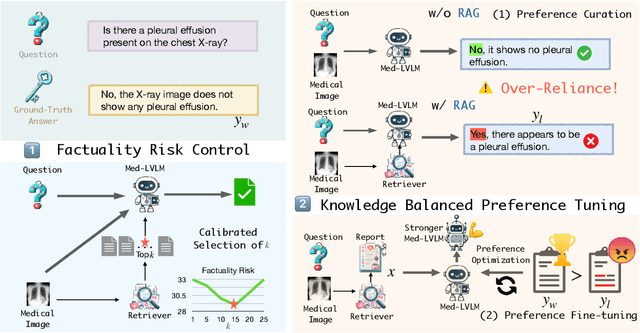
The recent emergence of Medical Large Vision Language Models (Med-LVLMs) has enhanced medical diagnosis. However, current Med-LVLMs frequently encounter factual issues, often generating responses that do not align with established medical facts. Retrieval-Augmented Generation (RAG), which utilizes external knowledge, can improve the factual accuracy of these models but introduces two major challenges. First, limited retrieved contexts might not cover all necessary information, while excessive retrieval can introduce irrelevant and inaccurate references, interfering with the model's generation. Second, in cases where the model originally responds correctly, applying RAG can lead to an over-reliance on retrieved contexts, resulting in incorrect answers. To address these issues, we propose RULE, which consists of two components. First, we introduce a provably effective strategy for controlling factuality risk through the calibrated selection of the number of retrieved contexts. Second, based on samples where over-reliance on retrieved contexts led to errors, we curate a preference dataset to fine-tune the model, balancing its dependence on inherent knowledge and retrieved contexts for generation. We demonstrate the effectiveness of RULE on three medical VQA datasets, achieving an average improvement of 20.8% in factual accuracy. We publicly release our benchmark and code in https://github.com/richard-peng-xia/RULE.
Channel Modeling Aided Dataset Generation for AI-Enabled CSI Feedback: Advances, Challenges, and Solutions
Jul 01, 2024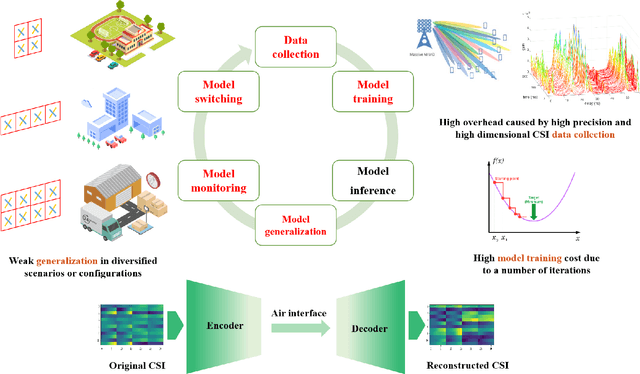
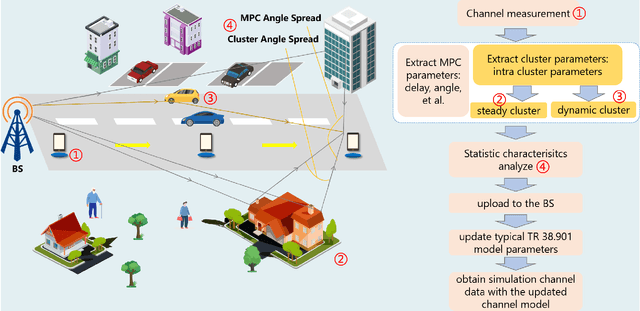
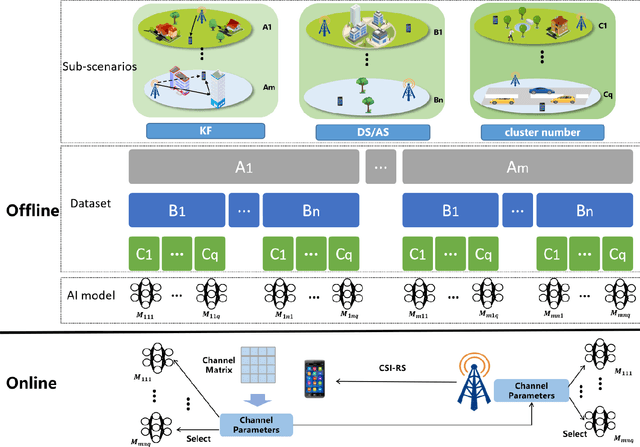
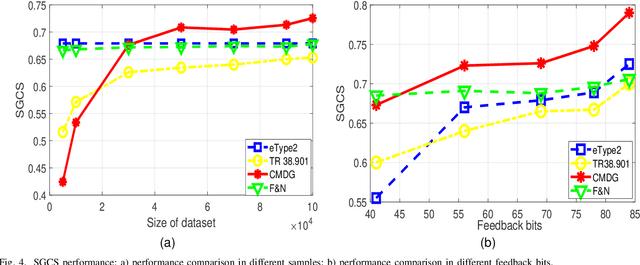
The AI-enabled autoencoder has demonstrated great potential in channel state information (CSI) feedback in frequency division duplex (FDD) multiple input multiple output (MIMO) systems. However, this method completely changes the existing feedback strategies, making it impractical to deploy in recent years. To address this issue, this paper proposes a channel modeling aided data augmentation method based on a limited number of field channel data. Specifically, the user equipment (UE) extracts the primary stochastic parameters of the field channel data and transmits them to the base station (BS). The BS then updates the typical TR 38.901 model parameters with the extracted parameters. In this way, the updated channel model is used to generate the dataset. This strategy comprehensively considers the dataset collection, model generalization, model monitoring, and so on. Simulations verify that our proposed strategy can significantly improve performance compared to the benchmarks.
Beyond Thumbs Up/Down: Untangling Challenges of Fine-Grained Feedback for Text-to-Image Generation
Jun 24, 2024Human feedback plays a critical role in learning and refining reward models for text-to-image generation, but the optimal form the feedback should take for learning an accurate reward function has not been conclusively established. This paper investigates the effectiveness of fine-grained feedback which captures nuanced distinctions in image quality and prompt-alignment, compared to traditional coarse-grained feedback (for example, thumbs up/down or ranking between a set of options). While fine-grained feedback holds promise, particularly for systems catering to diverse societal preferences, we show that demonstrating its superiority to coarse-grained feedback is not automatic. Through experiments on real and synthetic preference data, we surface the complexities of building effective models due to the interplay of model choice, feedback type, and the alignment between human judgment and computational interpretation. We identify key challenges in eliciting and utilizing fine-grained feedback, prompting a reassessment of its assumed benefits and practicality. Our findings -- e.g., that fine-grained feedback can lead to worse models for a fixed budget, in some settings; however, in controlled settings with known attributes, fine grained rewards can indeed be more helpful -- call for careful consideration of feedback attributes and potentially beckon novel modeling approaches to appropriately unlock the potential value of fine-grained feedback in-the-wild.
Robust Zero Trust Architecture: Joint Blockchain based Federated learning and Anomaly Detection based Framework
Jun 24, 2024This paper introduces a robust zero-trust architecture (ZTA) tailored for the decentralized system that empowers efficient remote work and collaboration within IoT networks. Using blockchain-based federated learning principles, our proposed framework includes a robust aggregation mechanism designed to counteract malicious updates from compromised clients, enhancing the security of the global learning process. Moreover, secure and reliable trust computation is essential for remote work and collaboration. The robust ZTA framework integrates anomaly detection and trust computation, ensuring secure and reliable device collaboration in a decentralized fashion. We introduce an adaptive algorithm that dynamically adjusts to varying user contexts, using unsupervised clustering to detect novel anomalies, like zero-day attacks. To ensure a reliable and scalable trust computation, we develop an algorithm that dynamically adapts to varying user contexts by employing incremental anomaly detection and clustering techniques to identify and share local and global anomalies between nodes. Future directions include scalability improvements, Dirichlet process for advanced anomaly detection, privacy-preserving techniques, and the integration of post-quantum cryptographic methods to safeguard against emerging quantum threats.