 Add to Chrome
 Add to Firefox
 Add to Edge
From Cheap Fakes to Pure Synthesis: Addressing the New Era of T2V Fake News Videos
Aug 07, 2026
Recent text-to-video (T2V) generation models enable fake news videos to be synthesized from scratch, shifting the threat beyond cheap fakes assembled from existing footage. Such news videos can closely match fabricated narratives, creating a modality alignment trap for existing detectors. Existing datasets lack pure synthesis fake news videos. Although directly prompting T2V models with descriptions of fake news videos can yield perfectly aligned samples, it reduces the fake news video detection (FNVD) to unimodal shortcuts and causes semantic-visual degeneration. To counter this, we formulate T2V-FNVD as a novel ternary classification task with three labels (real, cheap fake, and pure synthesis fake) and construct the first pure synthesis fake news video dataset (PS-FNVD). PS-FNVD includes fabricated events with aligned deception (Type 1) and true events with false visual provenance (Type 2), preventing models from exploiting unimodal shortcuts. Furthermore, we propose the Reasoning-guided T2V-FNVD (R-T2V) framework. Trained through conditioned rationale generation and supervised fine-tuning, R-T2V integrates high-level semantic logic with low-level physical generative traces to predict the ternary veracity label. Extensive experiments across 10 prevailing baselines show that R-T2V achieves the state-of-the-art performance, outperforming the second-best baseline by 12.20 percentage points in accuracy and 8.46 percentage points in macro $F_1$.

Novel Claim or Déjà Vu? Rethinking "Contamination-Free'' Dynamic Evaluation for Multimodal Automated Fact-Checking
Jul 26, 2026Multimodal automated fact-checking (MAFC) verifies claims by retrieving and reasoning over external evidence. However, most existing static benchmarks risk contamination: they primarily consist of outdated claims verifiable using an LLM's internal knowledge without external evidence. This can inflate performance estimates and fail to reflect true capability on novel claims that require up-to-date information. To address this, emerging dynamic benchmarks collect claims published after LLMs' knowledge cut-off dates, assuming they are uncontaminated. This work revisits this assumption by empirically studying contamination risks in both the state-of-the-art (SOTA) static AVeriTeC benchmark and our newly constructed dynamic ClaimReview2025Q4 benchmark, as well as their impact on MAFC evaluation. Our experiments yield 16 findings, highlighting three key results: (1) Dynamic evaluation reduces but does not eliminate contamination risks, as 17.09\%--29.30\% of post-cut-off claims remain potentially contaminated; (2) Many newly published claims can be verified either directly or by synthesizing multiple pieces of public knowledge available before the cut-off; and (3) Contamination can induce statistically significant inflation in MAFC performance, increasing Macro-F1 by up to 11.34 points and distorting system rankings. In light of these findings, we re-evaluate SOTA LLMs under a strictly contamination-controlled setting. Our study provides practical guidelines for trustworthy MAFC evaluation.
OneRetrieval: Unifying Multi-Branch E-commerce Retrieval with an Editable Generative Model
Jun 11, 2026Industrial e-commerce search serves hundreds of millions of items through a multi-branch retrieval stage fused by hand-tuned merging without joint optimization. Generative retrieval (GR) raises the prospect of collapsing this stage into a single model, yet unification is gated by more than retrieval quality: the inverted-index branch converts below the platform average yet persists because it is almost the only branch where operations can inject a new term within hours without any model update; a one-model substitute must preserve this real-time editability. Existing GR methods structurally lack it: closed-codebook methods fix each slot to a quantized embedding at training, while open-vocabulary methods leave new-term routing to model generalization. We present OneRetrieval, a one-model GR framework built on Keyword-Aligned Encoding (KAE), which ties each identifier position to an interpretable attribute word, pairing competitive recall quality with the editability of the inverted index -- to our knowledge the first editable generative retrieval method. An information-theoretic merging organizes 18 attribute categories into six codebook groups with non-uniform capacity; reserved slots in each codebook can be bound to new words after deployment without retraining; and a four-stage fine-tuning pipeline secures quality and editability jointly. On five million real-traffic requests, OneRetrieval matches the deep recall of the strongest generative baseline, with an intervention hit rate over an order of magnitude above closed-codebook encodings. Online, replacing the inverted-index branch significantly lifts order volume; extending to nearly the entire stage holds conversion while improving CTR. The system is deployed at Kuaishou, serving hundreds of millions of PVs daily.
Score-Based Conditional Flow Models for MIMO Receiver Design with Superimposed Pilots
Feb 25, 2026Accurate channel state information (CSI) is vital for multiple-input multiple-output (MIMO) systems. However, superimposed pilots (SIP), which reduce overhead, introduce severe pilot contamination and data interference, complicating joint channel estimation and data detection. This paper proposes a conditional flow matching receiver (CFM-Rx), an unsupervised generative framework that learns directly from received signals, eliminating the need for labeled data and improving adaptability across diverse system settings. By leveraging flow-based generative modeling, CFM-Rx enables deterministic, low-latency inference and exploits model invertibility to capture the bidirectional nature of signal propagation. This framework unifies flow matching with score-based diffusion modeling via a moment-consistent ordinary differential equation (ODE), replacing stochastic differential equation (SDE) sampling with a deterministic and efficient process. Furthermore, it integrates receiver-side priors to ensure stable, data-consistent inference. Extensive simulation results across various MIMO configurations demonstrate that CFM-Rx consistently outperforms conventional estimators and state-of-the-art data-driven receivers, achieving notable gains in channel estimation accuracy and symbol detection robustness, particularly under severe pilot contamination.
KuaiSearch: A Large-Scale E-Commerce Search Dataset for Recall, Ranking, and Relevance
Feb 12, 2026E-commerce search serves as a central interface, connecting user demands with massive product inventories and plays a vital role in our daily lives. However, in real-world applications, it faces challenges, including highly ambiguous queries, noisy product texts with weak semantic order, and diverse user preferences, all of which make it difficult to accurately capture user intent and fine-grained product semantics. In recent years, significant advances in large language models (LLMs) for semantic representation and contextual reasoning have created new opportunities to address these challenges. Nevertheless, existing e-commerce search datasets still suffer from notable limitations: queries are often heuristically constructed, cold-start users and long-tail products are filtered out, query and product texts are anonymized, and most datasets cover only a single stage of the search pipeline. Collectively, these issues constrain research on LLM-based e-commerce search. To address these challenges, we construct and release KuaiSearch. To the best of our knowledge, it is the largest e-commerce search dataset currently available. KuaiSearch is built upon real user search interactions from the Kuaishou platform, preserving authentic user queries and natural-language product texts, covering cold-start users and long-tail products, and systematically spanning three key stages of the search pipeline: recall, ranking, and relevance judgment. We conduct a comprehensive analysis of KuaiSearch from multiple perspectives, including products, users, and queries, and establish benchmark experiments across several representative search tasks. Experimental results demonstrate that KuaiSearch provides a valuable foundation for research on real-world e-commerce search.
BLADE: A Behavior-Level Data Augmentation Framework with Dual Fusion Modeling for Multi-Behavior Sequential Recommendation
Dec 15, 2025Multi-behavior sequential recommendation aims to capture users' dynamic interests by modeling diverse types of user interactions over time. Although several studies have explored this setting, the recommendation performance remains suboptimal, mainly due to two fundamental challenges: the heterogeneity of user behaviors and data sparsity. To address these challenges, we propose BLADE, a framework that enhances multi-behavior modeling while mitigating data sparsity. Specifically, to handle behavior heterogeneity, we introduce a dual item-behavior fusion architecture that incorporates behavior information at both the input and intermediate levels, enabling preference modeling from multiple perspectives. To mitigate data sparsity, we design three behavior-level data augmentation methods that operate directly on behavior sequences rather than core item sequences. These methods generate diverse augmented views while preserving the semantic consistency of item sequences. These augmented views further enhance representation learning and generalization via contrastive learning. Experiments on three real-world datasets demonstrate the effectiveness of our approach.
Benchmarking Multimodal LLMs on Recognition and Understanding over Chemical Tables
Jun 13, 2025Chemical tables encode complex experimental knowledge through symbolic expressions, structured variables, and embedded molecular graphics. Existing benchmarks largely overlook this multimodal and domain-specific complexity, limiting the ability of multimodal large language models to support scientific understanding in chemistry. In this work, we introduce ChemTable, a large-scale benchmark of real-world chemical tables curated from the experimental sections of literature. ChemTable includes expert-annotated cell polygons, logical layouts, and domain-specific labels, including reagents, catalysts, yields, and graphical components and supports two core tasks: (1) Table Recognition, covering structure parsing and content extraction; and (2) Table Understanding, encompassing both descriptive and reasoning-oriented question answering grounded in table structure and domain semantics. We evaluated a range of representative multimodal models, including both open-source and closed-source models, on ChemTable and reported a series of findings with practical and conceptual insights. Although models show reasonable performance on basic layout parsing, they exhibit substantial limitations on both descriptive and inferential QA tasks compared to human performance, and we observe significant performance gaps between open-source and closed-source models across multiple dimensions. These results underscore the challenges of chemistry-aware table understanding and position ChemTable as a rigorous and realistic benchmark for advancing scientific reasoning.
Mixture of Attention Yields Accurate Results for Tabular Data
Feb 18, 2025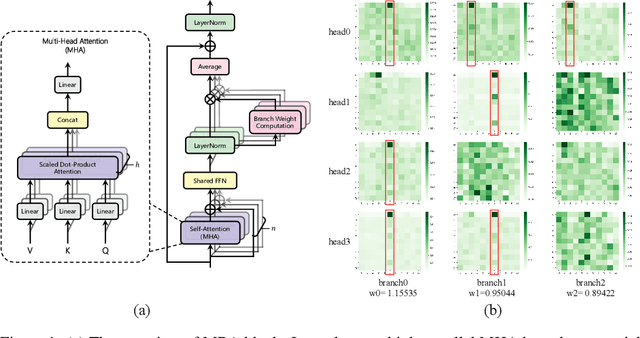
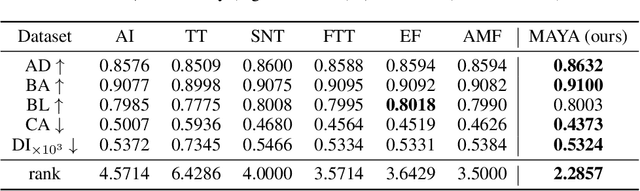
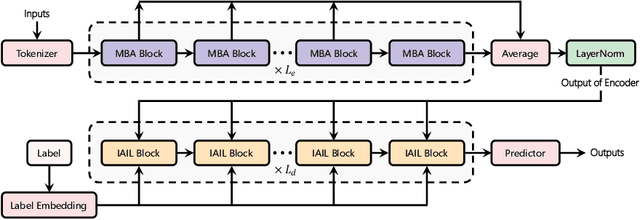
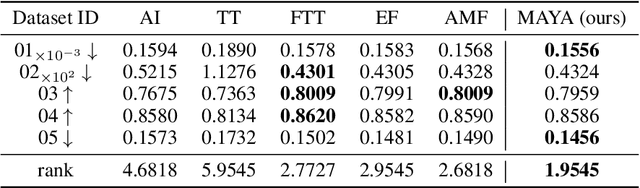
Tabular data inherently exhibits significant feature heterogeneity, but existing transformer-based methods lack specialized mechanisms to handle this property. To bridge the gap, we propose MAYA, an encoder-decoder transformer-based framework. In the encoder, we design a Mixture of Attention (MOA) that constructs multiple parallel attention branches and averages the features at each branch, effectively fusing heterogeneous features while limiting parameter growth. Additionally, we employ collaborative learning with a dynamic consistency weight constraint to produce more robust representations. In the decoder stage, cross-attention is utilized to seamlessly integrate tabular data with corresponding label features. This dual-attention mechanism effectively captures both intra-instance and inter-instance interactions. We evaluate the proposed method on a wide range of datasets and compare it with other state-of-the-art transformer-based methods. Extensive experiments demonstrate that our model achieves superior performance among transformer-based methods in both tabular classification and regression tasks.
Augmenting Channel Simulator and Semi- Supervised Learning for Efficient Indoor Positioning
Aug 01, 2024


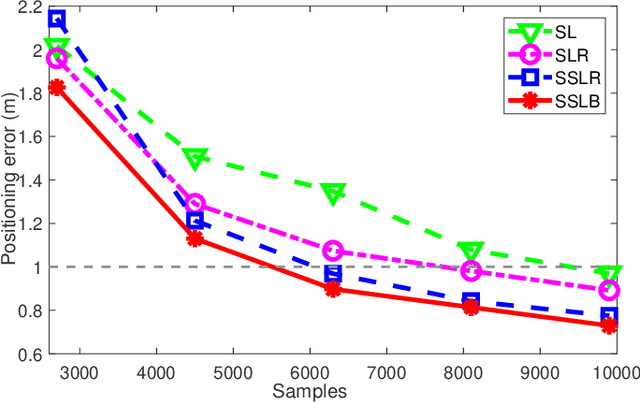
This work aims to tackle the labor-intensive and resource-consuming task of indoor positioning by proposing an efficient approach. The proposed approach involves the introduction of a semi-supervised learning (SSL) with a biased teacher (SSLB) algorithm, which effectively utilizes both labeled and unlabeled channel data. To reduce measurement expenses, unlabeled data is generated using an updated channel simulator (UCHS), and then weighted by adaptive confidence values to simplify the tuning of hyperparameters. Simulation results demonstrate that the proposed strategy achieves superior performance while minimizing measurement overhead and training expense compared to existing benchmarks, offering a valuable and practical solution for indoor positioning.
Channel Modeling Aided Dataset Generation for AI-Enabled CSI Feedback: Advances, Challenges, and Solutions
Jul 01, 2024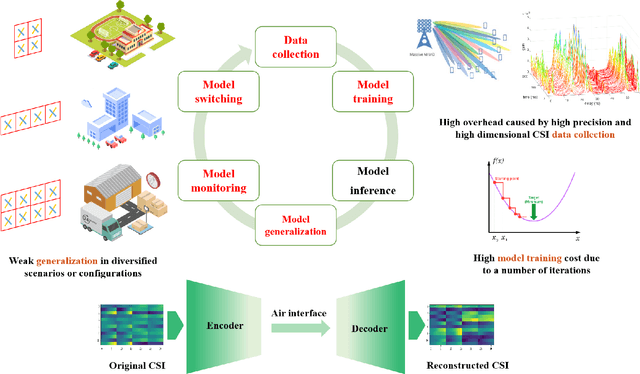
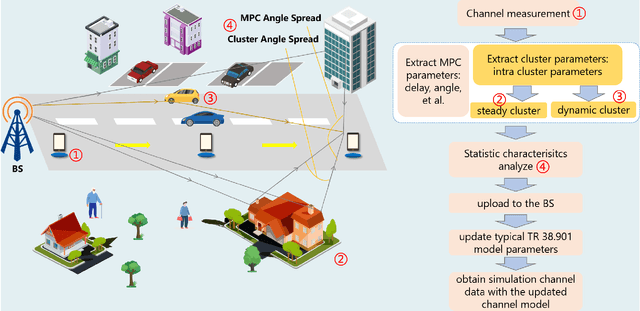
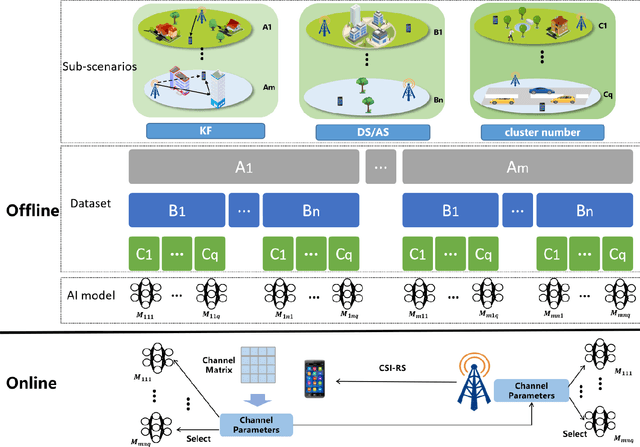
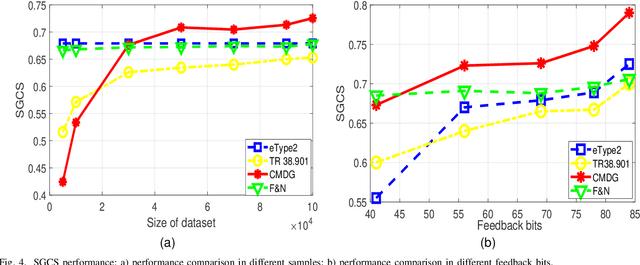
The AI-enabled autoencoder has demonstrated great potential in channel state information (CSI) feedback in frequency division duplex (FDD) multiple input multiple output (MIMO) systems. However, this method completely changes the existing feedback strategies, making it impractical to deploy in recent years. To address this issue, this paper proposes a channel modeling aided data augmentation method based on a limited number of field channel data. Specifically, the user equipment (UE) extracts the primary stochastic parameters of the field channel data and transmits them to the base station (BS). The BS then updates the typical TR 38.901 model parameters with the extracted parameters. In this way, the updated channel model is used to generate the dataset. This strategy comprehensively considers the dataset collection, model generalization, model monitoring, and so on. Simulations verify that our proposed strategy can significantly improve performance compared to the benchmarks.