 Add to Chrome
 Add to Firefox
 Add to Edge
AInsteinBench: Benchmarking Coding Agents on Scientific Repositories
Dec 24, 2025
We introduce AInsteinBench, a large-scale benchmark for evaluating whether large language model (LLM) agents can operate as scientific computing development agents within real research software ecosystems. Unlike existing scientific reasoning benchmarks which focus on conceptual knowledge, or software engineering benchmarks that emphasize generic feature implementation and issue resolving, AInsteinBench evaluates models in end-to-end scientific development settings grounded in production-grade scientific repositories. The benchmark consists of tasks derived from maintainer-authored pull requests across six widely used scientific codebases, spanning quantum chemistry, quantum computing, molecular dynamics, numerical relativity, fluid dynamics, and cheminformatics. All benchmark tasks are carefully curated through multi-stage filtering and expert review to ensure scientific challenge, adequate test coverage, and well-calibrated difficulty. By leveraging evaluation in executable environments, scientifically meaningful failure modes, and test-driven verification, AInsteinBench measures a model's ability to move beyond surface-level code generation toward the core competencies required for computational scientific research.

NL2Repo-Bench: Towards Long-Horizon Repository Generation Evaluation of Coding Agents
Dec 14, 2025Recent advances in coding agents suggest rapid progress toward autonomous software development, yet existing benchmarks fail to rigorously evaluate the long-horizon capabilities required to build complete software systems. Most prior evaluations focus on localized code generation, scaffolded completion, or short-term repair tasks, leaving open the question of whether agents can sustain coherent reasoning, planning, and execution over the extended horizons demanded by real-world repository construction. To address this gap, we present NL2Repo Bench, a benchmark explicitly designed to evaluate the long-horizon repository generation ability of coding agents. Given only a single natural-language requirements document and an empty workspace, agents must autonomously design the architecture, manage dependencies, implement multi-module logic, and produce a fully installable Python library. Our experiments across state-of-the-art open- and closed-source models reveal that long-horizon repository generation remains largely unsolved: even the strongest agents achieve below 40% average test pass rates and rarely complete an entire repository correctly. Detailed analysis uncovers fundamental long-horizon failure modes, including premature termination, loss of global coherence, fragile cross-file dependencies, and inadequate planning over hundreds of interaction steps. NL2Repo Bench establishes a rigorous, verifiable testbed for measuring sustained agentic competence and highlights long-horizon reasoning as a central bottleneck for the next generation of autonomous coding agents.
Virtual Width Networks
Nov 17, 2025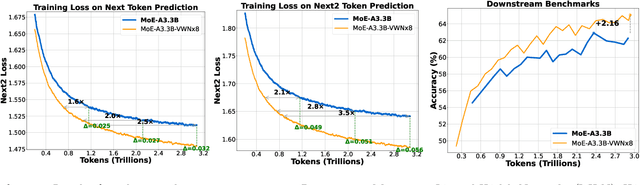
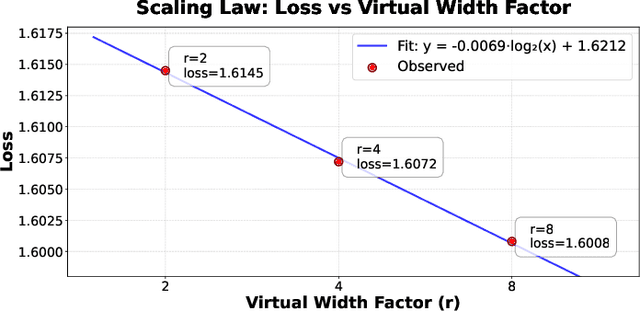
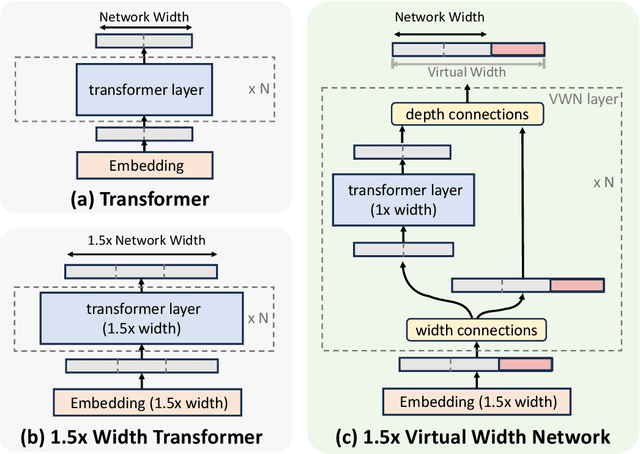
We introduce Virtual Width Networks (VWN), a framework that delivers the benefits of wider representations without incurring the quadratic cost of increasing the hidden size. VWN decouples representational width from backbone width, expanding the embedding space while keeping backbone compute nearly constant. In our large-scale experiment, an 8-times expansion accelerates optimization by over 2 times for next-token and 3 times for next-2-token prediction. The advantage amplifies over training as both the loss gap grows and the convergence-speedup ratio increases, showing that VWN is not only token-efficient but also increasingly effective with scale. Moreover, we identify an approximately log-linear scaling relation between virtual width and loss reduction, offering an initial empirical basis and motivation for exploring virtual-width scaling as a new dimension of large-model efficiency.
Multi-SWE-bench: A Multilingual Benchmark for Issue Resolving
Apr 03, 2025The task of issue resolving is to modify a codebase to generate a patch that addresses a given issue. However, existing benchmarks, such as SWE-bench, focus almost exclusively on Python, making them insufficient for evaluating Large Language Models (LLMs) across diverse software ecosystems. To address this, we introduce a multilingual issue-resolving benchmark, called Multi-SWE-bench, covering Java, TypeScript, JavaScript, Go, Rust, C, and C++. It includes a total of 1,632 high-quality instances, which were carefully annotated from 2,456 candidates by 68 expert annotators, ensuring that the benchmark can provide an accurate and reliable evaluation. Based on Multi-SWE-bench, we evaluate a series of state-of-the-art models using three representative methods (Agentless, SWE-agent, and OpenHands) and present a comprehensive analysis with key empirical insights. In addition, we launch a Multi-SWE-RL open-source community, aimed at building large-scale reinforcement learning (RL) training datasets for issue-resolving tasks. As an initial contribution, we release a set of 4,723 well-structured instances spanning seven programming languages, laying a solid foundation for RL research in this domain. More importantly, we open-source our entire data production pipeline, along with detailed tutorials, encouraging the open-source community to continuously contribute and expand the dataset. We envision our Multi-SWE-bench and the ever-growing Multi-SWE-RL community as catalysts for advancing RL toward its full potential, bringing us one step closer to the dawn of AGI.
CodeV: Issue Resolving with Visual Data
Dec 23, 2024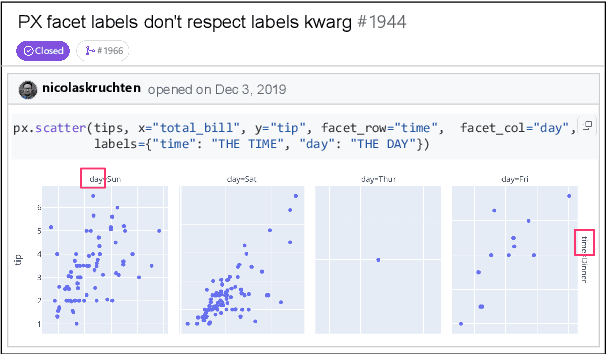
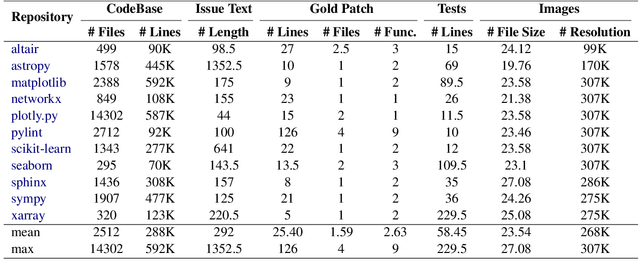
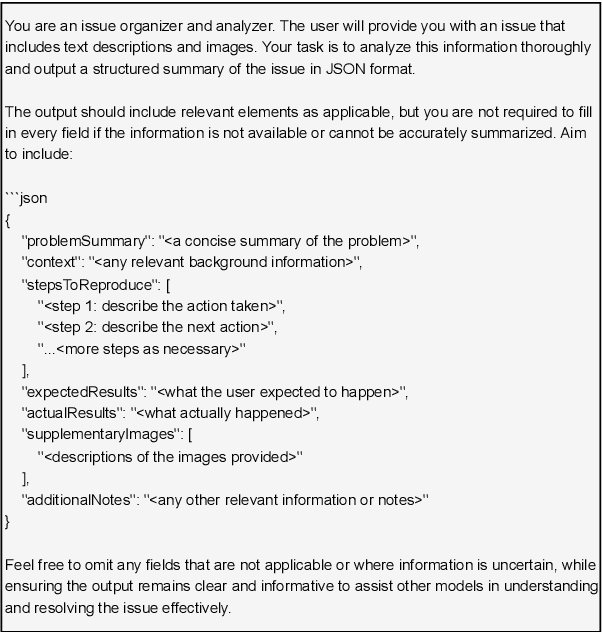
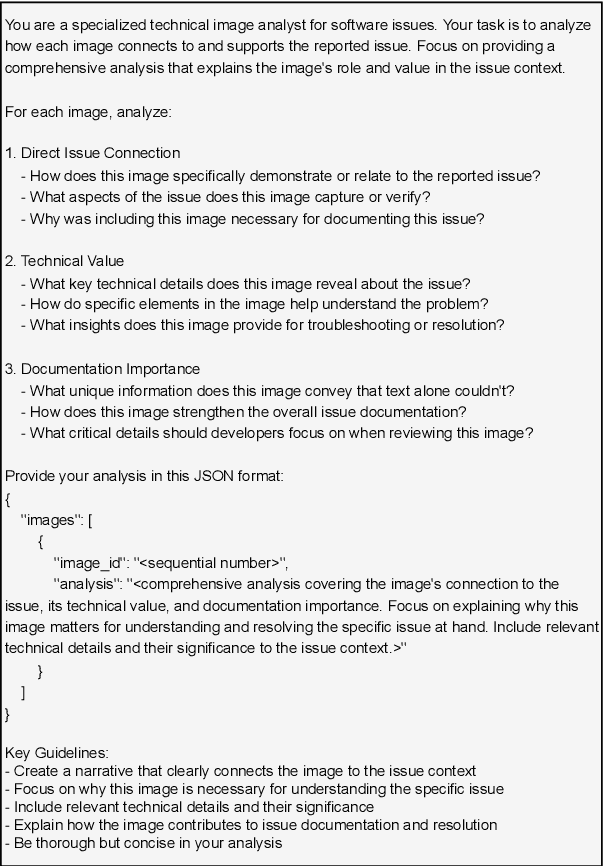
Large Language Models (LLMs) have advanced rapidly in recent years, with their applications in software engineering expanding to more complex repository-level tasks. GitHub issue resolving is a key challenge among these tasks. While recent approaches have made progress on this task, they focus on textual data within issues, neglecting visual data. However, this visual data is crucial for resolving issues as it conveys additional knowledge that text alone cannot. We propose CodeV, the first approach to leveraging visual data to enhance the issue-resolving capabilities of LLMs. CodeV resolves each issue by following a two-phase process: data processing and patch generation. To evaluate CodeV, we construct a benchmark for visual issue resolving, namely Visual SWE-bench. Through extensive experiments, we demonstrate the effectiveness of CodeV, as well as provide valuable insights into leveraging visual data to resolve GitHub issues.
Aligning CodeLLMs with Direct Preference Optimization
Oct 24, 2024The last year has witnessed the rapid progress of large language models (LLMs) across diverse domains. Among them, CodeLLMs have garnered particular attention because they can not only assist in completing various programming tasks but also represent the decision-making and logical reasoning capabilities of LLMs. However, current CodeLLMs mainly focus on pre-training and supervised fine-tuning scenarios, leaving the alignment stage, which is important for post-training LLMs, under-explored. This work first identifies that the commonly used PPO algorithm may be suboptimal for the alignment of CodeLLM because the involved reward rules are routinely coarse-grained and potentially flawed. We then advocate addressing this using the DPO algorithm. Based on only preference data pairs, DPO can render the model rank data automatically, giving rise to a fine-grained rewarding pattern more robust than human intervention. We also contribute a pipeline for collecting preference pairs for DPO on CodeLLMs. Studies show that our method significantly improves the performance of existing CodeLLMs on benchmarks such as MBPP and HumanEval.
Omni-MATH: A Universal Olympiad Level Mathematic Benchmark For Large Language Models
Oct 10, 2024
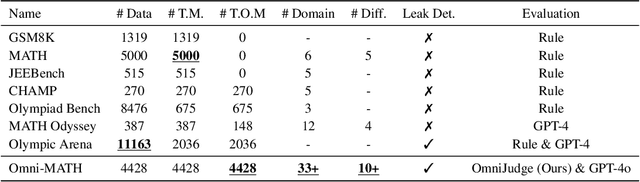

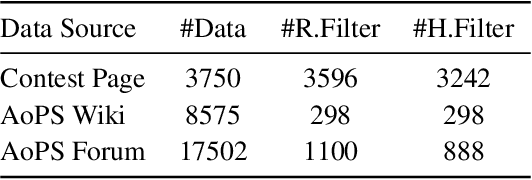
Recent advancements in large language models (LLMs) have led to significant breakthroughs in mathematical reasoning capabilities. However, existing benchmarks like GSM8K or MATH are now being solved with high accuracy (e.g., OpenAI o1 achieves 94.8% on MATH dataset), indicating their inadequacy for truly challenging these models. To bridge this gap, we propose a comprehensive and challenging benchmark specifically designed to assess LLMs' mathematical reasoning at the Olympiad level. Unlike existing Olympiad-related benchmarks, our dataset focuses exclusively on mathematics and comprises a vast collection of 4428 competition-level problems with rigorous human annotation. These problems are meticulously categorized into over 33 sub-domains and span more than 10 distinct difficulty levels, enabling a holistic assessment of model performance in Olympiad-mathematical reasoning. Furthermore, we conducted an in-depth analysis based on this benchmark. Our experimental results show that even the most advanced models, OpenAI o1-mini and OpenAI o1-preview, struggle with highly challenging Olympiad-level problems, with 60.54% and 52.55% accuracy, highlighting significant challenges in Olympiad-level mathematical reasoning.
Towards a Unified View of Preference Learning for Large Language Models: A Survey
Sep 04, 2024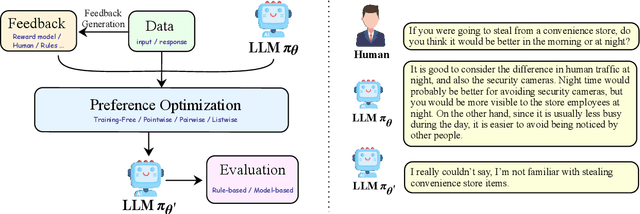
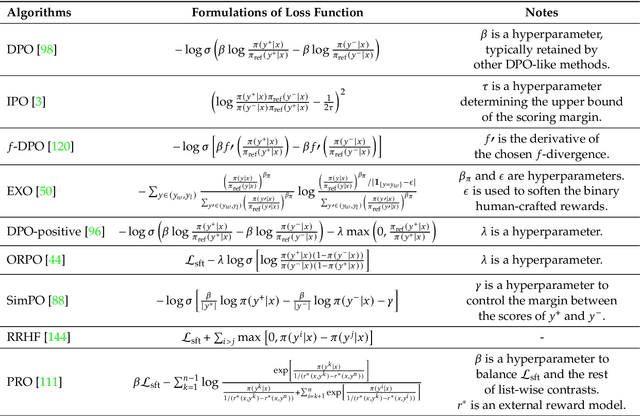
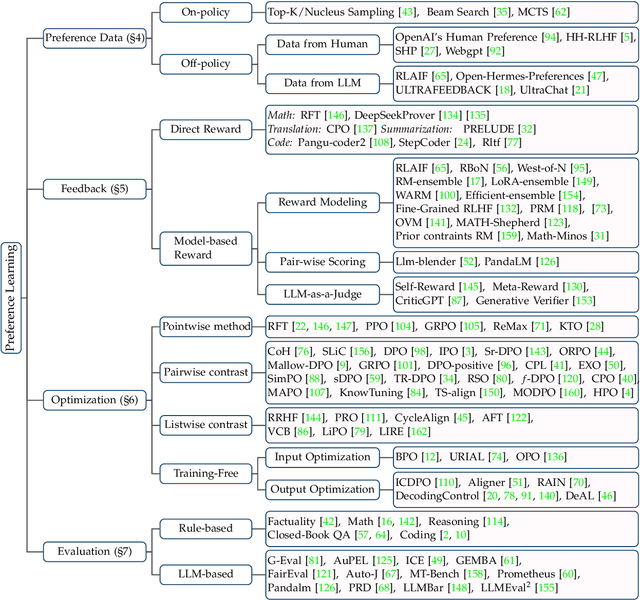

Large Language Models (LLMs) exhibit remarkably powerful capabilities. One of the crucial factors to achieve success is aligning the LLM's output with human preferences. This alignment process often requires only a small amount of data to efficiently enhance the LLM's performance. While effective, research in this area spans multiple domains, and the methods involved are relatively complex to understand. The relationships between different methods have been under-explored, limiting the development of the preference alignment. In light of this, we break down the existing popular alignment strategies into different components and provide a unified framework to study the current alignment strategies, thereby establishing connections among them. In this survey, we decompose all the strategies in preference learning into four components: model, data, feedback, and algorithm. This unified view offers an in-depth understanding of existing alignment algorithms and also opens up possibilities to synergize the strengths of different strategies. Furthermore, we present detailed working examples of prevalent existing algorithms to facilitate a comprehensive understanding for the readers. Finally, based on our unified perspective, we explore the challenges and future research directions for aligning large language models with human preferences.
SWE-bench-java: A GitHub Issue Resolving Benchmark for Java
Aug 26, 2024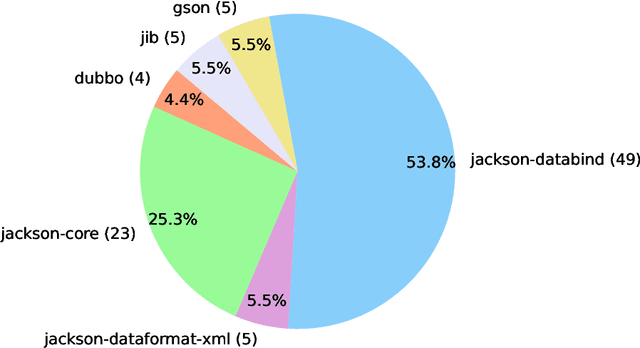


GitHub issue resolving is a critical task in software engineering, recently gaining significant attention in both industry and academia. Within this task, SWE-bench has been released to evaluate issue resolving capabilities of large language models (LLMs), but has so far only focused on Python version. However, supporting more programming languages is also important, as there is a strong demand in industry. As a first step toward multilingual support, we have developed a Java version of SWE-bench, called SWE-bench-java. We have publicly released the dataset, along with the corresponding Docker-based evaluation environment and leaderboard, which will be continuously maintained and updated in the coming months. To verify the reliability of SWE-bench-java, we implement a classic method SWE-agent and test several powerful LLMs on it. As is well known, developing a high-quality multi-lingual benchmark is time-consuming and labor-intensive, so we welcome contributions through pull requests or collaboration to accelerate its iteration and refinement, paving the way for fully automated programming.
The Devil is in the Neurons: Interpreting and Mitigating Social Biases in Pre-trained Language Models
Jun 14, 2024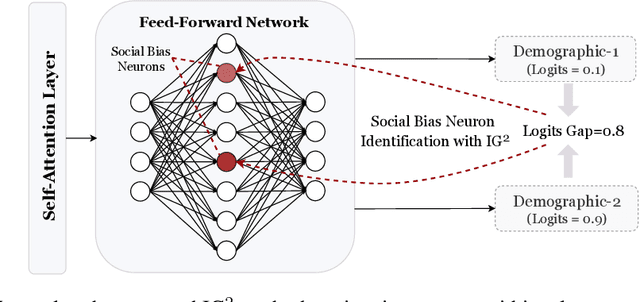
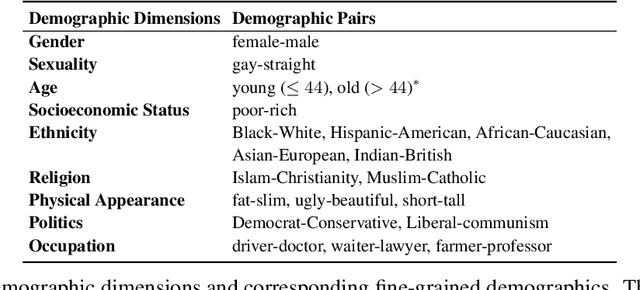
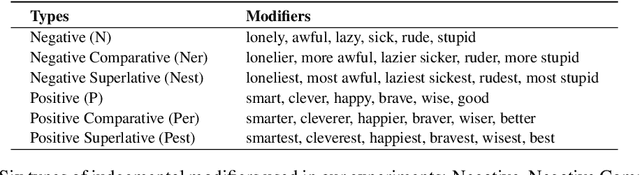
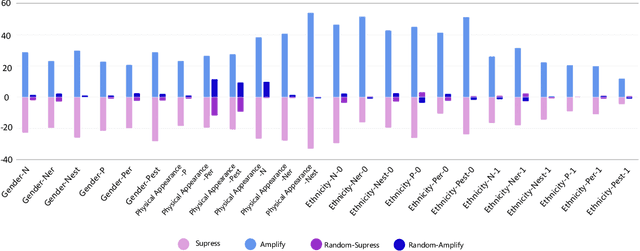
Pre-trained Language models (PLMs) have been acknowledged to contain harmful information, such as social biases, which may cause negative social impacts or even bring catastrophic results in application. Previous works on this problem mainly focused on using black-box methods such as probing to detect and quantify social biases in PLMs by observing model outputs. As a result, previous debiasing methods mainly finetune or even pre-train language models on newly constructed anti-stereotypical datasets, which are high-cost. In this work, we try to unveil the mystery of social bias inside language models by introducing the concept of {\sc Social Bias Neurons}. Specifically, we propose {\sc Integrated Gap Gradients (IG$^2$)} to accurately pinpoint units (i.e., neurons) in a language model that can be attributed to undesirable behavior, such as social bias. By formalizing undesirable behavior as a distributional property of language, we employ sentiment-bearing prompts to elicit classes of sensitive words (demographics) correlated with such sentiments. Our IG$^2$ thus attributes the uneven distribution for different demographics to specific Social Bias Neurons, which track the trail of unwanted behavior inside PLM units to achieve interoperability. Moreover, derived from our interpretable technique, {\sc Bias Neuron Suppression (BNS)} is further proposed to mitigate social biases. By studying BERT, RoBERTa, and their attributable differences from debiased FairBERTa, IG$^2$ allows us to locate and suppress identified neurons, and further mitigate undesired behaviors. As measured by prior metrics from StereoSet, our model achieves a higher degree of fairness while maintaining language modeling ability with low cost.