 Add to Chrome
 Add to Firefox
 Add to Edge
Efficient Agentic Reinforcement Learning with On-Policy Intrinsic Knowledge Boundary Enhancement
May 26, 2026
Agentic reinforcement learning (RL) has proven effective for training LLM-based agents with external tool-use capabilities. However, we identify that agentic RL training induces increasing redundant tool calls and blurs the model's intrinsic knowledge boundary, where the model fails to distinguish when tools are needed versus when parametric knowledge suffices. Existing solutions based on reward shaping create coarse-grained optimization targets that tend to incentivize indiscriminate tool-call suppression, leading to reward hacking. In this paper, we propose AKBE (Agentic Knowledge Boundary Enhancement), an on-policy method that dynamically probes the model's intrinsic knowledge boundary through dual-path (with-tool and no-tool) rollouts during training. We define the knowledge boundary as the per-instance determination of whether tools are required and the minimum tool calls necessary. By comparing correctness across paths, AKBE categorizes trajectories and constructs targeted supervisory signals that guide efficient tool-use patterns for each question. These signals are integrated seamlessly into the agentic RL training loop. Experiments on seven QA benchmarks demonstrate that AKBE improves task accuracy by +1.85 on average and reduces tool calls by 18% over standard agentic RL, yielding 25% higher tool productivity without any accuracy-efficiency trade-off. Further analysis suggests its plug-and-play compatibility across different RL algorithms and the mechanism of each signal category. Our code is available at https://github.com/CuSO4-Chen/AKBE.

A$^2$TGPO: Agentic Turn-Group Policy Optimization with Adaptive Turn-level Clipping
May 07, 2026Reinforcement learning for agentic large language models (LLMs) typically relies on a sparse, trajectory-level outcome reward, making it difficult to evaluate the contribution of individual tool-calls within multi-turn interactions. Existing approaches to such process credit assignment either depend on separate external process reward models that introduce additional consumption, or tree-based structural rollout that merely redistributes the outcome signal while constraining trajectory diversity. A promising alternative leverages the per-turn change in the policy's predicted probability of the ground-truth, termed Information Gain (IG), as an intrinsic process signal without an external evaluator. However, prior work on leveraging IG signals within the RL training loop faces three systematic challenges: normalizing across turns that face heterogeneous positional contexts can distort the relative standing of individual turns, accumulating a variable number of terms causes advantage magnitudes to drift with trajectory depth, and a fixed clipping range governs policy updates identically for turns with vastly different IG signals. In this paper, we propose A$^2$TGPO (Agentic Turn-Group Policy Optimization with Adaptive Turn-level Clipping), which retains IG as the intrinsic signal but re-designs how it is normalized, accumulated, and consumed: (i) turn-group normalization: normalizes IG within each (prompt, turn-index) group so that each turn is compared only against peers at the same interaction depth; (ii) variance-rescaled discounted accumulation: divides cumulative normalized IG by square root of accumulated terms to keep advantage magnitudes comparable across turn positions; and (iii) adaptive turn-level clipping: modulates each turn's clipping range based on its normalized IG, widening the update region for informative turns and narrowing it for uninformative ones.
RAIE: Region-Aware Incremental Preference Editing with LoRA for LLM-based Recommendation
Feb 28, 2026Large language models (LLMs) are increasingly adopted as the backbone of recommender systems. However, user-item interactions in real-world scenarios are non-stationary, making preference drift over time inevitable. Existing model update strategies mainly rely on global fine-tuning or pointwise editing, but they face two fundamental challenges: (i) imbalanced update granularity, where global updates perturb behaviors unrelated to the target while pointwise edits fail to capture broader preference shifts; (ii) unstable incremental updates, where repeated edits interfere with prior adaptations, leading to catastrophic forgetting and inconsistent recommendations. To address these issues, we propose Region-Aware Incremental Editing (RAIE), a plug-in framework that freezes the backbone model and performs region-level updates. RAIE first constructs semantically coherent preference regions via spherical k-means in the representation space. It then assigns incoming sequences to regions via confidence-aware gating and performs three localized edit operations - Update, Expand, and Add - to dynamically revise the affected region. Each region is equipped with a dedicated Low-Rank Adaptation (LoRA) module, which is trained only on the region's updated data. During inference, RAIE routes each user sequence to its corresponding region and activates the region-specific adapter for prediction. Experiments on two benchmark datasets under a time-sliced protocol that segments data into Set-up (S), Finetune (F), and Test (T) show that RAIE significantly outperforms state-of-the-art baselines while effectively mitigating forgetting. These results demonstrate that region-aware editing offers an accurate and scalable mechanism for continual adaptation in dynamic recommendation scenarios. Our code is available at https://github.com/fengaogao/RAIE.
SonicBench: Dissecting the Physical Perception Bottleneck in Large Audio Language Models
Jan 16, 2026Large Audio Language Models (LALMs) excel at semantic and paralinguistic tasks, yet their ability to perceive the fundamental physical attributes of audio such as pitch, loudness, and spatial location remains under-explored. To bridge this gap, we introduce SonicBench, a psychophysically grounded benchmark that systematically evaluates 12 core physical attributes across five perceptual dimensions. Unlike previous datasets, SonicBench uses a controllable generation toolbox to construct stimuli for two complementary paradigms: recognition (absolute judgment) and comparison (relative judgment). This design allows us to probe not only sensory precision but also relational reasoning capabilities, a domain where humans typically exhibit greater proficiency. Our evaluation reveals a substantial deficiency in LALMs' foundational auditory understanding; most models perform near random guessing and, contrary to human patterns, fail to show the expected advantage on comparison tasks. Furthermore, explicit reasoning yields minimal gains. However, our linear probing analysis demonstrates crucially that frozen audio encoders do successfully capture these physical cues (accuracy at least 60%), suggesting that the primary bottleneck lies in the alignment and decoding stages, where models fail to leverage the sensory signals they have already captured.
AT$^2$PO: Agentic Turn-based Policy Optimization via Tree Search
Jan 08, 2026LLM agents have emerged as powerful systems for tackling multi-turn tasks by interleaving internal reasoning and external tool interactions. Agentic Reinforcement Learning has recently drawn significant research attention as a critical post-training paradigm to further refine these capabilities. In this paper, we present AT$^2$PO (Agentic Turn-based Policy Optimization via Tree Search), a unified framework for multi-turn agentic RL that addresses three core challenges: limited exploration diversity, sparse credit assignment, and misaligned policy optimization. AT$^2$PO introduces a turn-level tree structure that jointly enables Entropy-Guided Tree Expansion for strategic exploration and Turn-wise Credit Assignment for fine-grained reward propagation from sparse outcomes. Complementing this, we propose Agentic Turn-based Policy Optimization, a turn-level learning objective that aligns policy updates with the natural decision granularity of agentic interactions. ATPO is orthogonal to tree search and can be readily integrated into any multi-turn RL pipeline. Experiments across seven benchmarks demonstrate consistent improvements over the state-of-the-art baseline by up to 1.84 percentage points in average, with ablation studies validating the effectiveness of each component. Our code is available at https://github.com/zzfoutofspace/ATPO.
LongEmotion: Measuring Emotional Intelligence of Large Language Models in Long-Context Interaction
Sep 09, 2025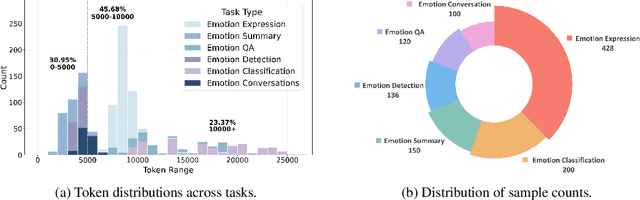
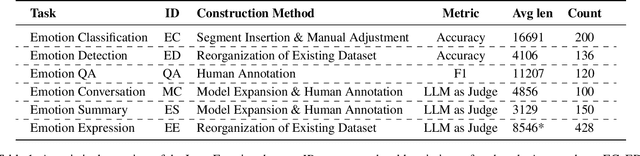
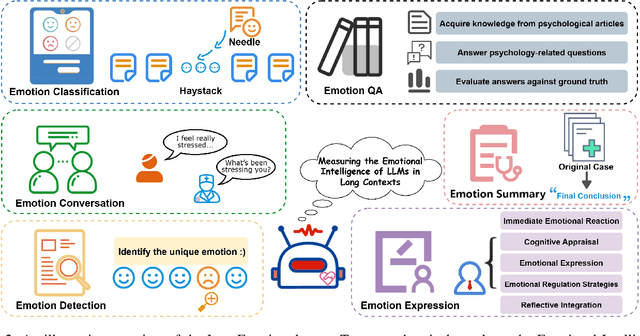
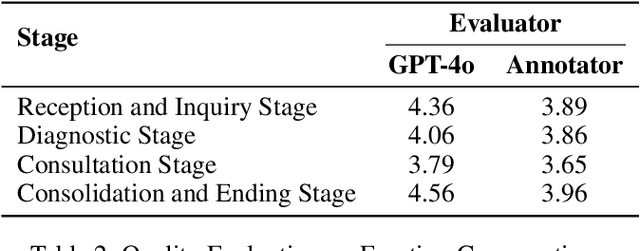
Large language models (LLMs) make significant progress in Emotional Intelligence (EI) and long-context understanding. However, existing benchmarks tend to overlook certain aspects of EI in long-context scenarios, especially under realistic, practical settings where interactions are lengthy, diverse, and often noisy. To move towards such realistic settings, we present LongEmotion, a benchmark specifically designed for long-context EI tasks. It covers a diverse set of tasks, including Emotion Classification, Emotion Detection, Emotion QA, Emotion Conversation, Emotion Summary, and Emotion Expression. On average, the input length for these tasks reaches 8,777 tokens, with long-form generation required for Emotion Expression. To enhance performance under realistic constraints, we incorporate Retrieval-Augmented Generation (RAG) and Collaborative Emotional Modeling (CoEM), and compare them with standard prompt-based methods. Unlike conventional approaches, our RAG method leverages both the conversation context and the large language model itself as retrieval sources, avoiding reliance on external knowledge bases. The CoEM method further improves performance by decomposing the task into five stages, integrating both retrieval augmentation and limited knowledge injection. Experimental results show that both RAG and CoEM consistently enhance EI-related performance across most long-context tasks, advancing LLMs toward more practical and real-world EI applications. Furthermore, we conducted a comparative case study experiment on the GPT series to demonstrate the differences among various models in terms of EI. Code is available on GitHub at https://github.com/LongEmotion/LongEmotion, and the project page can be found at https://longemotion.github.io/.
AutoCBT: An Autonomous Multi-agent Framework for Cognitive Behavioral Therapy in Psychological Counseling
Jan 16, 2025


Traditional in-person psychological counseling remains primarily niche, often chosen by individuals with psychological issues, while online automated counseling offers a potential solution for those hesitant to seek help due to feelings of shame. Cognitive Behavioral Therapy (CBT) is an essential and widely used approach in psychological counseling. The advent of large language models (LLMs) and agent technology enables automatic CBT diagnosis and treatment. However, current LLM-based CBT systems use agents with a fixed structure, limiting their self-optimization capabilities, or providing hollow, unhelpful suggestions due to redundant response patterns. In this work, we utilize Quora-like and YiXinLi single-round consultation models to build a general agent framework that generates high-quality responses for single-turn psychological consultation scenarios. We use a bilingual dataset to evaluate the quality of single-response consultations generated by each framework. Then, we incorporate dynamic routing and supervisory mechanisms inspired by real psychological counseling to construct a CBT-oriented autonomous multi-agent framework, demonstrating its general applicability. Experimental results indicate that AutoCBT can provide higher-quality automated psychological counseling services.
UncertaintyRAG: Span-Level Uncertainty Enhanced Long-Context Modeling for Retrieval-Augmented Generation
Oct 03, 2024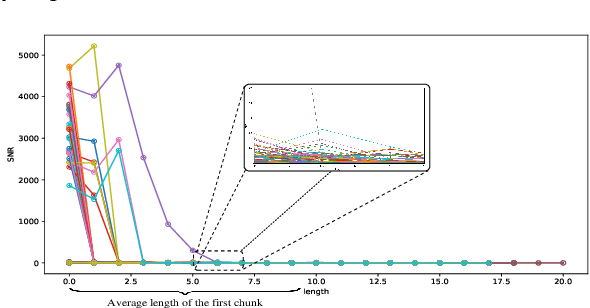
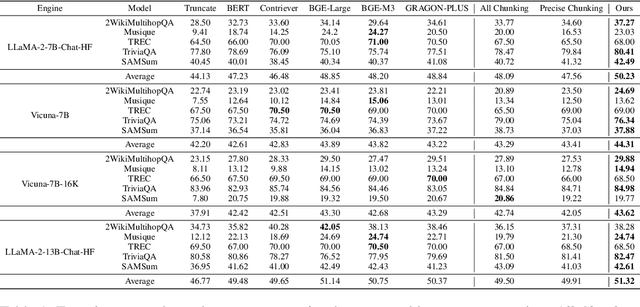
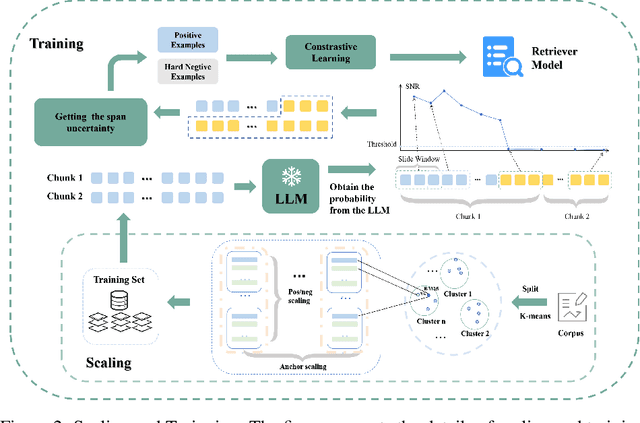
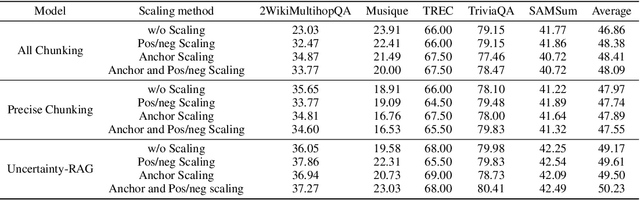
We present UncertaintyRAG, a novel approach for long-context Retrieval-Augmented Generation (RAG) that utilizes Signal-to-Noise Ratio (SNR)-based span uncertainty to estimate similarity between text chunks. This span uncertainty enhances model calibration, improving robustness and mitigating semantic inconsistencies introduced by random chunking. Leveraging this insight, we propose an efficient unsupervised learning technique to train the retrieval model, alongside an effective data sampling and scaling strategy. UncertaintyRAG outperforms baselines by 2.03% on LLaMA-2-7B, achieving state-of-the-art results while using only 4% of the training data compared to other advanced open-source retrieval models under distribution shift settings. Our method demonstrates strong calibration through span uncertainty, leading to improved generalization and robustness in long-context RAG tasks. Additionally, UncertaintyRAG provides a lightweight retrieval model that can be integrated into any large language model with varying context window lengths, without the need for fine-tuning, showcasing the flexibility of our approach.
PersonaMath: Enhancing Math Reasoning through Persona-Driven Data Augmentation
Oct 02, 2024


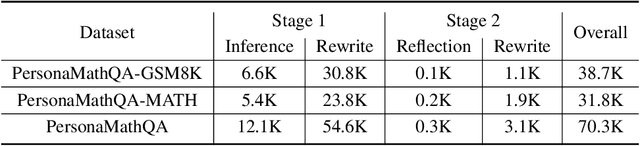
While closed-source Large Language Models (LLMs) demonstrate strong mathematical problem-solving abilities, open-source models continue to struggle with such tasks. To bridge this gap, we propose a data augmentation approach and introduce PersonaMathQA, a dataset derived from MATH and GSM8K, on which we train the PersonaMath models. Our approach consists of two stages: the first stage is learning from Persona Diversification, and the second stage is learning from Reflection. In the first stage, we regenerate detailed chain-of-thought (CoT) solutions as instructions using a closed-source LLM and introduce a novel persona-driven data augmentation technique to enhance the dataset's quantity and diversity. In the second stage, we incorporate reflection to fully leverage more challenging and valuable questions. Evaluation of our PersonaMath models on MATH and GSM8K reveals that the PersonaMath-7B model (based on LLaMA-2-7B) achieves an accuracy of 24.2% on MATH and 68.7% on GSM8K, surpassing all baseline methods and achieving state-of-the-art performance. Notably, our dataset contains only 70.3K data points-merely 17.8% of MetaMathQA and 27% of MathInstruct-yet our model outperforms these baselines, demonstrating the high quality and diversity of our dataset, which enables more efficient model training. We open-source the PersonaMathQA dataset, PersonaMath models, and our code for public usage.
Training on the Benchmark Is Not All You Need
Sep 03, 2024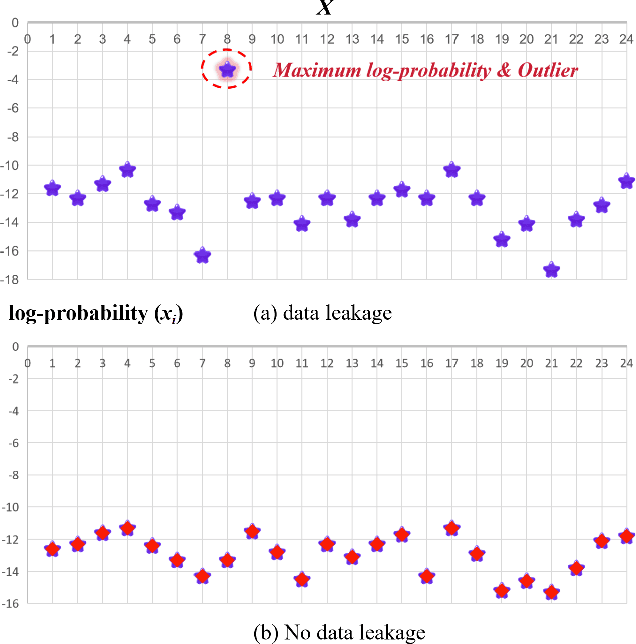

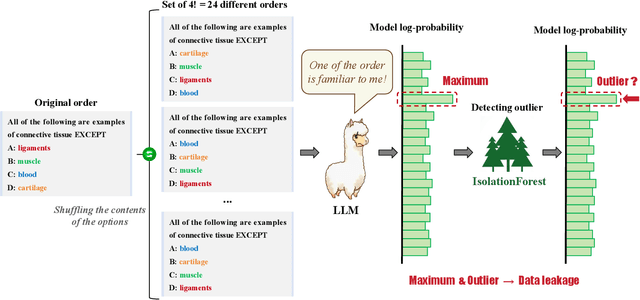

The success of Large Language Models (LLMs) relies heavily on the huge amount of pre-training data learned in the pre-training phase. The opacity of the pre-training process and the training data causes the results of many benchmark tests to become unreliable. If any model has been trained on a benchmark test set, it can seriously hinder the health of the field. In order to automate and efficiently test the capabilities of large language models, numerous mainstream benchmarks adopt a multiple-choice format. As the swapping of the contents of multiple-choice options does not affect the meaning of the question itself, we propose a simple and effective data leakage detection method based on this property. Specifically, we shuffle the contents of the options in the data to generate the corresponding derived data sets, and then detect data leakage based on the model's log probability distribution over the derived data sets. If there is a maximum and outlier in the set of log probabilities, it indicates that the data is leaked. Our method is able to work under black-box conditions without access to model training data or weights, effectively identifying data leakage from benchmark test sets in model pre-training data, including both normal scenarios and complex scenarios where options may have been shuffled intentionally or unintentionally. Through experiments based on two LLMs and benchmark designs, we demonstrate the effectiveness of our method. In addition, we evaluate the degree of data leakage of 31 mainstream open-source LLMs on four benchmark datasets and give a ranking of the leaked LLMs for each benchmark, and we find that the Qwen family of LLMs has the highest degree of data leakage.