 Add to Chrome
 Add to Firefox
 Add to Edge
DIRECT-3D: Learning Direct Text-to-3D Generation on Massive Noisy 3D Data
Jun 07, 2024
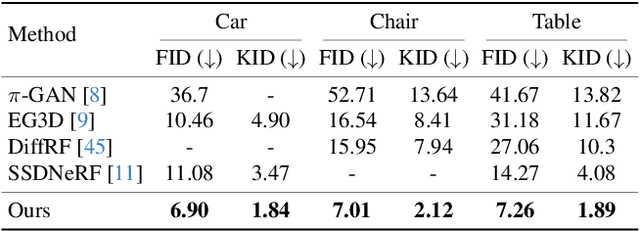
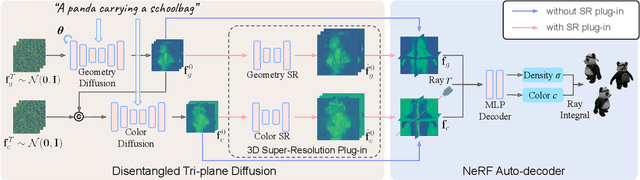
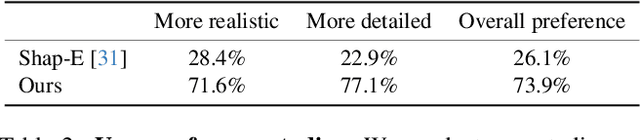
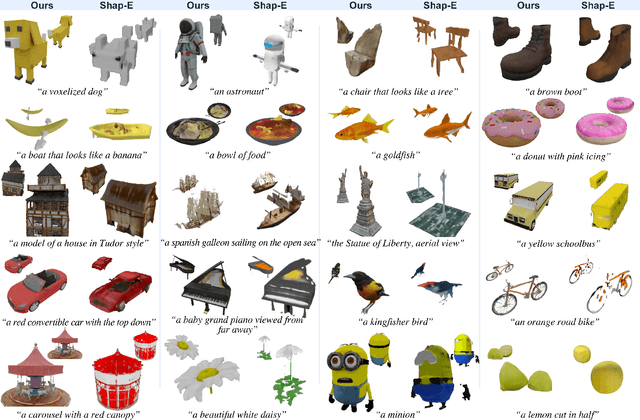
We present DIRECT-3D, a diffusion-based 3D generative model for creating high-quality 3D assets (represented by Neural Radiance Fields) from text prompts. Unlike recent 3D generative models that rely on clean and well-aligned 3D data, limiting them to single or few-class generation, our model is directly trained on extensive noisy and unaligned `in-the-wild' 3D assets, mitigating the key challenge (i.e., data scarcity) in large-scale 3D generation. In particular, DIRECT-3D is a tri-plane diffusion model that integrates two innovations: 1) A novel learning framework where noisy data are filtered and aligned automatically during the training process. Specifically, after an initial warm-up phase using a small set of clean data, an iterative optimization is introduced in the diffusion process to explicitly estimate the 3D pose of objects and select beneficial data based on conditional density. 2) An efficient 3D representation that is achieved by disentangling object geometry and color features with two separate conditional diffusion models that are optimized hierarchically. Given a prompt input, our model generates high-quality, high-resolution, realistic, and complex 3D objects with accurate geometric details in seconds. We achieve state-of-the-art performance in both single-class generation and text-to-3D generation. We also demonstrate that DIRECT-3D can serve as a useful 3D geometric prior of objects, for example to alleviate the well-known Janus problem in 2D-lifting methods such as DreamFusion. The code and models are available for research purposes at: https://github.com/qihao067/direct3d.

Compositional 4D Dynamic Scenes Understanding with Physics Priors for Video Question Answering
Jun 02, 2024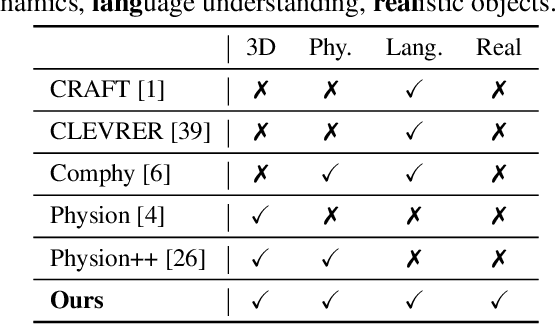


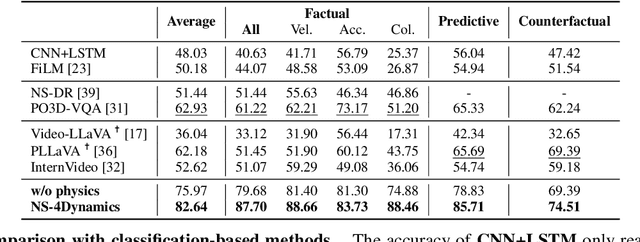
For vision-language models (VLMs), understanding the dynamic properties of objects and their interactions within 3D scenes from video is crucial for effective reasoning. In this work, we introduce a video question answering dataset SuperCLEVR-Physics that focuses on the dynamics properties of objects. We concentrate on physical concepts -- velocity, acceleration, and collisions within 4D scenes, where the model needs to fully understand these dynamics properties and answer the questions built on top of them. From the evaluation of a variety of current VLMs, we find that these models struggle with understanding these dynamic properties due to the lack of explicit knowledge about the spatial structure in 3D and world dynamics in time variants. To demonstrate the importance of an explicit 4D dynamics representation of the scenes in understanding world dynamics, we further propose NS-4Dynamics, a Neural-Symbolic model for reasoning on 4D Dynamics properties under explicit scene representation from videos. Using scene rendering likelihood combining physical prior distribution, the 4D scene parser can estimate the dynamics properties of objects over time to and interpret the observation into 4D scene representation as world states. By further incorporating neural-symbolic reasoning, our approach enables advanced applications in future prediction, factual reasoning, and counterfactual reasoning. Our experiments show that our NS-4Dynamics suppresses previous VLMs in understanding the dynamics properties and answering questions about factual queries, future prediction, and counterfactual reasoning. Moreover, based on the explicit 4D scene representation, our model is effective in reconstructing the 4D scenes and re-simulate the future or counterfactual events.
Quality Sentinel: Estimating Label Quality and Errors in Medical Segmentation Datasets
Jun 01, 2024An increasing number of public datasets have shown a transformative impact on automated medical segmentation. However, these datasets are often with varying label quality, ranging from manual expert annotations to AI-generated pseudo-annotations. There is no systematic, reliable, and automatic quality control (QC). To fill in this bridge, we introduce a regression model, Quality Sentinel, to estimate label quality compared with manual annotations in medical segmentation datasets. This regression model was trained on over 4 million image-label pairs created by us. Each pair presents a varying but quantified label quality based on manual annotations, which enable us to predict the label quality of any image-label pairs in the inference. Our Quality Sentinel can predict the label quality of 142 body structures. The predicted label quality quantified by Dice Similarity Coefficient (DSC) shares a strong correlation with ground truth quality, with a positive correlation coefficient (r=0.902). Quality Sentinel has found multiple impactful use cases. (I) We evaluated label quality in publicly available datasets, where quality highly varies across different datasets. Our analysis also uncovers that male and younger subjects exhibit significantly higher quality. (II) We identified and corrected poorly annotated labels, achieving 1/3 reduction in annotation costs with optimal budgeting on TotalSegmentator. (III) We enhanced AI training efficiency and performance by focusing on high-quality pseudo labels, resulting in a 33%--88% performance boost over entropy-based methods, with a cost of 31% time and 4.5% memory. The data and model are released.
Universal and Extensible Language-Vision Models for Organ Segmentation and Tumor Detection from Abdominal Computed Tomography
May 28, 2024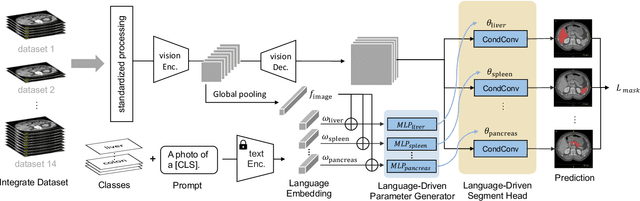
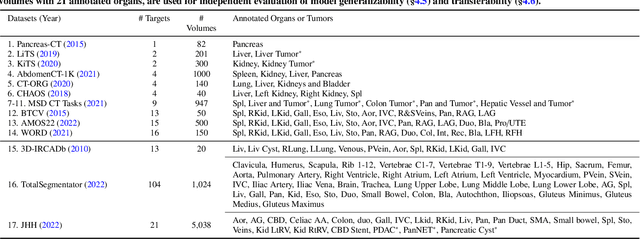
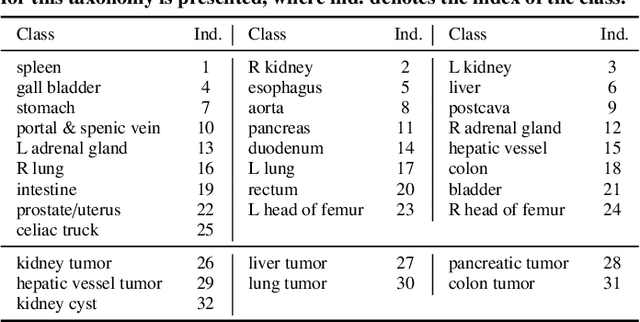
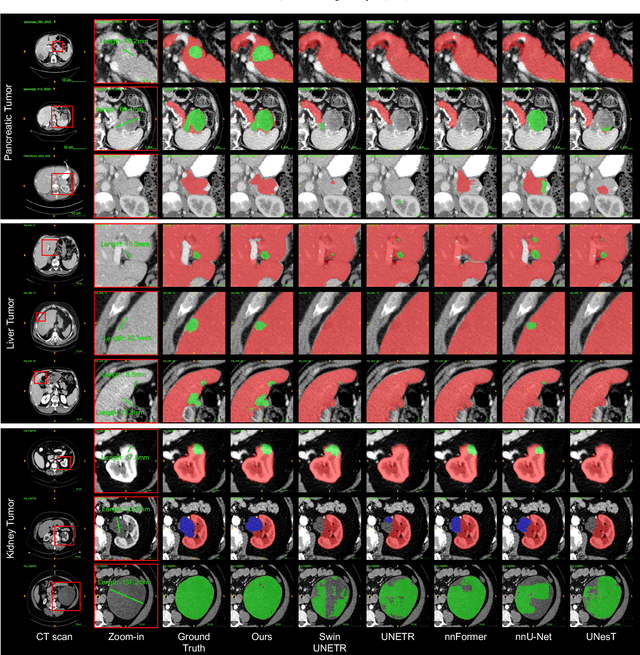
The advancement of artificial intelligence (AI) for organ segmentation and tumor detection is propelled by the growing availability of computed tomography (CT) datasets with detailed, per-voxel annotations. However, these AI models often struggle with flexibility for partially annotated datasets and extensibility for new classes due to limitations in the one-hot encoding, architectural design, and learning scheme. To overcome these limitations, we propose a universal, extensible framework enabling a single model, termed Universal Model, to deal with multiple public datasets and adapt to new classes (e.g., organs/tumors). Firstly, we introduce a novel language-driven parameter generator that leverages language embeddings from large language models, enriching semantic encoding compared with one-hot encoding. Secondly, the conventional output layers are replaced with lightweight, class-specific heads, allowing Universal Model to simultaneously segment 25 organs and six types of tumors and ease the addition of new classes. We train our Universal Model on 3,410 CT volumes assembled from 14 publicly available datasets and then test it on 6,173 CT volumes from four external datasets. Universal Model achieves first place on six CT tasks in the Medical Segmentation Decathlon (MSD) public leaderboard and leading performance on the Beyond The Cranial Vault (BTCV) dataset. In summary, Universal Model exhibits remarkable computational efficiency (6x faster than other dataset-specific models), demonstrates strong generalization across different hospitals, transfers well to numerous downstream tasks, and more importantly, facilitates the extensibility to new classes while alleviating the catastrophic forgetting of previously learned classes. Codes, models, and datasets are available at https://github.com/ljwztc/CLIP-Driven-Universal-Model
HDR-GS: Efficient High Dynamic Range Novel View Synthesis at 1000x Speed via Gaussian Splatting
May 27, 2024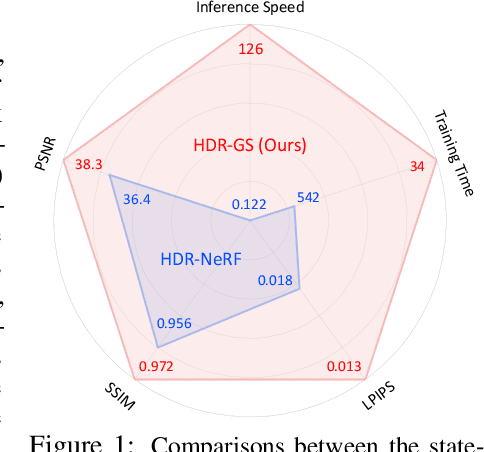
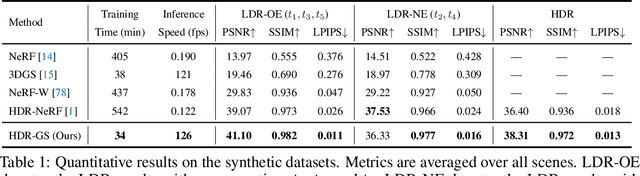
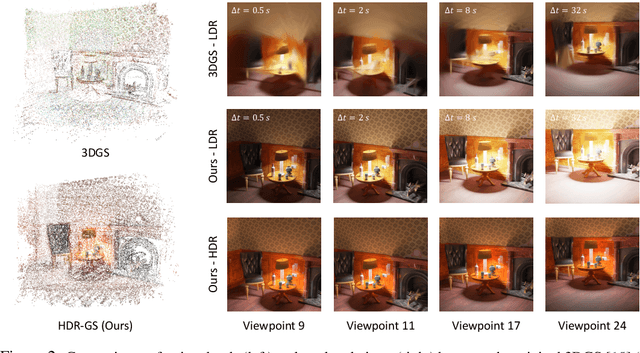
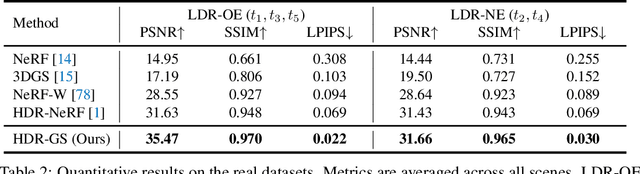
High dynamic range (HDR) novel view synthesis (NVS) aims to create photorealistic images from novel viewpoints using HDR imaging techniques. The rendered HDR images capture a wider range of brightness levels containing more details of the scene than normal low dynamic range (LDR) images. Existing HDR NVS methods are mainly based on NeRF. They suffer from long training time and slow inference speed. In this paper, we propose a new framework, High Dynamic Range Gaussian Splatting (HDR-GS), which can efficiently render novel HDR views and reconstruct LDR images with a user input exposure time. Specifically, we design a Dual Dynamic Range (DDR) Gaussian point cloud model that uses spherical harmonics to fit HDR color and employs an MLP-based tone-mapper to render LDR color. The HDR and LDR colors are then fed into two Parallel Differentiable Rasterization (PDR) processes to reconstruct HDR and LDR views. To establish the data foundation for the research of 3D Gaussian splatting-based methods in HDR NVS, we recalibrate the camera parameters and compute the initial positions for Gaussian point clouds. Experiments demonstrate that our HDR-GS surpasses the state-of-the-art NeRF-based method by 3.84 and 1.91 dB on LDR and HDR NVS while enjoying 1000x inference speed and only requiring 6.3% training time. Code, models, and recalibrated data will be publicly available at https://github.com/caiyuanhao1998/HDR-GS
ARVideo: Autoregressive Pretraining for Self-Supervised Video Representation Learning
May 24, 2024


This paper presents a new self-supervised video representation learning framework, ARVideo, which autoregressively predicts the next video token in a tailored sequence order. Two key designs are included. First, we organize autoregressive video tokens into clusters that span both spatially and temporally, thereby enabling a richer aggregation of contextual information compared to the standard spatial-only or temporal-only clusters. Second, we adopt a randomized spatiotemporal prediction order to facilitate learning from multi-dimensional data, addressing the limitations of a handcrafted spatial-first or temporal-first sequence order. Extensive experiments establish ARVideo as an effective paradigm for self-supervised video representation learning. For example, when trained with the ViT-B backbone, ARVideo competitively attains 81.2% on Kinetics-400 and 70.9% on Something-Something V2, which are on par with the strong benchmark set by VideoMAE. Importantly, ARVideo also demonstrates higher training efficiency, i.e., it trains 14% faster and requires 58% less GPU memory compared to VideoMAE.
Mamba-R: Vision Mamba ALSO Needs Registers
May 23, 2024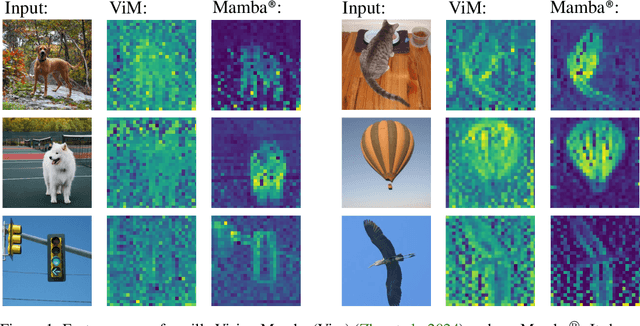
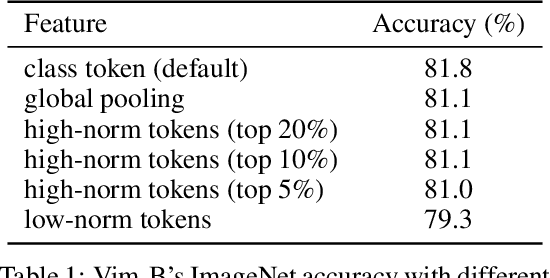
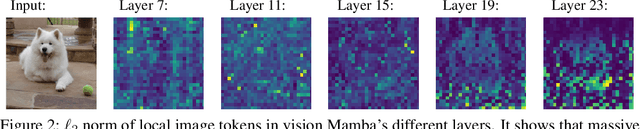

Similar to Vision Transformers, this paper identifies artifacts also present within the feature maps of Vision Mamba. These artifacts, corresponding to high-norm tokens emerging in low-information background areas of images, appear much more severe in Vision Mamba -- they exist prevalently even with the tiny-sized model and activate extensively across background regions. To mitigate this issue, we follow the prior solution of introducing register tokens into Vision Mamba. To better cope with Mamba blocks' uni-directional inference paradigm, two key modifications are introduced: 1) evenly inserting registers throughout the input token sequence, and 2) recycling registers for final decision predictions. We term this new architecture Mamba-R. Qualitative observations suggest, compared to vanilla Vision Mamba, Mamba-R's feature maps appear cleaner and more focused on semantically meaningful regions. Quantitatively, Mamba-R attains stronger performance and scales better. For example, on the ImageNet benchmark, our base-size Mamba-R attains 82.9% accuracy, significantly outperforming Vim-B's 81.8%; furthermore, we provide the first successful scaling to the large model size (i.e., with 341M parameters), attaining a competitive accuracy of 83.2% (84.5% if finetuned with 384x384 inputs). Additional validation on the downstream semantic segmentation task also supports Mamba-R's efficacy.
NTIRE 2024 Challenge on Low Light Image Enhancement: Methods and Results
Apr 22, 2024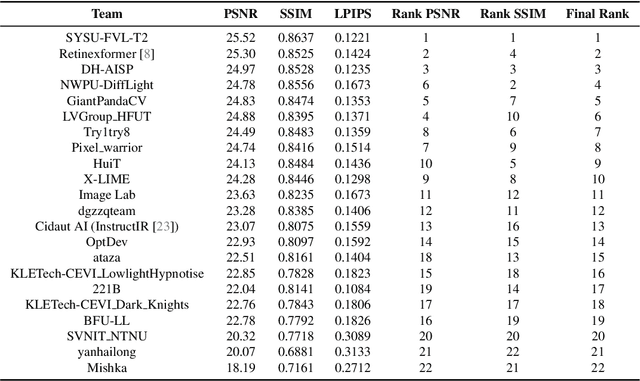
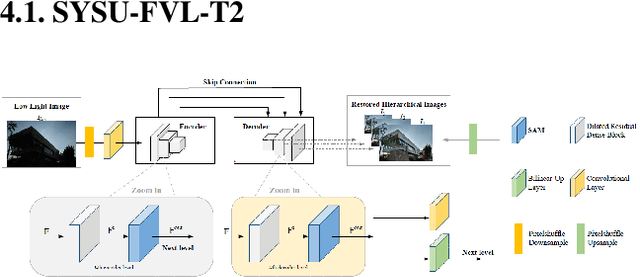
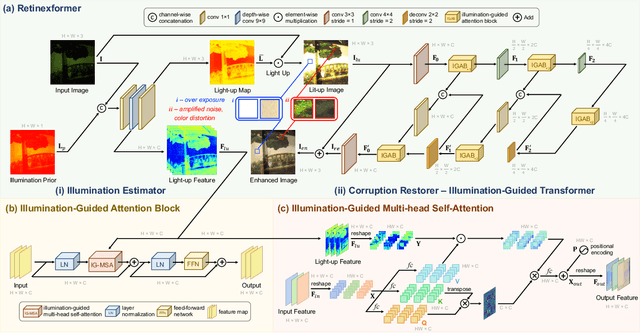
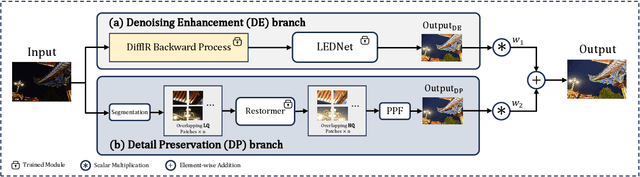
This paper reviews the NTIRE 2024 low light image enhancement challenge, highlighting the proposed solutions and results. The aim of this challenge is to discover an effective network design or solution capable of generating brighter, clearer, and visually appealing results when dealing with a variety of conditions, including ultra-high resolution (4K and beyond), non-uniform illumination, backlighting, extreme darkness, and night scenes. A notable total of 428 participants registered for the challenge, with 22 teams ultimately making valid submissions. This paper meticulously evaluates the state-of-the-art advancements in enhancing low-light images, reflecting the significant progress and creativity in this field.
Learning a Category-level Object Pose Estimator without Pose Annotations
Apr 08, 2024
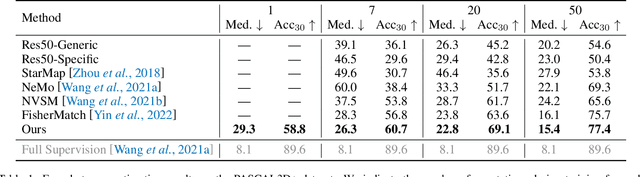

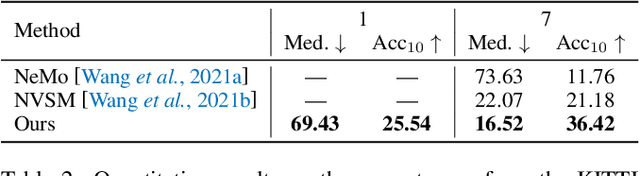
3D object pose estimation is a challenging task. Previous works always require thousands of object images with annotated poses for learning the 3D pose correspondence, which is laborious and time-consuming for labeling. In this paper, we propose to learn a category-level 3D object pose estimator without pose annotations. Instead of using manually annotated images, we leverage diffusion models (e.g., Zero-1-to-3) to generate a set of images under controlled pose differences and propose to learn our object pose estimator with those images. Directly using the original diffusion model leads to images with noisy poses and artifacts. To tackle this issue, firstly, we exploit an image encoder, which is learned from a specially designed contrastive pose learning, to filter the unreasonable details and extract image feature maps. Additionally, we propose a novel learning strategy that allows the model to learn object poses from those generated image sets without knowing the alignment of their canonical poses. Experimental results show that our method has the capability of category-level object pose estimation from a single shot setting (as pose definition), while significantly outperforming other state-of-the-art methods on the few-shot category-level object pose estimation benchmarks.
ViTamin: Designing Scalable Vision Models in the Vision-Language Era
Apr 03, 2024


Recent breakthroughs in vision-language models (VLMs) start a new page in the vision community. The VLMs provide stronger and more generalizable feature embeddings compared to those from ImageNet-pretrained models, thanks to the training on the large-scale Internet image-text pairs. However, despite the amazing achievement from the VLMs, vanilla Vision Transformers (ViTs) remain the default choice for the image encoder. Although pure transformer proves its effectiveness in the text encoding area, it remains questionable whether it is also the case for image encoding, especially considering that various types of networks are proposed on the ImageNet benchmark, which, unfortunately, are rarely studied in VLMs. Due to small data/model scale, the original conclusions of model design on ImageNet can be limited and biased. In this paper, we aim at building an evaluation protocol of vision models in the vision-language era under the contrastive language-image pretraining (CLIP) framework. We provide a comprehensive way to benchmark different vision models, covering their zero-shot performance and scalability in both model and training data sizes. To this end, we introduce ViTamin, a new vision models tailored for VLMs. ViTamin-L significantly outperforms ViT-L by 2.0% ImageNet zero-shot accuracy, when using the same publicly available DataComp-1B dataset and the same OpenCLIP training scheme. ViTamin-L presents promising results on 60 diverse benchmarks, including classification, retrieval, open-vocabulary detection and segmentation, and large multi-modal models. When further scaling up the model size, our ViTamin-XL with only 436M parameters attains 82.9% ImageNet zero-shot accuracy, surpassing 82.0% achieved by EVA-E that has ten times more parameters (4.4B).