 Add to Chrome
 Add to Firefox
 Add to Edge
An approach of deep reinforcement learning for maximizing the net present value of stochastic projects
Nov 17, 2025
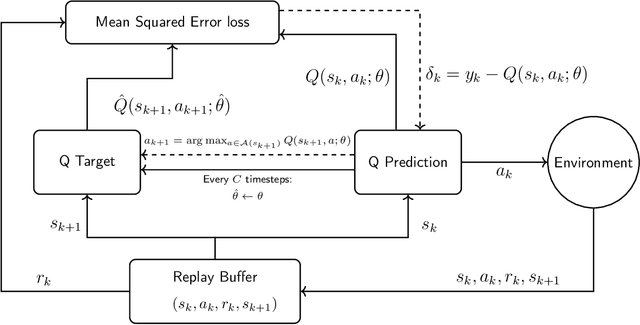
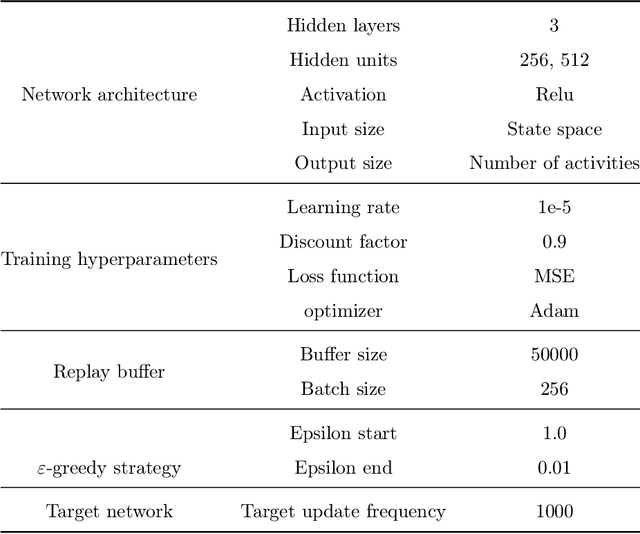
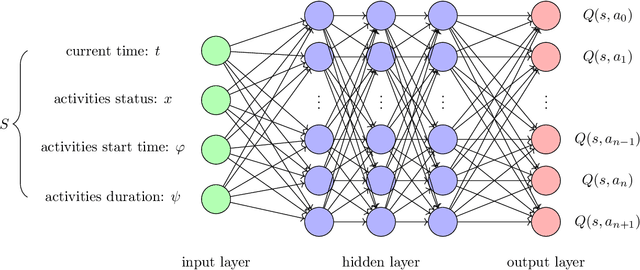
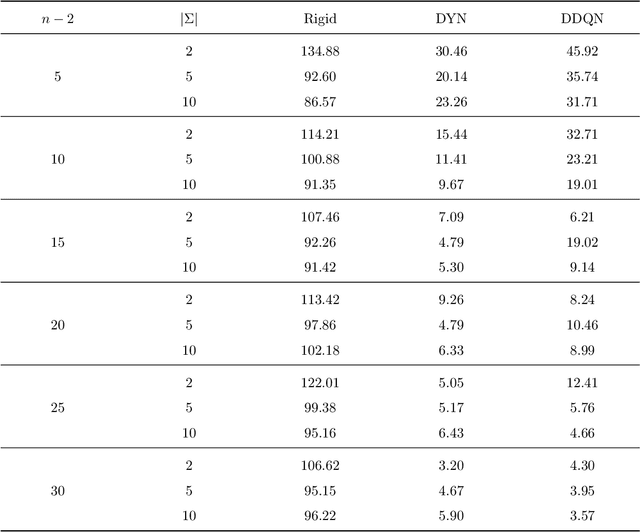
This paper investigates a project with stochastic activity durations and cash flows under discrete scenarios, where activities must satisfy precedence constraints generating cash inflows and outflows. The objective is to maximize expected net present value (NPV) by accelerating inflows and deferring outflows. We formulate the problem as a discrete-time Markov Decision Process (MDP) and propose a Double Deep Q-Network (DDQN) approach. Comparative experiments demonstrate that DDQN outperforms traditional rigid and dynamic strategies, particularly in large-scale or highly uncertain environments, exhibiting superior computational capability, policy reliability, and adaptability. Ablation studies further reveal that the dual-network architecture mitigates overestimation of action values, while the target network substantially improves training convergence and robustness. These results indicate that DDQN not only achieves higher expected NPV in complex project optimization but also provides a reliable framework for stable and effective policy implementation.

Virtual Width Networks
Nov 17, 2025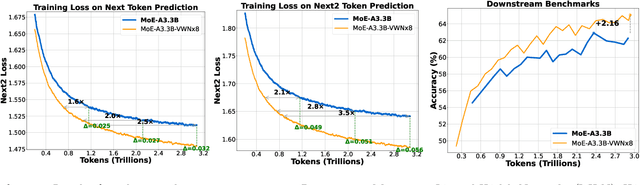
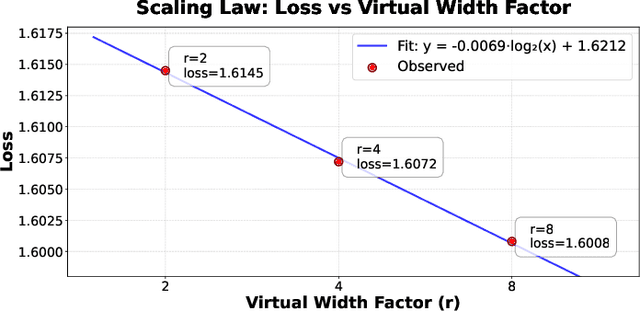
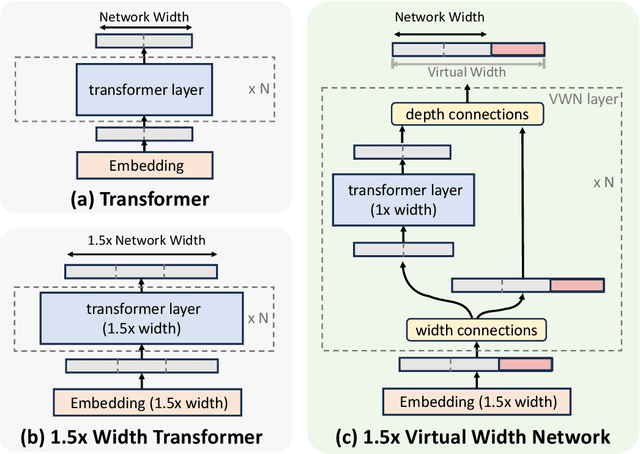
We introduce Virtual Width Networks (VWN), a framework that delivers the benefits of wider representations without incurring the quadratic cost of increasing the hidden size. VWN decouples representational width from backbone width, expanding the embedding space while keeping backbone compute nearly constant. In our large-scale experiment, an 8-times expansion accelerates optimization by over 2 times for next-token and 3 times for next-2-token prediction. The advantage amplifies over training as both the loss gap grows and the convergence-speedup ratio increases, showing that VWN is not only token-efficient but also increasingly effective with scale. Moreover, we identify an approximately log-linear scaling relation between virtual width and loss reduction, offering an initial empirical basis and motivation for exploring virtual-width scaling as a new dimension of large-model efficiency.
Distributed Zero-Shot Learning for Visual Recognition
Nov 11, 2025In this paper, we propose a Distributed Zero-Shot Learning (DistZSL) framework that can fully exploit decentralized data to learn an effective model for unseen classes. Considering the data heterogeneity issues across distributed nodes, we introduce two key components to ensure the effective learning of DistZSL: a cross-node attribute regularizer and a global attribute-to-visual consensus. Our proposed cross-node attribute regularizer enforces the distances between attribute features to be similar across different nodes. In this manner, the overall attribute feature space would be stable during learning, and thus facilitate the establishment of visual-to-attribute(V2A) relationships. Then, we introduce the global attribute-tovisual consensus to mitigate biased V2A mappings learned from individual nodes. Specifically, we enforce the bilateral mapping between the attribute and visual feature distributions to be consistent across different nodes. Thus, the learned consistent V2A mapping can significantly enhance zero-shot learning across different nodes. Extensive experiments demonstrate that DistZSL achieves superior performance to the state-of-the-art in learning from distributed data.
The Universal Landscape of Human Reasoning
Oct 24, 2025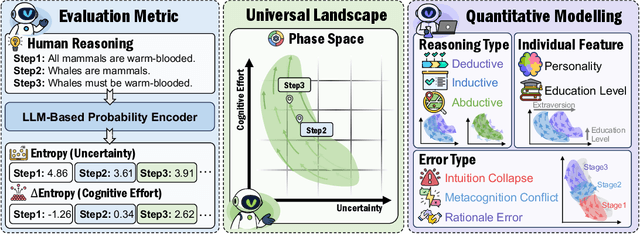
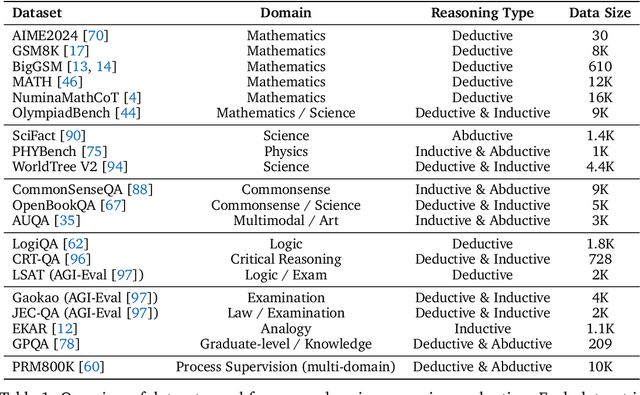
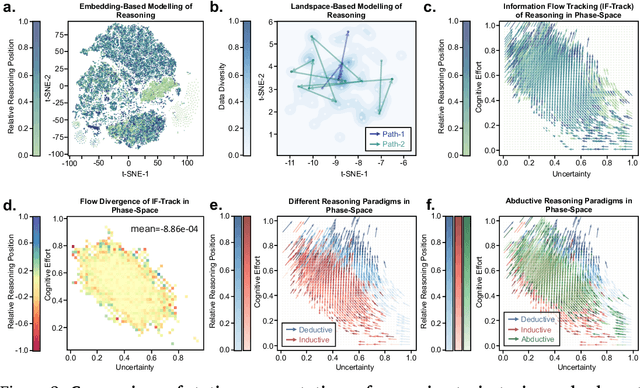
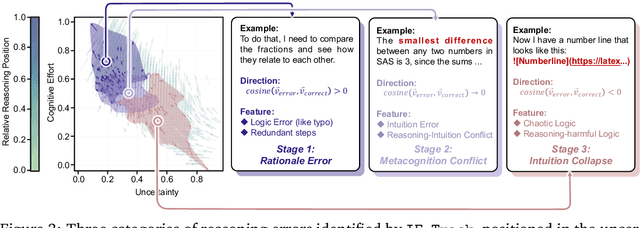
Understanding how information is dynamically accumulated and transformed in human reasoning has long challenged cognitive psychology, philosophy, and artificial intelligence. Existing accounts, from classical logic to probabilistic models, illuminate aspects of output or individual modelling, but do not offer a unified, quantitative description of general human reasoning dynamics. To solve this, we introduce Information Flow Tracking (IF-Track), that uses large language models (LLMs) as probabilistic encoder to quantify information entropy and gain at each reasoning step. Through fine-grained analyses across diverse tasks, our method is the first successfully models the universal landscape of human reasoning behaviors within a single metric space. We show that IF-Track captures essential reasoning features, identifies systematic error patterns, and characterizes individual differences. Applied to discussion of advanced psychological theory, we first reconcile single- versus dual-process theories in IF-Track and discover the alignment of artificial and human cognition and how LLMs reshaping human reasoning process. This approach establishes a quantitative bridge between theory and measurement, offering mechanistic insights into the architecture of reasoning.
CoRA: Covariate-Aware Adaptation of Time Series Foundation Models
Oct 14, 2025Time Series Foundation Models (TSFMs) have shown significant impact through their model capacity, scalability, and zero-shot generalization. However, due to the heterogeneity of inter-variate dependencies and the backbone scalability on large-scale multivariate datasets, most TSFMs are typically pre-trained on univariate time series. This limitation renders them oblivious to crucial information from diverse covariates in real-world forecasting tasks. To further enhance the performance of TSFMs, we propose a general covariate-aware adaptation (CoRA) framework for TSFMs. It leverages pre-trained backbones of foundation models while effectively incorporating exogenous covariates from various modalities, including time series, language, and images, to improve the quality of predictions. Technically, CoRA maintains the equivalence of initialization and parameter consistency during adaptation. With preserved backbones of foundation models as frozen feature extractors, the outcome embeddings from foundation models are empirically demonstrated more informative than raw data. Further, CoRA employs a novel Granger Causality Embedding (GCE) to automatically evaluate covariates regarding their causal predictability with respect to the target variate. We incorporate these weighted embeddings with a zero-initialized condition-injection mechanism, avoiding catastrophic forgetting of pre-trained foundation models and gradually integrates exogenous information. Extensive experiments show that CoRA of TSFMs surpasses state-of-the-art covariate-aware deep forecasters with full or few-shot training samples, achieving 31.1% MSE reduction on covariate-aware forecasting. Compared to other adaptation methods, CoRA exhibits strong compatibility with various advanced TSFMs and extends the scope of covariates to other modalities, presenting a practical paradigm for the application of TSFMs.
Performance Optimization for Movable Antenna Enhanced MISO-OFDM Systems
Oct 02, 2025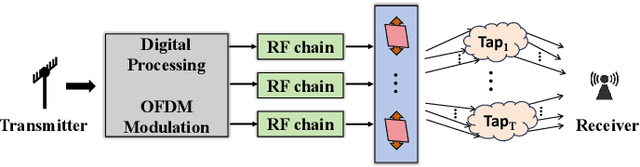
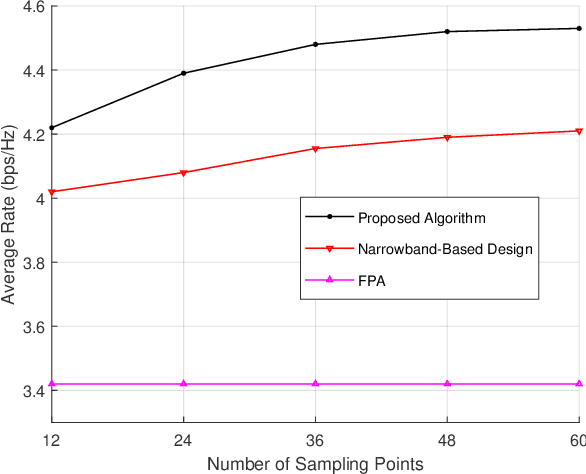
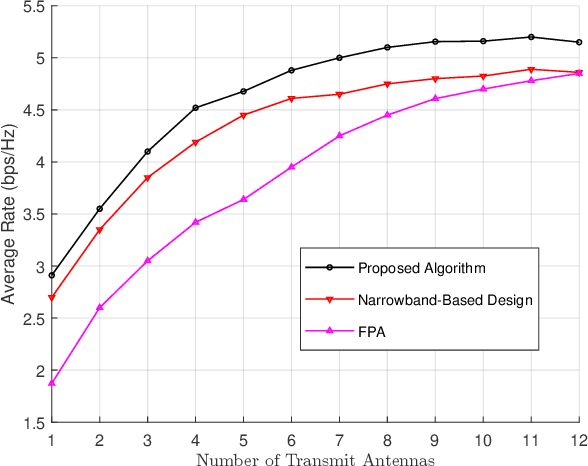
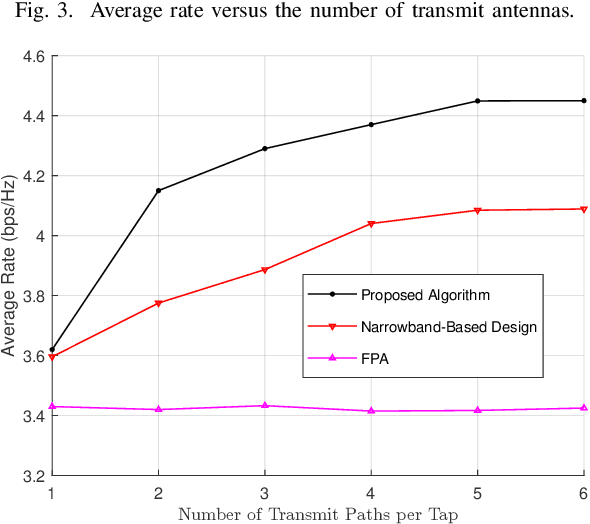
Movable antenna (MA) technology offers a flexible approach to enhancing wireless channel conditions by adjusting antenna positions within a designated region. While most existing works focus on narrowband MA systems, this paper investigates MA position optimization for an MA-enhanced multiple-input single-output (MISO) orthogonal frequency-division multiplexing (OFDM) system. This problem appears to be particularly challenging due to the frequency-flat nature of MA positioning, which should accommodate the channel conditions across different subcarriers. To overcome this challenge, we discretize the movement region into a multitude of sampling points, thereby converting the continuous position optimization problem into a discrete point selection problem. Although this problem is combinatorial, we develop an efficient partial enumeration algorithm to find the optimal solution using a branch-and-bound framework, where a graph-theoretic method is incorporated to effectively prune suboptimal solutions. In the low signal-to-noise ratio (SNR) regime, a simplified graph-based algorithm is also proposed to obtain the optimal MA positions without the need for enumeration. Simulation results reveal that the proposed algorithm outperforms conventional fixed-position antennas (FPAs), while narrowband-based antenna position optimization can achieve near-optimal performance.
Compressive Near-Field Wideband Channel Estimation for THz Extremely Large-scale MIMO Systems
Jul 30, 2025We consider the channel acquisition problem for a wideband terahertz (THz) communication system, where an extremely large-scale array is deployed to mitigate severe path attenuation. In channel modeling, we account for both the near-field spherical wavefront and the wideband beam-splitting phenomena, resulting in a wideband near-field channel. We propose a frequency-independent orthogonal dictionary that generalizes the standard discrete Fourier transform (DFT) matrix by introducing an additional parameter to capture the near-field property. This dictionary enables the wideband near-field channel to be efficiently represented with a two-dimensional (2D) block-sparse structure. Leveraging this specific sparse structure, the wideband near-field channel estimation problem can be effectively addressed within a customized compressive sensing framework. Numerical results demonstrate the significant advantages of our proposed 2D block-sparsity-aware method over conventional polar-domain-based approaches for near-field wideband channel estimation.
URPO: A Unified Reward & Policy Optimization Framework for Large Language Models
Jul 23, 2025Large-scale alignment pipelines typically pair a policy model with a separately trained reward model whose parameters remain frozen during reinforcement learning (RL). This separation creates a complex, resource-intensive pipeline and suffers from a performance ceiling due to a static reward signal. We propose a novel framework, Unified Reward & Policy Optimization (URPO), that unifies instruction-following ("player") and reward modeling ("referee") within a single model and a single training phase. Our method recasts all alignment data-including preference pairs, verifiable reasoning, and open-ended instructions-into a unified generative format optimized by a single Group-Relative Policy Optimization (GRPO) loop. This enables the model to learn from ground-truth preferences and verifiable logic while simultaneously generating its own rewards for open-ended tasks. Experiments on the Qwen2.5-7B model demonstrate URPO's superiority. Our unified model significantly outperforms a strong baseline using a separate generative reward model, boosting the instruction-following score on AlpacaEval from 42.24 to 44.84 and the composite reasoning average from 32.66 to 35.66. Furthermore, URPO cultivates a superior internal evaluator as a byproduct of training, achieving a RewardBench score of 85.15 and surpassing the dedicated reward model it replaces (83.55). By eliminating the need for a separate reward model and fostering a co-evolutionary dynamic between generation and evaluation, URPO presents a simpler, more efficient, and more effective path towards robustly aligned language models.
Are Synthetic Videos Useful? A Benchmark for Retrieval-Centric Evaluation of Synthetic Videos
Jul 03, 2025Text-to-video (T2V) synthesis has advanced rapidly, yet current evaluation metrics primarily capture visual quality and temporal consistency, offering limited insight into how synthetic videos perform in downstream tasks such as text-to-video retrieval (TVR). In this work, we introduce SynTVA, a new dataset and benchmark designed to evaluate the utility of synthetic videos for building retrieval models. Based on 800 diverse user queries derived from MSRVTT training split, we generate synthetic videos using state-of-the-art T2V models and annotate each video-text pair along four key semantic alignment dimensions: Object \& Scene, Action, Attribute, and Prompt Fidelity. Our evaluation framework correlates general video quality assessment (VQA) metrics with these alignment scores, and examines their predictive power for downstream TVR performance. To explore pathways of scaling up, we further develop an Auto-Evaluator to estimate alignment quality from existing metrics. Beyond benchmarking, our results show that SynTVA is a valuable asset for dataset augmentation, enabling the selection of high-utility synthetic samples that measurably improve TVR outcomes. Project page and dataset can be found at https://jasoncodemaker.github.io/SynTVA/.
Derivative-Free Optimization-Empowered Wireless Channel Reconfiguration for 6G
Jul 03, 2025Reconfigurable antennas, including reconfigurable intelligent surface (RIS), movable antenna (MA), fluid antenna (FA), and other advanced antenna techniques, have been studied extensively in the context of reshaping wireless propagation environments for 6G and beyond wireless communications. Nevertheless, how to reconfigure/optimize the real-time controllable coefficients to achieve a favorable end-to-end wireless channel remains a substantial challenge, as it usually requires accurate modeling of the complex interaction between the reconfigurable devices and the electromagnetic waves, as well as knowledge of implicit channel propagation parameters. In this paper, we introduce a derivative-free optimization (a.k.a., zeroth-order (ZO) optimization) technique to directly optimize reconfigurable coefficients to shape the wireless end-to-end channel, without the need of channel modeling and estimation of the implicit environmental propagation parameters. We present the fundamental principles of ZO optimization and discuss its potential advantages in wireless channel reconfiguration. Two case studies for RIS and movable antenna-enabled single-input single-output (SISO) systems are provided to show the superiority of ZO-based methods as compared to state-of-the-art techniques. Finally, we outline promising future research directions and offer concluding insights on derivative-free optimization for reconfigurable antenna technologies.