 Add to Chrome
 Add to Firefox
 Add to Edge
Amortized Bayesian Causal Discovery of Extended Factor Graphs
Jul 24, 2026
Learning causal graphs from interventional data is a challenging problem with broad applications. In molecular biology, for example, a central goal is to uncover gene regulatory networks from large-scale perturbation data. An ideal algorithm for this task should scale to thousands of nodes, incorporate interventions even when their targets are unknown, quantify uncertainty, and provide identifiability guarantees. However, existing approaches---e.g. approaches using score-based optimization or approximate Bayesian inference---often fail to meet all of these criteria. To address these limitations, we develop Amortized Bayesian Causal Discovery of Extended Factor Graphs (ABCDEFG). Our method guarantees exact acyclicity, scales to graphs with thousands of nodes, and naturally handles interventions even when their targets are unknown. Additionally, ABCDEFG estimates a posterior distribution whose maximum a posteriori estimate provably identifies the true causal graph up to an equivalence class. On simulated datasets, ABCDEFG achieves state-of-the-art accuracy, producing a well-calibrated posterior distribution while outperforming previous score-based and approximate Bayesian methods. Applied to large-scale single-cell perturbation data, ABCDEFG identifies both established and novel gene targets of growth factors.

Spectral Rewiring for Exploration, Purification, and Model Merging
Jul 03, 2026Reinforcement learning has become a standard post-training recipe for large language models, but dense full-parameter updates create two deployment-relevant bottlenecks: suppressed reasoning performance, often reflected by premature saturation of test-time scaling, and interference when consolidating multiple capabilities through multi-domain training or model merging. We show that the reasoning-effective component of these updates is largely concentrated in the base model's spectral space, motivating Subspace-Aligned Rewiring (SAR), a post-hoc editing method that retains this spectral core while removing orthogonal components. SAR therefore preserves reasoning gains and filters residual update directions that suppress performance or amplify cross-domain interference. Across several model families and scales, SAR extracts compact reasoning cores using as little as approximately 0.58% of total parameters: it preserves over 99% of post-training performance and improves high-k exploration in mathematical reasoning, and generalizes to agentic coding by improving six of seven open benchmarks on an in-house model. SAR also purifies mixed-domain training updates by releasing suppressed coding capability while maintaining math reasoning and instruction following. It further enables model merging across experts, yielding cross-domain generalization that surpasses previous merging baselines and even the best single-domain experts. Overall, SAR shows that extracting reasoning-effective updates from parameter geometry can serve as a training-free mechanism to improve reasoning and multi-domain performance.
Improved Large Language Diffusion Models
Jun 24, 2026Modern large language models are predominantly trained with autoregressive factorization and causal attention. We present \emph{iLLaDA}, an 8B masked diffusion language model trained from scratch with fully bidirectional attention. iLLaDA keeps the masked diffusion objective throughout pre-training and supervised fine-tuning (SFT), scaling pre-training to 12T tokens and fine-tuning on a 25B-token instruction corpus for 12 epochs. We further use variable-length generation for efficiency and introduce confidence-based scoring for multiple-choice evaluation. Compared with LLaDA, iLLaDA improves broadly across general, mathematical, and code benchmarks; for example, iLLaDA-Base improves by 21.6 points on BBH and 14.9 points on ARC-Challenge, while iLLaDA-Instruct improves by 14.5 points on MATH and 16.5 points on HumanEval. Despite its non-autoregressive training, iLLaDA also remains competitive with Qwen2.5 7B on several benchmarks. These results show that fully bidirectional diffusion training from scratch is a competitive path toward strong language models. Model weights and codes: https://github.com/ML-GSAI/LLaDA.
AMix-2: Establishing Protein as a Native Modality in Large Language Models
May 29, 2026We present AMix-2, a protein-text foundation model that establishes protein as a native modality in large language models (LLMs), unifying protein understanding and sequence design within a single foundation model. AMix-2 is built upon two key ideas: (1) a unified protein-text formulation that embeds natural language and protein sequence in a shared token space, enabling one model to perform biological reasoning and conditional design instead of separate downstream task-specialized models; and (2) a block-wise diffusion language modeling backbone that combines causal generation across blocks with bidirectional context and iterative refinement within blocks. This scheme better matches the intrinsic nature of proteins than a strict left-to-right factorization. To evaluate protein foundation models under realistic generalization settings, we further introduce ProteinArena, a comprehensive benchmark with time-aware and homology-aware protocols across various understanding and design tasks, and with baselines covering classical bioinformatics tools, protein-specialized models and LLMs. On ProteinArena, AMix-2 outperforms frontier LLMs and demonstrates competitive performance to task-specific protein models. Controlled experiments further show that the diffusion-based paradigm generally surpasses its autoregressive counterpart, highlighting the advantage of flexible generation order for protein sequences. We release both AMix-2 and ProteinArena to facilitate open research in protein foundation models.
Stable-DiffCoder: Pushing the Frontier of Code Diffusion Large Language Model
Jan 23, 2026Diffusion-based language models (DLLMs) offer non-sequential, block-wise generation and richer data reuse compared to autoregressive (AR) models, but existing code DLLMs still lag behind strong AR baselines under comparable budgets. We revisit this setting in a controlled study and introduce Stable-DiffCoder, a block diffusion code model that reuses the Seed-Coder architecture, data, and training pipeline. To enable efficient knowledge learning and stable training, we incorporate a block diffusion continual pretraining (CPT) stage enhanced by a tailored warmup and block-wise clipped noise schedule. Under the same data and architecture, Stable-DiffCoder overall outperforms its AR counterpart on a broad suite of code benchmarks. Moreover, relying only on the CPT and supervised fine-tuning stages, Stable-DiffCoder achieves stronger performance than a wide range of \~8B ARs and DLLMs, demonstrating that diffusion-based training can improve code modeling quality beyond AR training alone. Moreover, diffusion-based any-order modeling improves structured code modeling for editing and reasoning, and through data augmentation, benefits low-resource coding languages.
Dynamic Large Concept Models: Latent Reasoning in an Adaptive Semantic Space
Dec 31, 2025Large Language Models (LLMs) apply uniform computation to all tokens, despite language exhibiting highly non-uniform information density. This token-uniform regime wastes capacity on locally predictable spans while under-allocating computation to semantically critical transitions. We propose $\textbf{Dynamic Large Concept Models (DLCM)}$, a hierarchical language modeling framework that learns semantic boundaries from latent representations and shifts computation from tokens to a compressed concept space where reasoning is more efficient. DLCM discovers variable-length concepts end-to-end without relying on predefined linguistic units. Hierarchical compression fundamentally changes scaling behavior. We introduce the first $\textbf{compression-aware scaling law}$, which disentangles token-level capacity, concept-level reasoning capacity, and compression ratio, enabling principled compute allocation under fixed FLOPs. To stably train this heterogeneous architecture, we further develop a $\textbf{decoupled $μ$P parametrization}$ that supports zero-shot hyperparameter transfer across widths and compression regimes. At a practical setting ($R=4$, corresponding to an average of four tokens per concept), DLCM reallocates roughly one-third of inference compute into a higher-capacity reasoning backbone, achieving a $\textbf{+2.69$\%$ average improvement}$ across 12 zero-shot benchmarks under matched inference FLOPs.
ShortListing Model: A Streamlined SimplexDiffusion for Discrete Variable Generation
Aug 24, 2025Generative modeling of discrete variables is challenging yet crucial for applications in natural language processing and biological sequence design. We introduce the Shortlisting Model (SLM), a novel simplex-based diffusion model inspired by progressive candidate pruning. SLM operates on simplex centroids, reducing generation complexity and enhancing scalability. Additionally, SLM incorporates a flexible implementation of classifier-free guidance, enhancing unconditional generation performance. Extensive experiments on DNA promoter and enhancer design, protein design, character-level and large-vocabulary language modeling demonstrate the competitive performance and strong potential of SLM. Our code can be found at https://github.com/GenSI-THUAIR/SLM
Protenix-Mini: Efficient Structure Predictor via Compact Architecture, Few-Step Diffusion and Switchable pLM
Jul 16, 2025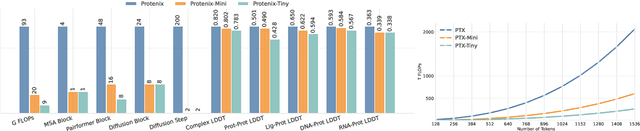



Lightweight inference is critical for biomolecular structure prediction and other downstream tasks, enabling efficient real-world deployment and inference-time scaling for large-scale applications. In this work, we address the challenge of balancing model efficiency and prediction accuracy by making several key modifications, 1) Multi-step AF3 sampler is replaced by a few-step ODE sampler, significantly reducing computational overhead for the diffusion module part during inference; 2) In the open-source Protenix framework, a subset of pairformer or diffusion transformer blocks doesn't make contributions to the final structure prediction, presenting opportunities for architectural pruning and lightweight redesign; 3) A model incorporating an ESM module is trained to substitute the conventional MSA module, reducing MSA preprocessing time. Building on these key insights, we present Protenix-Mini, a compact and optimized model designed for efficient protein structure prediction. This streamlined version incorporates a more efficient architectural design with a two-step Ordinary Differential Equation (ODE) sampling strategy. By eliminating redundant Transformer components and refining the sampling process, Protenix-Mini significantly reduces model complexity with slight accuracy drop. Evaluations on benchmark datasets demonstrate that it achieves high-fidelity predictions, with only a negligible 1 to 5 percent decrease in performance on benchmark datasets compared to its full-scale counterpart. This makes Protenix-Mini an ideal choice for applications where computational resources are limited but accurate structure prediction remains crucial.
Piloting Structure-Based Drug Design via Modality-Specific Optimal Schedule
May 12, 2025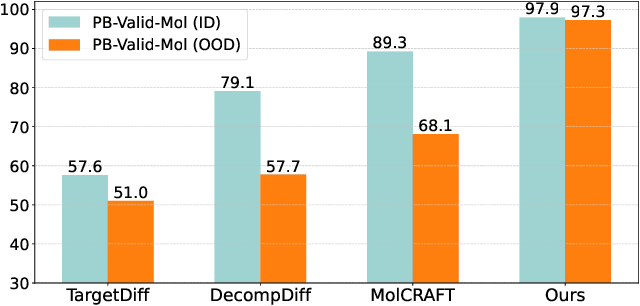
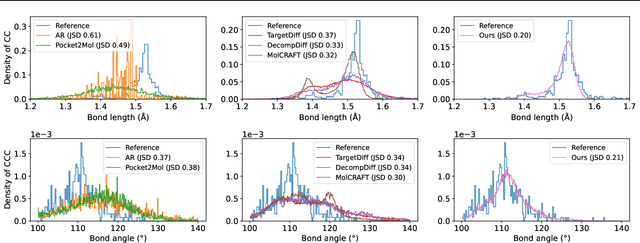
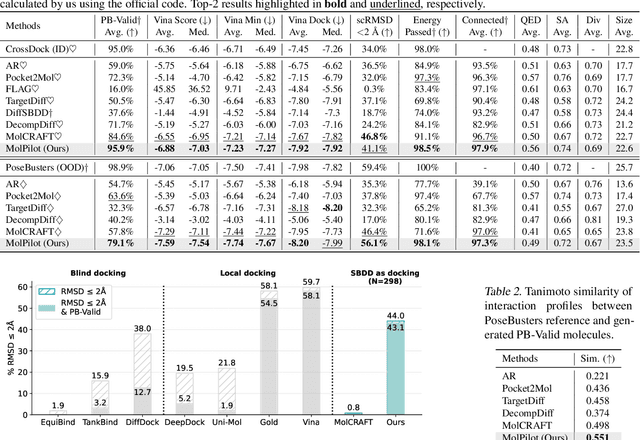
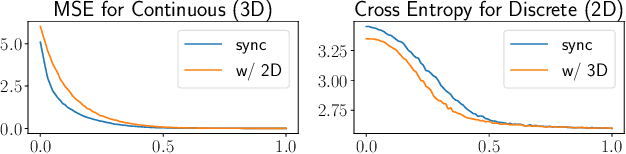
Structure-Based Drug Design (SBDD) is crucial for identifying bioactive molecules. Recent deep generative models are faced with challenges in geometric structure modeling. A major bottleneck lies in the twisted probability path of multi-modalities -- continuous 3D positions and discrete 2D topologies -- which jointly determine molecular geometries. By establishing the fact that noise schedules decide the Variational Lower Bound (VLB) for the twisted probability path, we propose VLB-Optimal Scheduling (VOS) strategy in this under-explored area, which optimizes VLB as a path integral for SBDD. Our model effectively enhances molecular geometries and interaction modeling, achieving state-of-the-art PoseBusters passing rate of 95.9% on CrossDock, more than 10% improvement upon strong baselines, while maintaining high affinities and robust intramolecular validity evaluated on held-out test set.
DAPO: An Open-Source LLM Reinforcement Learning System at Scale
Mar 18, 2025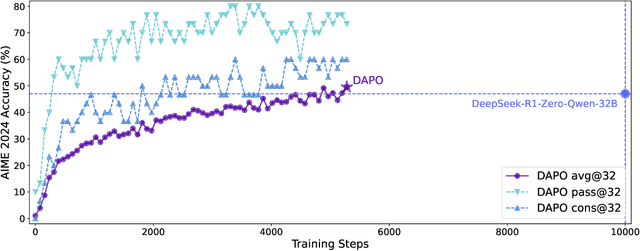
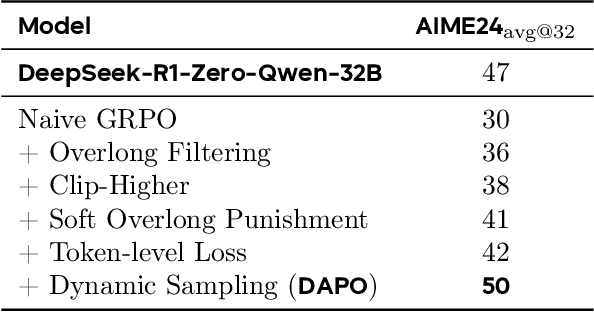
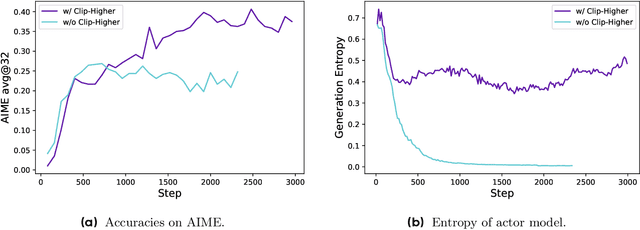

Inference scaling empowers LLMs with unprecedented reasoning ability, with reinforcement learning as the core technique to elicit complex reasoning. However, key technical details of state-of-the-art reasoning LLMs are concealed (such as in OpenAI o1 blog and DeepSeek R1 technical report), thus the community still struggles to reproduce their RL training results. We propose the $\textbf{D}$ecoupled Clip and $\textbf{D}$ynamic s$\textbf{A}$mpling $\textbf{P}$olicy $\textbf{O}$ptimization ($\textbf{DAPO}$) algorithm, and fully open-source a state-of-the-art large-scale RL system that achieves 50 points on AIME 2024 using Qwen2.5-32B base model. Unlike previous works that withhold training details, we introduce four key techniques of our algorithm that make large-scale LLM RL a success. In addition, we open-source our training code, which is built on the verl framework, along with a carefully curated and processed dataset. These components of our open-source system enhance reproducibility and support future research in large-scale LLM RL.