 Add to Chrome
 Add to Firefox
 Add to Edge
Secure On-Device Video OOD Detection Without Backpropagation
Mar 08, 2025
Out-of-Distribution (OOD) detection is critical for ensuring the reliability of machine learning models in safety-critical applications such as autonomous driving and medical diagnosis. While deploying personalized OOD detection directly on edge devices is desirable, it remains challenging due to large model sizes and the computational infeasibility of on-device training. Federated learning partially addresses this but still requires gradient computation and backpropagation, exceeding the capabilities of many edge devices. To overcome these challenges, we propose SecDOOD, a secure cloud-device collaboration framework for efficient on-device OOD detection without requiring device-side backpropagation. SecDOOD utilizes cloud resources for model training while ensuring user data privacy by retaining sensitive information on-device. Central to SecDOOD is a HyperNetwork-based personalized parameter generation module, which adapts cloud-trained models to device-specific distributions by dynamically generating local weight adjustments, effectively combining central and local information without local fine-tuning. Additionally, our dynamic feature sampling and encryption strategy selectively encrypts only the most informative feature channels, largely reducing encryption overhead without compromising detection performance. Extensive experiments across multiple datasets and OOD scenarios demonstrate that SecDOOD achieves performance comparable to fully fine-tuned models, enabling secure, efficient, and personalized OOD detection on resource-limited edge devices. To enhance accessibility and reproducibility, our code is publicly available at https://github.com/Dystopians/SecDOOD.

Can Multimodal LLMs Perform Time Series Anomaly Detection?
Feb 25, 2025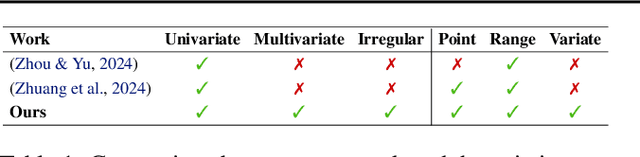
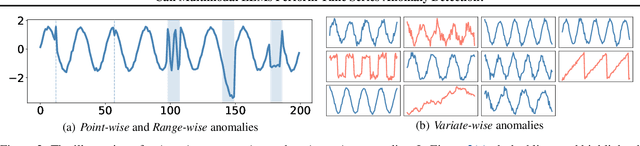
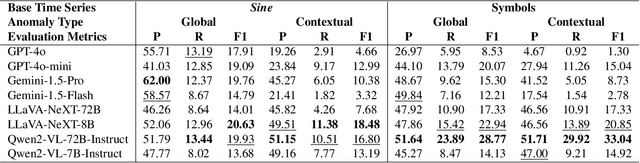
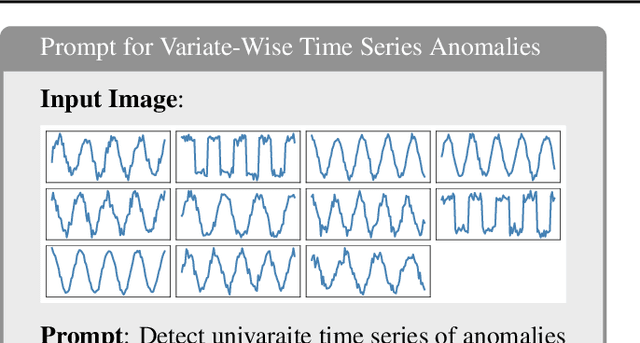
Large language models (LLMs) have been increasingly used in time series analysis. However, the potential of multimodal LLMs (MLLMs), particularly vision-language models, for time series remains largely under-explored. One natural way for humans to detect time series anomalies is through visualization and textual description. Motivated by this, we raise a critical and practical research question: Can multimodal LLMs perform time series anomaly detection? To answer this, we propose VisualTimeAnomaly benchmark to evaluate MLLMs in time series anomaly detection (TSAD). Our approach transforms time series numerical data into the image format and feed these images into various MLLMs, including proprietary models (GPT-4o and Gemini-1.5) and open-source models (LLaVA-NeXT and Qwen2-VL), each with one larger and one smaller variant. In total, VisualTimeAnomaly contains 12.4k time series images spanning 3 scenarios and 3 anomaly granularities with 9 anomaly types across 8 MLLMs. Starting with the univariate case (point- and range-wise anomalies), we extend our evaluation to more practical scenarios, including multivariate and irregular time series scenarios, and variate-wise anomalies. Our study reveals several key insights: 1) MLLMs detect range- and variate-wise anomalies more effectively than point-wise anomalies. 2) MLLMs are highly robust to irregular time series, even with 25% of the data missing. 3) Open-source MLLMs perform comparably to proprietary models in TSAD. While open-source MLLMs excel on univariate time series, proprietary MLLMs demonstrate superior effectiveness on multivariate time series. To the best of our knowledge, this is the first work to comprehensively investigate MLLMs for TSAD, particularly for multivariate and irregular time series scenarios. We release our dataset and code at https://github.com/mllm-ts/VisualTimeAnomaly to support future research.
A Survey of Model Extraction Attacks and Defenses in Distributed Computing Environments
Feb 22, 2025Model Extraction Attacks (MEAs) threaten modern machine learning systems by enabling adversaries to steal models, exposing intellectual property and training data. With the increasing deployment of machine learning models in distributed computing environments, including cloud, edge, and federated learning settings, each paradigm introduces distinct vulnerabilities and challenges. Without a unified perspective on MEAs across these distributed environments, organizations risk fragmented defenses, inadequate risk assessments, and substantial economic and privacy losses. This survey is motivated by the urgent need to understand how the unique characteristics of cloud, edge, and federated deployments shape attack vectors and defense requirements. We systematically examine the evolution of attack methodologies and defense mechanisms across these environments, demonstrating how environmental factors influence security strategies in critical sectors such as autonomous vehicles, healthcare, and financial services. By synthesizing recent advances in MEAs research and discussing the limitations of current evaluation practices, this survey provides essential insights for developing robust and adaptive defense strategies. Our comprehensive approach highlights the importance of integrating protective measures across the entire distributed computing landscape to ensure the secure deployment of machine learning models.
From Selection to Generation: A Survey of LLM-based Active Learning
Feb 17, 2025Active Learning (AL) has been a powerful paradigm for improving model efficiency and performance by selecting the most informative data points for labeling and training. In recent active learning frameworks, Large Language Models (LLMs) have been employed not only for selection but also for generating entirely new data instances and providing more cost-effective annotations. Motivated by the increasing importance of high-quality data and efficient model training in the era of LLMs, we present a comprehensive survey on LLM-based Active Learning. We introduce an intuitive taxonomy that categorizes these techniques and discuss the transformative roles LLMs can play in the active learning loop. We further examine the impact of AL on LLM learning paradigms and its applications across various domains. Finally, we identify open challenges and propose future research directions. This survey aims to serve as an up-to-date resource for researchers and practitioners seeking to gain an intuitive understanding of LLM-based AL techniques and deploy them to new applications.
QLIP: Text-Aligned Visual Tokenization Unifies Auto-Regressive Multimodal Understanding and Generation
Feb 07, 2025We introduce Quantized Language-Image Pretraining (QLIP), a visual tokenization method that combines state-of-the-art reconstruction quality with state-of-the-art zero-shot image understanding. QLIP trains a binary-spherical-quantization-based autoencoder with reconstruction and language-image alignment objectives. We are the first to show that the two objectives do not need to be at odds. We balance the two loss terms dynamically during training and show that a two-stage training pipeline effectively mixes the large-batch requirements of image-language pre-training with the memory bottleneck imposed by the reconstruction objective. We validate the effectiveness of QLIP for multimodal understanding and text-conditioned image generation with a single model. Specifically, QLIP serves as a drop-in replacement for the visual encoder for LLaVA and the image tokenizer for LlamaGen with comparable or even better performance. Finally, we demonstrate that QLIP enables a unified mixed-modality auto-regressive model for understanding and generation.
Encrypted Large Model Inference: The Equivariant Encryption Paradigm
Feb 03, 2025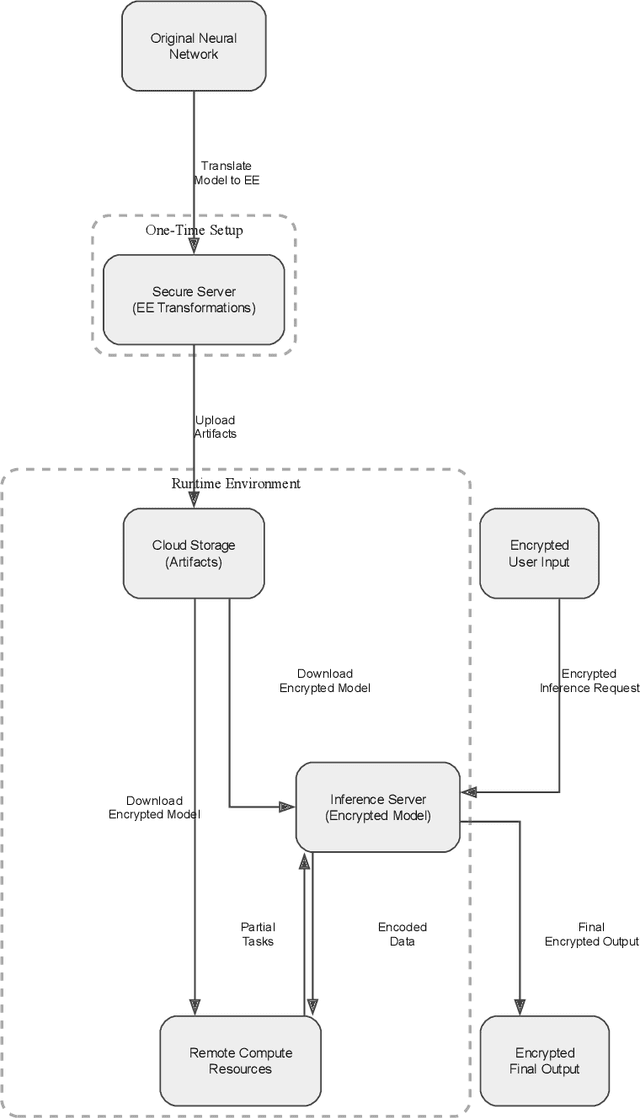
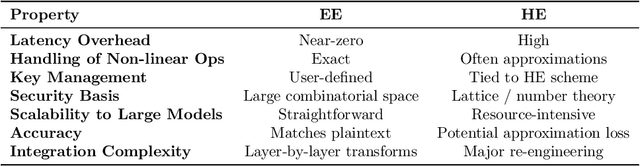
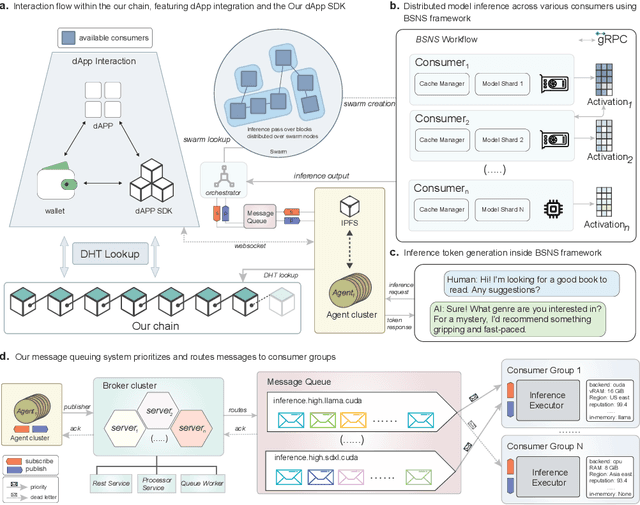
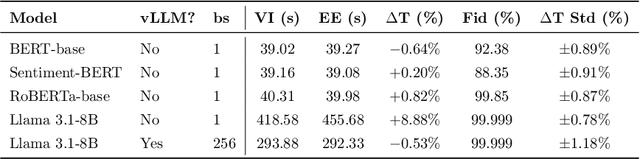
Large scale deep learning model, such as modern language models and diffusion architectures, have revolutionized applications ranging from natural language processing to computer vision. However, their deployment in distributed or decentralized environments raises significant privacy concerns, as sensitive data may be exposed during inference. Traditional techniques like secure multi-party computation, homomorphic encryption, and differential privacy offer partial remedies but often incur substantial computational overhead, latency penalties, or limited compatibility with non-linear network operations. In this work, we introduce Equivariant Encryption (EE), a novel paradigm designed to enable secure, "blind" inference on encrypted data with near zero performance overhead. Unlike fully homomorphic approaches that encrypt the entire computational graph, EE selectively obfuscates critical internal representations within neural network layers while preserving the exact functionality of both linear and a prescribed set of non-linear operations. This targeted encryption ensures that raw inputs, intermediate activations, and outputs remain confidential, even when processed on untrusted infrastructure. We detail the theoretical foundations of EE, compare its performance and integration complexity against conventional privacy preserving techniques, and demonstrate its applicability across a range of architectures, from convolutional networks to large language models. Furthermore, our work provides a comprehensive threat analysis, outlining potential attack vectors and baseline strategies, and benchmarks EE against standard inference pipelines in decentralized settings. The results confirm that EE maintains high fidelity and throughput, effectively bridging the gap between robust data confidentiality and the stringent efficiency requirements of modern, large scale model inference.
Large Language Model Can Be a Foundation for Hidden Rationale-Based Retrieval
Dec 21, 2024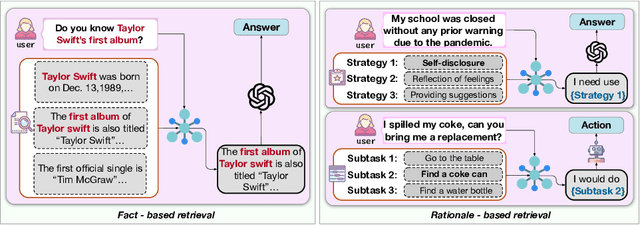
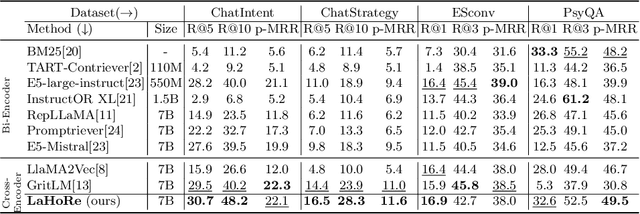
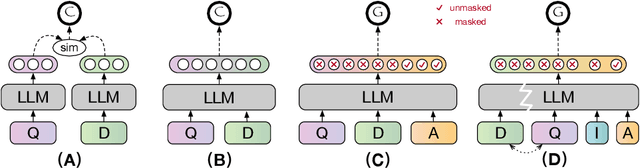
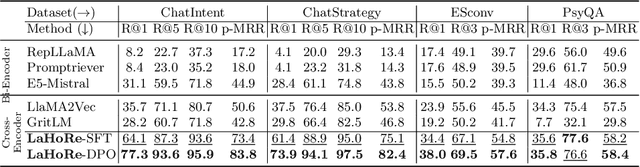
Despite the recent advancement in Retrieval-Augmented Generation (RAG) systems, most retrieval methodologies are often developed for factual retrieval, which assumes query and positive documents are semantically similar. In this paper, we instead propose and study a more challenging type of retrieval task, called hidden rationale retrieval, in which query and document are not similar but can be inferred by reasoning chains, logic relationships, or empirical experiences. To address such problems, an instruction-tuned Large language model (LLM) with a cross-encoder architecture could be a reasonable choice. To further strengthen pioneering LLM-based retrievers, we design a special instruction that transforms the retrieval task into a generative task by prompting LLM to answer a binary-choice question. The model can be fine-tuned with direct preference optimization (DPO). The framework is also optimized for computational efficiency with no performance degradation. We name this retrieval framework by RaHoRe and verify its zero-shot and fine-tuned performance superiority on Emotional Support Conversation (ESC), compared with previous retrieval works. Our study suggests the potential to employ LLM as a foundation for a wider scope of retrieval tasks. Our codes, models, and datasets are available on https://github.com/flyfree5/LaHoRe.
A Large-scale Empirical Study on Large Language Models for Election Prediction
Dec 19, 2024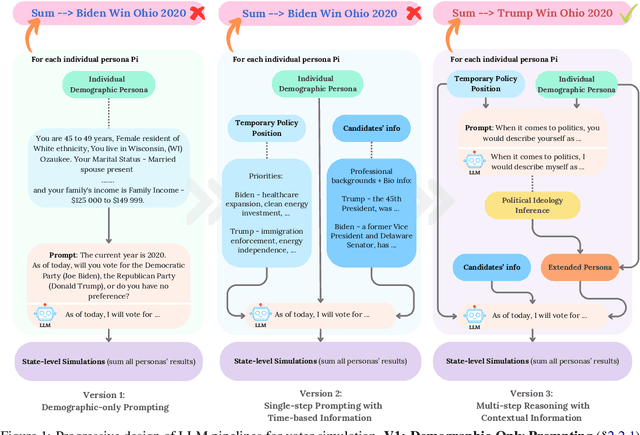
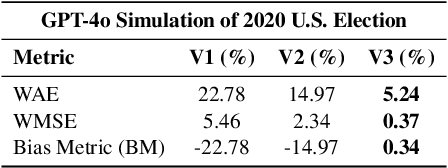
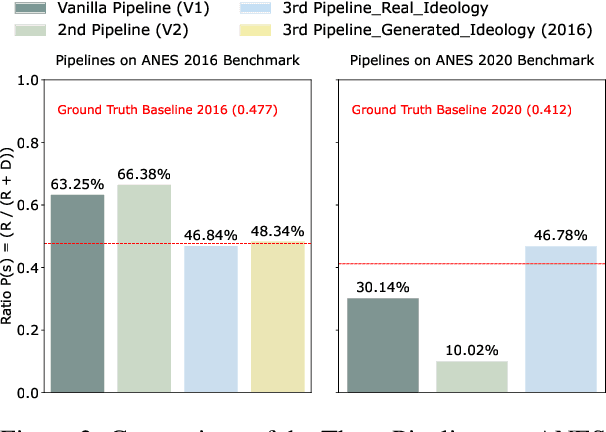

Can Large Language Models (LLMs) accurately predict election outcomes? While LLMs have demonstrated impressive performance in healthcare, legal analysis, and creative applications, their capabilities in election forecasting remain uncertain. Notably, election prediction poses unique challenges: limited voter-level data, evolving political contexts, and the complexity of modeling human behavior. In the first part of this paper, we explore and introduce a multi-step reasoning framework for election prediction, which systematically integrates demographic, ideological, and time-sensitive factors. Validated on 2016 and 2020 real-world data and extensive synthetic personas, our approach adapts to changing political landscapes, reducing bias and significantly improving predictive accuracy. We further apply our pipeline to the 2024 U.S. presidential election, illustrating its ability to generalize beyond observed historical data. Beyond enhancing accuracy, the second part of the paper provides insights into the broader implications of LLM-based election forecasting. We identify potential political biases embedded in pretrained corpora, examine how demographic patterns can become exaggerated, and suggest strategies for mitigating these issues. Together, this project, a large-scale LLM empirical study, advances the accuracy of election predictions and establishes directions for more balanced, transparent, and context-aware modeling in political science research and practice.
AD-LLM: Benchmarking Large Language Models for Anomaly Detection
Dec 15, 2024

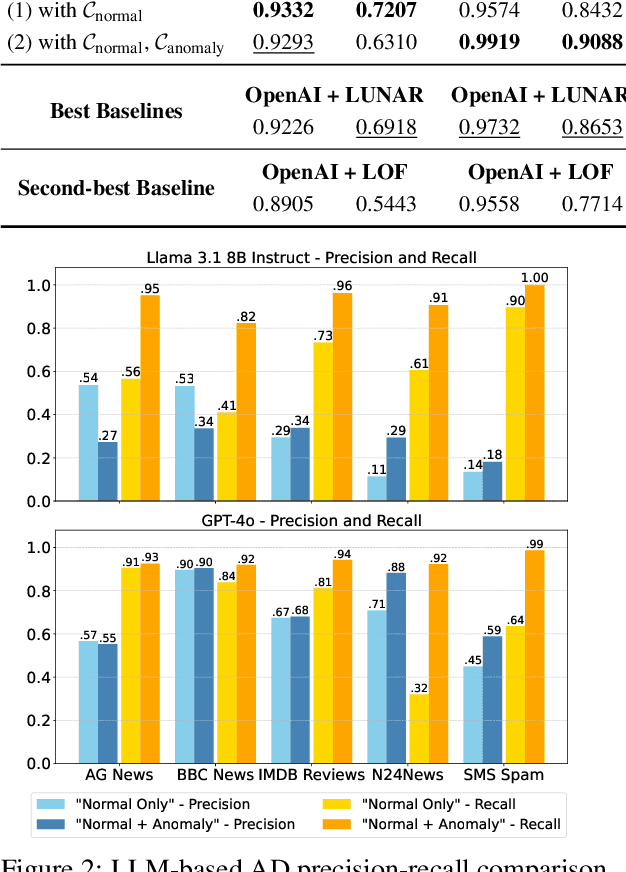

Anomaly detection (AD) is an important machine learning task with many real-world uses, including fraud detection, medical diagnosis, and industrial monitoring. Within natural language processing (NLP), AD helps detect issues like spam, misinformation, and unusual user activity. Although large language models (LLMs) have had a strong impact on tasks such as text generation and summarization, their potential in AD has not been studied enough. This paper introduces AD-LLM, the first benchmark that evaluates how LLMs can help with NLP anomaly detection. We examine three key tasks: (i) zero-shot detection, using LLMs' pre-trained knowledge to perform AD without tasks-specific training; (ii) data augmentation, generating synthetic data and category descriptions to improve AD models; and (iii) model selection, using LLMs to suggest unsupervised AD models. Through experiments with different datasets, we find that LLMs can work well in zero-shot AD, that carefully designed augmentation methods are useful, and that explaining model selection for specific datasets remains challenging. Based on these results, we outline six future research directions on LLMs for AD.
PyOD 2: A Python Library for Outlier Detection with LLM-powered Model Selection
Dec 11, 2024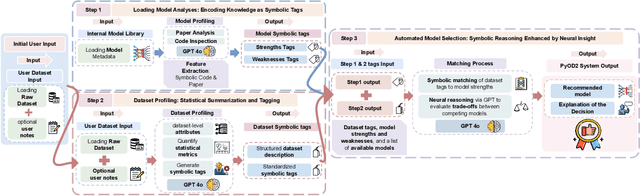
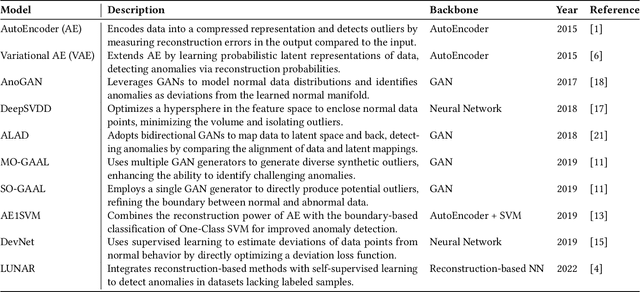

Outlier detection (OD), also known as anomaly detection, is a critical machine learning (ML) task with applications in fraud detection, network intrusion detection, clickstream analysis, recommendation systems, and social network moderation. Among open-source libraries for outlier detection, the Python Outlier Detection (PyOD) library is the most widely adopted, with over 8,500 GitHub stars, 25 million downloads, and diverse industry usage. However, PyOD currently faces three limitations: (1) insufficient coverage of modern deep learning algorithms, (2) fragmented implementations across PyTorch and TensorFlow, and (3) no automated model selection, making it hard for non-experts. To address these issues, we present PyOD Version 2 (PyOD 2), which integrates 12 state-of-the-art deep learning models into a unified PyTorch framework and introduces a large language model (LLM)-based pipeline for automated OD model selection. These improvements simplify OD workflows, provide access to 45 algorithms, and deliver robust performance on various datasets. In this paper, we demonstrate how PyOD 2 streamlines the deployment and automation of OD models and sets a new standard in both research and industry. PyOD 2 is accessible at [https://github.com/yzhao062/pyod](https://github.com/yzhao062/pyod). This study aligns with the Web Mining and Content Analysis track, addressing topics such as the robustness of Web mining methods and the quality of algorithmically-generated Web data.